
For almost a year we planned our 6-week trip to Australia with the assistance of GoWay Travel, half with small group tours and half on our own driving down the Gold Coast in a rental car.
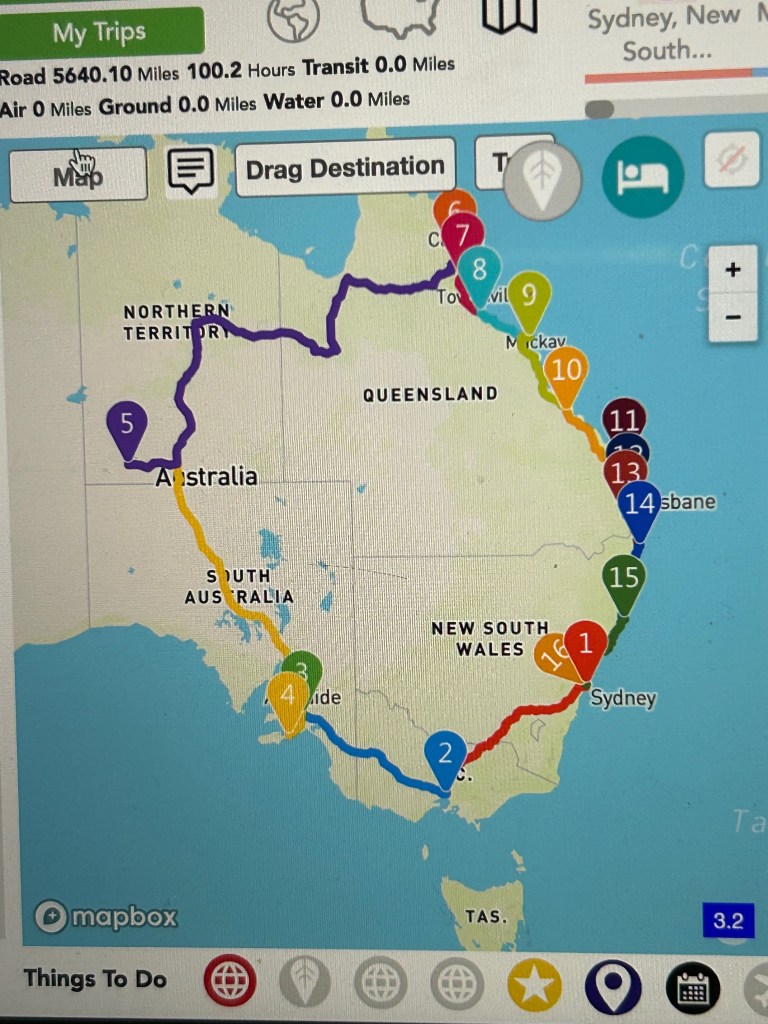
A Bit of History courtesy of Britannica and various sources
Australia, the smallest continent and one of the largest countries on Earth, is located between the Pacific and Indian oceans in the Southern Hemisphere. Australia’s capital is Canberra, located in the southeast between the larger and more important economic and cultural centres of Sydney and Melbourne.
Australia is the “last of lands” only in the sense that it was the last continent, apart from Antarctica, to be explored by Europeans. At least 60,000 years before European explorers sailed into the South Pacific, the first Aboriginal explorers had arrived from Asia, and by 20,000 years ago they had spread throughout the mainland and its chief island outlier, Tasmania. When Captain Arthur Phillip of the British Royal Navy landed with the First Fleet at Botany Bay in 1788, there may have been between 250,000 and 500,000 Aboriginals, though some estimates are much higher. Largely nomadic hunters and gatherers, the Aboriginals had already transformed the primeval landscape, principally by the use of fire, and, contrary to common European perceptions, they had established robust, semipermanent settlements in well-favoured localities.
Most early settlers were convicts transported for petty crimes and assigned as labourers or servants to “free settlers” (willing immigrants). This transportation of convicts process lasted until 1865. Once emancipated, convicts tended to integrate into colonial society. Martial law was declared to suppress convict rebellions and uprisings, and lasted for two years following the 1808 Rum Rebellion, the only successful armed takeover of government in Australia. Over the next two decades, social and economic reforms, together with the establishment of a Legislative Council and Supreme Court saw New South Wales transition from a penal colony to a civil society.
The indigenous population declined for 150 years following European settlement, mainly due to infectious disease. British colonial authorities did not sign any treaties with Aboriginal Groups. As settlement expanded, thousands of Indigenous people died in frontier wars while others were dispossessed of their traditional lands.
Historically part of the British Empire and now a member of the Commonwealth, Australia is a relatively prosperous independent country. Australians are in many respects fortunate in that they do not share their continent—which is only a little smaller than the United States—with any other country. Extremely remote from their traditional allies and trading partners—it is some 12,000 miles (19,000 km) from Australia to Great Britain via the Indian Ocean and the Suez Canal and about 7,000 miles (11,000 km) across the Pacific Ocean to the west coast of the United States—Australians have become more interested in the proximity of huge potential markets in Asia and in the highly competitive industrialized economies of China, Japan, South Korea, and Taiwan. Australia, the continent and the country, may have been quite isolated at the beginning of the 20th century, but it entered the 21st century a culturally diverse land brimming with confidence, an attitude encouraged by the worldwide fascination with the land “Down Under” and demonstrated when Sydney hosted the 2000 Olympic Games.
Thursday 25th January, 2024
We left Toronto on Air Canada two and a half hours late but the plane we took to Vancouver was to be the one going on to Sydney so no worries about making connections. A friend at yoga gave us some sleeping pills (Triazolam) and we both slept 5 and 3 hours each on the Vancouver to Sydney leg, arriving feeling quite good.
Day to Day Itinerary
Saturday 27th January, 2024 – Arrive Sydney
Sydney

As Australia’s second largest city, Sydney embraces its harbour, taking the sea and natural waterways to its heart. The grand style of the Sydney Opera House has made the city the landmark of the South Pacific. Sydney, with some 5+ million people is the oldest, and liveliest city in Australia but Melbourne is now the biggest. Sydney’s facilities for sightseeing and holiday activities are unequalled by any other Australian city. It is a paradise for surfers, swimmers, yachtsmen, fishermen, and golfers. Full of history and great nightlife, the choice of things to do in Sydney is endless.
Accommodation:
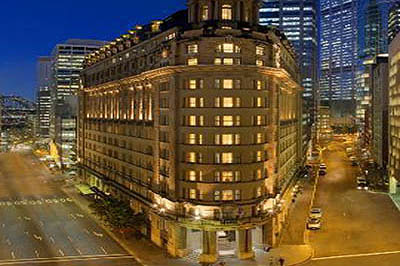
Radisson Blu Plaza Hotel Sydney: 4 nights
A beautiful hotel with a stunning 1800’s sandstone facade, the Radisson Blu Plaza Hotel Sydney is an intimate, boutique-style property. Once home to the Fairfax newspaper empire and the prestigious Bank of New South Wales, this accommodation offers a location near Sydney Opera House and major shopping precincts.
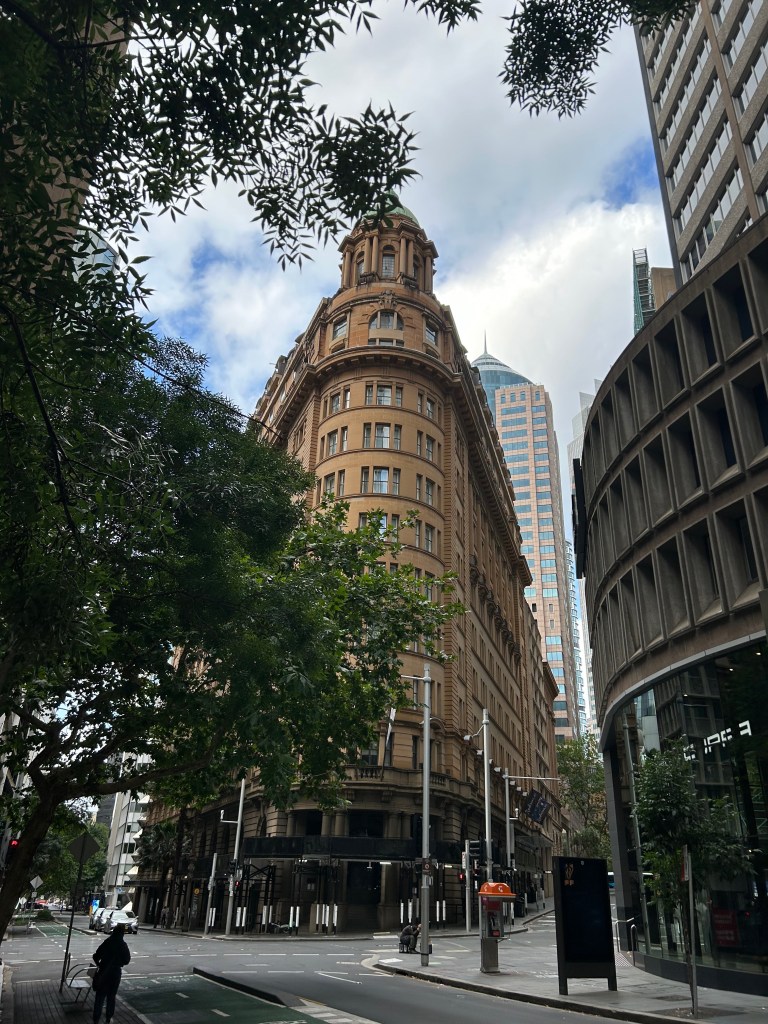
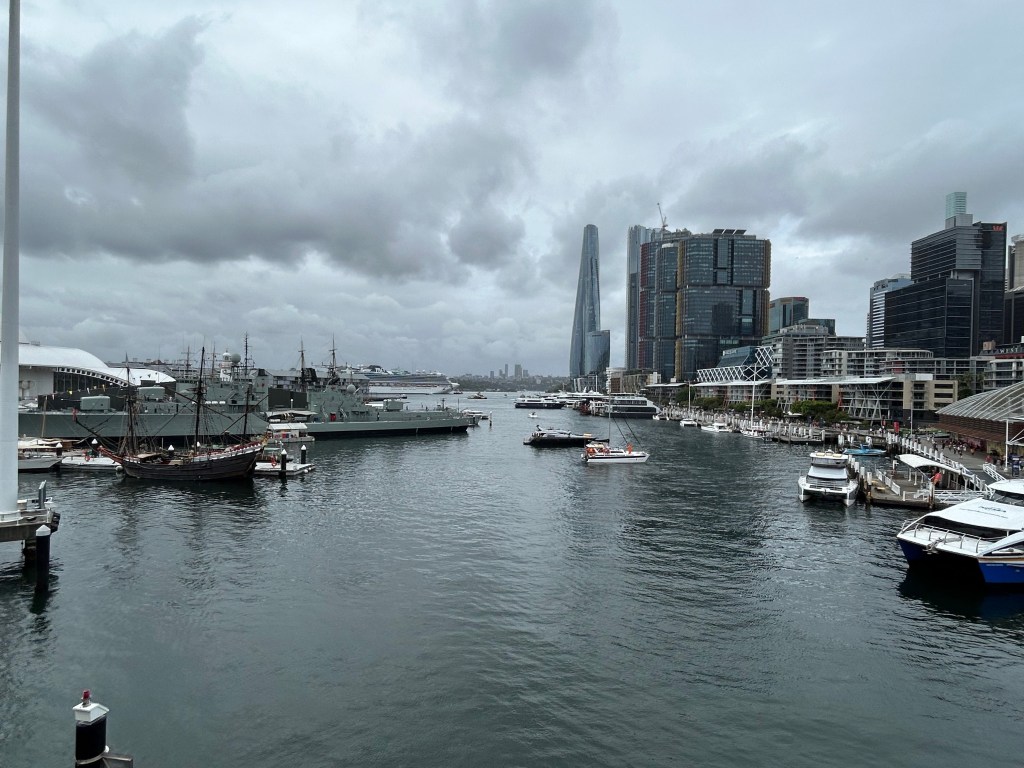
After we settled in our room, we walked down to Darling Harbour, walked the docks, had a drink at a cafe and had dinner at the Radisson.
Sunday 28th January, 2024 – Sydney Harbour Luxury Sailing

Sailboat Duration: 5.50 hour(s) Operated By: Harbour Days Sailing Experience
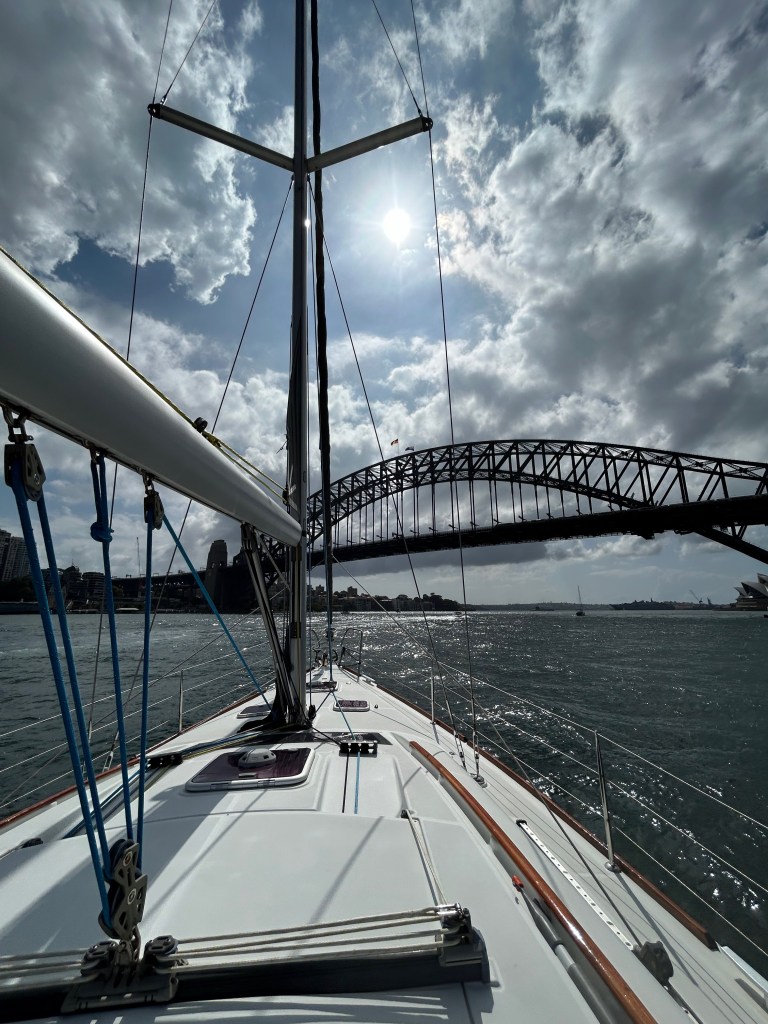
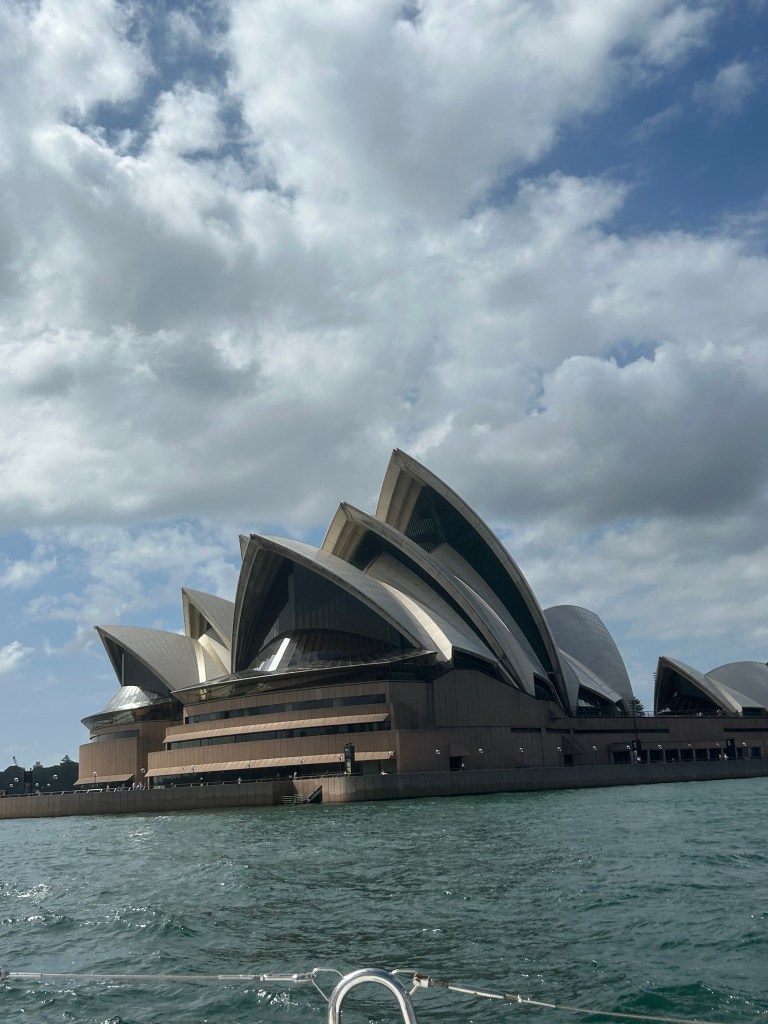
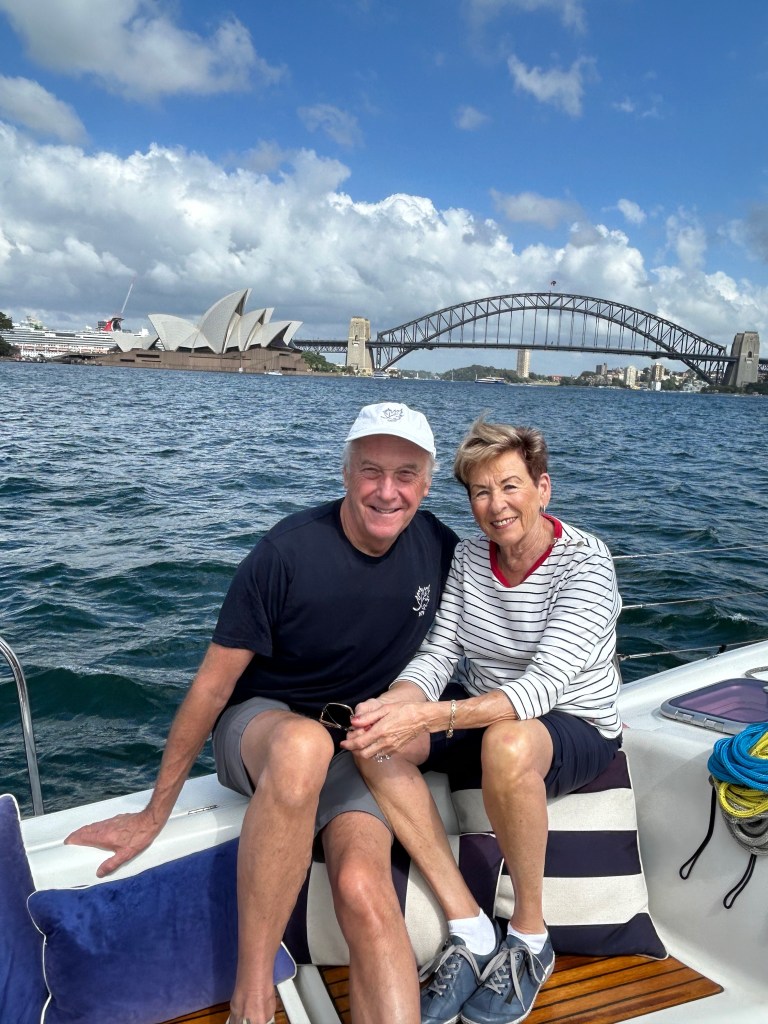
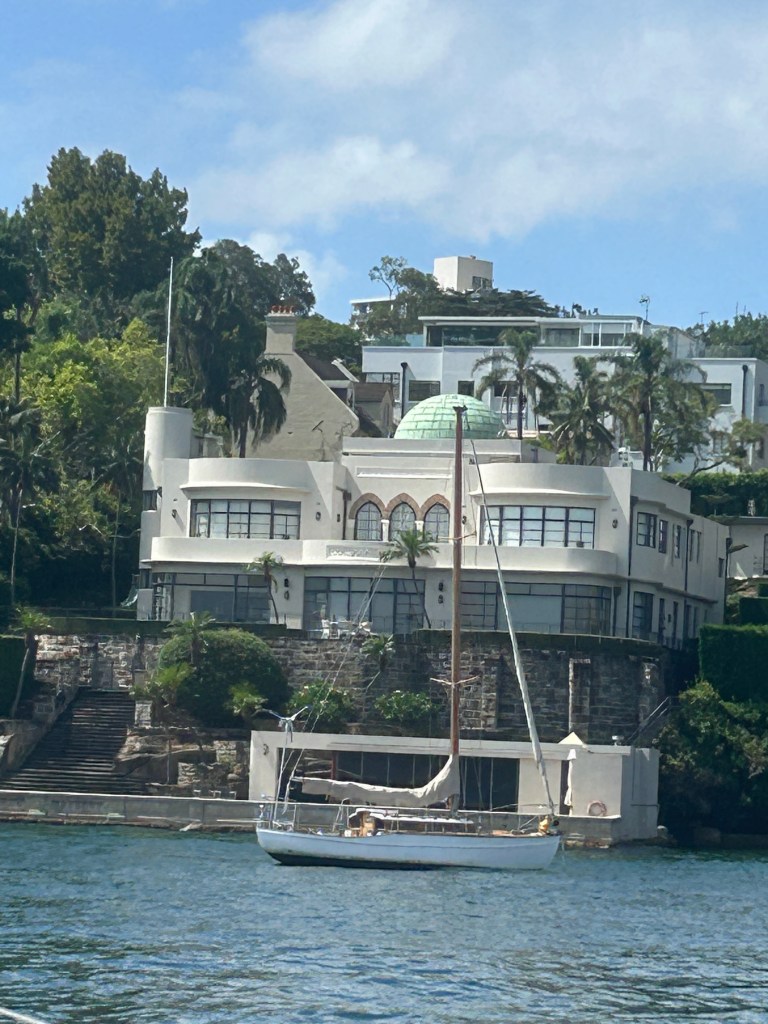
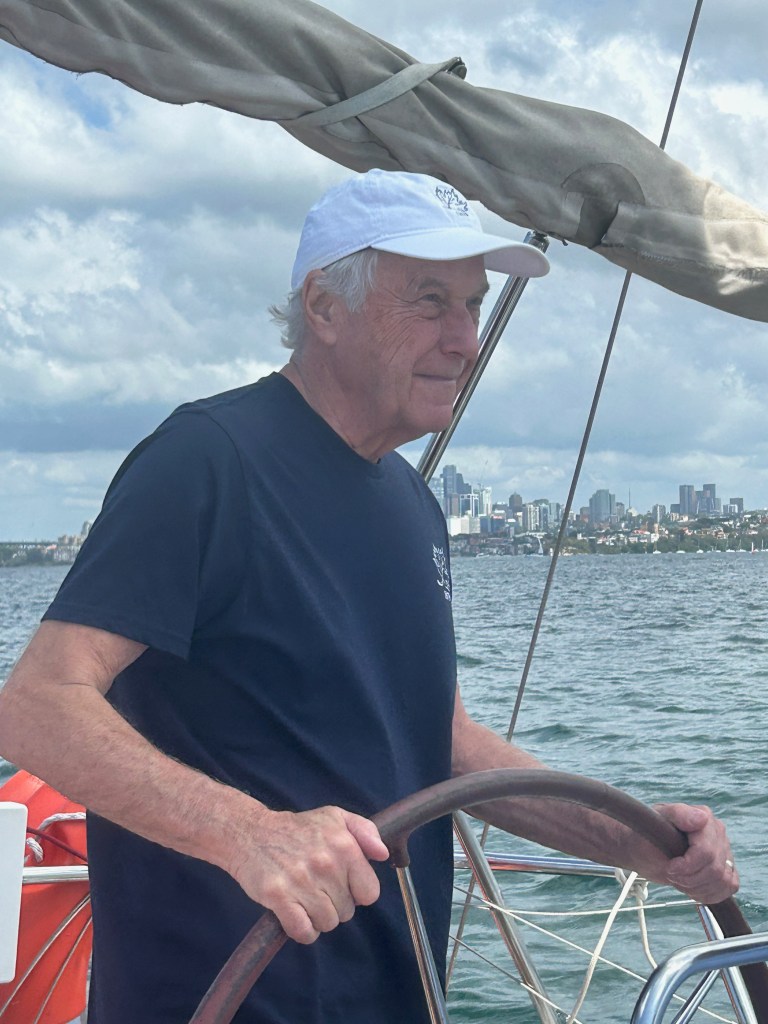
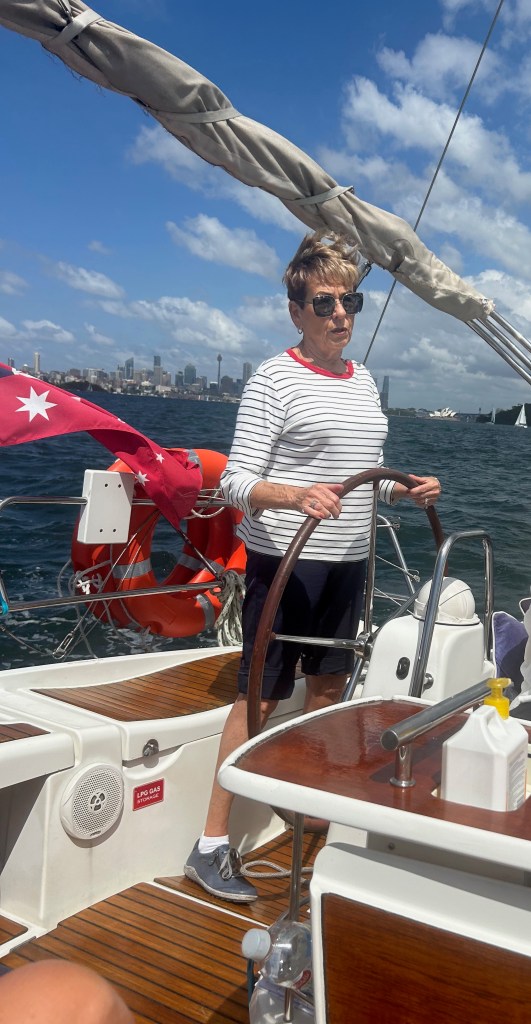
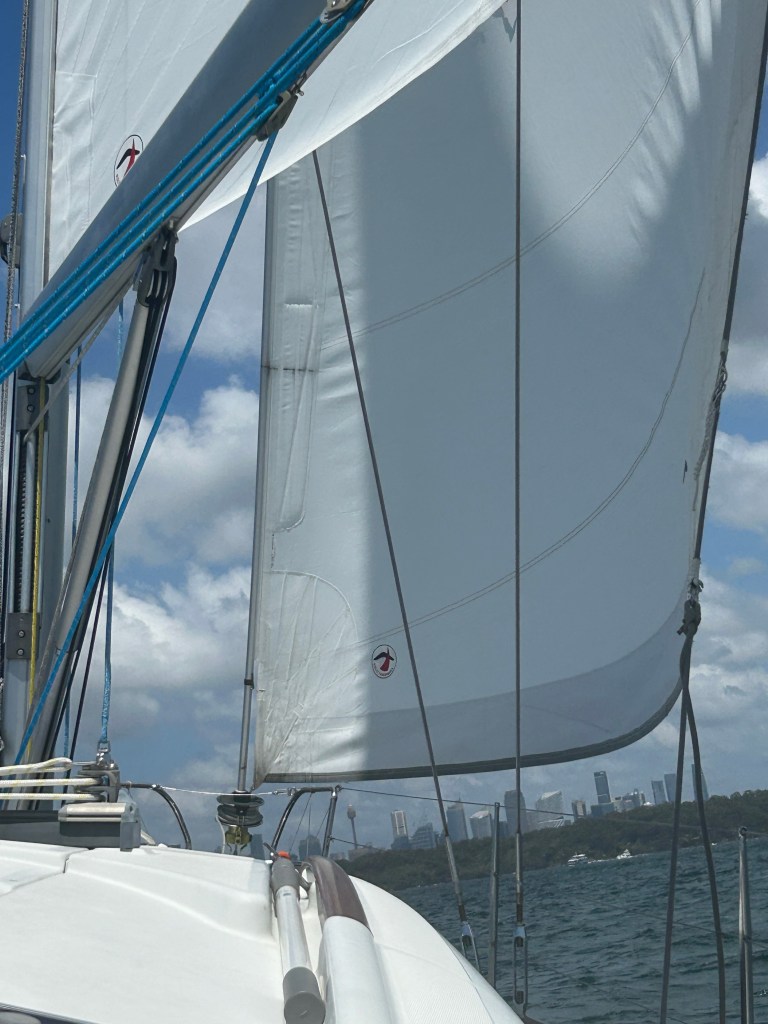
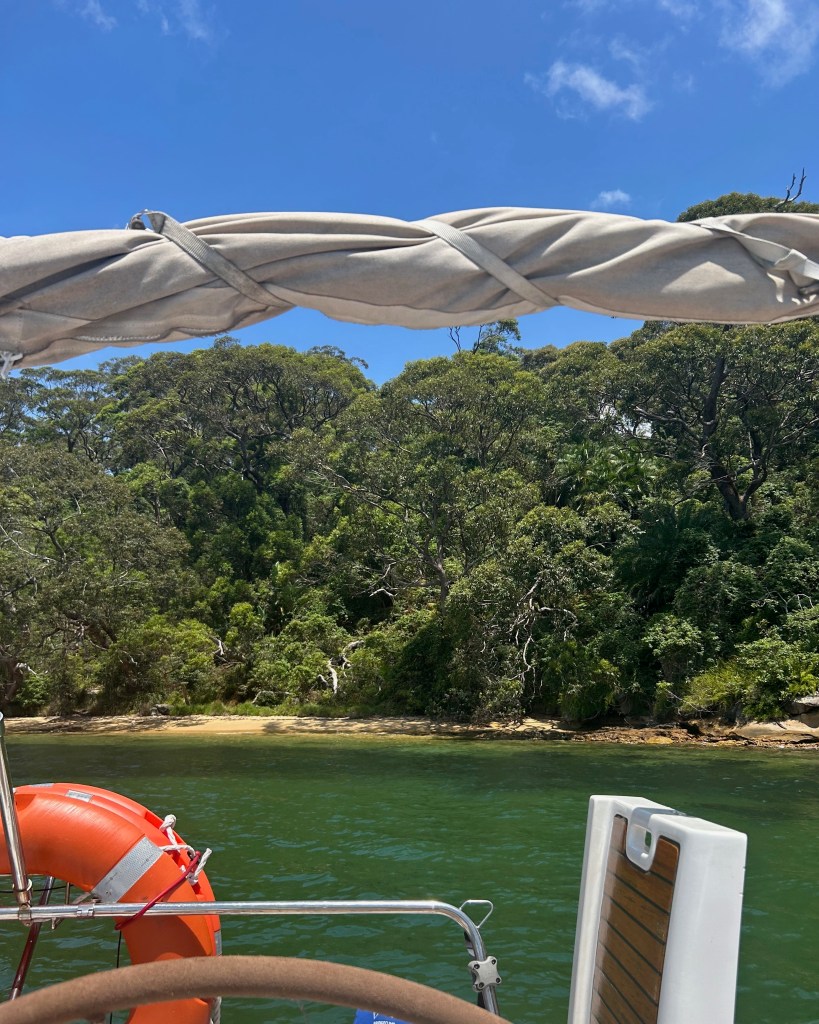
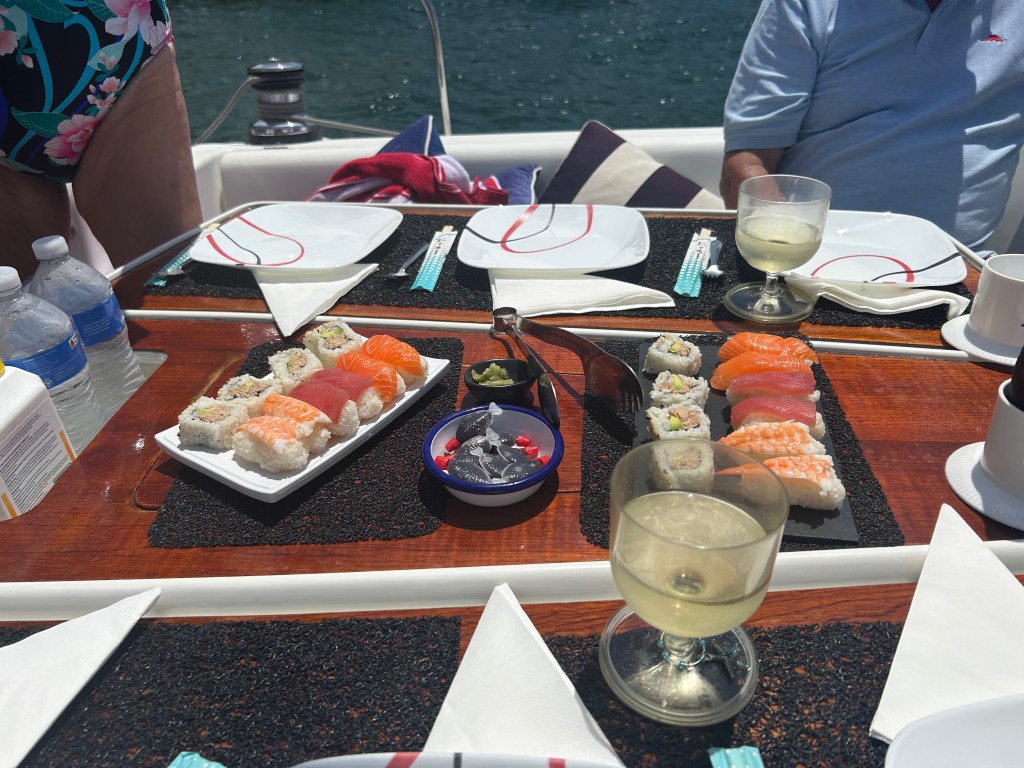
All in all a fabulous sailing day on Sydney Harbour with Captain David, two American couples and David’s stories about Sydney.
Monday 29th January, 2024 – (A183) Blue Mountains Deluxe Experience
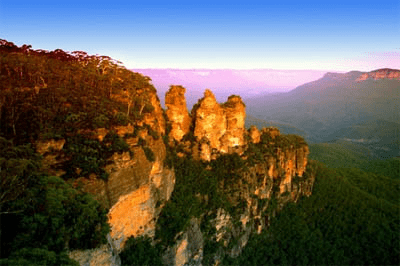
The Blue Mountains National Park is one of seven national parks that make up the Greater Blue Mountains World Heritage Area. This wonderland of sandstone outcrops, deep ravines and hazy blue eucalypt forests boasts luxury retreats and stunning views. The blue haze comes from the eucalyptus leaves and gum.
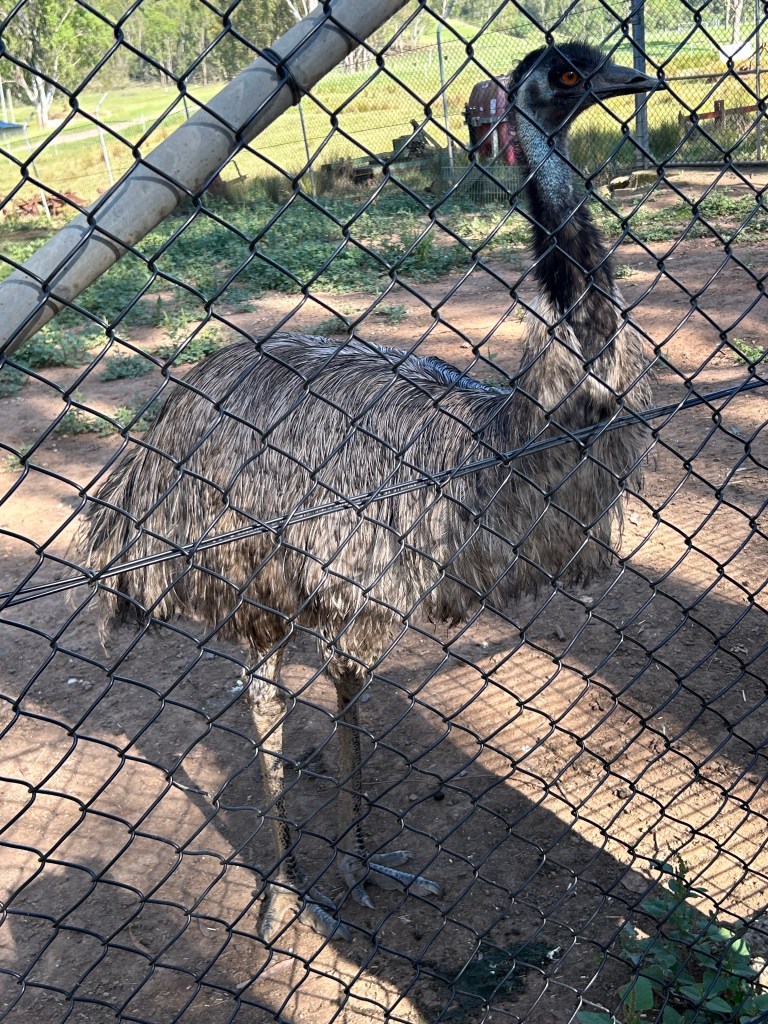
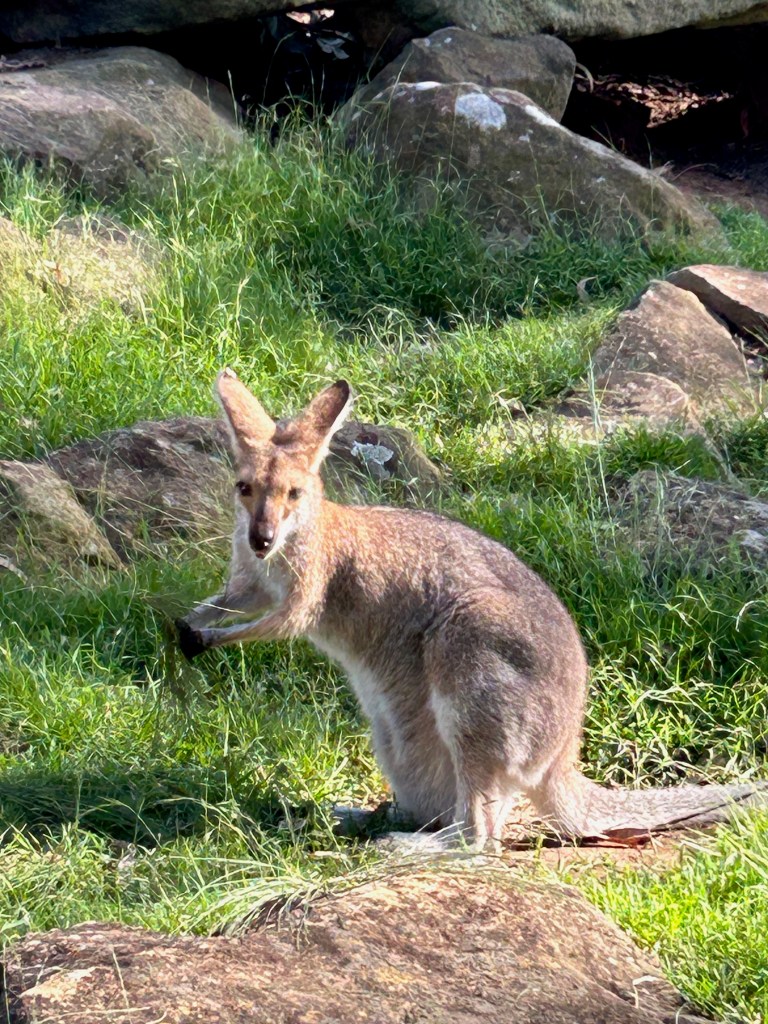
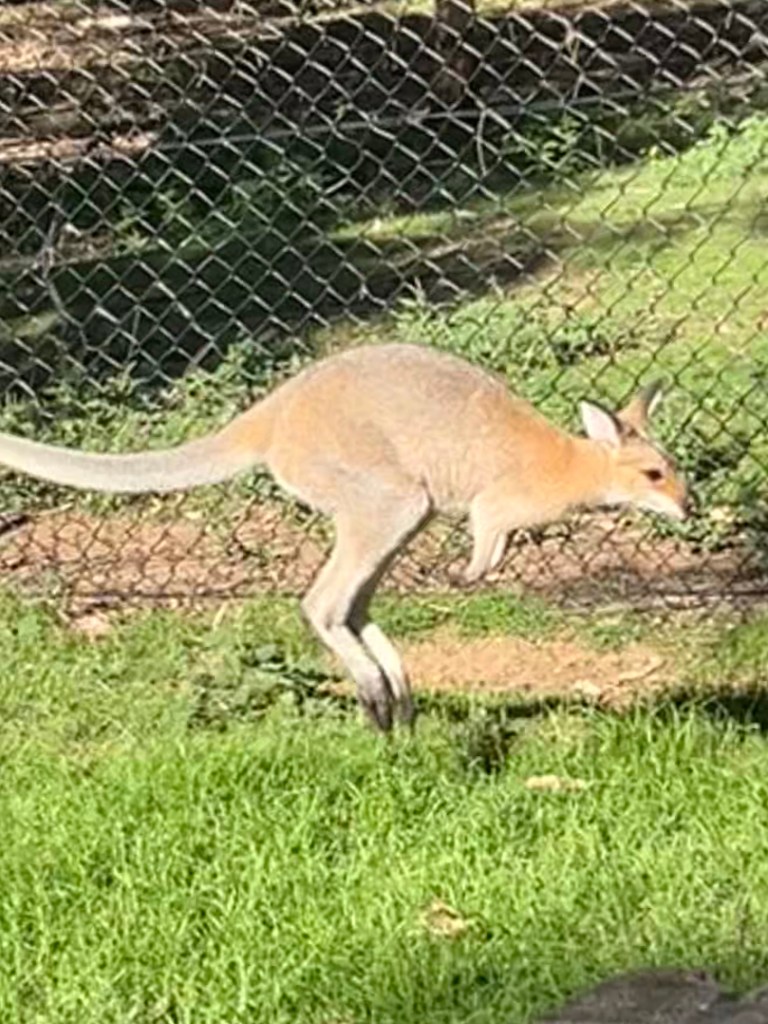
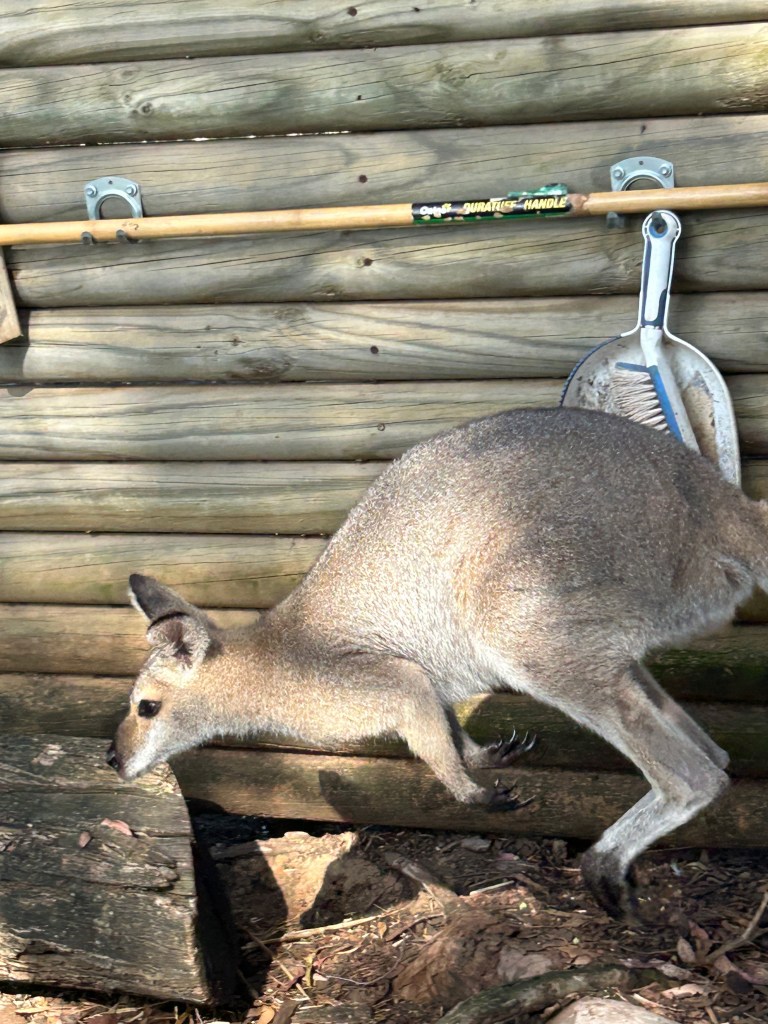
Our first stop of the day is at Calmsley Hill a working farm also home to Kangaroos, Emus, Wombats and Koalas.
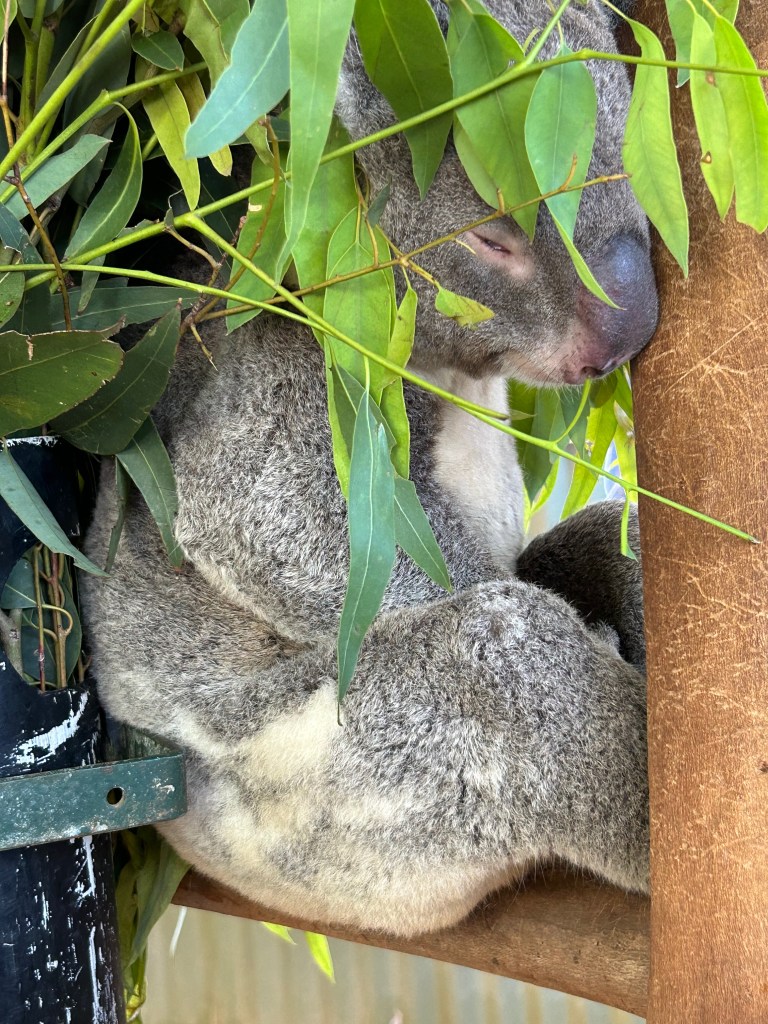
Koalas (not bears) sleep 18+ hours a day and poop all the time in little bullets that smell like eucalyptus.
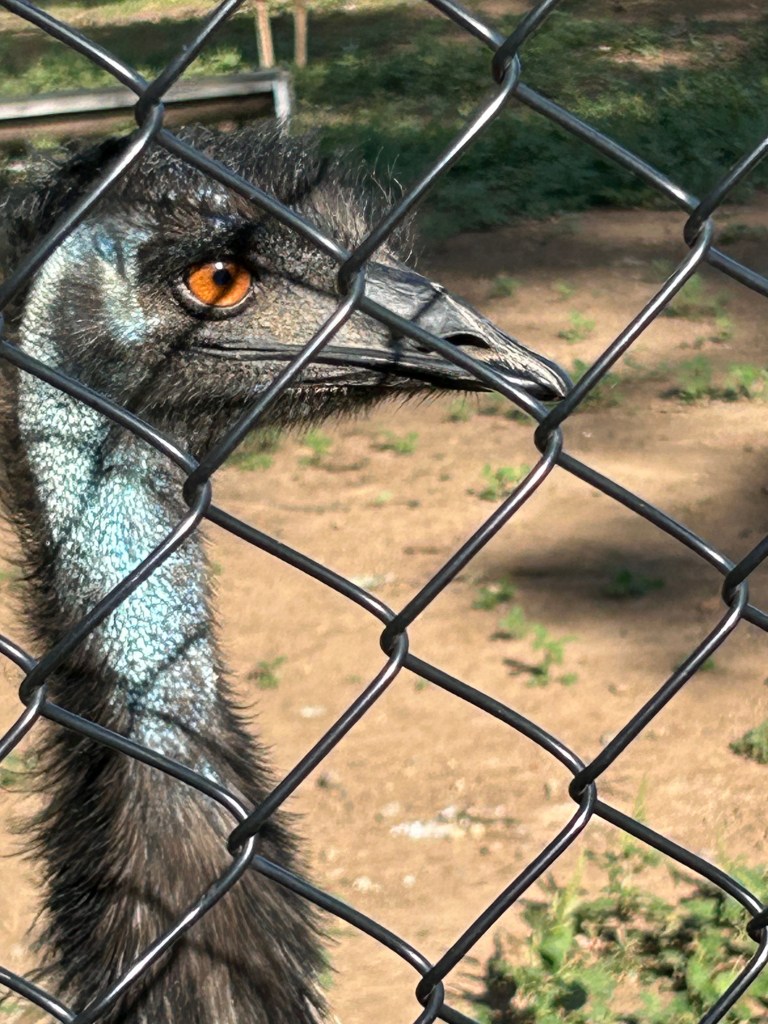
From Calmsley Hill we continue to ascend the Blue Mountains via the highway. We visited one of the ranges of stunning outlooks of the Jamison Valley seeing beautiful vistas.
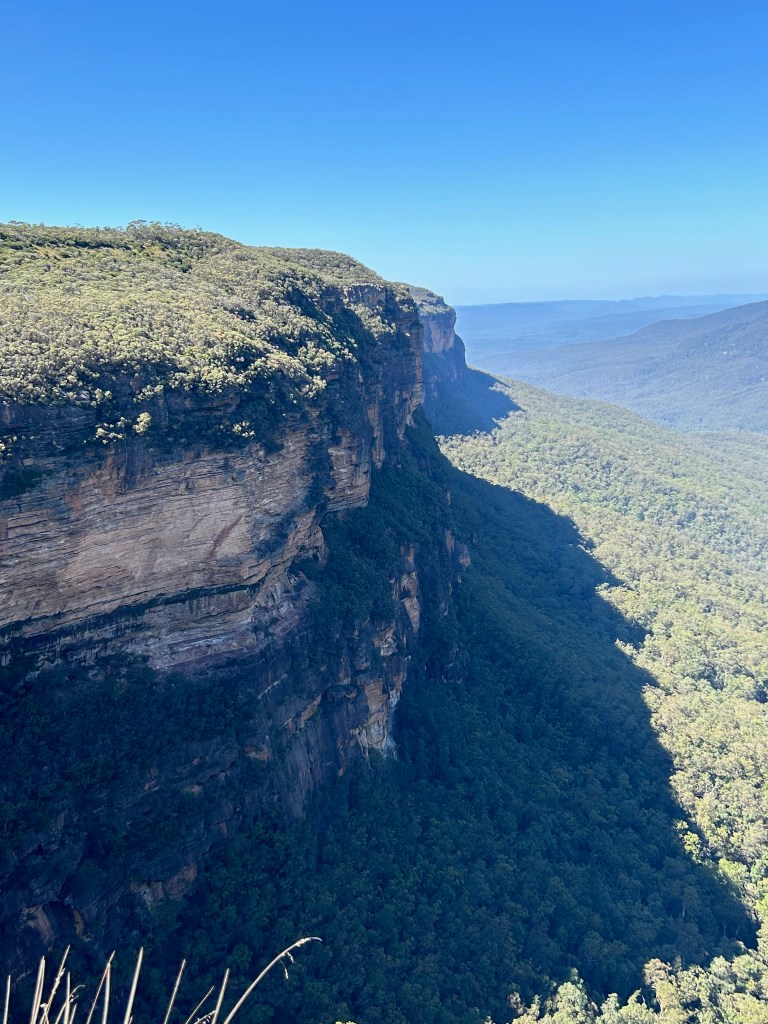
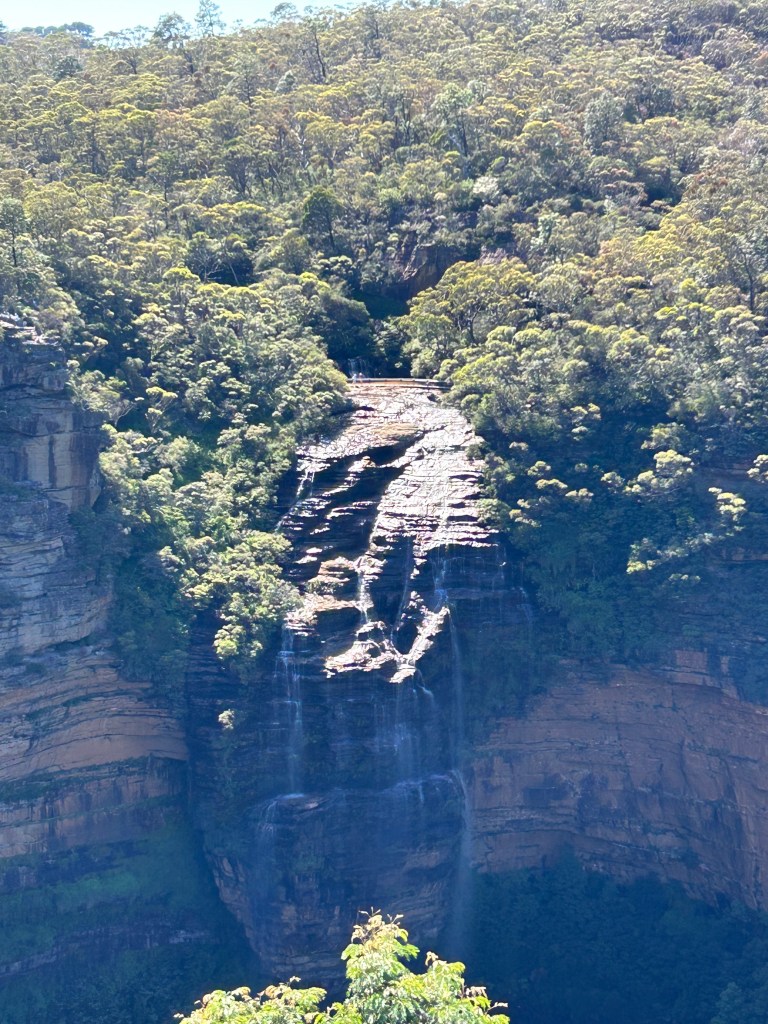
Continuing on we arrive at Eaglehawk Lookout, a remote lookout for views of the famous 3 Sisters. While the Blue Mountains features so much more than this natural attraction you can’t help but admire the unquestionable beauty of this amazing rock formation. The character of the Three Sisters changes throughout the day and throughout the seasons as the sunlight brings out magnificent colours.

The legends behind this famous rock formation involve this being a meeting place for aboriginal tribes as well as locations for battles. We then visited the Boar’s Head Lookout.

We made our way around the mountain towards the village of Blackheath and our lunch venue, the Hydro Majestic where we enjoyed a very good 2-course lunch.
The afternoon was spent visiting a selection of lookouts. Seeing the view from Govetts Leap we recognized why it’s one of the most famous lookouts in Australia.
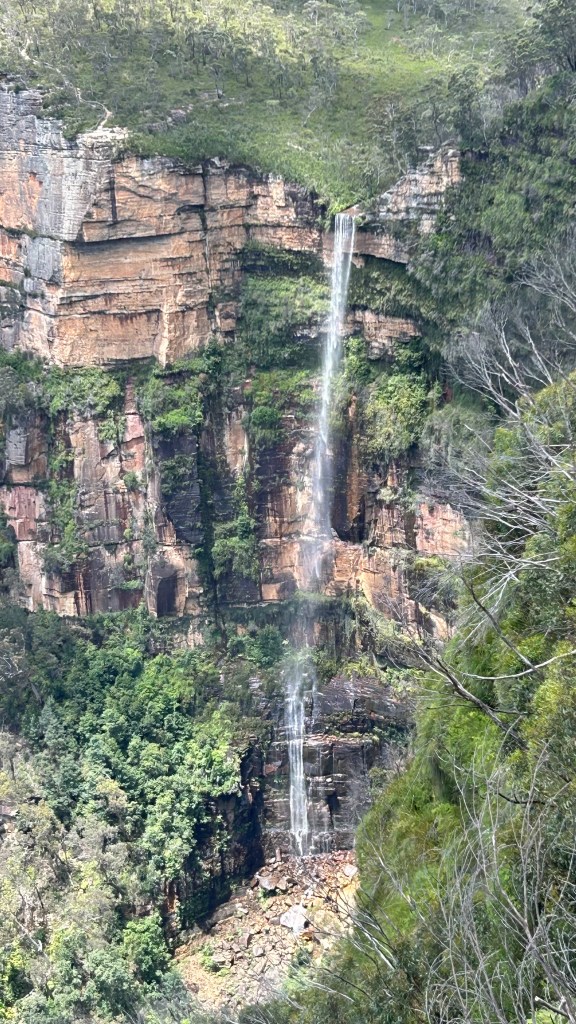
The magnificent waterfall drops a whopping 180m to the base of the cliff. If you’re not mesmerized by the dancing waves of water spray, you’ll be transfixed by the sweeping views down the valley to the Grose Wilderness.
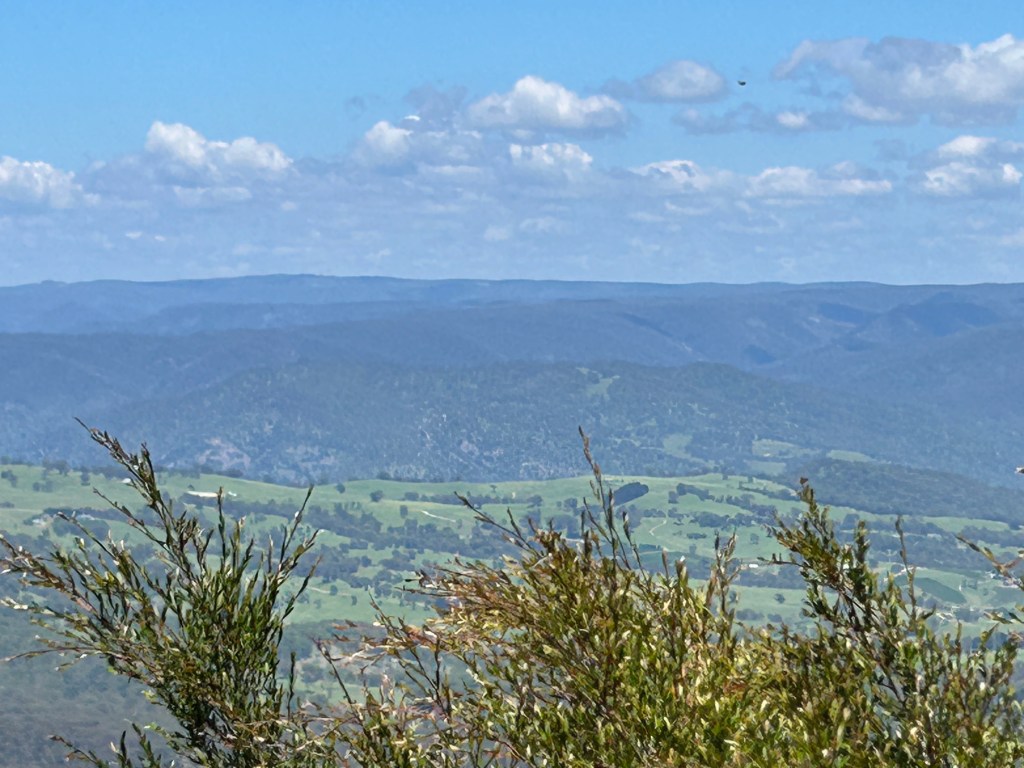
We then stopped briefly to enjoy a glass of sparkling wine or orange juice at the delightful Mt Tomah Botanic Gardens our last stop.
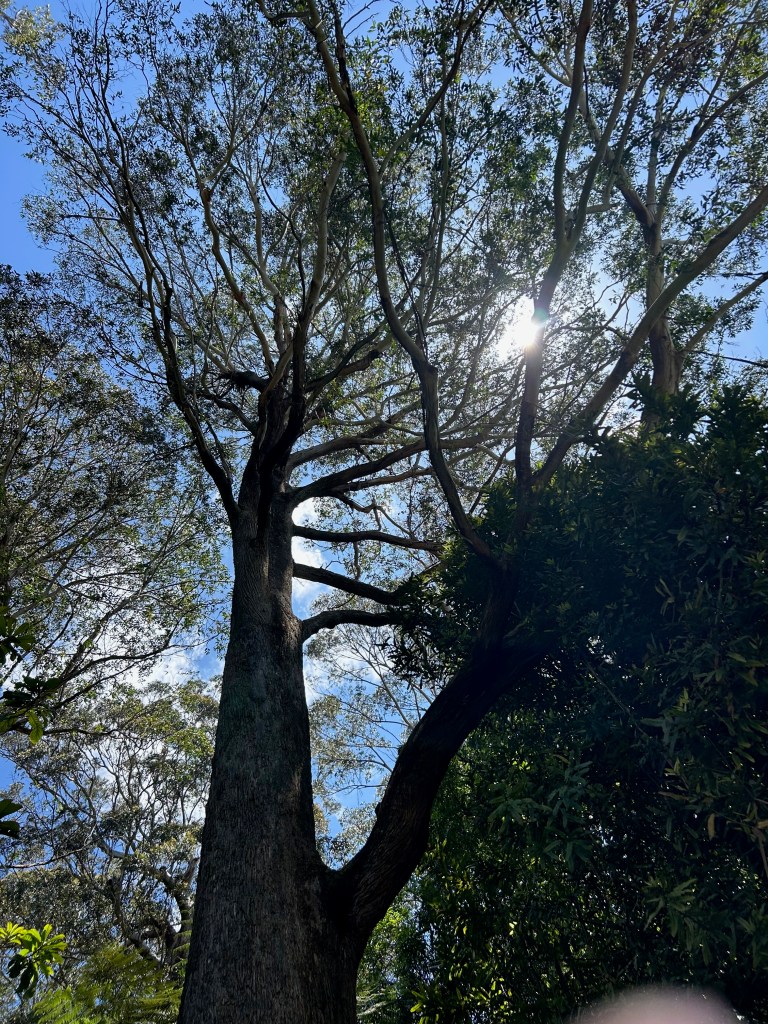
We enjoyed the sweeping views across to Sydney and the burned trunks of the trees, although much of the vegetation has returned. The 2019-2020 bush fires destroyed up to 19 million hectares. After traveling down the Bells Line, we arrive back at the hotel at 5:00pm. The unfortunate part of this tour is that the man who sat behind us on the bus coughed all day and by Tuesday, Bill had the cold/flu/upset stomach.
Tuesday 30th January, 2024 – (A115) Panoramic Sydney Sights
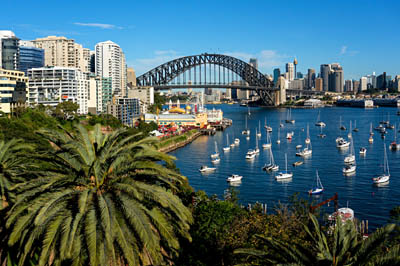
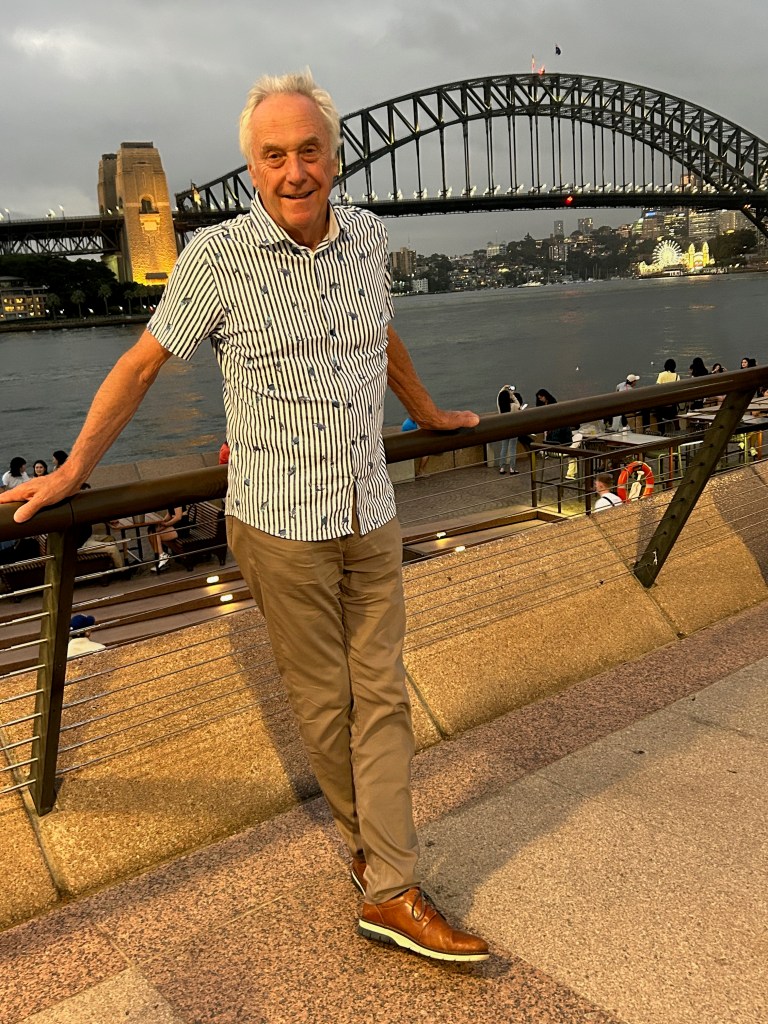
The Panoramic Sydney half day city sights tour started at 8:30. On tour we visited the historic Rocks area and heard about the early convict history: 80 years of bringing convicts with 7 to 14 year sentences to Australia. We enjoyed magnificent views of the Opera House and Harbour Bridge.
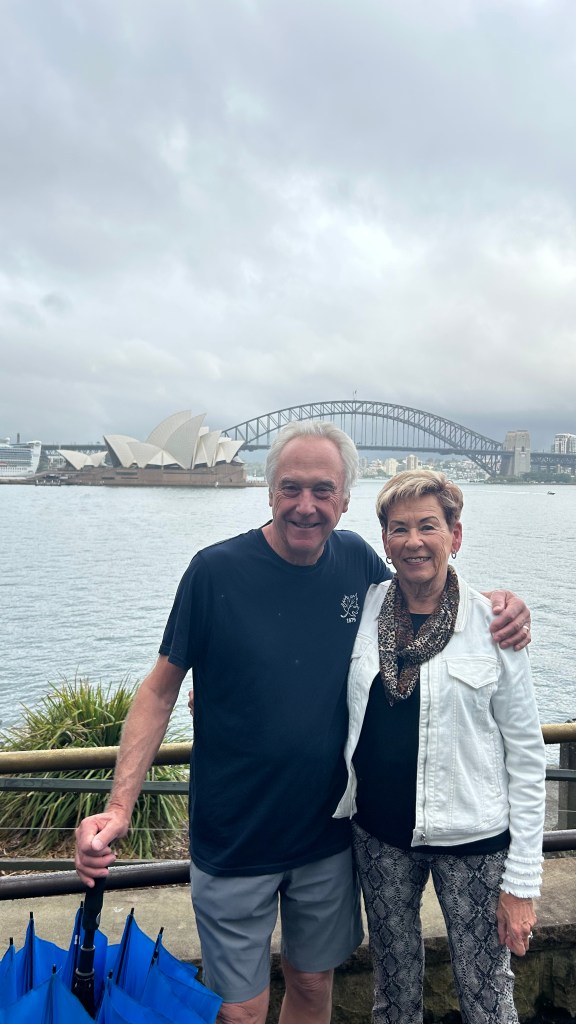
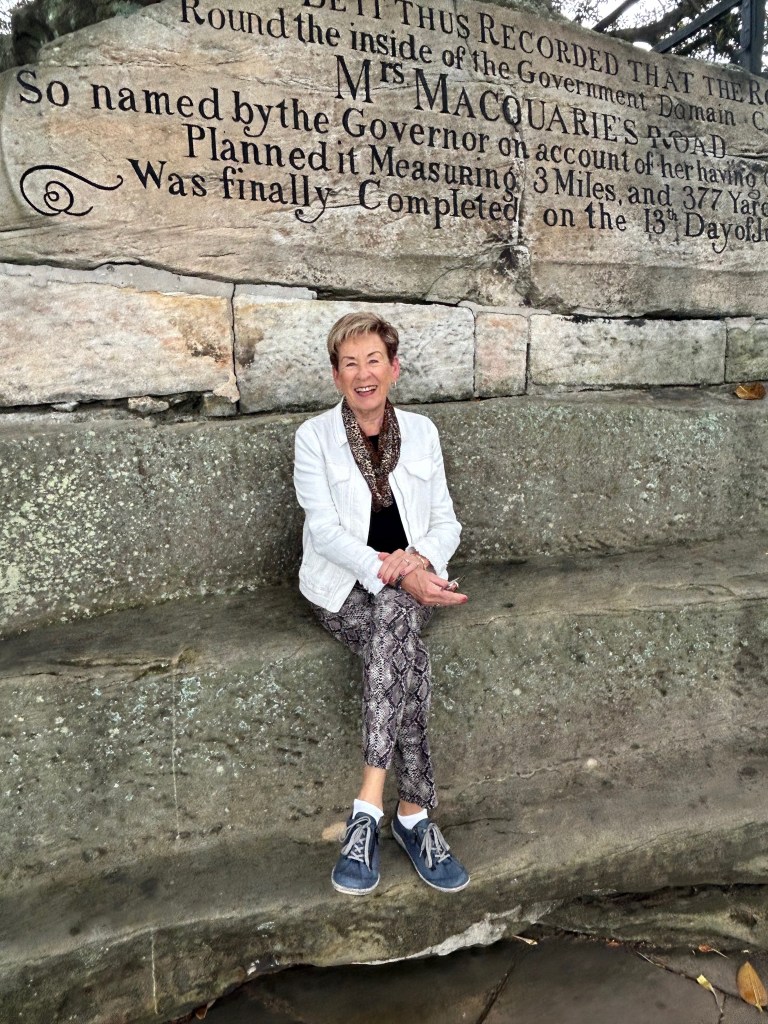
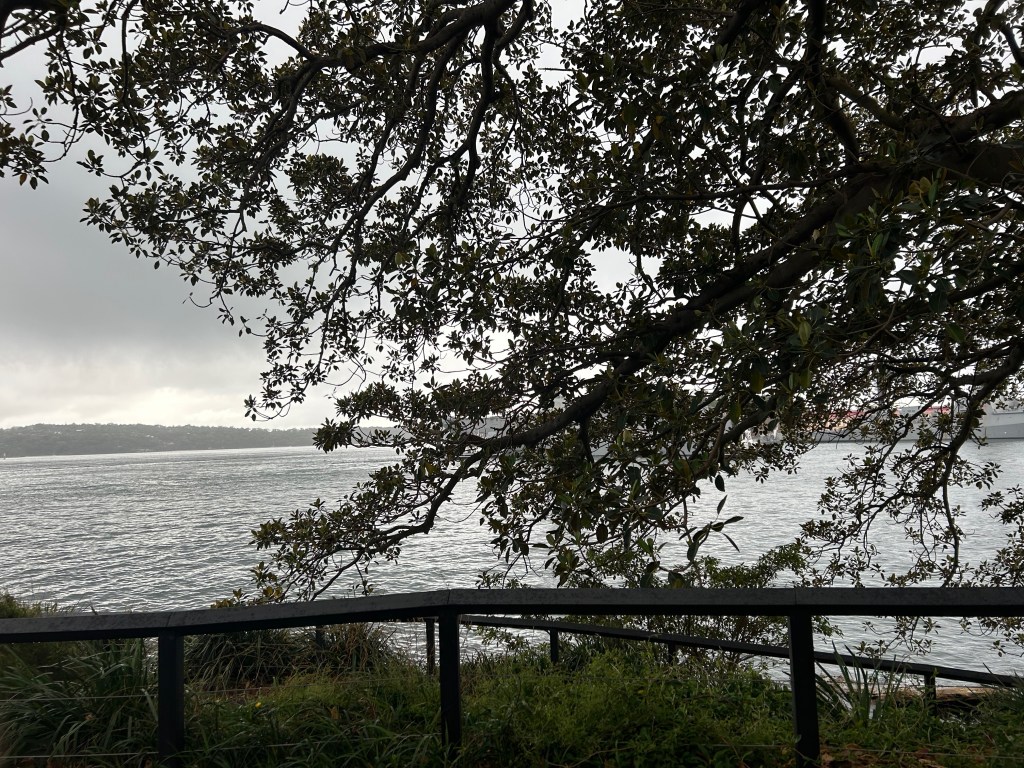
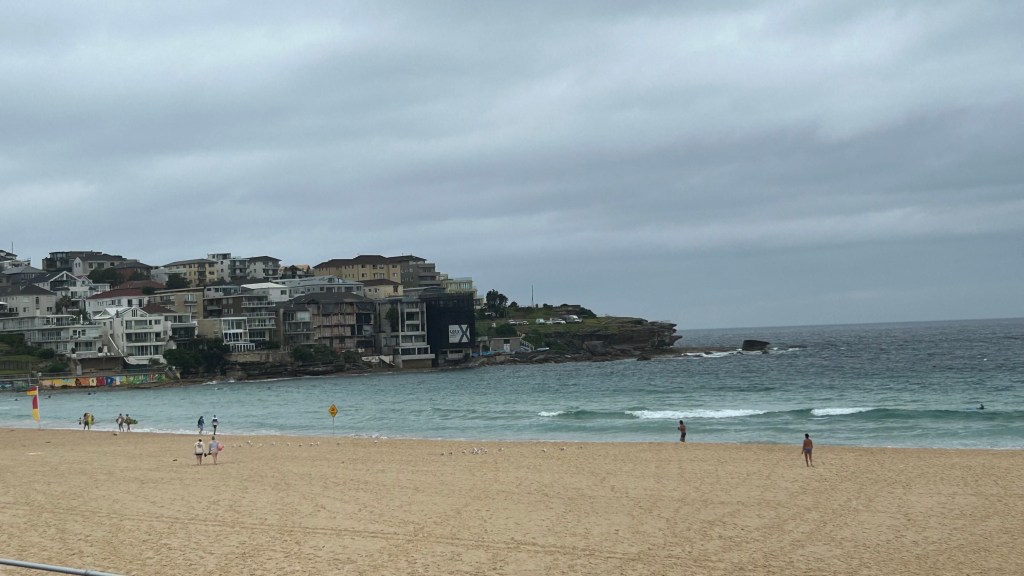
We travelled through elegant Paddington with its terrace houses before arriving at the Pacific Ocean. We saw the superb coast cliff walk around Tamarama and Bronte. Travel and went on to famous Bondi Beach and the beachfront promenade. Despite the cool, cloudy day, we saw many surfers.
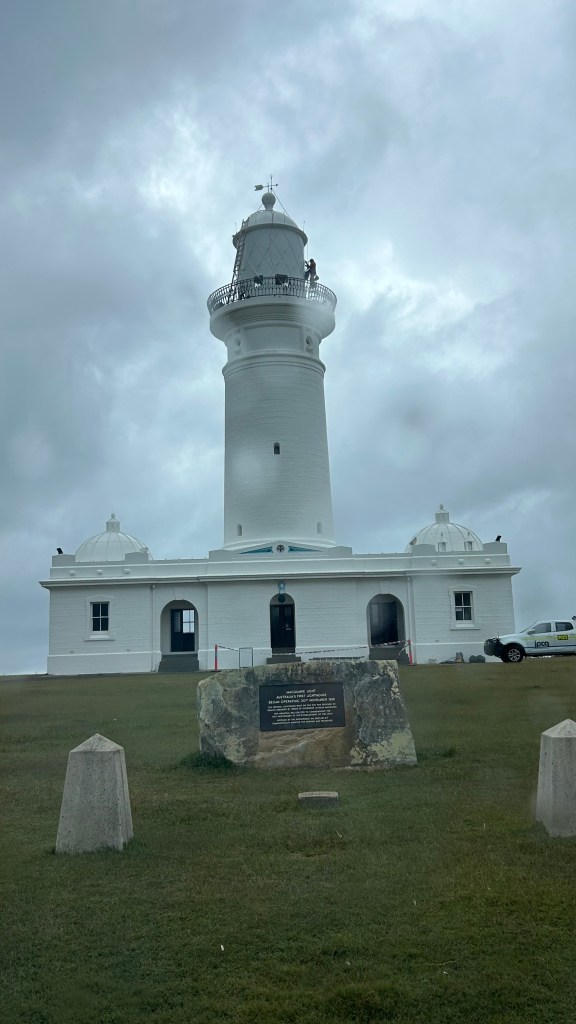
We saw Australia’s first lighthouse which began operating November 30, 1818.and Sydney’s best panoramic view at Dover Heights.
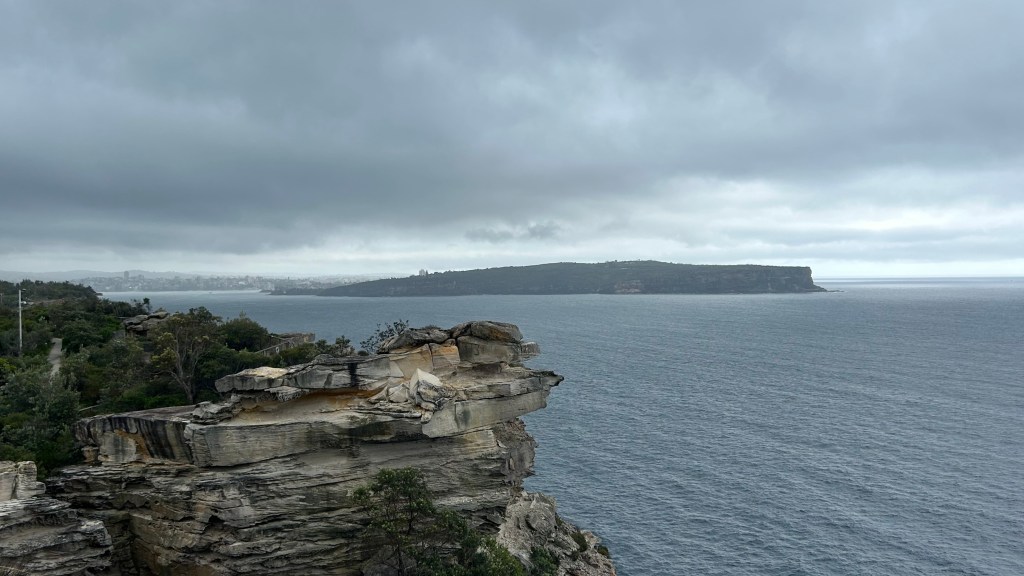
We went as far as the lookout at the entrance to Sydney Harbour – where we sailed on Monday on the sailboat.
After the morning tour we walked the Rocks area and had lunch at The Rocks Cafe. We then walked to The Sydney Opera House for our 2:00 tour of the opera house. The story of the building is one of fabulous creativity as well as sadness. The design came out of a competition and was won by a Danish architect. On 9 April 1956, Danish architect Jørn Utzon AC celebrated his 38th birthday and set to work in his modest office in Hellenbaek, north of Copenhagen, on his designs for the competition. He sent his 12 drawings to Sydney just before the competition closed in December. In contrast to many current designs, Utzon’s design was more sculptural and embraced expressionism. Among the competition entries, it was singular in making full use of Bennelong Point’s harbour-side setting, which would allow the building to be viewed from every angle.
Unfortunately, disagreement caused the local leaders to fire the architect and hired others to take over. The architect returned to Denmark and never saw it finished but it was awarded a World Heritage site and celebrated the work of the architect.
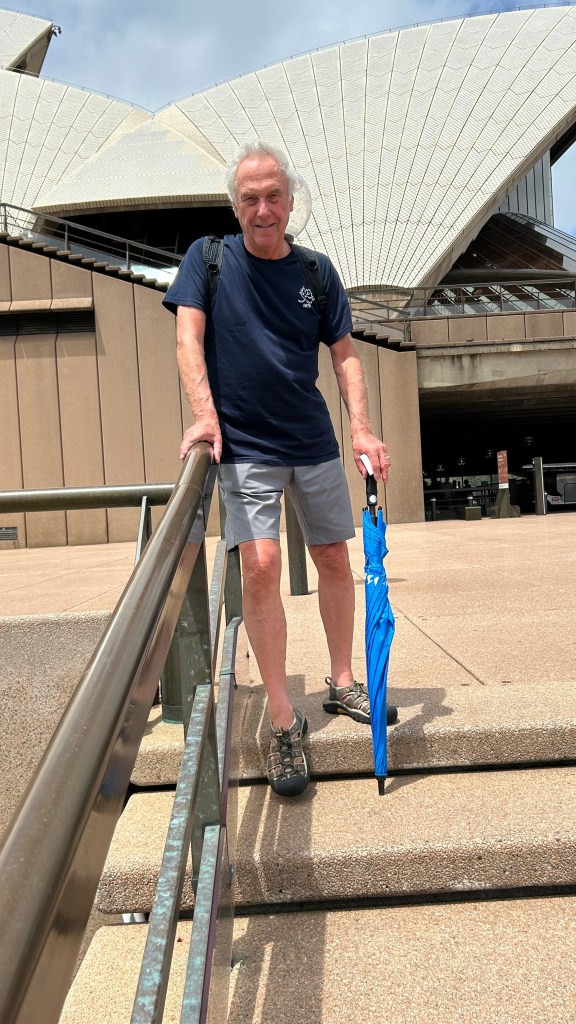
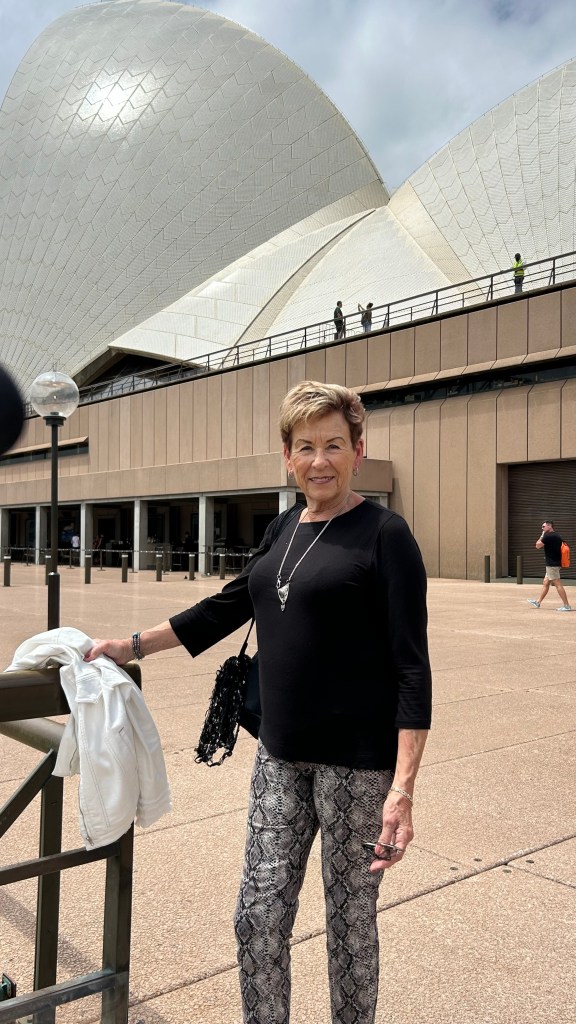
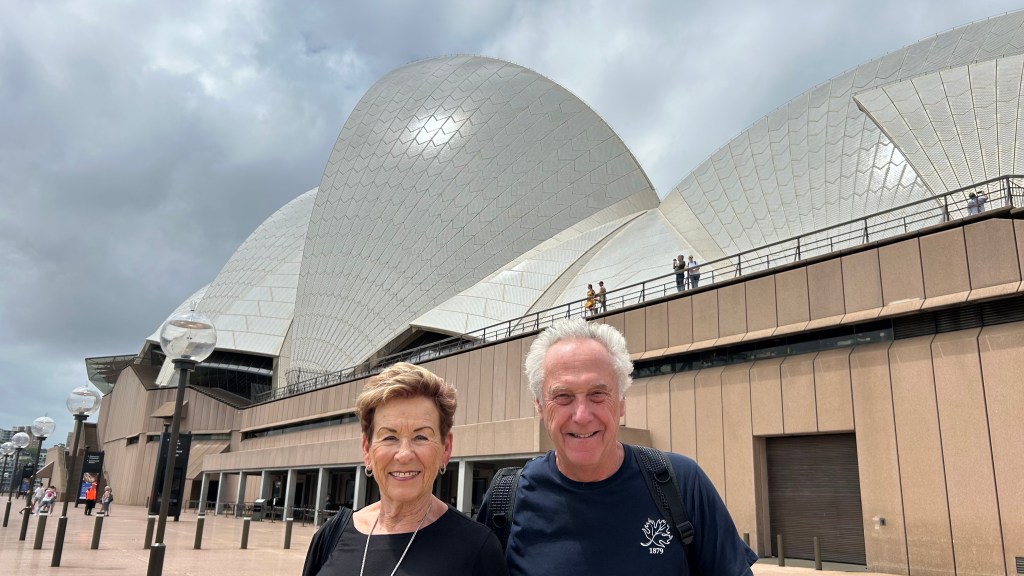
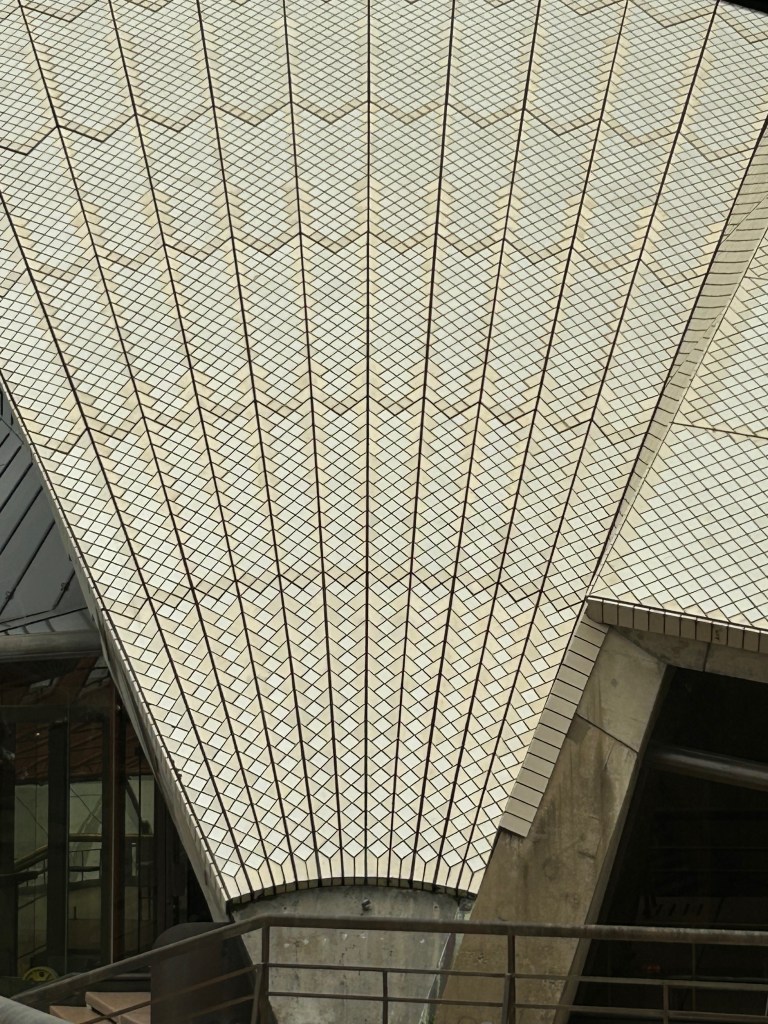
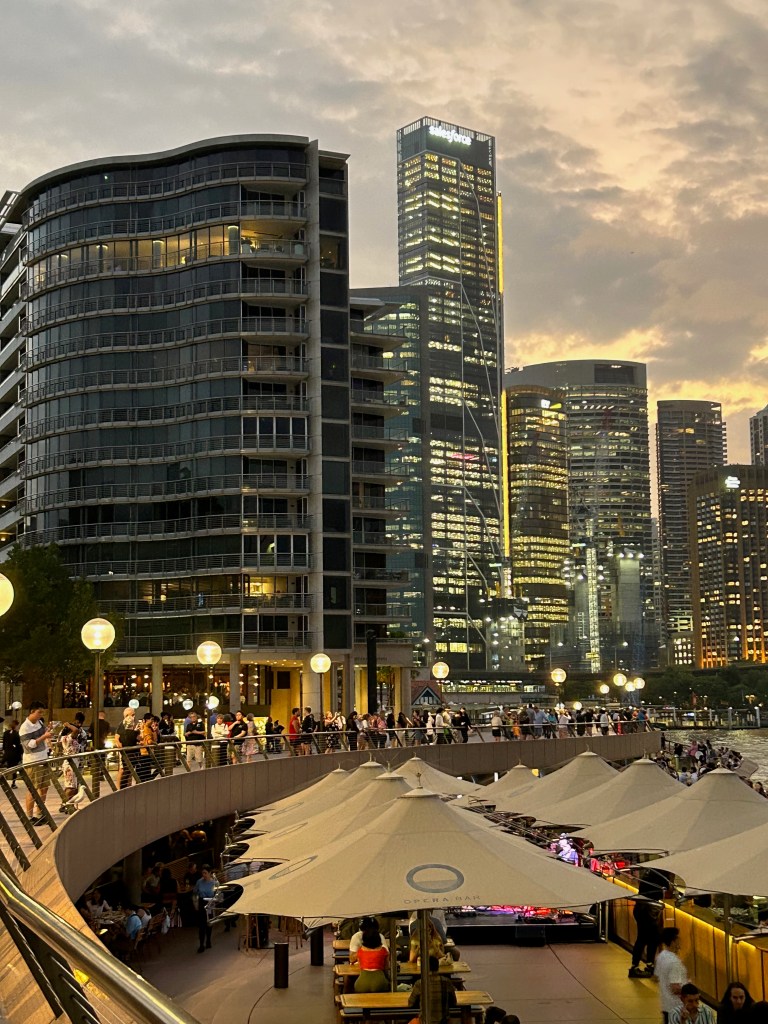
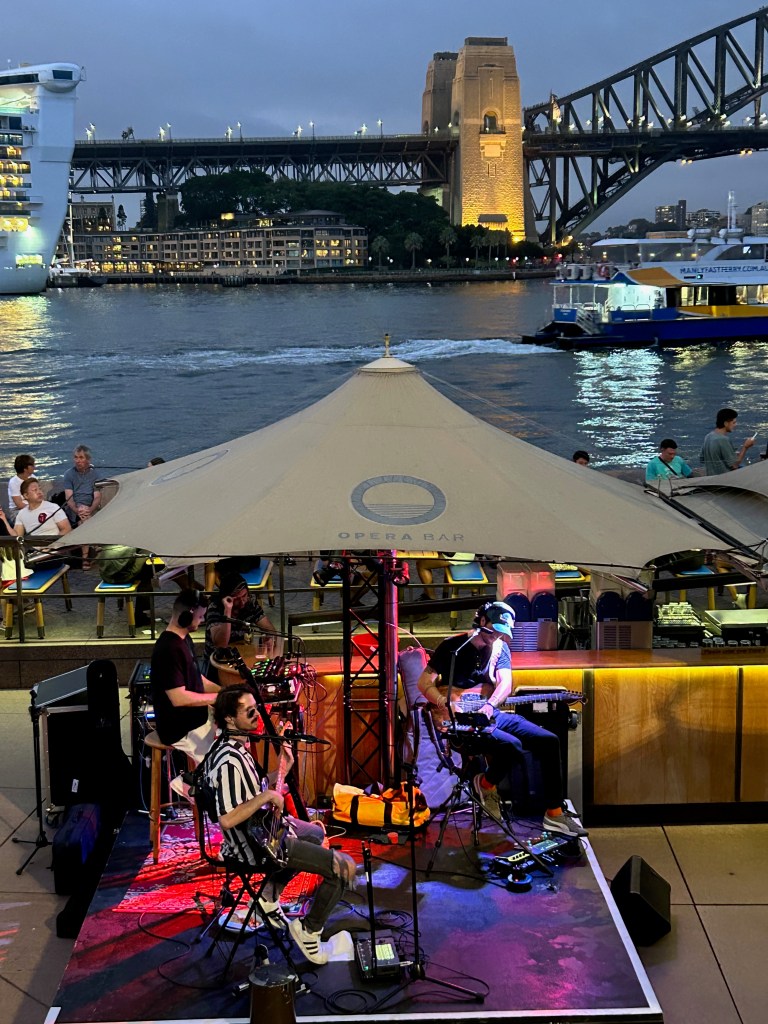
After a light dinner in the opera cafe, that evening we attended a cabaret, Gadsby, that was a combination of song, lively dance, high wire acts and strip-tease. The show was full of energy, activity and fun!
Wednesday 31st January, 2024 – Depart Sydney
At 10:00 we were picked up to go to the airport, both of us feeling under the weather, mine just starting. We arrived at 1:35 and were taken to the Intercontinental.
Arrive Melbourne
Melbourne
Melbourne is a beautiful city with a combination of old and new but with many very new buildings. It is known for wonderful restaurants but we both had a flu while we were there and missed those opportunities. According to our city tour guide, this is a crazed sports city, evident in the boisterous crowds at an Aussie Rules Football match as well as the plethora of sports centres in the downtown of Melbourne.
Accommodation:
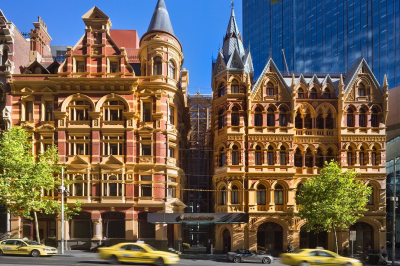
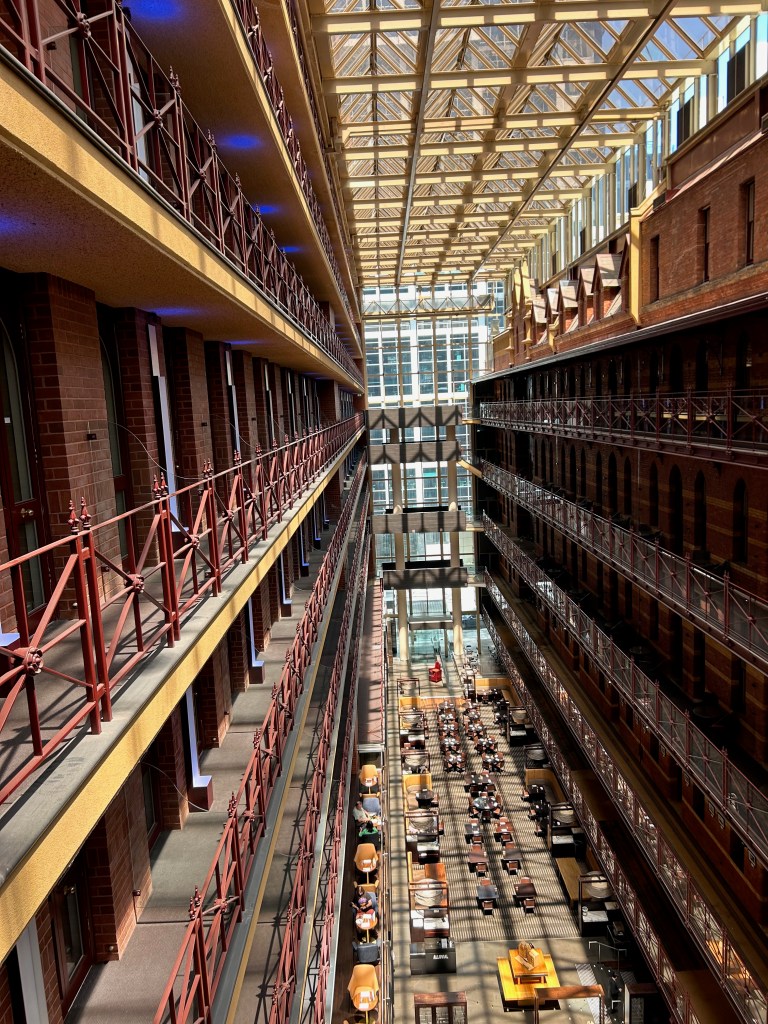
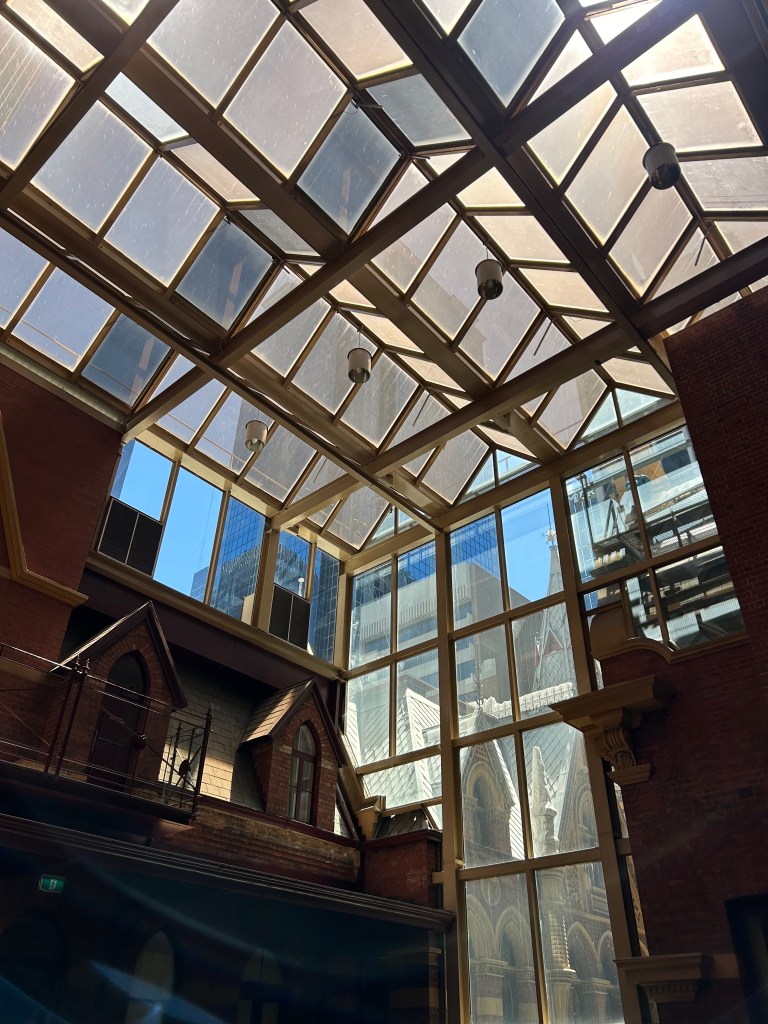
Intercontinental Melbourne the Rialto is a world class hotel located on the legendary Collins Street in the heart of the central business district, just steps away from the vibrant Southbank, the Yarra River and the ever changing Docklands. The architecture is interesting in that it has two hotel towers where they had maintained the original designs of the original buildings and made a restaurant and bar in the middle out of the former laneway. All rooms face the interior with the light from the street and roof windows.
We walked down to the river Yarra and had a drink and light meal at a cafe on the river. We continued to suffer from the cold/flu so we slept a lot.
Thursday 1st February, 2024 – (M1) Morning Melbourne City Tour

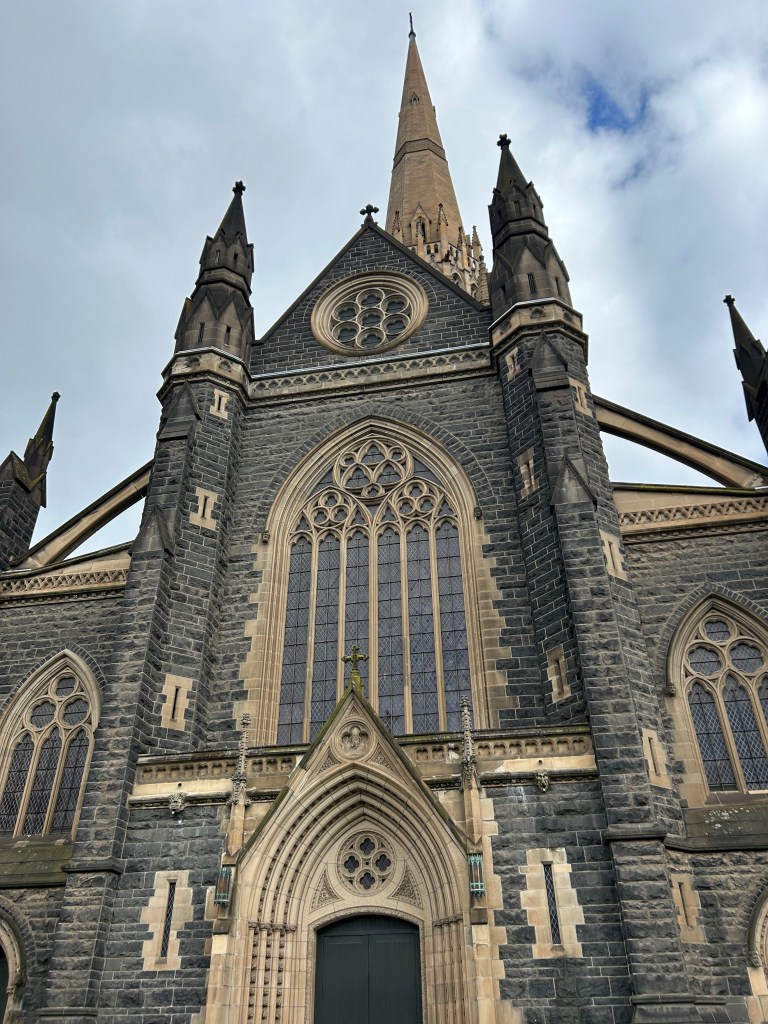
In our welcome to Melbourne, a city of contrasts, world famous sporting arenas and historic gardens, we enjoyed a half-day tour. We visited Federation Square, the MCG and our world-famous sports precinct, St Patrick’s Cathedral, Albert Park Lake (Formula 1) and over to St Kilda Beach. We strolled the Botanical Gardens but the conservatory was closed for changes in plants in the gardens and visited St Patrick’s Cathedral.
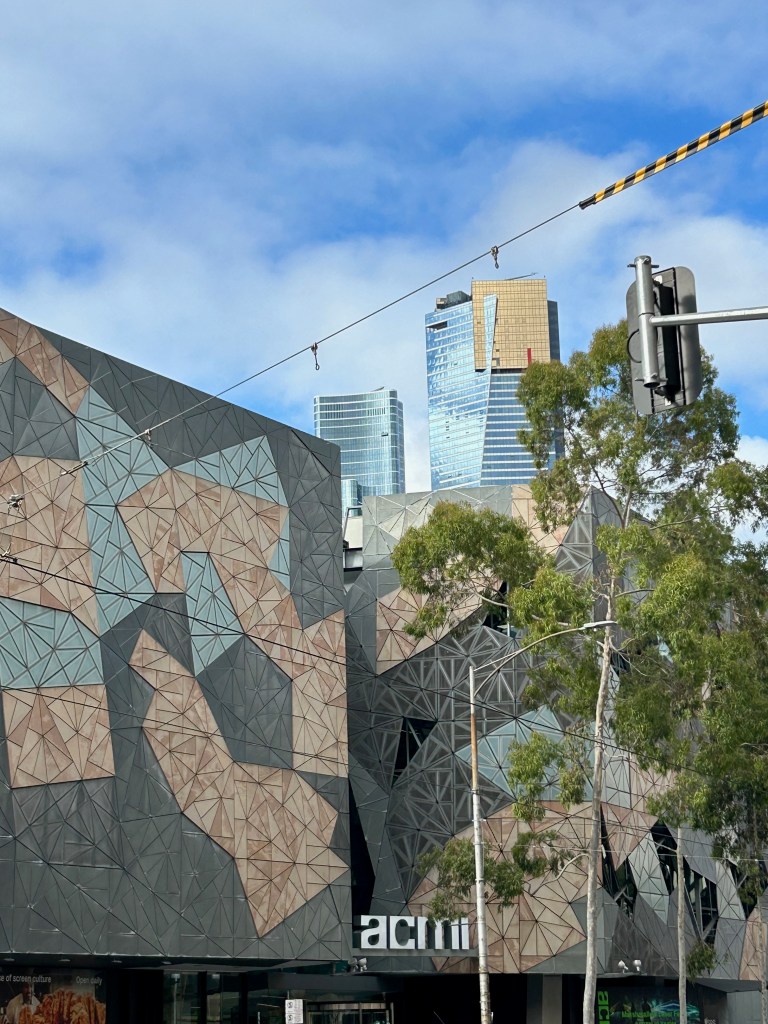
We stopped at Federation Square, viewed the graffiti street and heard about the buildings in the area.
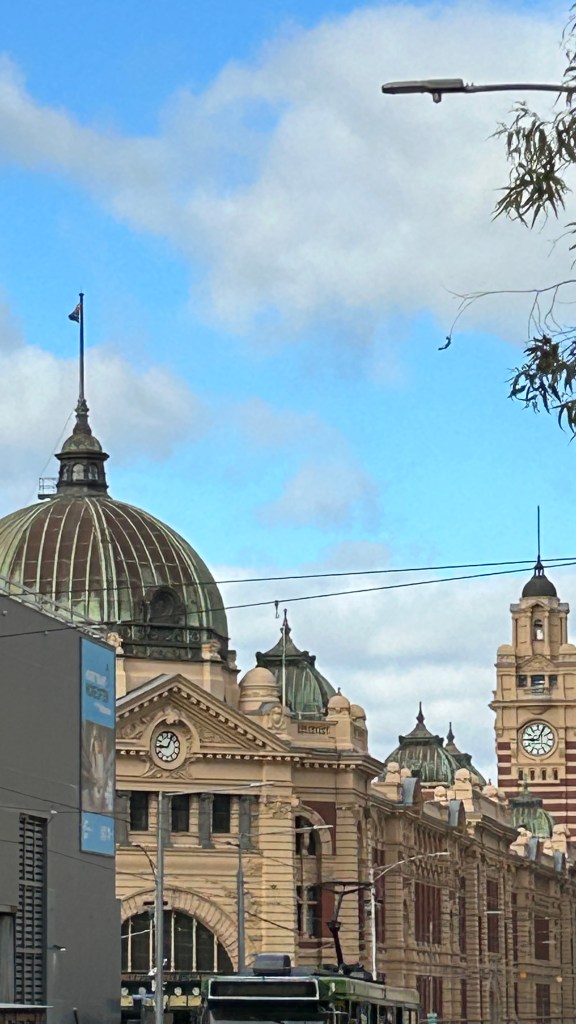
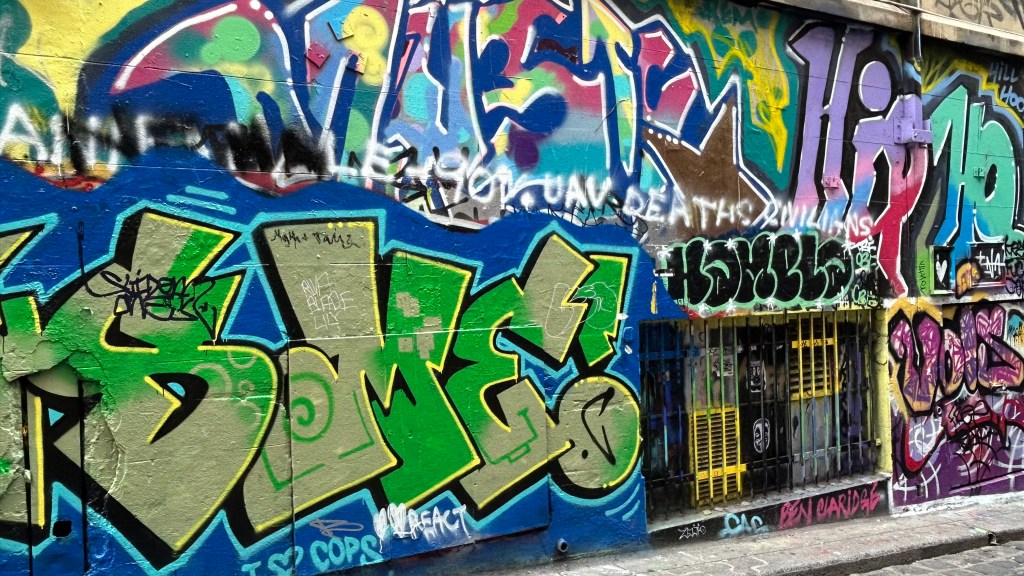
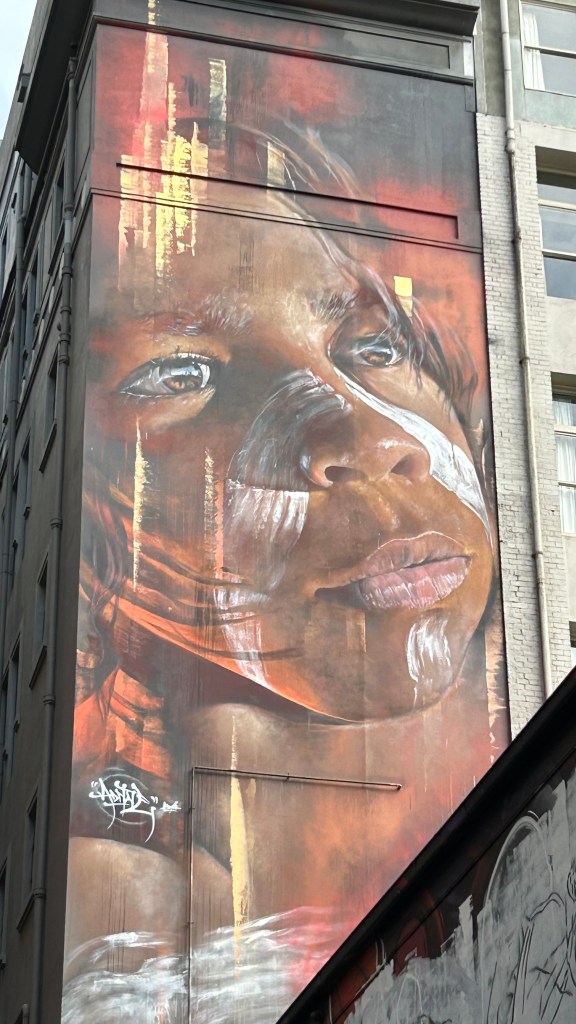
We visited world famous Albert Park, home of the Formula One, Australian Grand Prix and drove on some of the route as well as the inner-city sports precinct, home to the famous MCG and Melbourne Park where the Australian Tennis Open takes place – we saw some of it when we were in Sydney and we watched the final in which the Italian, Sinner, won.
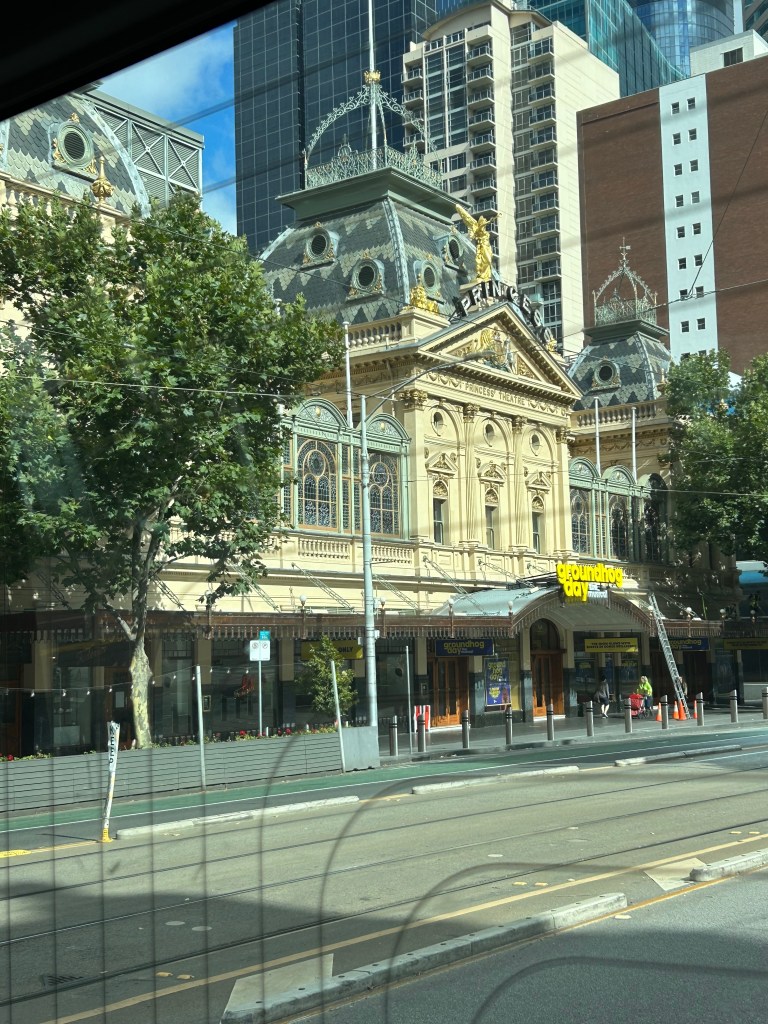
We drove past many famous sites such as the Melbourne Princess Theatre with its resident ghost.The story goes that on the opening night production of Faust at the Princess Theatre on the third of March 1888, Federici was playing the role of Mephistopheles. The play finishes with Mephistopheles and Faust descending into hell through a trapdoor in the stage. As Federici went through the trapdoor the audience is reported to have noticed that he was slumped over slightly. He had actually suffered a heart attack and died at that exact moment.
The rest of the cast had no idea and went back out onstage for the curtain call to take their bows as usual. It wasn’t until after they had left the stage that they learned that Fred had passed on. The spooky thing was that everyone at the performance, including the cast, swore he had actually been there onstage for the curtain call, taking his bows with the rest of the cast.
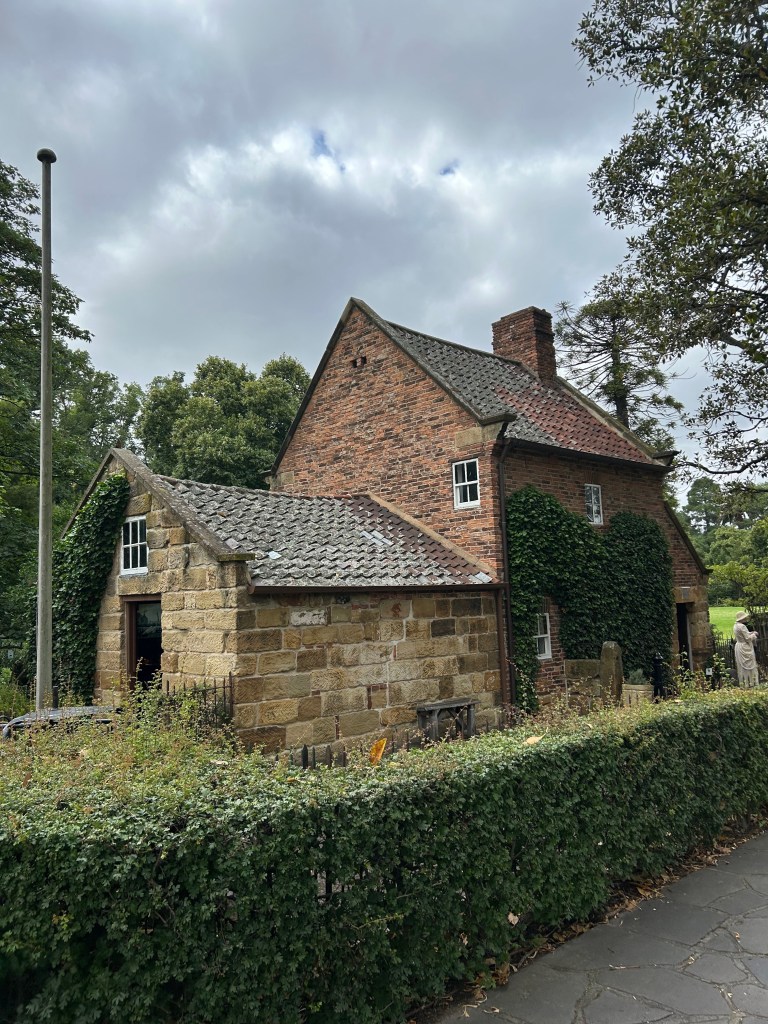
Originally located in Yorkshire, England, and built in 1755 by the parents of Captain James Cook, Cooks’ Cottage was brought to Melbourne by Sir Russell Grimwade in 1934.
Navigator and explorer Captain James Cook never lived in the cottage – he’d been away from home for almost 10 years when his father built it – but this connection to the Cook family was enough to prompt Grimwade to transport the cottage to the other side of the world. Astonishingly, each brick was individually numbered, packed into barrels and then shipped to Australia, along with cuttings of the original ivy coverings.
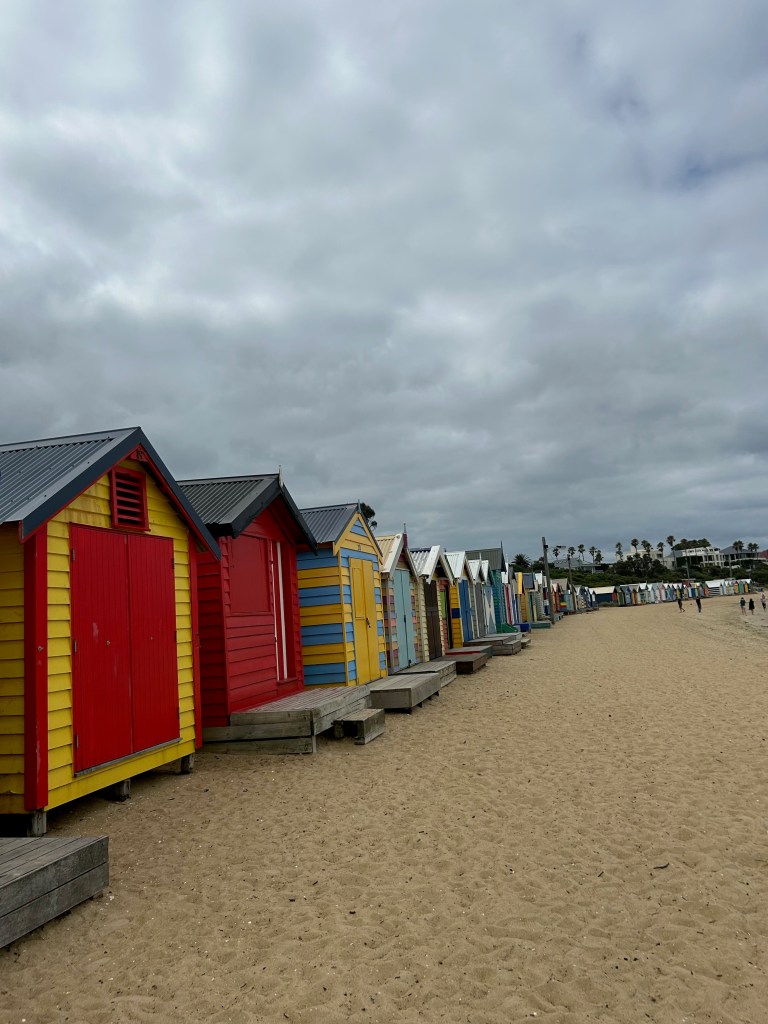
The final stop was at the Bathing Boxes. These boxes are owned by families that wish to leave their beach chairs, children’s toys and other paraphernalia there for easy access on their beach days. These boxes can be purchased for Au $300,000. These are the most popular photos taken in Melbourne.

Friday 2nd February, 2024 – Phillip Island Penguin and Moonlit Sanctuary Small Group Tour
We drove south-east from Melbourne to reach Moonlit Sanctuary Conservation Park where we met endangered species, kangaroos, wallabies and koalas plus an array of colourful birds and reptiles. That’s as far as we got as we were both feeling ill: we called an Uber and returned to Melbourne. So sad to miss the penguins!

Saturday 3rd February, 2024 – Land Arrangements
Name: Spirit of Melbourne dinner cruise 7.30pm
I was unable to eat anything! Bill went for the four course menu and enjoyed the lights of Melbourne while cruising down the Yarra River by night.
Sunday 4th February, 2024 – Land Arrangements
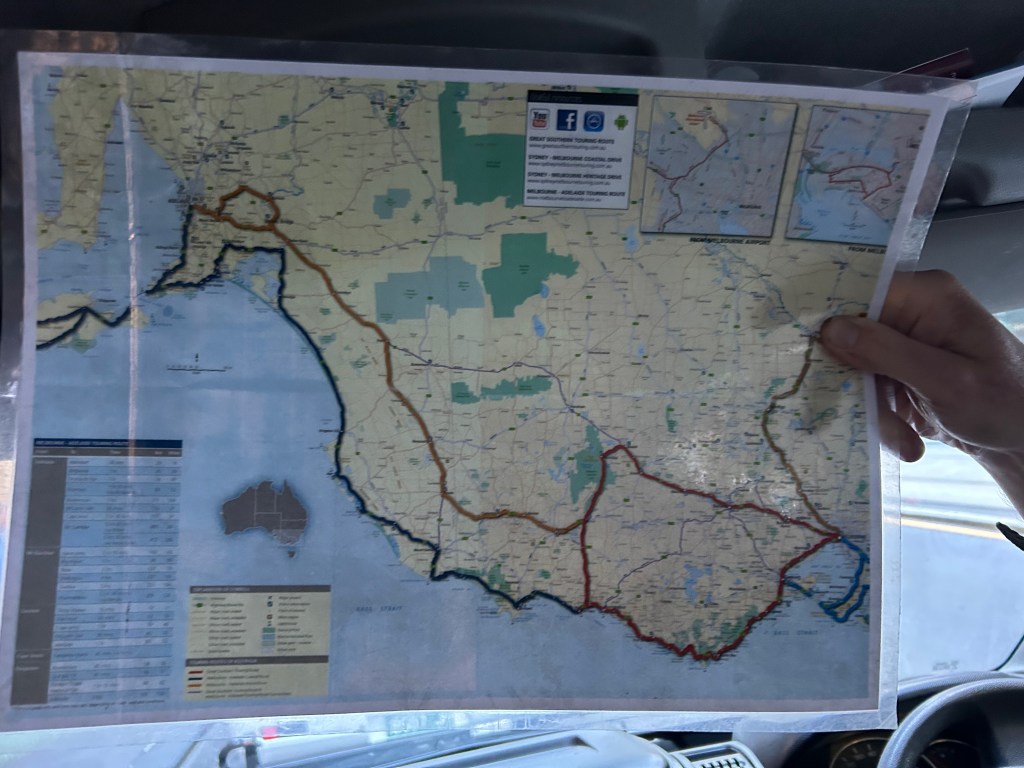
Name: 3 day Melbourne to Adelaide
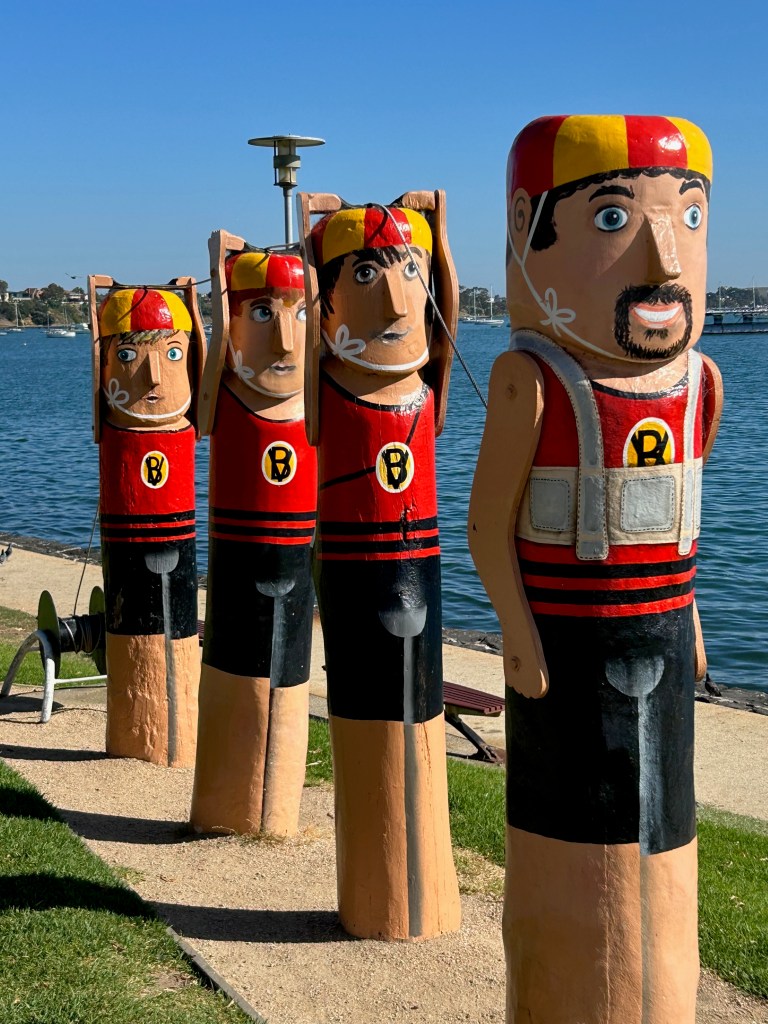
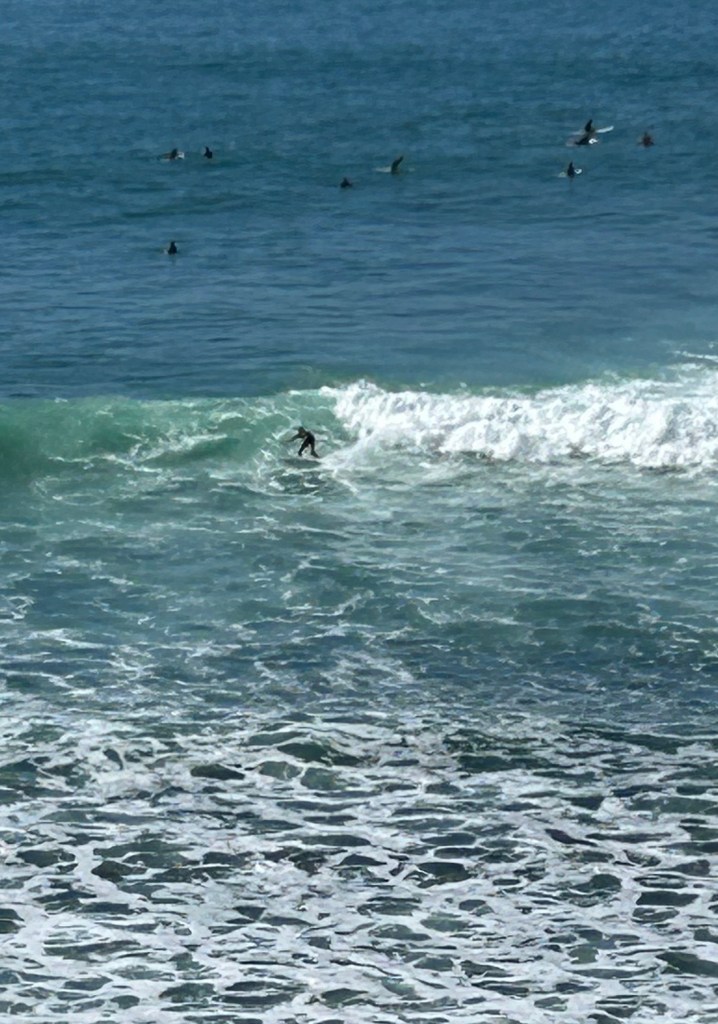
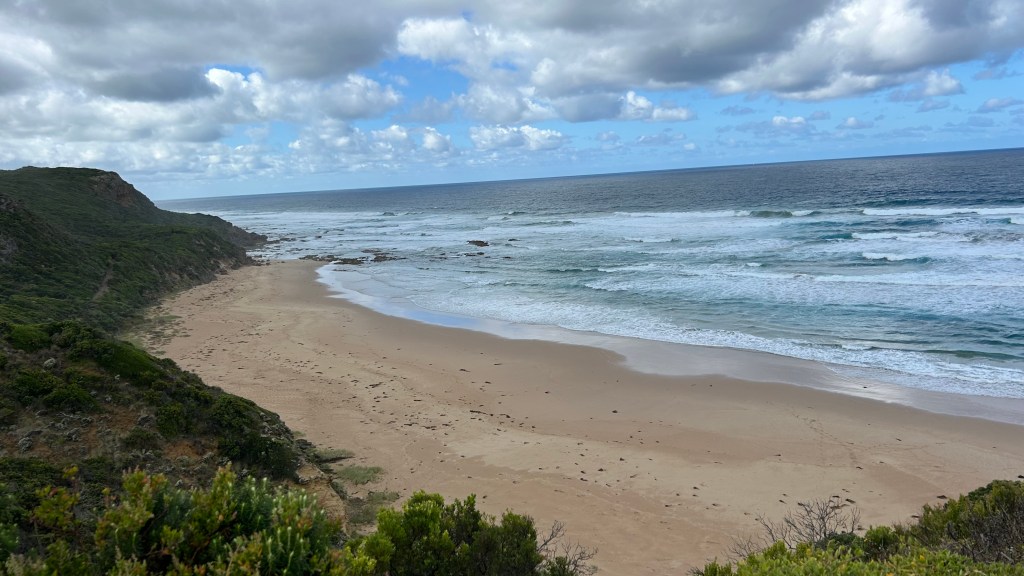
We were picked up at the hotel in a small coach with just Pierre and us – what a gift! We travelled through the vast volcanic plains on route to Geelong where we had time to stroll along the beautifully transformed waterfront. Our first stop along the coast was at Bells Beach, a famous surfing beach and a great place to enjoy morning tea.
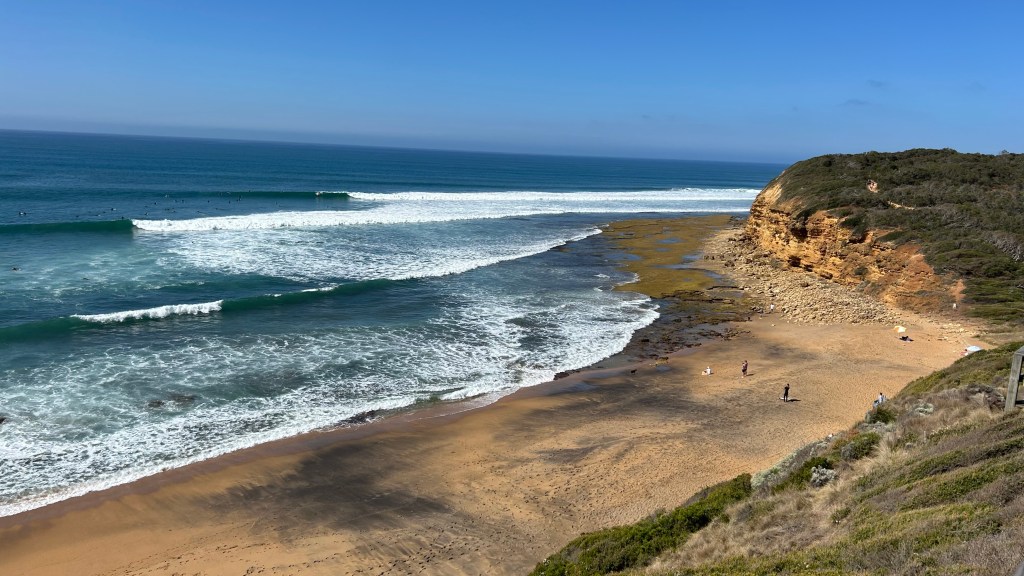
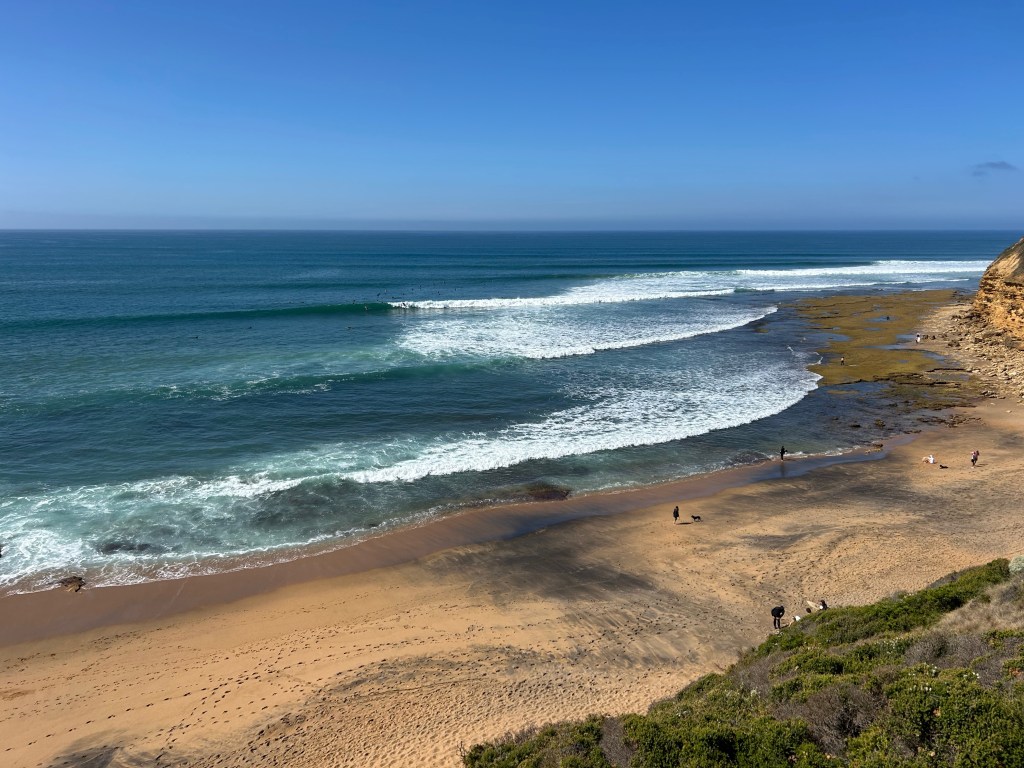
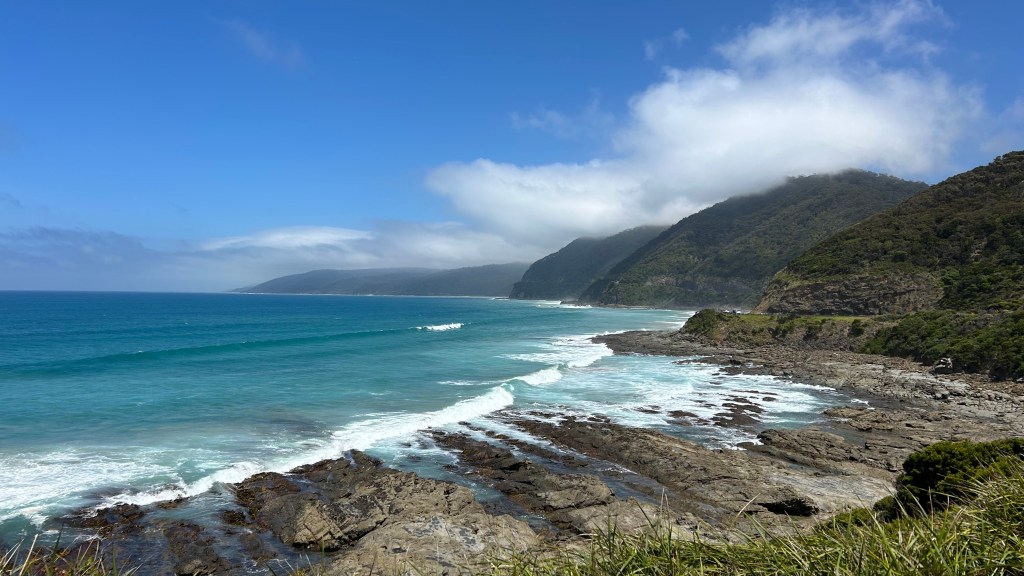
Our journey then began travelling the very scenic, cliff-hugging section of the Great Ocean Road. While winding our way along we stopped to view the Arch and hear about the intriguing story of this incredible memorial road, built by returning veterans. Lorne is the largest of the seaside resorts and is a perfect place for a lunch break. We stopped briefly here where Pierre and Bill had lunch and I rested as I was still suffering from upset stomach.
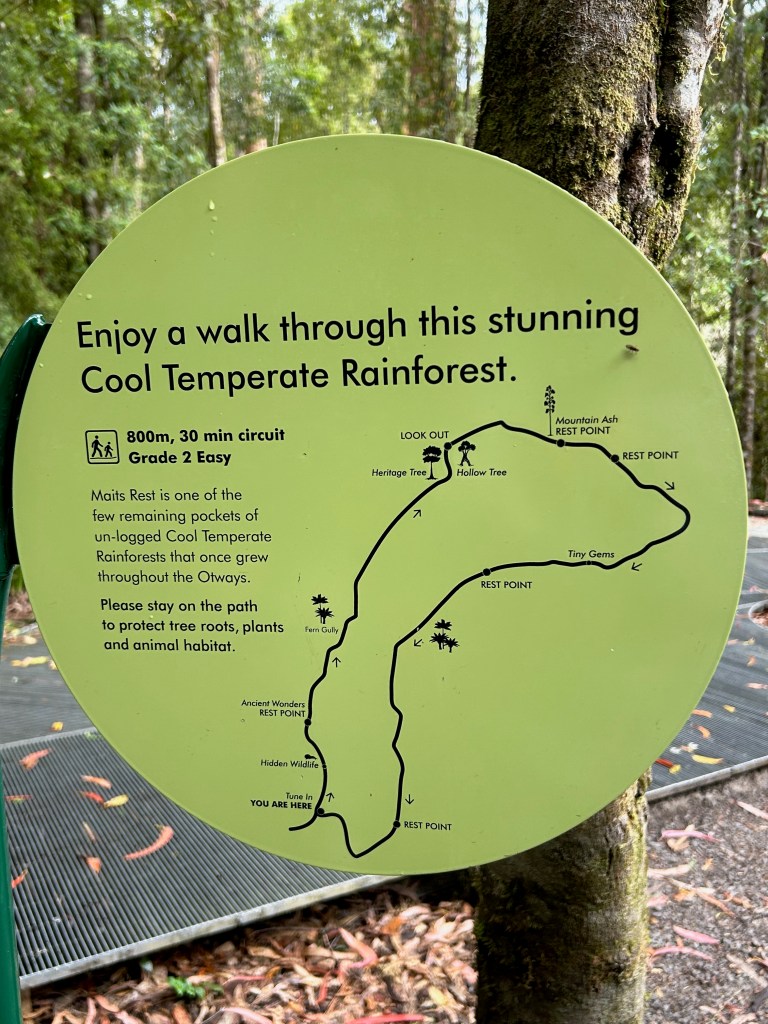
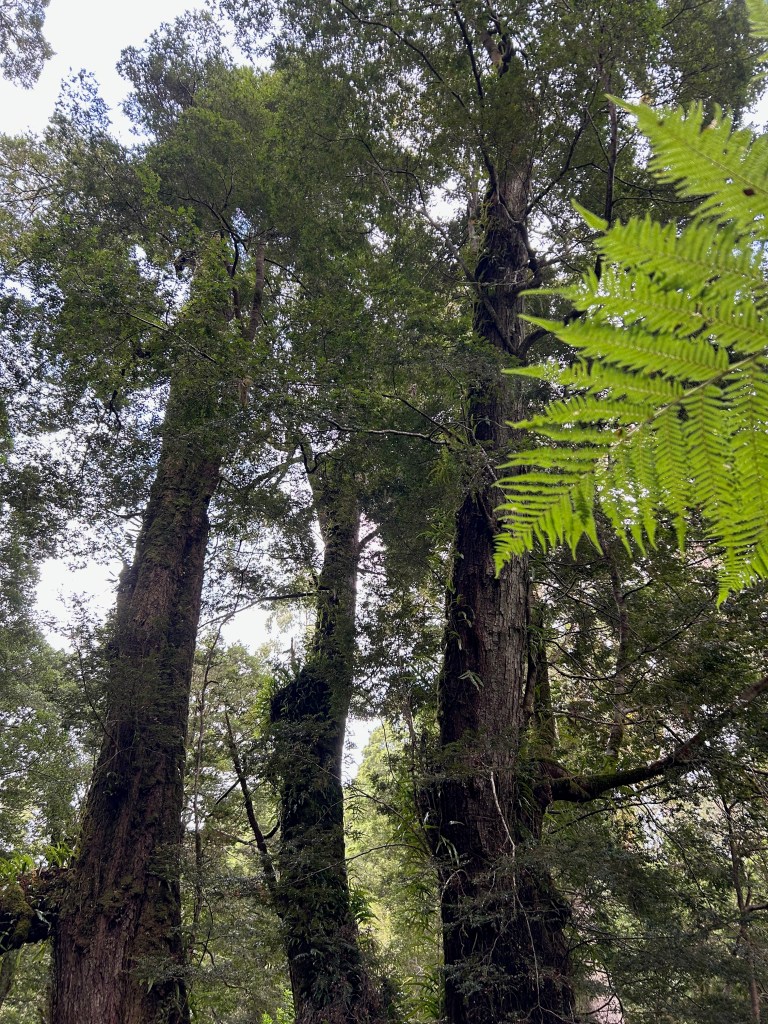
After lunch we cruise along the spectacular road, stopping at many scenic spots including Kennett River where we can see koalas and many colourful native birds in the wild. Travelling through Apollo Bay we go into the Great Otway National Park. We took a 1 km walk guided by Pierre through a cool temperate rainforest gully to see the world’s tallest flowering plants, prehistoric trees and ferns and unique features such as Yabbie Chimneys.
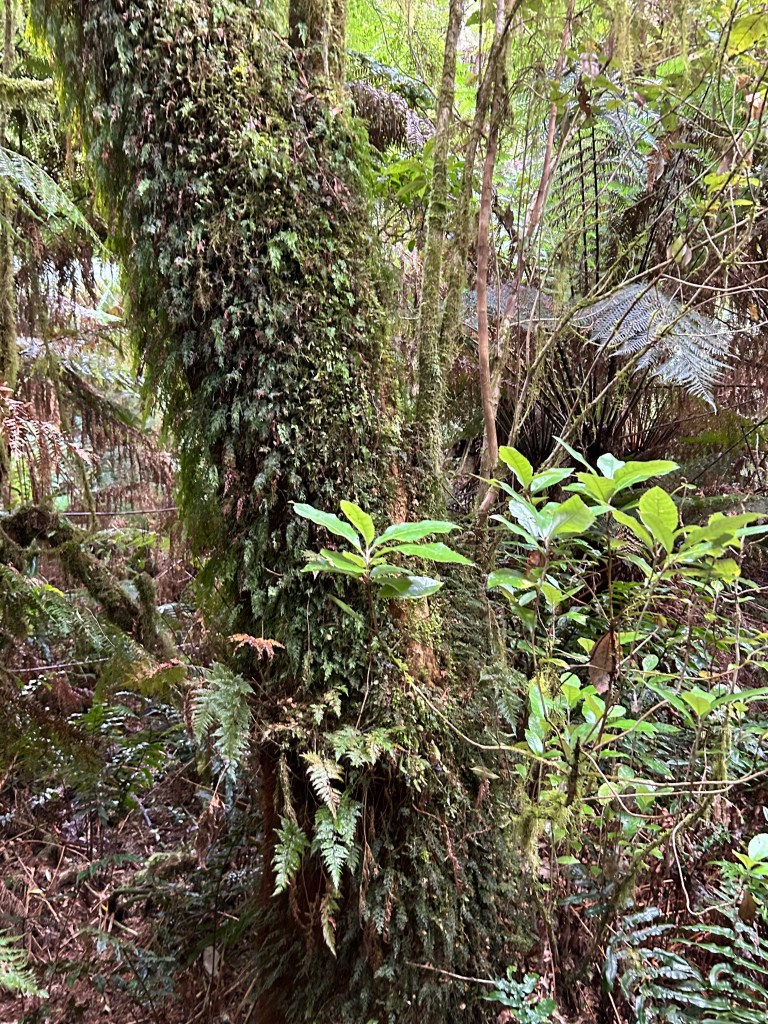
Ancient Wonders: Pierre points out that we are surrounded by ancient plants. Their relatives once grew over 100 million years ago when dinosaurs roamed this area. Australia was then part of the supercontinent Gondwana, before it slowly split into the continents we know today.
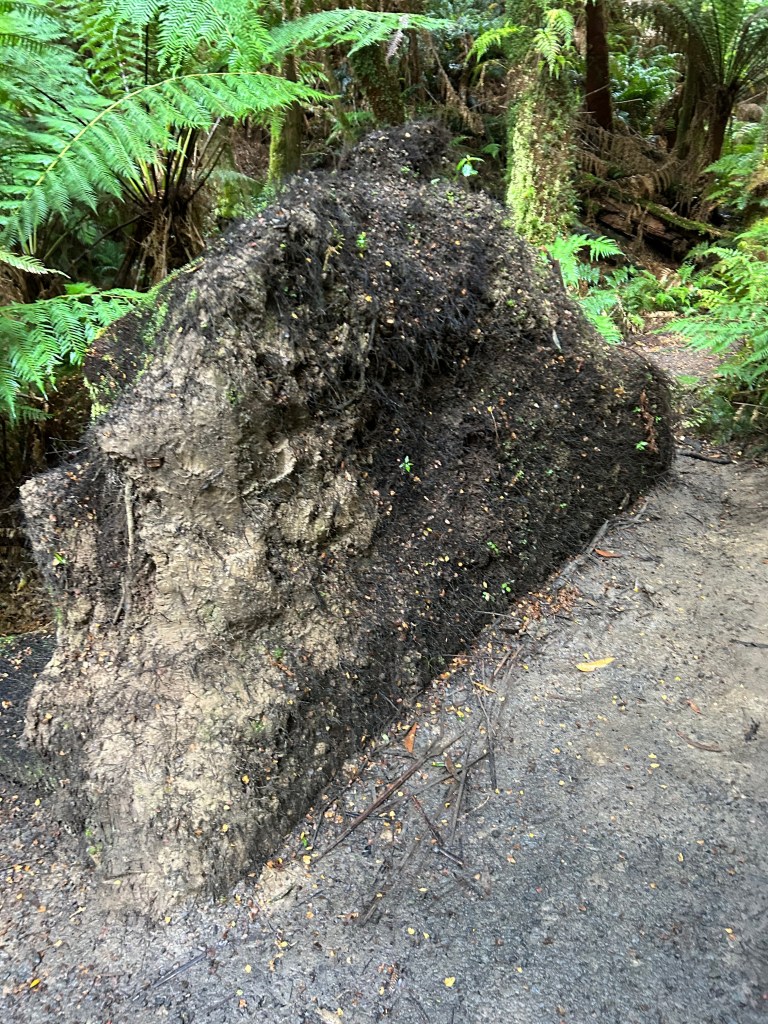
This Myrtle Beech tree is over 200 years old and made up of 2-3 trees which have grown together. It is so unusual that it is listed on the Register of Significant Trees with the National Trust of Australia.
We visit Apollo Bay before checking into Beacon Point Ocean View Villas. Our private self contained villa is set high on a hill overlooking the Southern Ocean. This amazing setting is a great place to relax and unwind for a couple of hours.
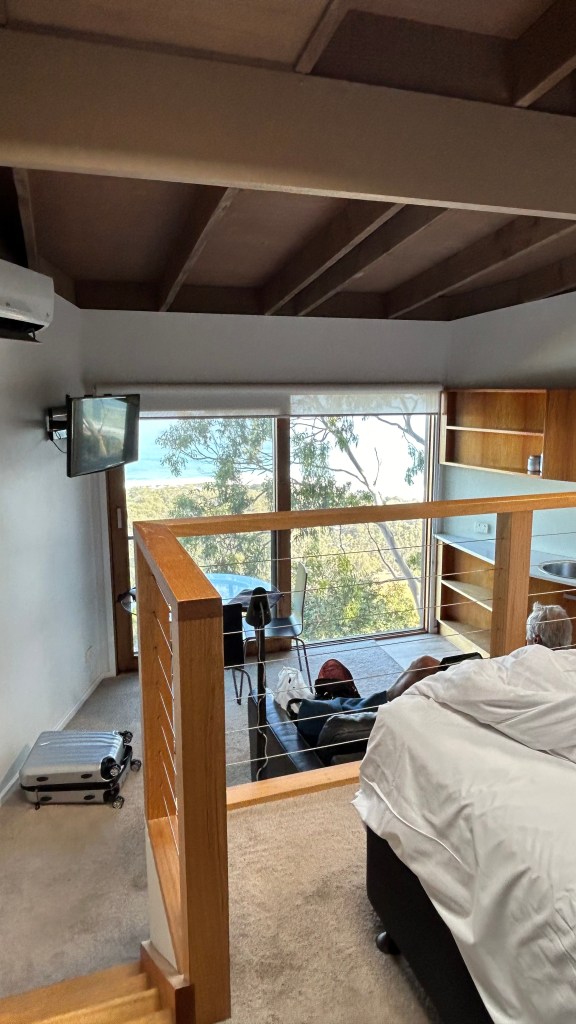
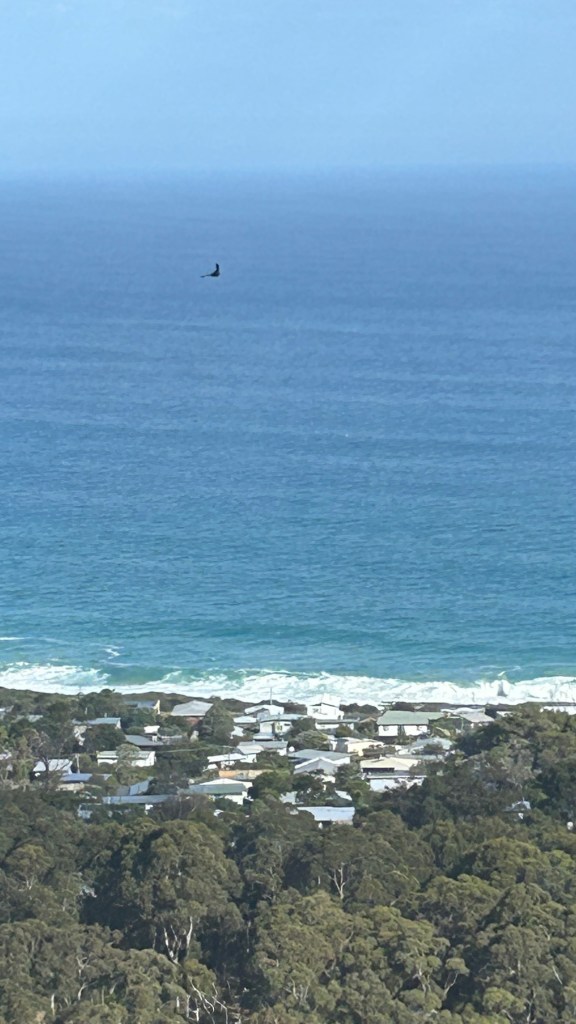
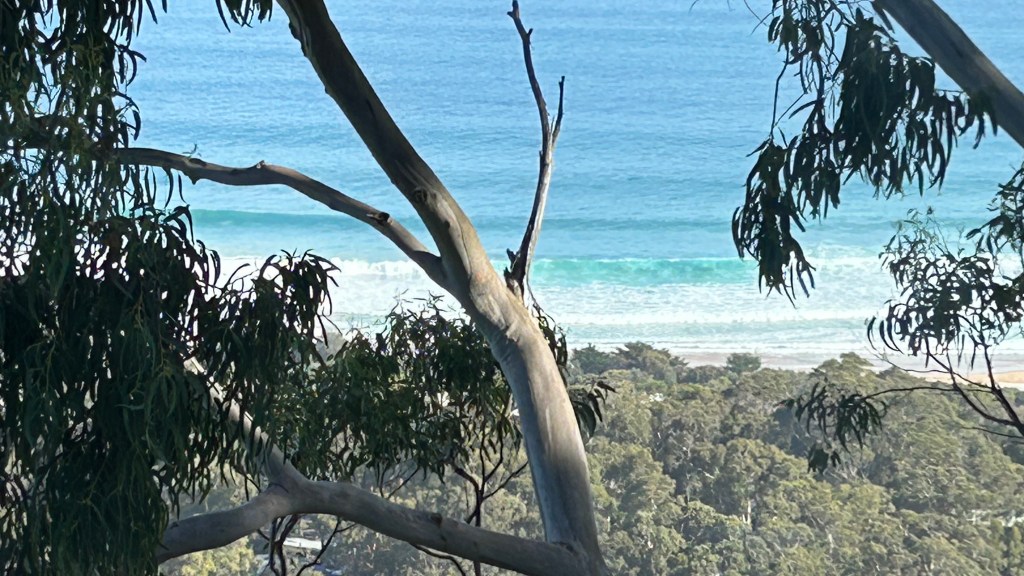
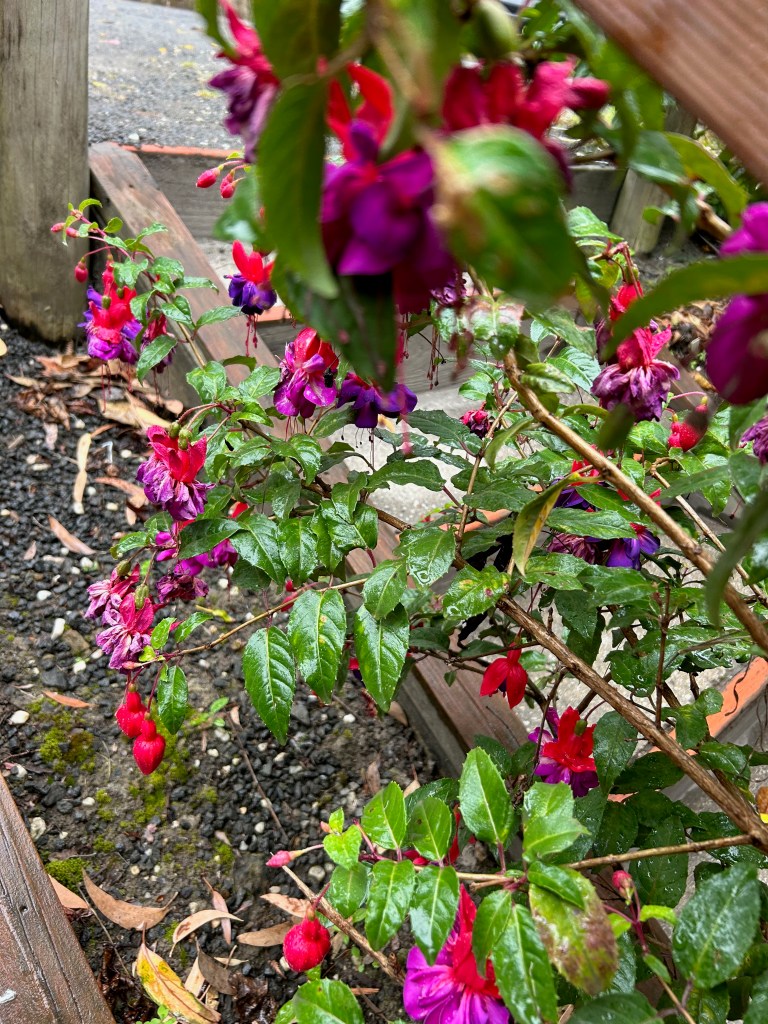
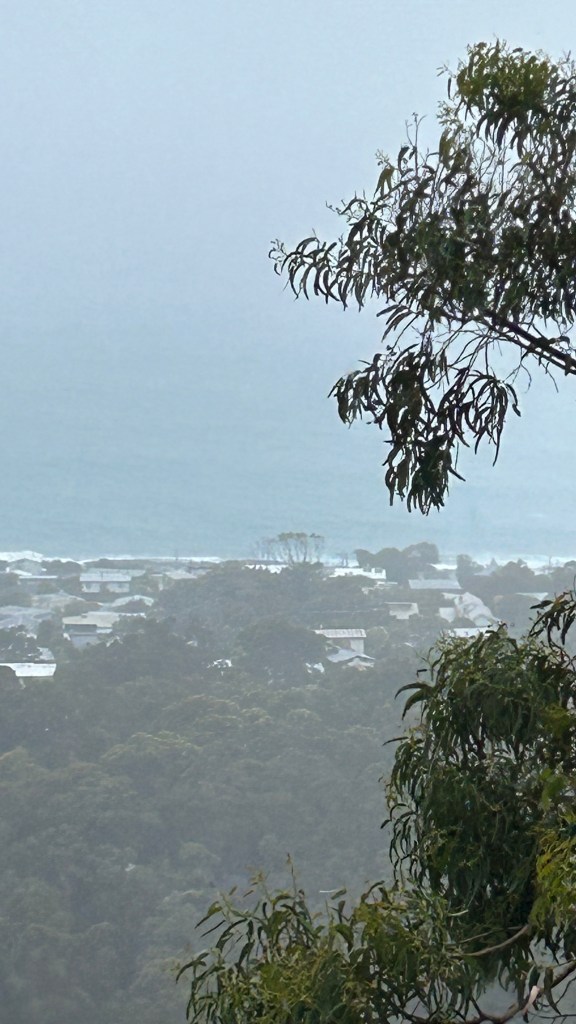
At night we dine at the award winning restaurant Chris’s at Beacon Point. This is regarded as the best restaurant in the region and has a fantastic menu that utilises great local produce. The next morning it was foggy and windy and the view was much different.
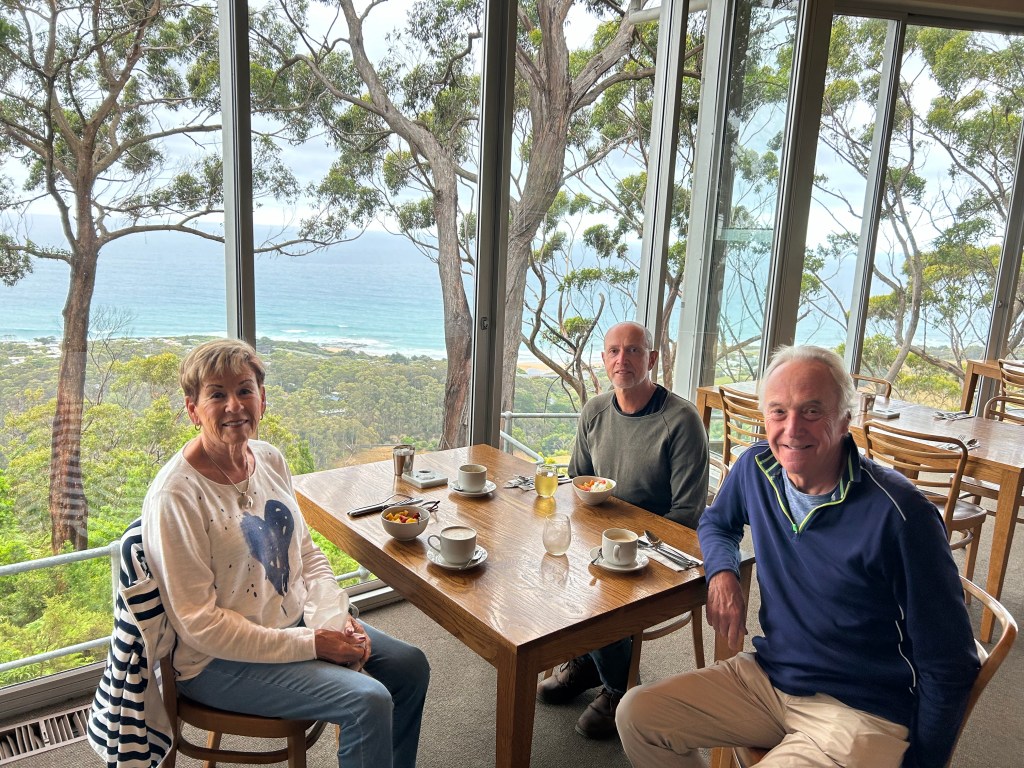
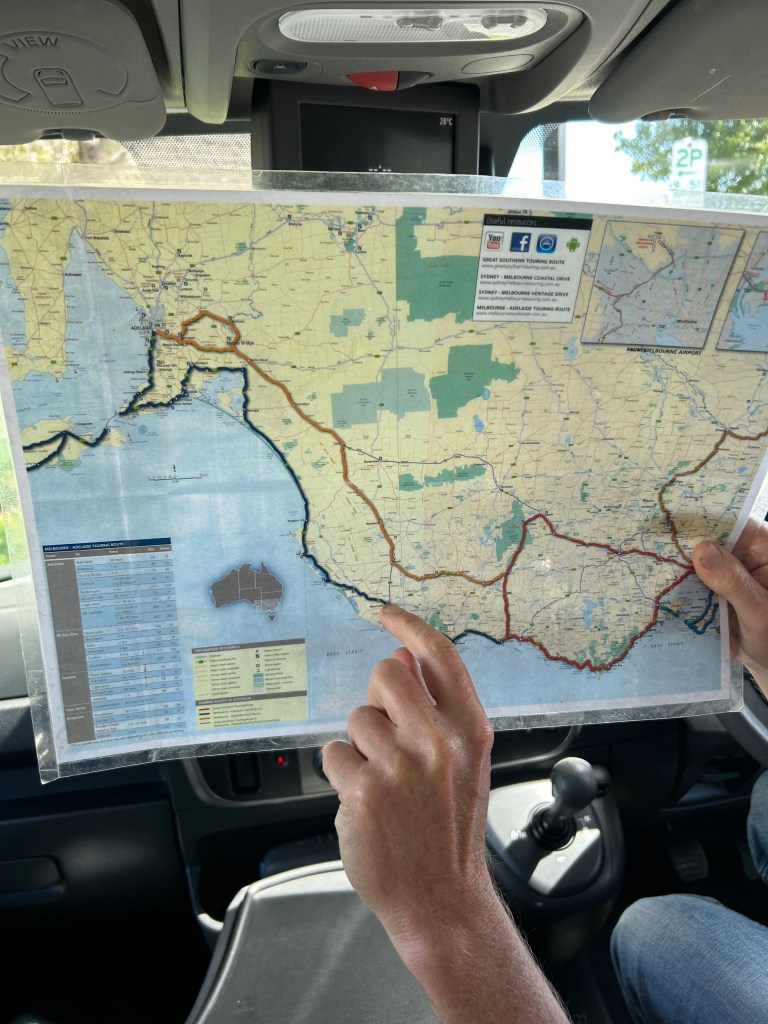
Our second day starts with breakfast at the restaurant and then the map of the day’s journey.
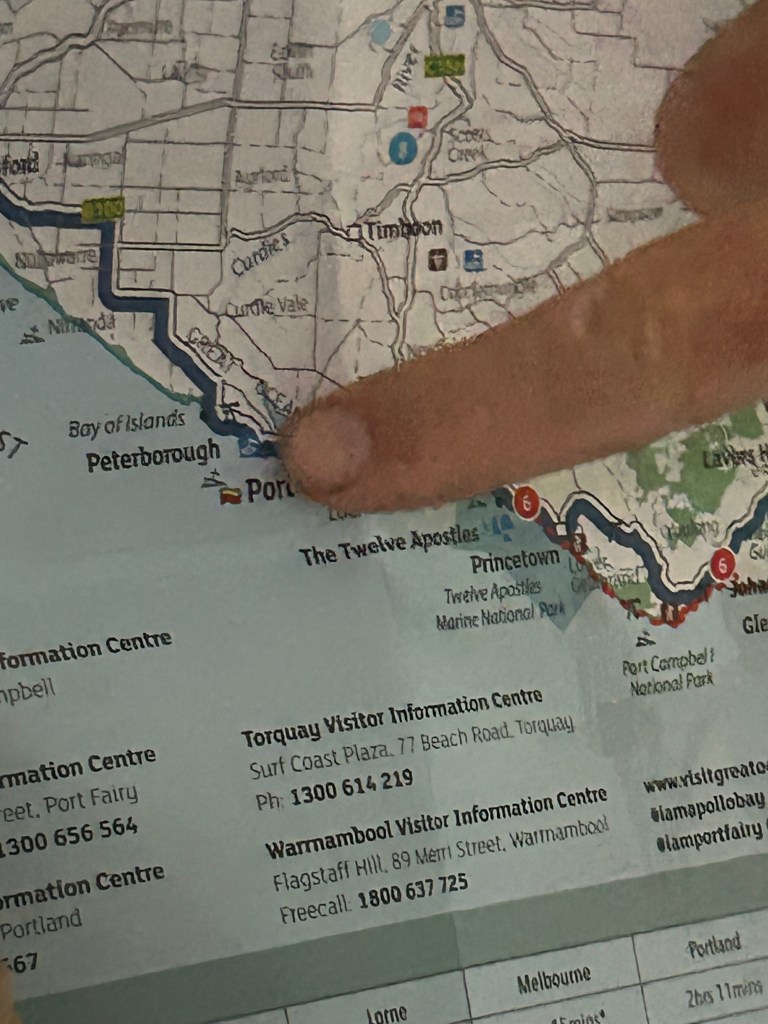
Our journey starts with us travelling through the Otway ranges and onto the Shipwreck Coast. Our first stop is at Castle Cove overlooking the Aire river valley. Pierre introduced us to the strong Aboriginal heritage of the region with many tribes living prosperously around the coastline for thousands of years. In the same area millions of years ago when Australia was part of the great southern land, Gondwana, dinosaurs were roaming the land.
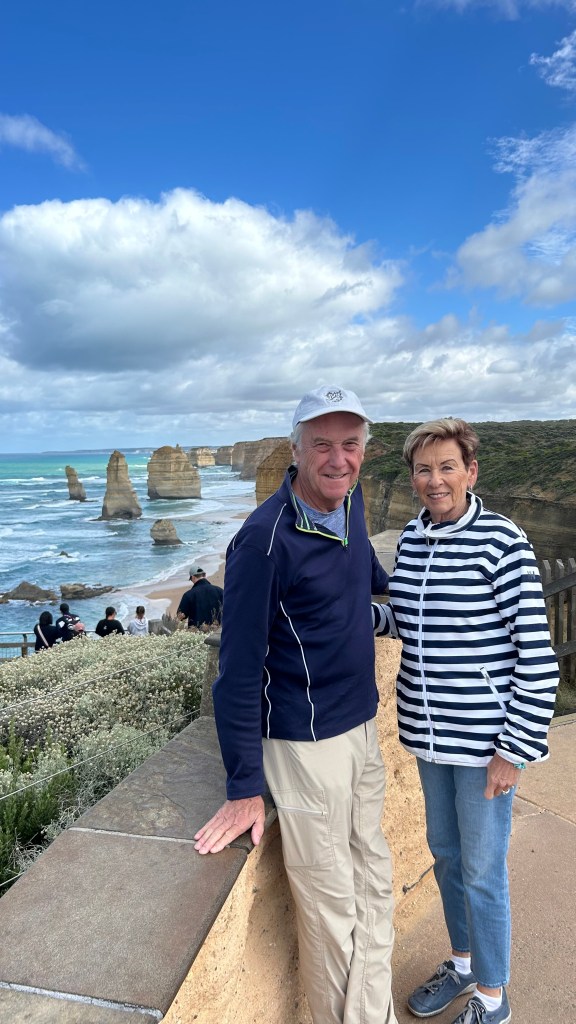
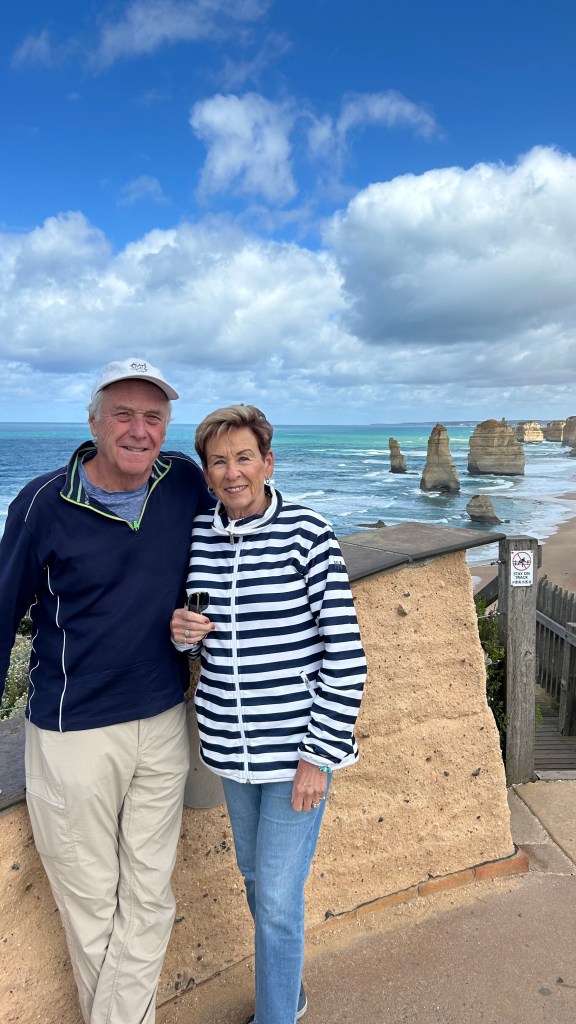
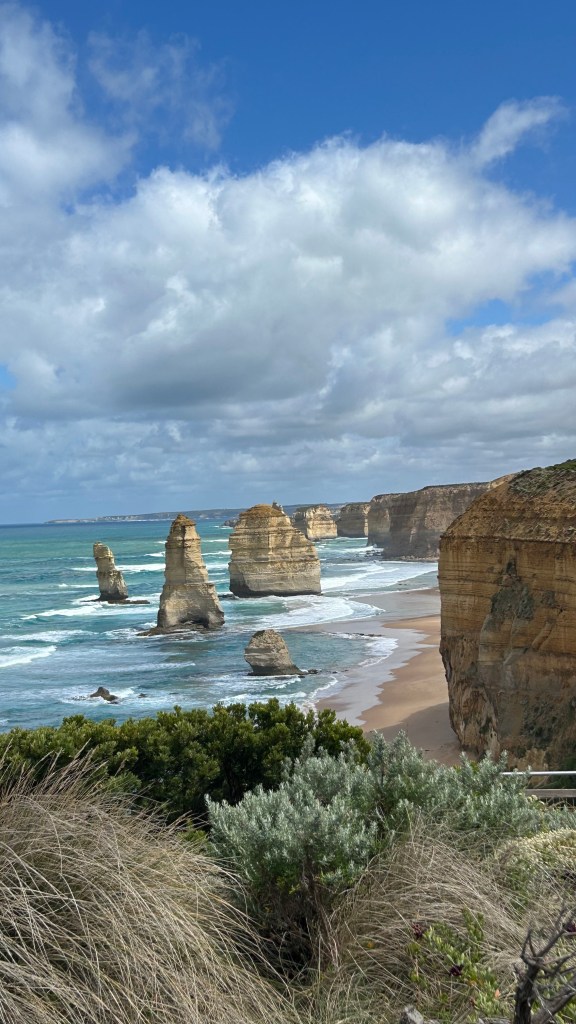
The 12 Apostles are Icons of Australia’s natural beauty. We arrive as the stacks are lit with the morning sun making them perfect for photos and relatively crowd free. This is a bonus for taking a 2 day trip as the stacks are silhouettes in the afternoon and overcrowded.
We then visit Loch Ard Gorge, the site of the most famous 19th century Australian shipwreck.
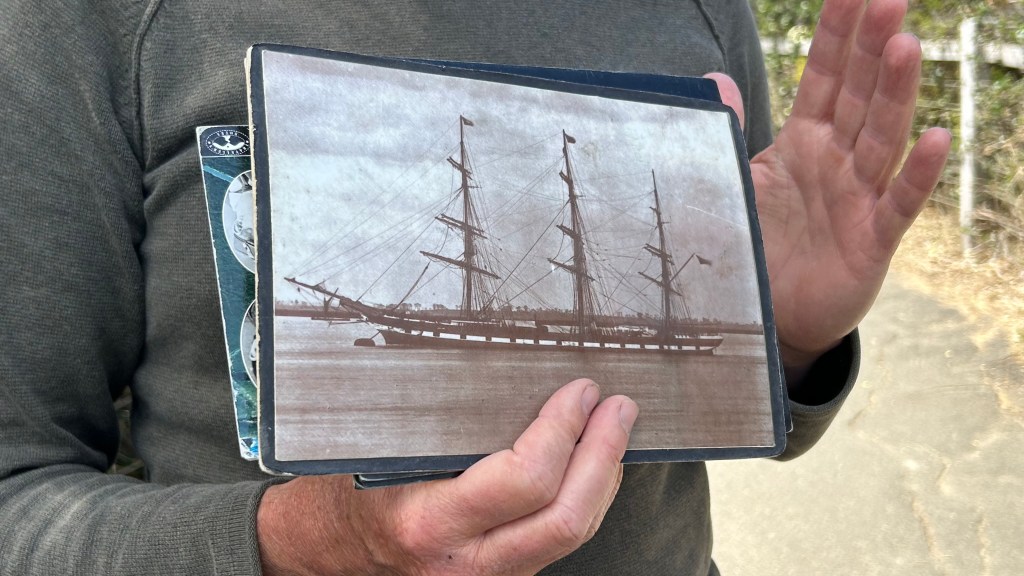
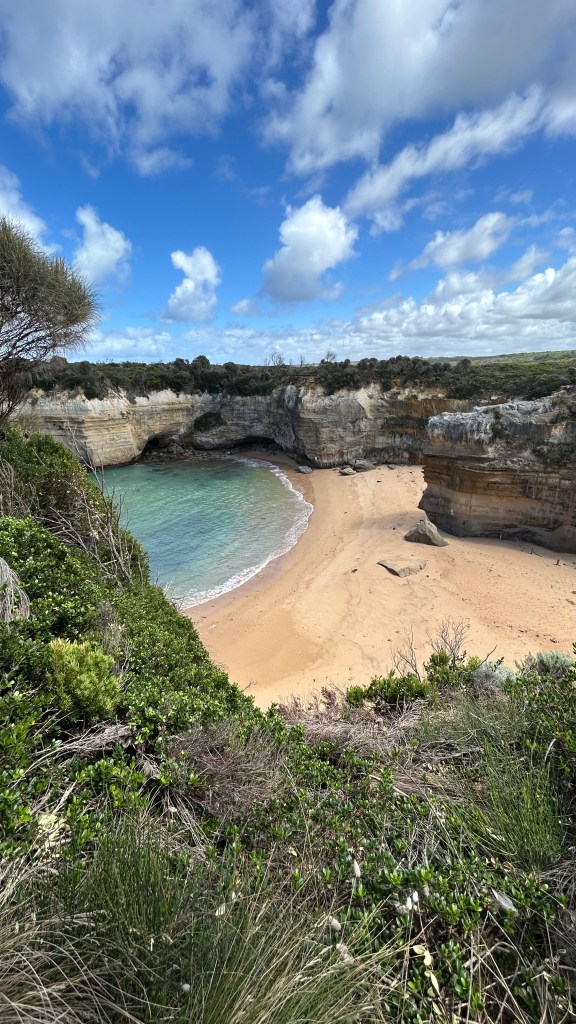
Pierre told the entire story from the calm voyage, the tragic wreck, the courageous survivors and their ultimate fate.
After lunch we travel to a lesser known but highly impressive area of the Great Ocean Road west of Port Campbell. This section takes in London Bridge, Bay of Islands, Bay of Martyrs, and Boat Bay. Along Bay of Islands, the limestone that once extended through the area of the bay was weakened by water seeping through ‘sinkholes’- water-filled swampy depressions in the surface clay.
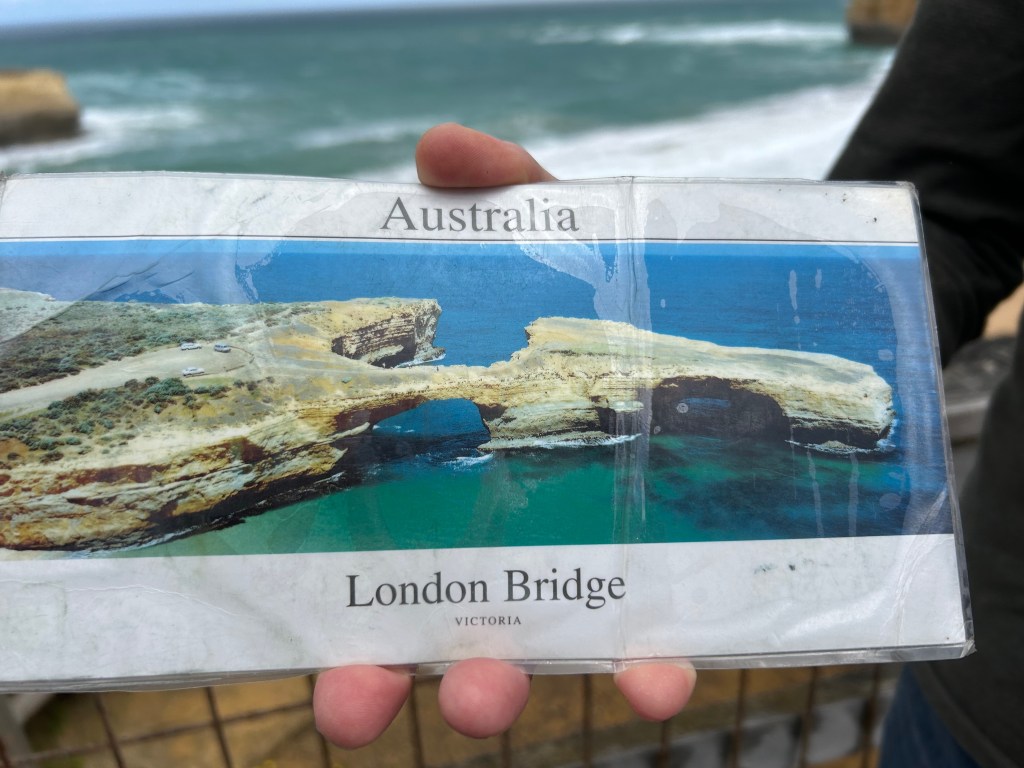
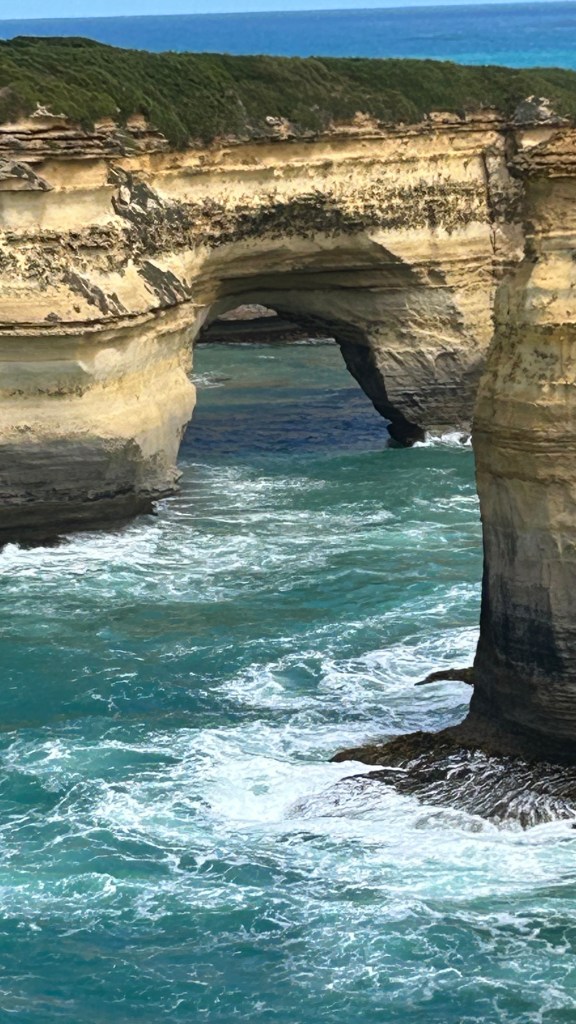
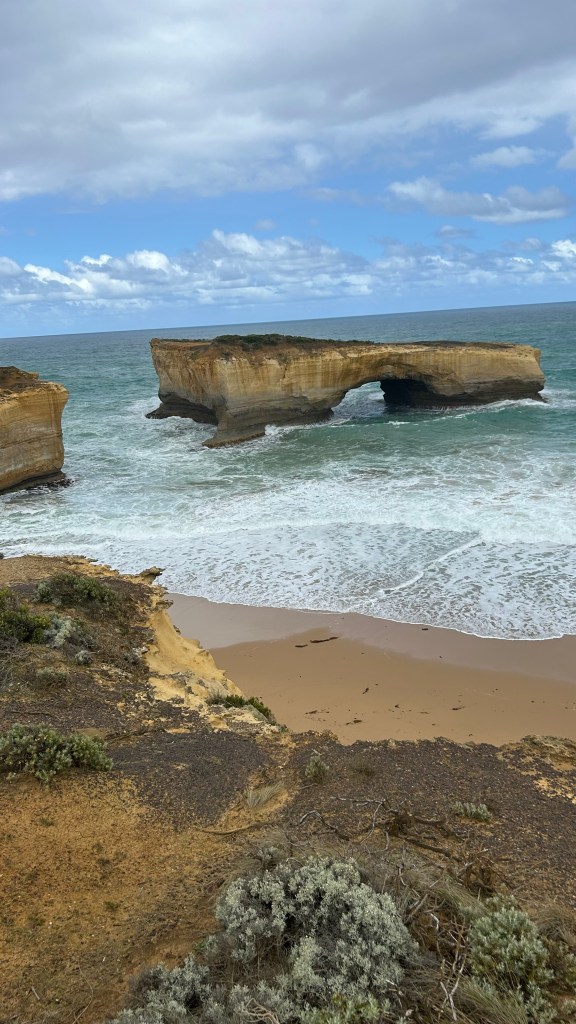
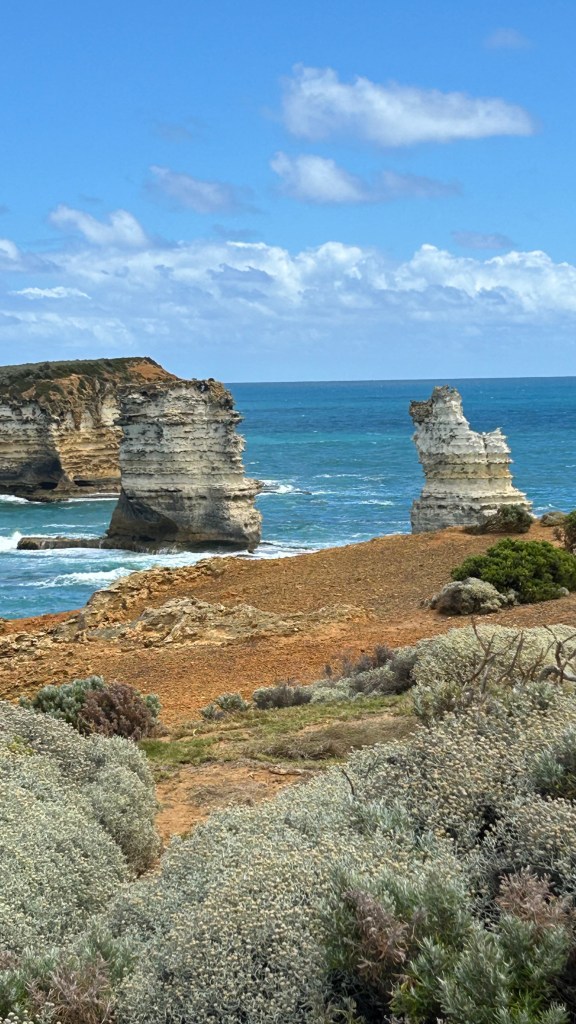
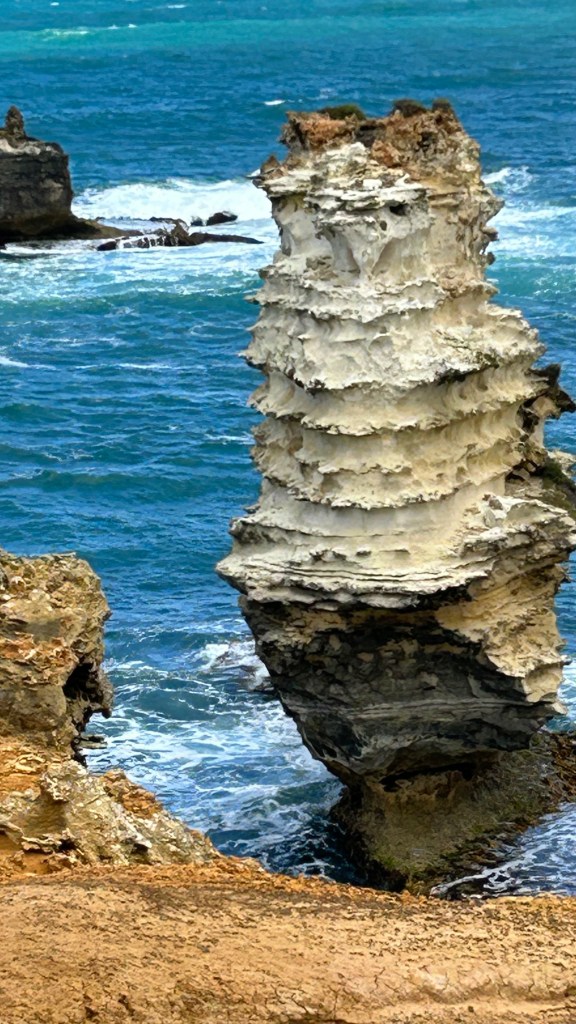
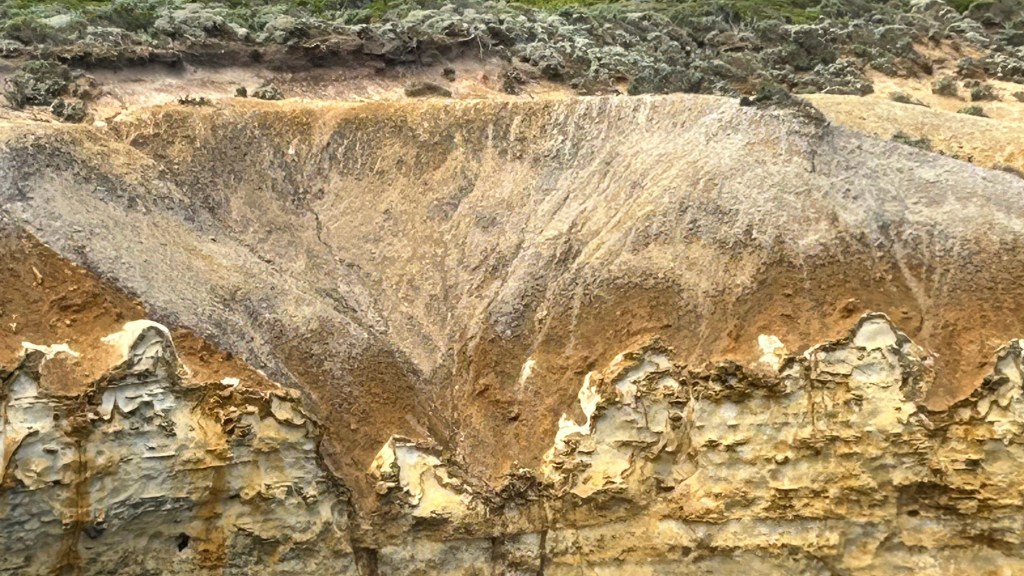
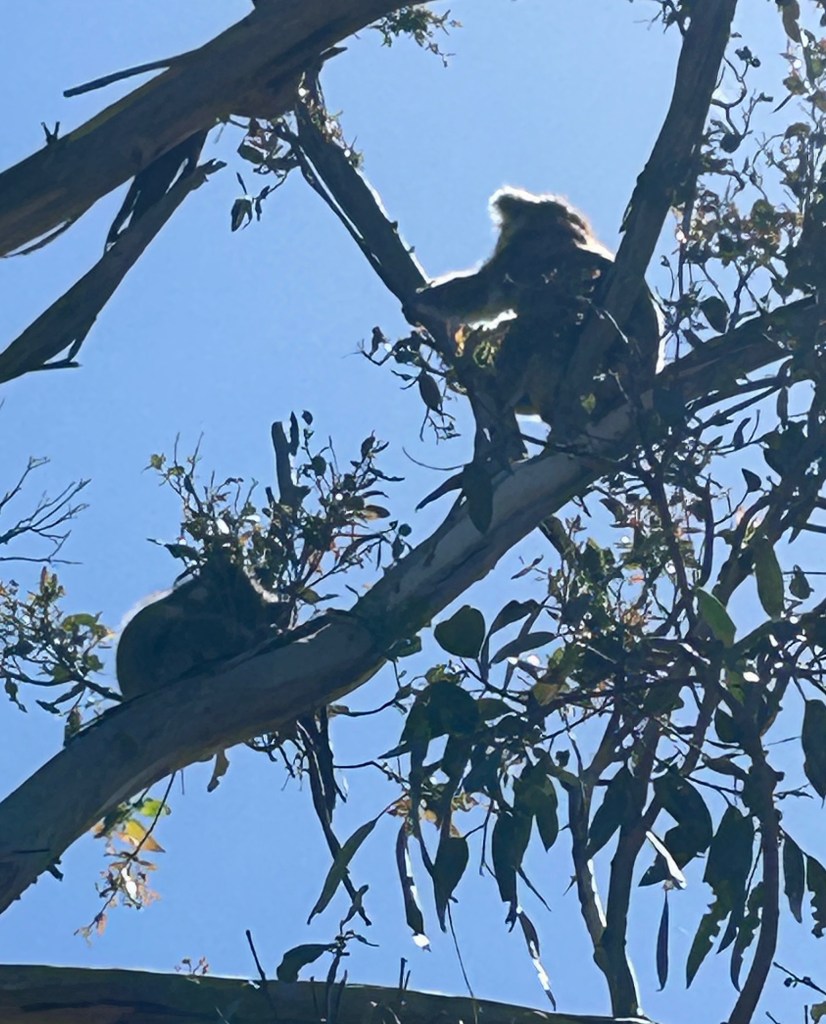
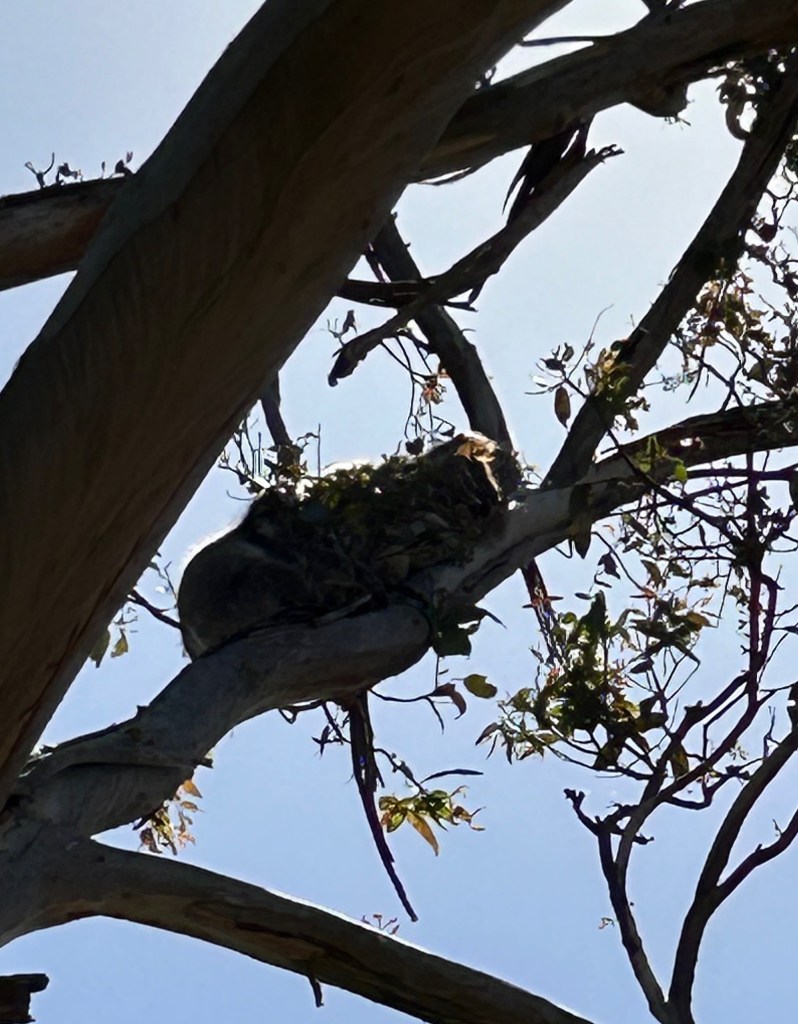
Our journey then continues through Warrnambool and onto Tower Hill Game Reserve where we saw koalas in the trees.
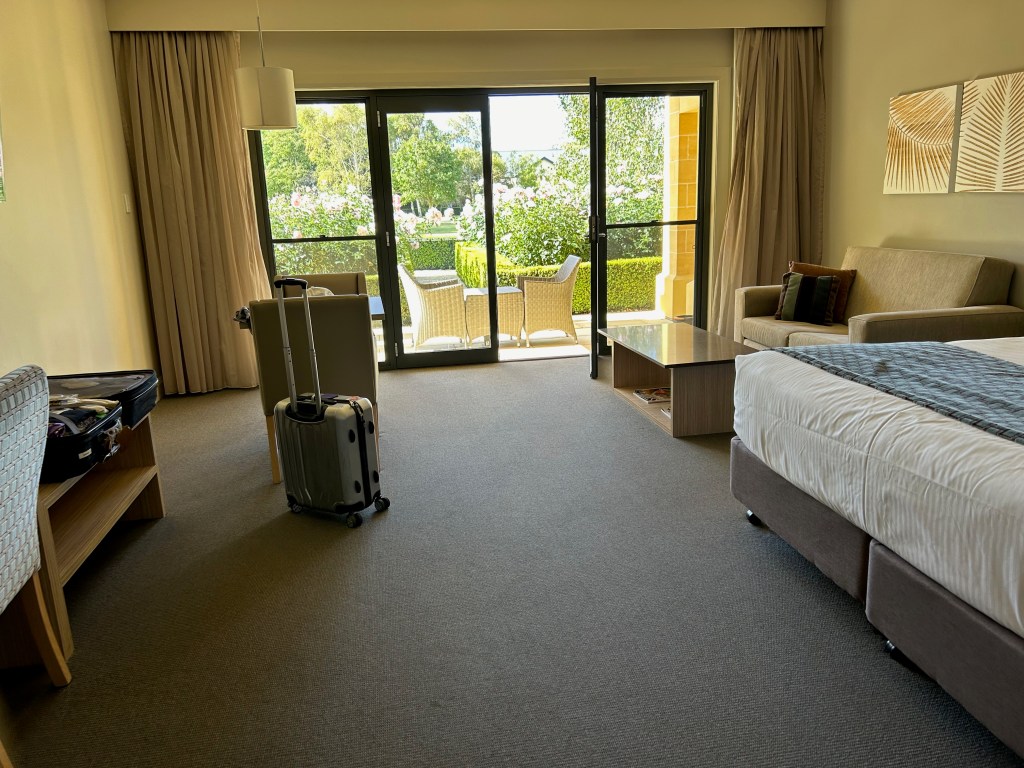
We then check into our luxurious overnight accommodation at The Barn in Mount Gambier and indulge in the fine food of the region in their award- winning restaurant.
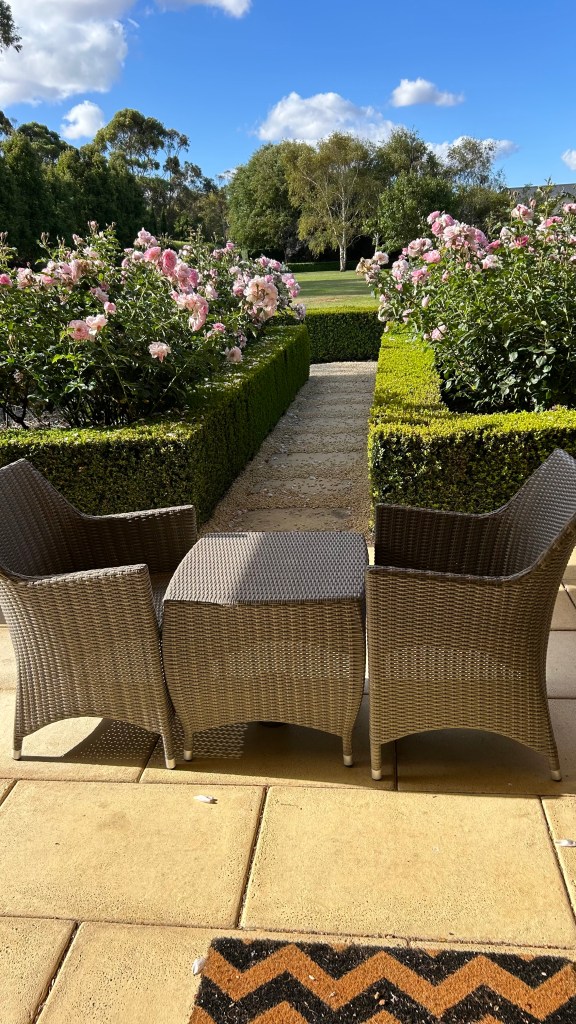
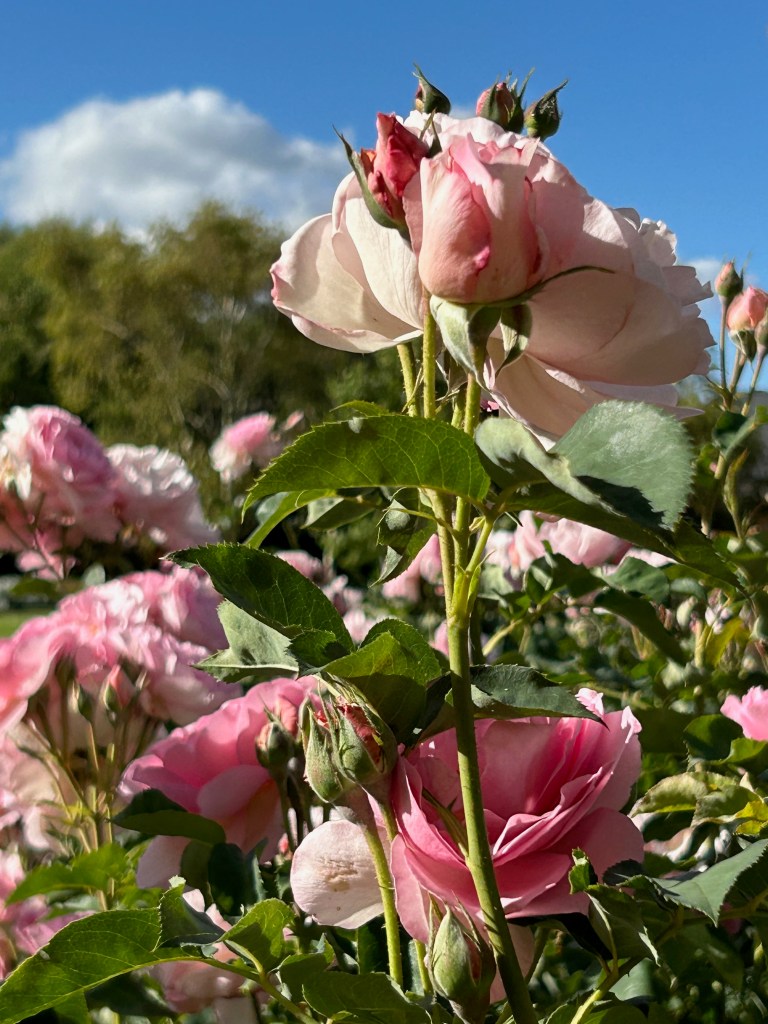
We’re off again!
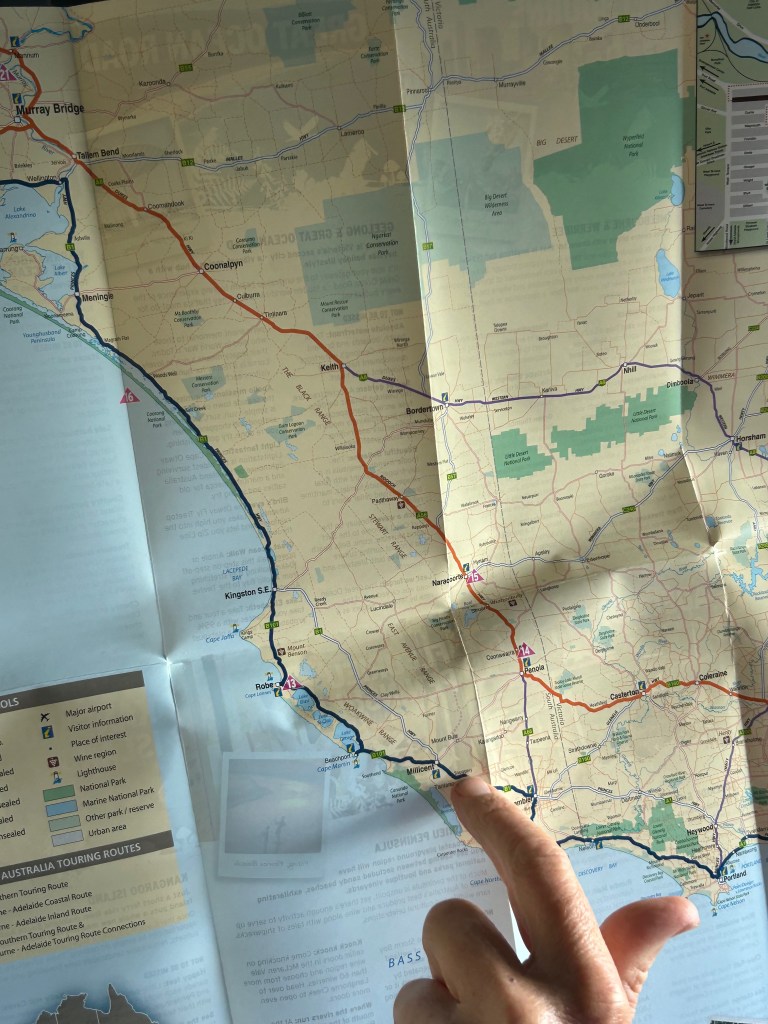
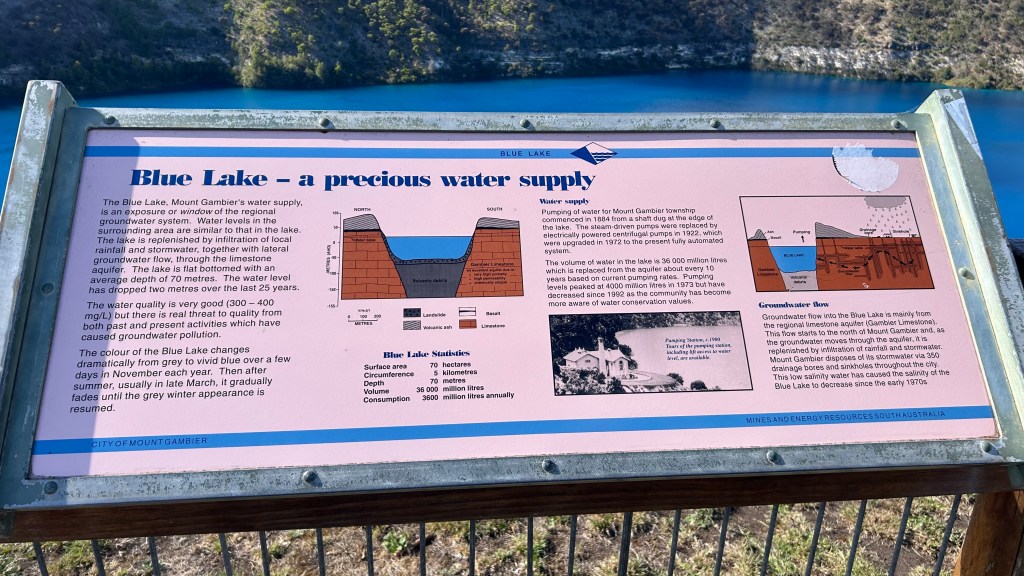
Our journey then continues through picturesque Port Fairy towards Mount Gambier, home of the Blue crater lake and numerous sinkholes. Blue Lake was formed as a result of volcanoes.
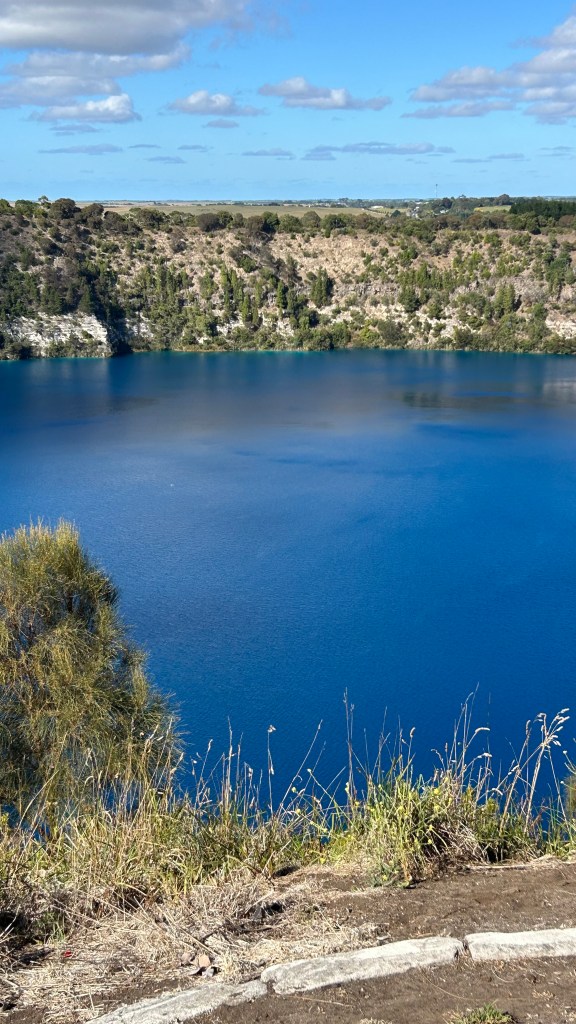
Explosive eruptions deposited layers of ash and rocks to form the present crater.After the eruptions ceased, the groundwater level was restored, forming the Blue Lake.
We then continue our journey through another prominent South Australian wine region of Padthaway as we head north through to Keith. We visited an early settlement home.
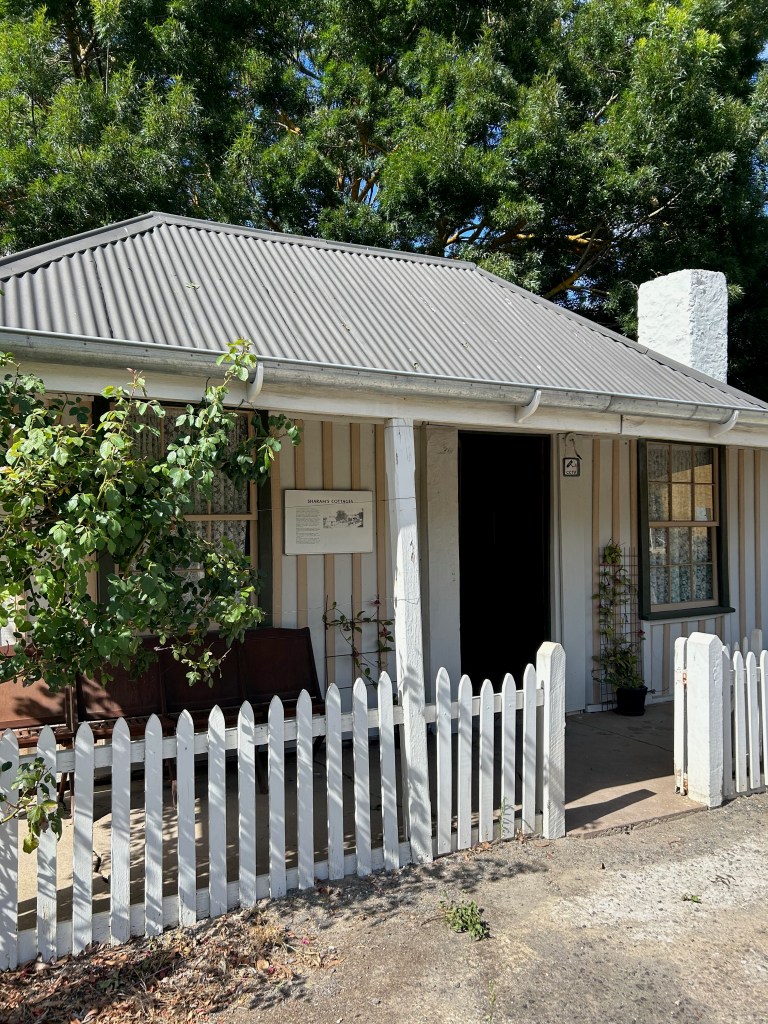
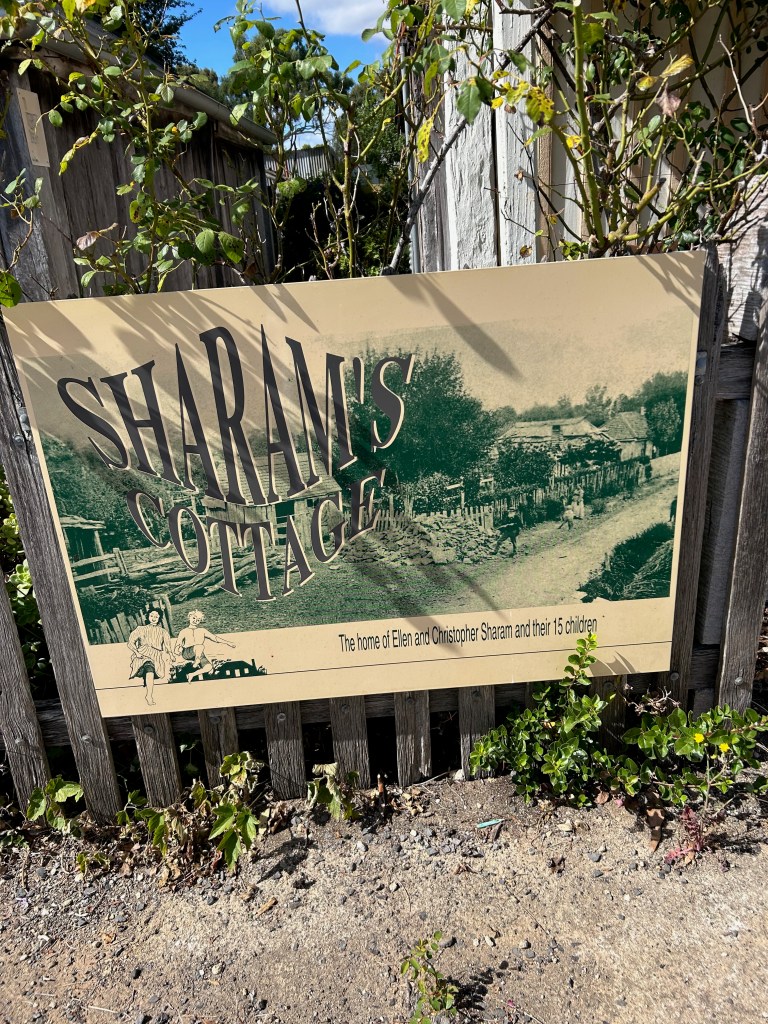
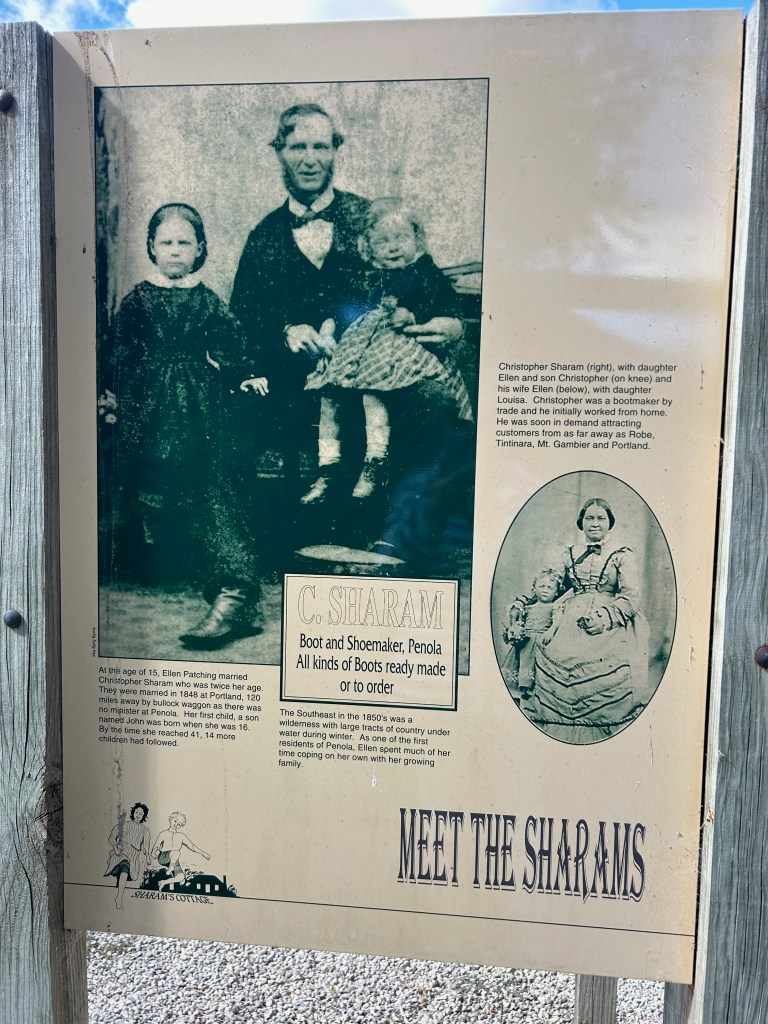
We stopped here for lunch before joining the highway, travelling through grain and stock land towards Adelaide.
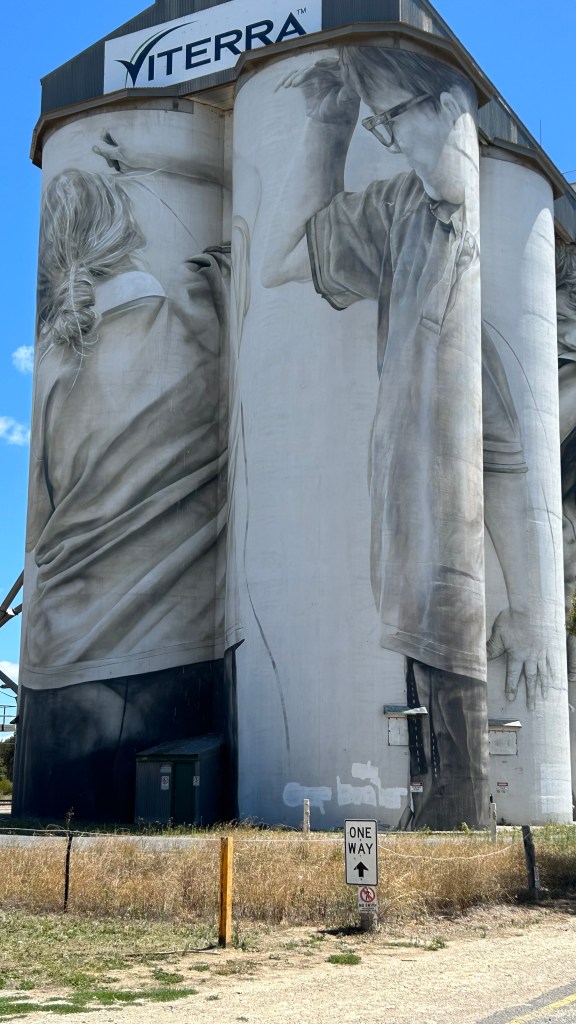
This is a vast drought affected area of Australia and is an incredible contrast to the lush forests and coastal pastures we have been travelling in. On our approach to city we visit the very popular tourist village of Hahndorf and Mount Lofty summit for impressive, birds-eye views of Adelaide and surrounds.
We arrive in the city at around 6pm.
Tuesday 6th February, 2024 – Arrive Adelaide
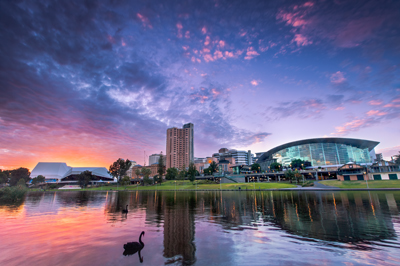
Adelaide city centre, surrounded by parklands, is a blend of historic buildings, wide streets, parklands, cafes and restaurants; it’s easy to get around with rolling hills to the east and beaches to the west.
Adelaide is also proud to be Australia’s wine capital, with numerous regions on its doorstep, voted Australia’s most ‘liveable’ city.
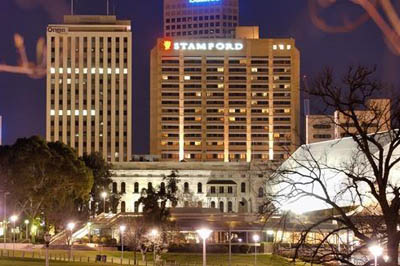
Stamford Plaza Adelaide Hotel is situated in the heart of the city on Adelaide’s key cultural boulevard, North Terrace. The excellent location means that we were just a short stroll to the Rundle Mall shopping area. We were here one night and then off to Kangaroo Island and back for 2 nights.
Wednesday 7th February, 2024 – Ultimate Kangaroo Island 2 Day Tour – AM Departure from Adelaide – Penneshaw
Depart Adelaide
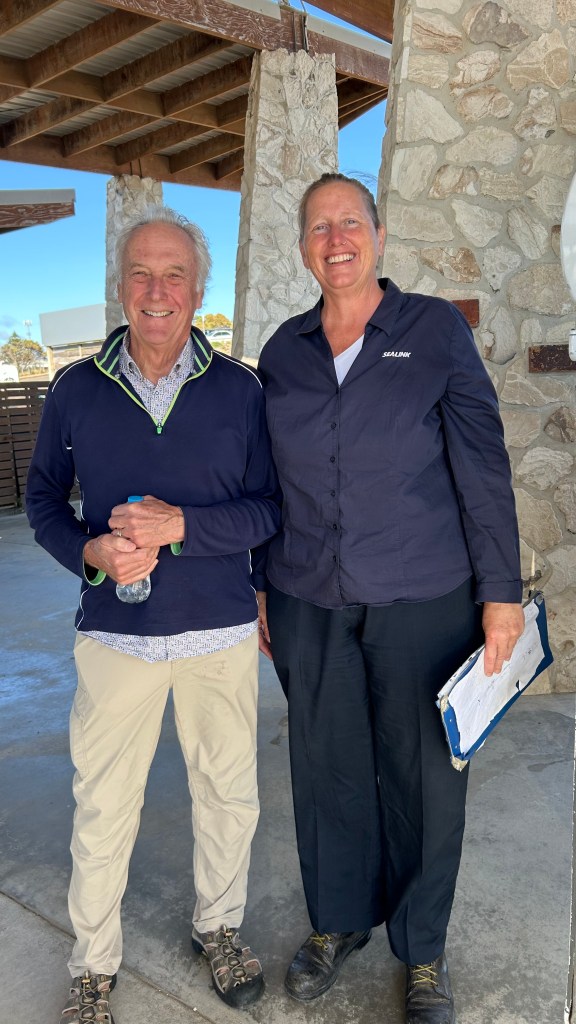
After an early pick up (6:00), we board the SeaLink ferry for the 45-minute crossing to Penneshaw on Kangaroo Island. Here we boarded a SeaLink coach, and our very knowledgeable guide, Dani, took us on a tour of South Australia’s premier nature-based tourism destination.
We visited Sea Lions first.
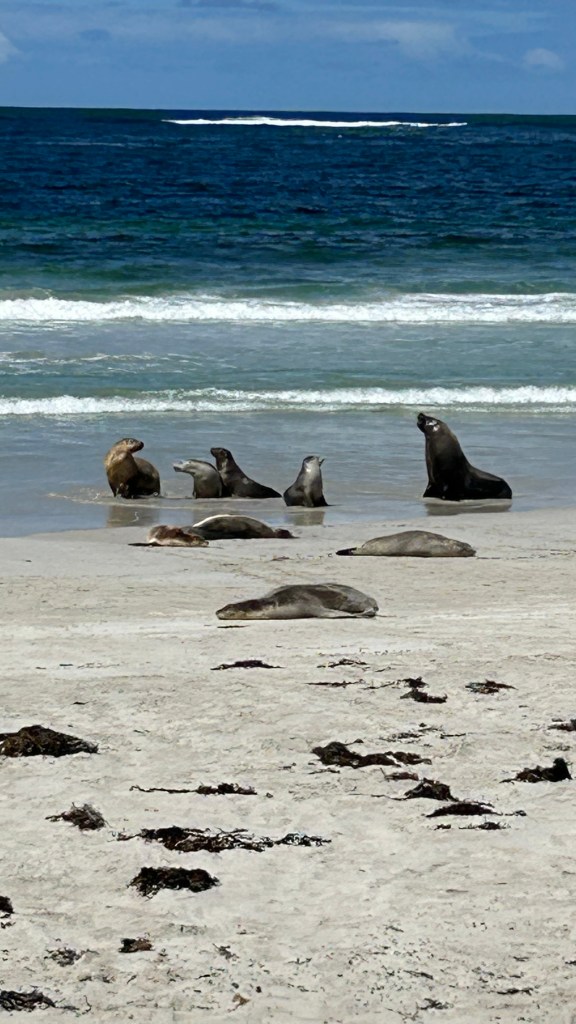
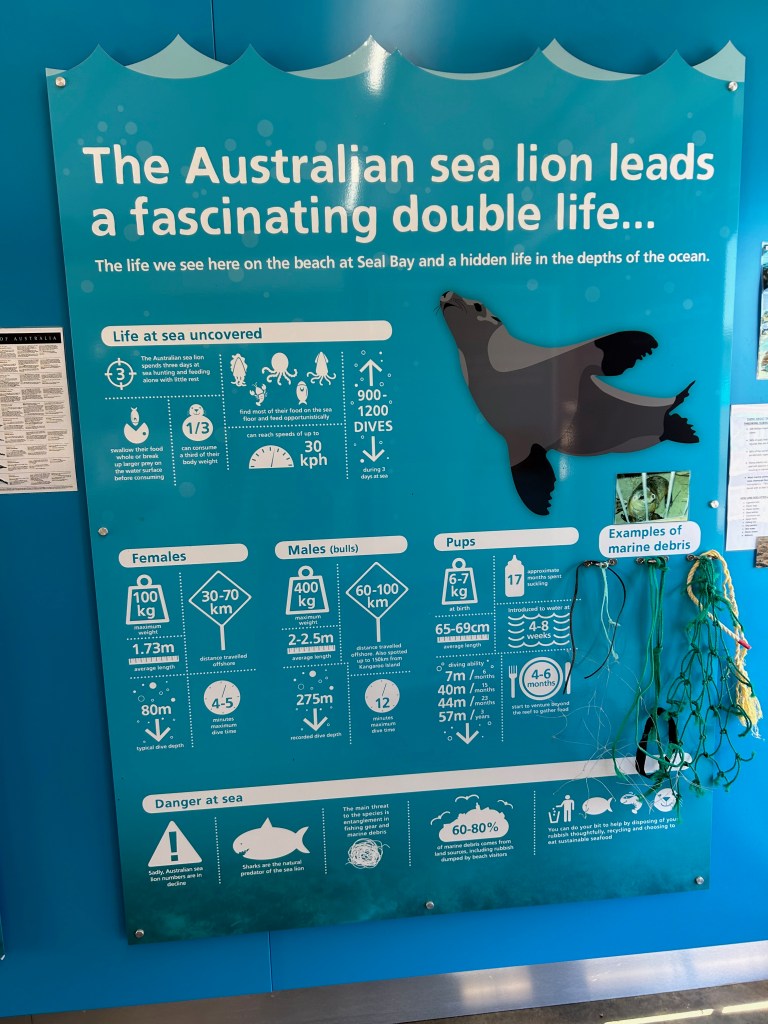
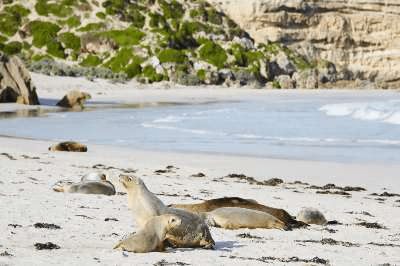
We visited Seal Bay Conservation Park where we were taken on a guided beach walk with an experienced guide and amongst a colony of rare Australian sea lions.
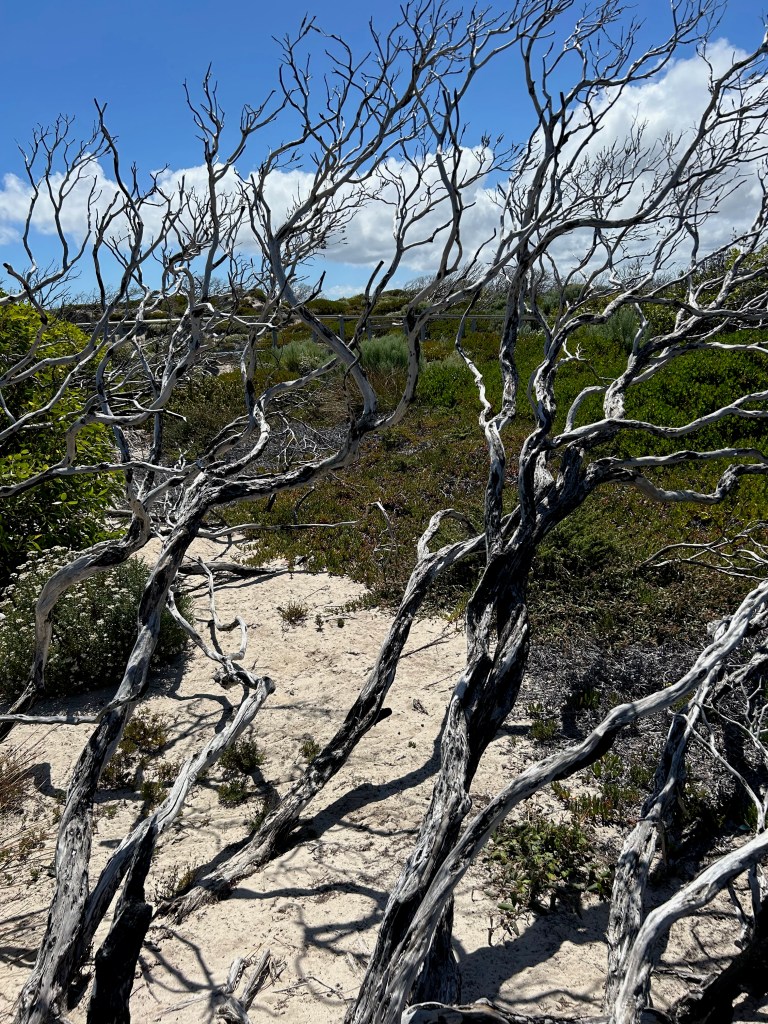
We spent the afternoon in the Flinders Chase National Park, which was devastated in the worst fire to ever hit the island in January 2020. We saw that the regeneration of the native bush occurred so quickly after the event.
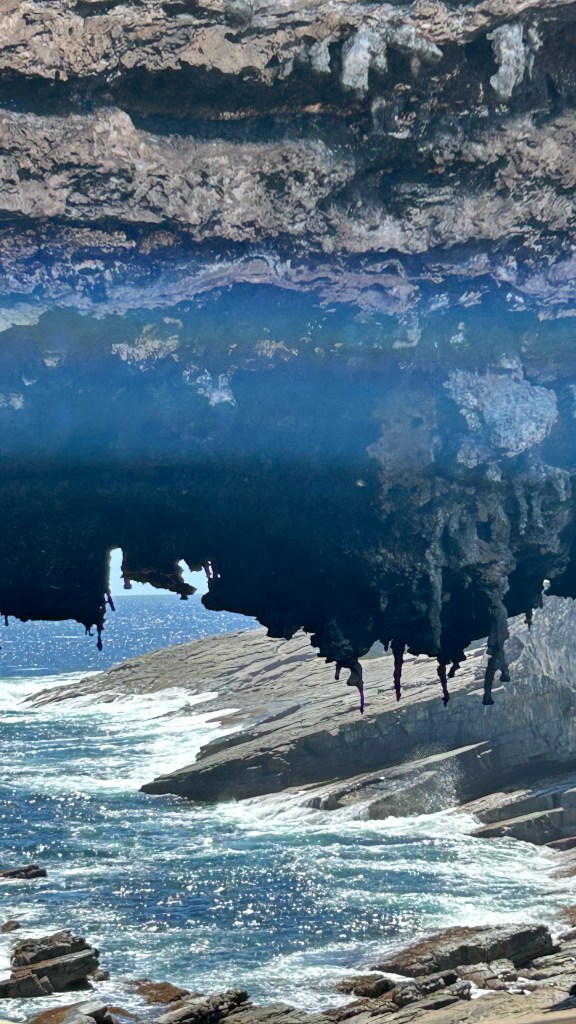
We viewed the rugged coastline from walks around Remarkable Rocks and Admirals Arch. Admirals Arch boardwalk takes you down a rugged cliff face to reveal the spectacular rock archway, a natural nursery and safe haven for playful Longnosed Fur Seals.
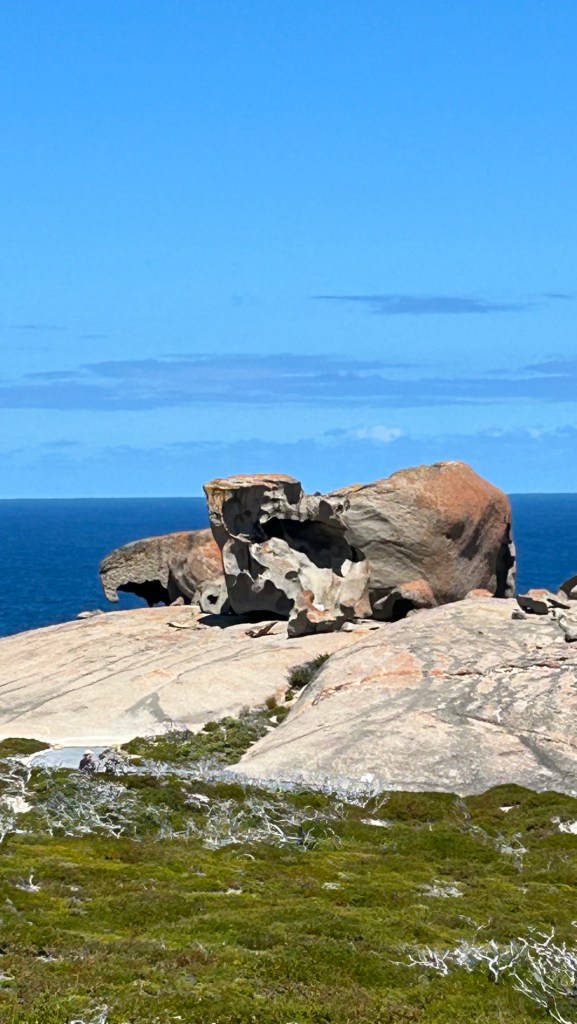
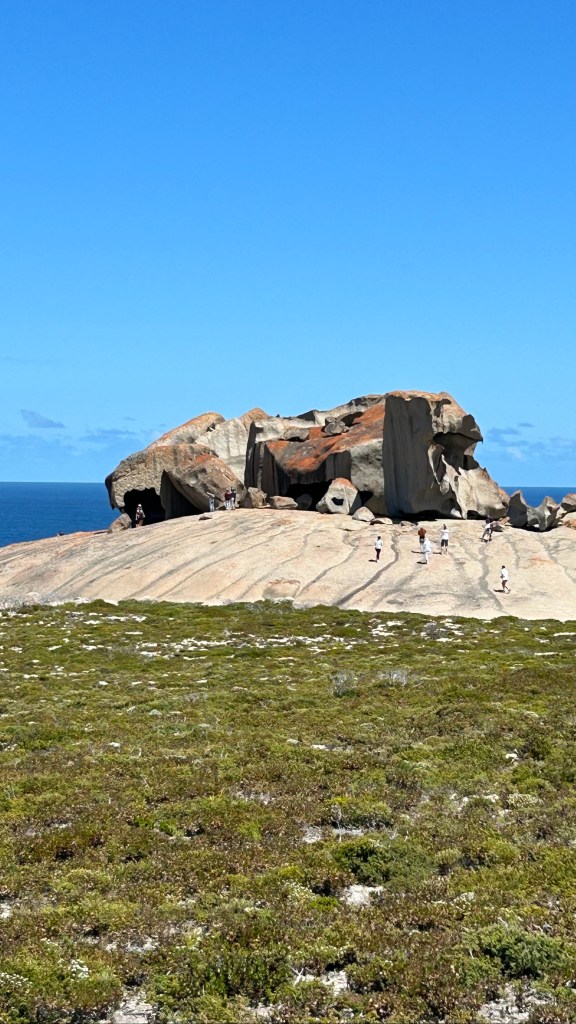
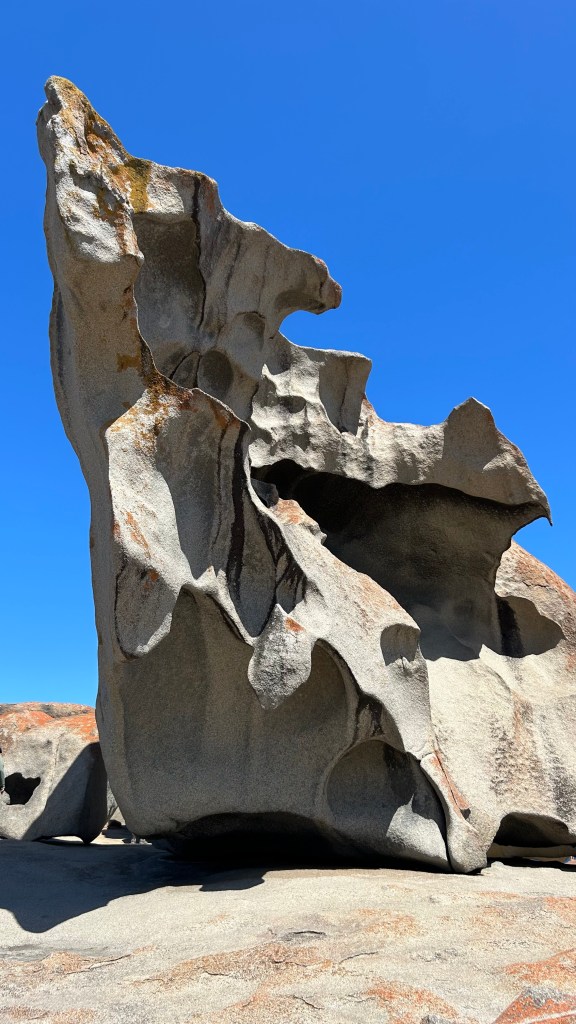
After a long trek down the face of the cliff, we found the famous arch.
The last visit of the day is to the Kangaroo Island Wildlife Park to feed some kangaroos and get up close to the Kangaroo Island Koalas while listening to the Keeper talk about the cuddly mammals.
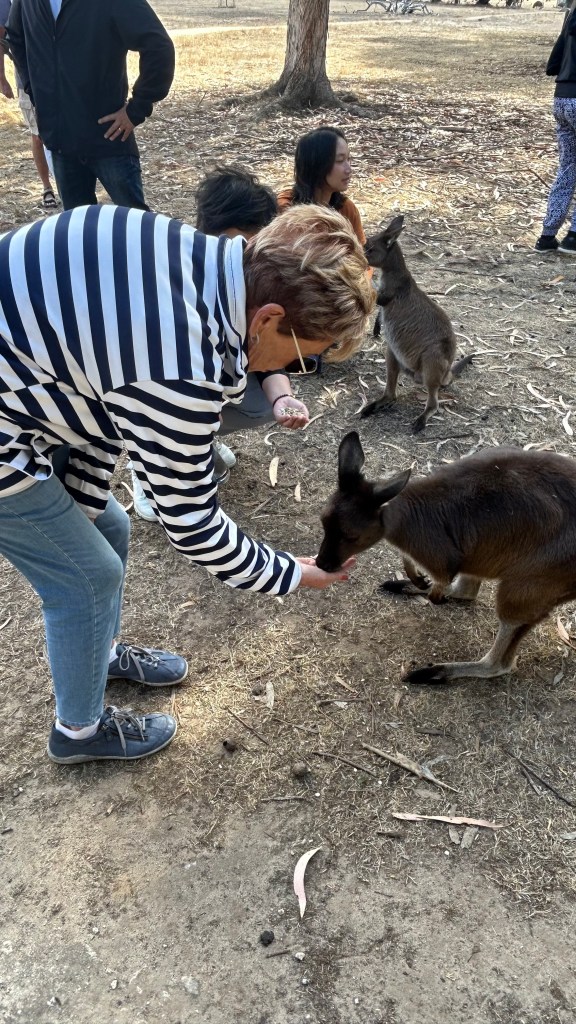
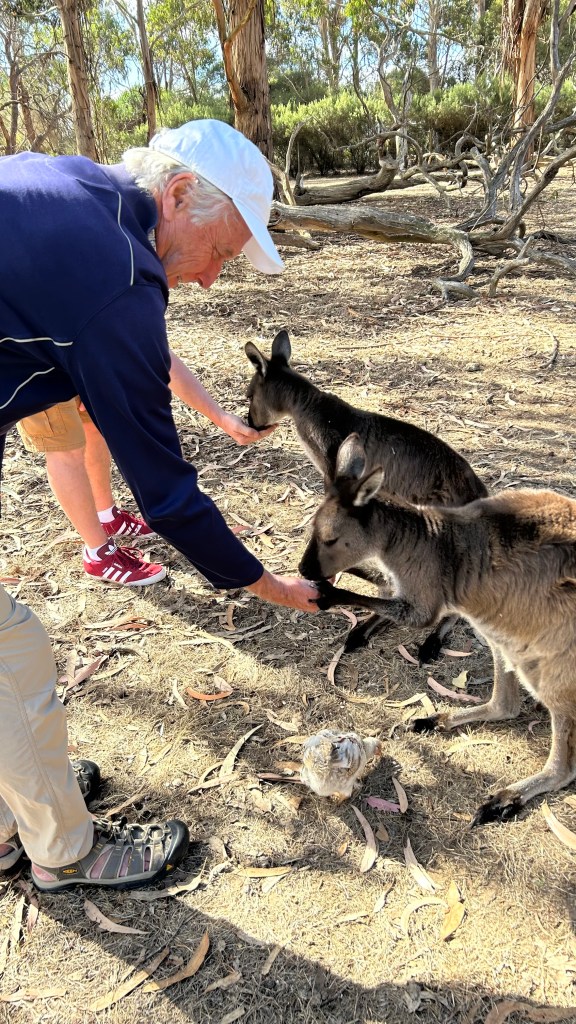
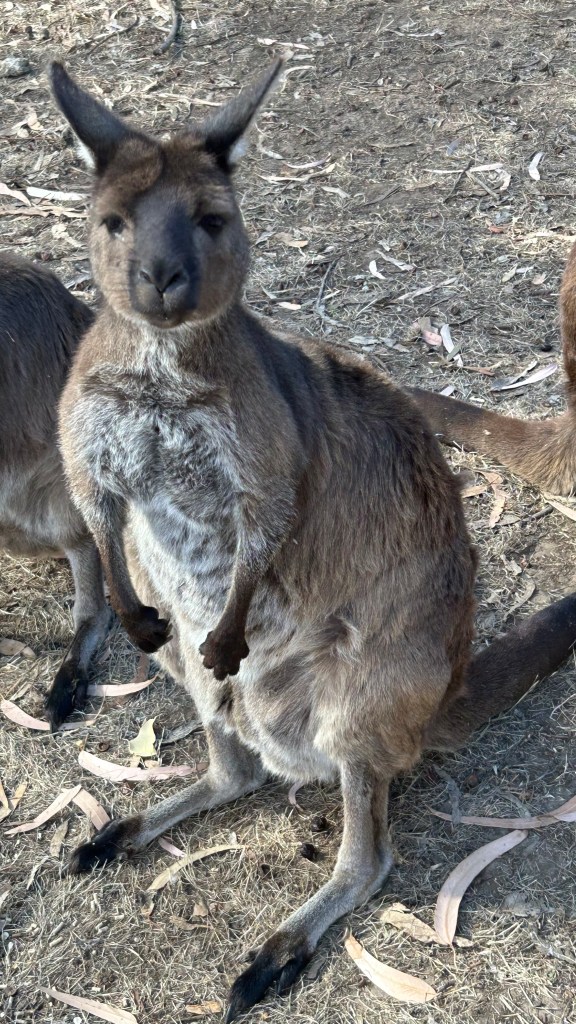
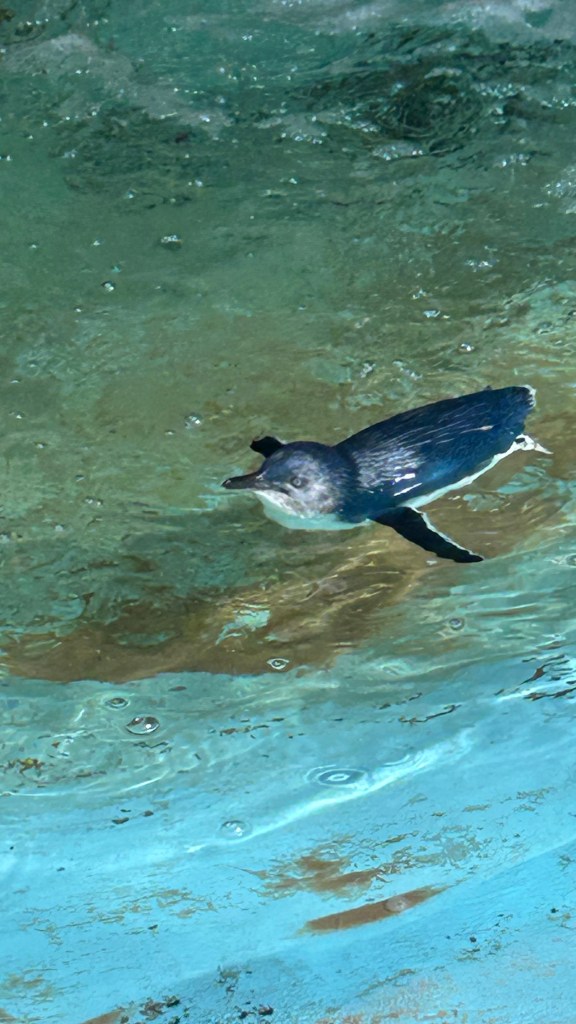
Then we saw penguins in a pond.
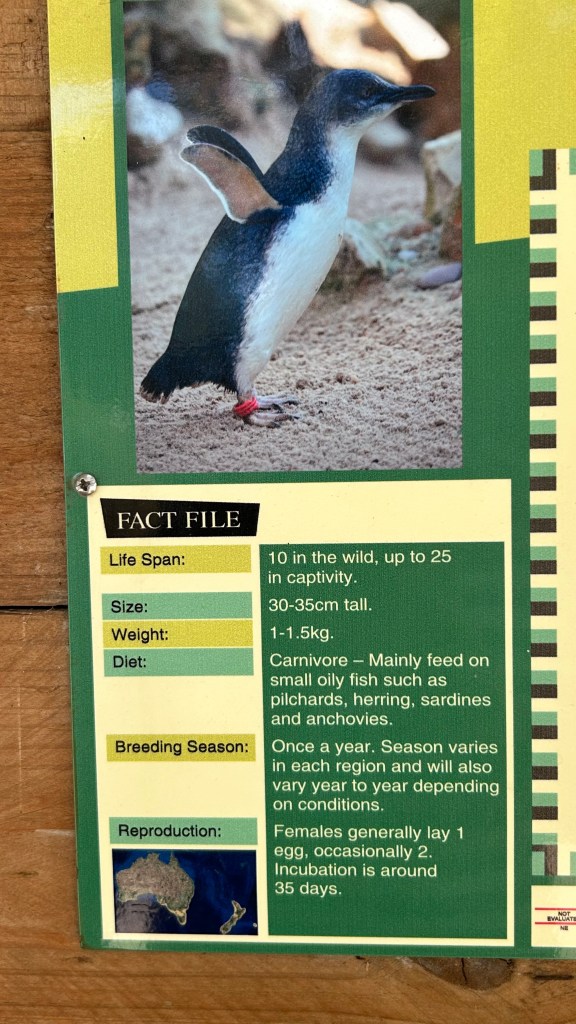
About Little Penguins:
Some penguins pair and mate for life but 25% will find new partners each year.
There are 17 species of penguins; Little Penguins are the smallest.
Penguins cannot fly; instead their wings are modified into flippers for swimming.
They have a salt gland above their eye which removes the salt from the seawater, providing them with fresh water.
On average, they can swim between 2-4 km/hr but have been recorded swimming up to 7 km/hr.
They have a third eyelid which protects their eyes both underwater and on land by acting as goggles to help them see and to wipe sand and dirt from their eyes.
Little Penguins will stay in the same colony their whole lives which is why they can’t be relocated. They will look for landmarks and will return with within 50m of where they were born.

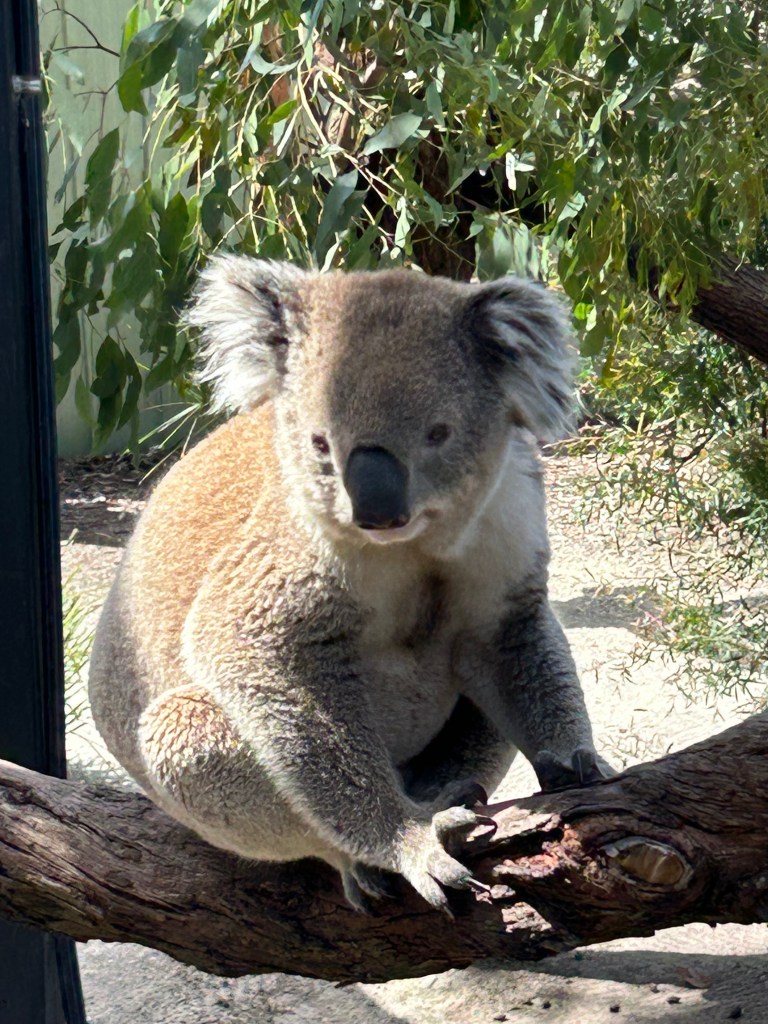
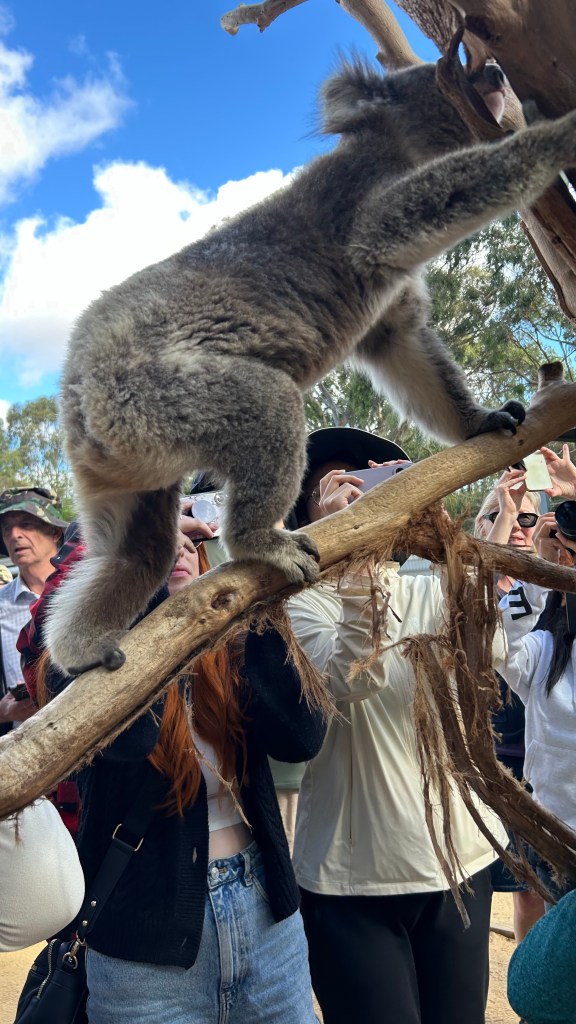
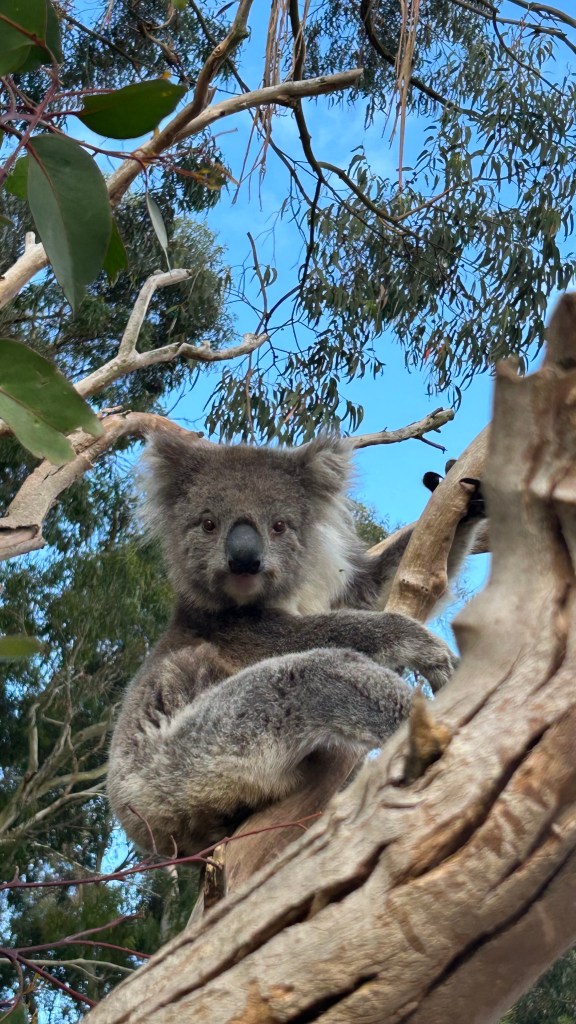
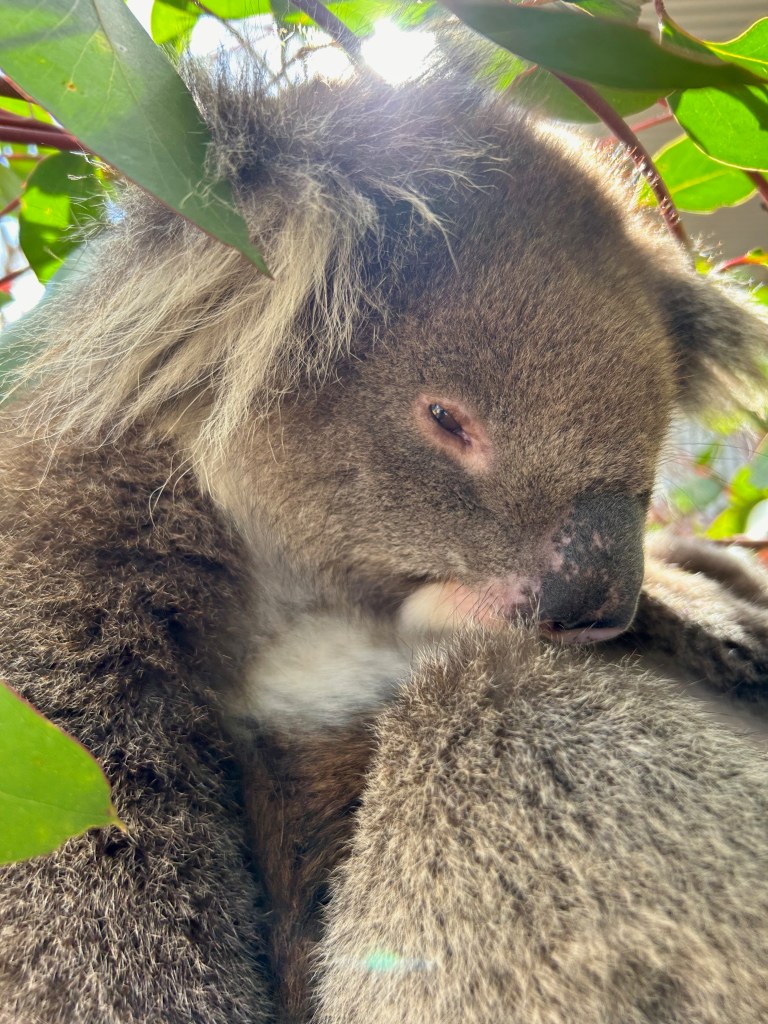
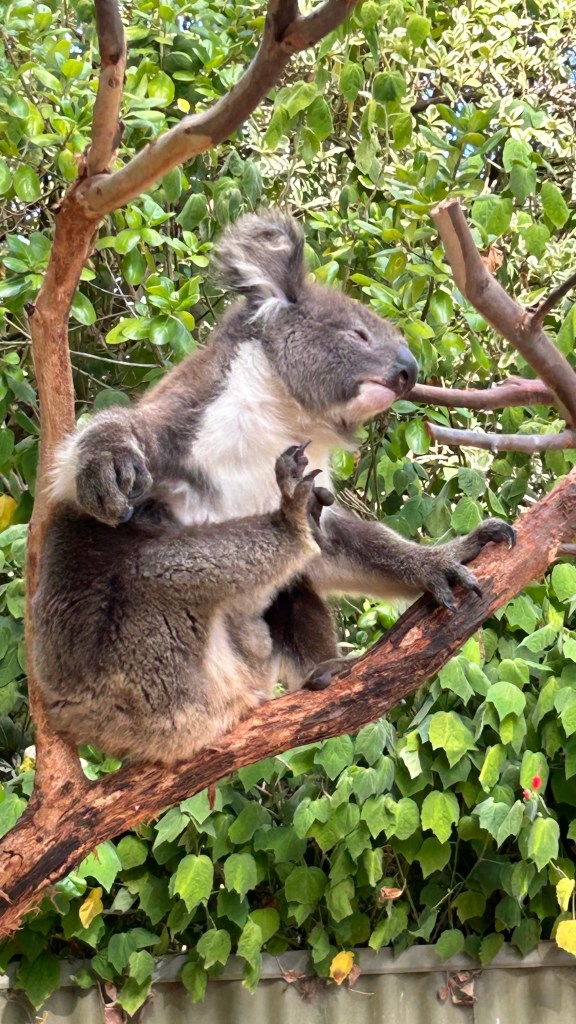
Next, we visited koalas, all rescued from the fire. Thousands died; many rescued and most released back into the wild. the ones in the centre were so damaged that they could not be released into the wild. The first pen was the females. We were allowed to touch them on their backs only.
We arrived at the hotel around 7:00 pm, very tired but having had a good day.
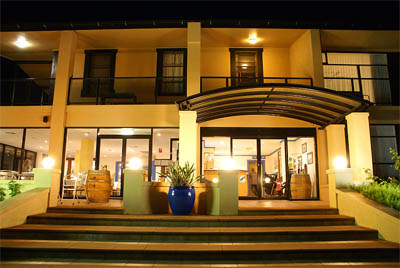
Kangaroo Island Seafront Hotel
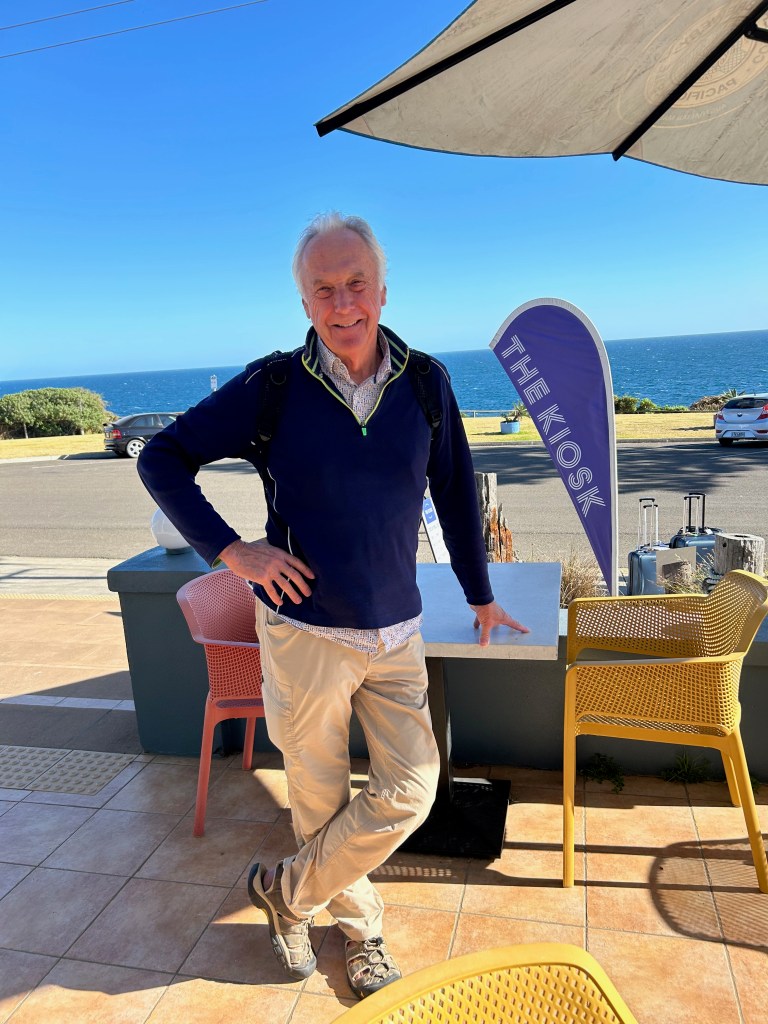
We stayed in one of the 12 Villas in the garden and had a good dinner in The Kiosk.
Thursday 8th February, 2024 – Kangaroo Island Sightseeing
Heading off on day 2 of our tour where we saw a “Free Flight” display of raptors and tasted some local Kangaroo Island produce. Our first official stop was the fascinating Birds of Prey Presentation at Raptor Domain.
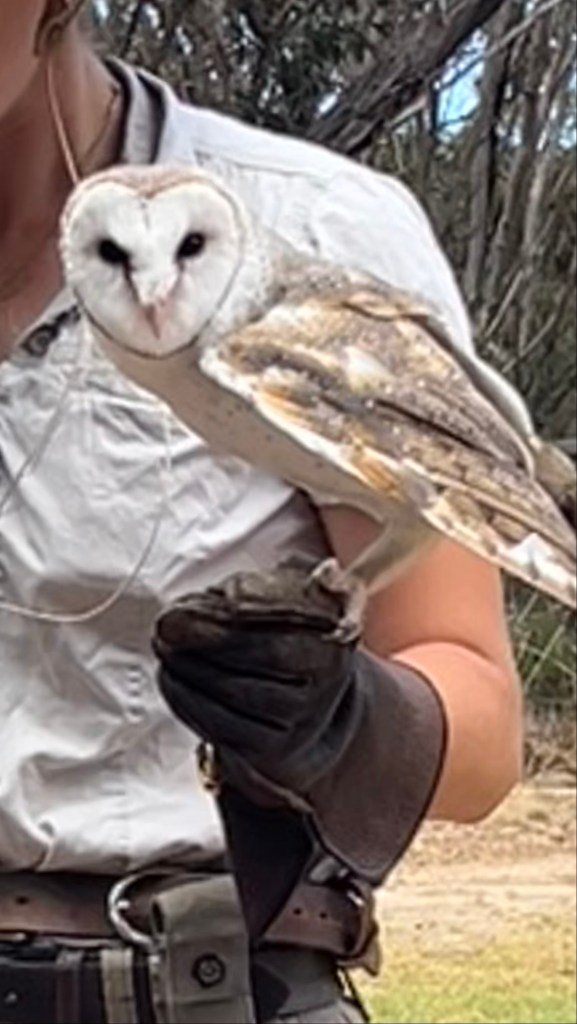
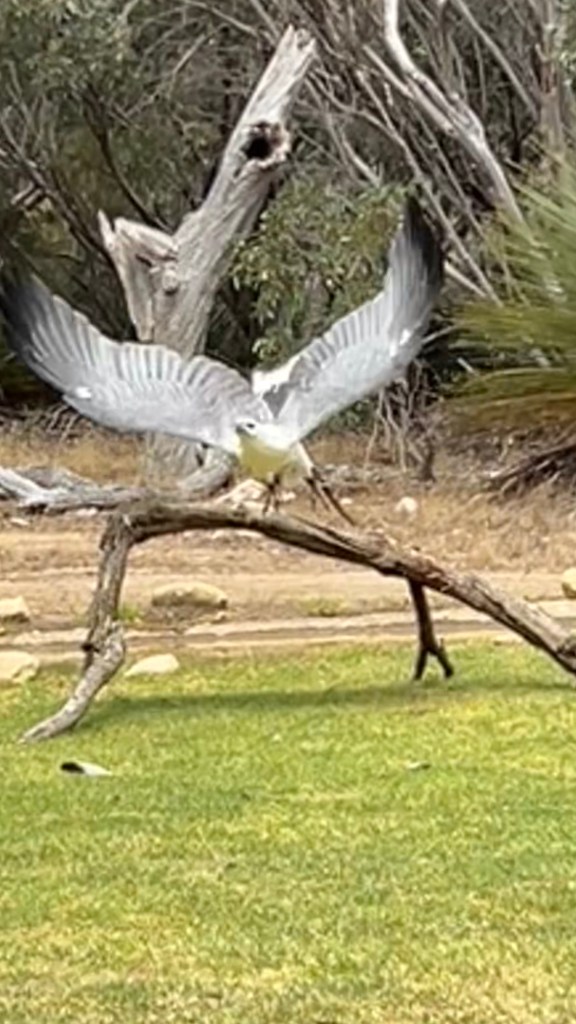
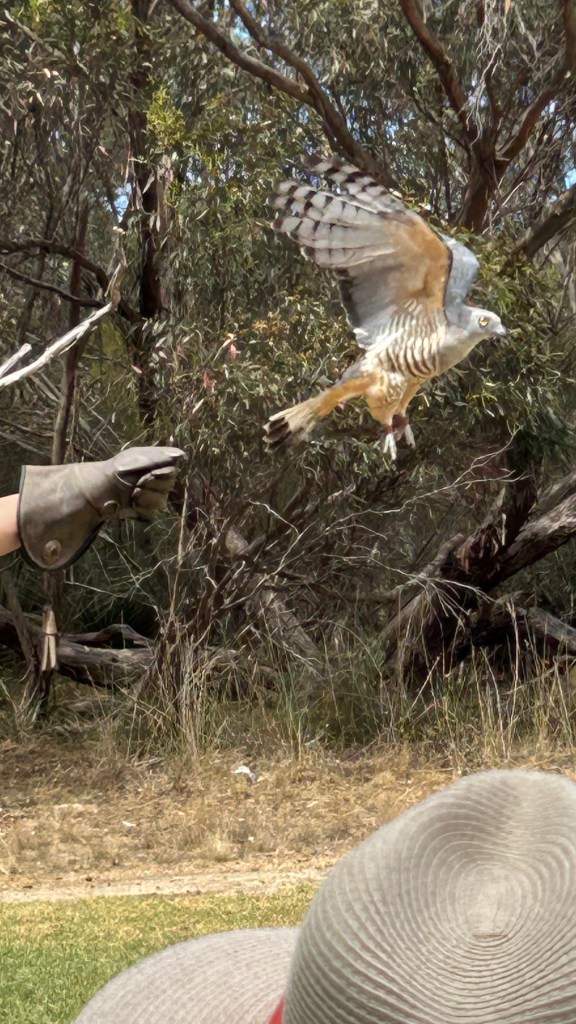
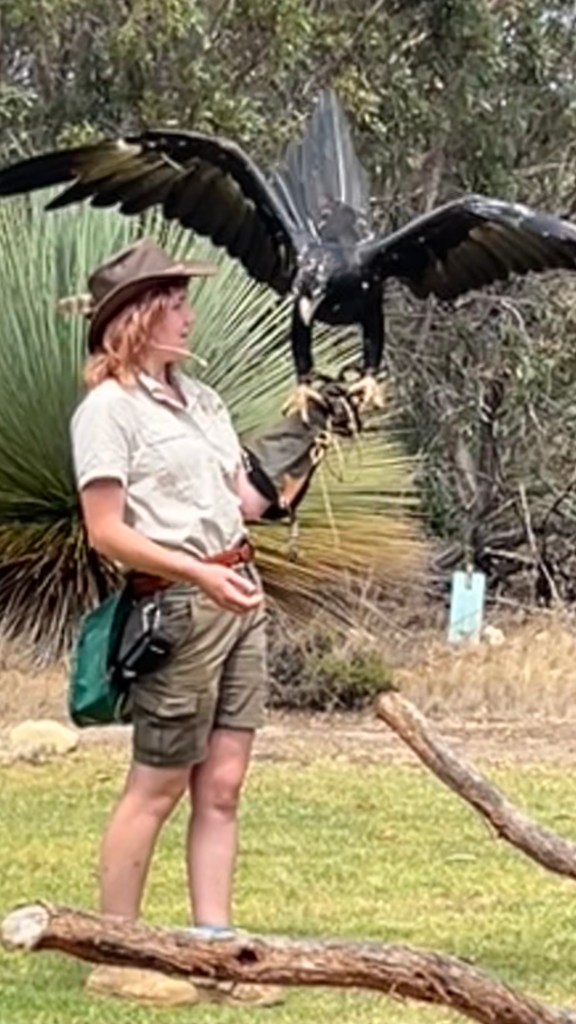
Raptors are birds of prey and skillful hunters.
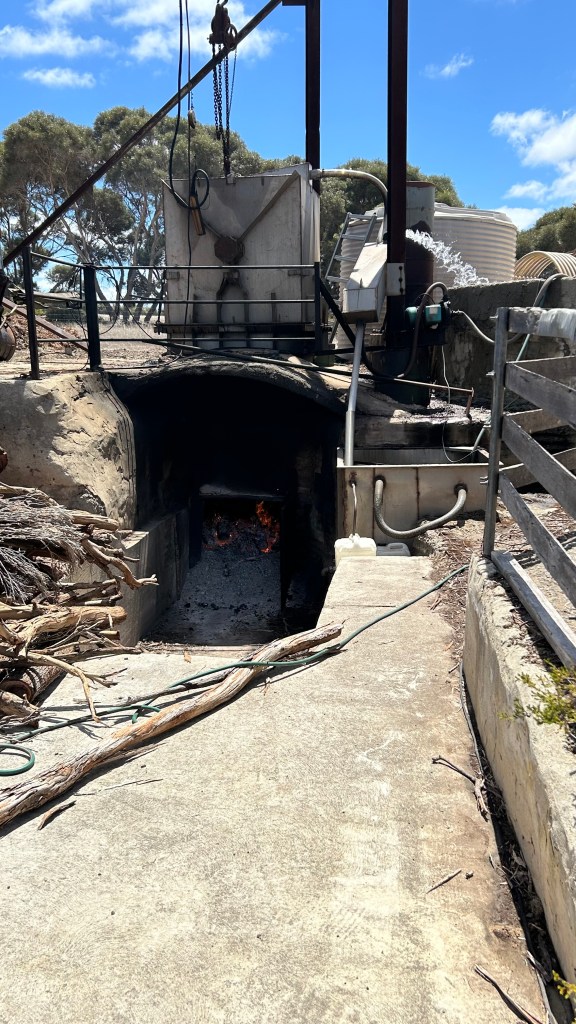
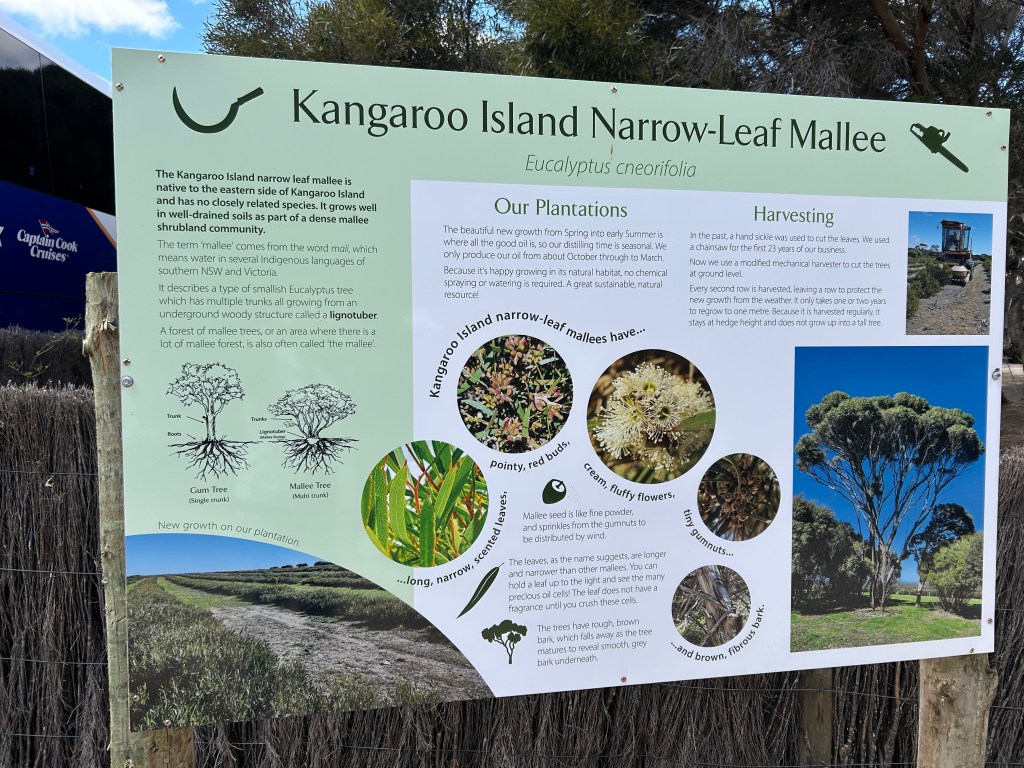
Next, we travelled to Emu Ridge Eucalyptus Distillery for lunch followed by an introductory talk about the history of the oil distillery and took a guided tour.
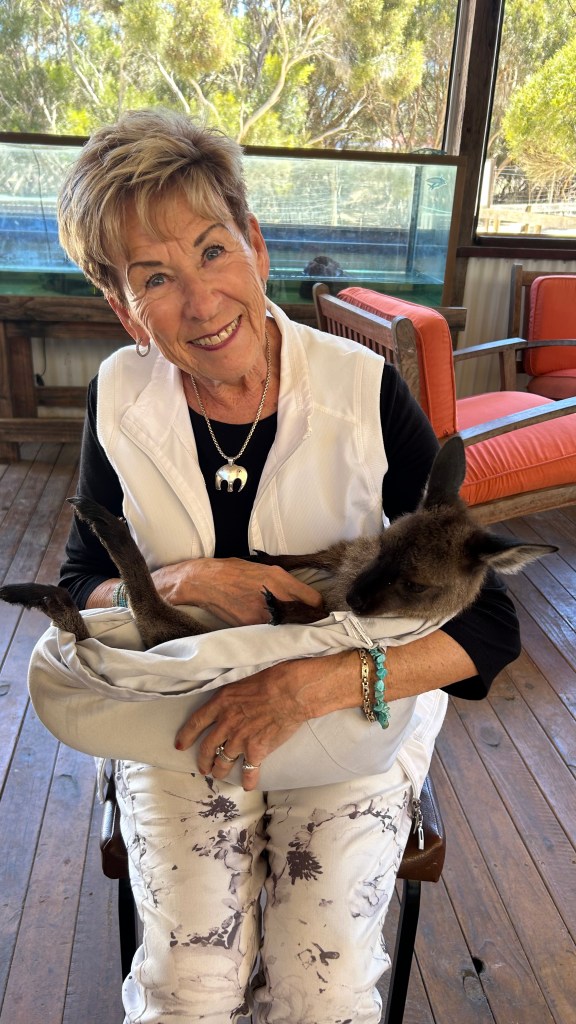
This one year old Joey was rescued by the family of the oil business when his mother was struck and killed by a car. She was still in the mother’s pouch. Star will be fed and cared for until she is 18 months and then released into the property.
Our next stop is Clifford’s Honey Farm, where we enjoyed an informative guided tour of the honey room to learn about the extraction process, taste a honey soft drink, and sample the Drunken Drone Brewery’s Honey Wheat Ale. In the farm gate shop, we saw a working beehive and spotted the Queen bee.
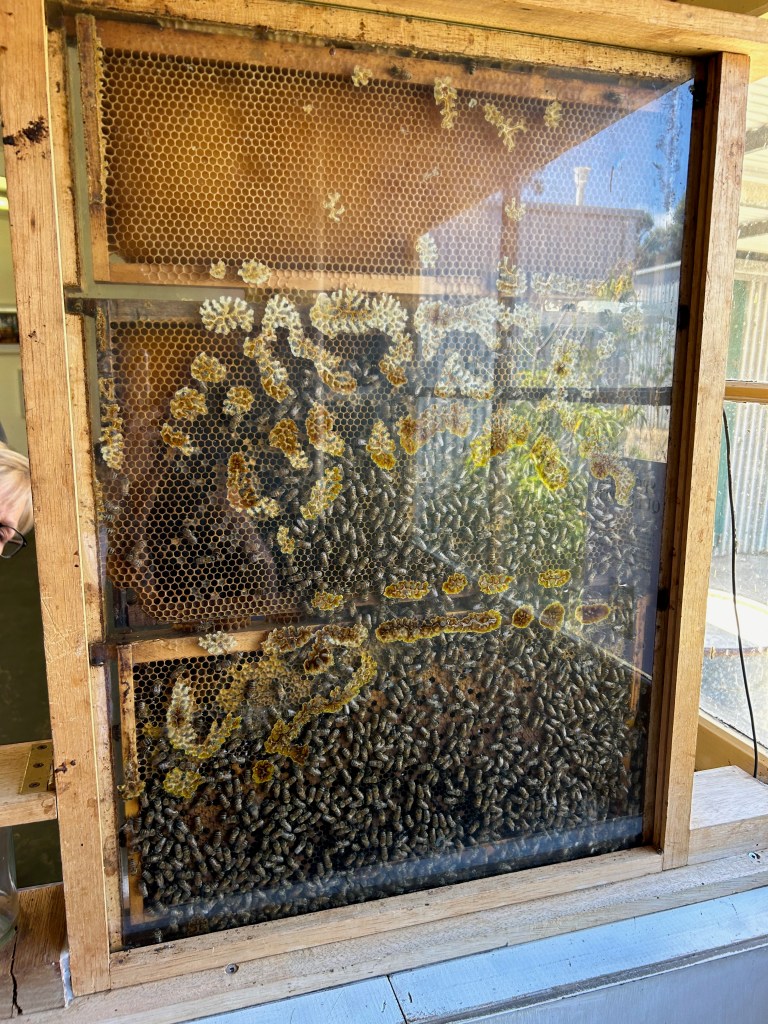
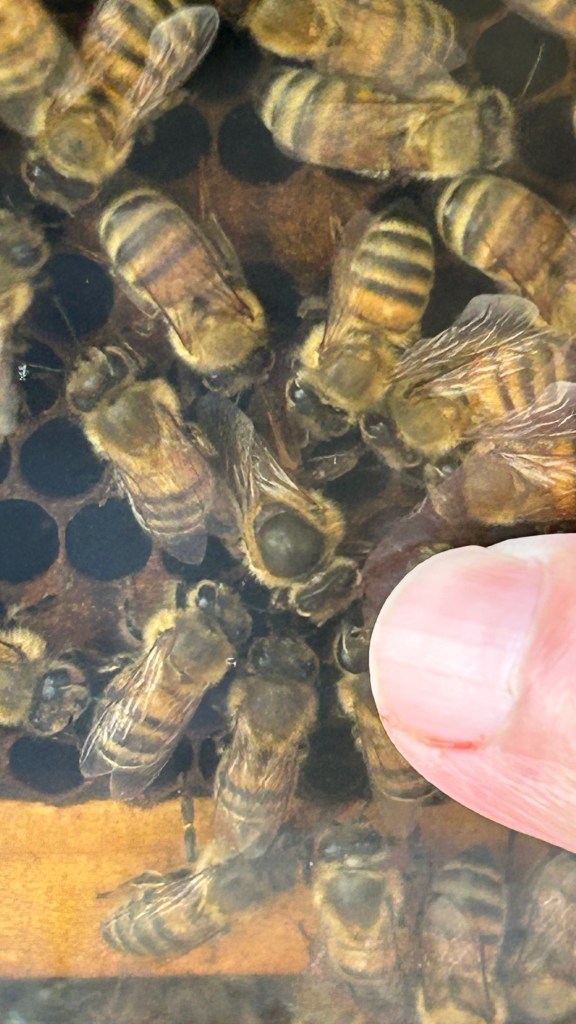
There are different varieties of pure Kangaroo Island Ligurian honey and beauty products to purchase as well as their famous honey ice-cream.
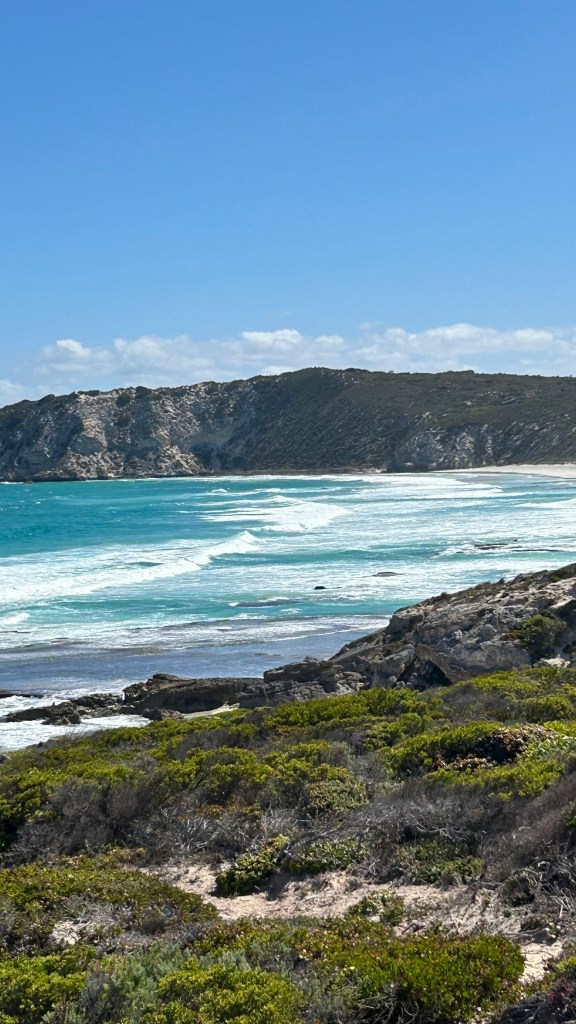
We continued to Pennington Bay, a spectacular beach on the south coast of Kangaroo Island for a photo opportunity before arriving at our final stop False Cape Wines Cellar Door.
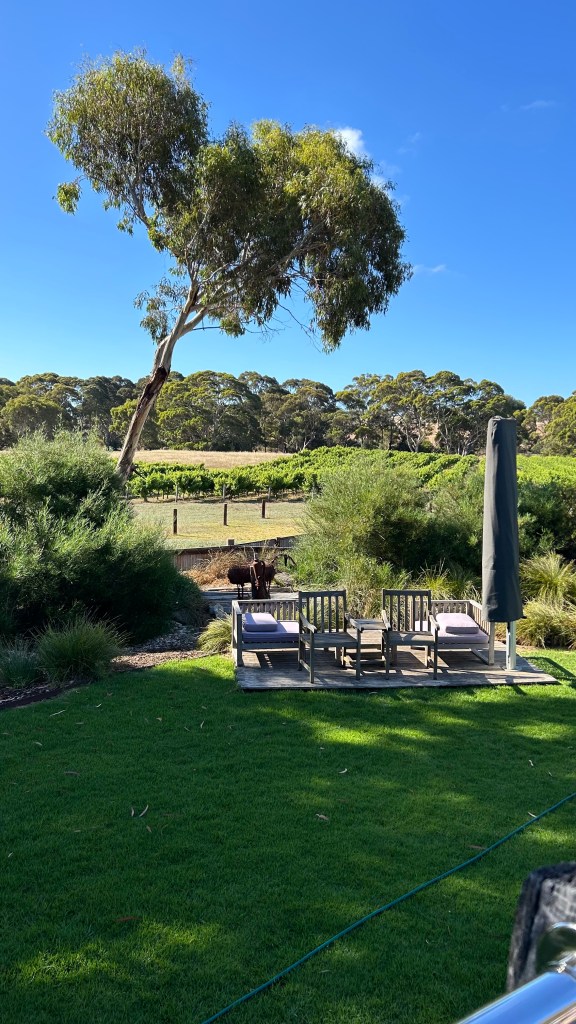
This new cellar door is made from recycled wood, jetty timbers and limestone sourced on the property. Here we took part in a structured wine tasting while enjoying the peaceful views of the surrounding vineyards.
Our tour ended at the Penneshaw Hotel where we had time to have dinner before returning to the Penneshaw Ferry Terminal for our ferry and coach transfer back to Adelaide.
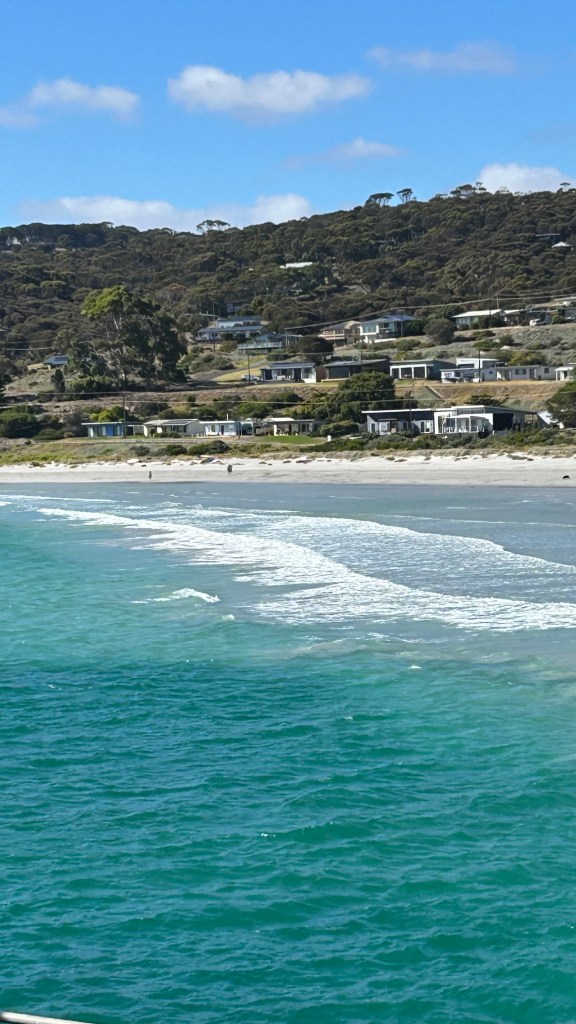
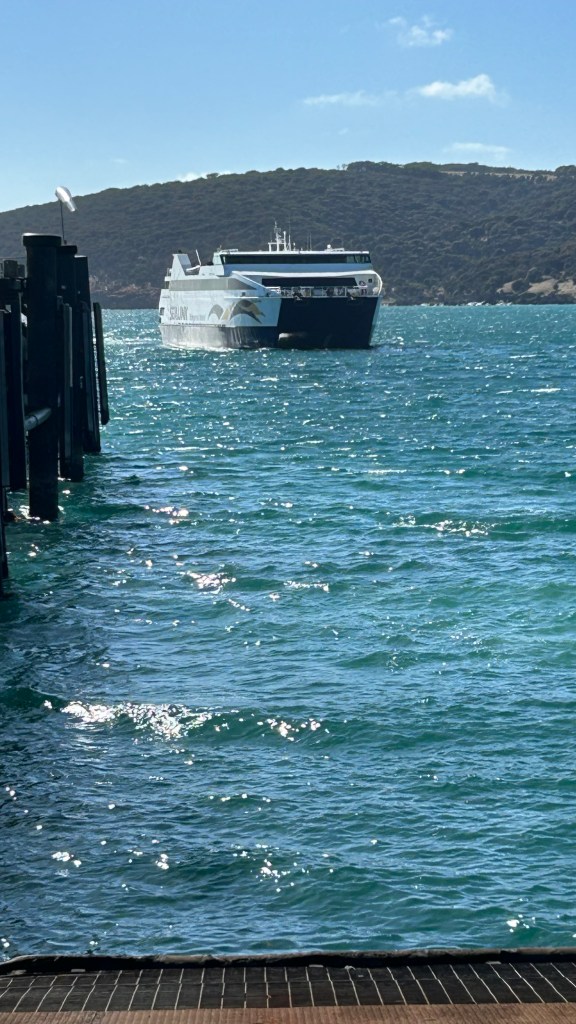
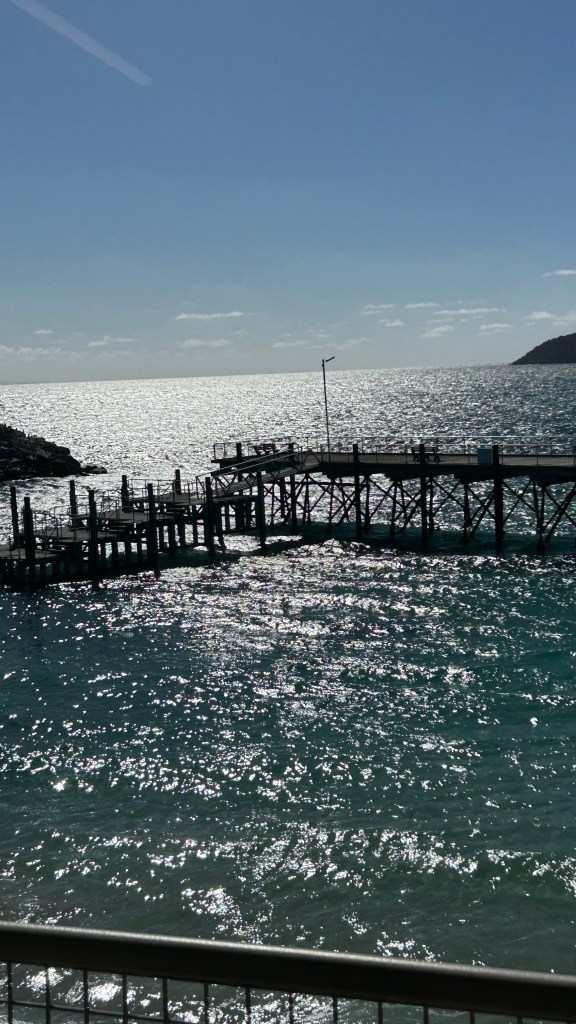
We arrived back at the Stamford at 11:00 totally exhausted but with a morning to sleep in and an afternoon tour of Adelaide.
Thursday 8th February, 2024 – Arrive Adelaide
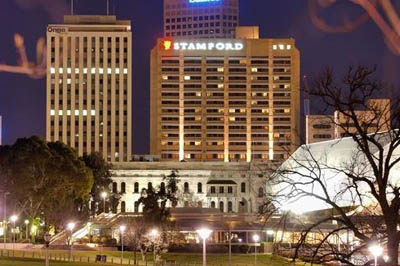
Stamford Plaza Adelaide for 2 nights
Friday 9th February, 2024 – (AS13) Adelaide Hills and Hahndorf
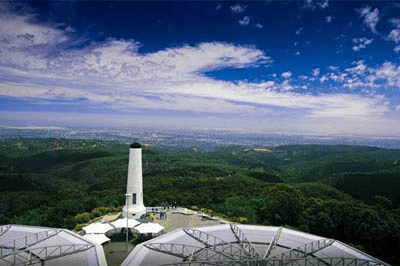
We departed our hotel for an afternoon tour of the Adelaide Hills and drove along North Terrace -Adelaide’s cultural precinct – on the way to Mount Lofty Summit, Adelaide’s highest peak.

We wound our way through the Adelaide Hills villages of Crafers, Stirling, Aldgate and Bridgewater before arriving at Hahndorf, Australia’s oldest German settlement. We spent the afternoon exploring the main street of Hahndorf where we checked out the local arts and crafts before enjoying afternoon tea and a traditional German beer tasting at the Hahndorf Inn.
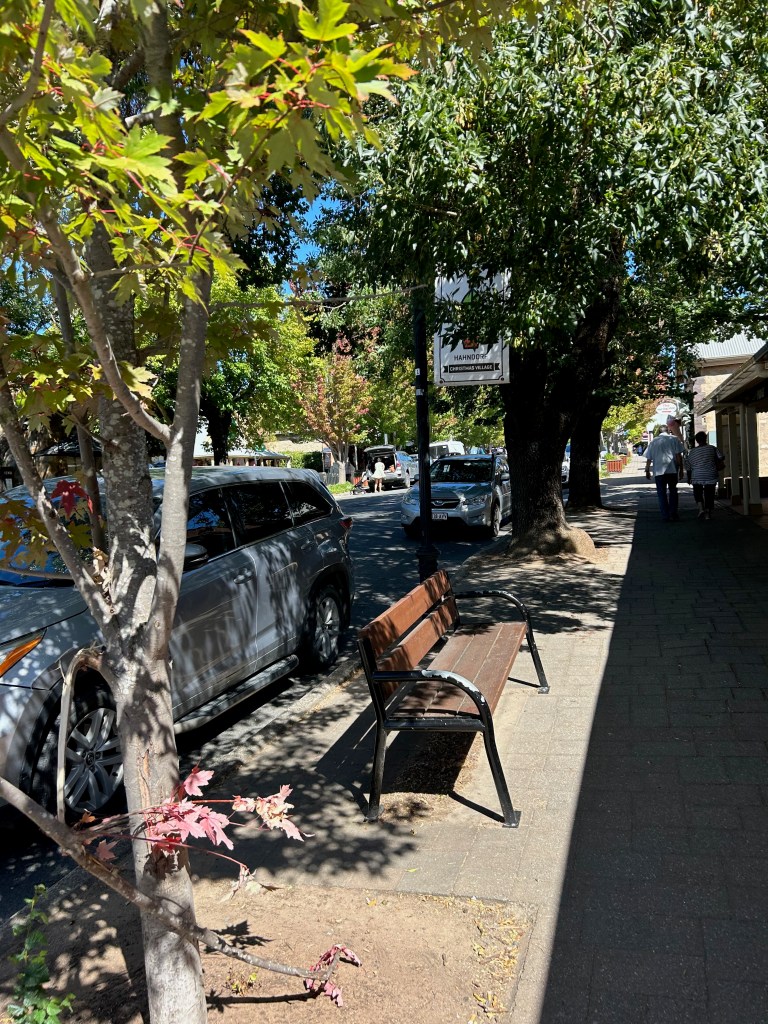
We had a light dinner on Runkles Street in Adelaide and went to bed early because of a 6:00 am flight to Sydney and then Ayer’s Rock. We met a Quantas Airline attendant, Sharon, in the elevator of the hotel and, as she promised, met her on the flight and she gave us a treat.
Arrive Ayers Rock
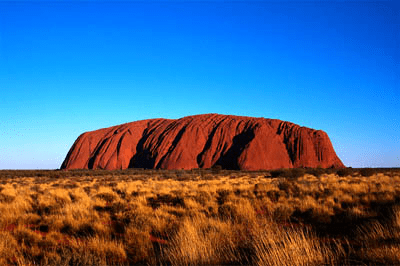
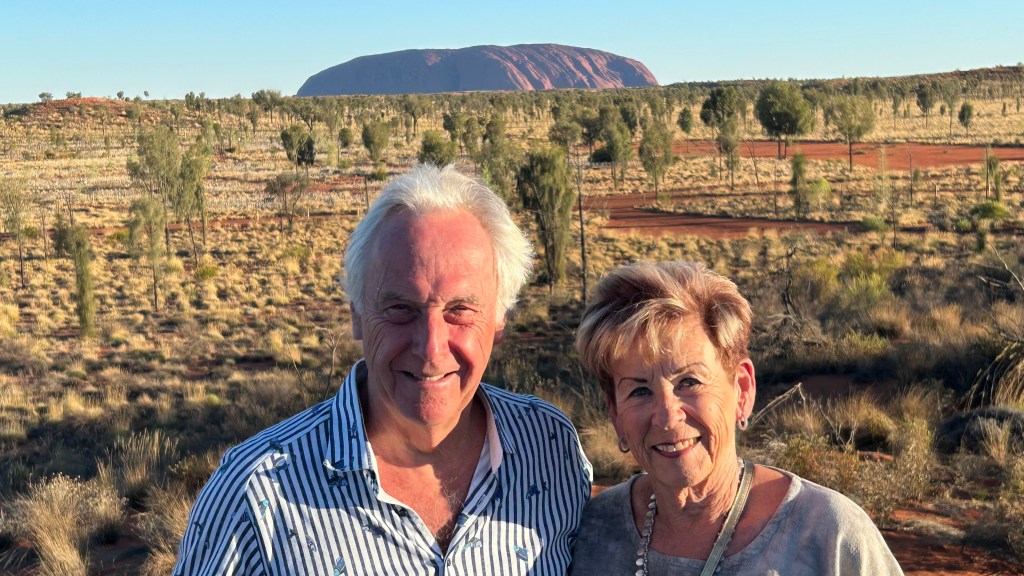
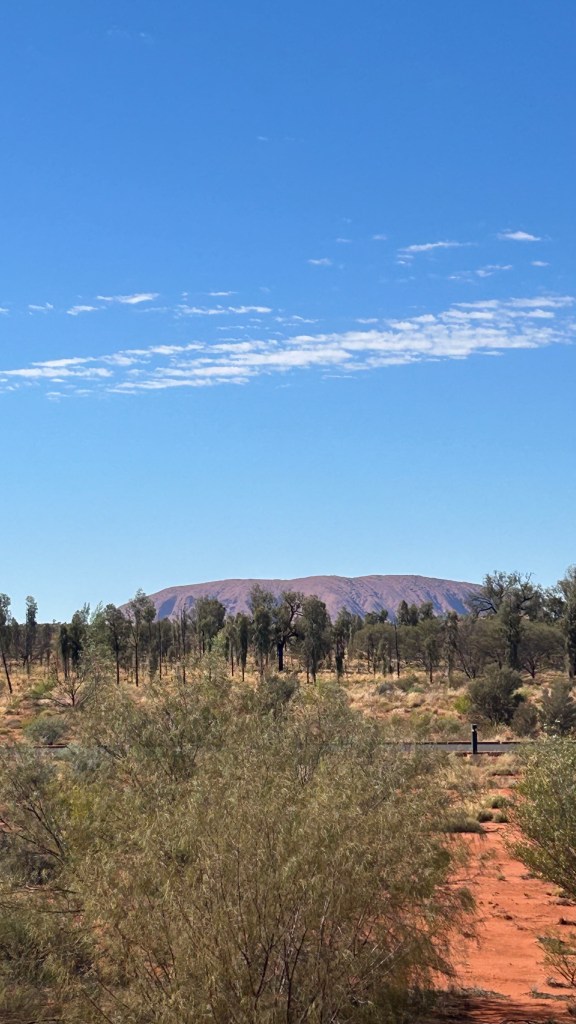
Ayers Rock/Uluru rises 348 metres from the desert and has a girth of 9.4 kilometres. These statistics alone assure its star role as the world’s most famous monolith, yet it is estimated that at least two-thirds of the Rock lies beneath the surface.
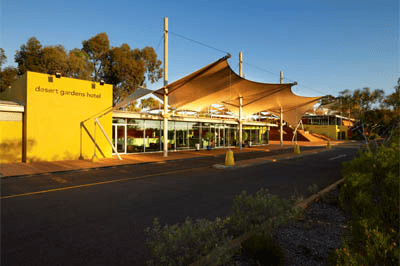
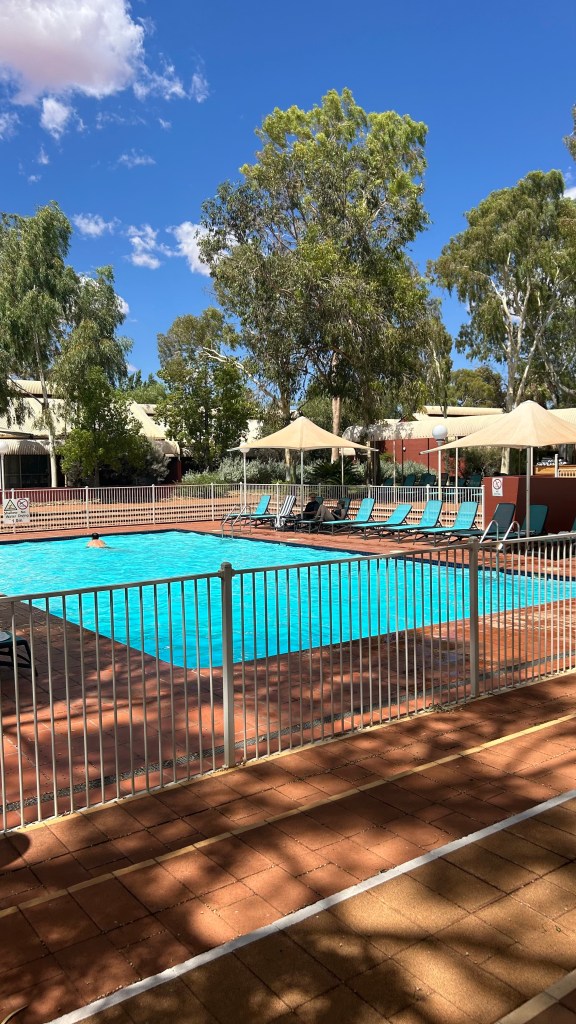
A comfortable 4 star hotel at Ayers Rock Resort, Desert Gardens Hotel, is set amongst magnificent ghost gums and flowering native shrubs – we paid extra for a deluxe room with Rock views.
We relaxed in the comfort of our private balcony and unwound near the pool.
Saturday 10th February, 2024
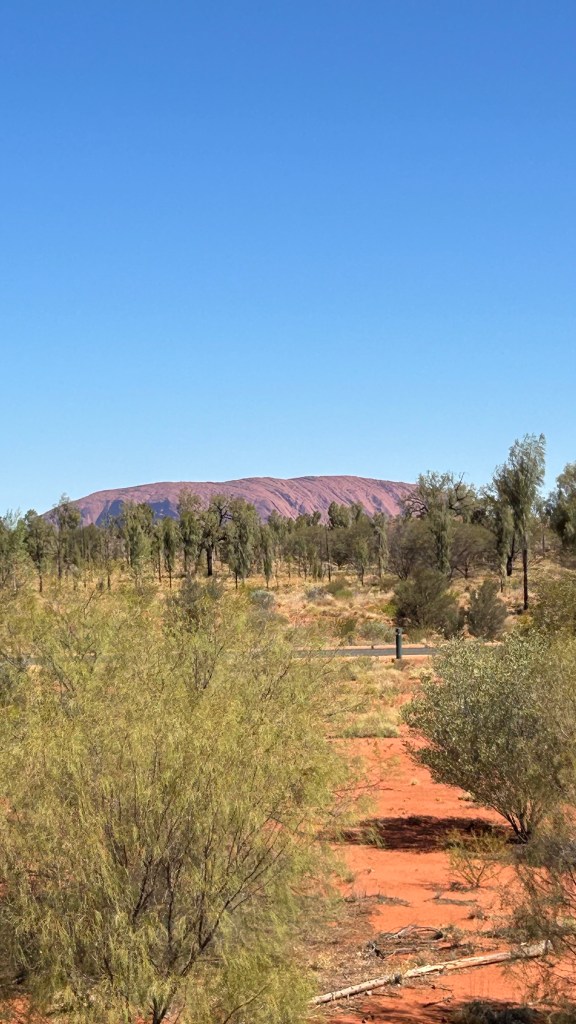
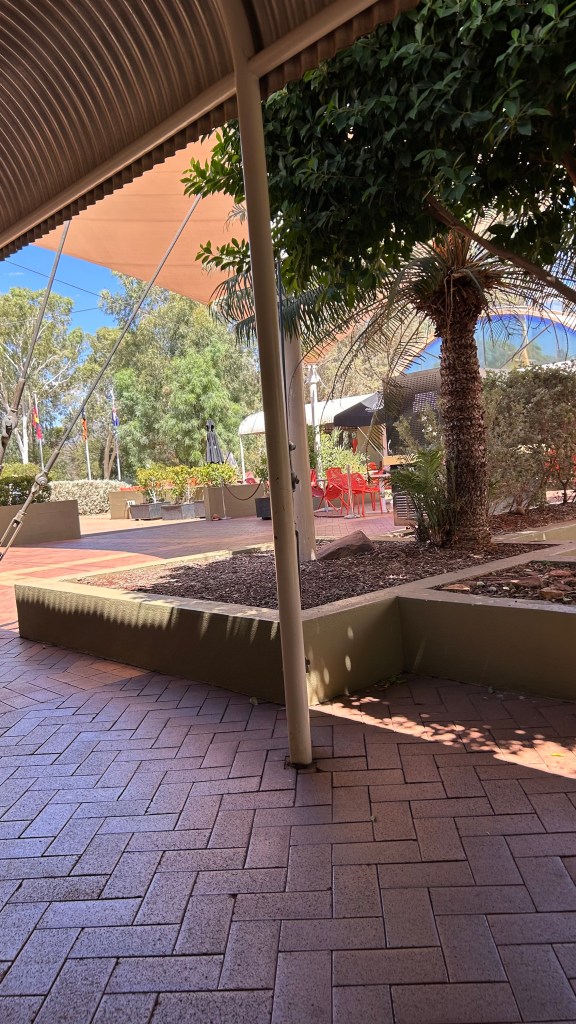
We arrived by coach from the airport in Ayer’s Rock early afternoon. We walked around the facilities and then took the shuttle into the small town and had a bowl of soup.
In the evening, we attended the Wintjiri Wiru Sunset Dinner.
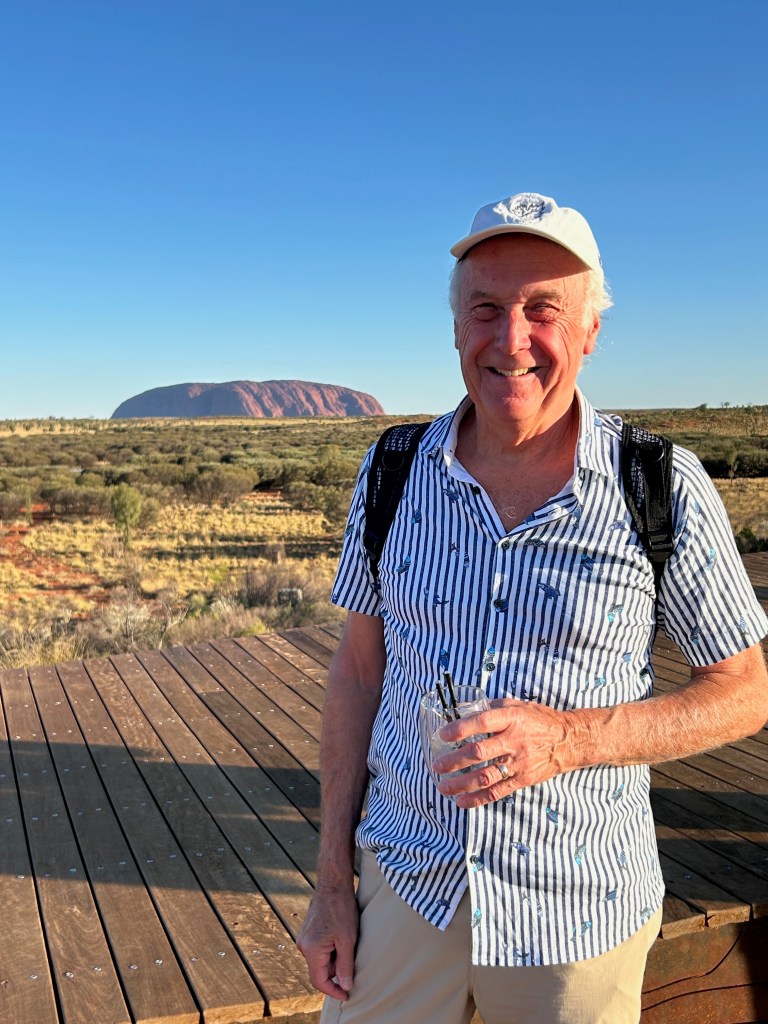
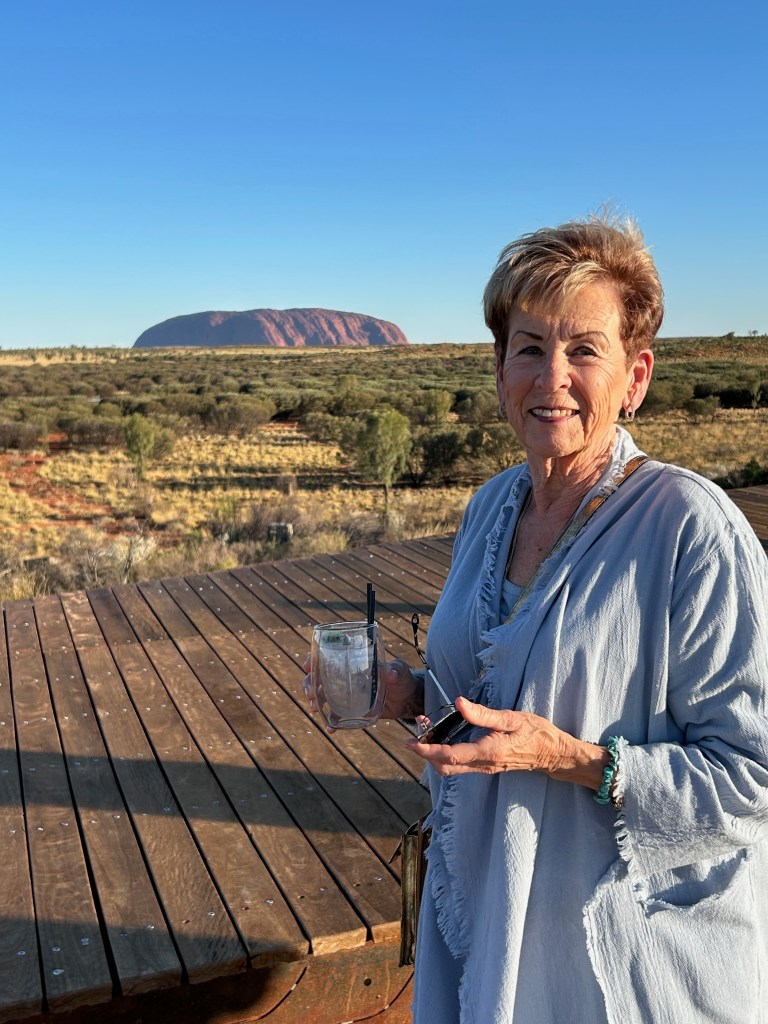
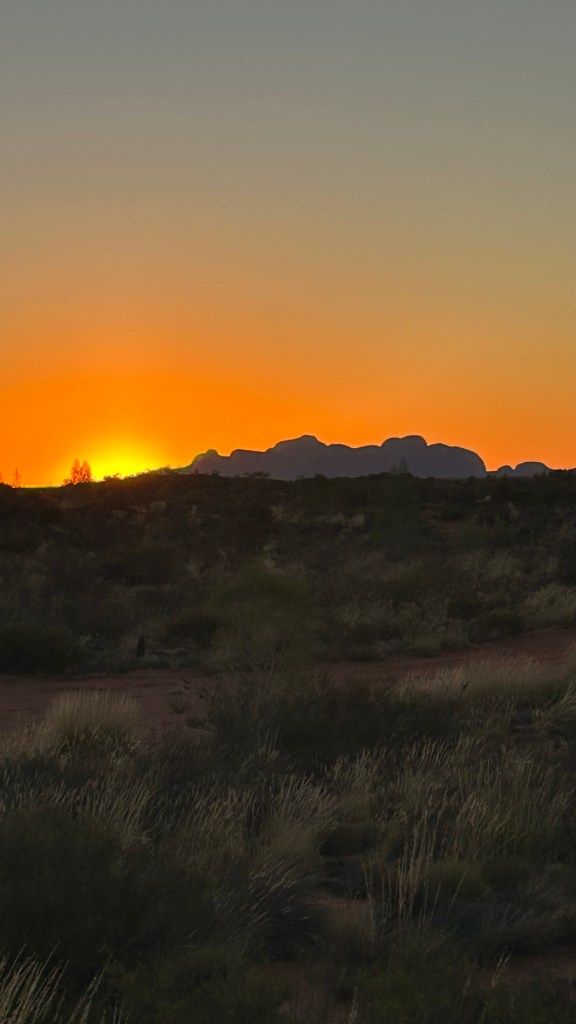
Our Wintjiri Wiru experience began deep in the desert. After a short journey from Ayers Rock Resort, we took a gentle evening stroll through the desert along an elevated walkway until we reached the open-air theatre, set upon a dune top. We were greeted with several delicious cocktails, infused with native ingredients while taking in the incredible views and watched in awe as the sun slowly set over Uluru and Kata Tjuta. As the show was about to begin, we enjoyed a gourmet dinner hamper with wine. With the heart of Australia as the backdrop, a story passed on for thousands of generations, was shared with us. Unfortunately, we had eaten so many canapes that we could not eat all the dinner.
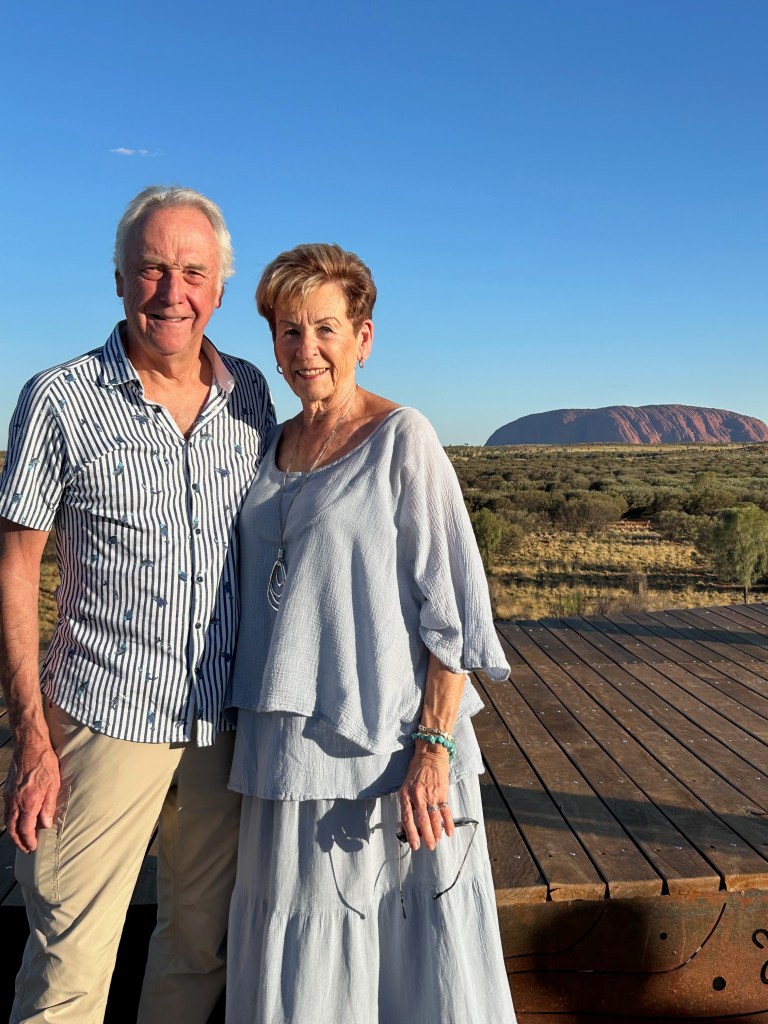
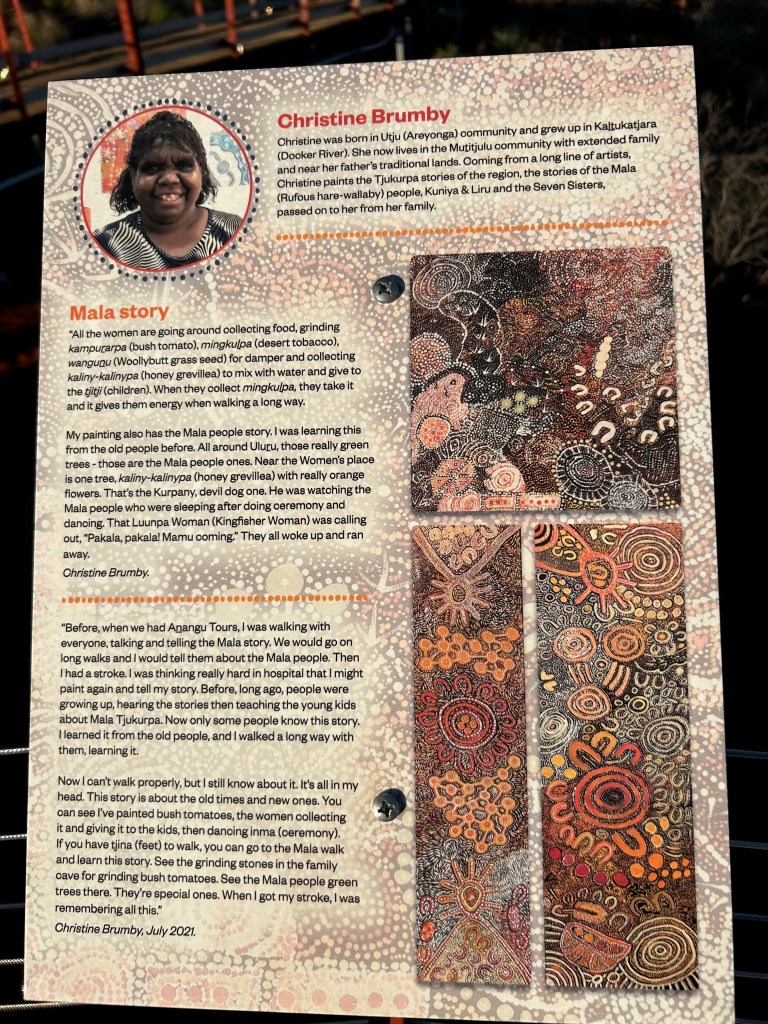
We witnessed the ancient Mala story re-told with ground-breaking technology. Choreographed drones, lasers, and projections lit up the night sky in a modern, artistic expression of an ancient, Anangu story. We listened to a traditional Inma soundtrack and narration in the local Pitjantjatjara language, and were immersed in a living story. The thousands of drones created images for the Mala story with the story first in the woman’s original tongue and then the man in English. It was the story of a Kingfisher woman warning the people of a demon coming to destroy them. They did not listen and the devil dog killed the men and later most of the tribe. The moral: listen to the advice.
Sunday 11th February, 2024 – (SUH) SEIT Uluru Highlights
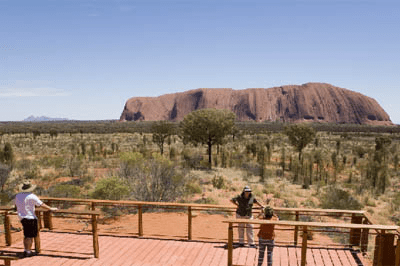
We set off very early in a small van (it was late because of mechanical problems and caused some stress) to see the sunrise on Uluru and hear some stories about the local tribes and the meaning of Uluru.
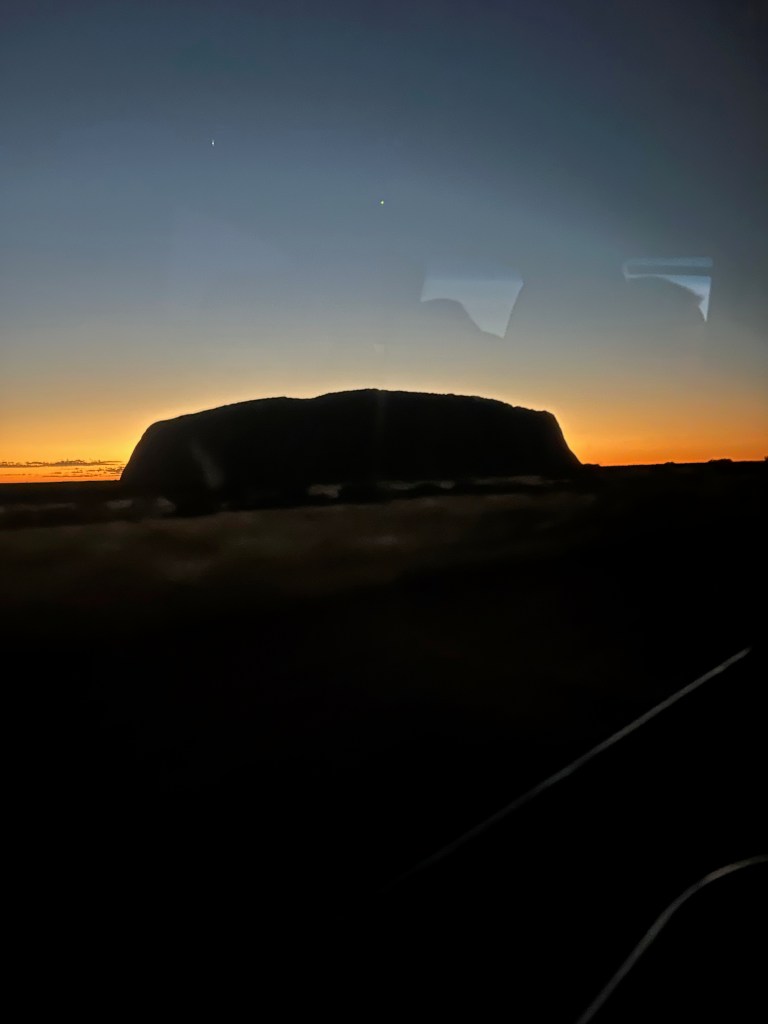
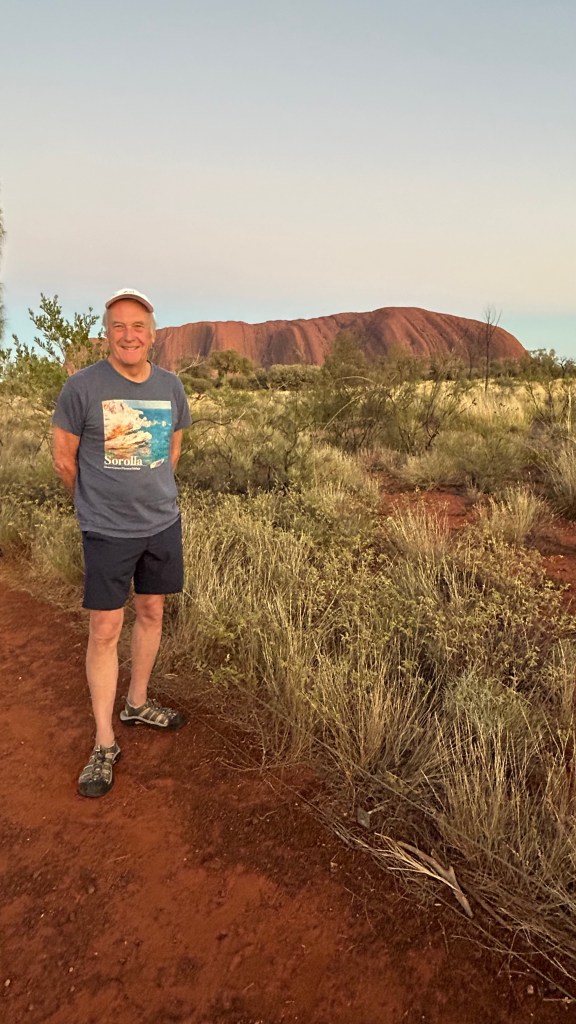
As you travel towards Uluru its vast shape rises from the sand dunes as the early dawn light highlights its presence in this country. Our guide took us to a special location with uninterrupted views to watch the sun rise over this amazing monolith.
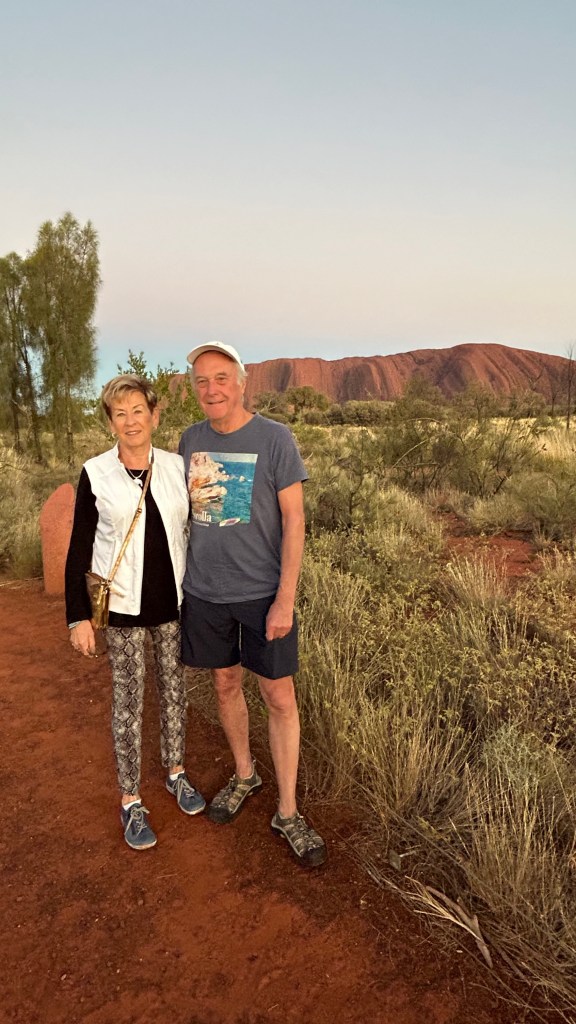
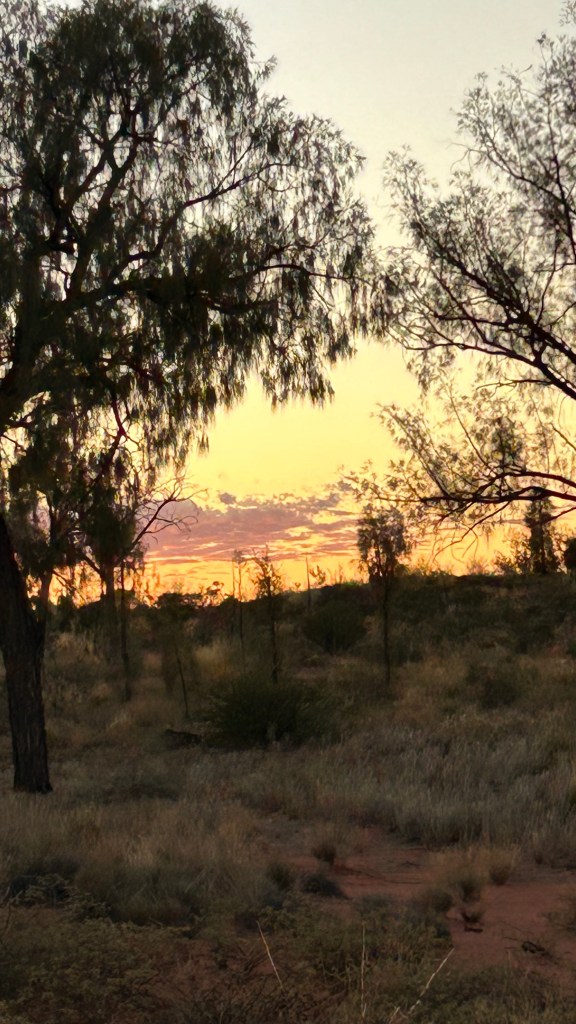
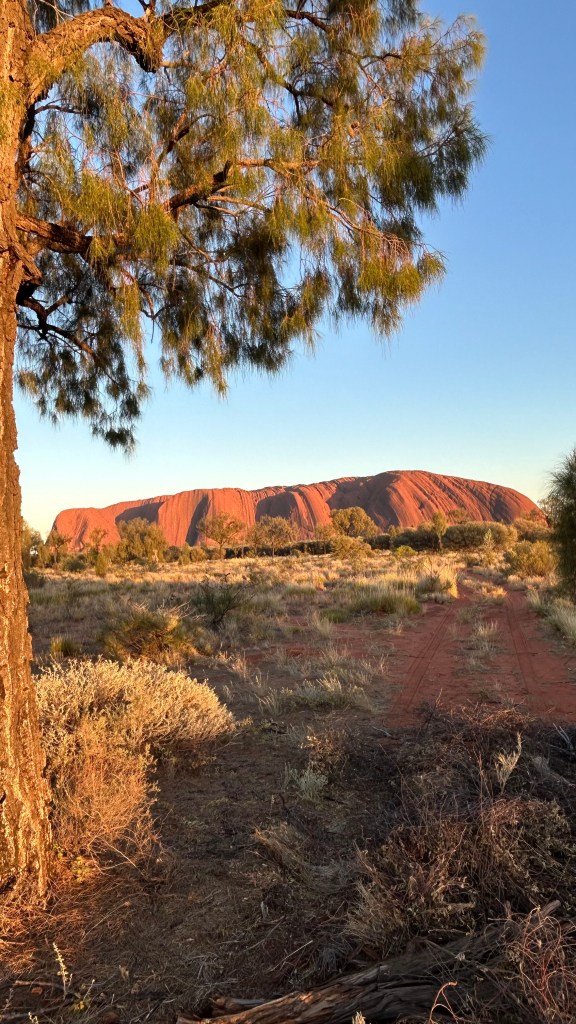
We enjoyed a picnic breakfast as we watched the sun on the massive rock and before our guide escorted us on a short walk to Mutitjulu Waterhole at Uluru where we learned the creation stories of Liru (poisonous snake) and Kuniya (Python).
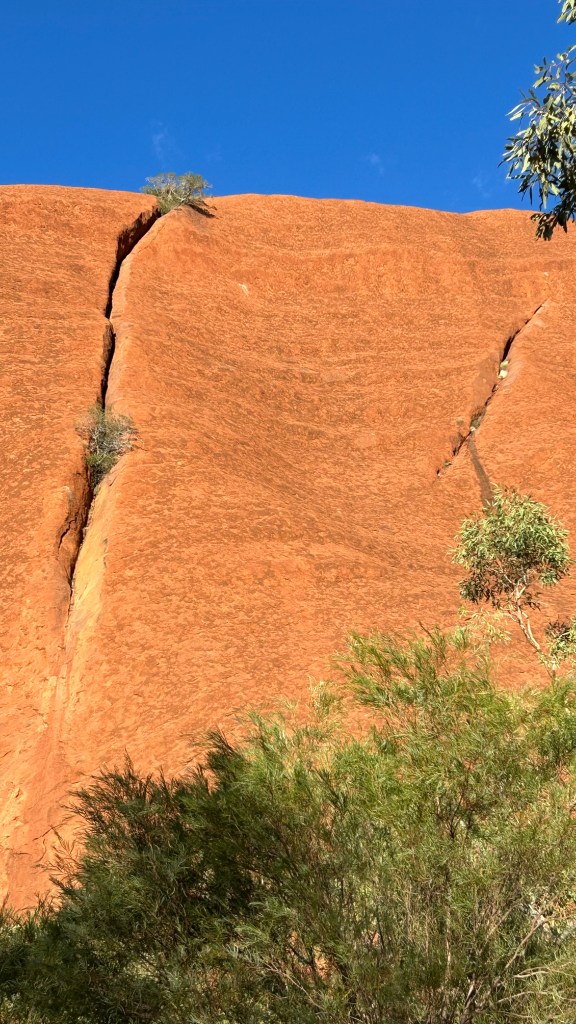
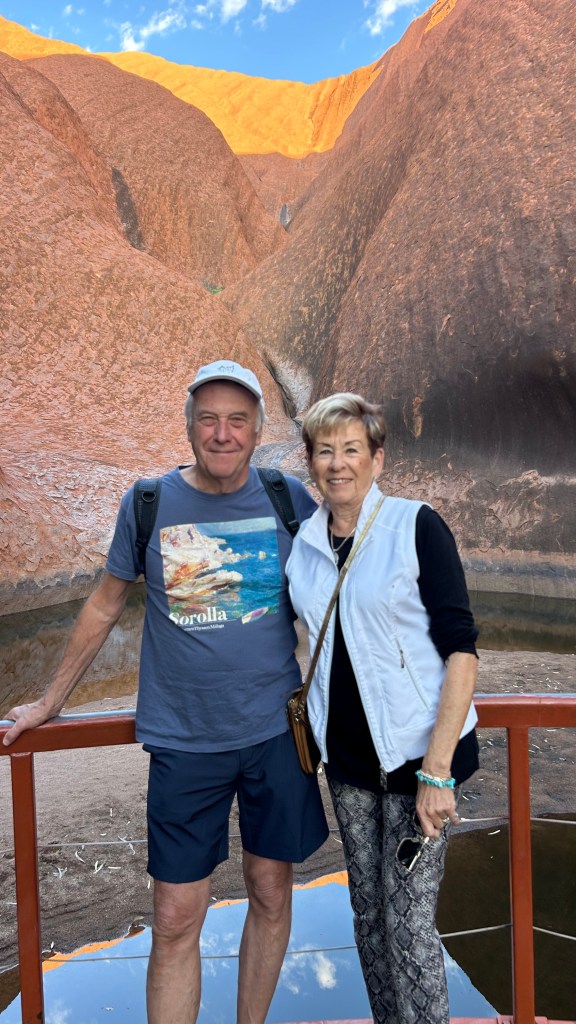
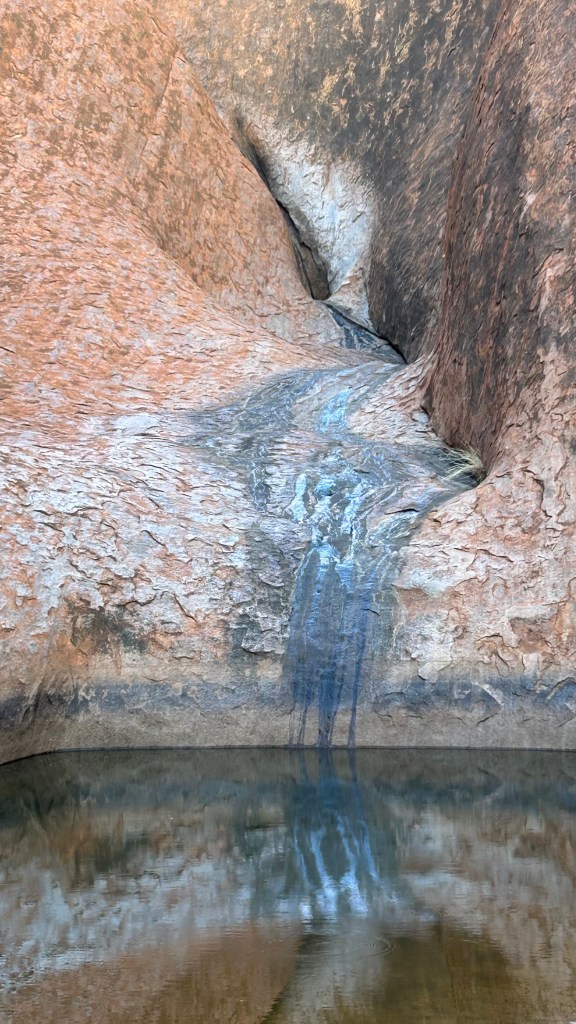
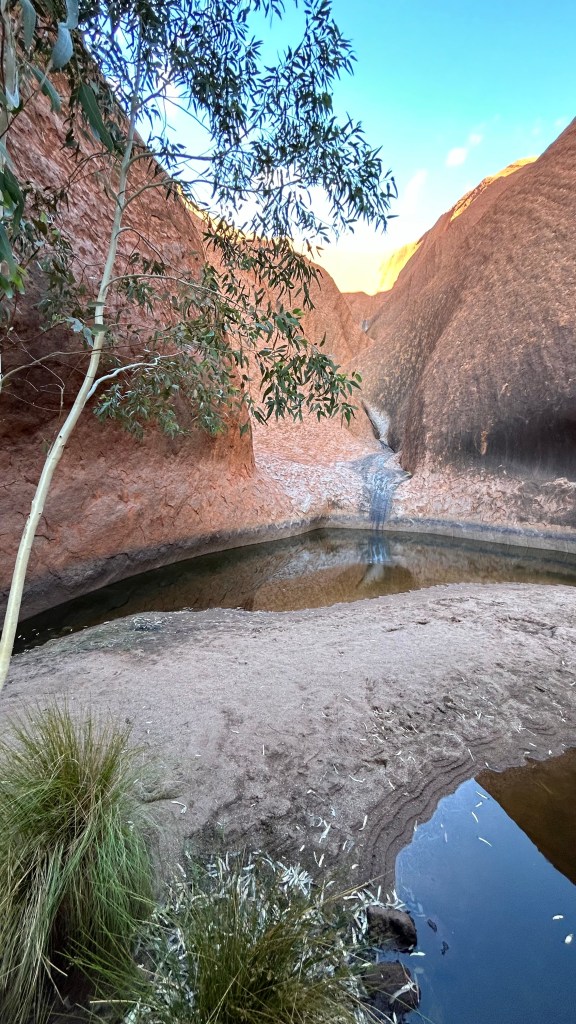
This is the family cave. For many generations, Anangu families camped here: the men would hunt for meat and the women and children would collect bush food to be shared. At night around the campfire, generations of the people told stories, teaching the children about this place and painting on the rock.
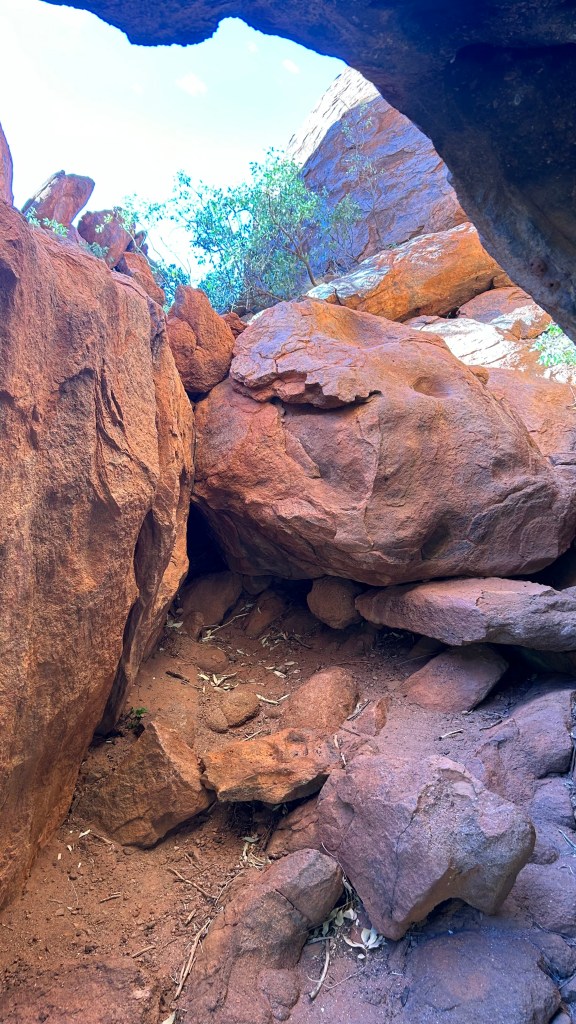
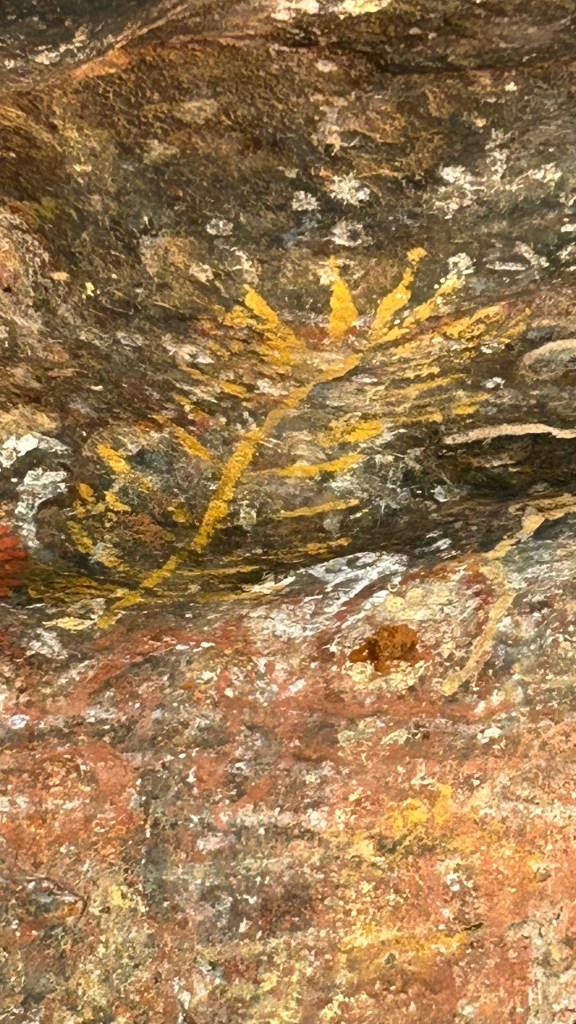
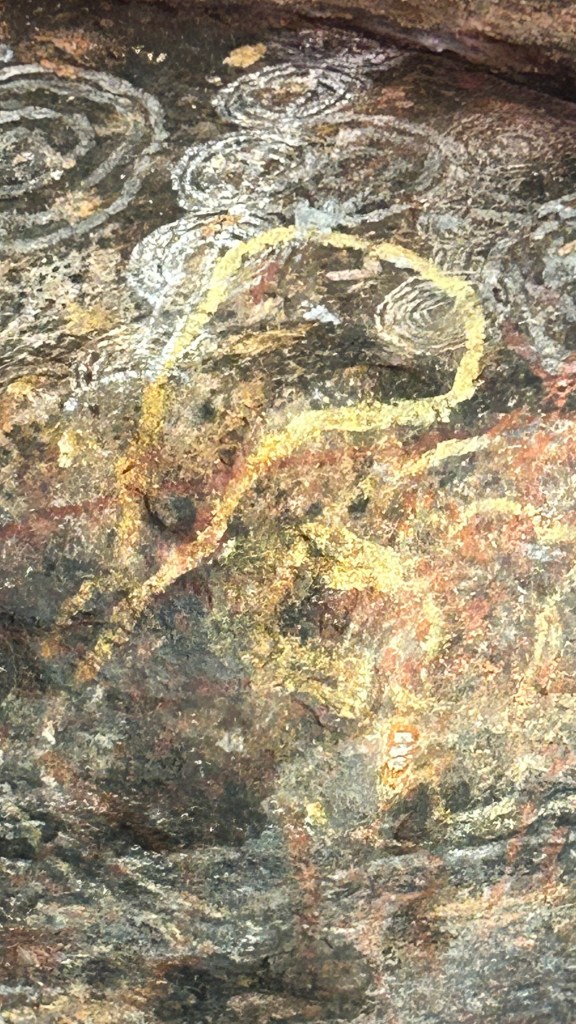
We drove around the base of Uluru before returning to the resort.
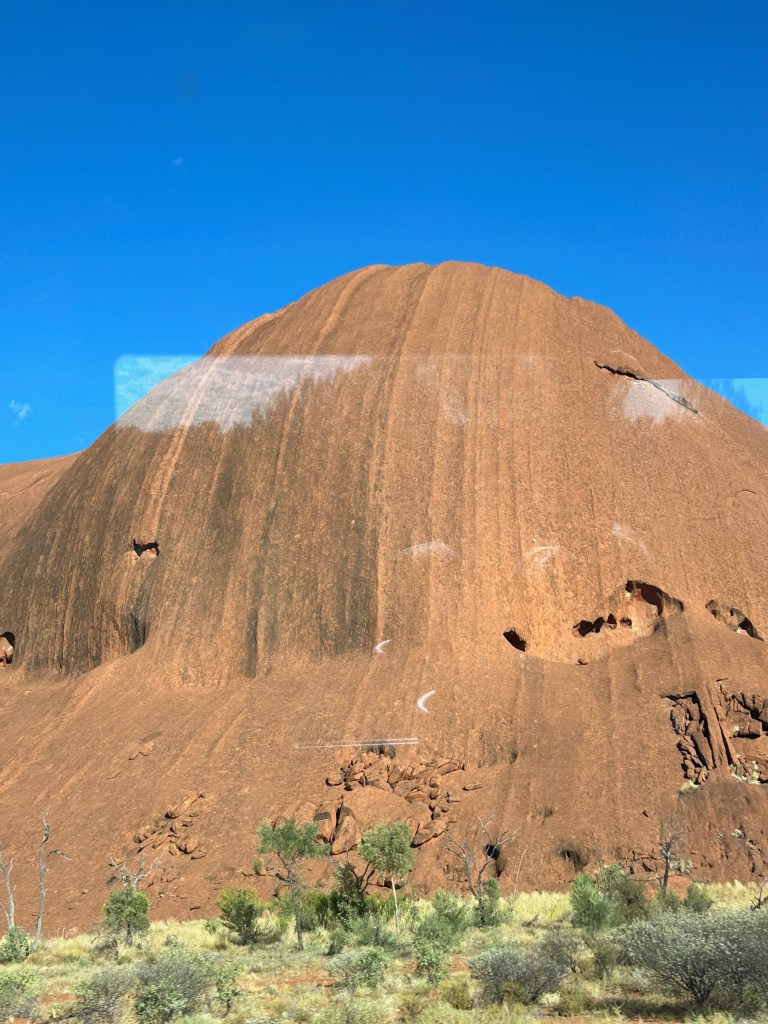
All in all an amazing morning. The waterfall and pond in Uluru was a complete surprise and very mystical as was the cave and its drawings. For the rest of the day, we visited the art gallery and spent some time at the pool.
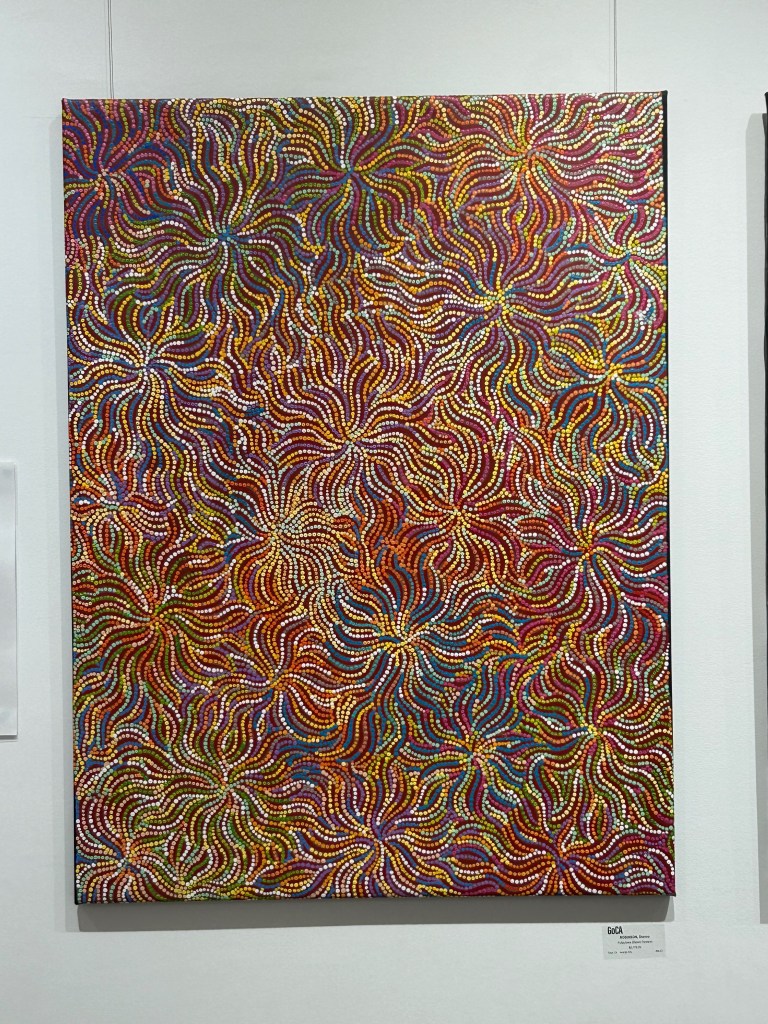
Dianne Robinson was born in Alice Springs in 1980, and her mother’s country was at Indsulkana, while her father’s was Coobunya. She grew up in Indulkana and attended primary school. She went to Inglefarm Boarding School in Adelaide and returned after graduation. Dianne worked at the Community Aged Care for a couple of years and then began work as an artist.
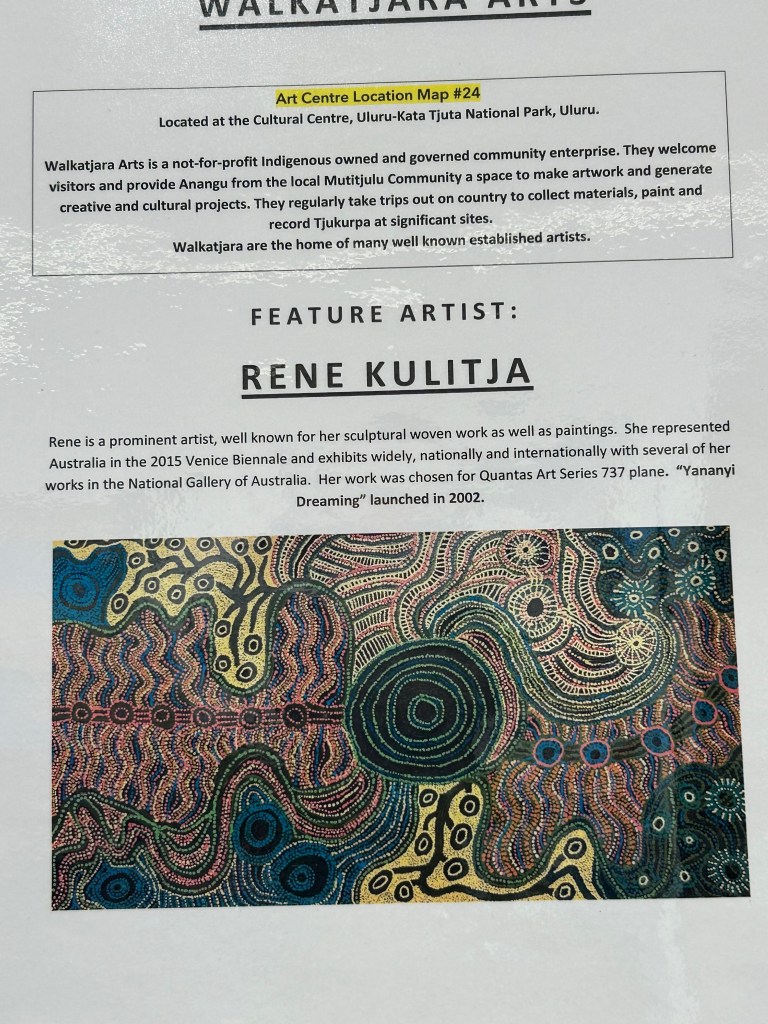
Rene Kulitja is a prominent artist well-known for her sculptured woven work as well as paintings. She represented Australia in the 2015 Venice Biennale. Painting: Yananyl Dreaming.
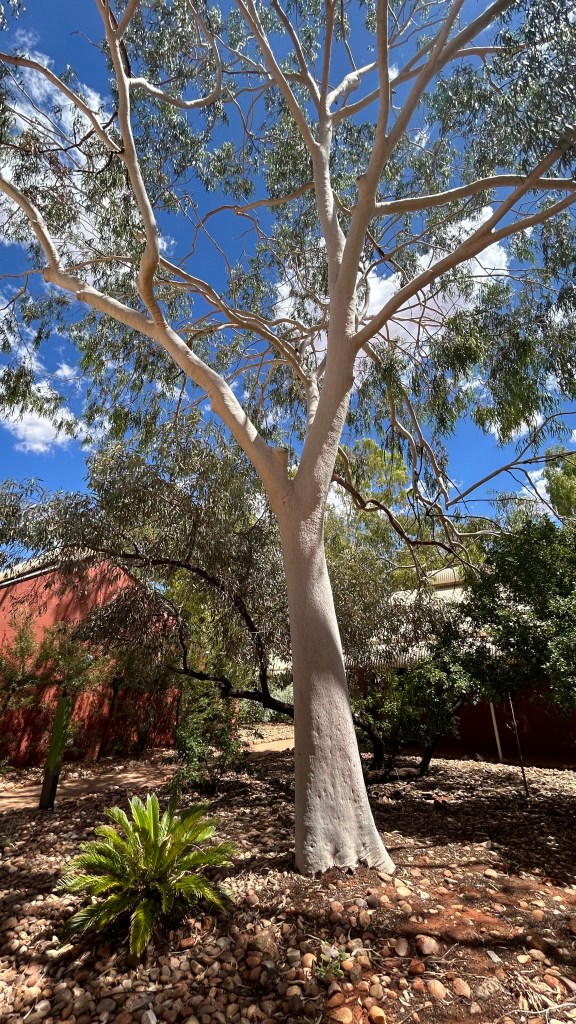
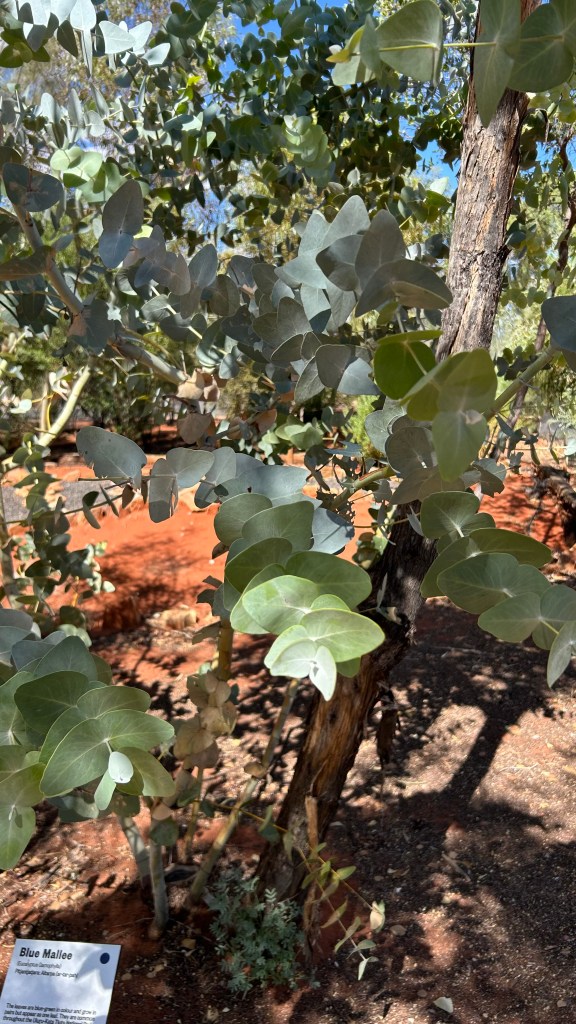
Two things to note from the gardens at the resort: one is the very white tree trunks, evidence of the tree having burned and the bark having fallen off; and two, the eucalyptus tree that looks like the kind we get in the florist with the blue leaves.
A Night at Field of Light
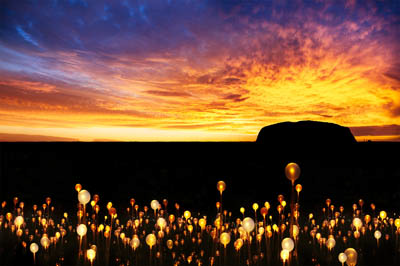
As the sun sets on the horizon to the music of a didgeridoo, we enjoyed canapes and sparkling wine. As darkness fell and the coloured lights of the 50,000 glass spheres came to life, we joined our table of fellow travellers for a three-course menu infused with bush tucker flavours. As the night ignited with countless stars, we listened to a local star talker decode the southern night sky.
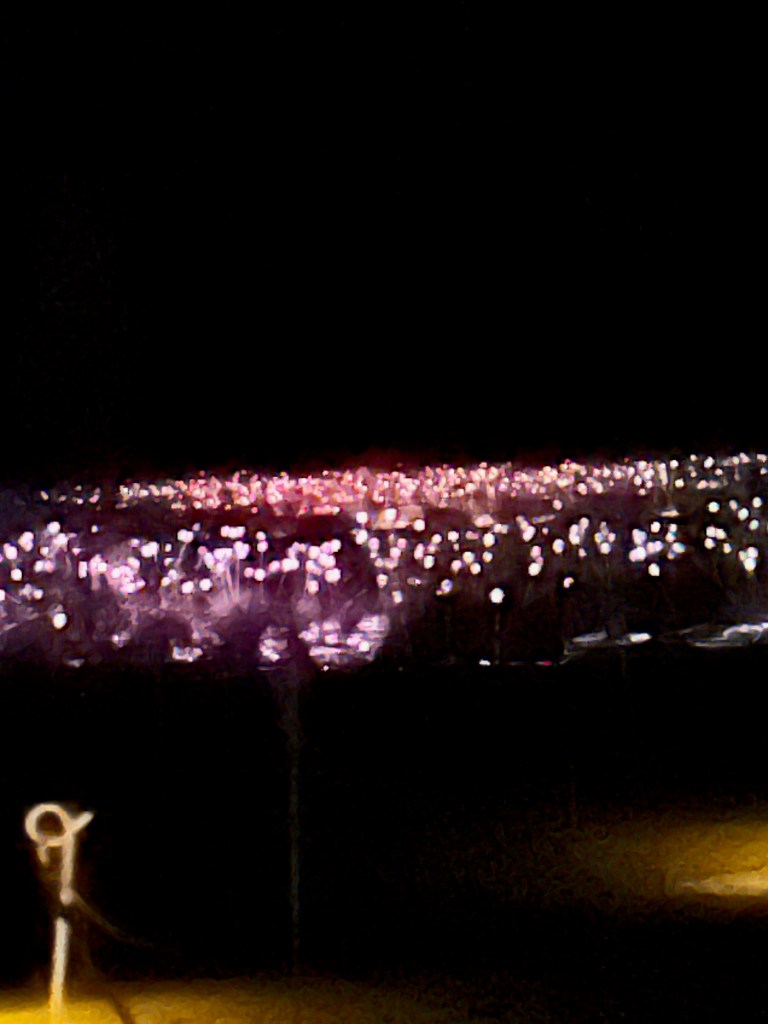
After dinner, we enjoyed a sweet treat and port while viewing the illuminated installation in the darkness. The walk back through the field of lights was a bit of a challenge given how dark it was. End of a full and interesting day at Uluru. We say goodbye to Ayer’s Rock and are off in the morning for the state of Queensland in the north east. Glad to see the last of the aggressive flies!
Monday 12th February, 2024 – Depart for Cairns, Australia
The Qantas flight was on time and uneventful. The limousine driver was there to take us to the Pacific Hotel.
Cairns
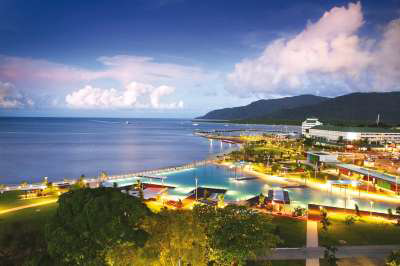
Cairns, pronounced Cannes, is the heart of the Tropical North and is gateway to some of the best scenery in Australia. Founded in 1876 as the port for inland gold fields, Cairns has matured from a flighty frontier town to a friendly international gateway and has become the most welcoming of all Queensland cities. The city is a blend of colonial architecture, ranging from grand public and commercial buildings to wooden houses built in the distinctive north Queensland style. Cairns is the focal point for the magnificent Great Barrier Reef Marine Park and is surrounded by World Heritage listed rainforests. We really enjoyed Cairns.
Accommodation:

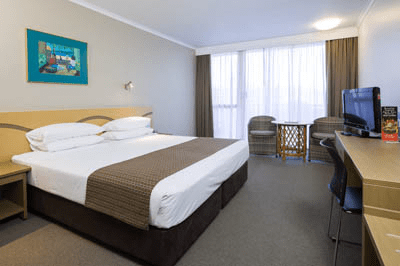
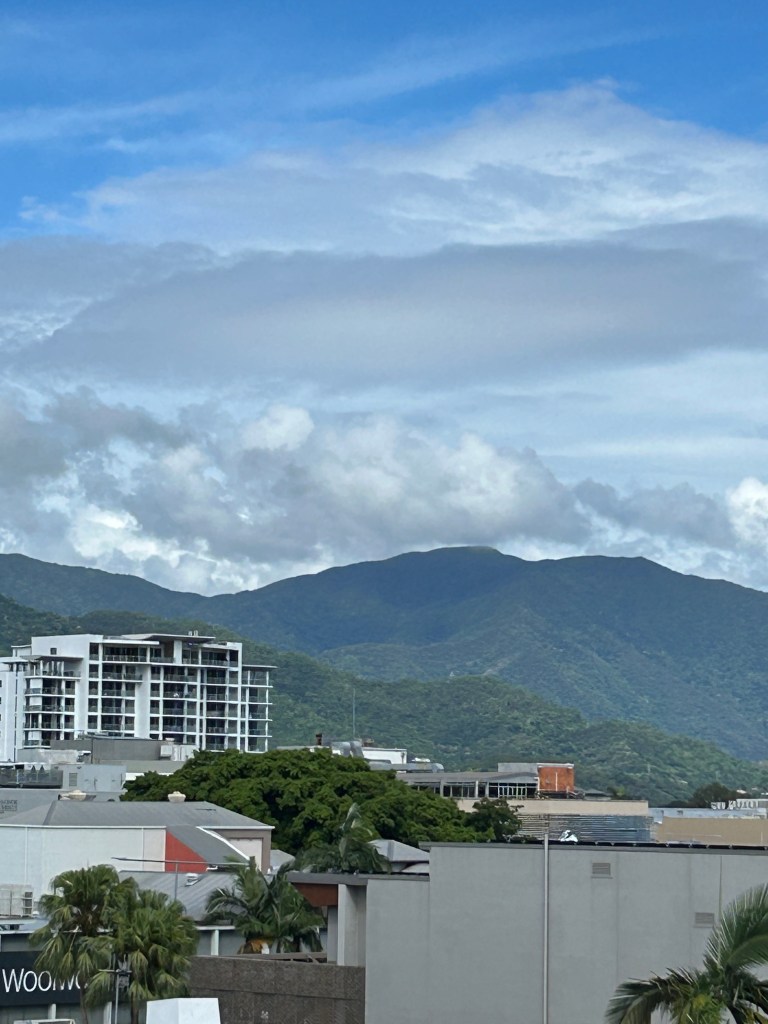
The Pacific Hotel Cairns boasts a magnificent location (downtown and opposite the Casino). We had a spacious room with a balcony and lovely view of the mountains.
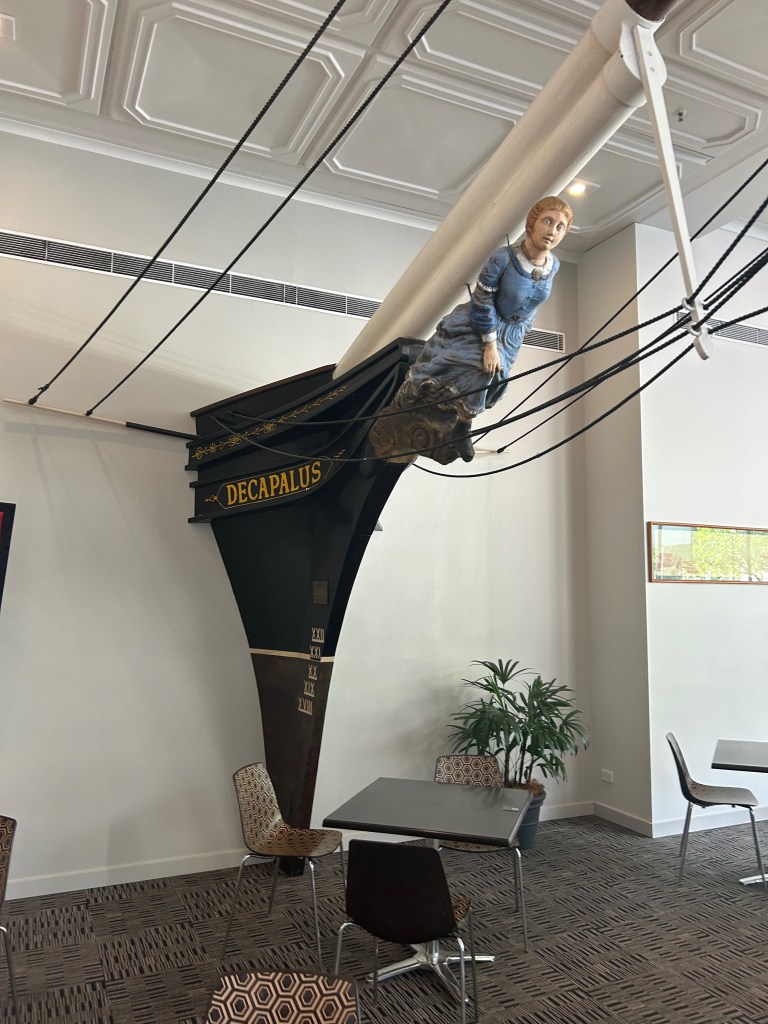
After we settled in, we walked around the waterfront and stopped to have a drink.
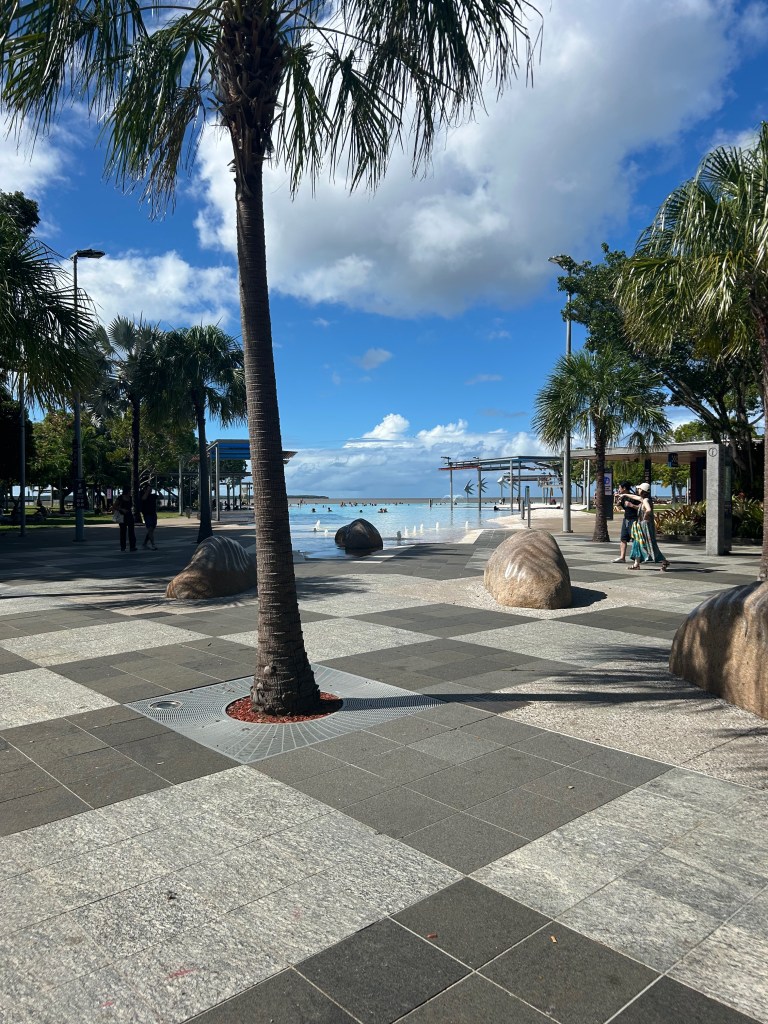
Tuesday 13th February, 2024 – Kuranda Classic Tour with Train SkyrailRainforest Cableway and Rainforestation
We got the bus at the Reef Hotel Casino at 8:00 am and arrived back at 5:30.
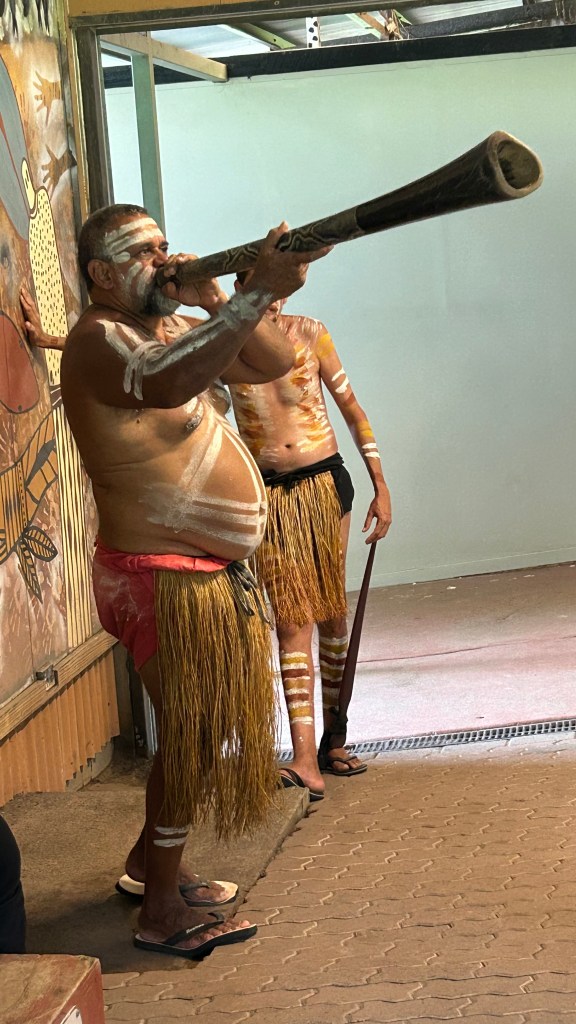
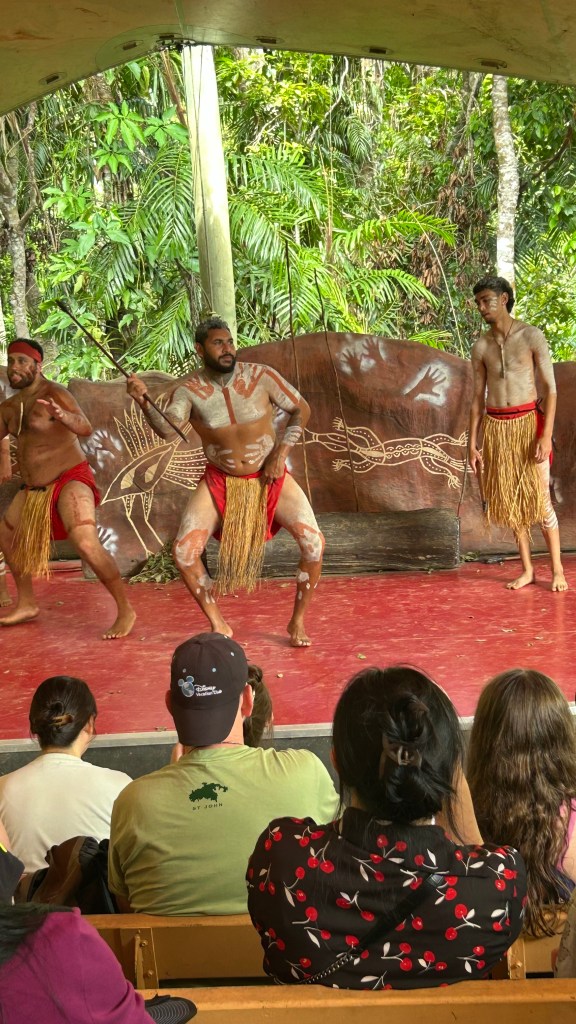
The Classic Kuranda Experience included a walk though the shops of Kuranda and then we were transferred to Rainforestation Nature Park, where we had Australian BBQ lunch, a guided tour of the rainforest on board an amphibious Army Duck, and the Pamagirri Aboriginal Dance performance, followed by the Dreamtime Walk. We learned how to throw a boomerang, saw a spear-throwing demonstrations, and learned about aboriginal culture.
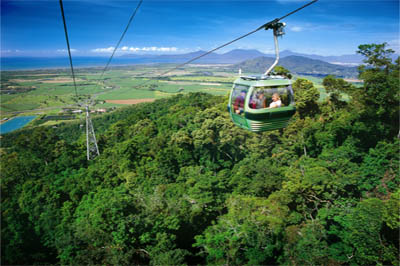
A guided tour of the Koala and Wildlife Park commenced at the Cultural Centre and our coach then transferred us to Kuranda Skyrail Terminal for the 7.5 kilometre Skyrail Rainforest Cableway journey down the mountain.
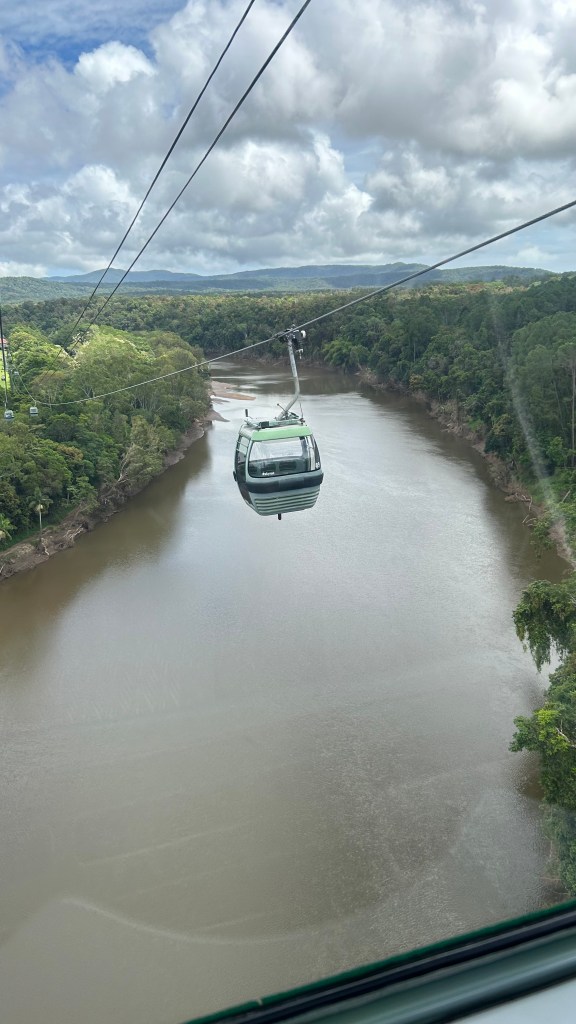
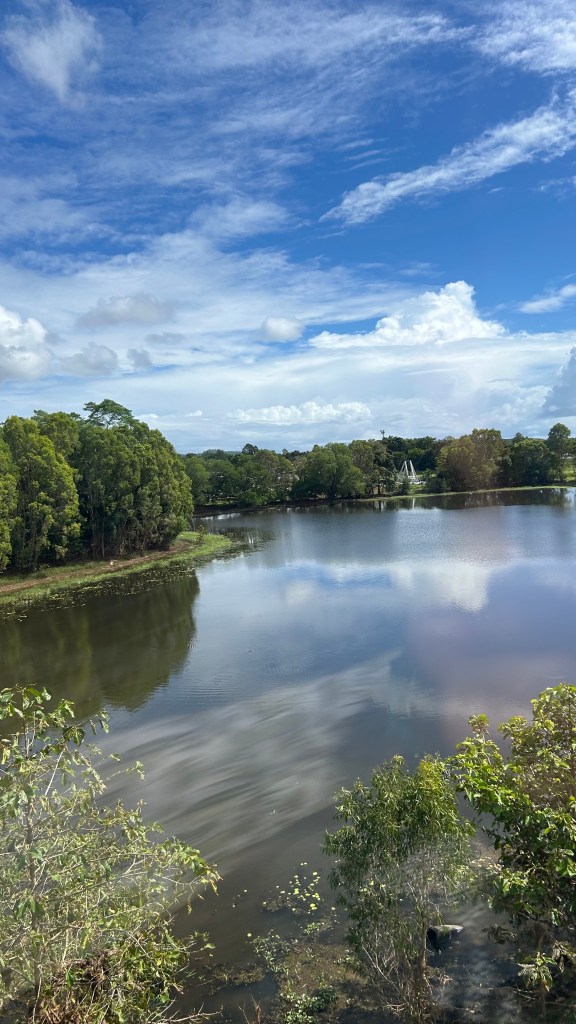
We walked through the boardwalk in the rainforest at the first stop of the skyrail.
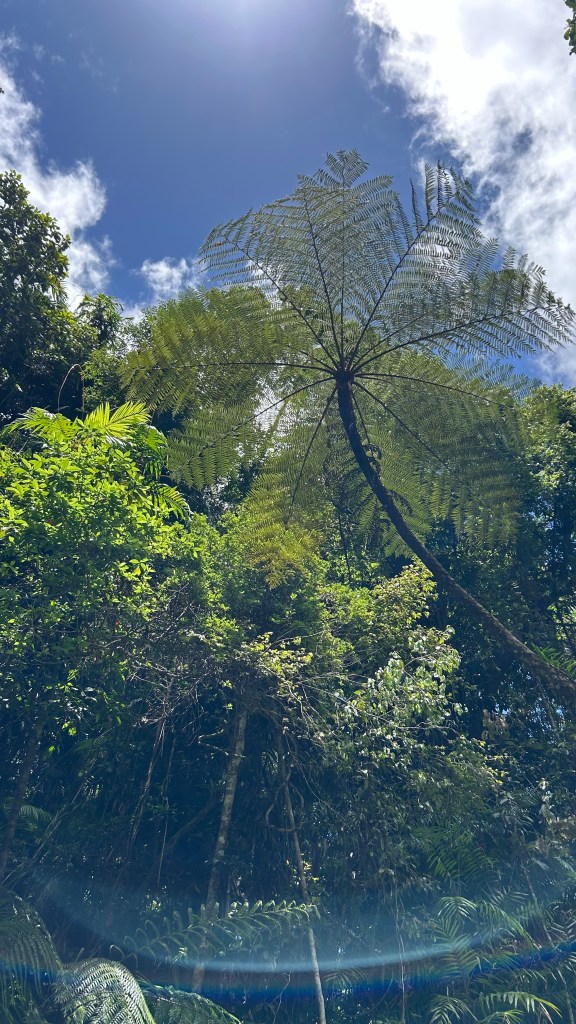
We then walked to the Barron Gorge.
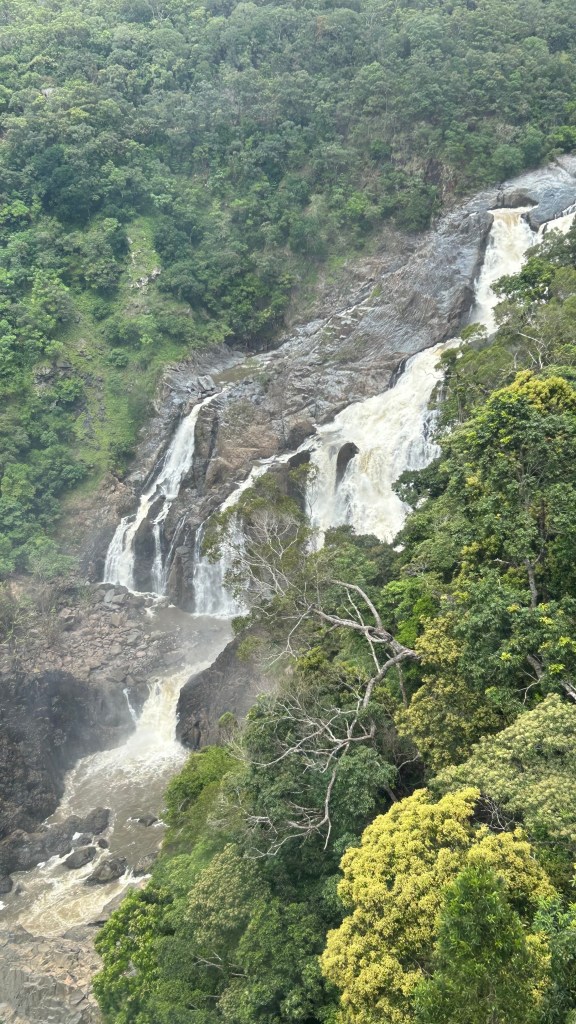
Millions of years in the making: Where majestic mountains once stood 100 millions years ago, this place was part of a mountain range that would rival the Andes of today. While these mountains have since eroded away, the remaining metamorphic outcrops are still visible and form the escarpment of the gorge. The Barron Gorge was formed by the forces of erosion over millions of years as the Barron River flowed through the rainforest, eroding the various rock layers as it went.
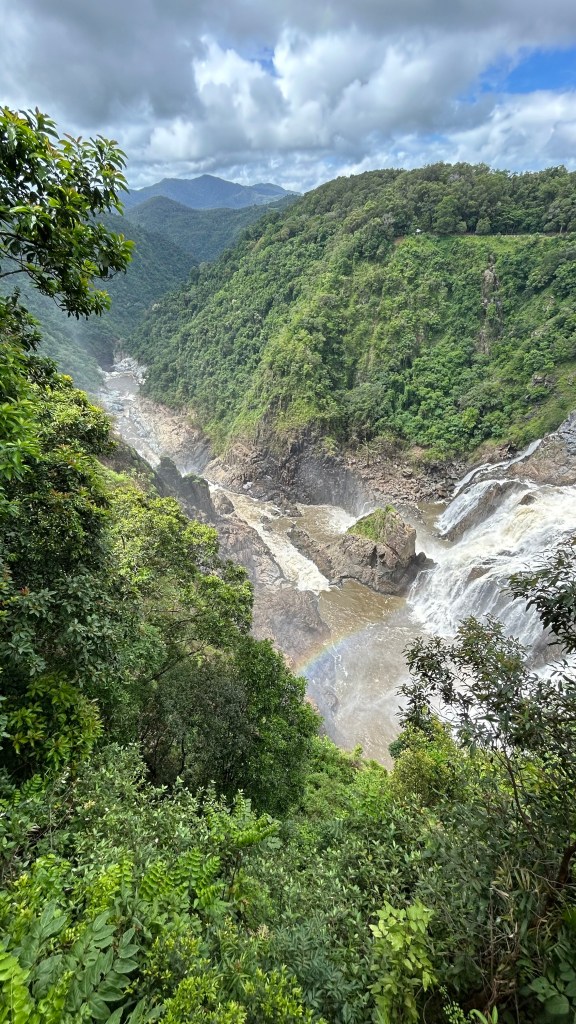
Barron Gorge National Park. Water without rain? Rainforests take 30% to 40% of their requirements directly from the clouds – even when it isn’t raining!
This is known as Cloud Stripping and the details were discovered right there at Red Peak. Misty clouds often cling to the forest canopy at around 600 metres above sea level, settling on leaves and stems and trickling down tree trunks.
Cloud Stripping is a vital source of water for the rainforest, especially during the dry season (April to October).
Then we boarded an amphibian “army duck” vehicle that drove through the rainforest and water with the guide identifying significant trees and plants.
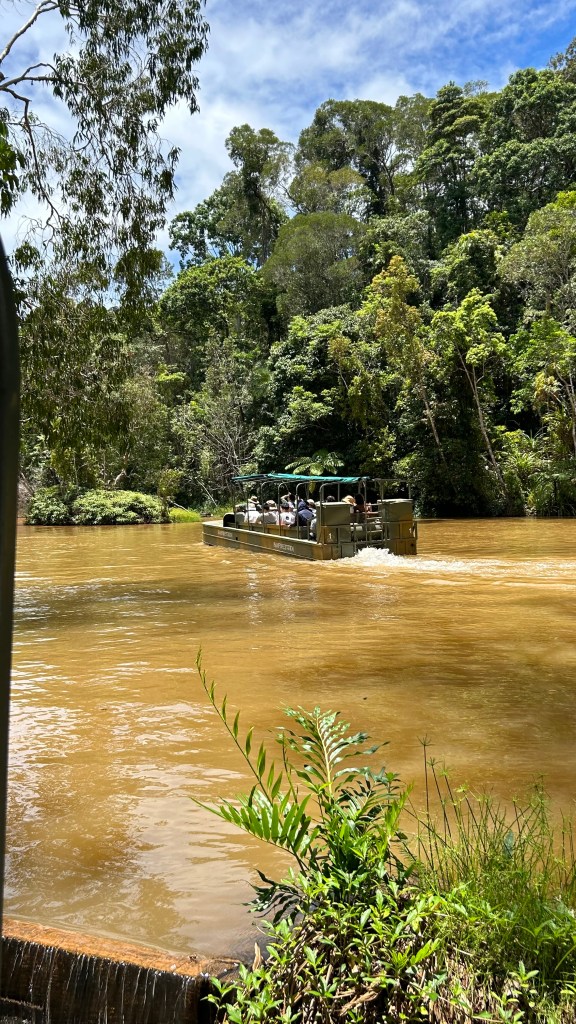
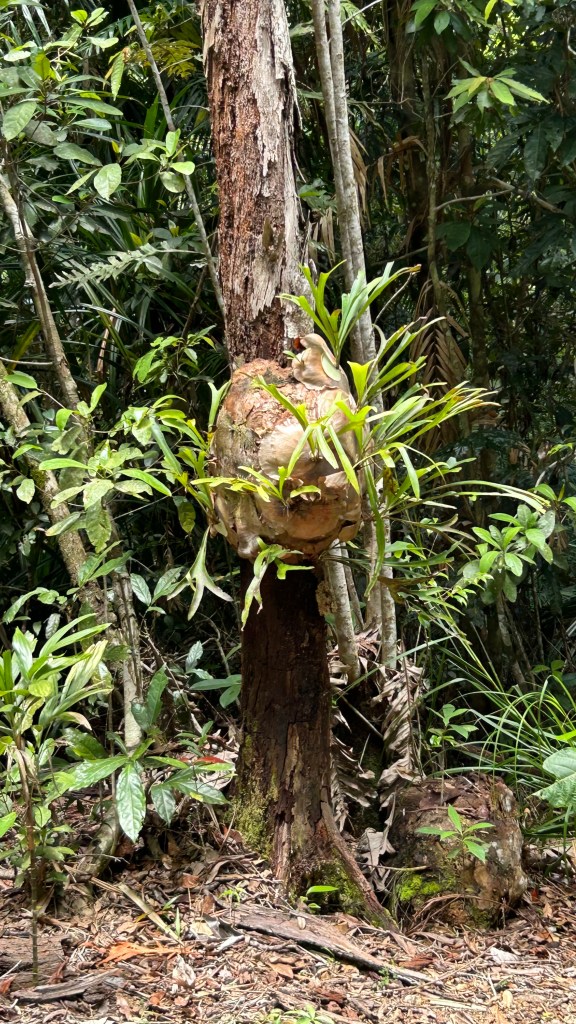
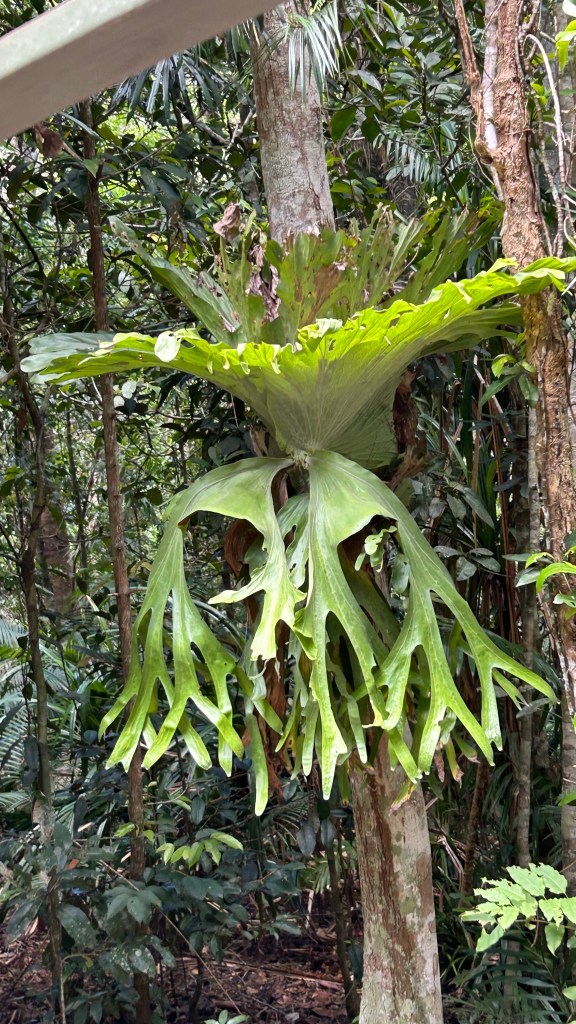
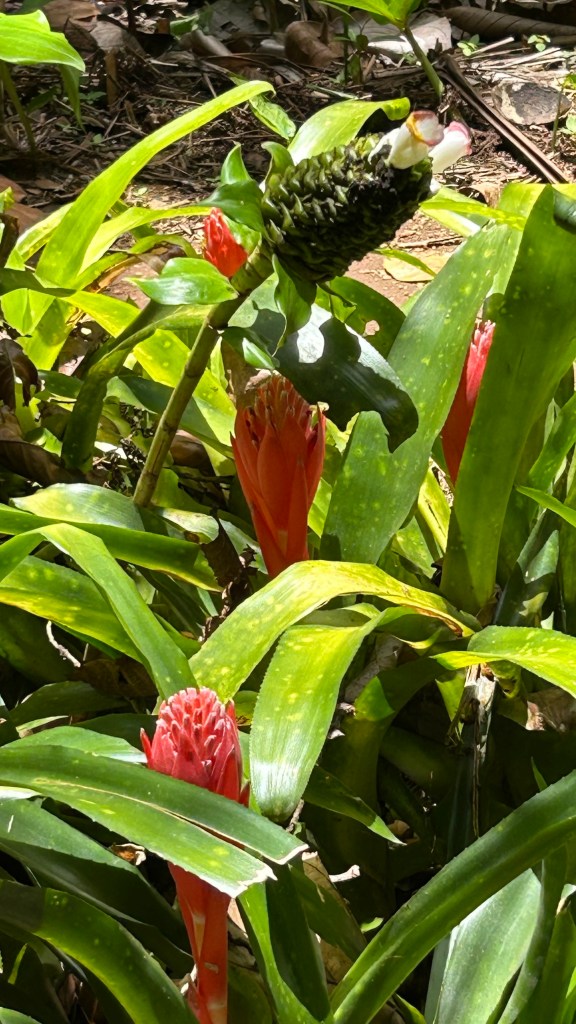
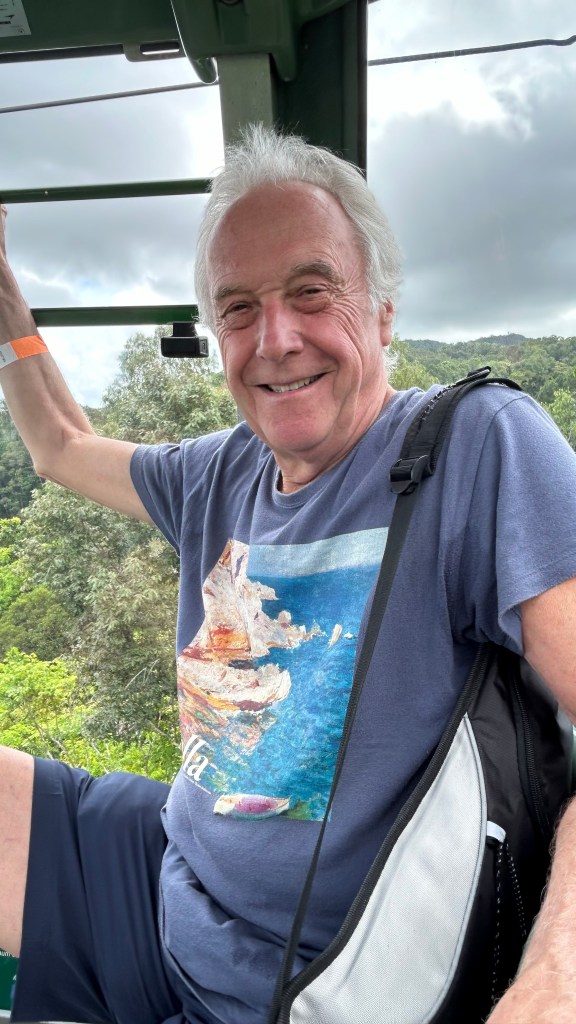
After we returned, we walked downtown and had a light dinner at a restaurant along the waterfront with this beautiful umbrella palm in front.
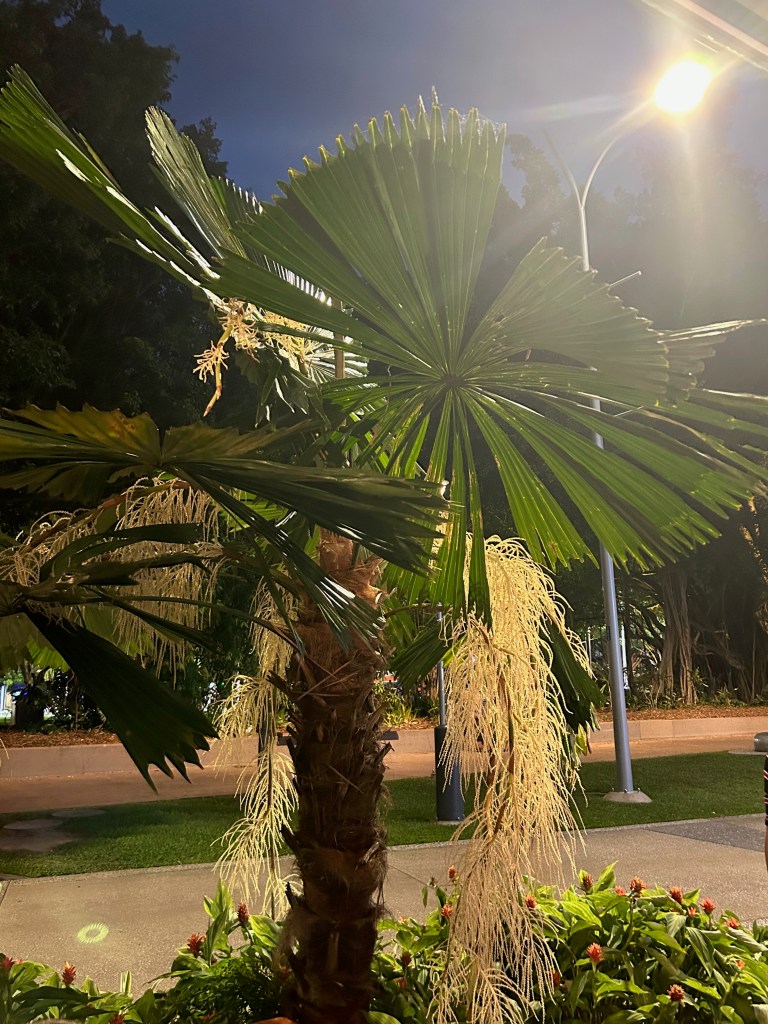
Wednesday 14th February, 2024 – (GIGBRA) Green Island and Great Barrier Reef Adventure ex Wharf
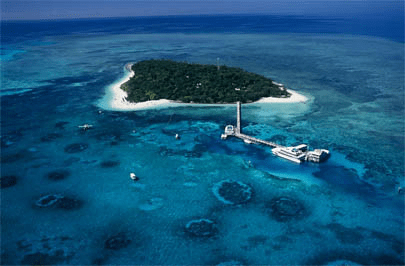
We travel by fast catamaran to Green Island this morning where we had 2 hours free time. Green Island is a beautiful 6000 year old coral cay. The island was very busy: we started strolling through cool rainforest but the mosquitos were out and we didn’t want to chance the stingers while swimming or snorkeling on the surrounding coral reef.
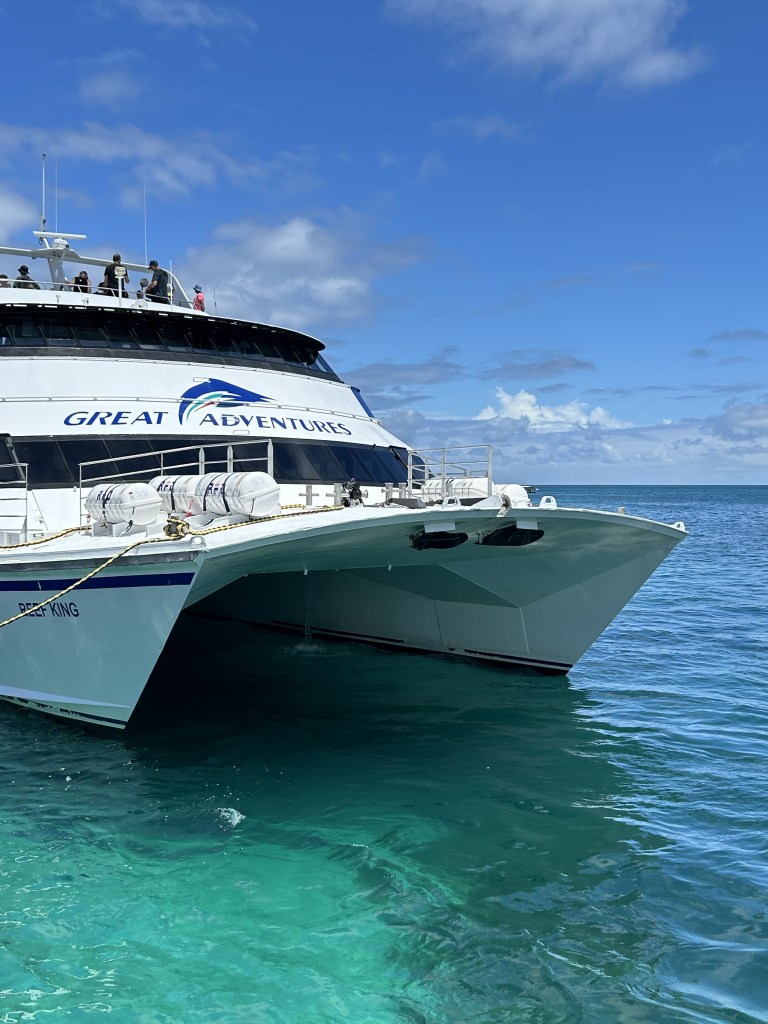
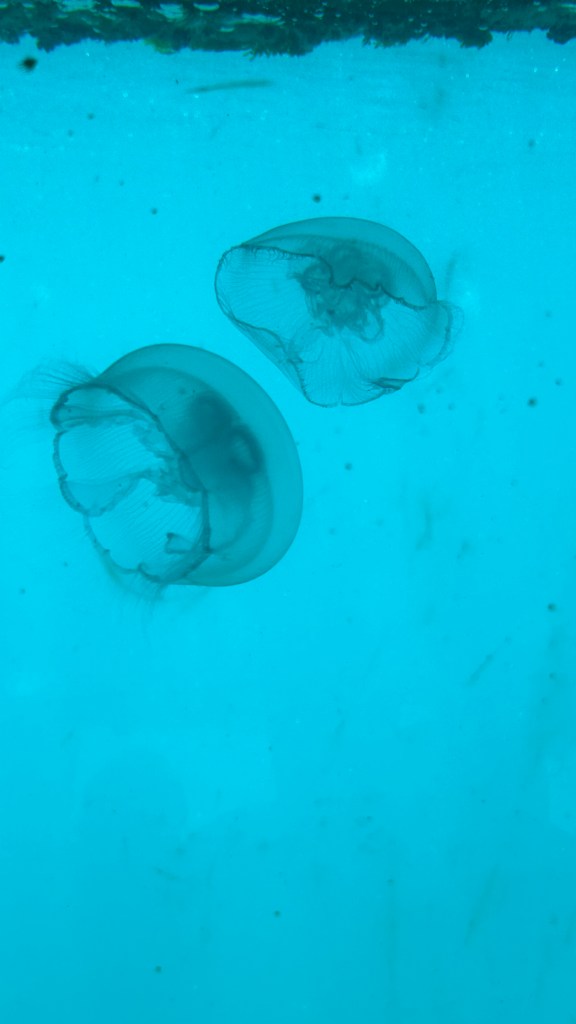
The 2 hours on Green Island were a non-event because we had all the activities during the 3 hours at Outer Barrier Reef platform, with snorkelling equipment, use of lycra suits, hot and cold buffet lunch, eco reef talk, semisubmersible coral viewing and underwater observatory. We started the Rainforest walk but were getting bitten and the water was inaccessible because of dangerous jellyfish on the shore. We had an interesting chat with a man, Nathan, from Toronto who made some interesting assessments of China’s role in the world: China doesn’t need an R & D budget; it just steals the data from other countries like Canada – Huwaie as an example.
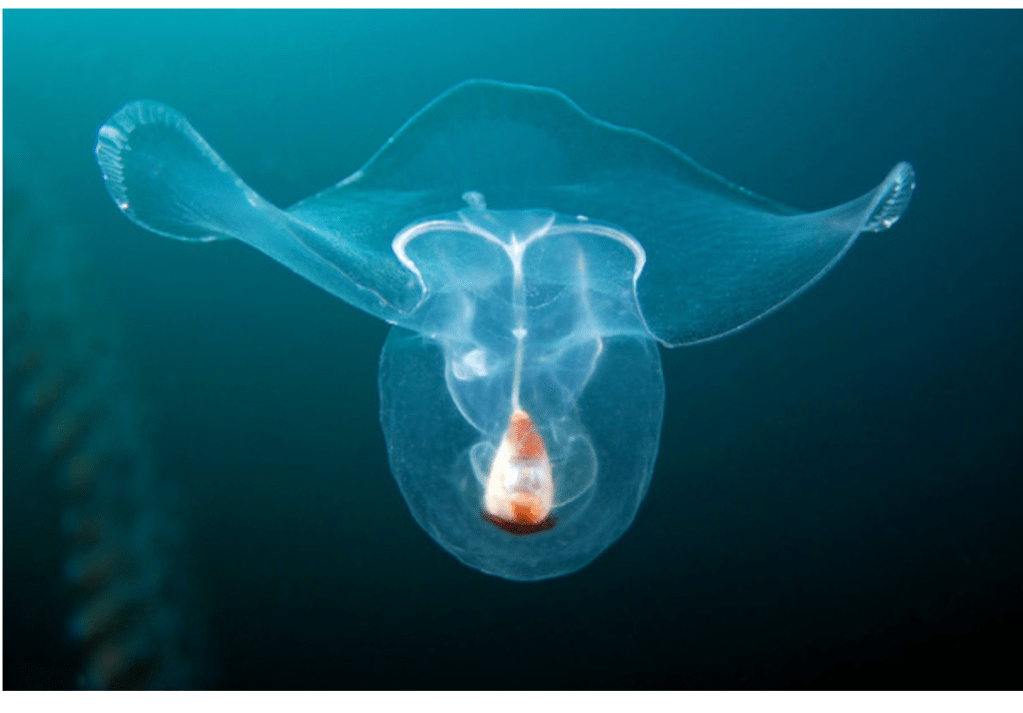
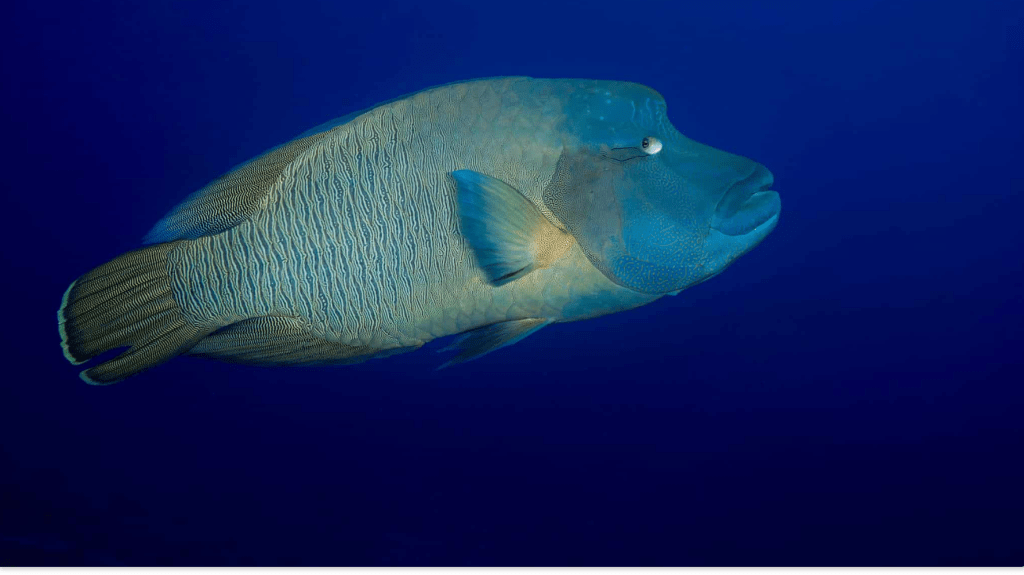
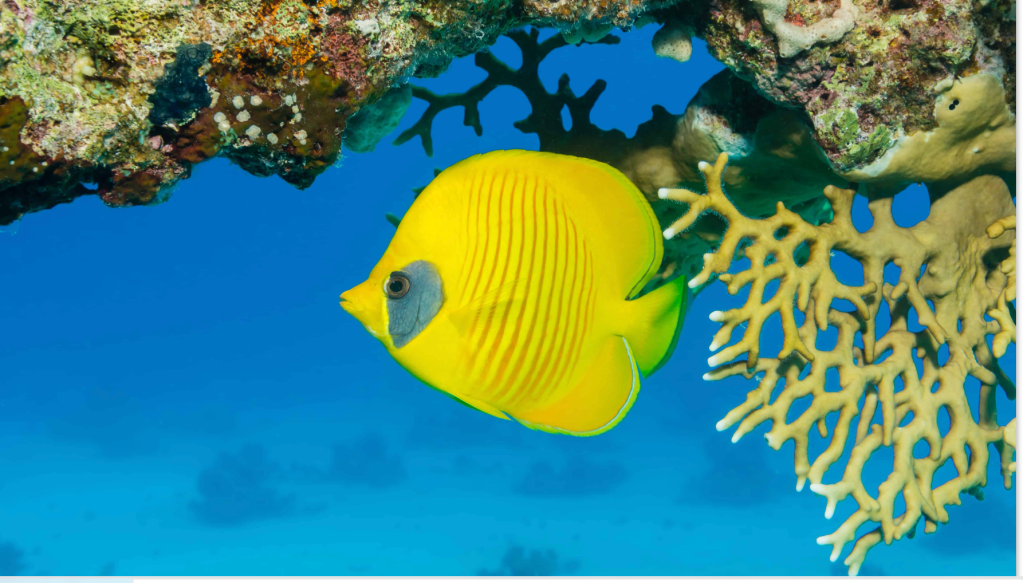
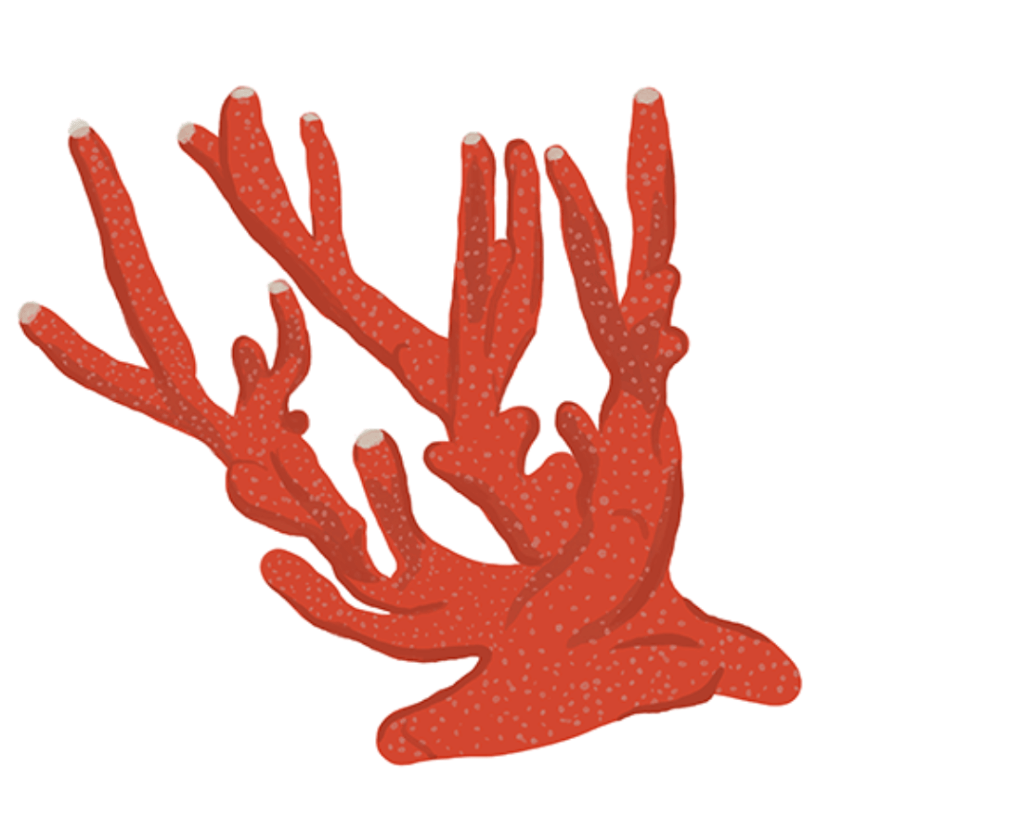
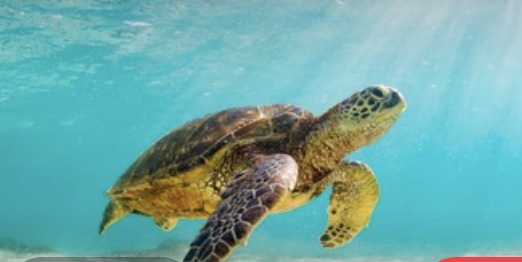
The experience on the Outer Barrier Reef platform was fabulous because we hired Bekkie, a marine biologist, to take us out snorkelling on the reef. We saw so many different fish (including 5 young sharks), beautiful corals, huge clams and a young turtle. Bekkie’s guidance and the experience was awesome! These following photos are internet ones.
The Great Barrier Reef formed from a long and slow process involving the accumulation of organic materials, such as stone, plants and animals and shells of dead corals. The Great Barrier Reef started forming approximately 20 million years ago. Dead shells from coral, along with remains from algae, anemones, fish, worms, crustaceans, snails, turtles and snakes accumulated and gave shape to the Great Barrier Reef as well.
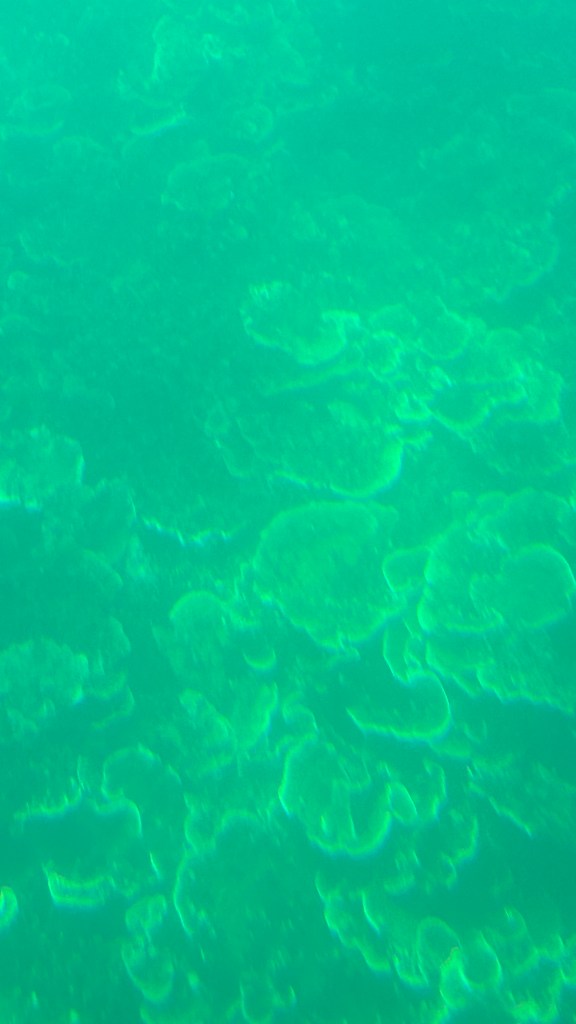
After our snorkelling tour with Bekkie and lunch, we went on the small touring boat with the glass windows below.
Thursday 15th February, 2024 – Mossman Gorge and Daintree Eco Experience ex Cairns
This excursion was intended to include Cape Tribulation but because of the heavy rains in December, the roads and railway were washed out.
The area received over 3 metres over 2 days in December 2023 as Cyclone Jasper moved through the Cairns area. Then another cyclone came through as we were there but remained more to the northwest. The devastation was evident as we went through the area.
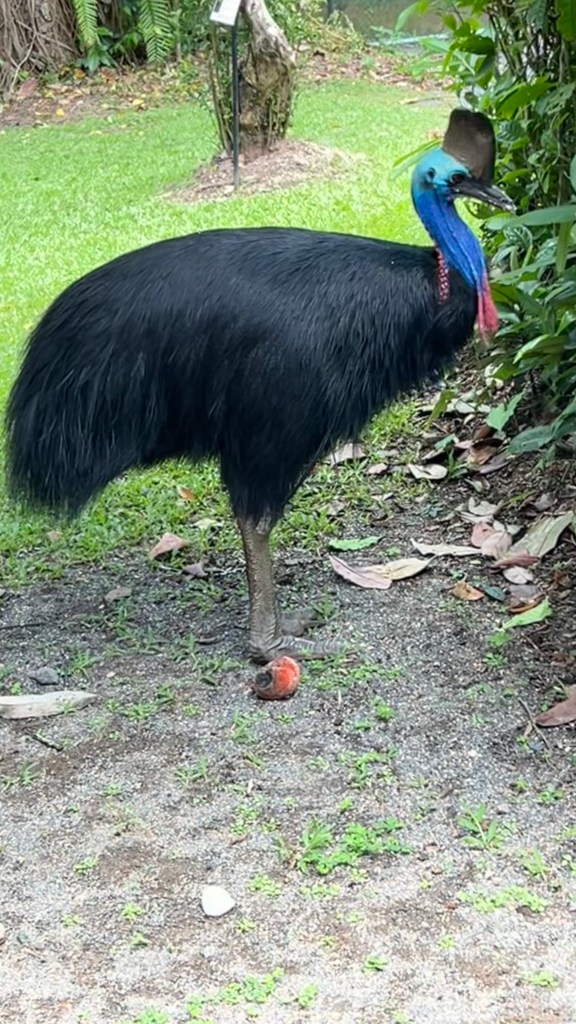
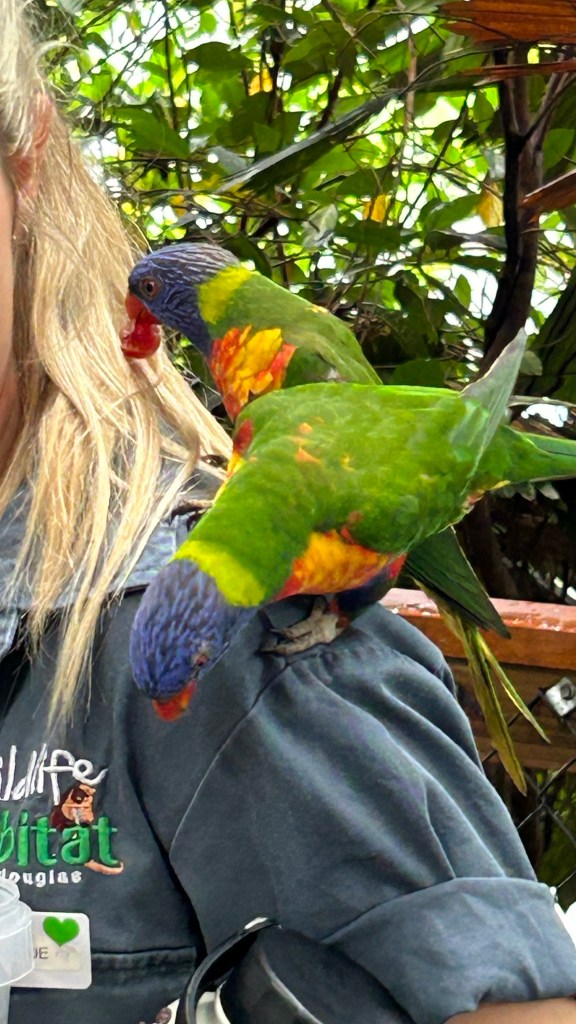
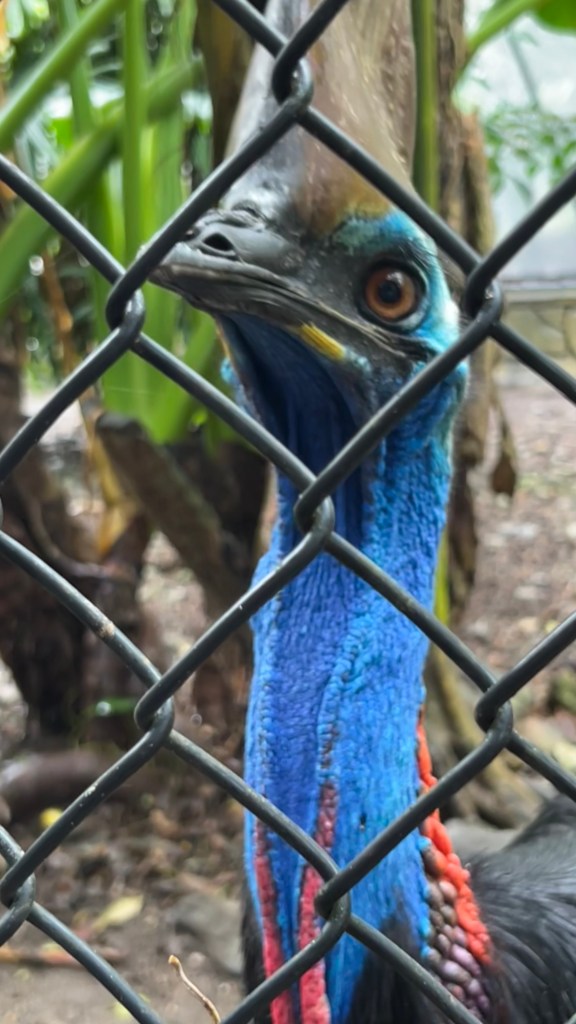
Our day began by visiting Wildlife Habitat. We saw the endangered Cassowary, a myriad of iconic Australian birds and animals.
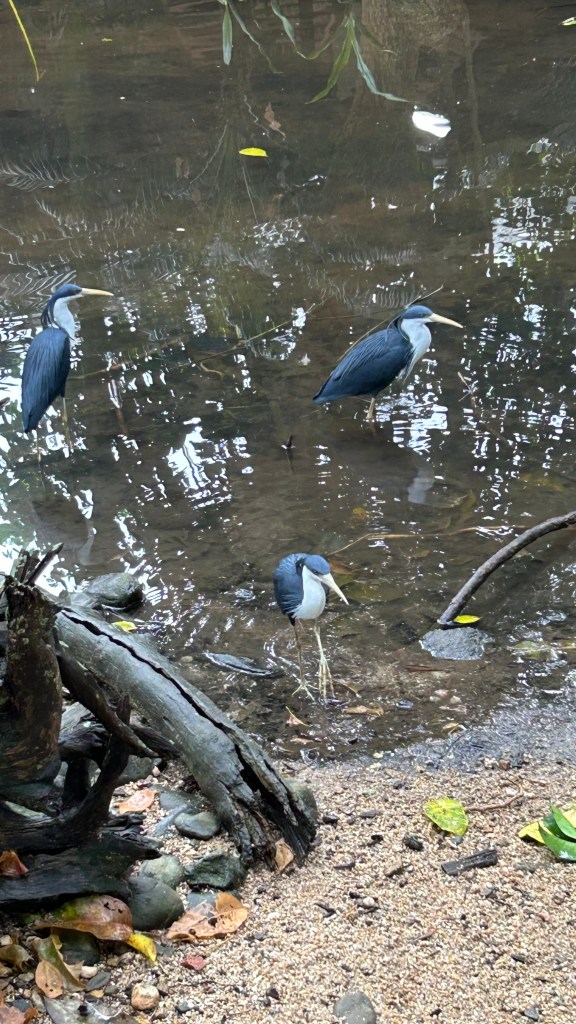
Black-necked storks
These birds have been able to provide the scientific and zoological community with a much greater knowledge of the species. They usually lay 3-4 eggs in a clutch. Each egg is laid at intervals of 1.5 to2 days. Incubation of the eggs takes 35 days. Both the male and the female incubate the eggs and share responsibility with raising the chicks. The chicks leave after 80—100 days. When the parents exhibit their breeding display, they hiss before they clap their bills and raise their wings.
These are rescued koalas and quite friendly.
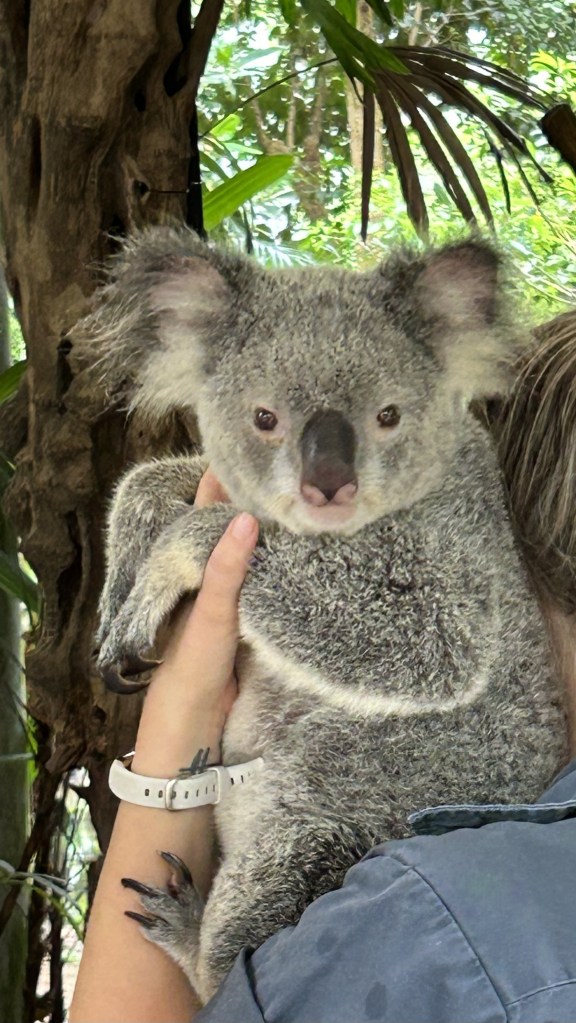
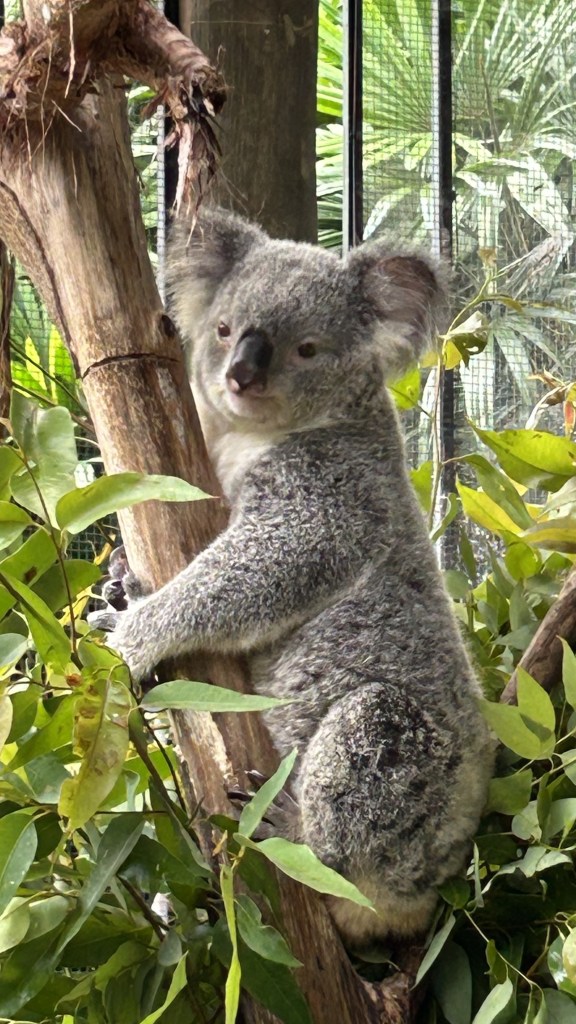
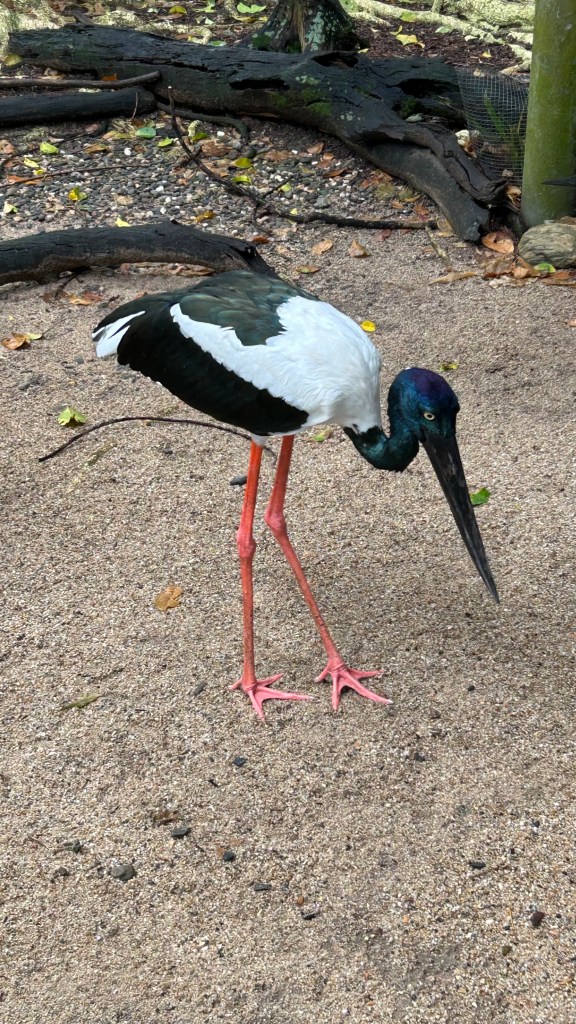
If you think Koalas don’t seem to do too much, you would be right. They sleep around 18-20 hours a day and spend up to 3 hours a day eating. Their eucalypt leaf diet isn’t very nutritious; therefore does not provide a lot of their minimum daily energy requirements. Koalas can consume up to a kilogram of eucalyptus leaf a day. Koalas are only found in Australia and its closest relative is the Wombat. Their conservation status in the wild is listed as vulnerable with the biggest threats being loss of habitat, domestic predators and vehicular traffic.
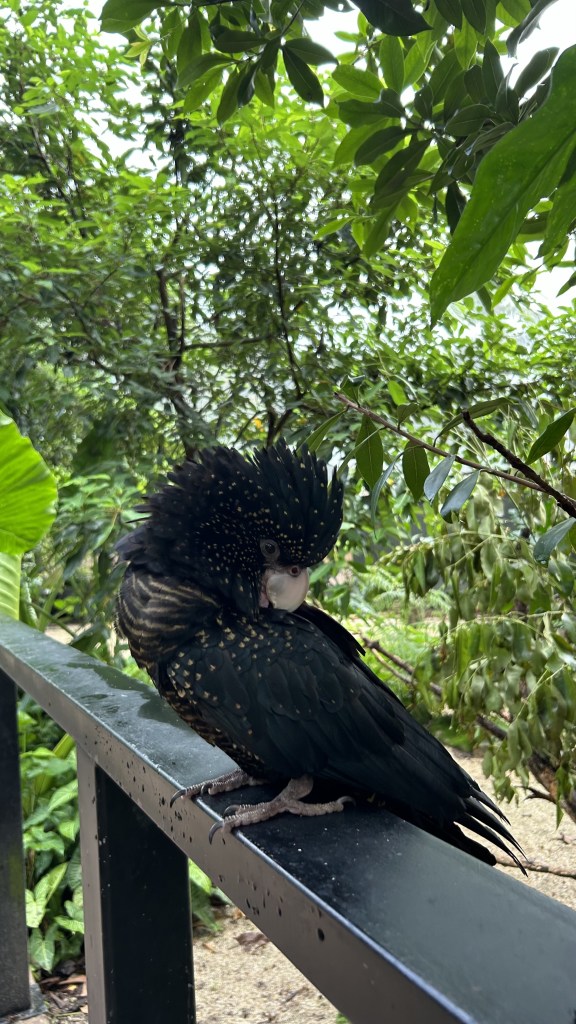
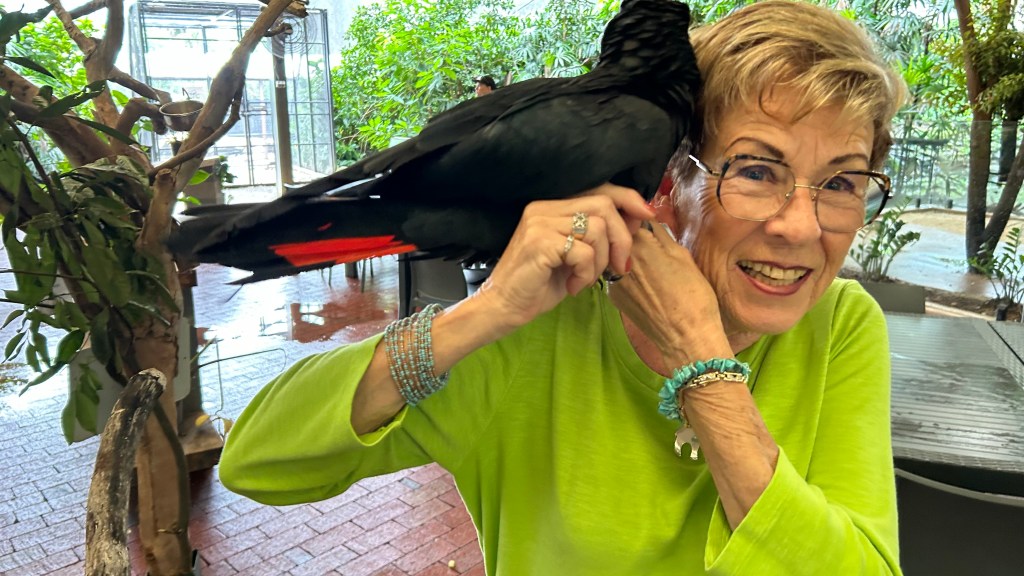
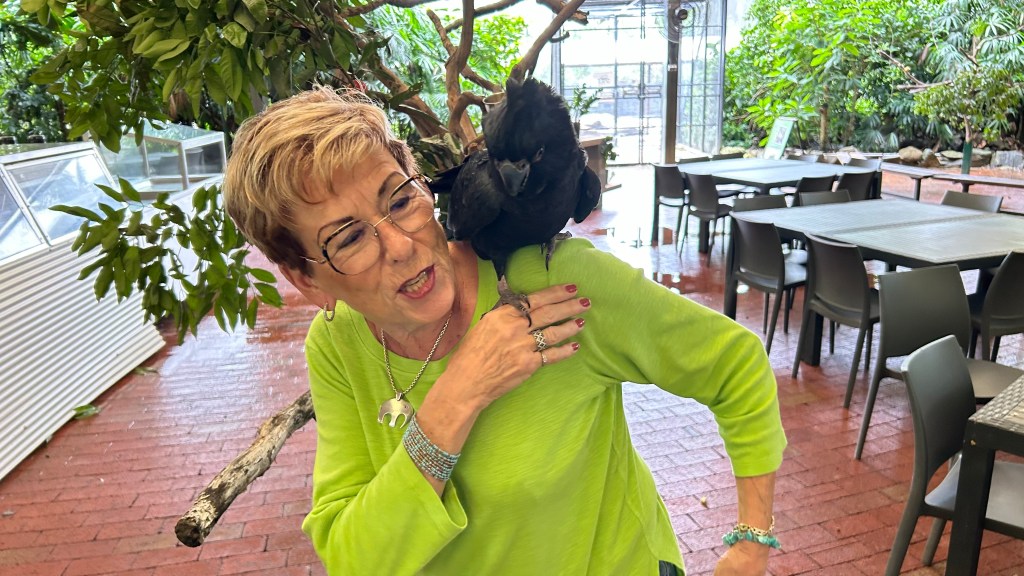
The word cockatoo derives from a 17th century Malay word – “kakak yua” – meaning”older sibling”. Australia is home to 14 of these noisy parrots. Unlike parrots, cockatoos carry a crest on top of their heads. Their overall plumage is less colourful than parrots, being mainly white, black and grey with colourful highlights in the crest, and tail. Cockatoos are zygodactyl with 2 toes facing forward and 2 back. Vocal, highly intelligent and social, cockatoos generally travel, roost and forage in large flocks.
Life span: up to 60+ years
Diet: seeds, fruits, nuts, berries, blossoms, farmers’ crops
Habitats: rainforests, eucalyptus groves, scrub lands and savannahs
Breeding: Mate for life. Pairs leave the flock to find a suitable nest spot ina tree hollow high above ground level. 1-6 eggs both parents incubate.
Eclectus Parrot: these birds are so different in colouring that Eclectus parrots were thought to be 2 separate species.
Habitat: rainforests and nearby savannah woodlands
Diet: Seeds, nuts, buds, fruits, nectar
Breeding: 2 eggs laid on decayed wood chips in a high tree trunk hollow.
Cassowary:
• Evolved millions of years ago
• Lives in the Wet Tropics of Australia
• Third largest bird in the world
• Keystone species; plays a vital role in rainforest biodiversity
• Endangered
• Losing its home
Woman’s world: The Female
• Is larger than the male and more brightly coloured than male
• only associates with males during breeding season – June to October
• can produce with a number of different males during breeding season
• will lay on average 4 eggs with each male and then leave the male to incubate thenm for 47-56 days
the father then looks after the chicks for 8-18 months, defending them and teaching to forage.
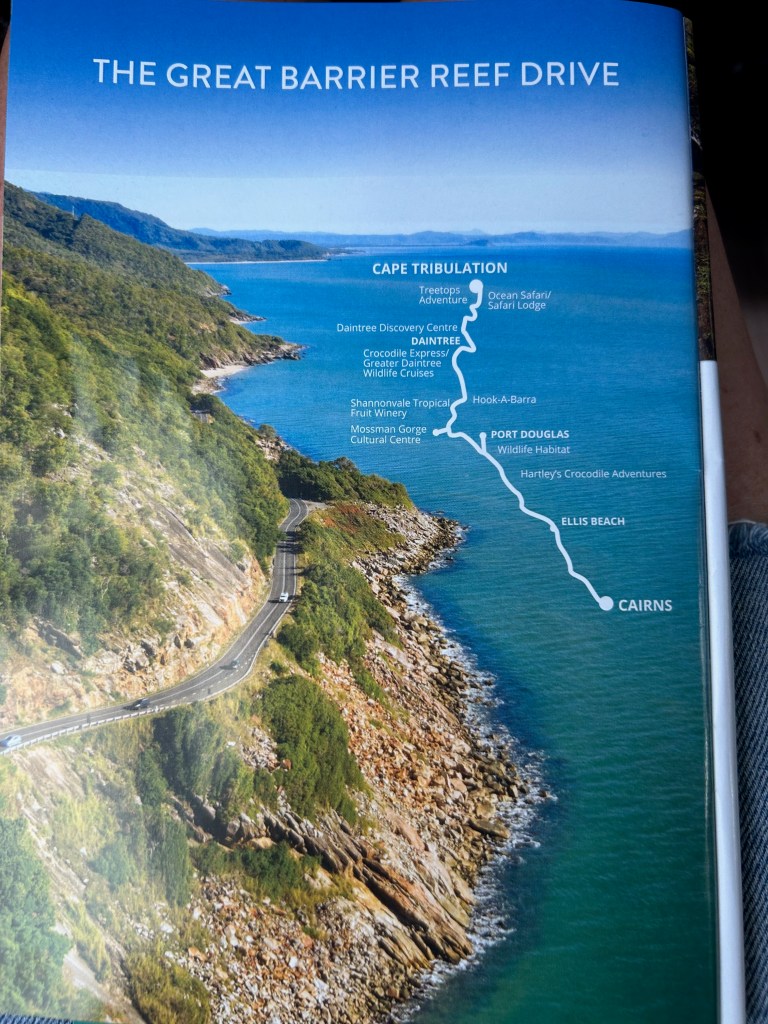
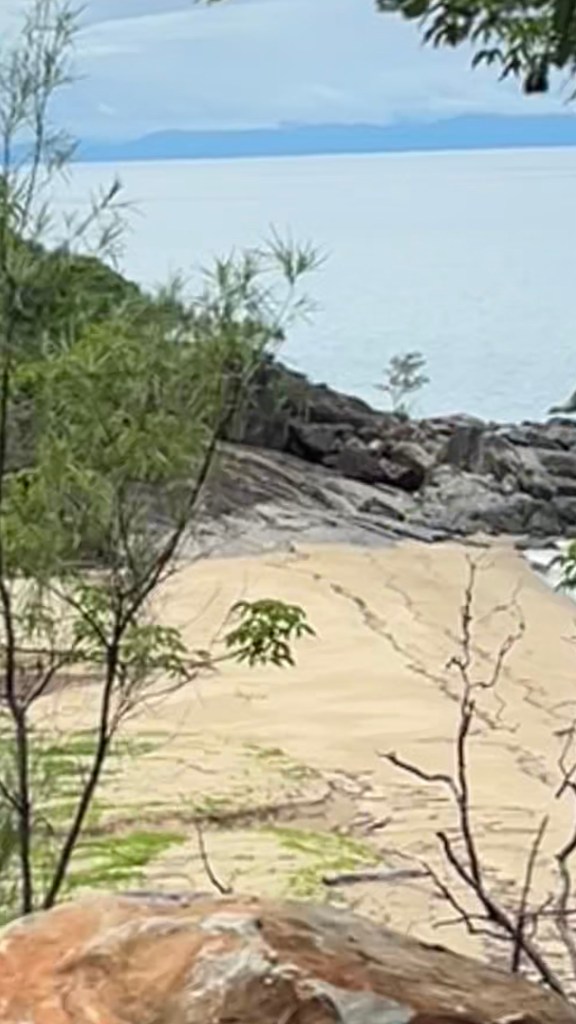
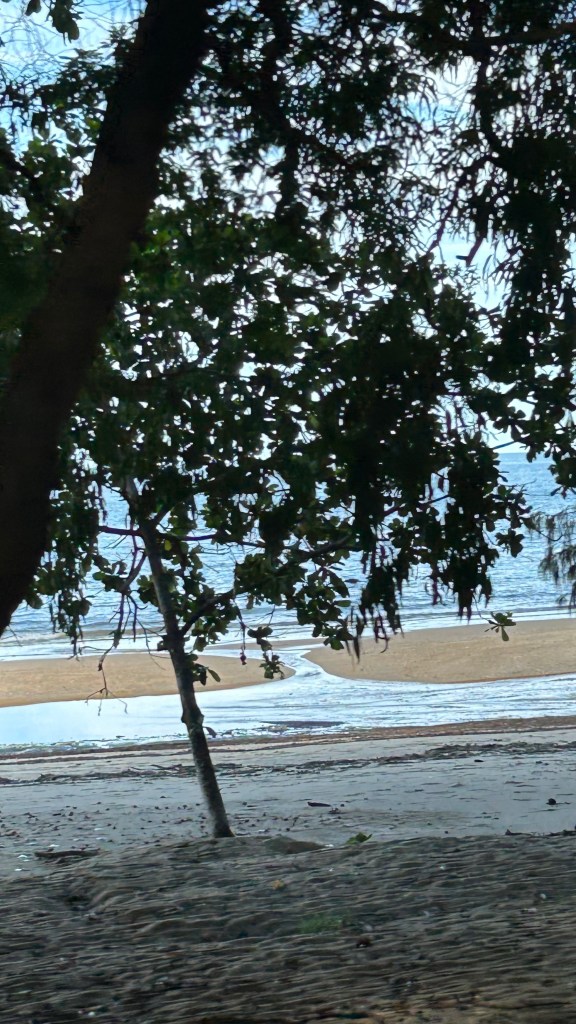
Next stop was the Mossman Gorge and Rainforest.
The Wet Tropics World Heritage Area extends from Townsville to Cooktown covering an area of 894,420 hectares and is located in the Daintree National Park, Mossman Gorge.
This is a UNESCO World Heritage site in recognition of its age (oldest rainforest), natural beauty, example of earth’s evolutionary history, habitat for rare and endangered species and unique plants and animals.
Upon arrival, we were welcomed with a Smoke Ceremony by one of the aboriginals.
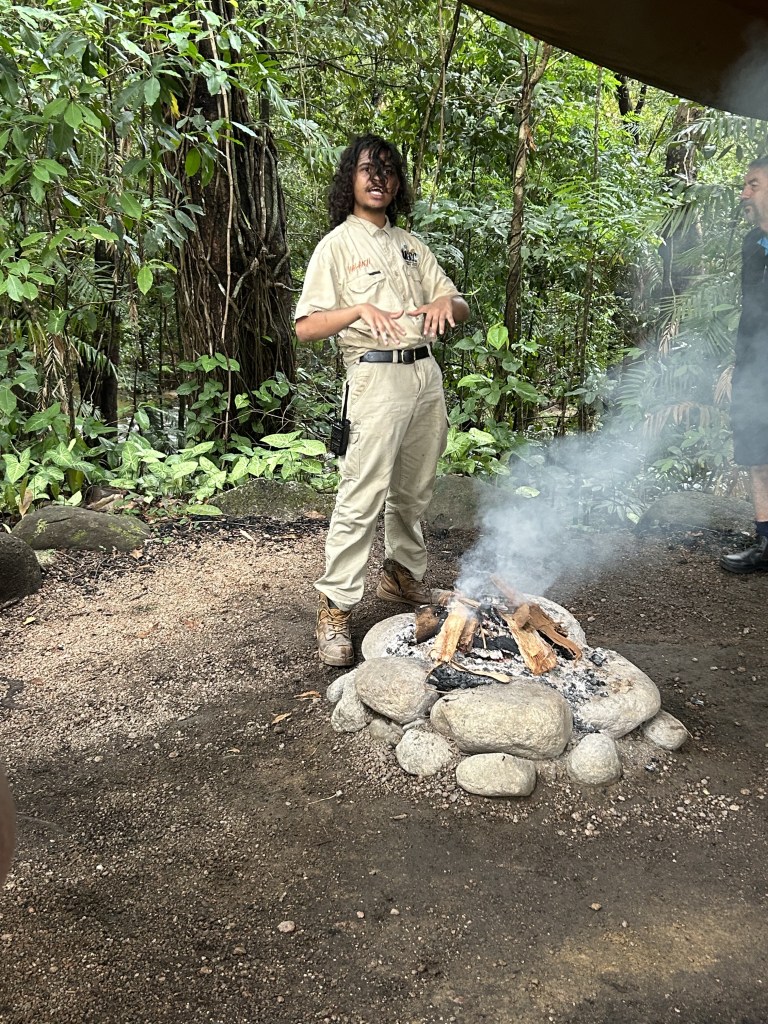
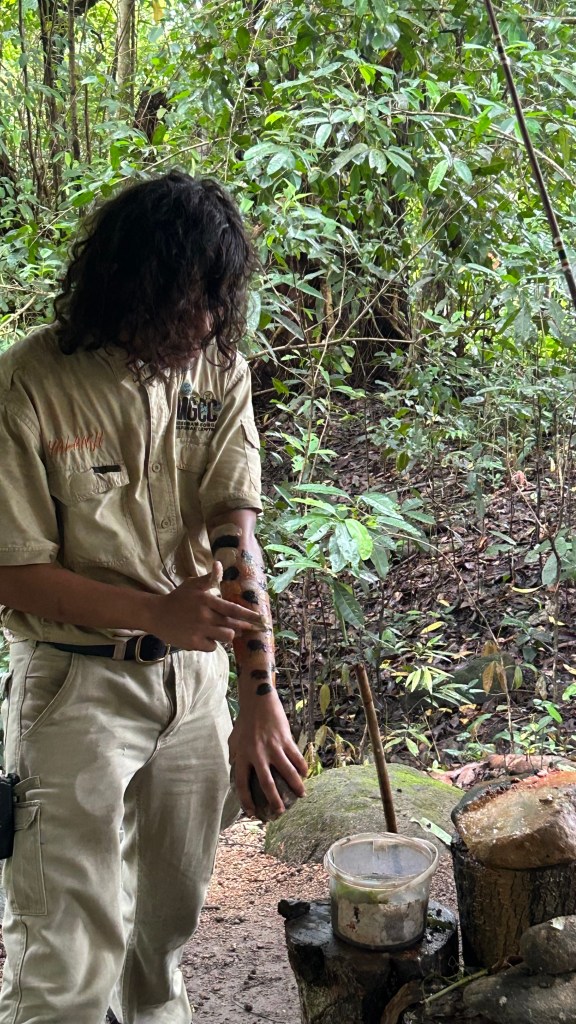
He explained that the markings that the natives wear tell others what nation they are from as they travel through the forest. He applied the stripes and dots for his tribe made from clay and leaves and water. They came off easily with a soap made from wintergreen leaves and water.
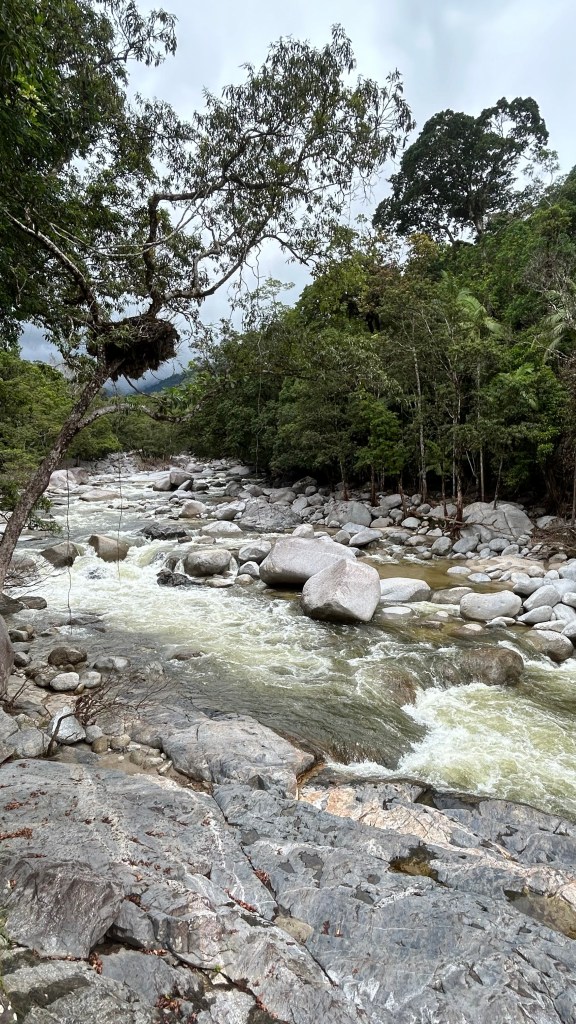
Mossman Gorge is a very accessible and scenic section of the Daintree National Park. Here the Mossman River tumbles its way over huge granite boulders that line the gorge.
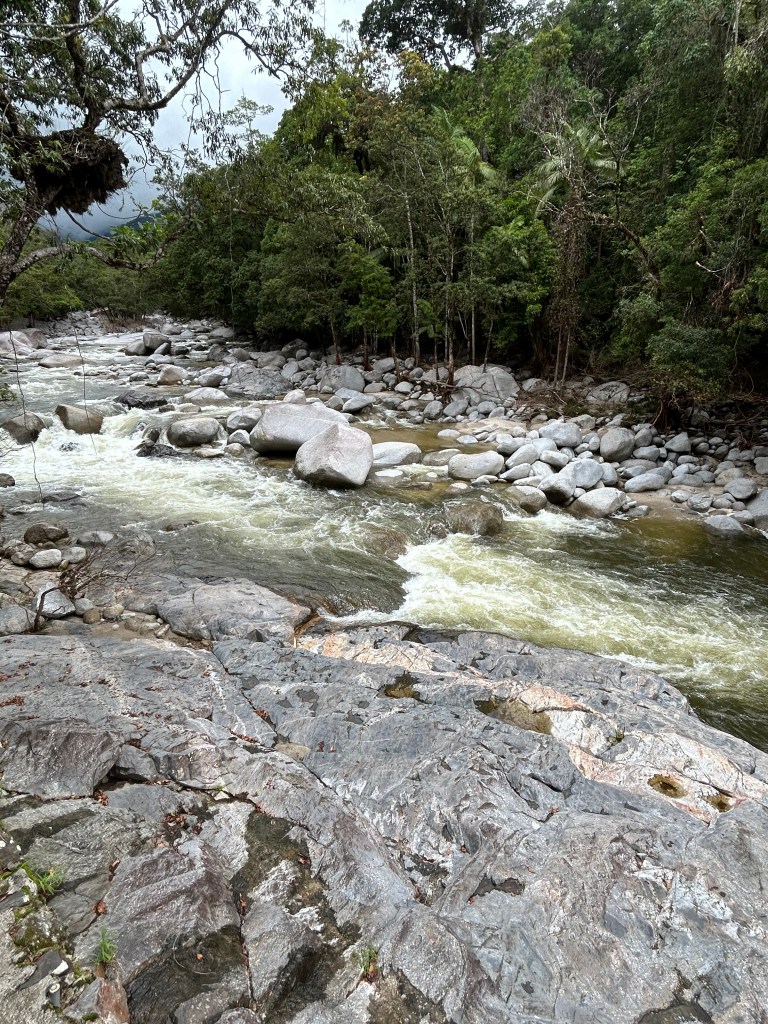
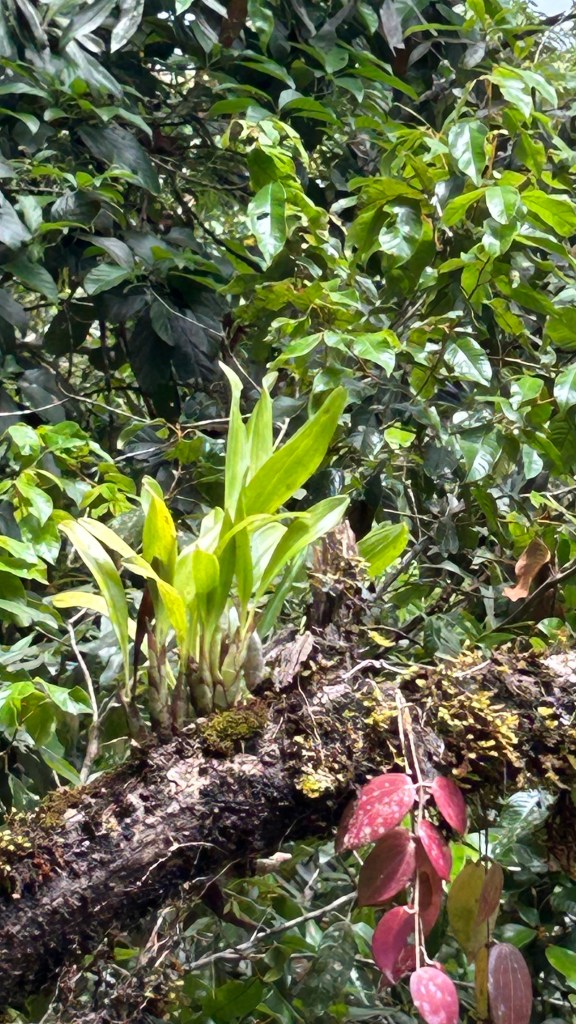
Finding enough light to flourish and grow is a constant challenge for rainforest plants. Climbing vines and epiphytes solve this problem by catching a ride to the sunlit canopy on other plants. The warm, wet and protected conditions in tropical lowland rainforests encourage an array of these rainforest hitchhikers.
Epiphytes grow on other plants but do not harm their hosts. The nestled leaves of basket ferns and funnel-like leaves of bird’s nest ferns trap rain and leaf litter, providing the plants with essential moisture and nutrients. Climbing plants lack a trunk for support. They use hooks, sticky pads, tendrils and coils to hoist themselves upwards on stronger plants.
This is known as the sugar capital with the Mossman Mill busy through the sugar cane season from June until November with the trains rattling back and forth along the highways and through the town.
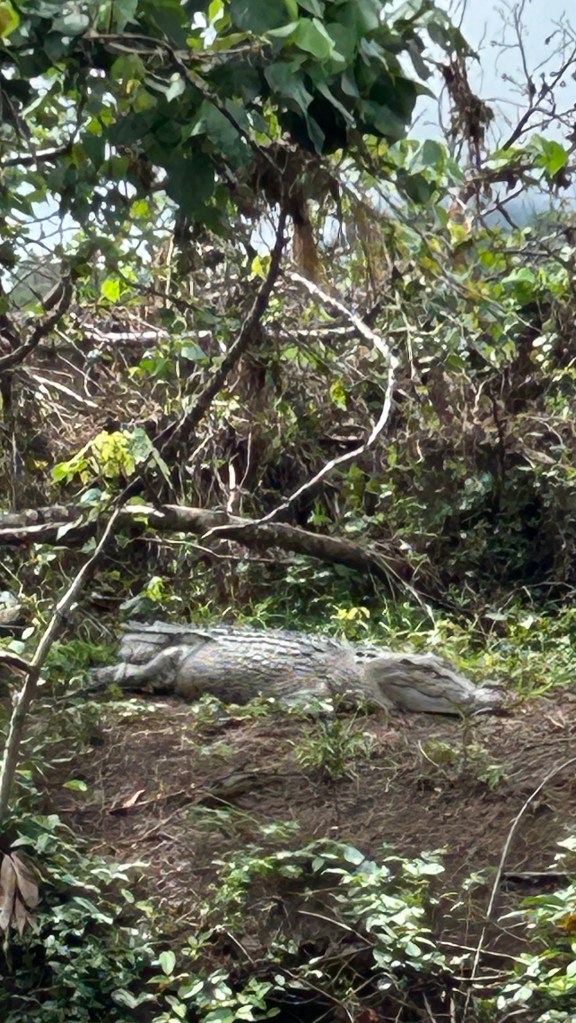
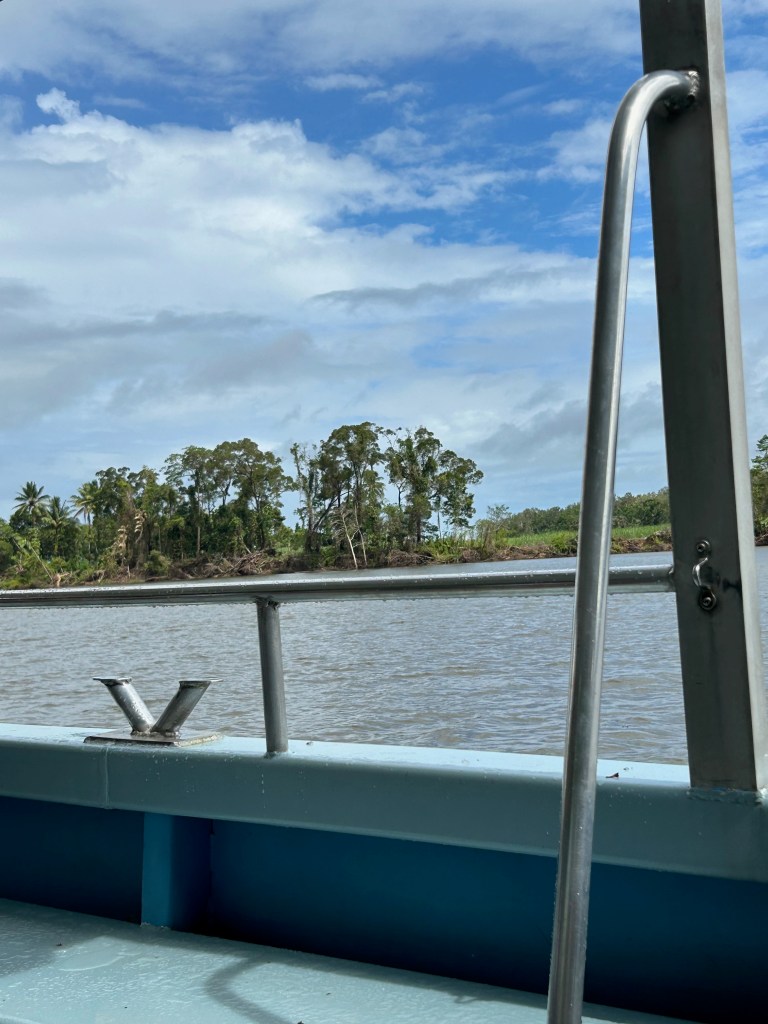
Then we had a cruise on the Daintree River. The Daintree River, winding through the oldest living rainforest in the world, is one of the longest rivers on the Australian east coast at 140 k. It harbours 35 mangrove fish species and its lush swamp forest attracts rare bird life, frogs and insect species. It is the habitat of the Estuarine (saltwater) crocodile with a populations of 70 adult crocs, some up to 6 metres in length.
We spotted crocodiles, birds and other wildlife in the wild as we journeyed through the mangroves. The mangroves are essential to the Great Barrier Reef as the fish come here to spawn.

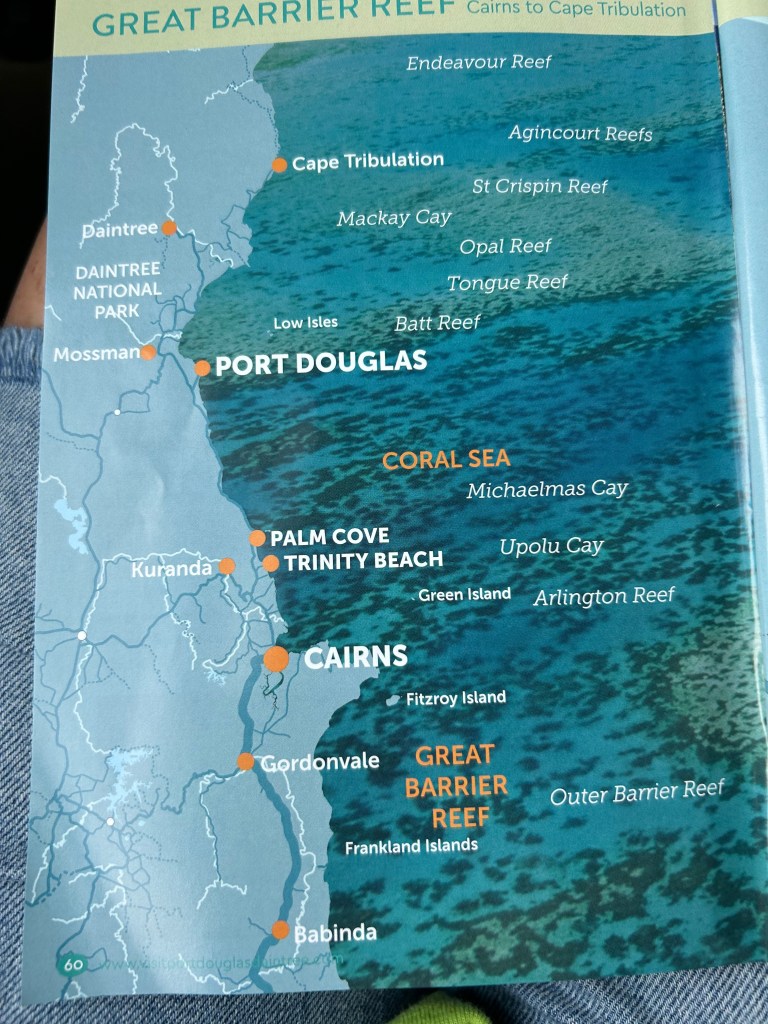
Friday 16th February, 2024 – CAIRNS DOWNTOWN To AIRLIE BEACH D’TOWN
We picked up our rental car at the Hertz office just around the corner from the hotel. We used Waze on Bill’s phone with the Australian SIM card for the whole trip south.
Arrive Mission Beach
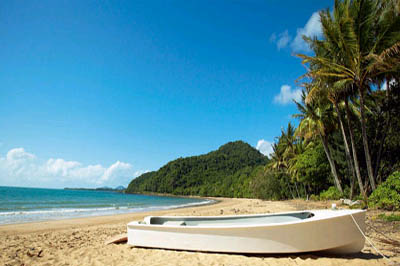
Mission Beach is one of the yet to be discovered jewels of North Queensland, a tropical playground, located just 90 minutes south of Cairns. Mission Beach is made up of four beach villages linked by 14 kilometers of wide golden beach, a perfect base to relax and explore the unspoilt environment.
Accommodation:

Castaways Resort and Spa Mission Beach Corner Pacific Parade and Seaview Street, Mission Beach Castaways Mission Beach accommodation is an ultimate beachfront escape in the tropics. It is positioned absolute beachfront with direct access to the 14 km long beautiful, white sandy beach.
We arrived before our room was ready so we walked through the shopping district and along the beach. We were told that when the red flag is posted, it is not a good time to swim in the sea even in the area protected with the screens from the jellyfish.
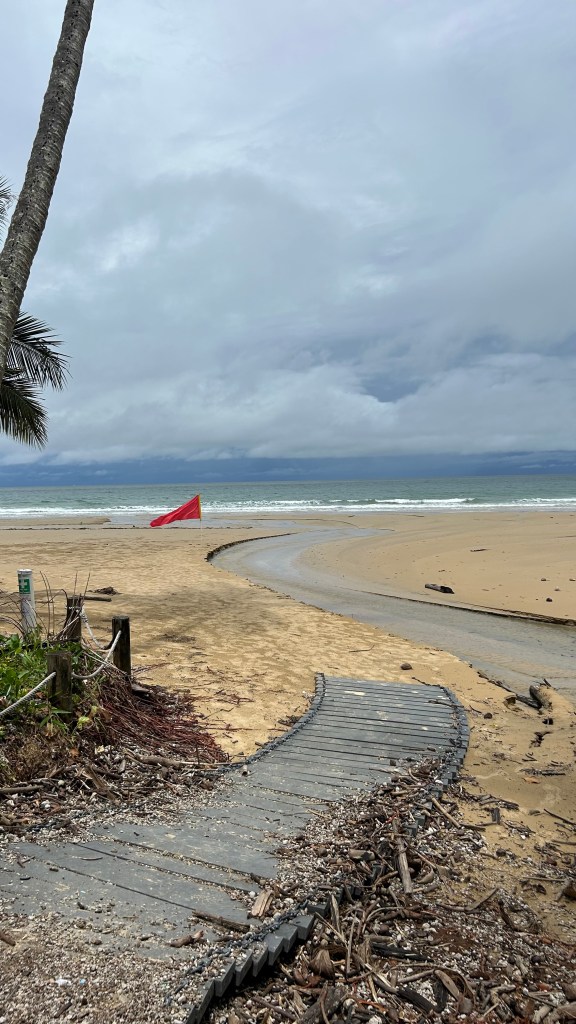
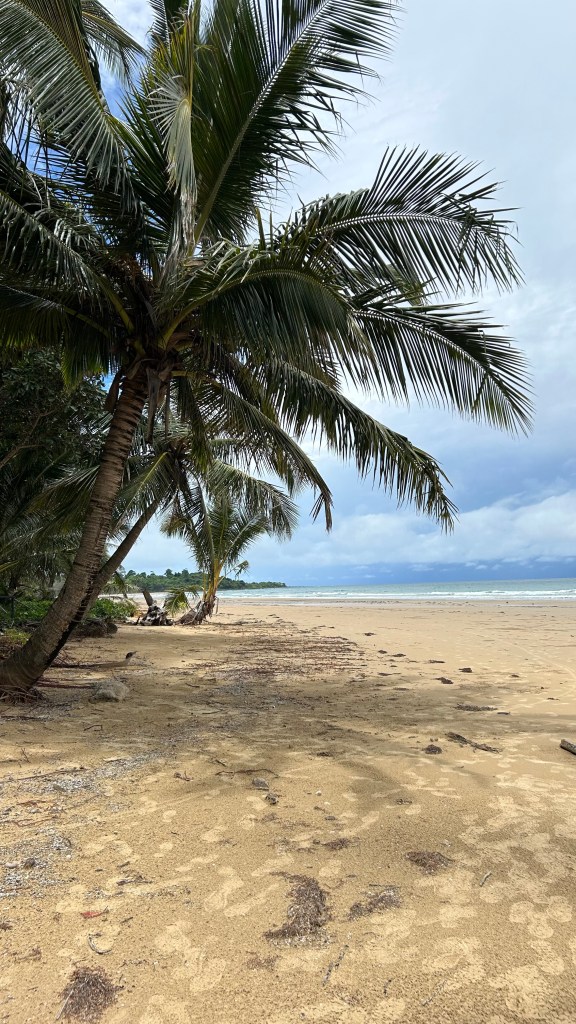
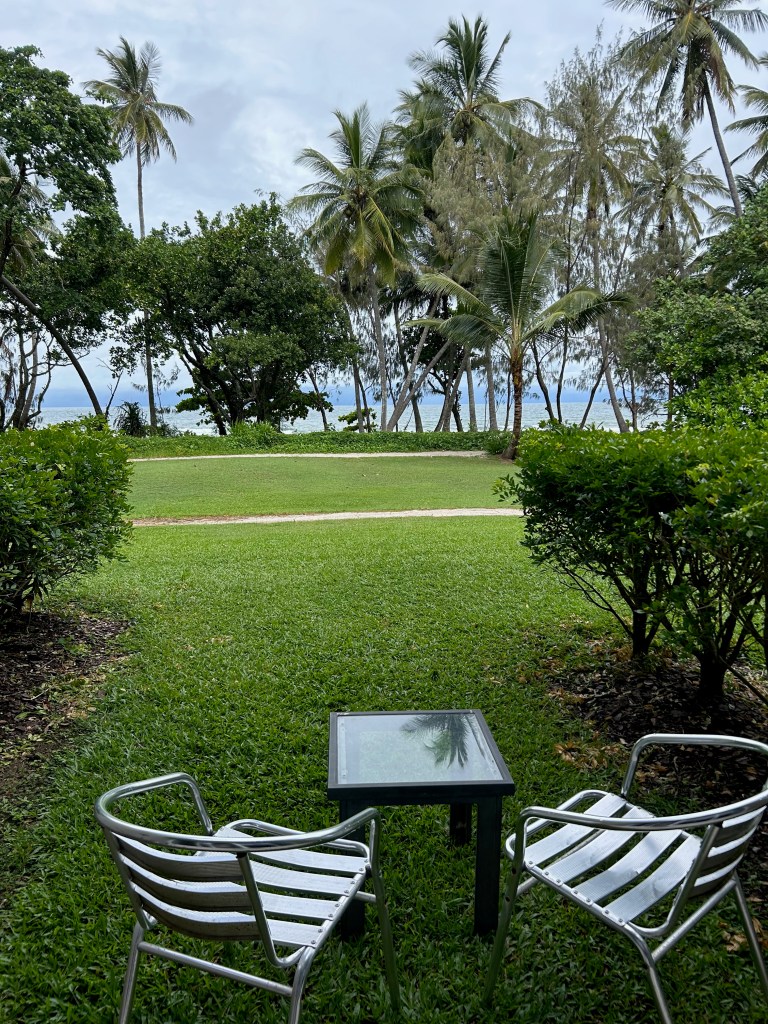
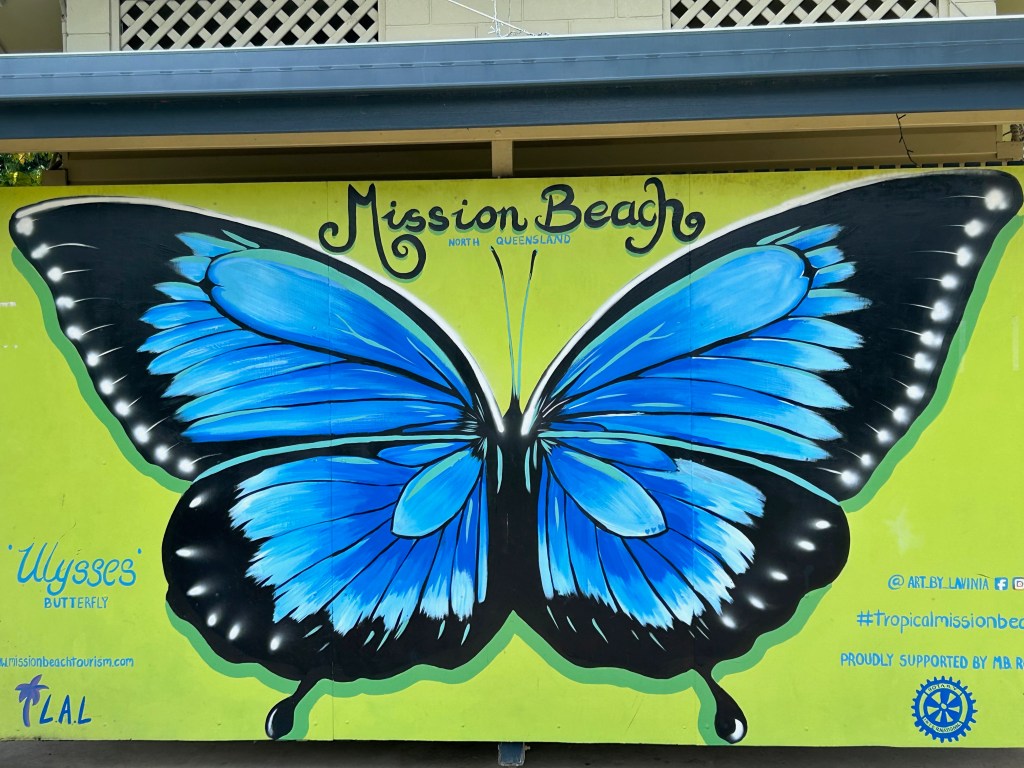
We walked through the town and shopping centre and then the beach. We had seen the beautiful Ulysses butterfly on many occasions but they wouldn’t stop for a photo!
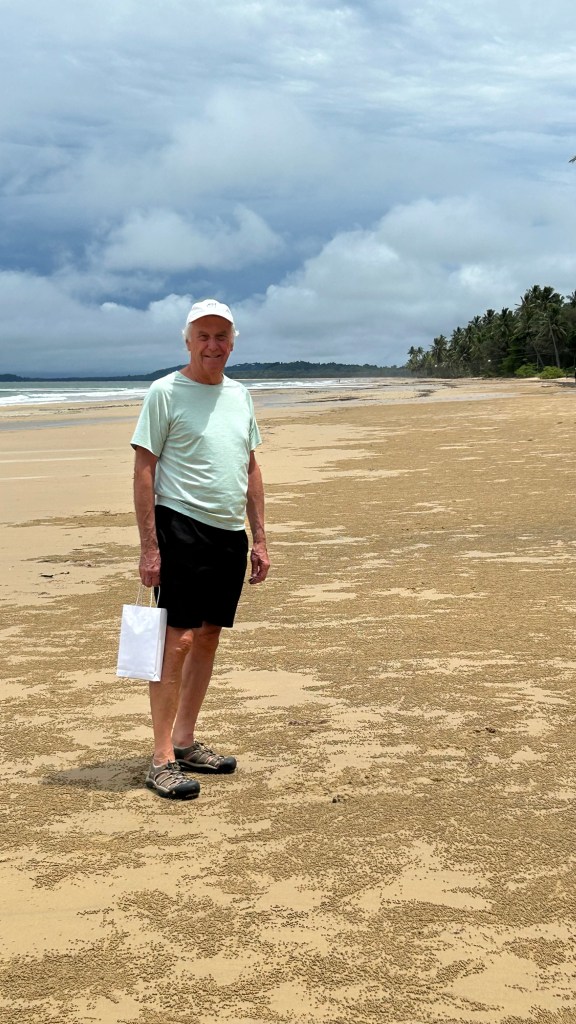
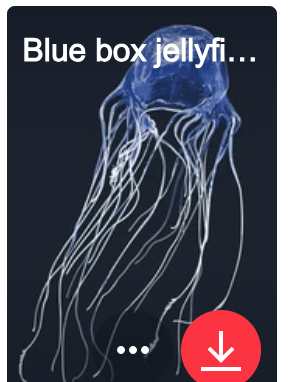
We were surprised to learn from our bus driver in Cairns that there is no swimming in the sea here from December til April because of life-threatening jelly fish. Some places have screens that allow you to swim within them but he said that they cannot be trusted to keep them out. Certain box jellyfish stings can kill a person within minutes. Other box jellyfish stings can lead to death in 4 to 48 hours after a sting due to “Irukandji syndrome,” a delayed reaction to the sting. It is important to carefully monitor box jellyfish sting victims for hours after a sting.The Box jelly fish causes death within 3-5 minutes.
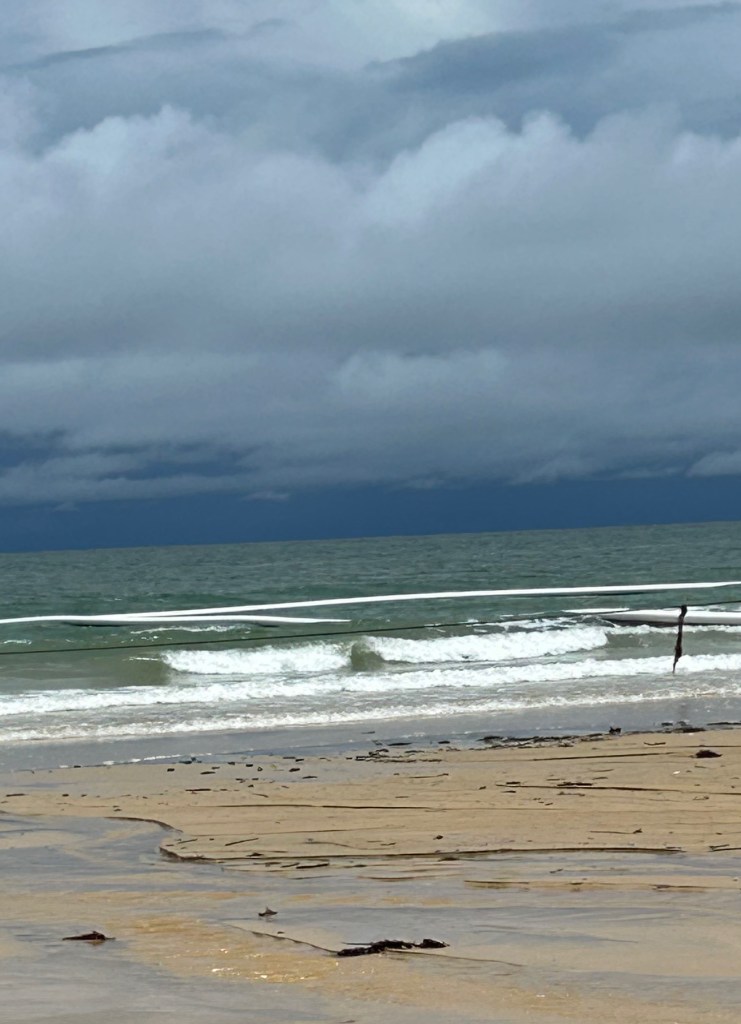
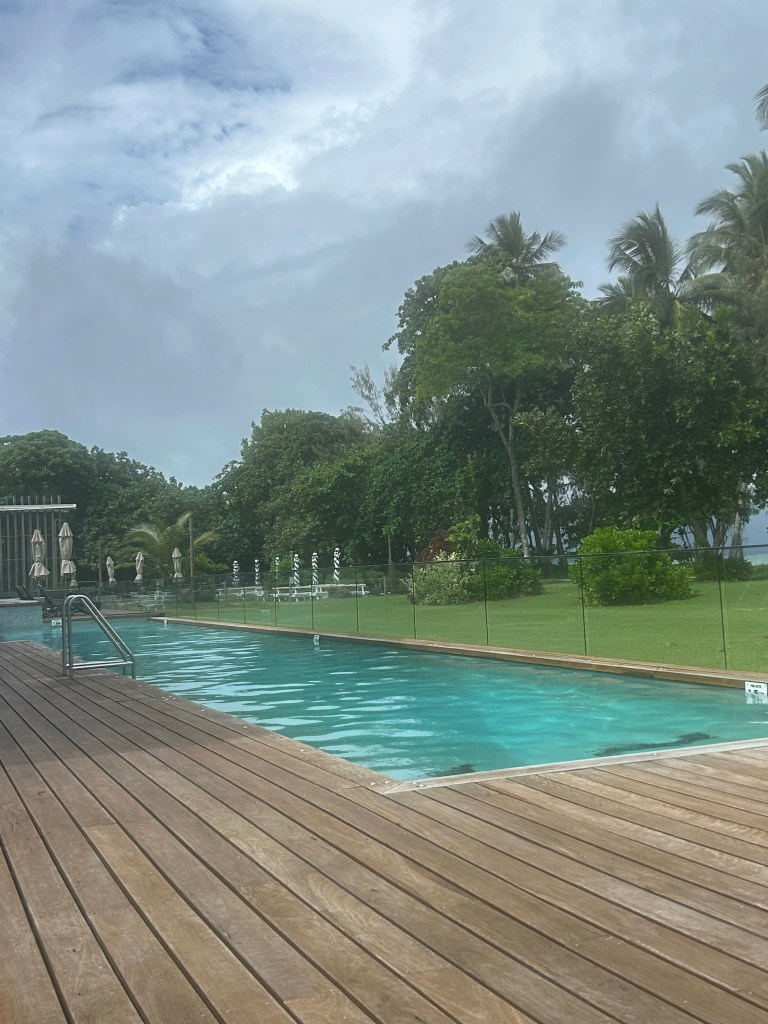
Around 4:00 we swam in the pool but shortly the storm caused by the cyclone in the Northern Territories, just west of us, came rolling in and we made a run for it as the rain came down in buckets. It poured rain for the rest of the day and the following day. We had a delicious Barramundi dinner at Plenty Restaurant and had an early night.
Saturday 17th February, 2024 – Depart Mission Beach to Townsville
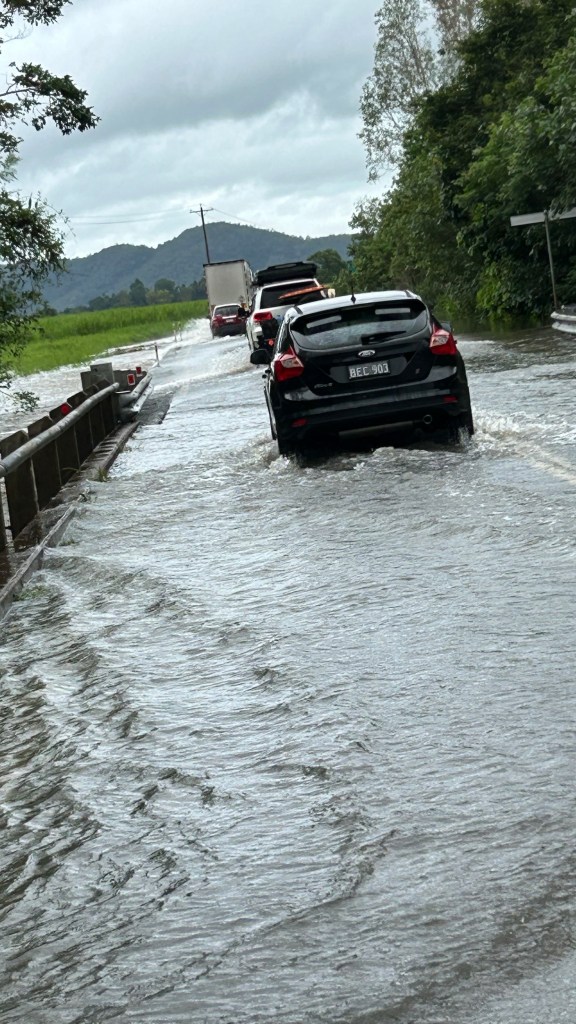
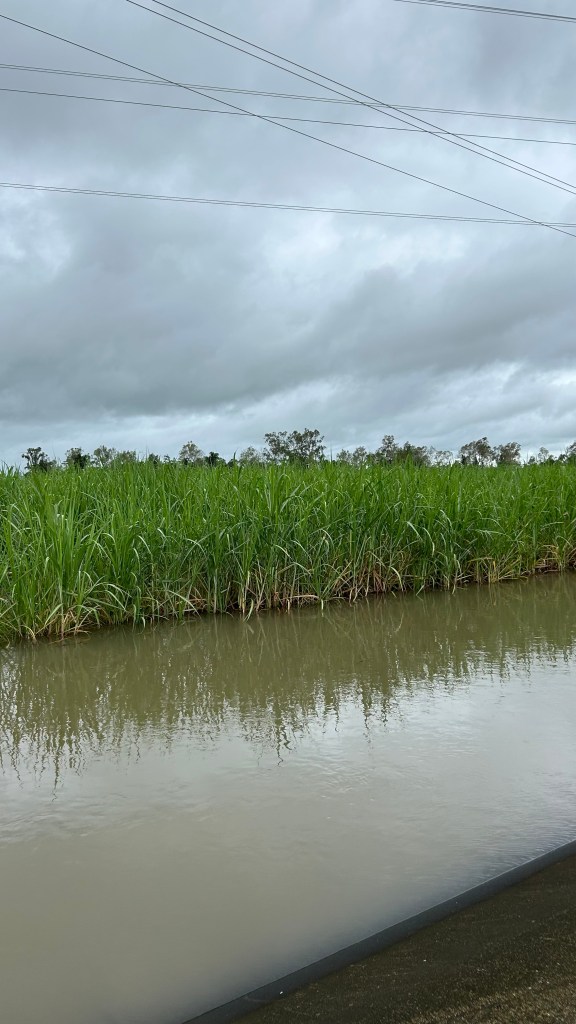
Along the route south there are multiple signs about roads being flooded. We didn’t find many flooded but this was one that had potential.
Most common crops were sugarcane and bananas. Sugarcane is grown and the raw sugar extracted but shipped and refined elsewhere.
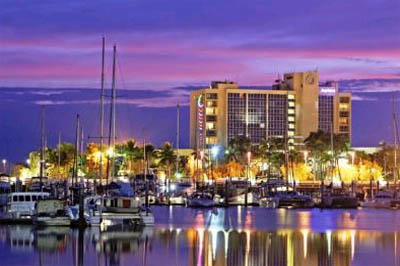
Townsville, the capital of North Queensland is the third largest city in the state. The city is the perfect stepping off point for tropical islands, the Great Barrier Reef and sits on the shores of Cleveland Bay where Captain Cook sailed in the Endeavour on June 5th and 6th, 1770.
Accommodation:
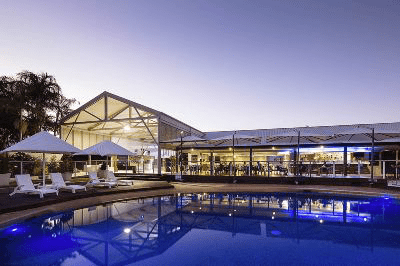
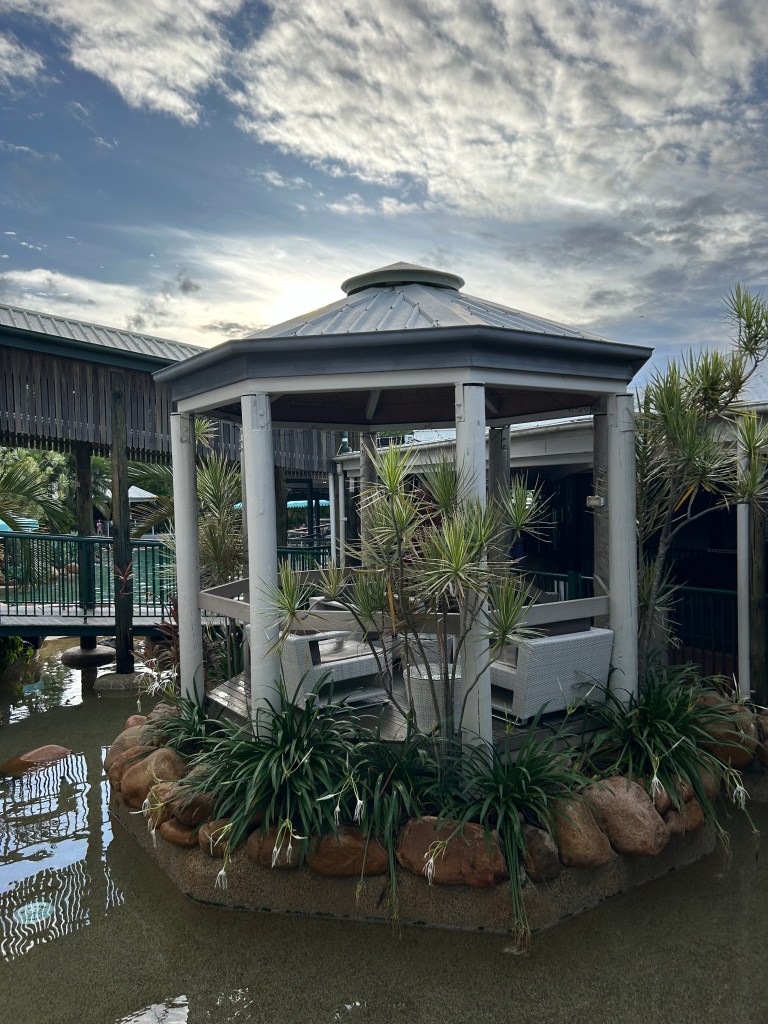
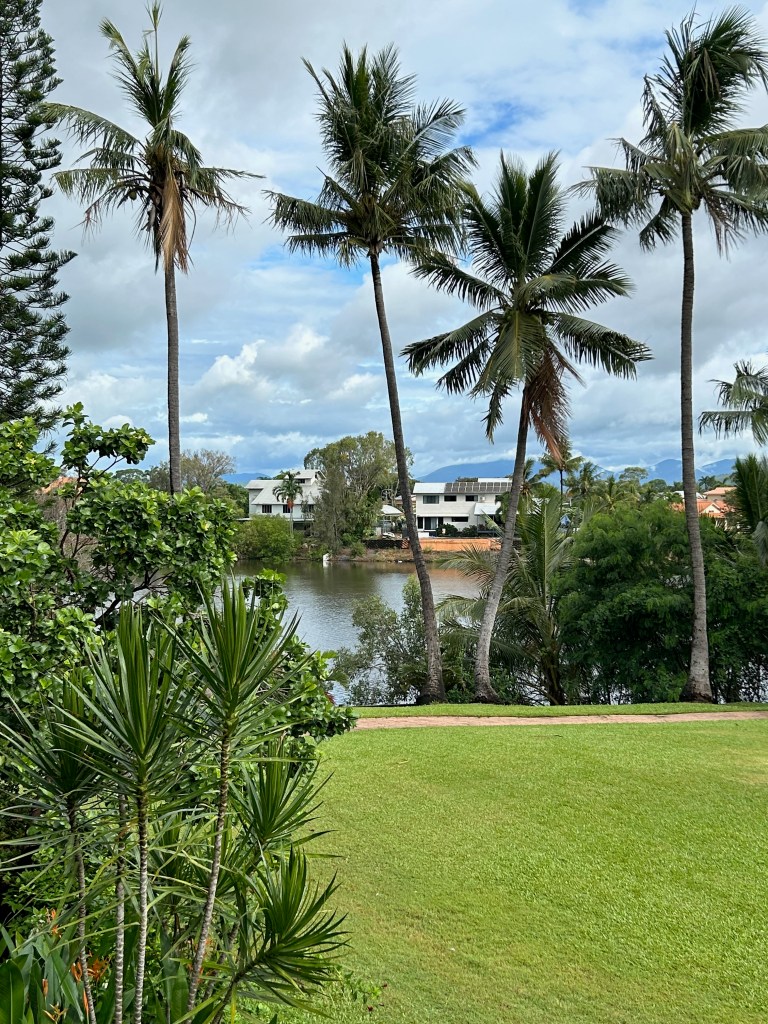
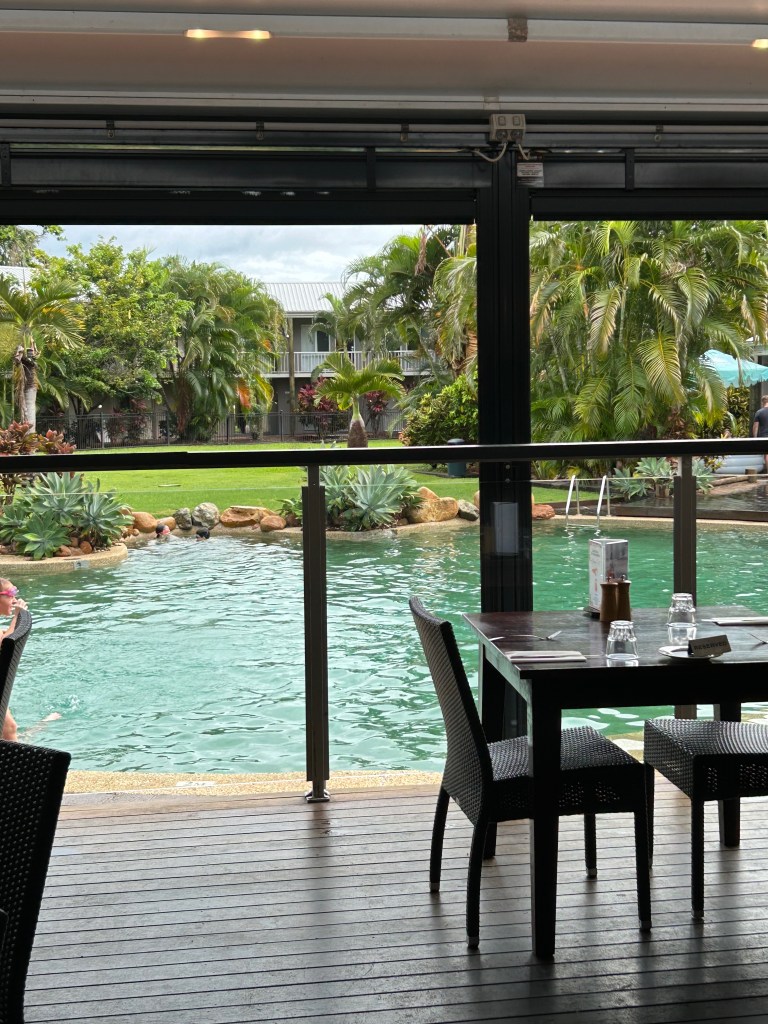
Mercure Townsville is a massive resort style hotel located close to the city set lakeside in 11 acres of lush tropical gardens; the hotel rooms have views across the lake or pool or through the gardens. On the Saturday when we arrived, it was full of noisy families with children. I had to work with the hotel to get a room with a view! It was pouring rain most of the day so we read and had a drink in the gazebo and read to the screaming of many children in the pool. The rain quit around dinner time and we had a good dinner in the restaurant.
Sunday 18th February, 2024 – Depart Townsville to Hamilton Island

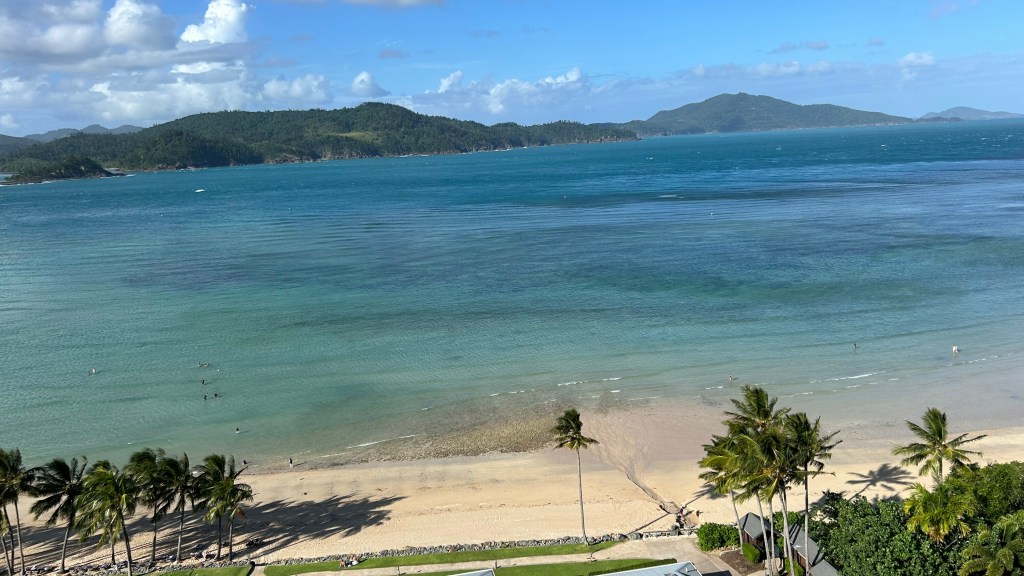
Perfectly situated on the edge of the Great Barrier Reef, amongst Queensland’s 74 Whitsunday Islands, Hamilton Island offers an experience like no other: glorious weather, azure waters, brilliant beaches, awe-inspiring coral reefs, fascinating flora and fauna, and fine food and wines. We had some confusing information for the transfer to Hamilton Island but managed to check in on the mainland, park our car and transfer via ferry.
Accommodation:

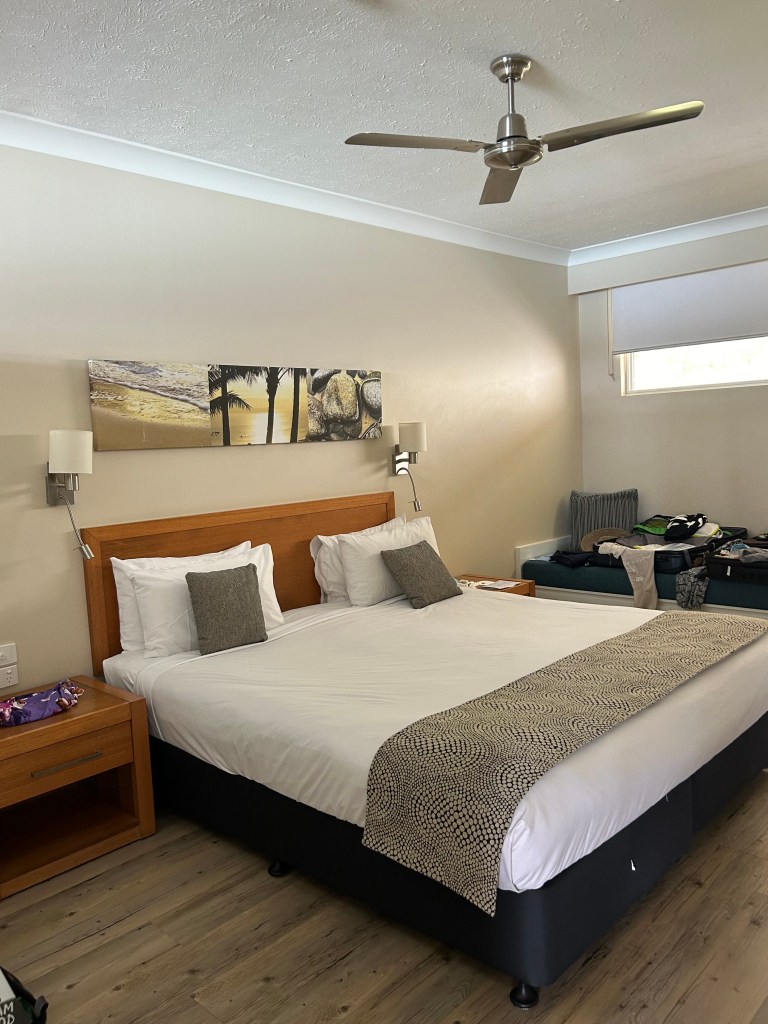
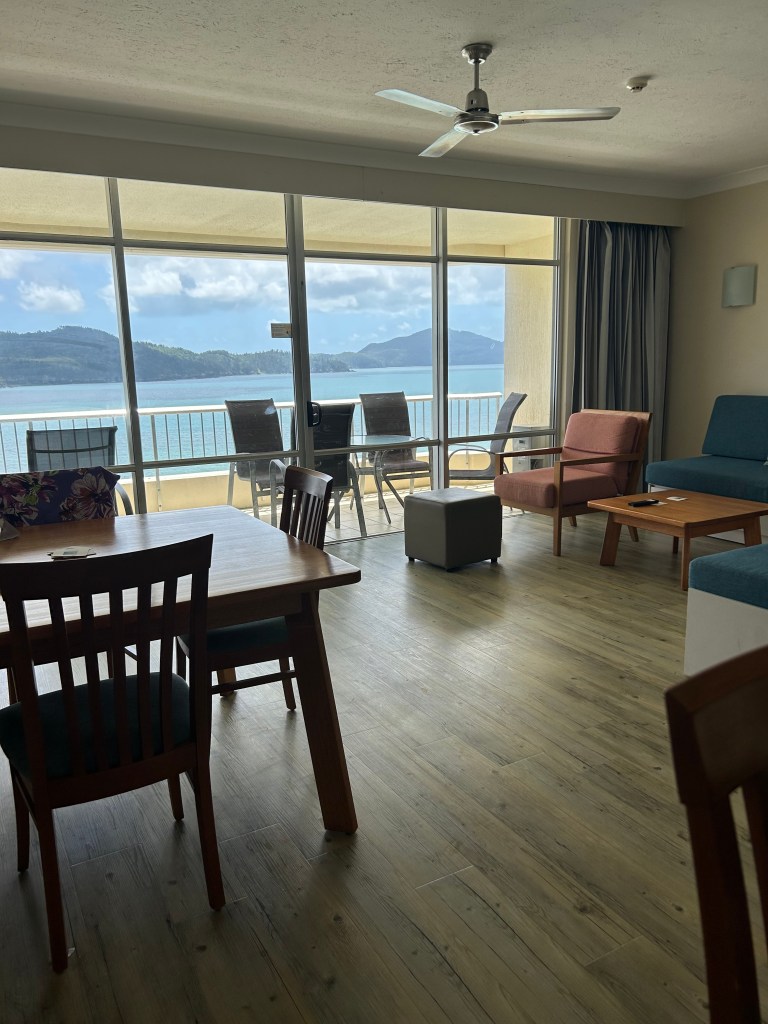
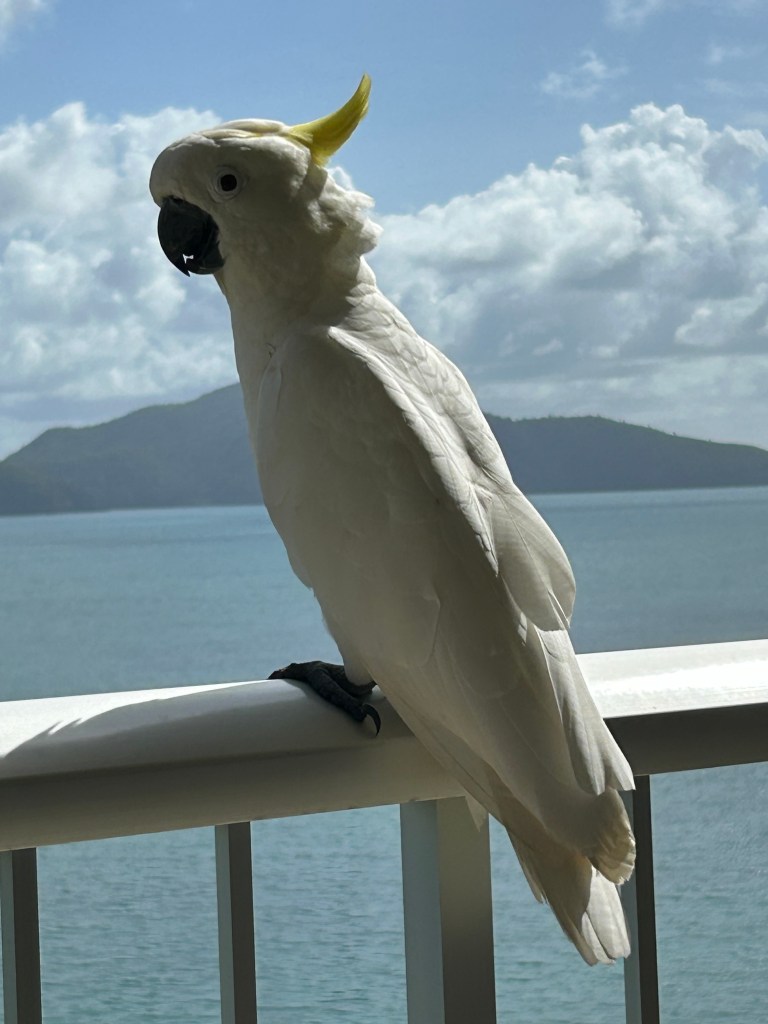
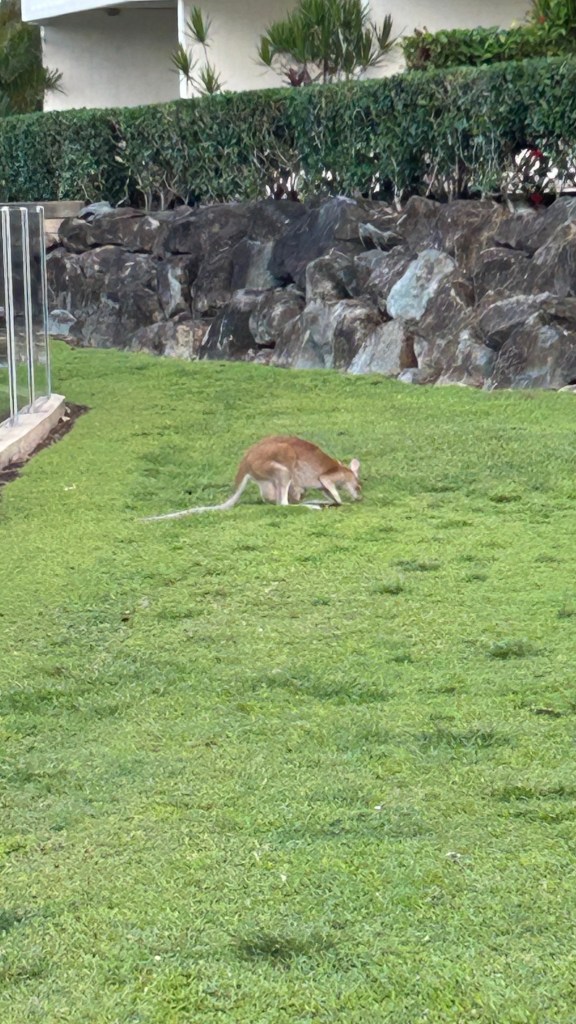
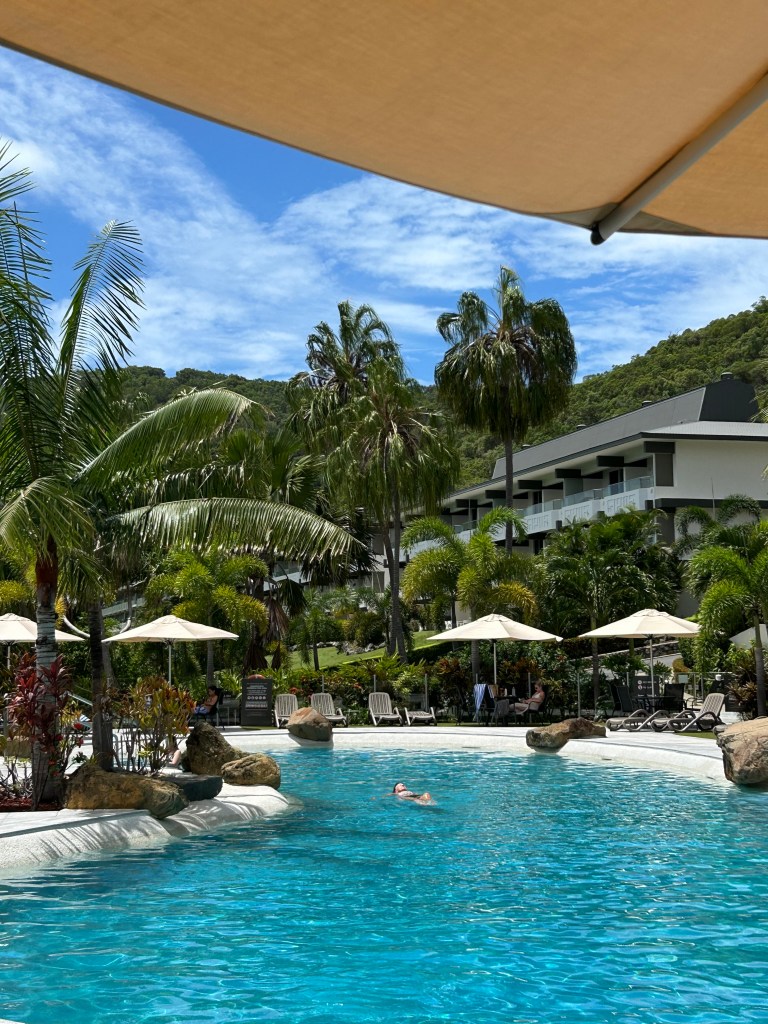
Whitsunday Apartments Hamilton Island is apartment-style living in a truly tropical holiday destination in the heart of the Great Barrier Reef. Adjacent to Catseye Beach on the resort side of Hamilton Island, the Whitsunday Apartments are the perfect base from which to explore Hamilton Island, the Whitsundays and the Great Barrier Reef. We had a large, well-equipped apartment and spectacular view from the balcony where we spent much of our time when at home.

Monday 19th February, 2024 – Whitsunday Islands and Whitehaven Beach ex Hamilton Island – Morning Cruise
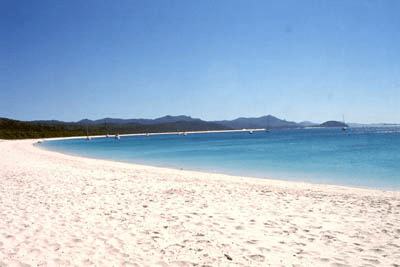
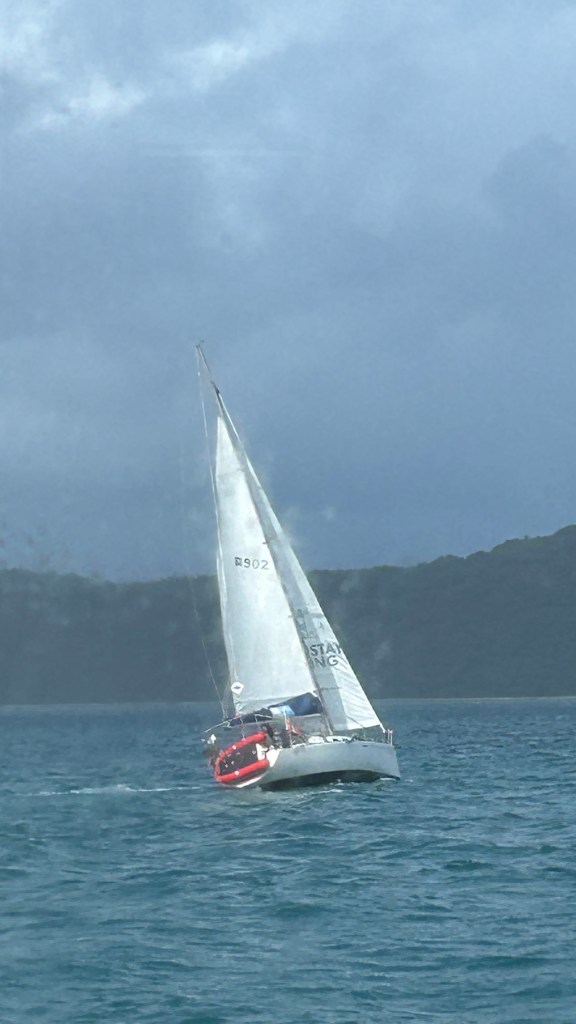
We took the fast catamaran to the Whitsunday Islands National Park on this half day cruise. The waters of Solway Passage led us to the world famous Whitehaven Beach, a definite ‘must see’ in the Whitsundays. It was a rough ride with some 2 metre waves and the boat crashing through them.
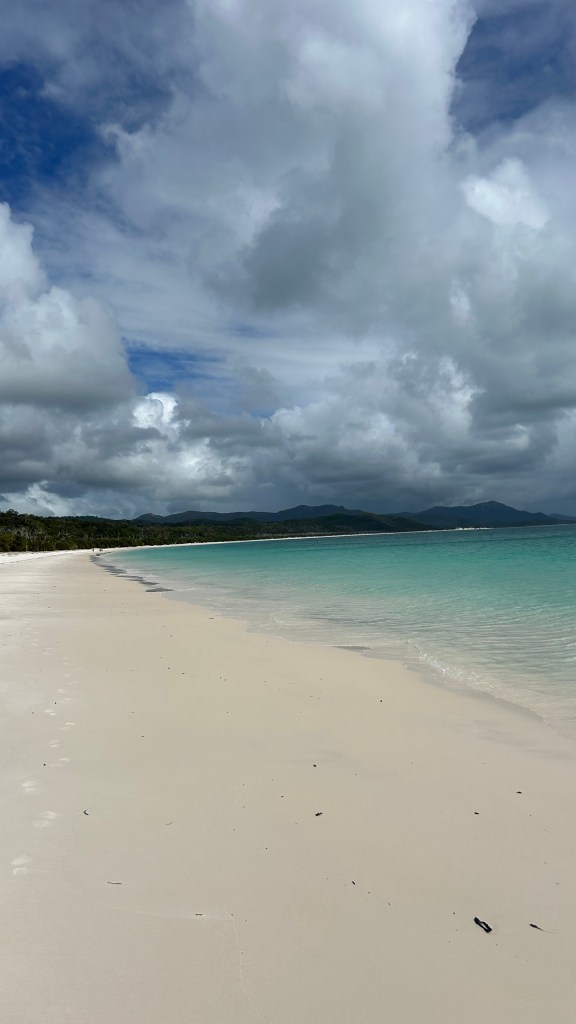
The crystal clear aqua waters and pristine white silica sand stretch for over seven kilometres along Whitsunday Island, the largest of the 74 islands in the Whitsundays. It is Mother Nature at her best – the most photographed beach in Australia and named “Queensland’s Most Beautiful Beach”.
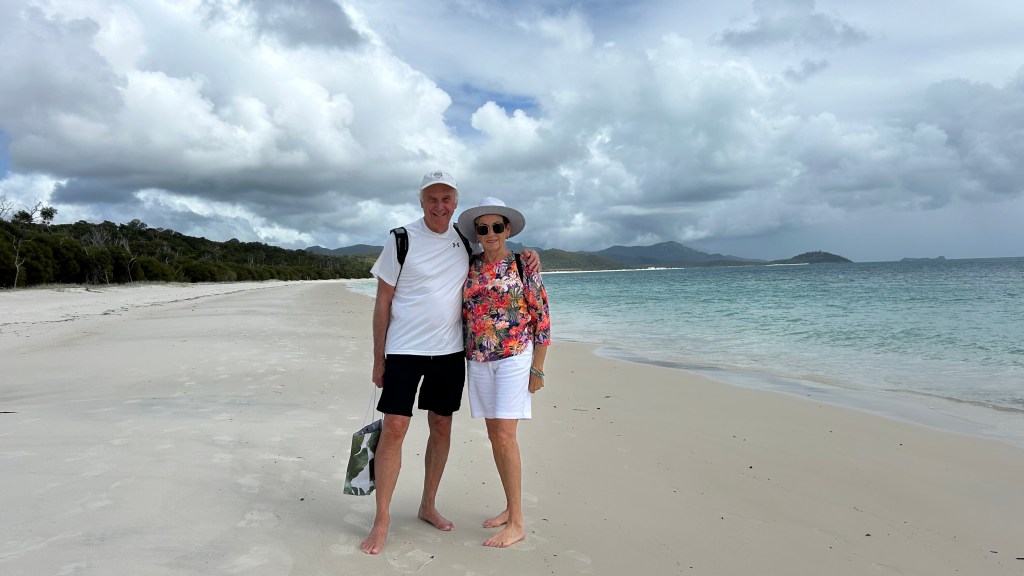
We walked the beach and watched the activities of swimming and paddle-boarding but were unwilling to risk being bitten by the stingers. There were showers off and on all day.
In the afternoon after lunch, we took the free shuttle to the town and bought groceries at the IGA. Having eaten at restaurants for a month and now with a full kitchen, we enjoyed eating at home for a change.
Tuesday 22nd February, 2024
We had a full day free. We took the free bus shuttle that toured the island and then went for a swim and read until lunch. It was pouring rain as we left on the shuttle but by the time we arrived in town, the sun was out. After another trip to the IGA, we walked the beach in front of the apartment and had another swim.
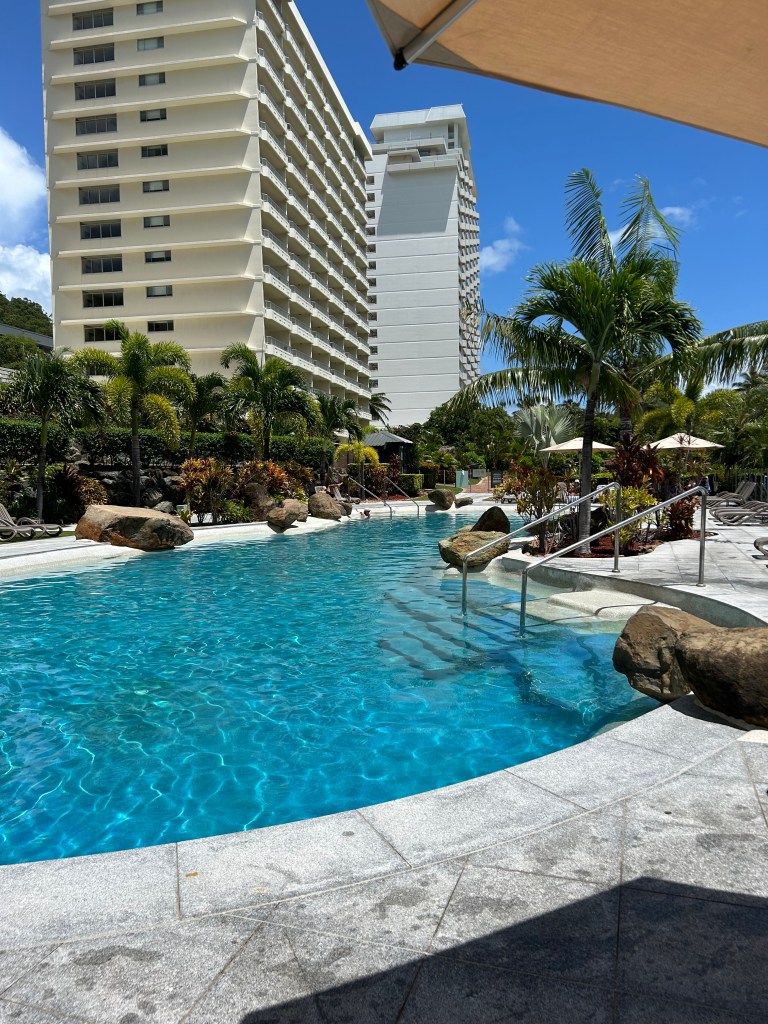
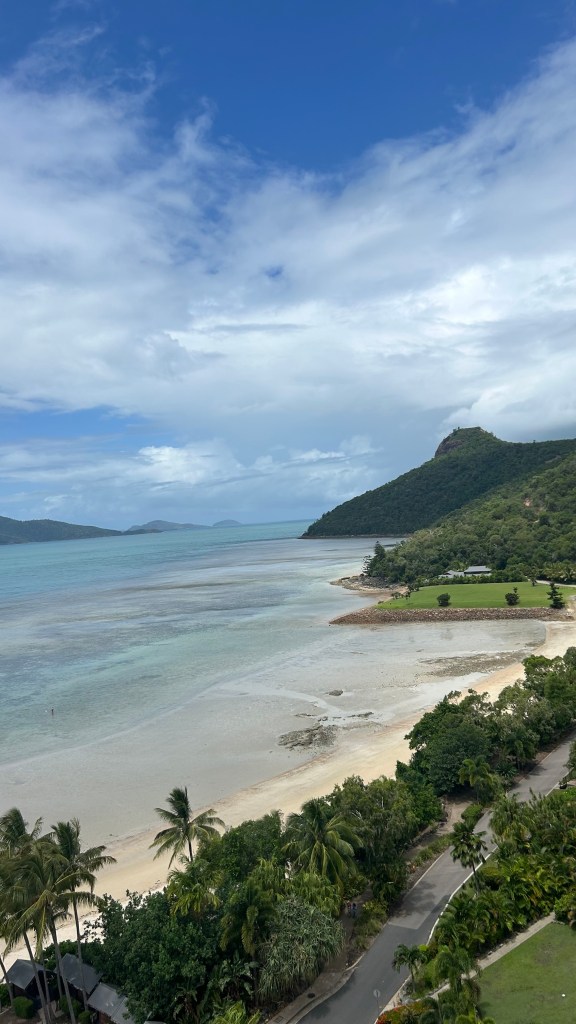
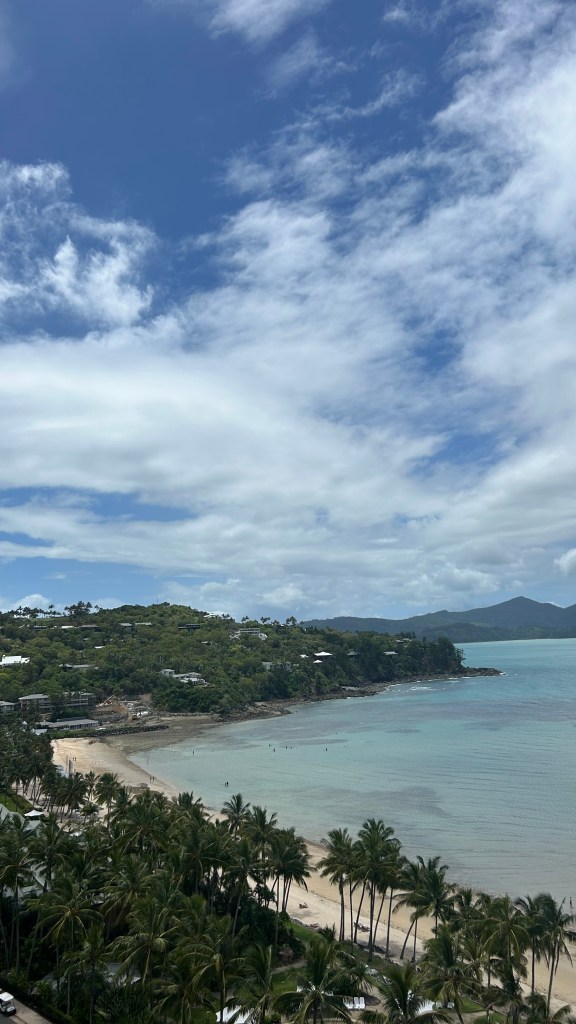
The rain clouds and showers and daily tides in and out were entertaining.
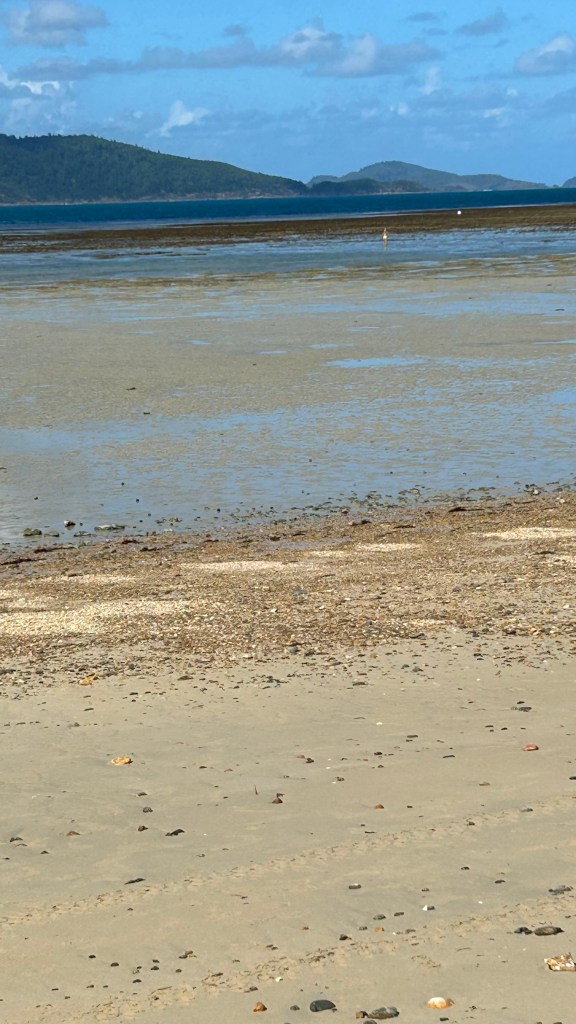
Wednesday 23nd February, 2024
Another free day. As we were having coffee on the deck, a dark cloud came over and it poured rain for 10 minutes and it was over.
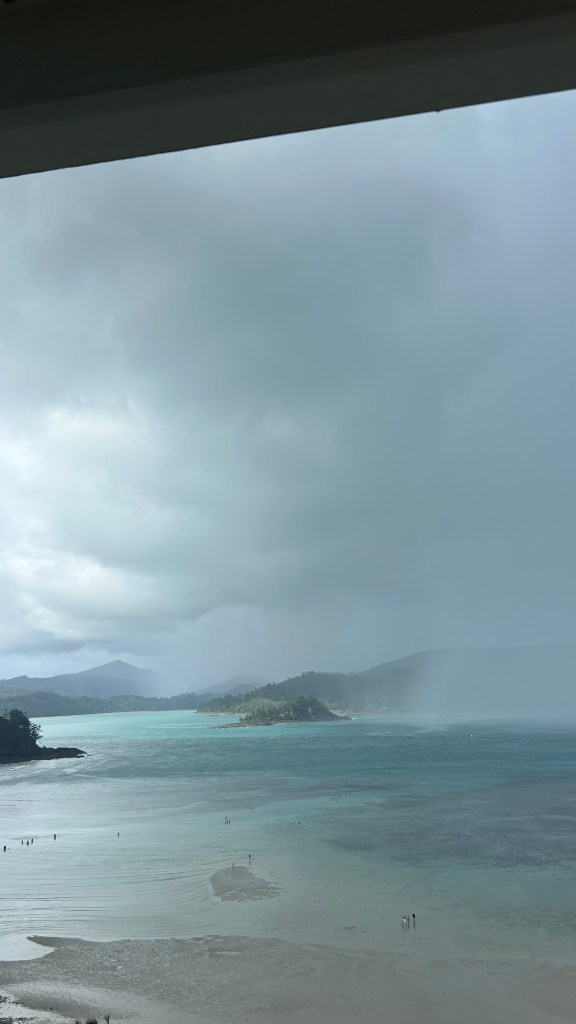
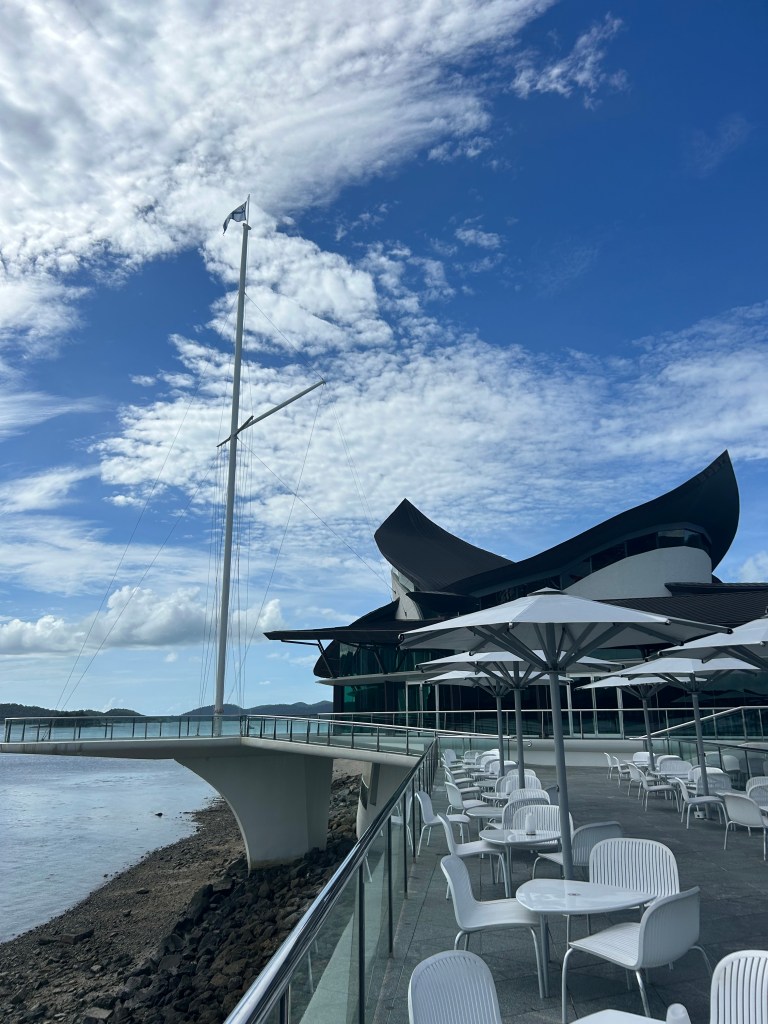
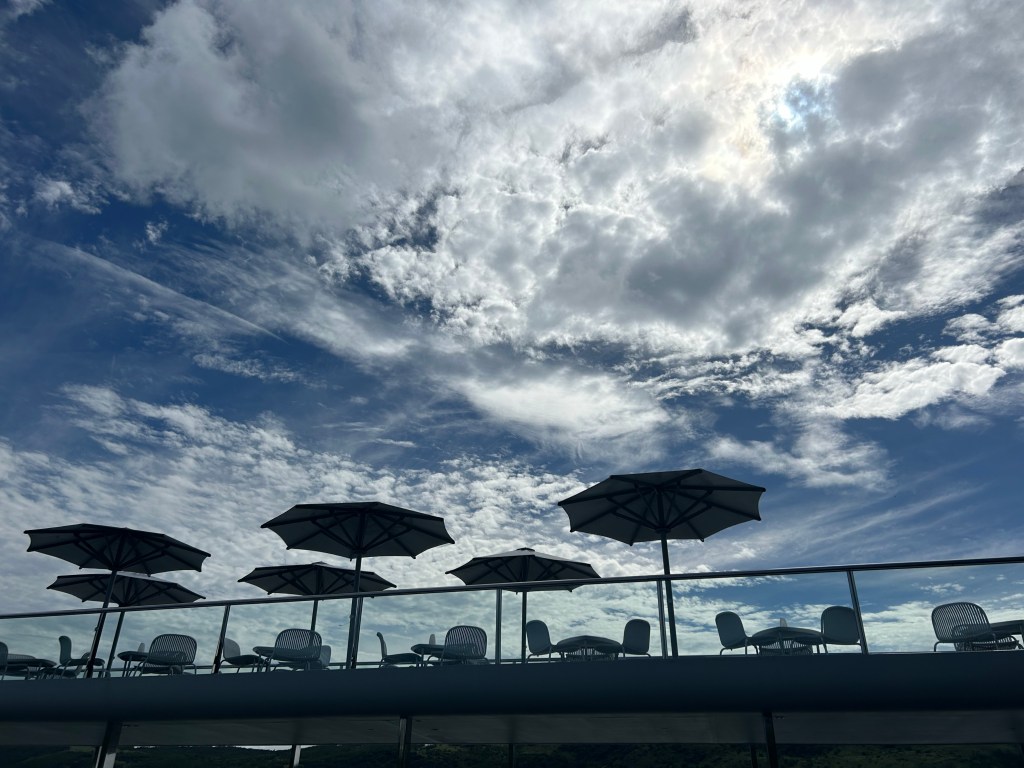
We watched the small rented catamarans and discussed renting one but decided again to not risk the stingers. We went for a swim before lunch; took the shuttle into town and walked to the Yacht Club with a very distinctive design.
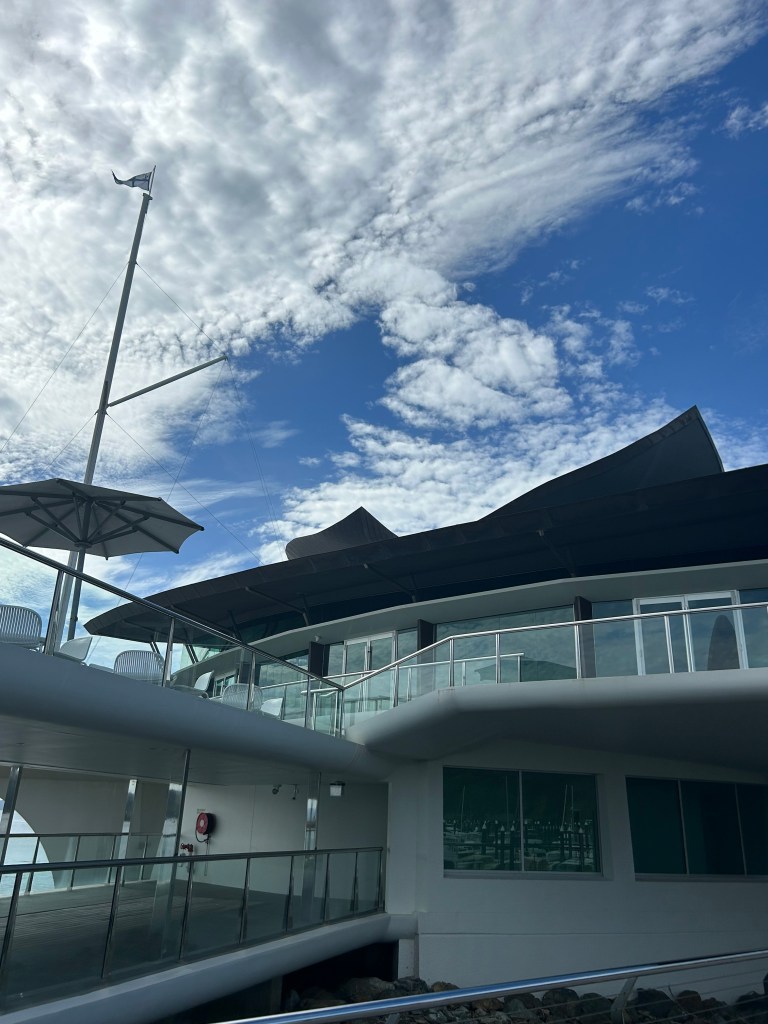
Thursday 22nd February, 2024 – Great Barrier Reef Adventure ex Hamilton Island

It was a long 2 hour trip out to Hardy Reef but it was great once we got there. We experienced the wonders of the world’s most celebrated underwater playground; on the outer edge of Hardy Reef, we came face to face with thousands of different species of marine life and stunning corals.
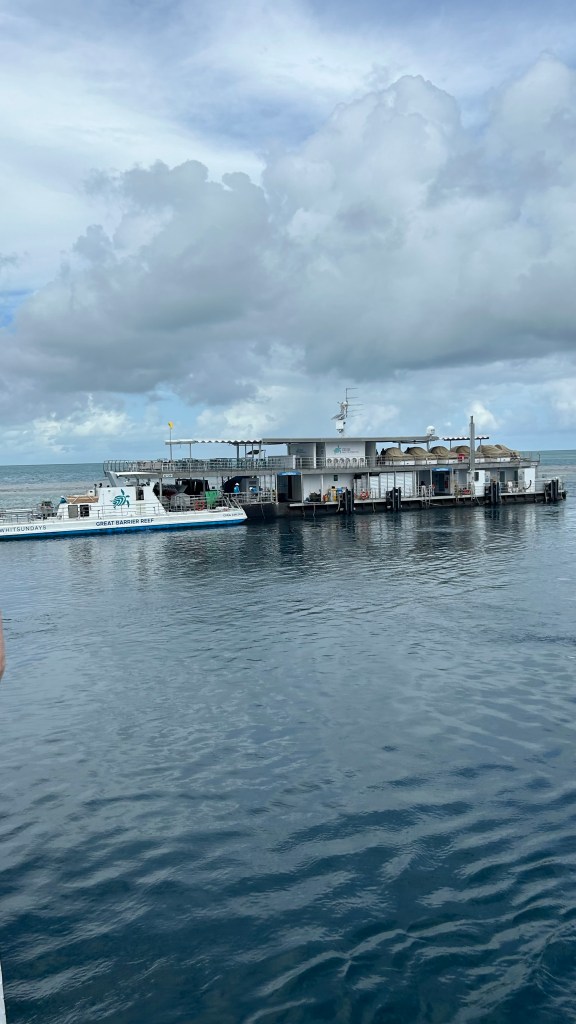
We again hired a guide who took us snorkelling along the edge of the coral reef where we saw many different fish and coral. A boat took us to the docking station where we entered the water and with the guide showing us various fish and corals, we went with the current back to the boat and pod. We were the first group so it was a rush to get the wetsuits and pfd’s on and get our goggles and fins and arrive for the transfer. It was unfortunate that one of our group of 4, a non-swimmer who said that she didn’t like to be anywhere where she couldn’t touch bottom, had a panic attack after we started out and our guide had to go back with her so our group was very large.
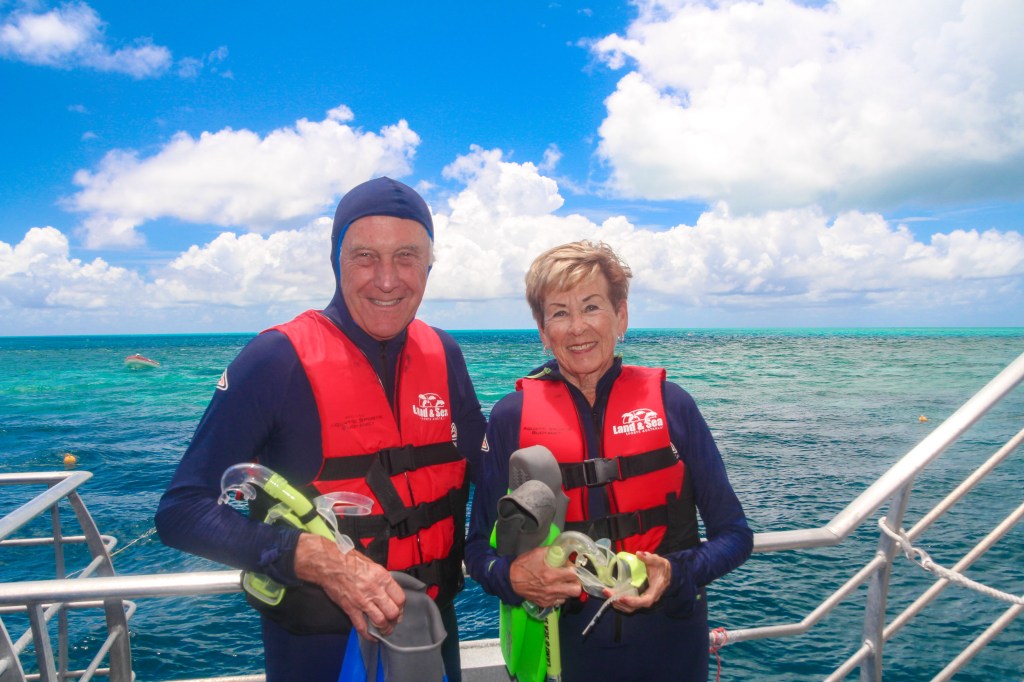
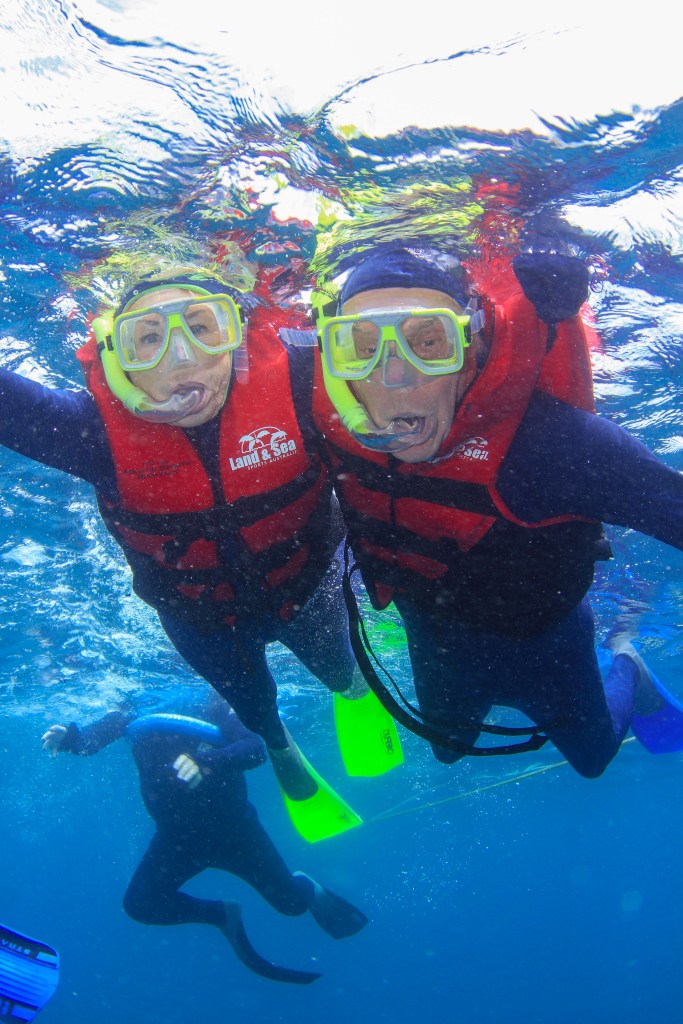
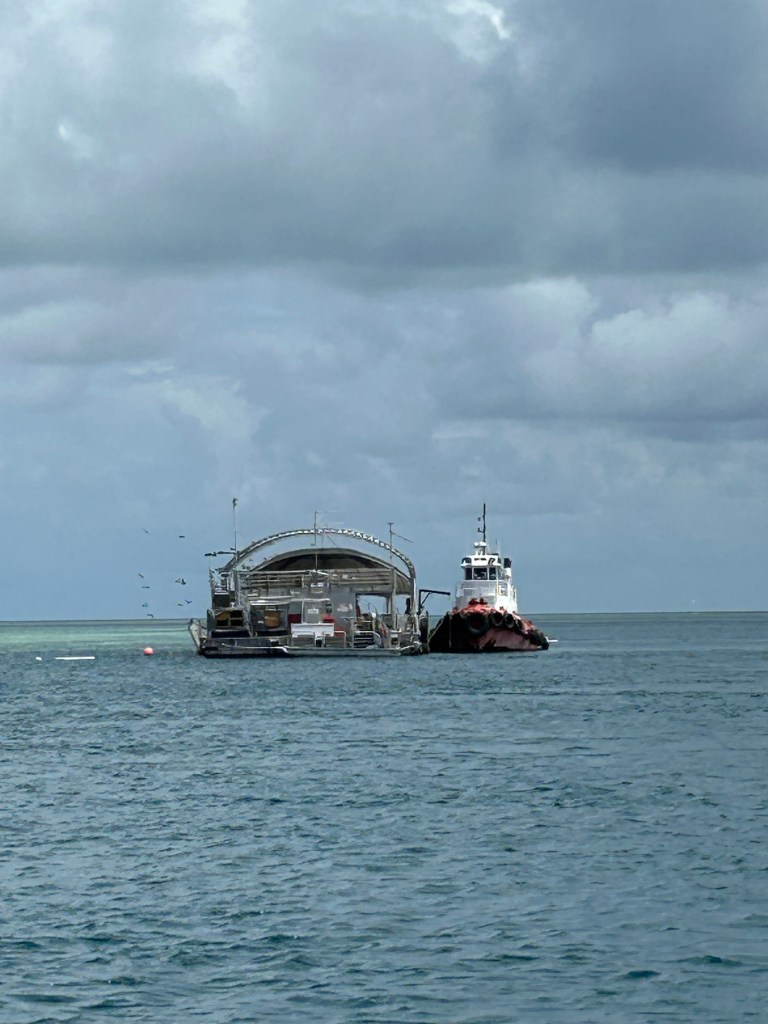
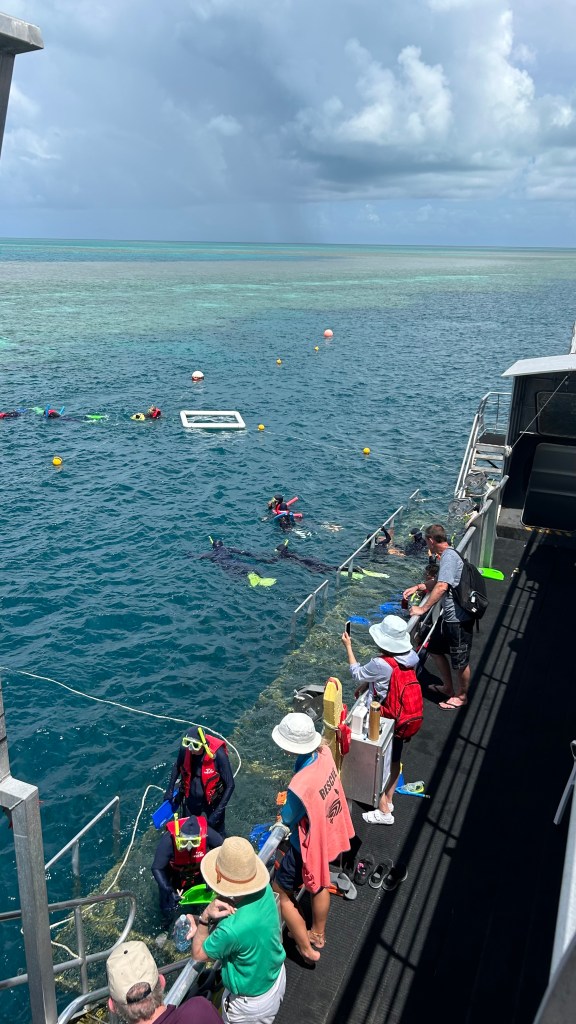
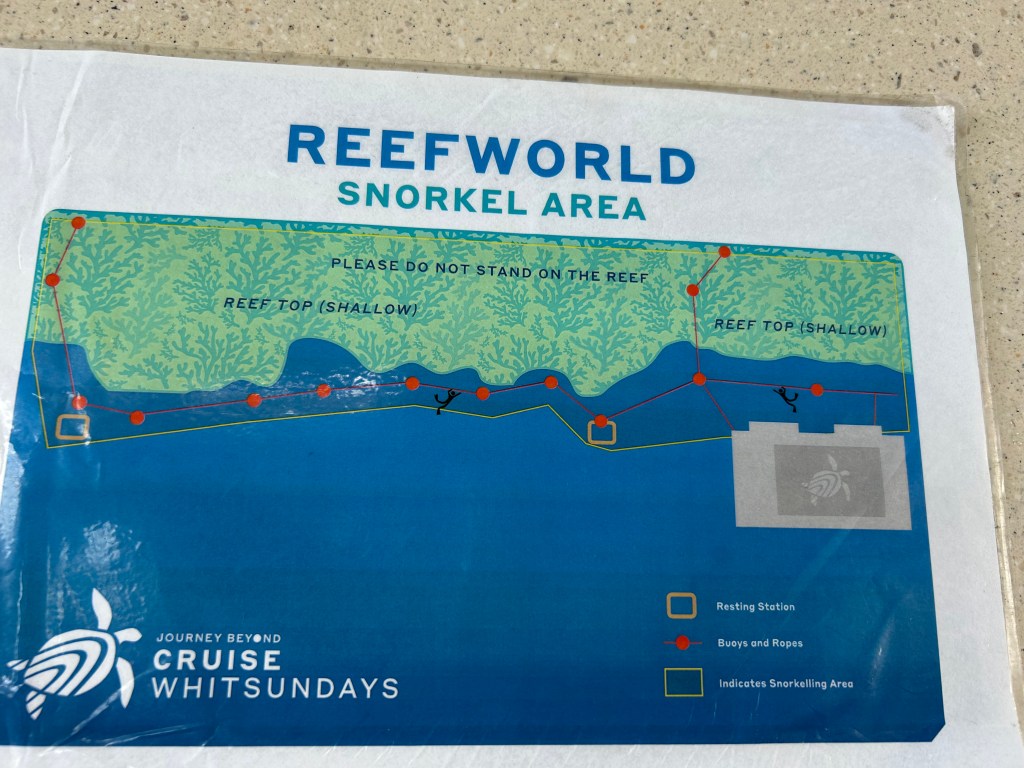
Each time we learn a little more about the GBR and its complexity:
The GBR started to from eighteen million years ago as the Australian continent was drifting north from cooler temperate waters into the tropics. Through the ages, the warming and cooling of the earth together with changes in the size and shape of sea basins, have caused numerous sea level changes, at times to as much as 100 metres below our present sea level.
During the last ice age the area that is now the Great Barrier Reef, was an area of grassy plains and limestone hills. It stayed like that for thousands of years until the earth started to warm and sea levels rose again. Sea levels have fluctuated greatly over the last 20,000 years with water levels above and below our present level.
As sea levels rose, corals that survived in the deeper water off the continental shelf reproduced and started to recolonize the edge of Australia’s continental shelf.
The bulk of the reef structure as it is today was laid down around 6000 to 9000 years ago but the final shape as it looks from the air today only appeared less than 3000 years ago when sea levels finally stabilised by the last couple of metres, defining reef and coastal margins as they look today.
We got changed, had a very good lunch.
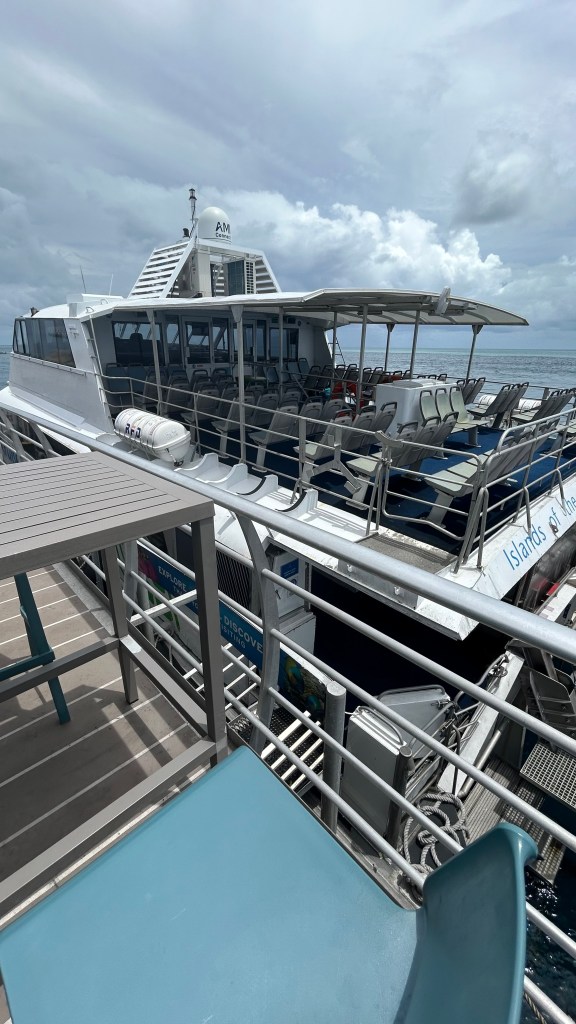
We went out in the glass-bottomed boat and saw much more than we did in Cairns.
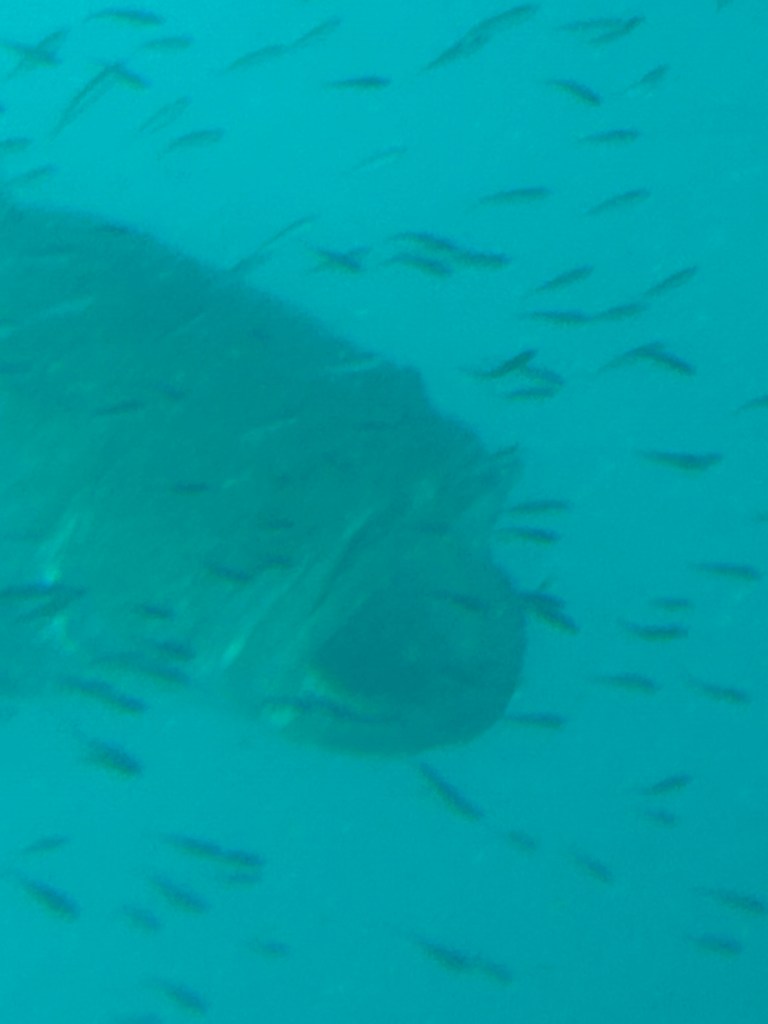
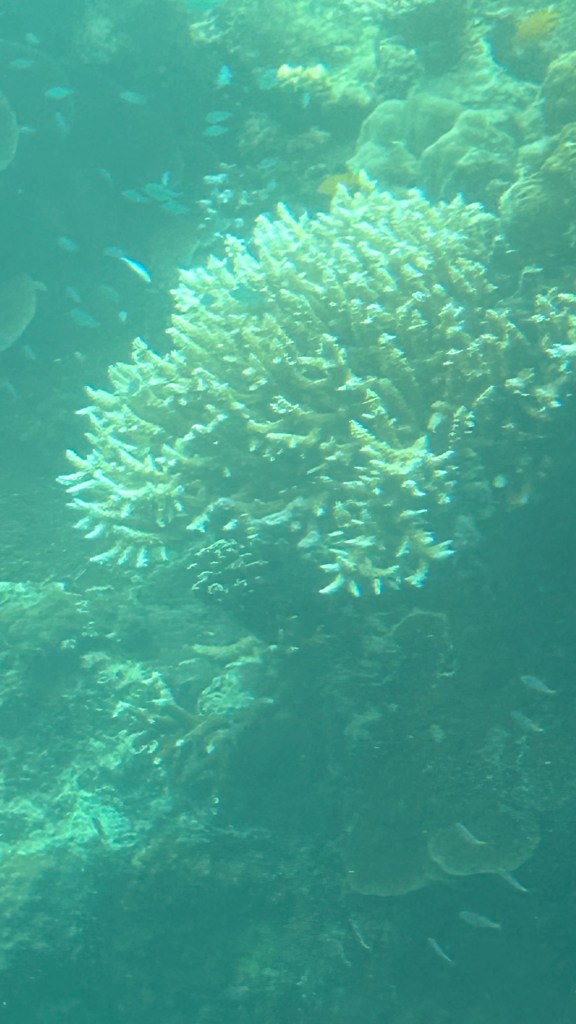
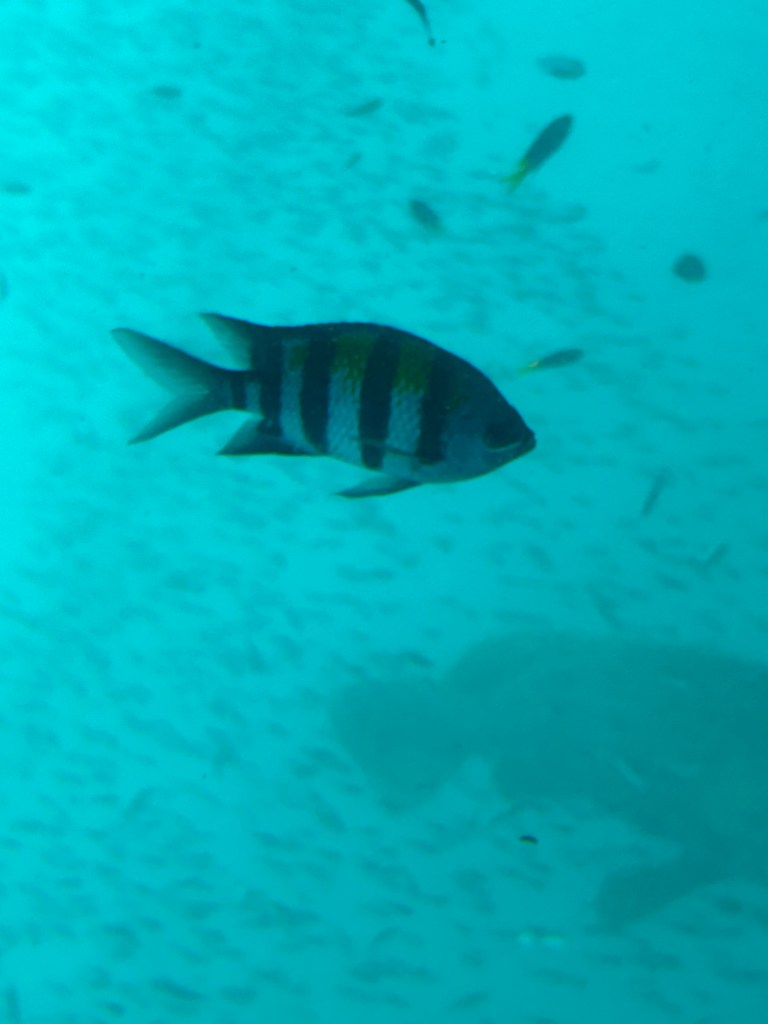

There was a problem with one of the engines so we arrived back 15 minutes late.
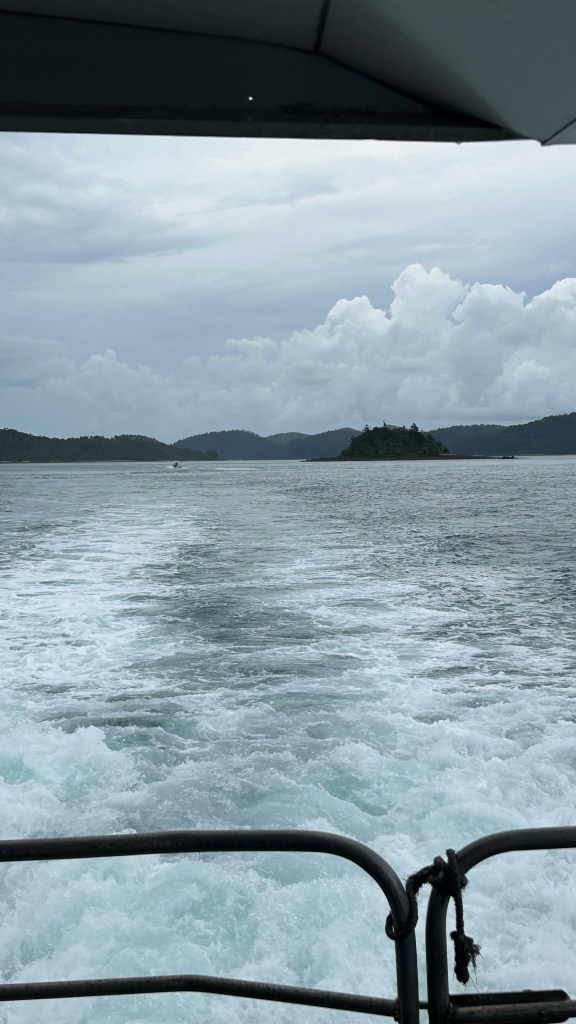
Altogether a very good day. We feel more experienced at snorkelling, more knowledgeable about the GBR but it was a long way to get there.
Friday 23rd February, 2024 – Depart Hamilton Island
We transferred from Hamilton Island Marina to Port of Airlie by ferry at 8:50am and arrived at 9:50am . We took a taxi to the rental office and were off on our 500 km drive to Rockhampton.
AIRLIE BEACH D’TOWN To SYDNEY AIRPORT
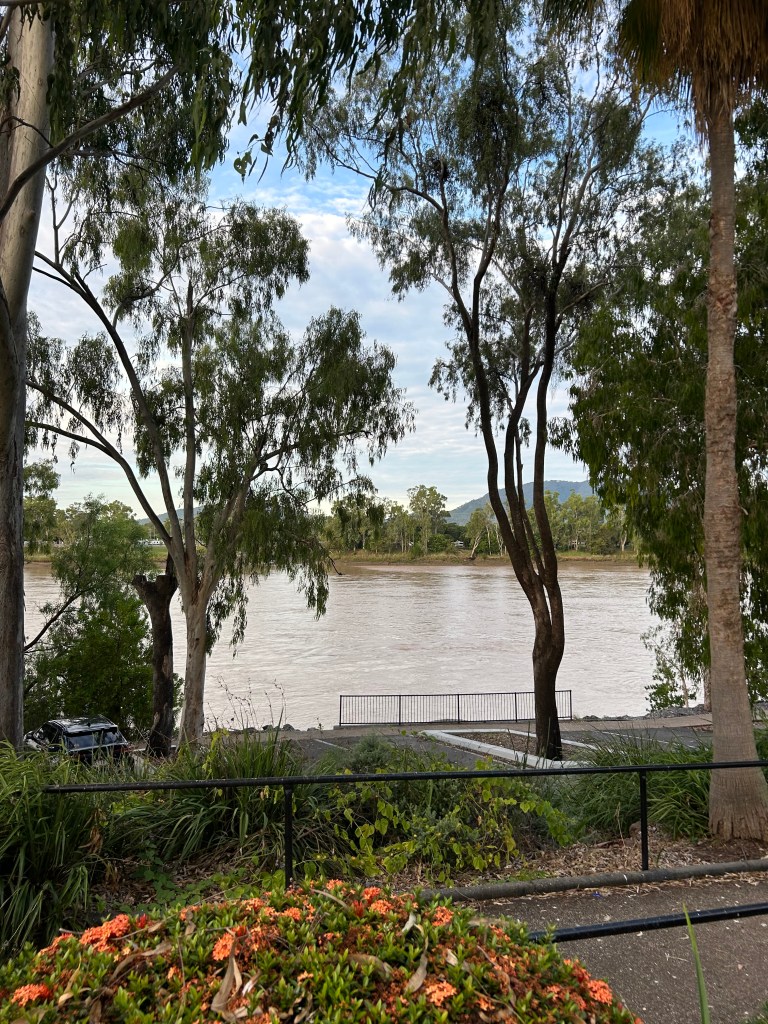
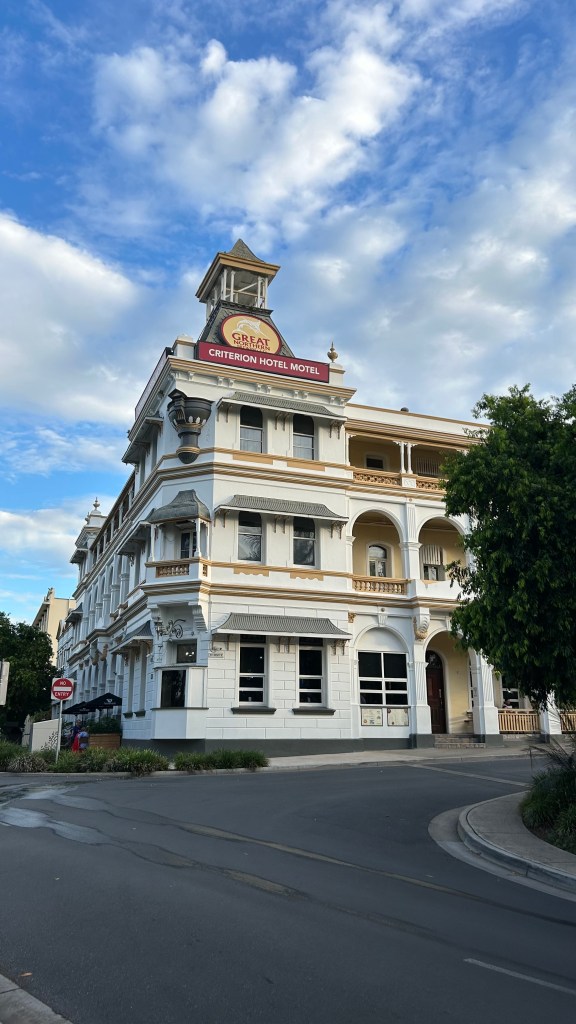
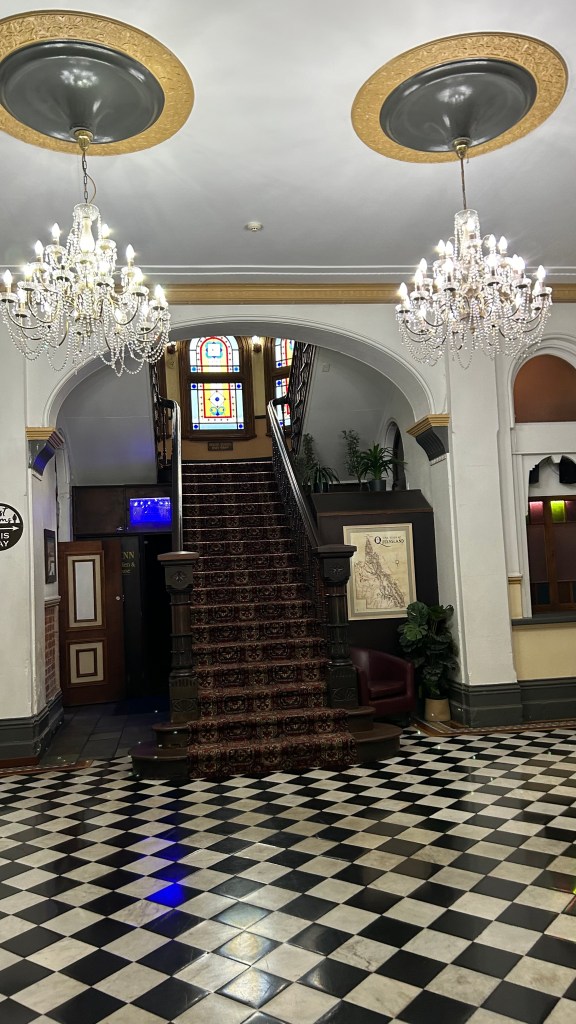
Arriving later in the day, we didn’t see muck of Rockhampton located 650 km north of Brisbane but a walk along the river and dinner. We had heard from a woman in Cairns that the place to go in Rockhampton was the Criterion Hotel. So that’s where we went for dinner.
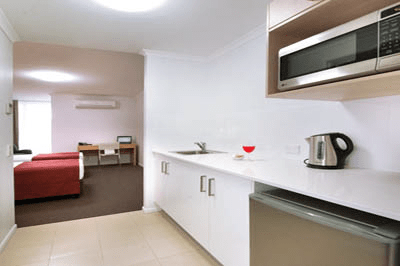
The Edge Apartment Hotel
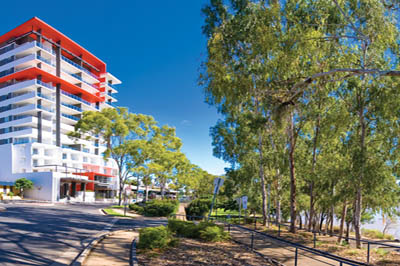
The Edge Apartment Hotel is Rockhampton’s an executive apartment hotel, RBO-type.
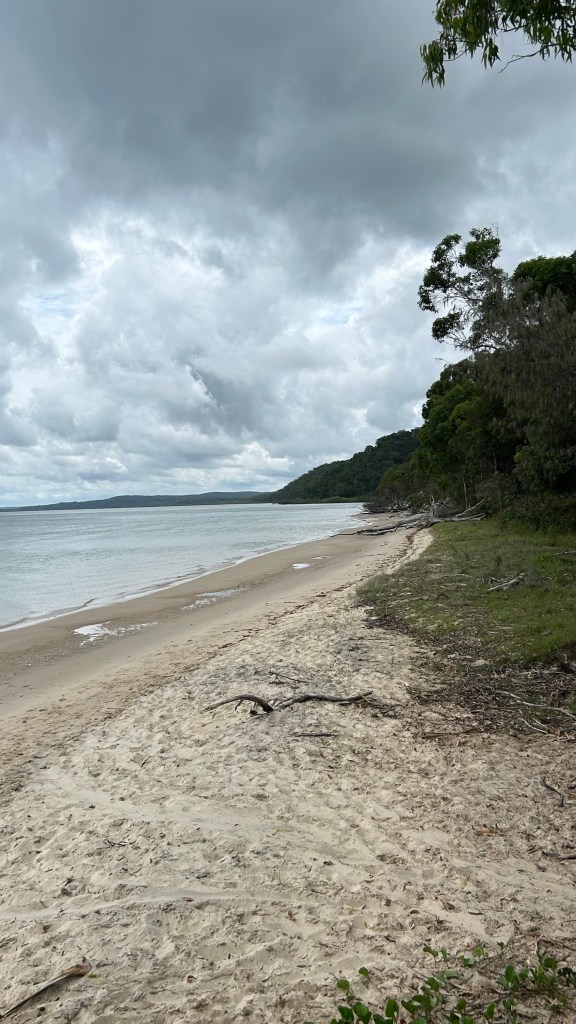
Saturday 24th February, 2024 – Depart Rockhampton to Fraser Island
Separated from the mainland by a narrow channel, Fraser Island is the largest sand island on Earth and an ecological masterpiece. Native wildlife abounds including dingoes about which we were warned.
Accommodation:

This World Heritage-listed national park, which sits within the Great Sandy Biosphere and adjoins the Great Sandy Marine Park, offers a unique blend of action and adventure versus relaxation and total immersion in nature.
We ran into a glitch in the itinerary. The following was the only information that we had:
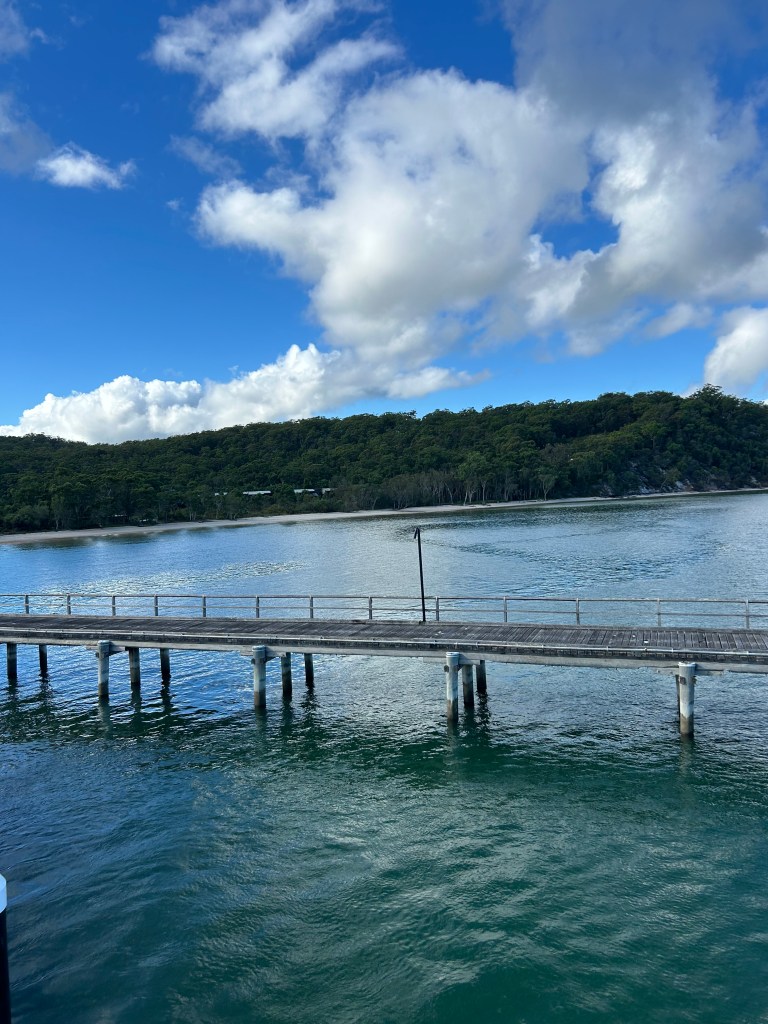
Notes: Pickup: 01:00 PM – River Heads to Kingfisher Bay Resort Drop Off: 10:30 AM – Kingfisher Bay Resort to River Heads
We assumed that the pick up was a 1:00 pm car-carrying ferry at River Heads and we’d check in on Fraser island. Not so. We found an office for the Kingfisher Resort after we arrived at the ferry location but no one in an office. Some people on the landing said that there may be an office up the hill. Sure enough, we found a Kingfisher Resort office where we were to check in and park our car for $45. We then drove into the nearest town and found a “bottle shop” for some Gin. We arrived back, ate a cheese and ham sandwich in the cafe and were transported with our bags to the ferry terminal.
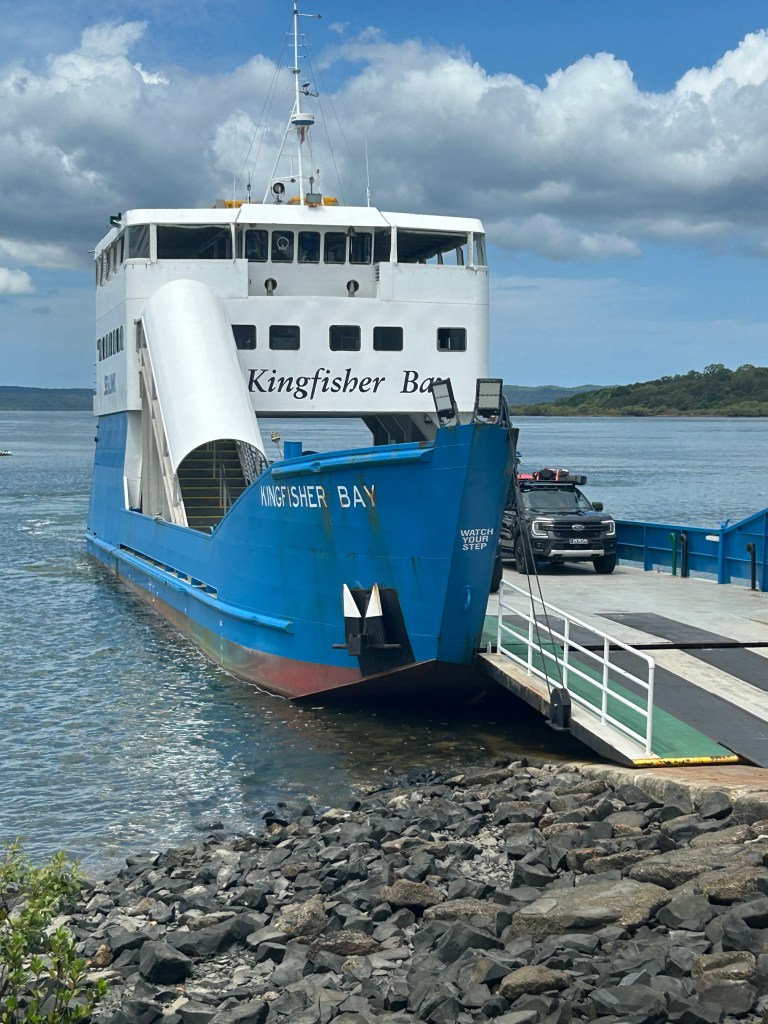
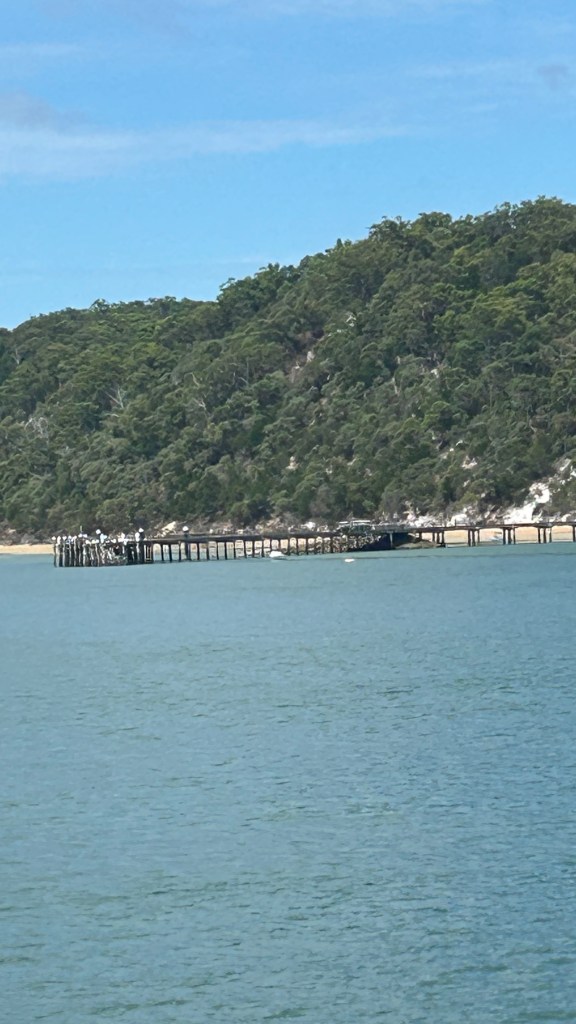
Sure enough we got to Fraser Island by 10:30 and were transported to the resort with our check-in information ready and went to our room.
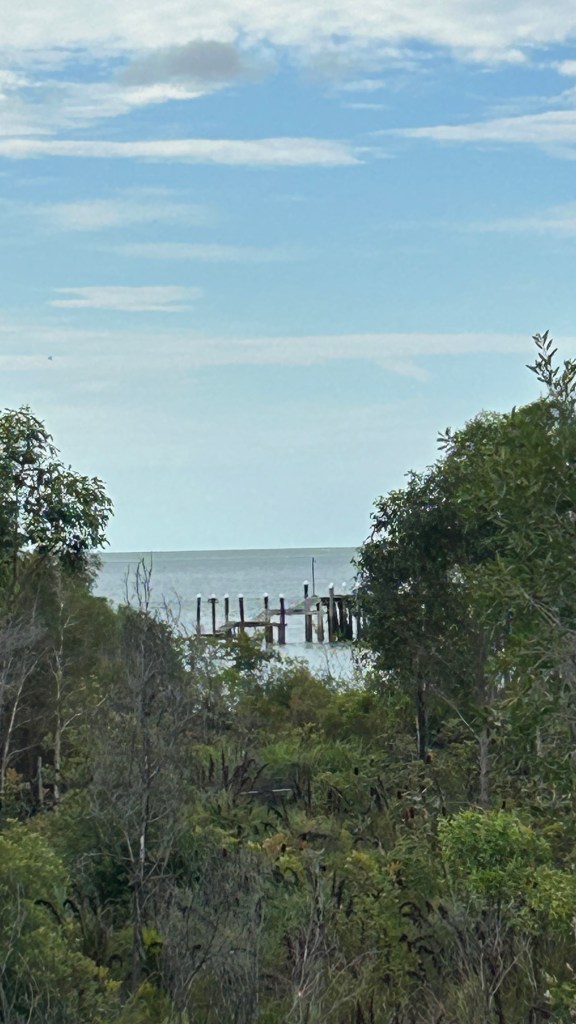
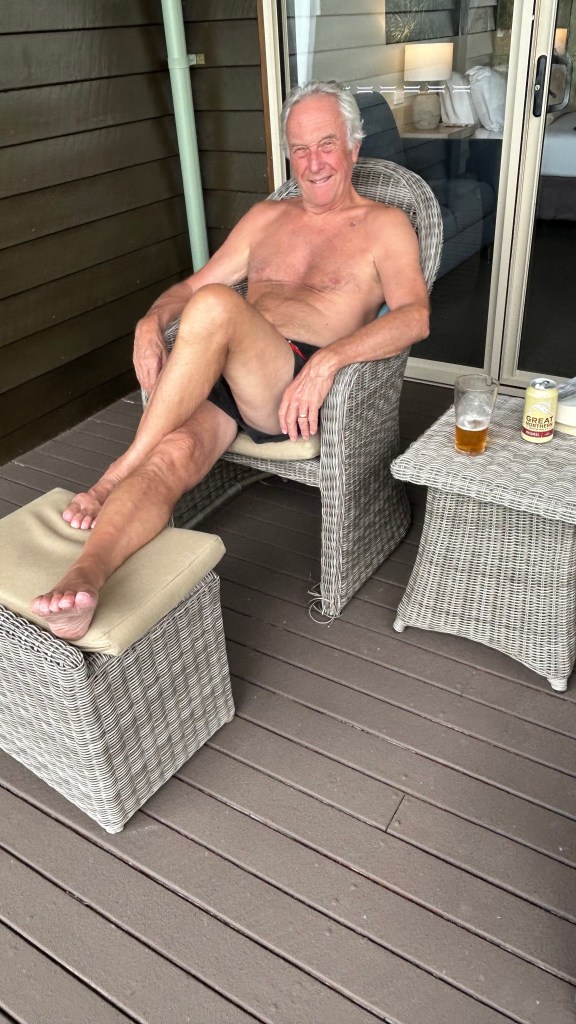
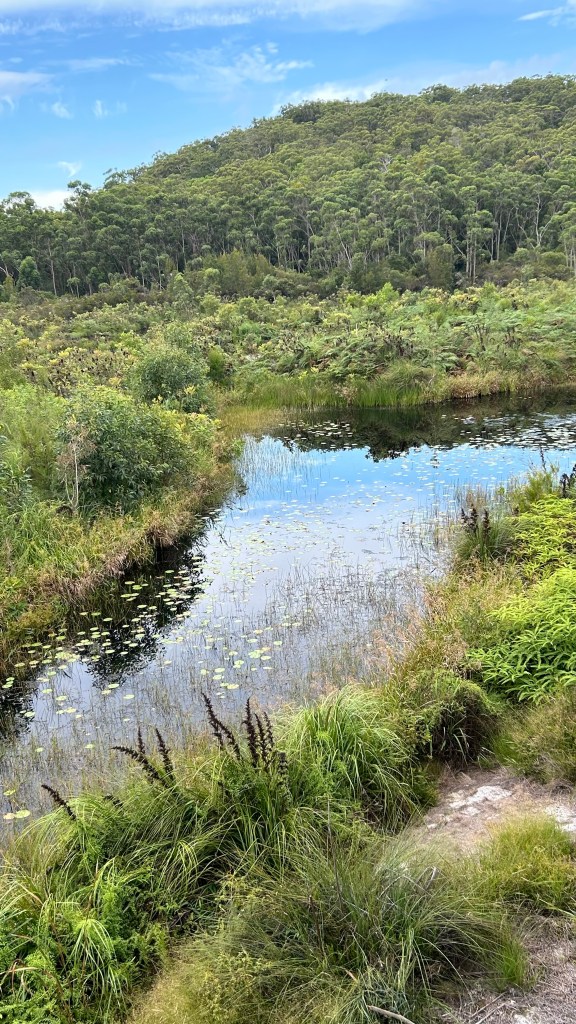
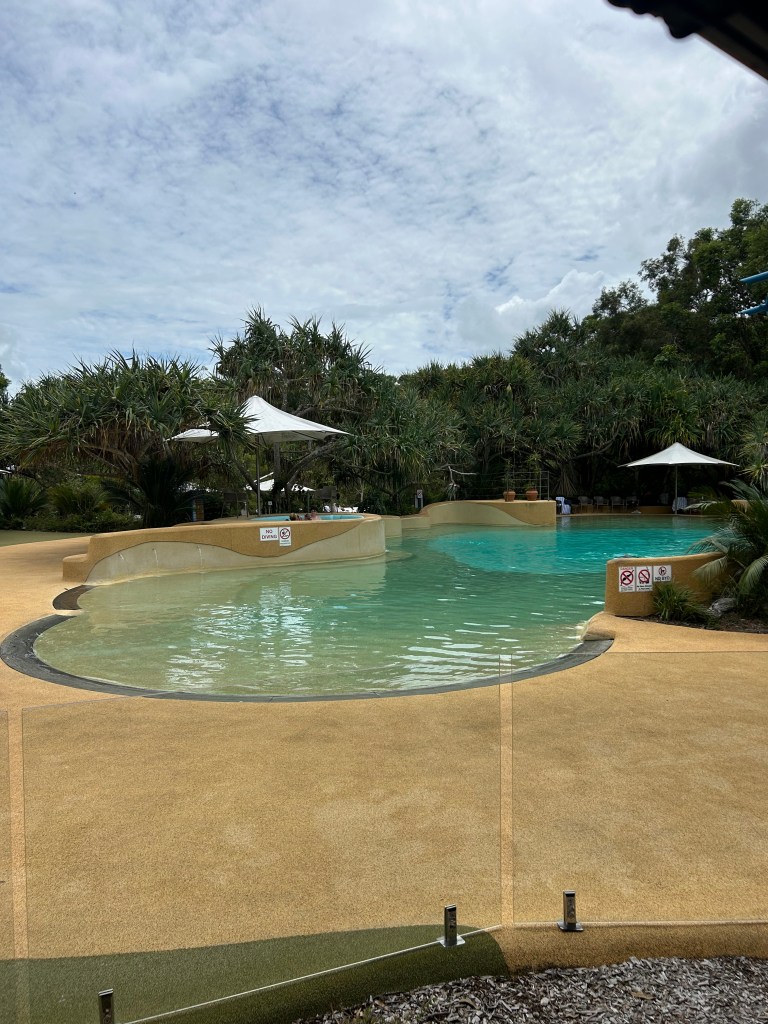
We spent the afternoon at the pool.
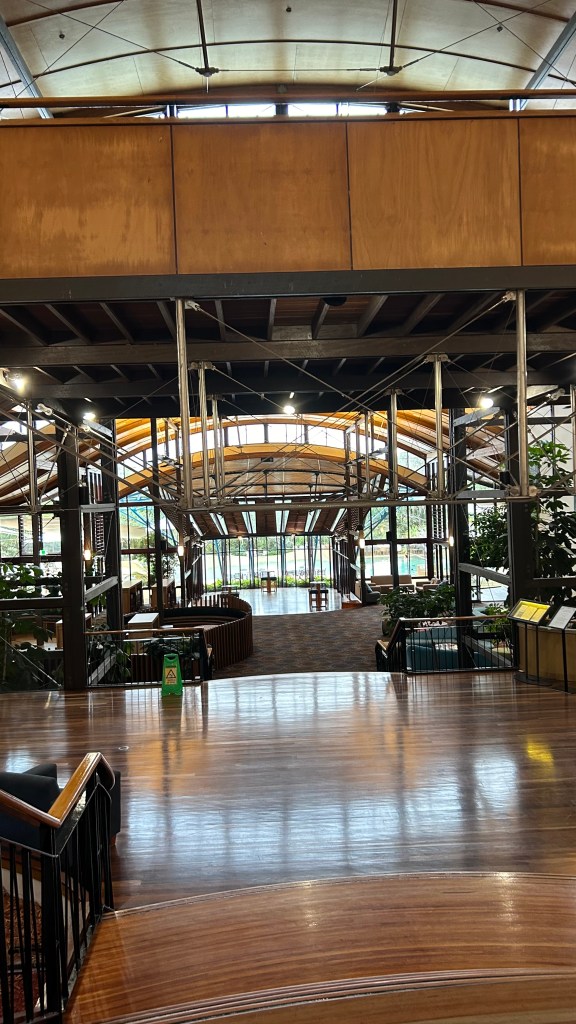
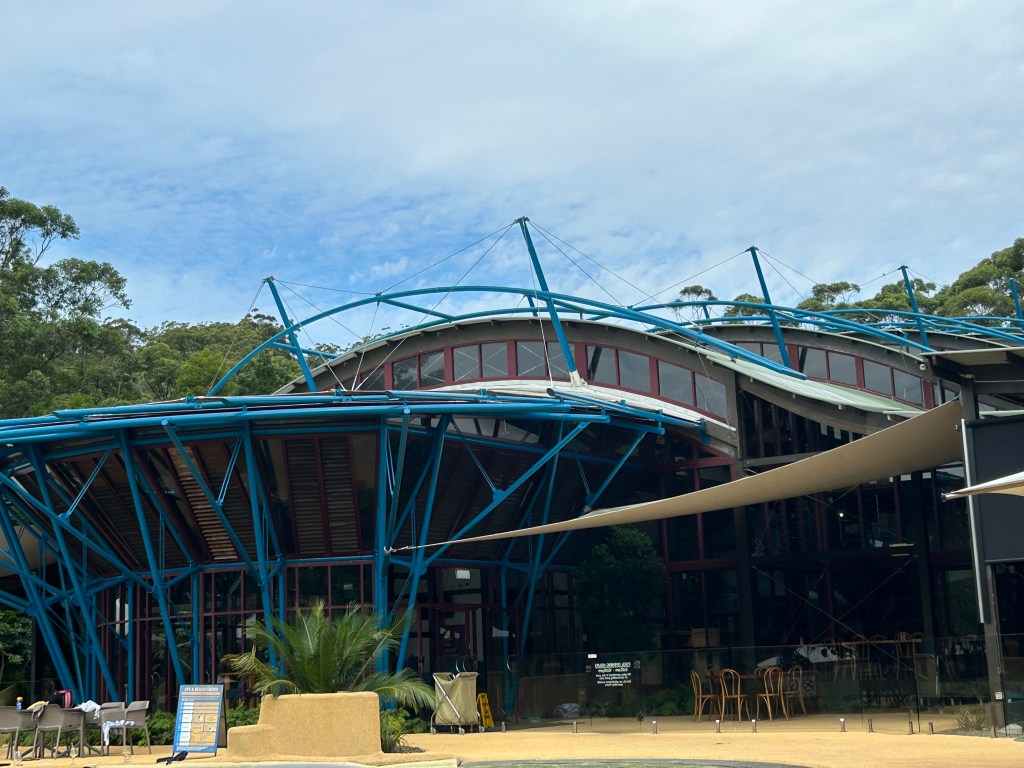
On Sunday morning at 8:00 we received a call from the front desk: we were booked on the full day tour and could we be ready in 5 minutes? This was the first we heard about this and no we couldn’t. Apparently, we were not informed about this tour! Several calls and emails followed with the agent promising reimbursement – still not really satisfied with the response and missing the sand dunes!
Sunday 25th February, 2024 – Fraser Island
We decided to join the walking tour in the morning in the Wallum with a guide.
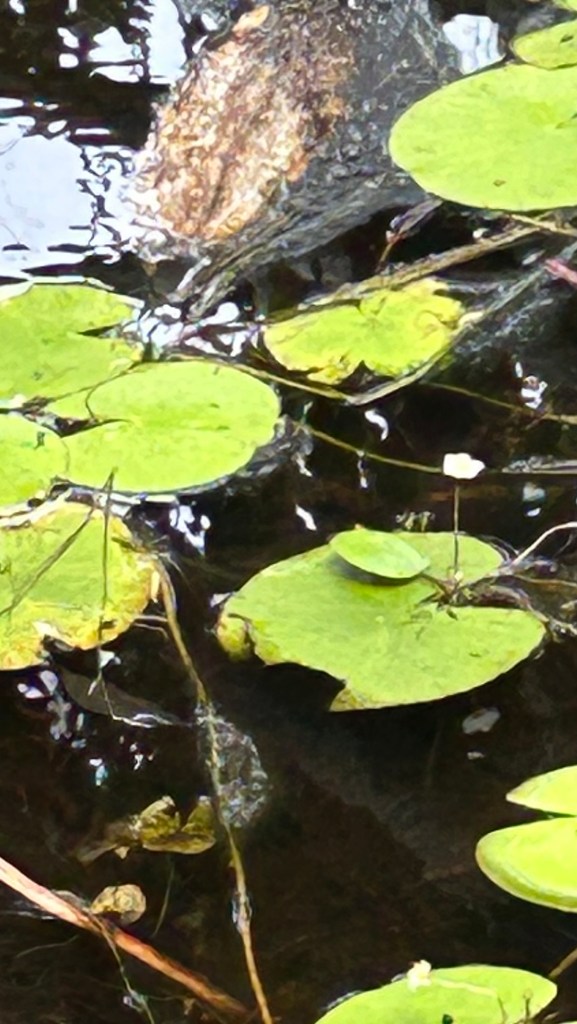
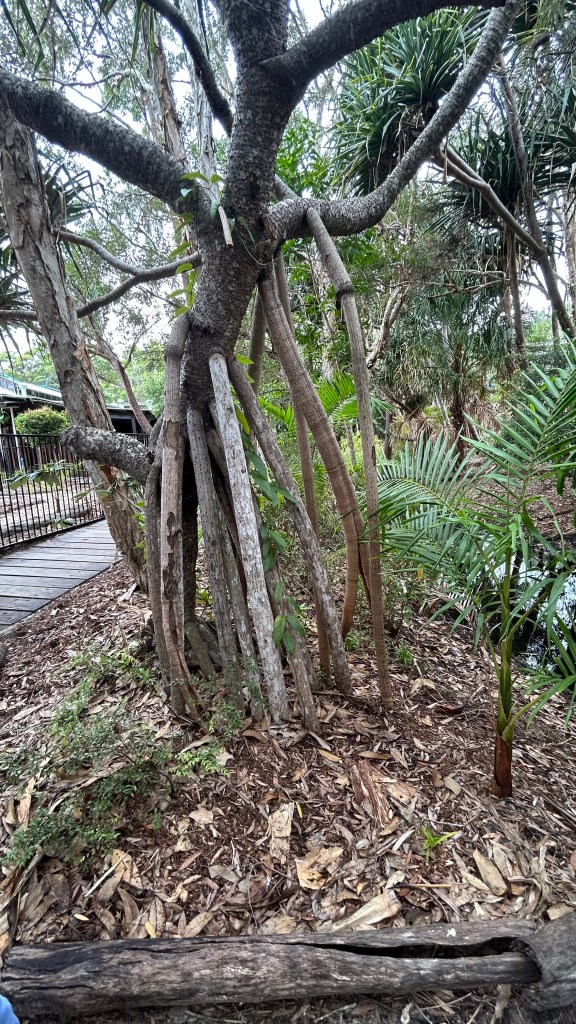
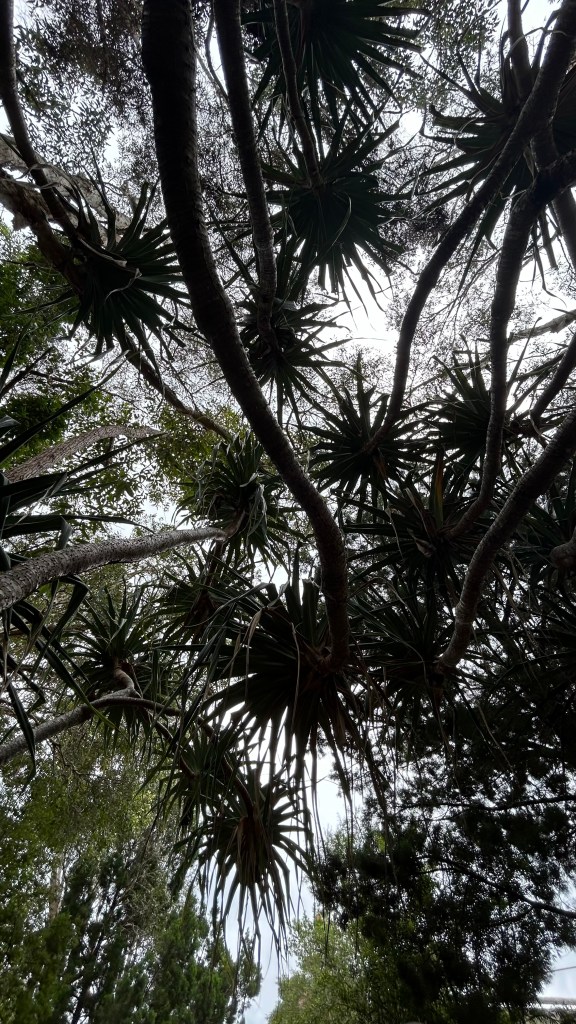
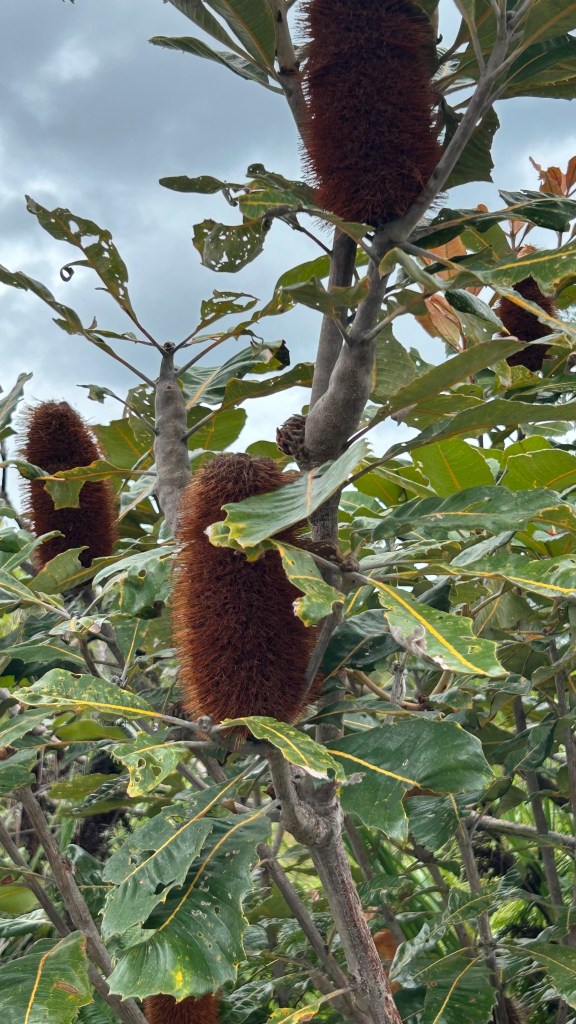
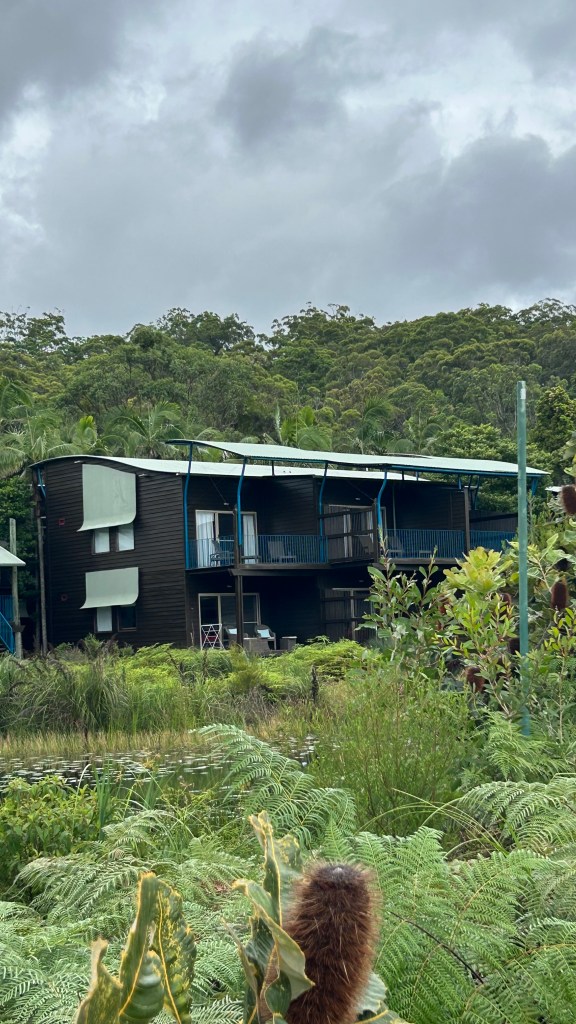
Banksia robur, commonly known as swamp banksia, grows in sand or peaty sand in coastal areas from Cooktown in north Queensland to the Illawarra region on the New South Wales south coast. It is often found in areas which are seasonally inundated. It grows as a multistemmed shrub to 3 m tall, with large, leathery tough green leaves: its new growth is colourful, in shades of red, maroon or brown with a dense felt-like covering of brown hairs.
Monday 26th February, 2024 – Depart Fraser Island to Caloundra
Accommodation:
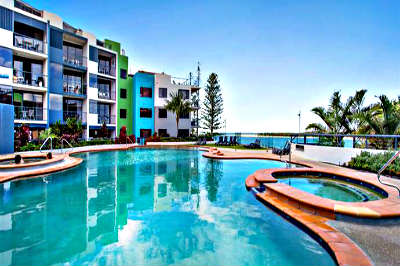
BreakFree Grand Pacific Caloundra
BreakFree Grand Pacific Caloundra has modern and stylish 1, 2 and 3 Bedroom Apartments, which are fully self-contained with all the mod cons you’ll need. Just a stone’s throw from the resort there are shops, restaurant, cafes and bars overlooking Pumicestone Passage.
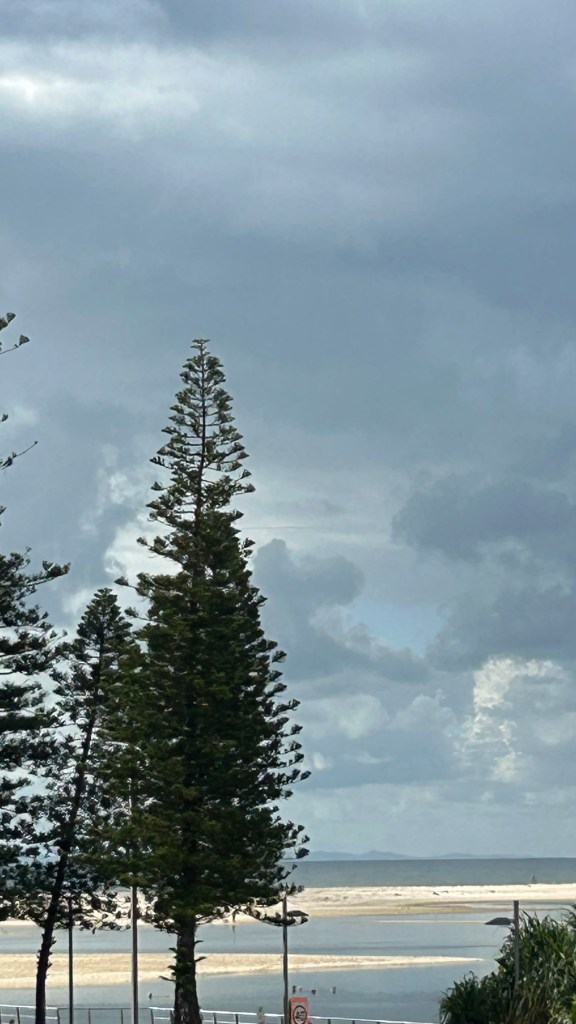
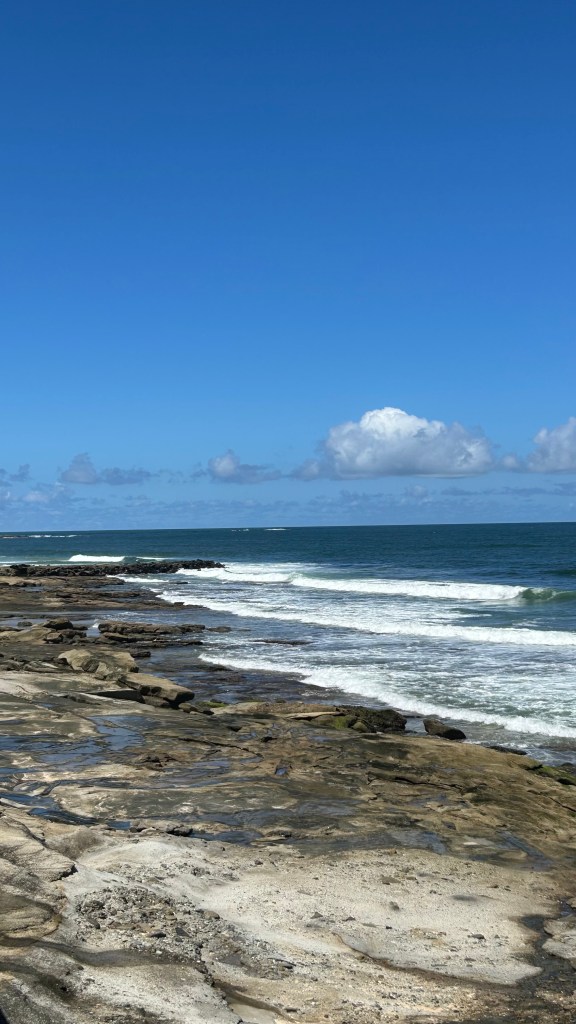
After we arrived and before checkin at 2:00, we walked the promenade along the waterfront.
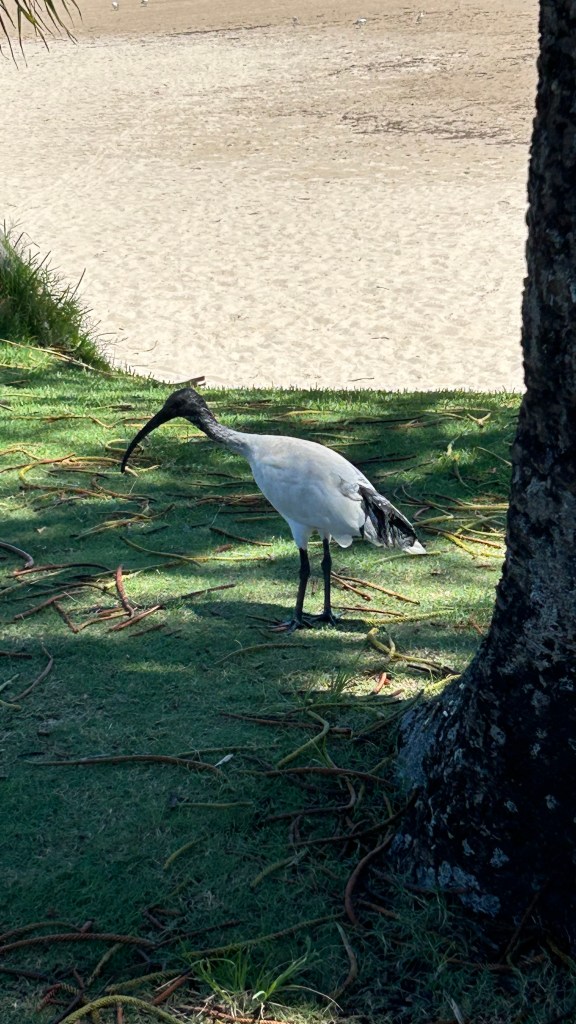
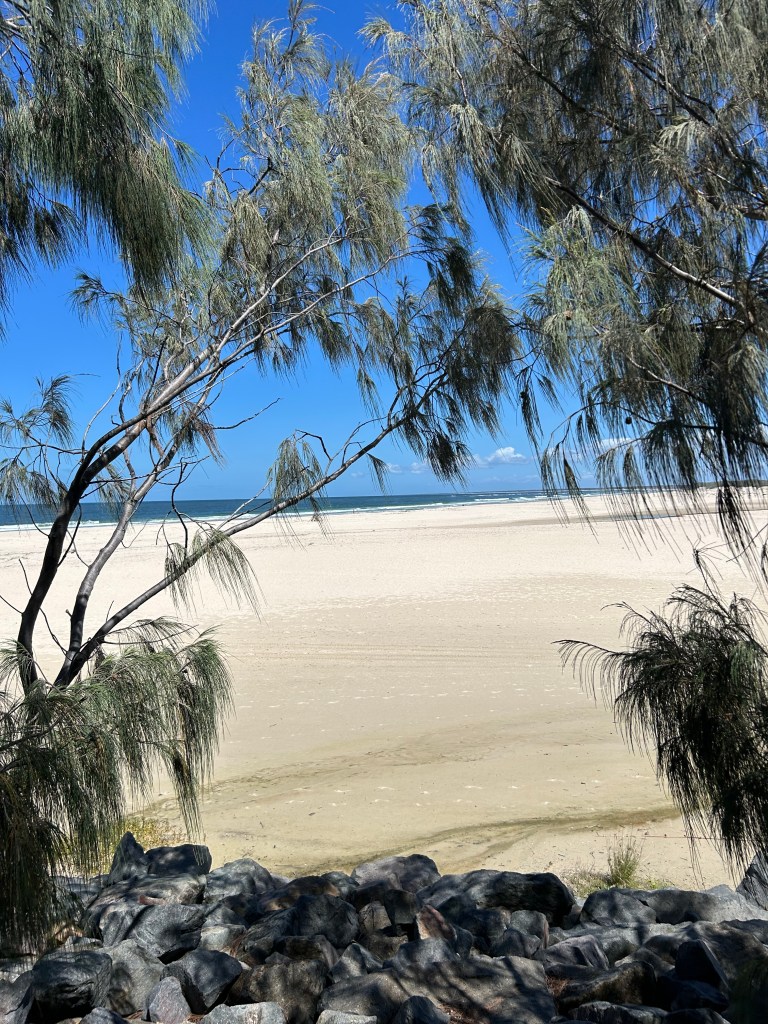

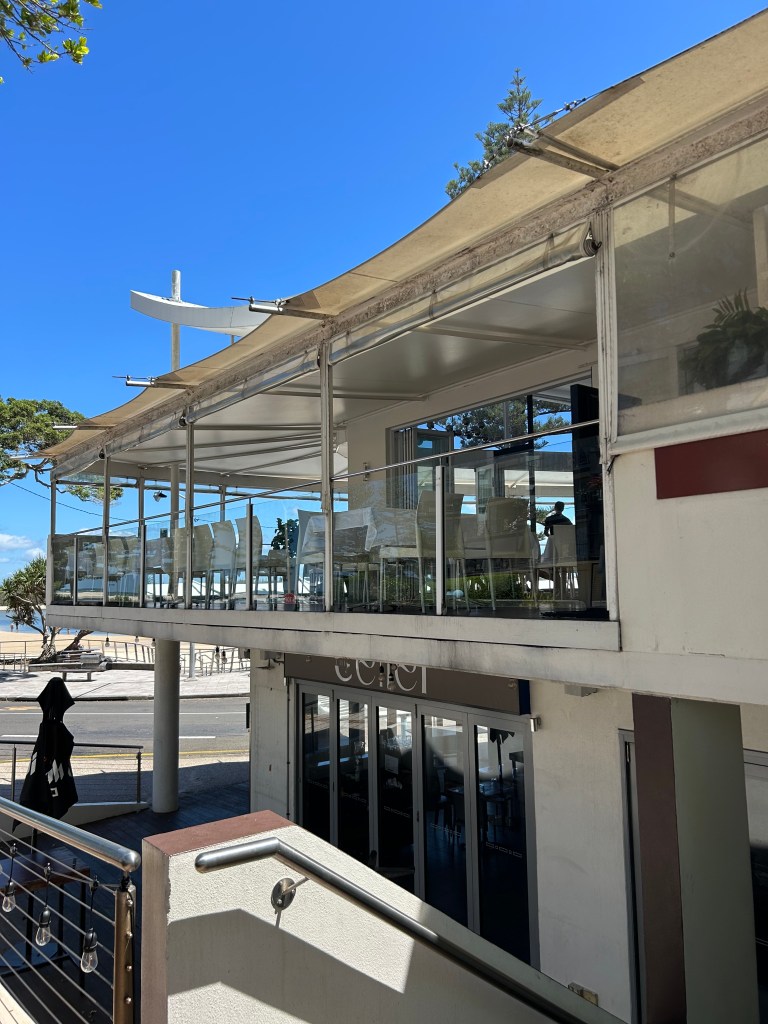
Returning from our walk, we passed The Tides restaurant and I had just read a very good review of it so we made a reservation.
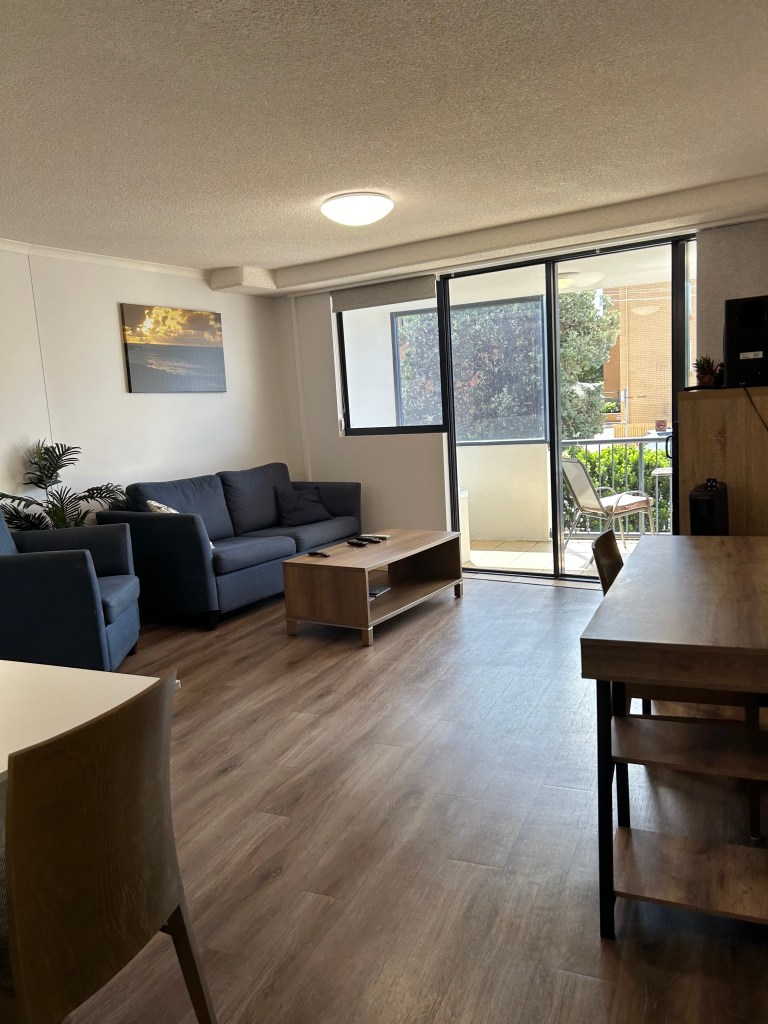
We checked into a rent by owner apartment that was fully equipped.
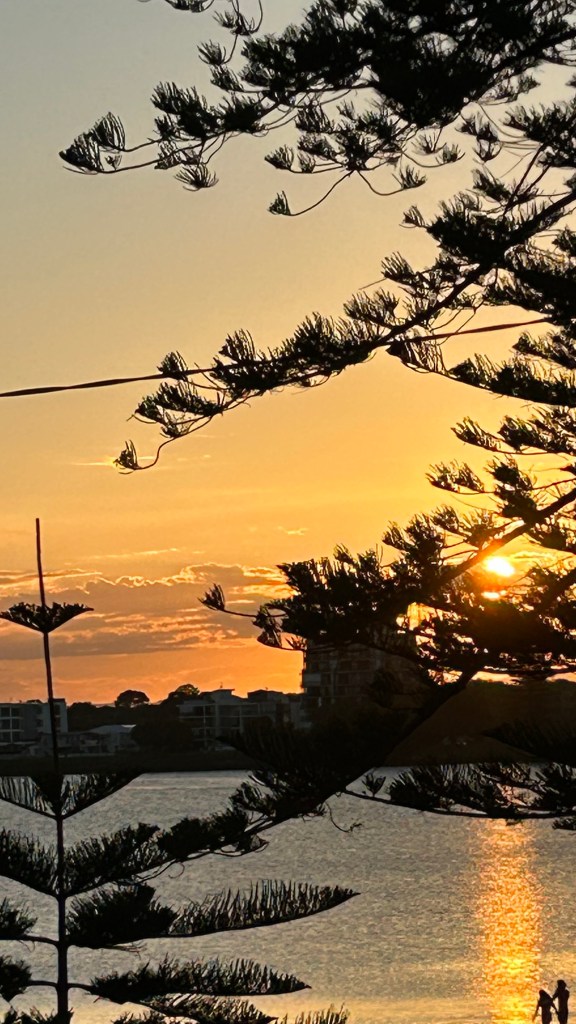
In the afternoon, we read on the balcony and had a swim in the very large pool. Then we had a great dinner at The Tides with Australian wine and watched the sunset.
Tuesday 27th February, 2024 – Depart Caloundra to Brisbane
Brisbane is Australia’s largest city in the sub-tropics, enjoying an enviable climate of hot, brilliant summers and clear, mild winters that make it the ideal destination for visitors all year round.
Holiday Inn Express Brisbane Central offers a convenient stay just a few blocks from the Riverfront. Going from a full apartment to a room was a bit of a shock but only one night here. At noon, we checked in and walked down to the river and got the free ferry to the Cultural Center.
The Brisbane River and Moreton Bay have continually shaped south-east Queensland’s history. From the time of the First Australians, for the Turrbal and Jagarra people, the river, known as Maiwar, has been a meeting place, a highway and a source of food. A critical conduit for early settlement and subsequent industry and development, the winding river and bay of islands have inspired artists for generations.
When the explorer John Oxley visited Moreton Bay in December 1823, he named the Brisbane River in honour of the then Governor of New South Wales. Later in 1825, Brisbane became a settlement to house Sydney’s most intractable convicts.
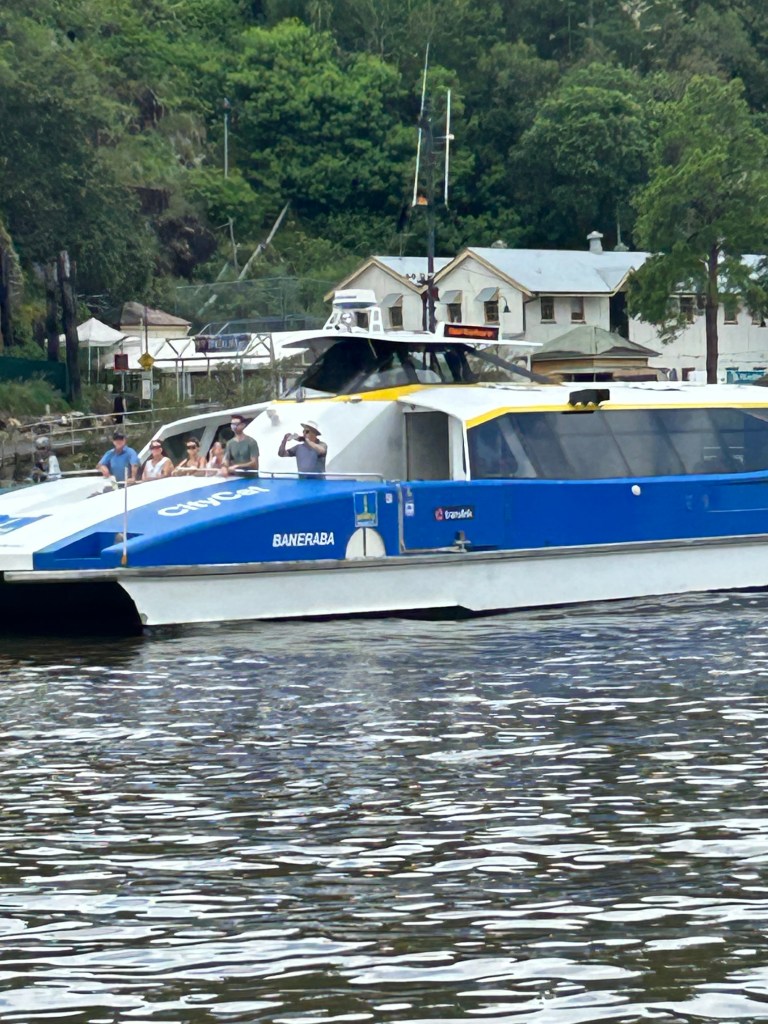
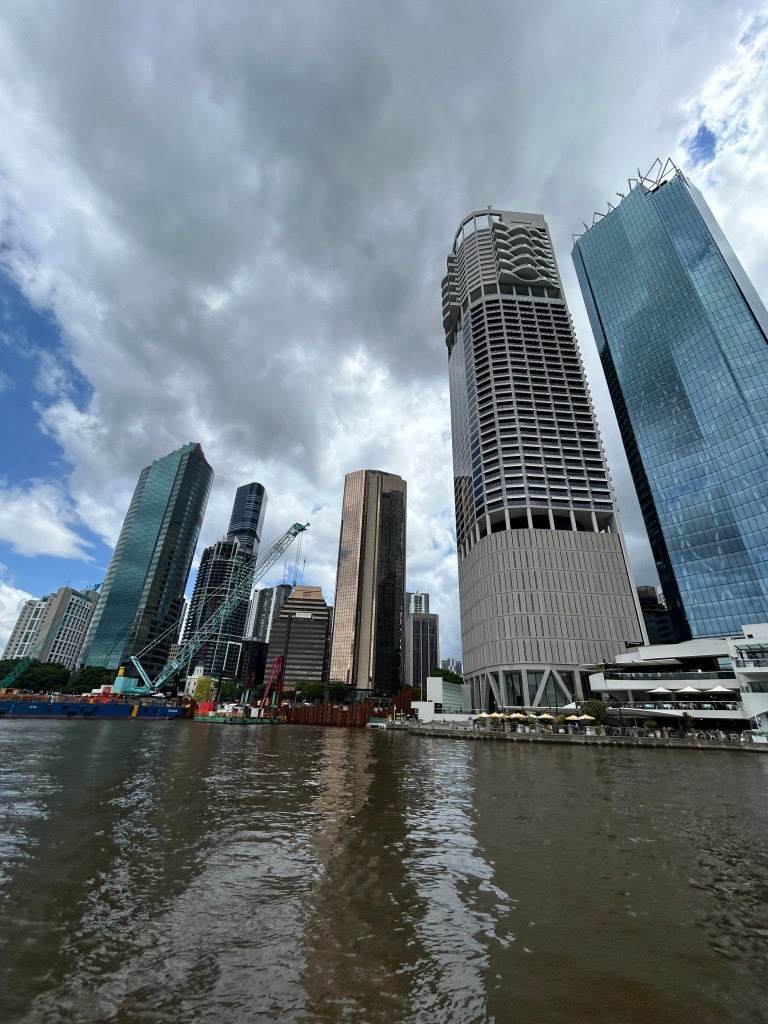
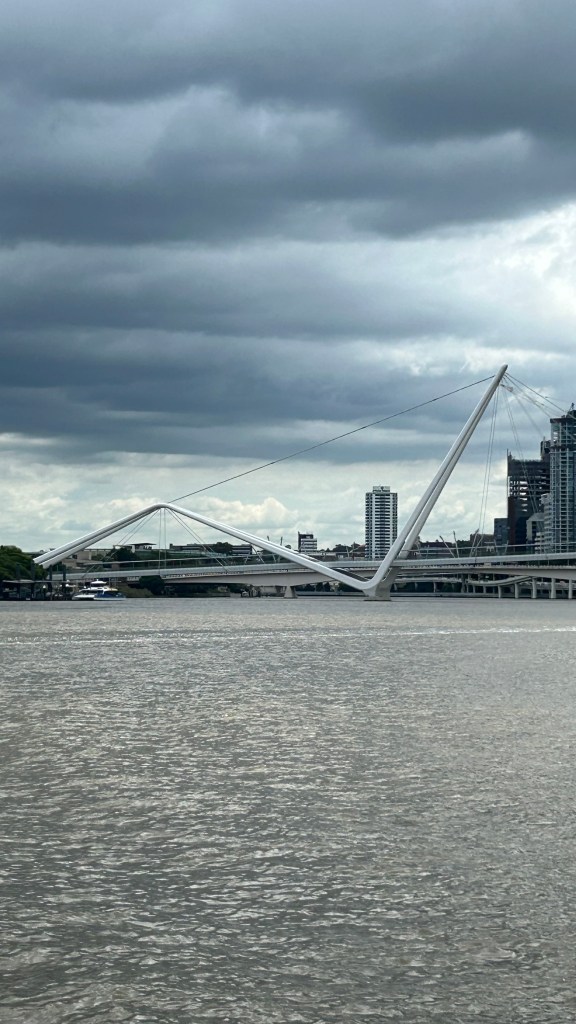
We walked to the Museum of Modern Art and then to the Queensland Art Gallery.
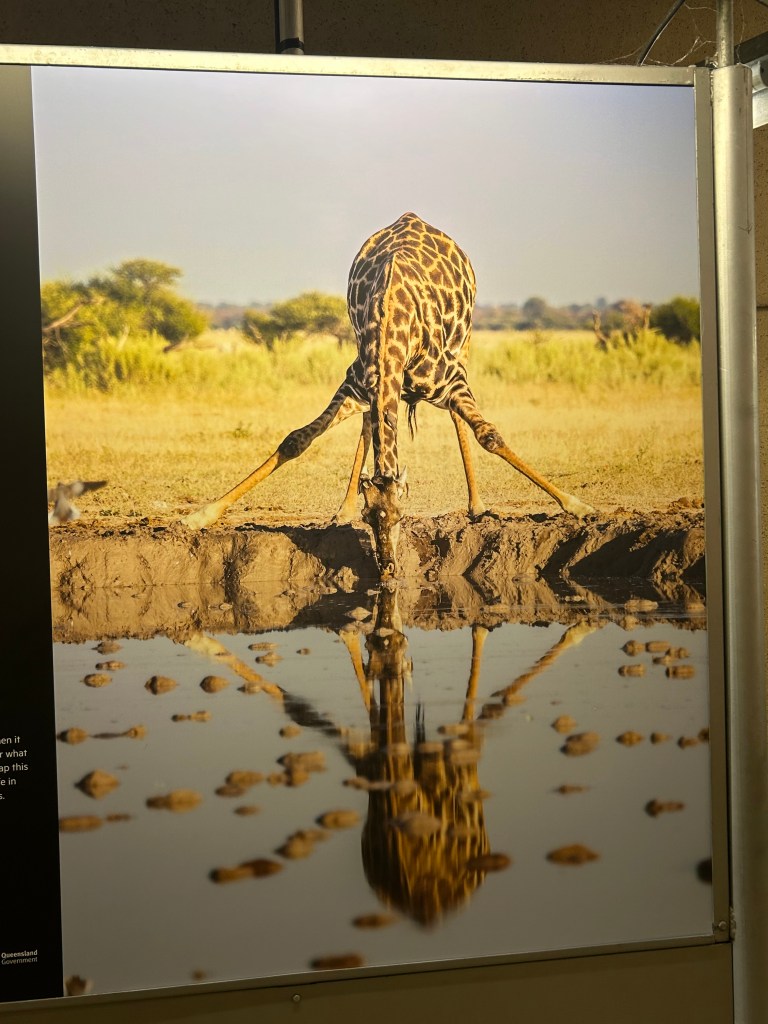
van Norden wrote: Giraffes are notoriously cautious when it comes to having a drink. I waited for what seemed like an age to be able to snap this reflective photo of a beautiful giraffe in one of its most vulnerable moments.
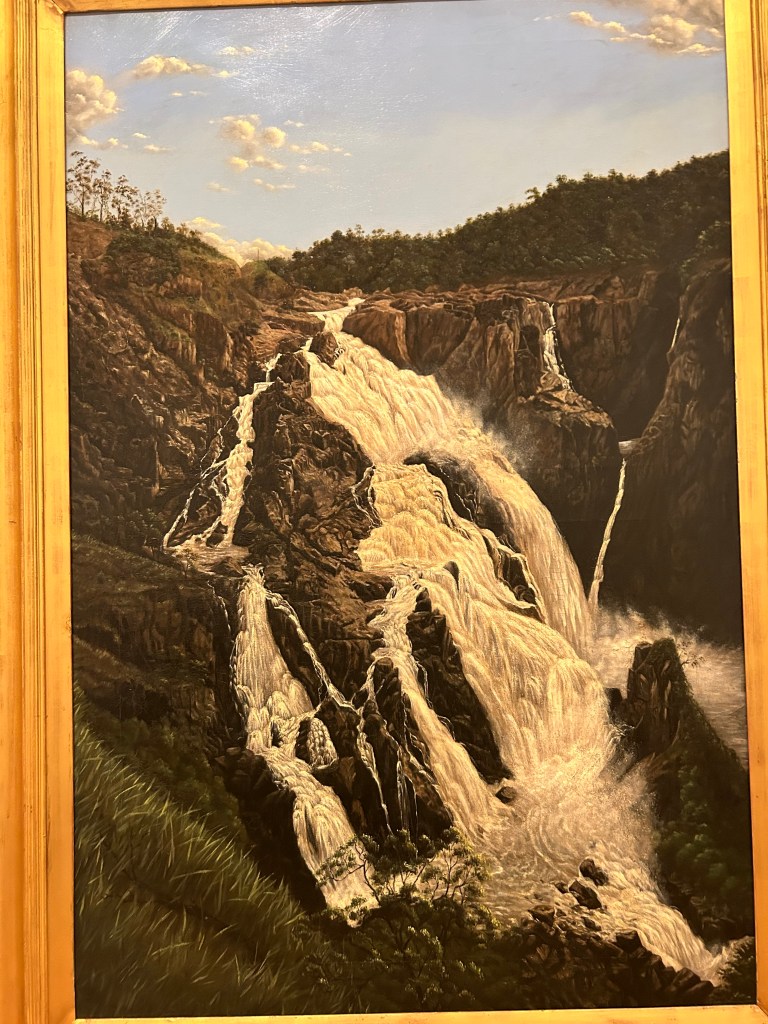
In The Art Gallery of Queensland, we saw this oil painting of Barron Falls.
In the evening, we walked to a restaurant on the Riverfront.
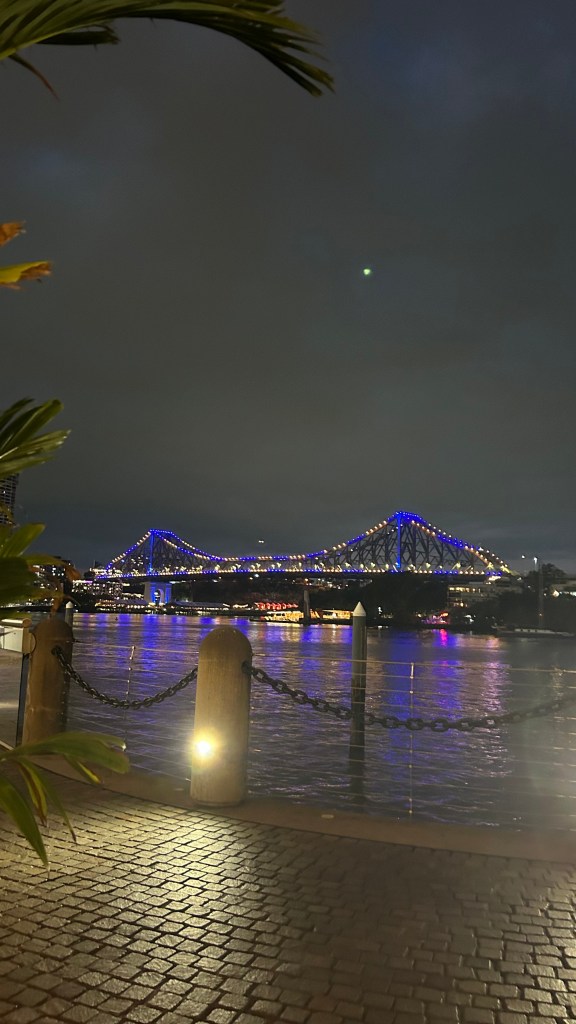
Brisbane, the third largest city, is a lovely setting with lots of building going on. Having free public transportation on land and water is an attractive feature. There was lots of activity on the riverfront on a Tuesday evening when we had dinner at a waterfront pub there.
Wednesday 28th February, 2024 – Depart Brisbane to Surfers Paradise
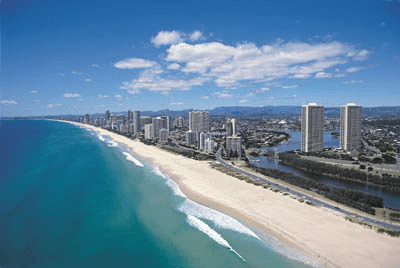
Surfers Paradise is the jewel of Queensland’s Gold Coast and one of the most popular holiday destinations in Australia. Surfers Paradise is where you’ll find the perfect fusion of city and beach lifestyles set amidst a spectacular skyline and brilliant stretch of coast.
Accommodation:
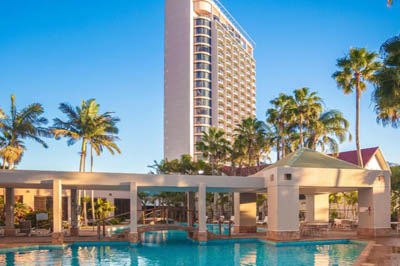
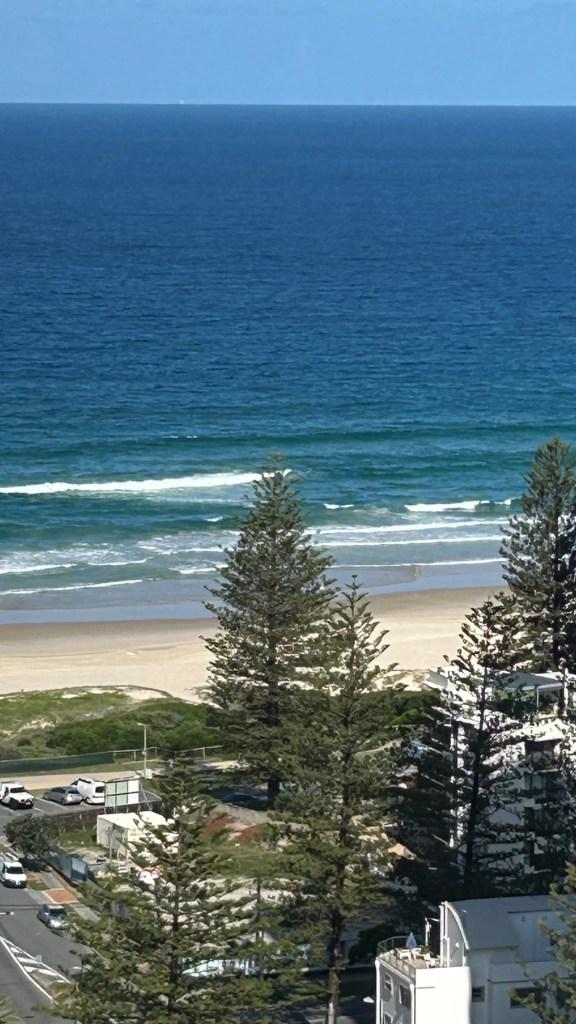
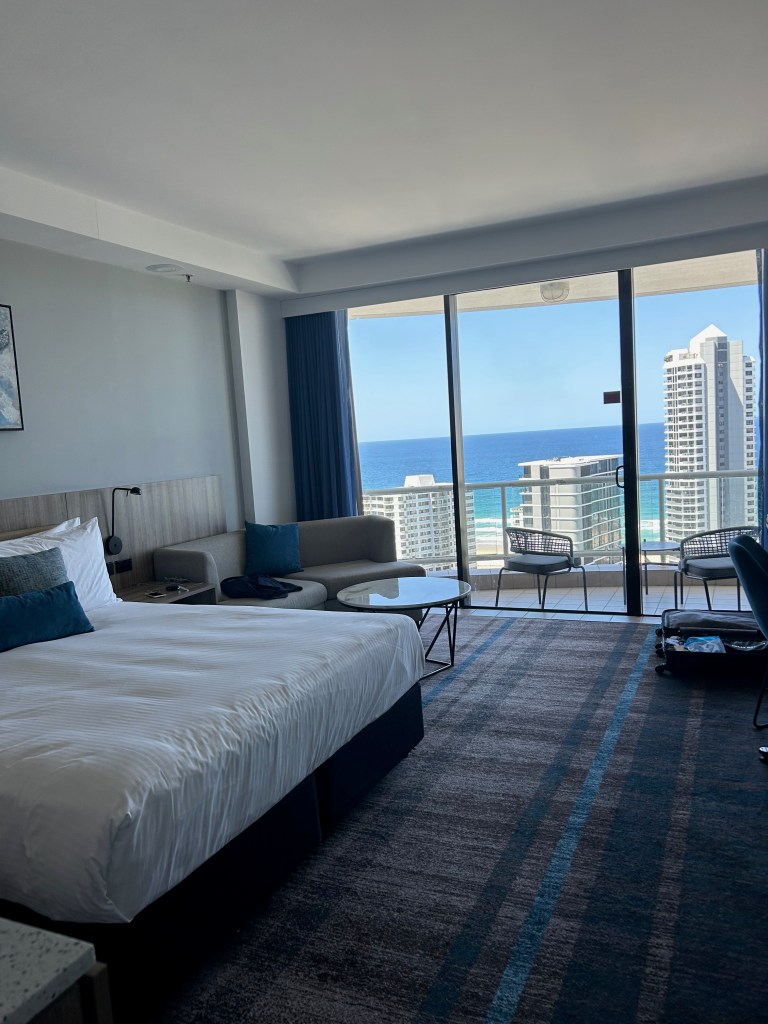
The Crowne Plaza Surfers Paradise is in an idyllic setting, two blocks from the beach.
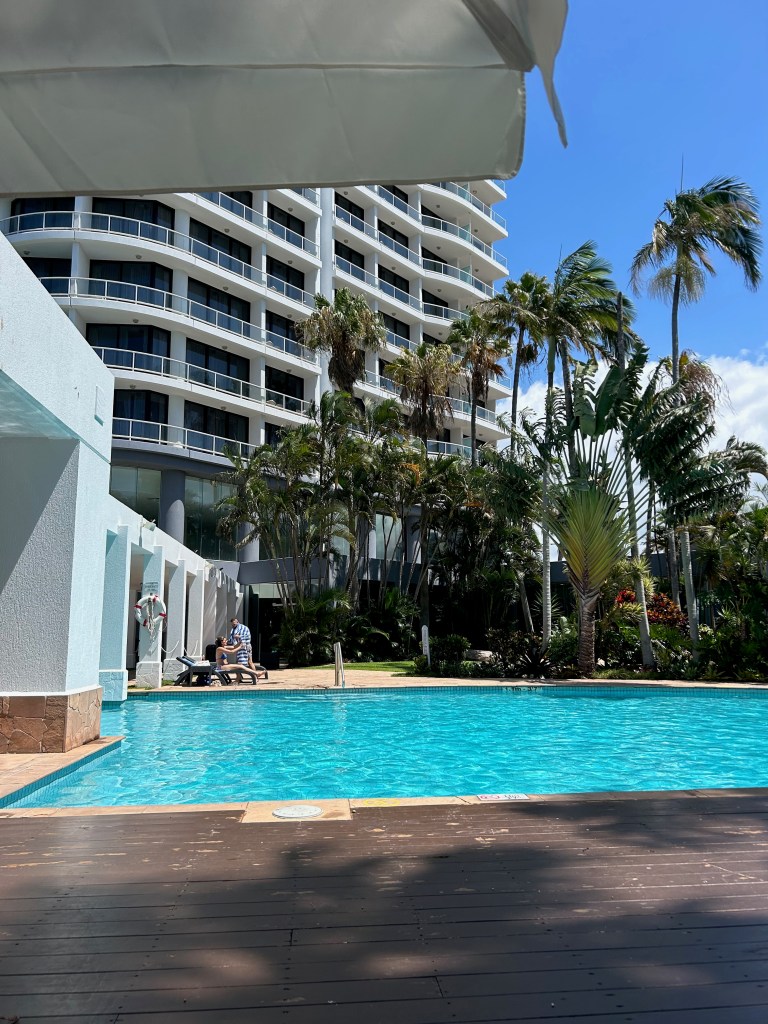
One of our frequent activities on both days was swimming and reading at the pool.
We walked the beach for an hour on both days.
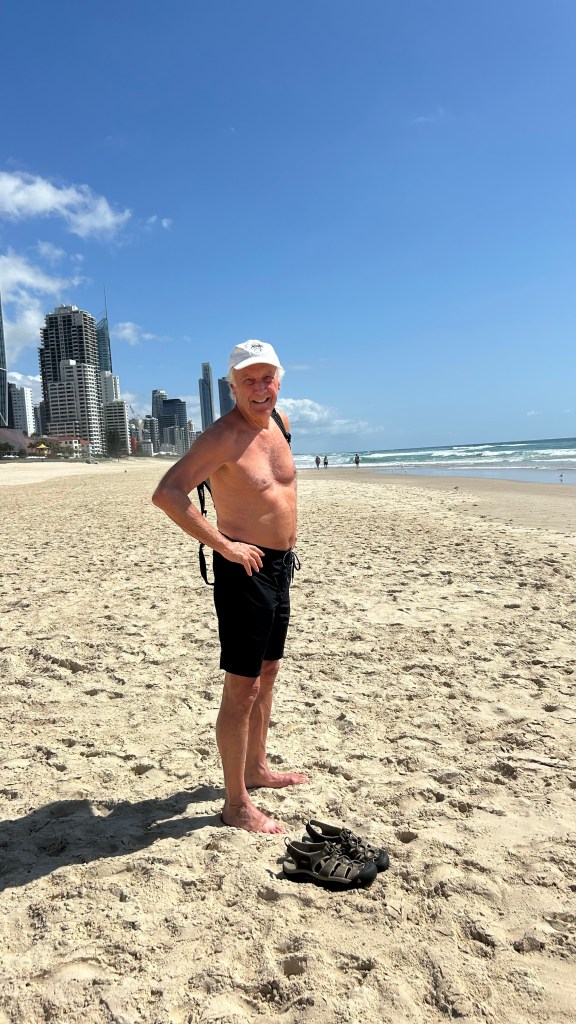
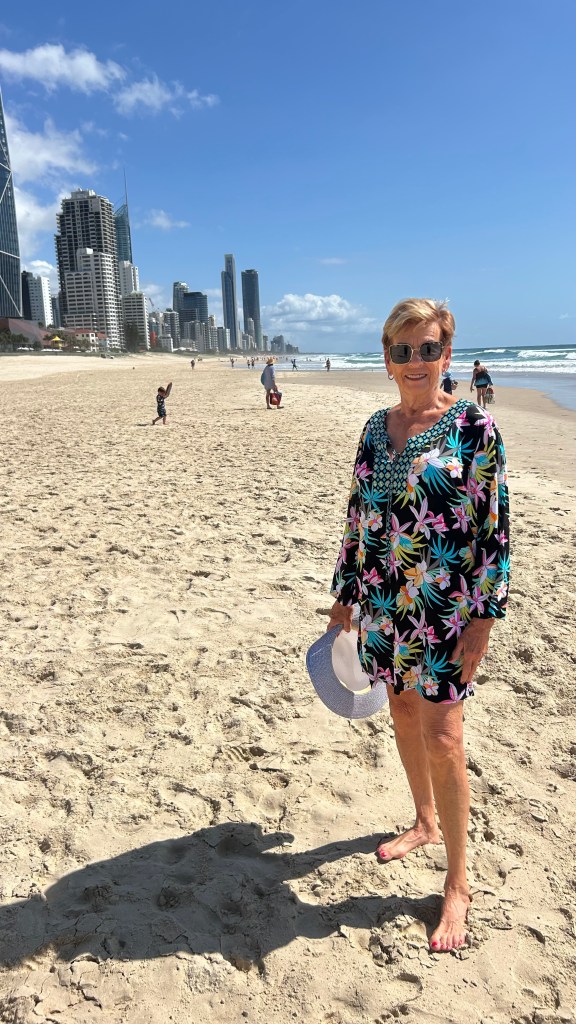
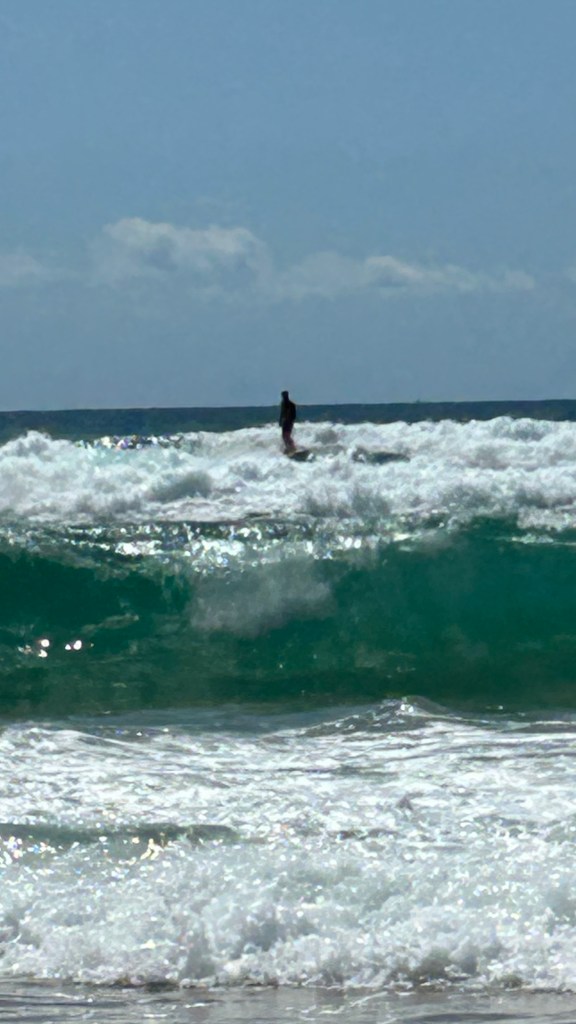
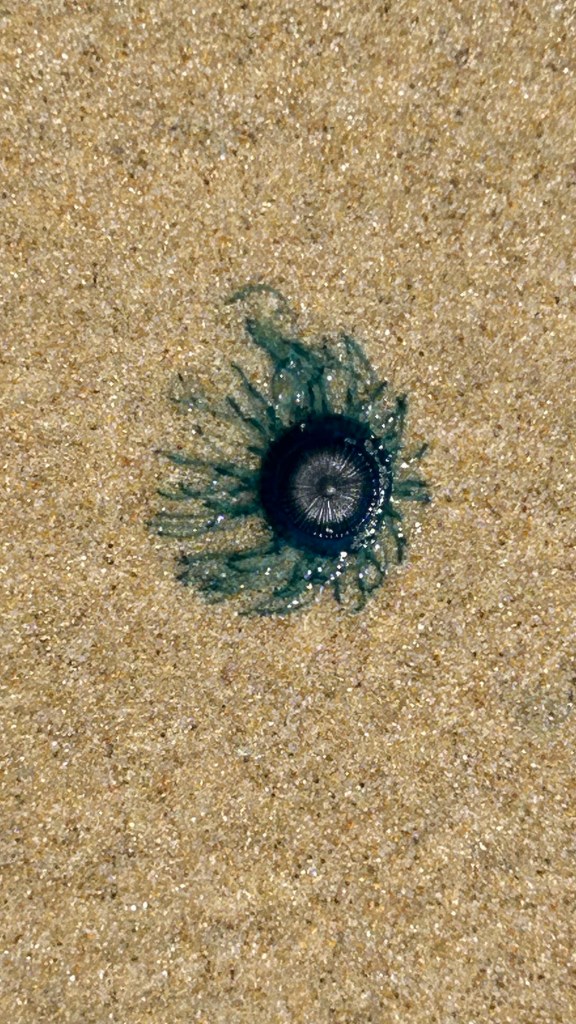
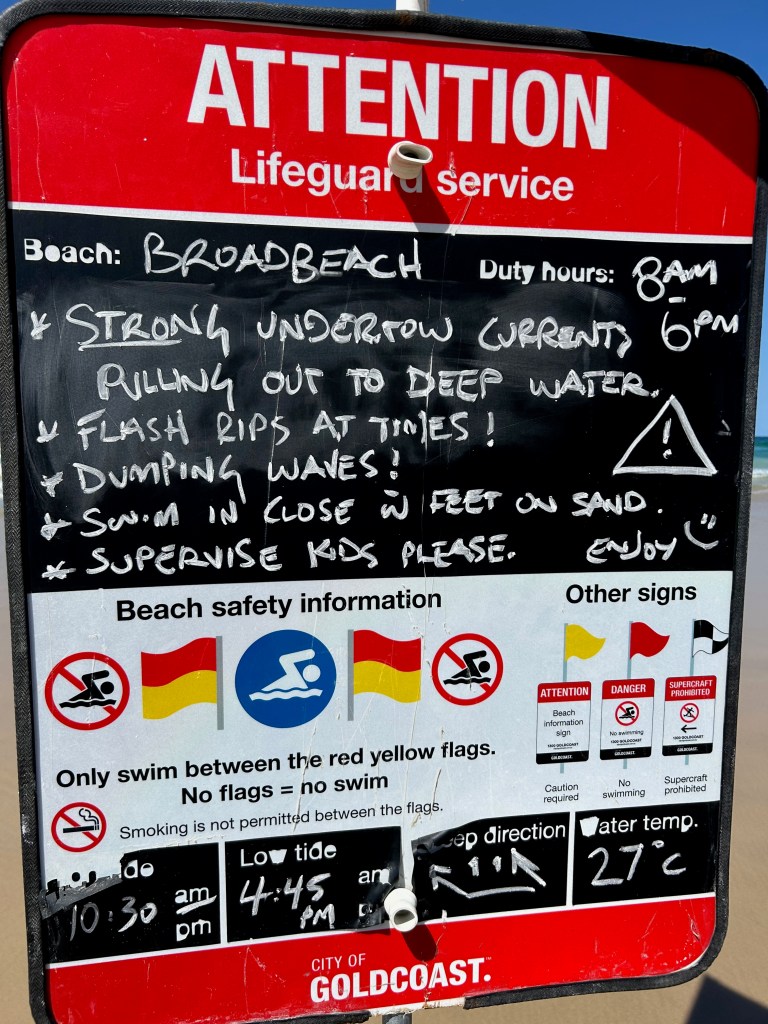
We came back and swam in the pool.
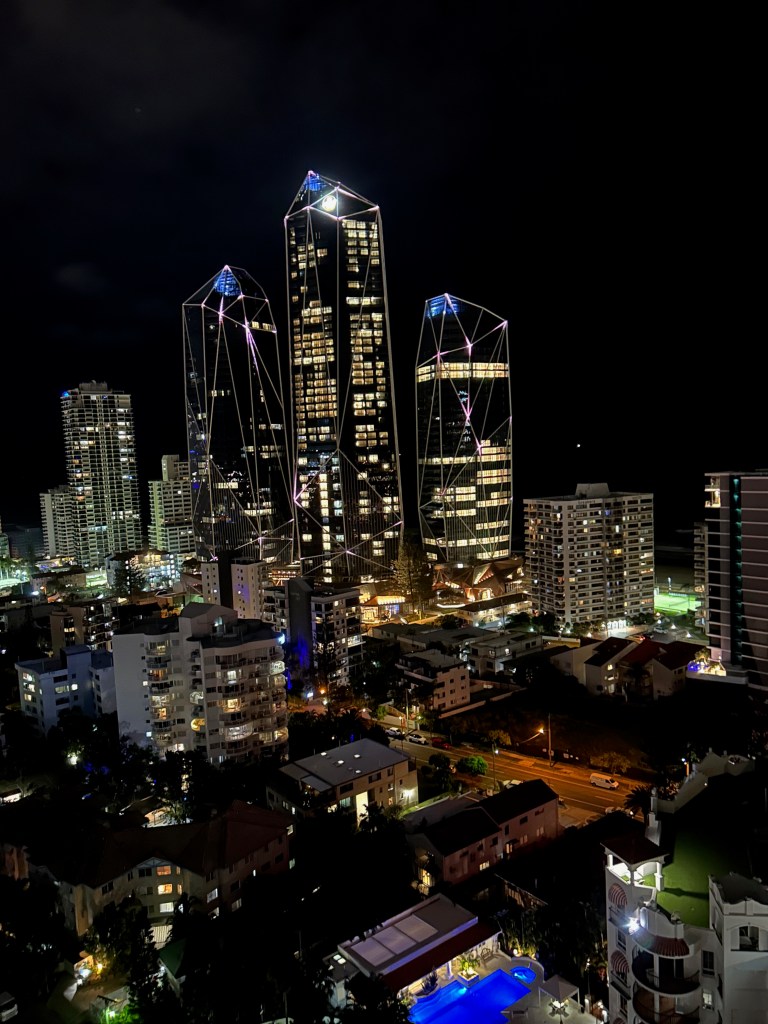
We had a good dinner at Changmai, a Thai restaurant, that was just a few blocks away.
Friday 1st and Saturday 2nd March, 2024 – Depart Surfers Paradise to Byron Bay

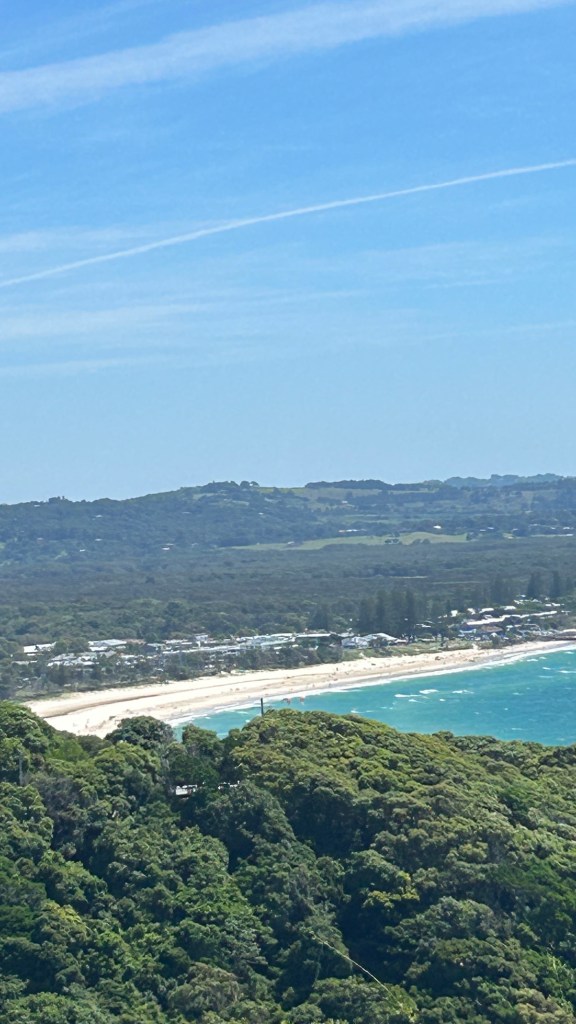
Cape Byron is Australia’s most easterly point, located on the north coast of New South Wales. With its numerous beaches and relaxed lifestyle, Byron Bay is a popular tourist destination, especially for the 20 year-olds. We were surprised when the clocks moved an hour ahead as we crossed from Queensland into New South Wales.
Accommodation:
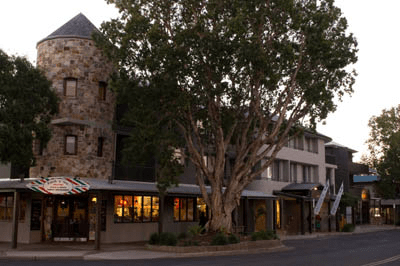
Byron Bay Hotel and Apartments
Byron Bay Hotel and Apartments is one of the facilities located in the heart of town. It is 150 meters to the Main Beach and a short drive to the most popular surfing beaches.
We had to work with the desk staff to get a room that didn’t feel closed in/claustrophobic but they found one that was large with a kitchen (a handicapped room, actually) with a small outside space and table. We walked through the town commercial area and to the beach and had a beverage, came back, went to the grocery story for the makings of dinner and had a swim in a small, very busy pool.
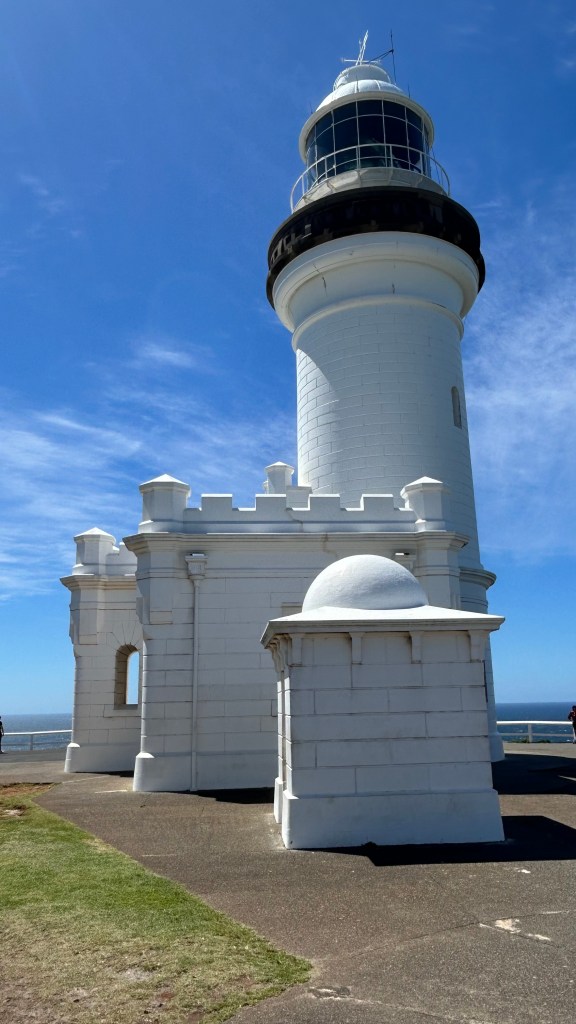
Saturday was a close repeat of Friday in Byron Bay with the addition of a trip to the lighthouse. We walked the beach in the morning, had a swim in the pool and made a sandwich for lunch.
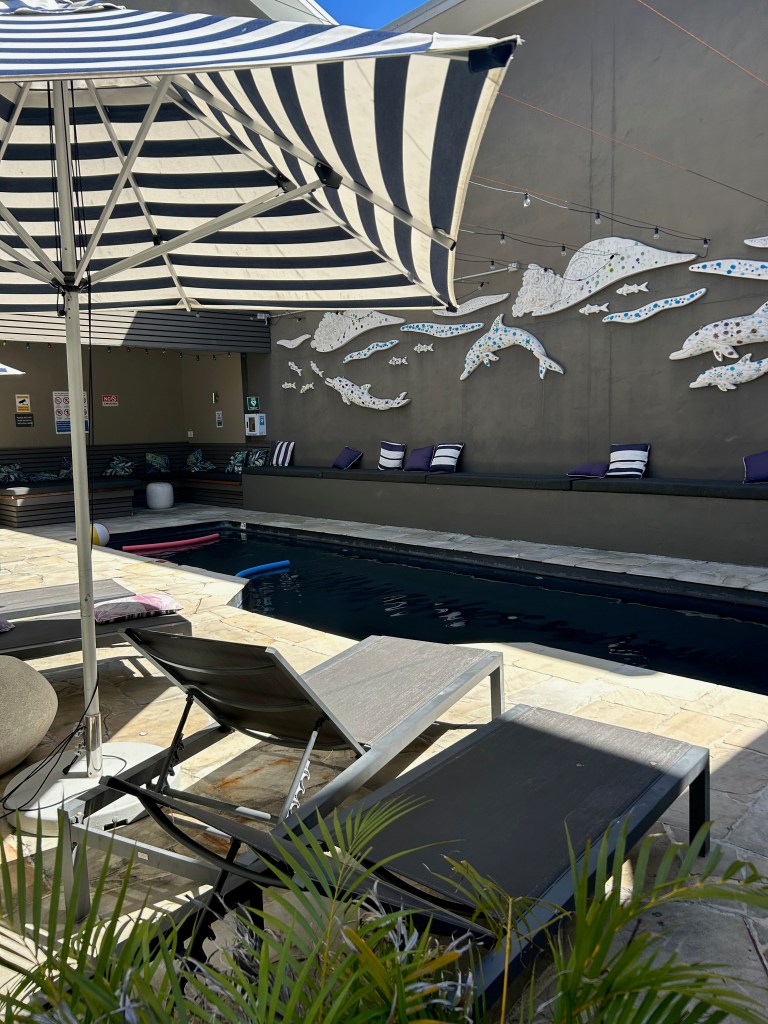
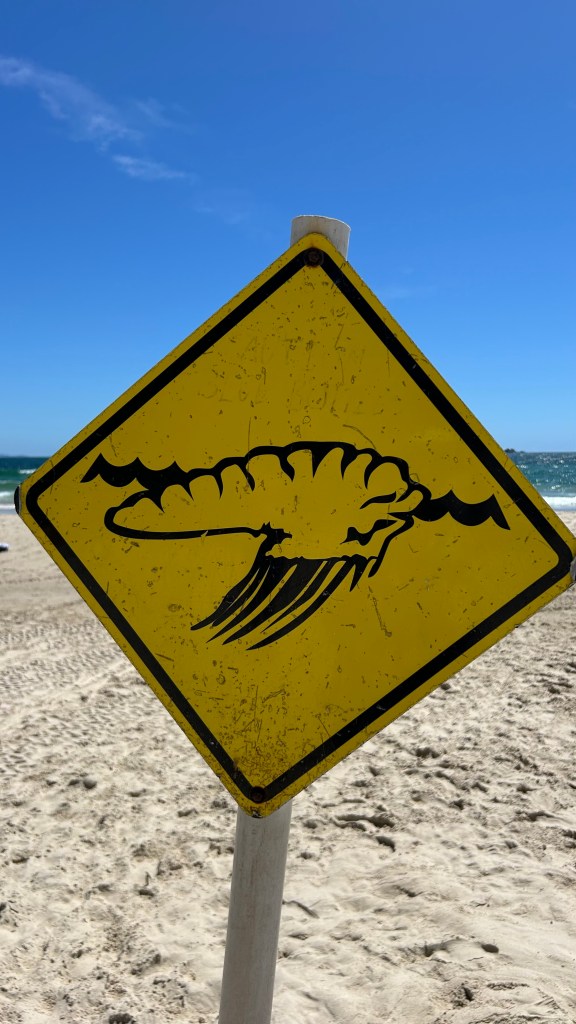
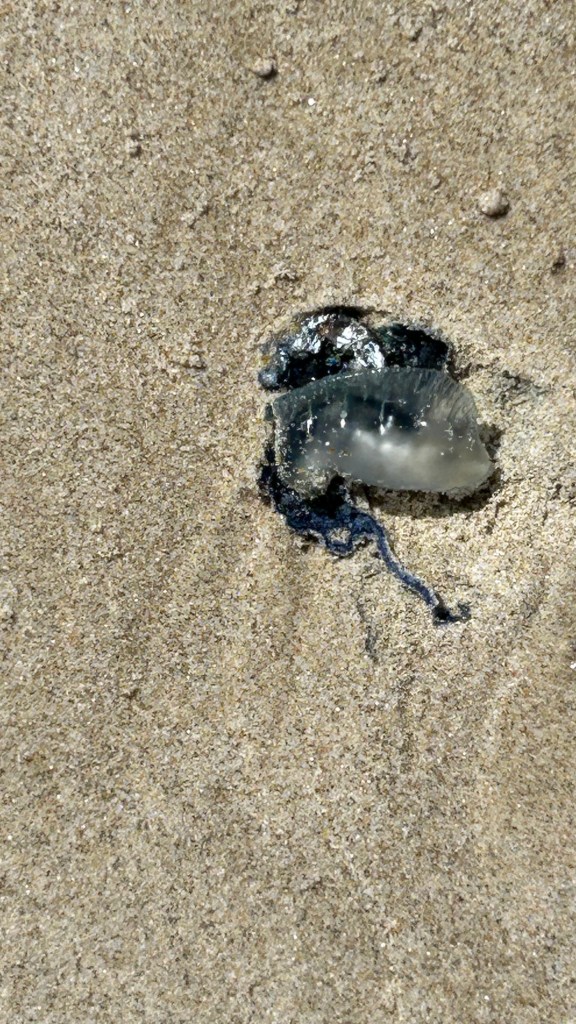
In the afternoon we drove up to the Byron Bay Lighthouse, walked around the town, had a refreshment, had another swim in the pool and ate dinner in our small outdoor space. We actually saw a girl who was stung by a jelly fish.
Sunday 3rd March, 2024 – Depart Byron Bay for Port Macquarie
With 383 km to Port Macquarie, we left early and arrived at noon.

Port Macquarie is a much quieter tourist destination than the ones we have visited on the New South Wales coast.
Accommodation:
The Sails Resort is Port Macquarie’s stunning waterfront resort. The lobby and rooms are spacious and full of light.
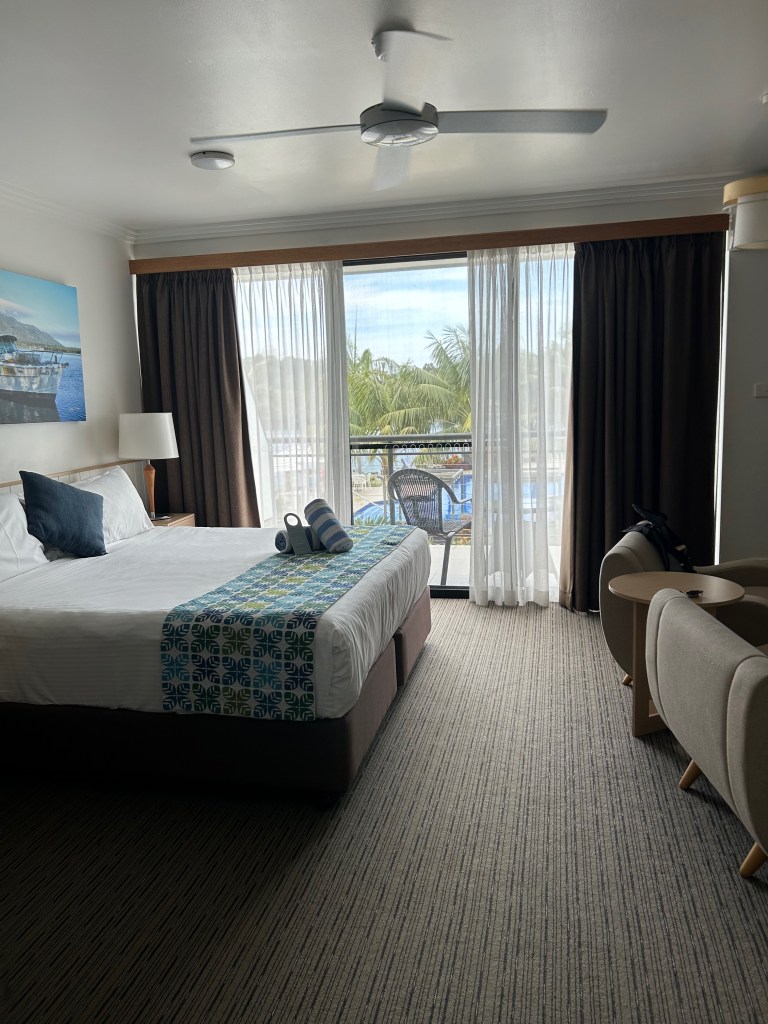
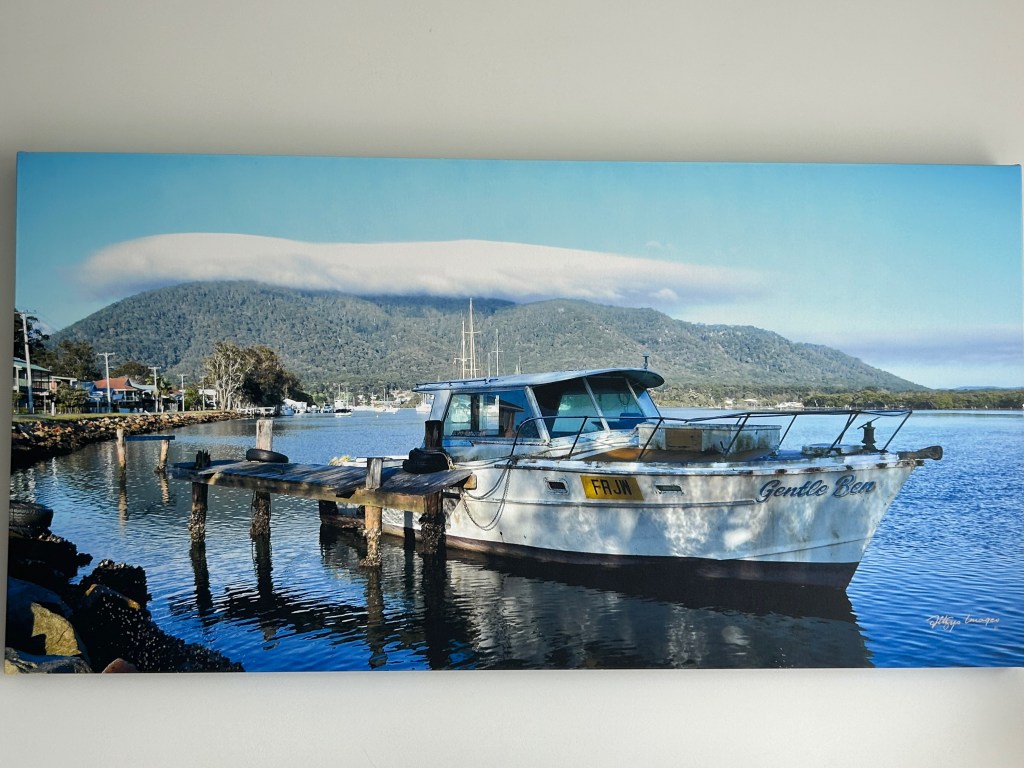
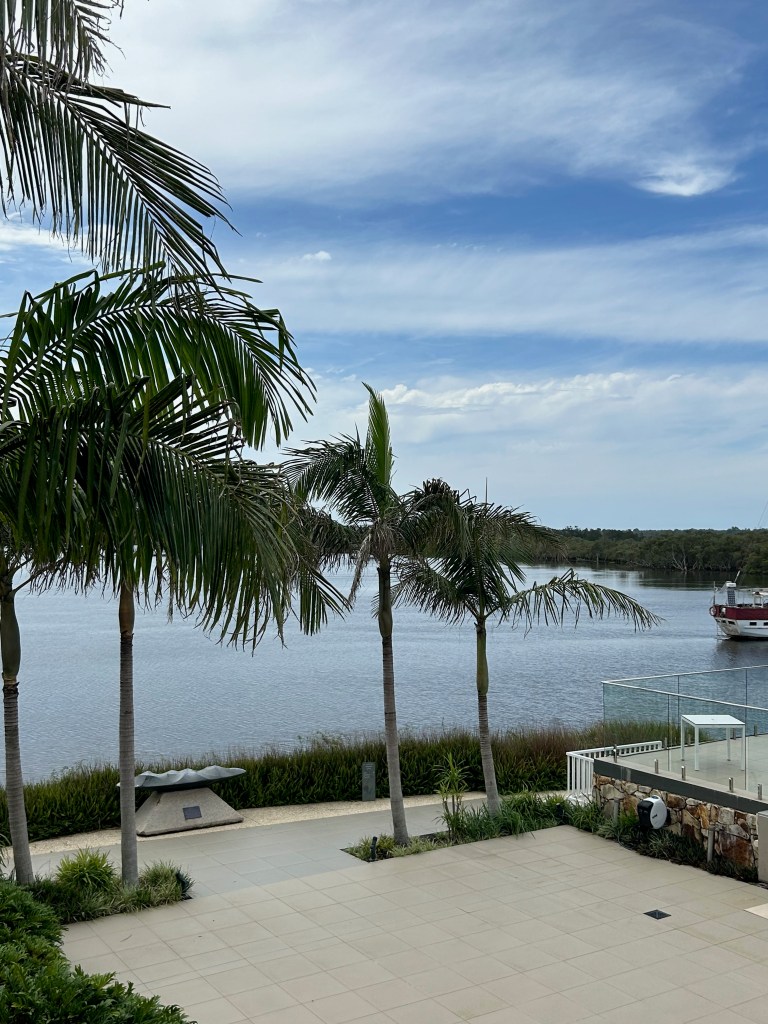
We walked the waterfront and back, looking for a good place for dinner. We decided on The Beach House because of the view of the water and a musician playing there. We returned to the resort for a swim before dinner.
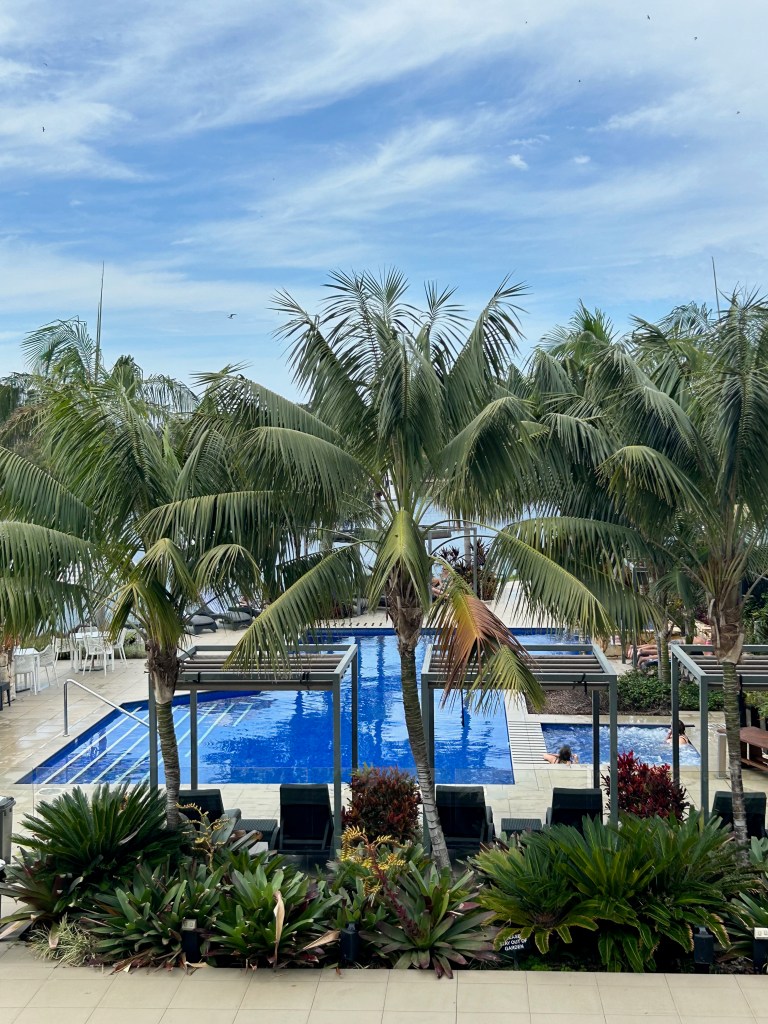
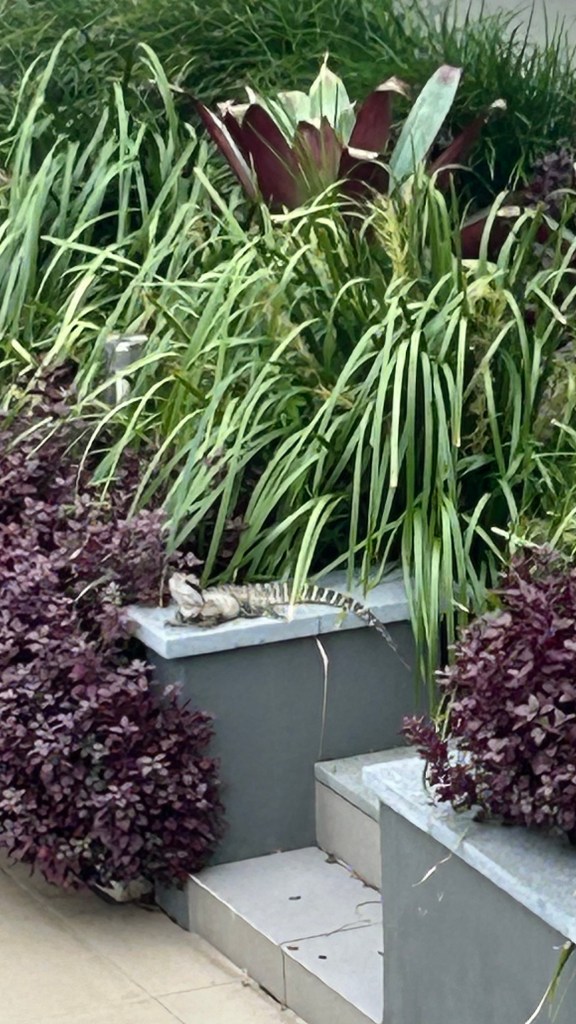
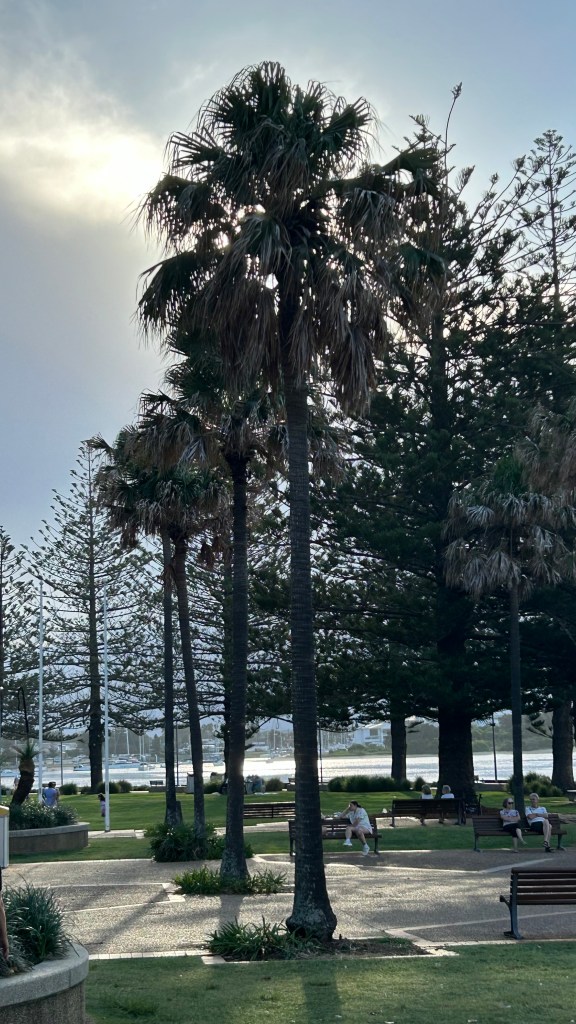
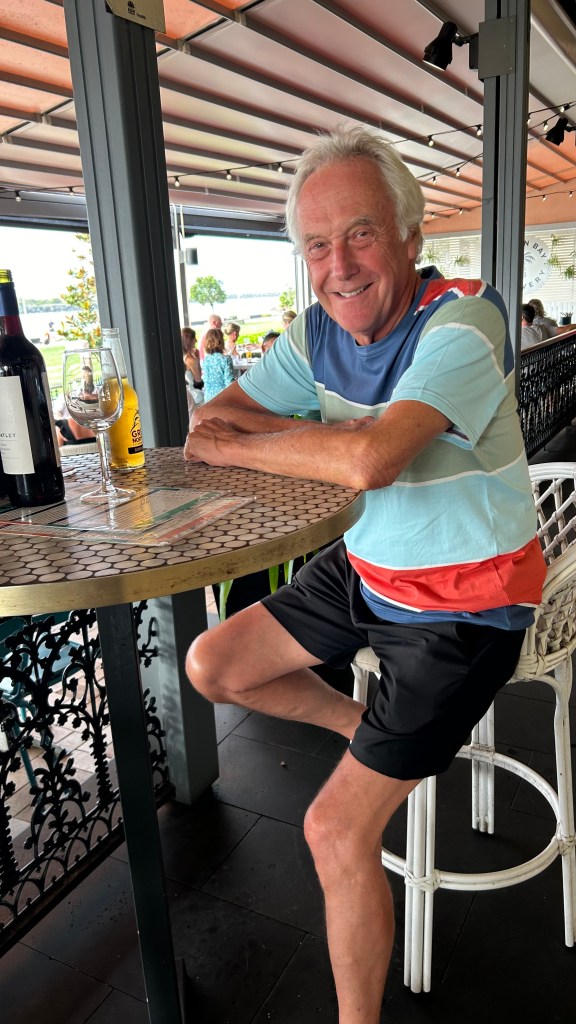
Monday 4th March, 2024 – Depart Port Macquarie to Sydney
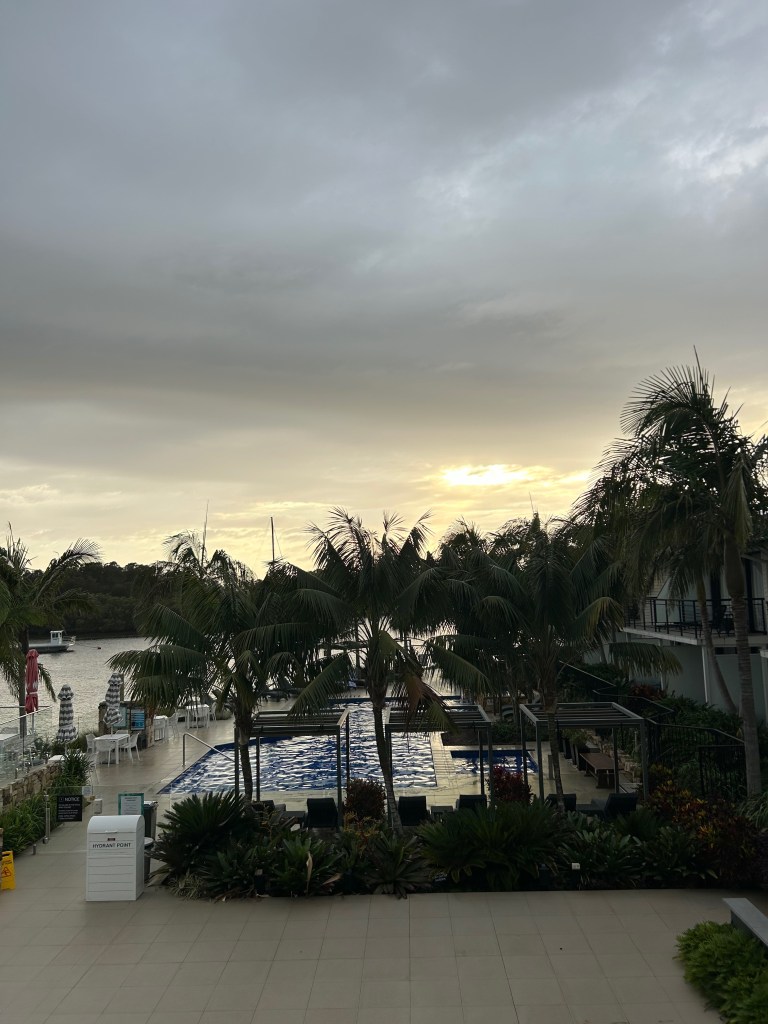
Another 385 km drive day; arriving in Sydney traffic around noon was challenging.
Accommodation:
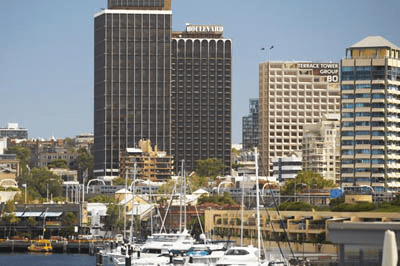
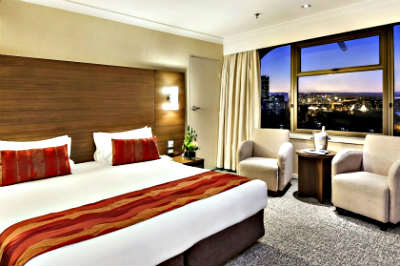
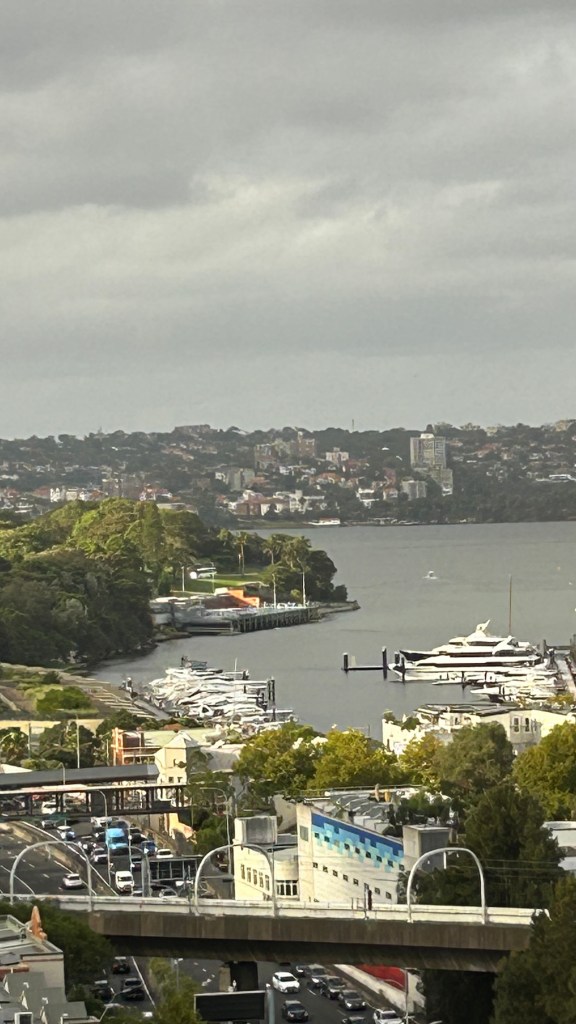
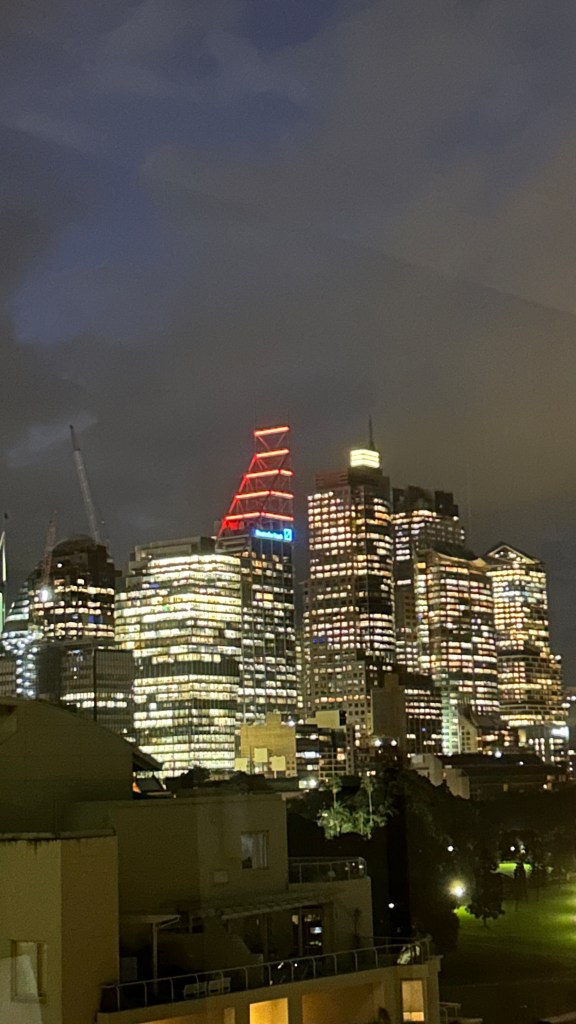
The Sydney Boulevard Hotel Suite overlooks Sydney Harbour and the city skyline – at some distance.
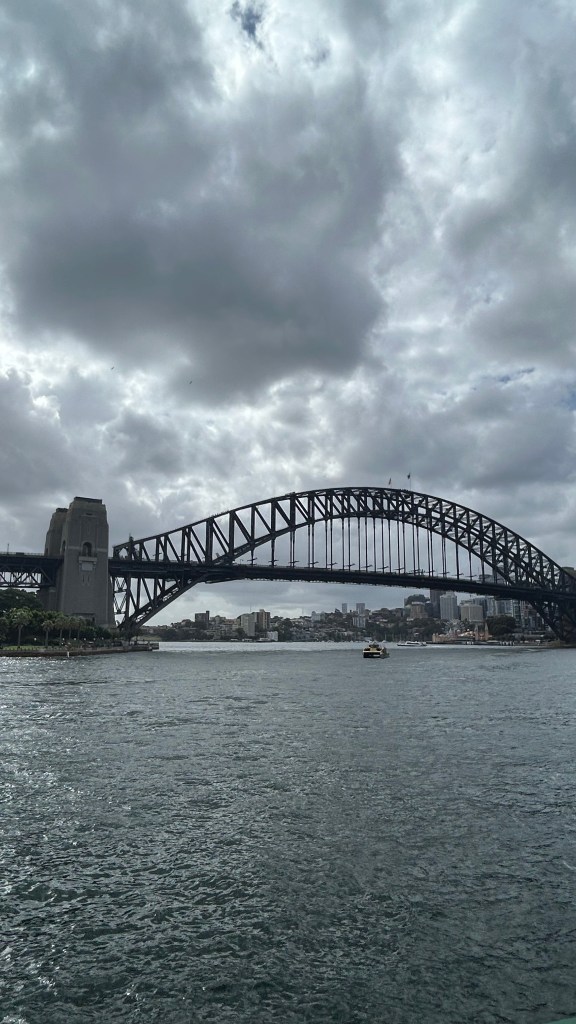
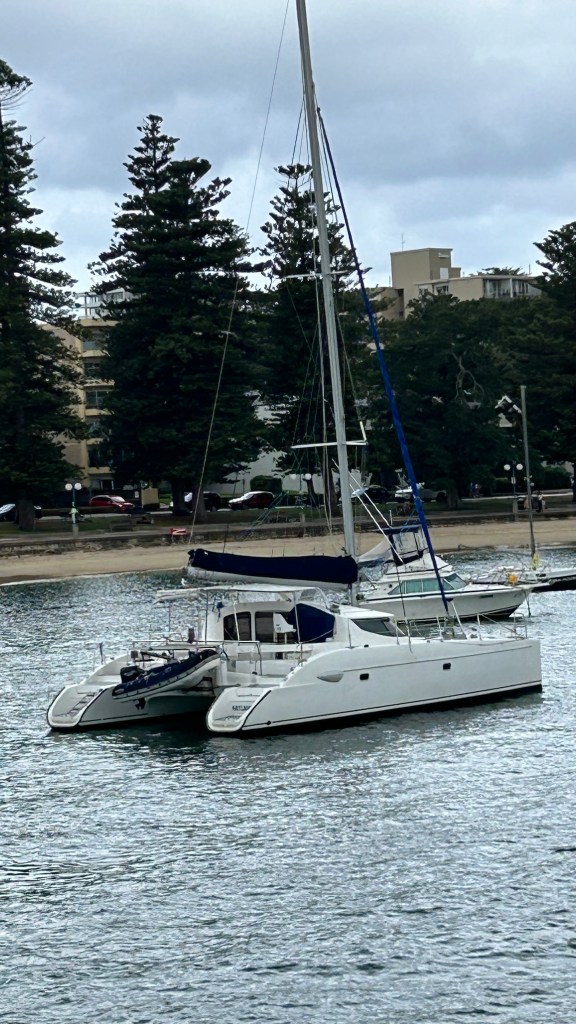
After packing to leave in the morning, we hired an Uber to the waterfront, took the ferry to Manly beach, had a drink, came back and had dinner at a Thai restaurant one block away: last views of the Harbour, Harbour Bridge and the Opera House.
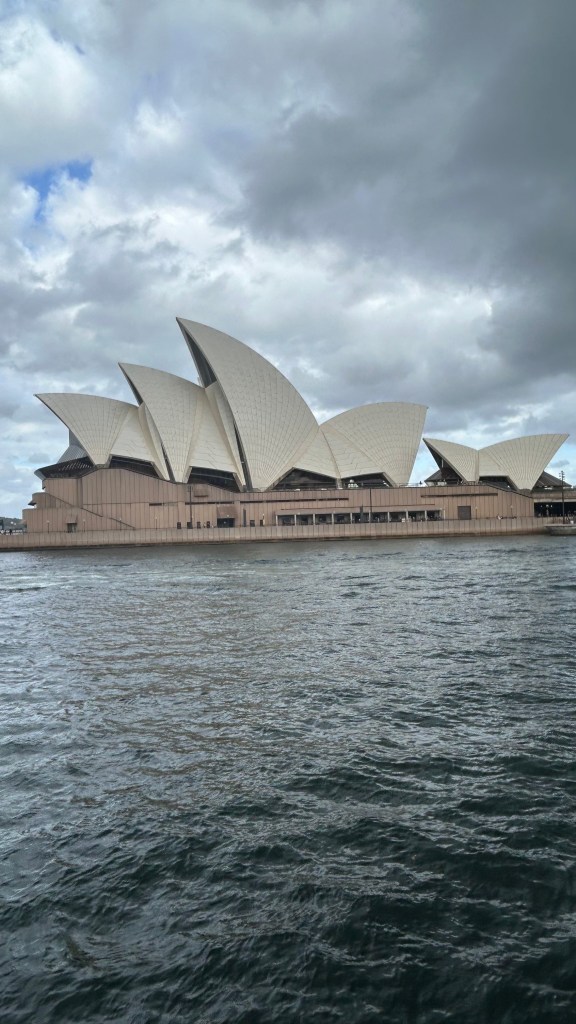
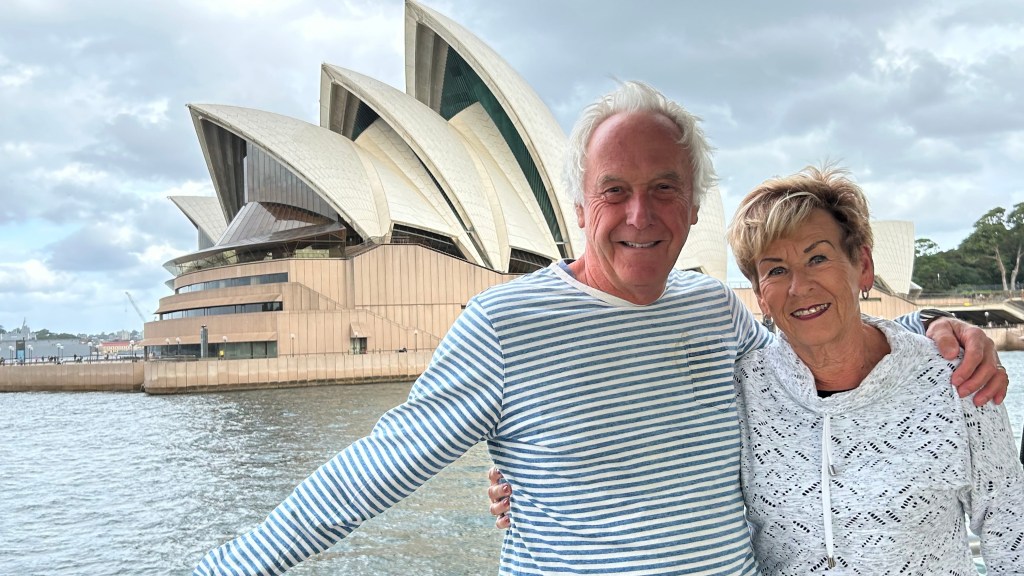
It was a challenge to find the airport Hertz depot to return the car but a phone call made it work. The flights were both on time and seamless. Our pick up, Paris Transportation Services, took us home from Pearson. Postscript: we had jet lag for over a week!
Thoughts on Australia
- Australians are very friendly and helpful.
- Australians seem to be prospering with a laid-back philosophy. When you ask about tips, they say no because they are well-paid.
- It still retains many of the British ways and traditions.
- The letter “r” is missing so harbour is haba.
- You don’t pass someone on the highway, you overtake them.
- There is a great competition between cities, especially between Sydney and Melbourne. Melbourne now has a larger population: over 5.5 million.
- If you need a service person, plumber or electrician, the time may be dependent on the surf.
- It seems to be very much a beach-influenced culture, very laid back.
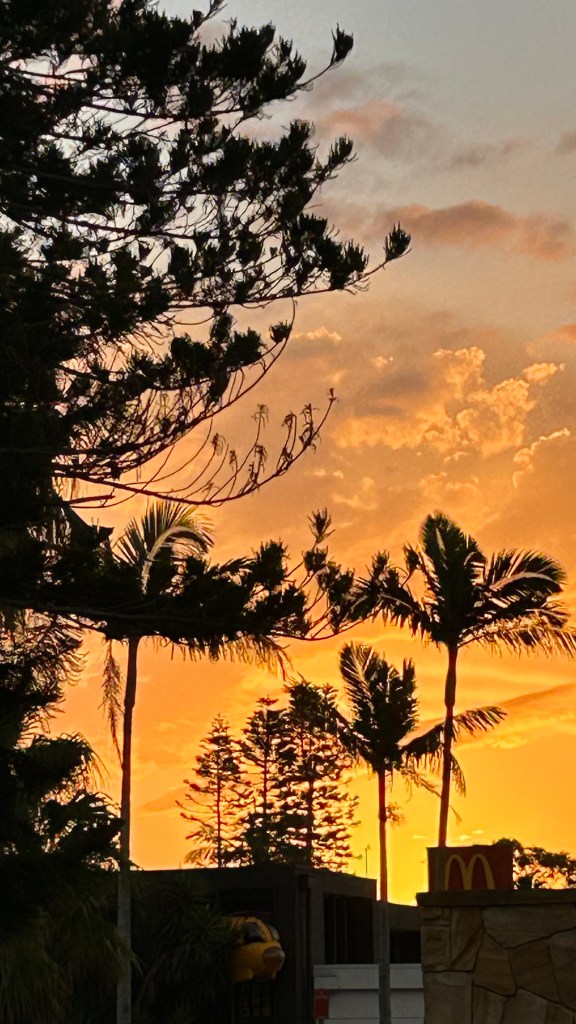
- McDonald’s is pronounced “Macca’s’.
- There are commonalities in our histories, including recent nationhood: Canada in 1867; Australia in 1901.
“Travel does that,” Lena used to say. “It clips the fetters of routine.” from Requiem by Frances Itani, p. 35.

 Site Title