France, Denmark, Sweden (Malmo, Gothenburg, Stockholm) and Spain 2024
Go Way Travel organized our tour to Copenhagen, Malmo, Gothenburg and Stockholm. Our guides in Paris. Copenhagen and Sweden as well as Rick Steves’ book, France and Scandinavia, and various internet sources provided information for this blog.
September 10-11 Toronto to Paris
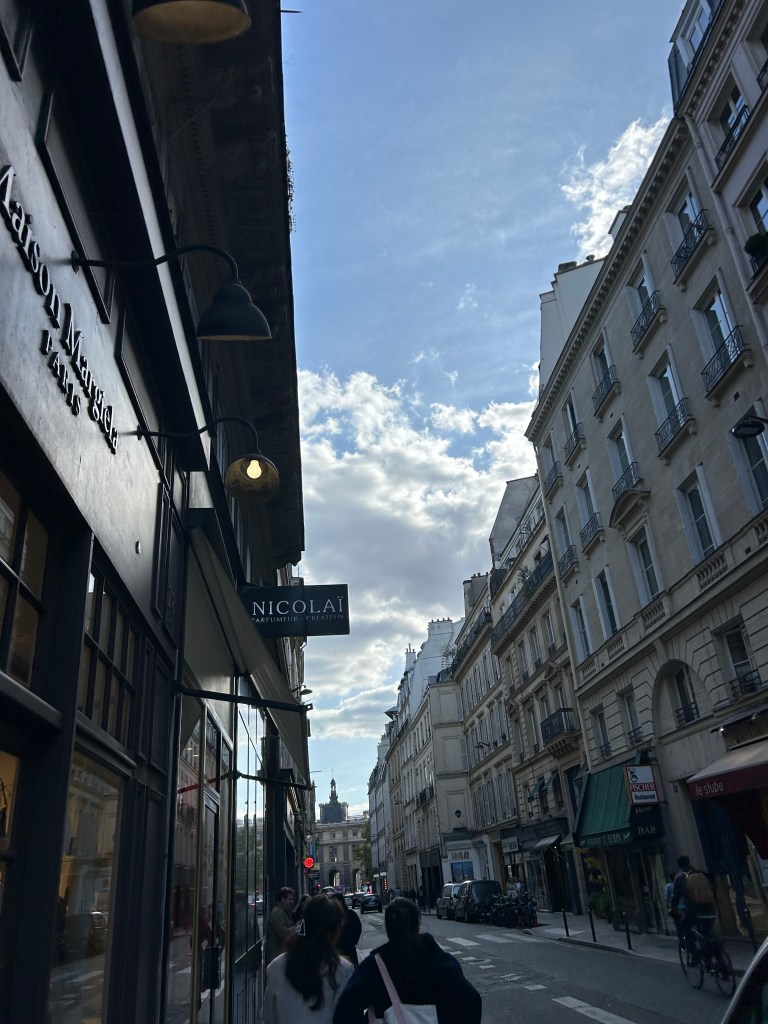
Paris (the other Paris) had been on our list for many years. We decided to make Paris our stopover for 4 days on the way over and 2 nights, one day on the way back. We flew Air Canada from Toronto to Paris on September 10-11 and stayed in a very well-designed and well-equipped Airbnb, a block from The Louvre. We took a taxi from the airport because we were tired. The apartment was on an alley inside green doors.
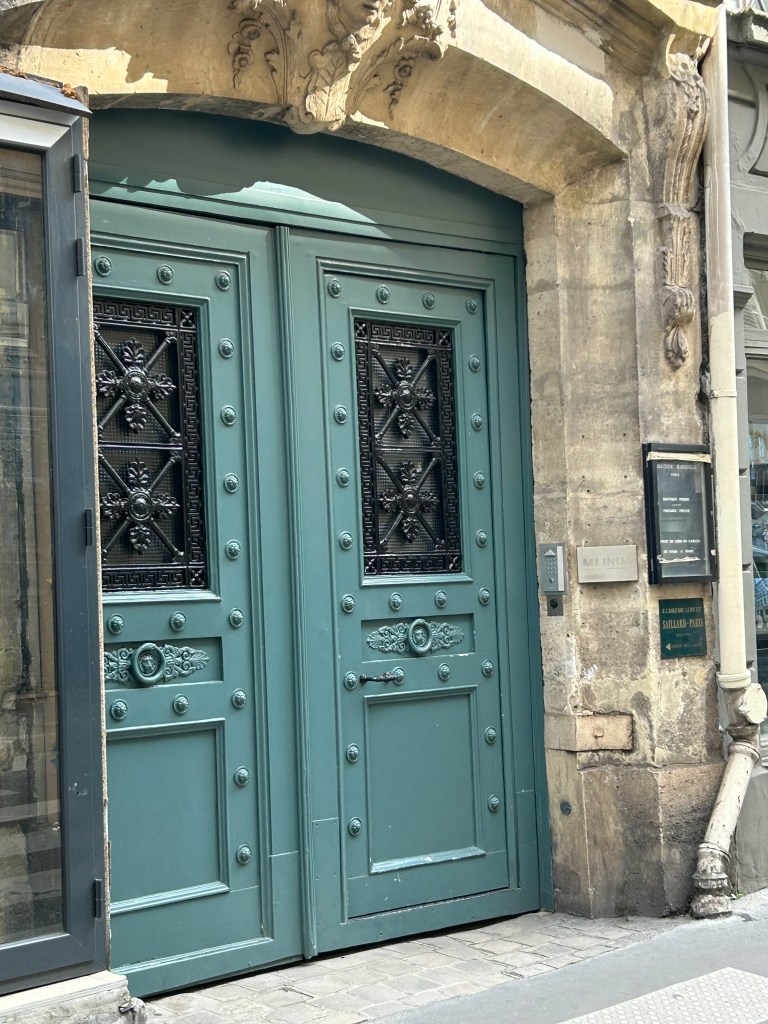
Fortunately, we were able to get into the apartment even though it was before check-in time.
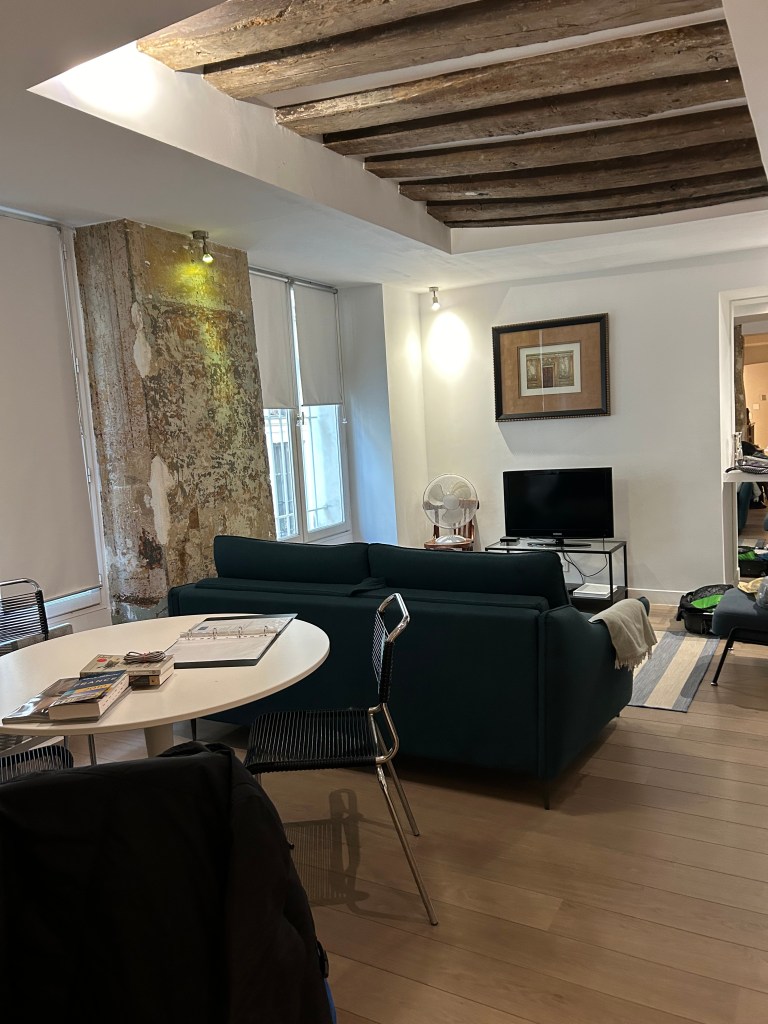
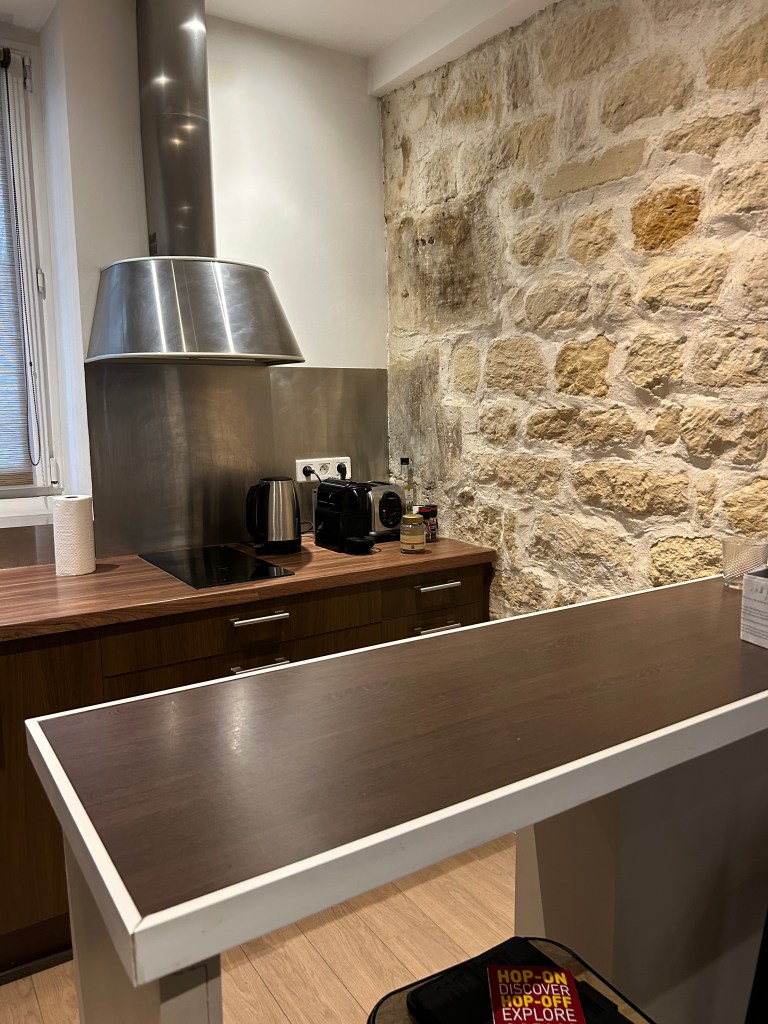
We walked around the neighbourhood. No one would believe that on our street there was a store devoted only to hair brushes.
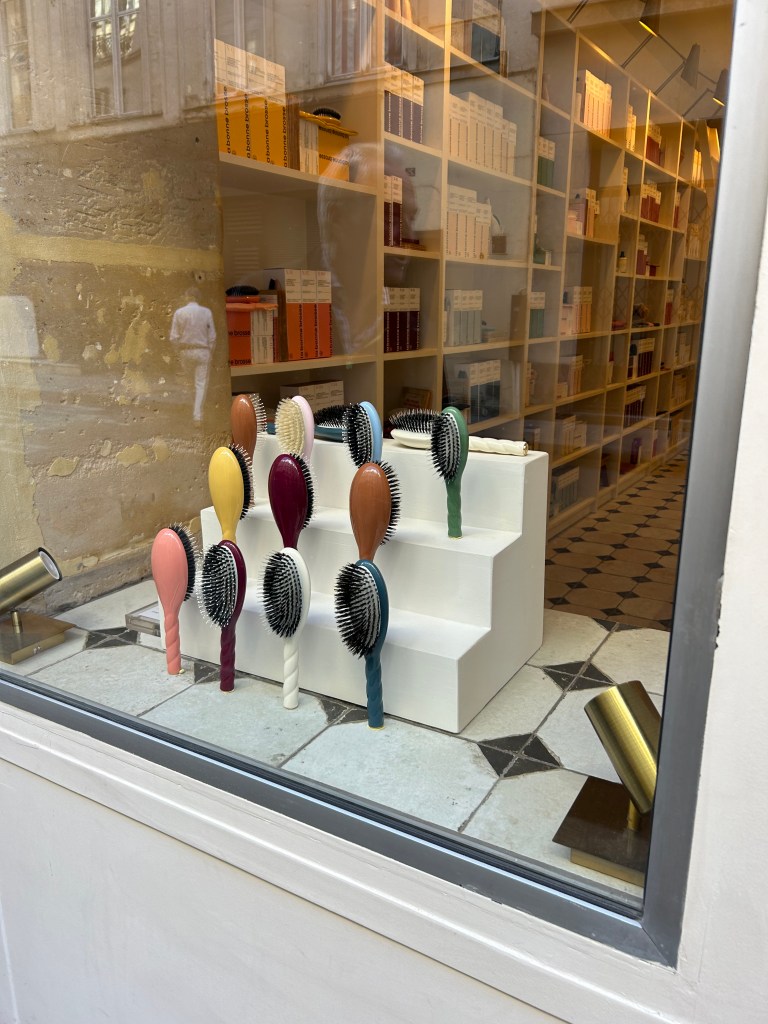
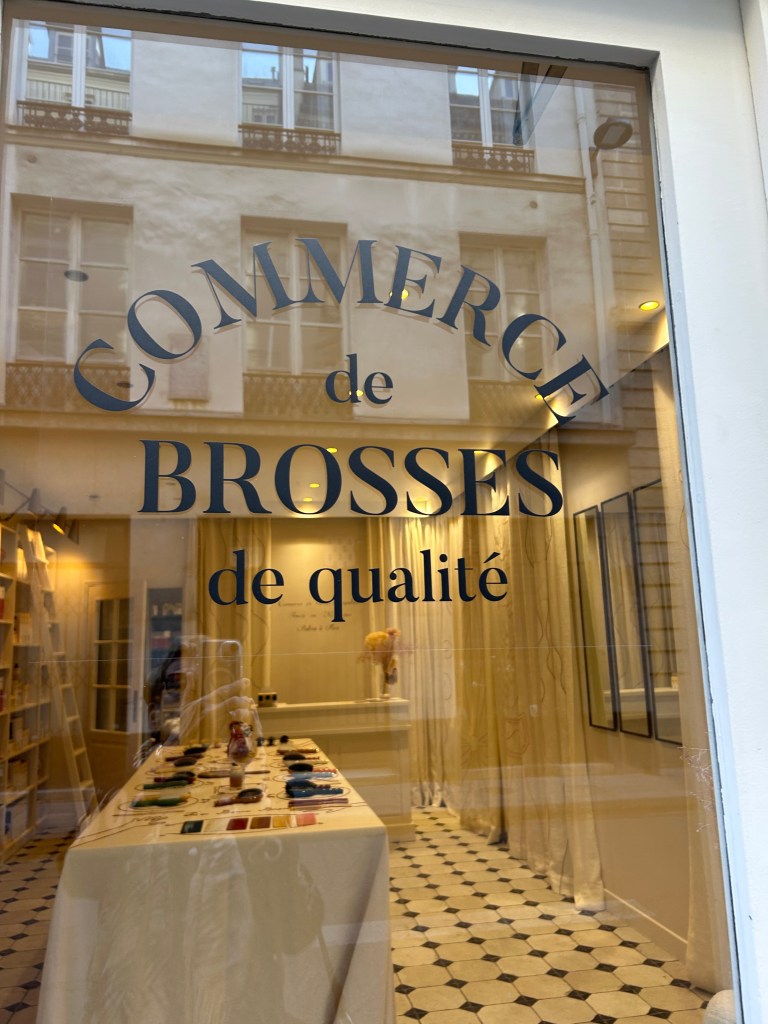
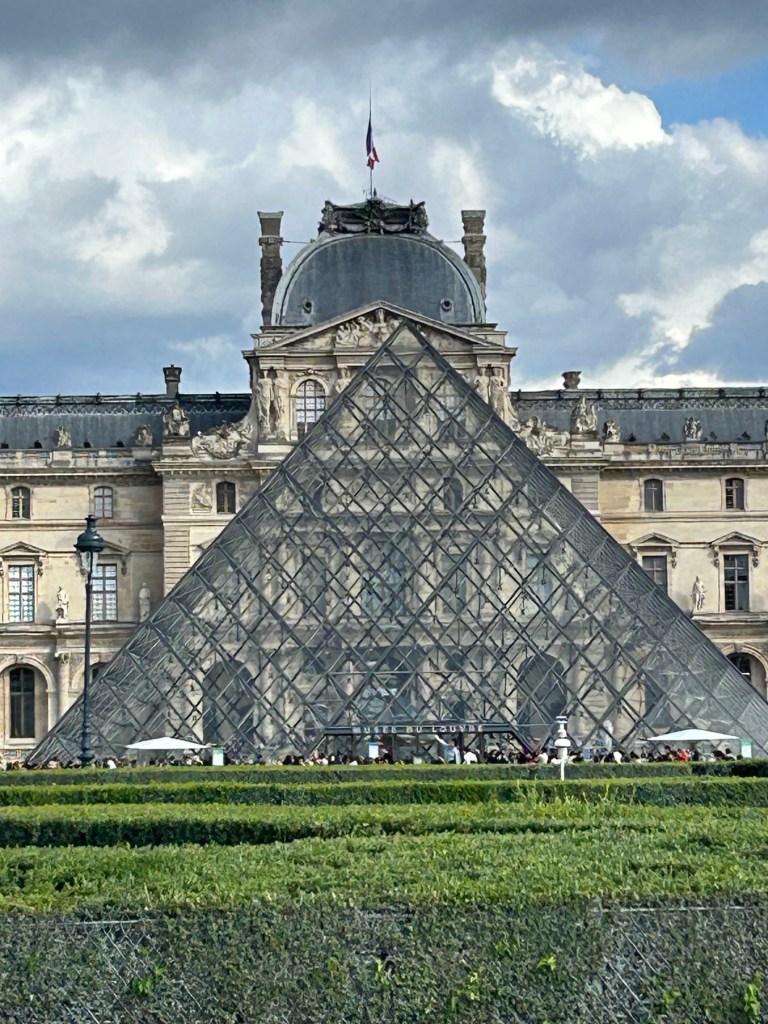
We headed out on the Hop-on Hop-off bus tour. First, we passed the Louvre. We’re coming back to it for a guided tour on our way home on November 21.
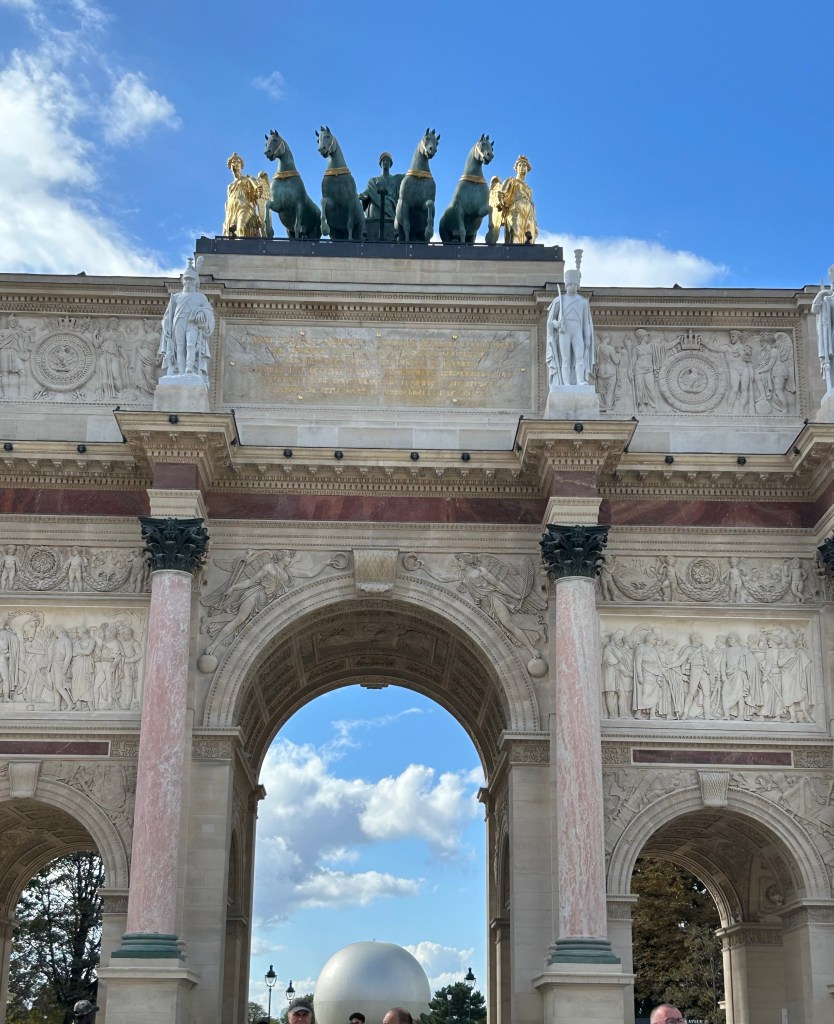
The Arc de Triomphe du Carrousel is a triumphal arch in Paris, located in the Place du Carrousel. It is an example of Neoclassical architecture in the Corinthian order. It was built between 1806 and 1808 to commemorate Napoleon’s military victories in the Wars of the Third and Fourth Coalitions. The Arc de Triomphe de l’Étoile, at the far end of the Champs-Élysées, is about twice the size; designed in the same year but not completed until 1836.
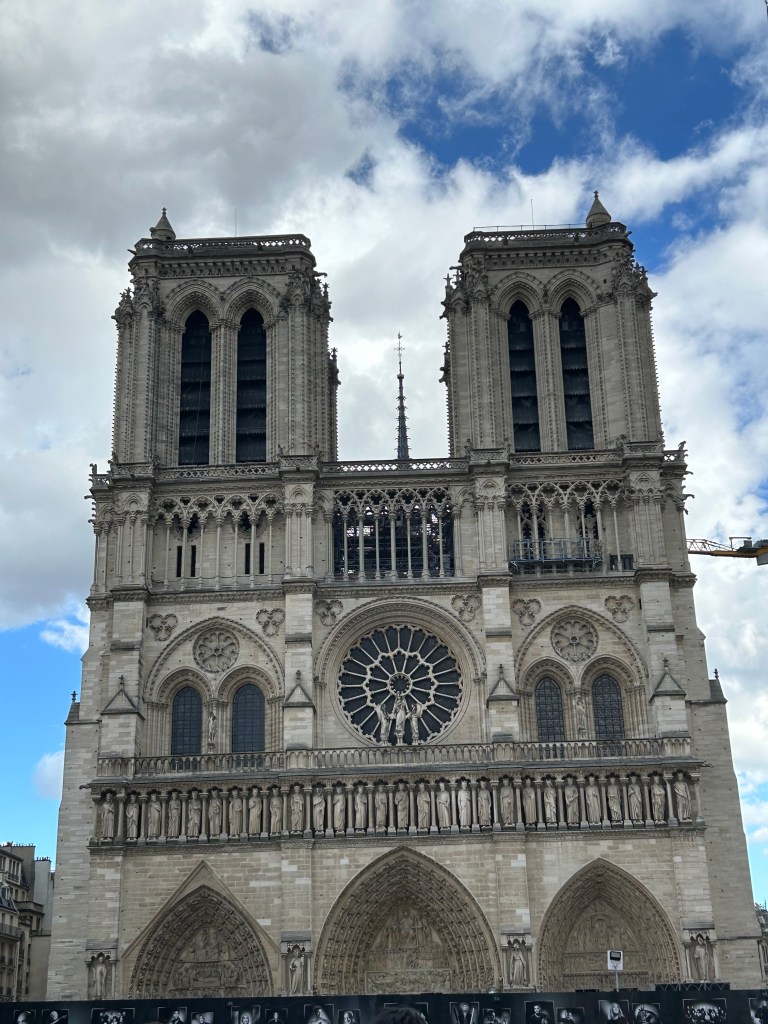
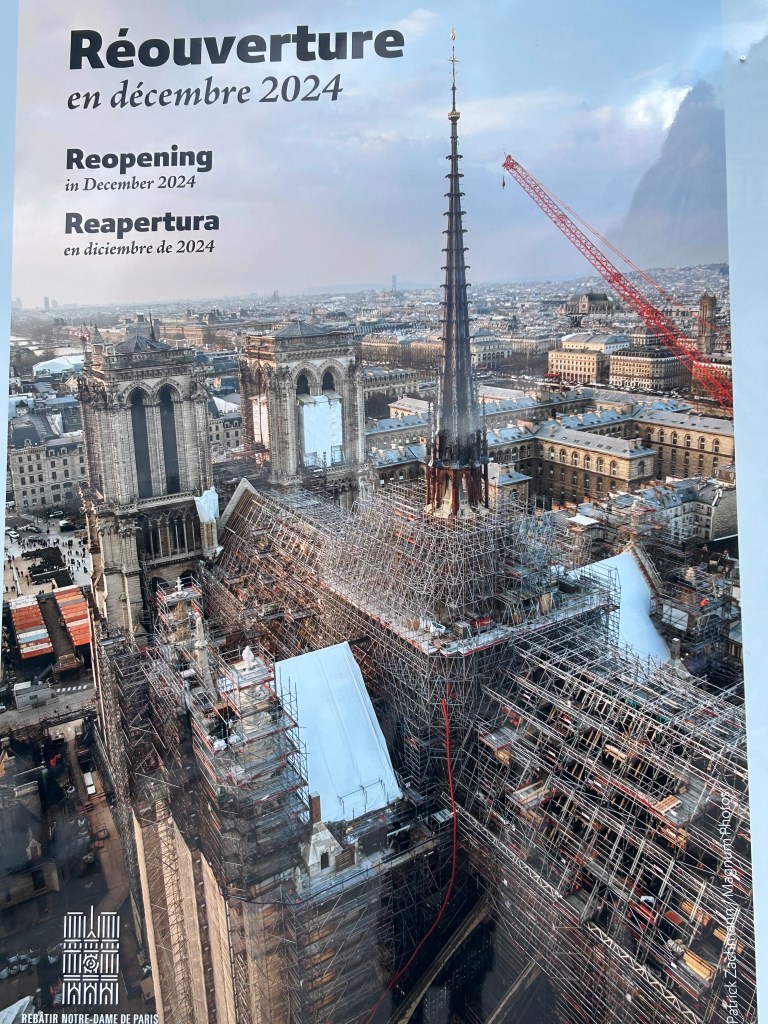
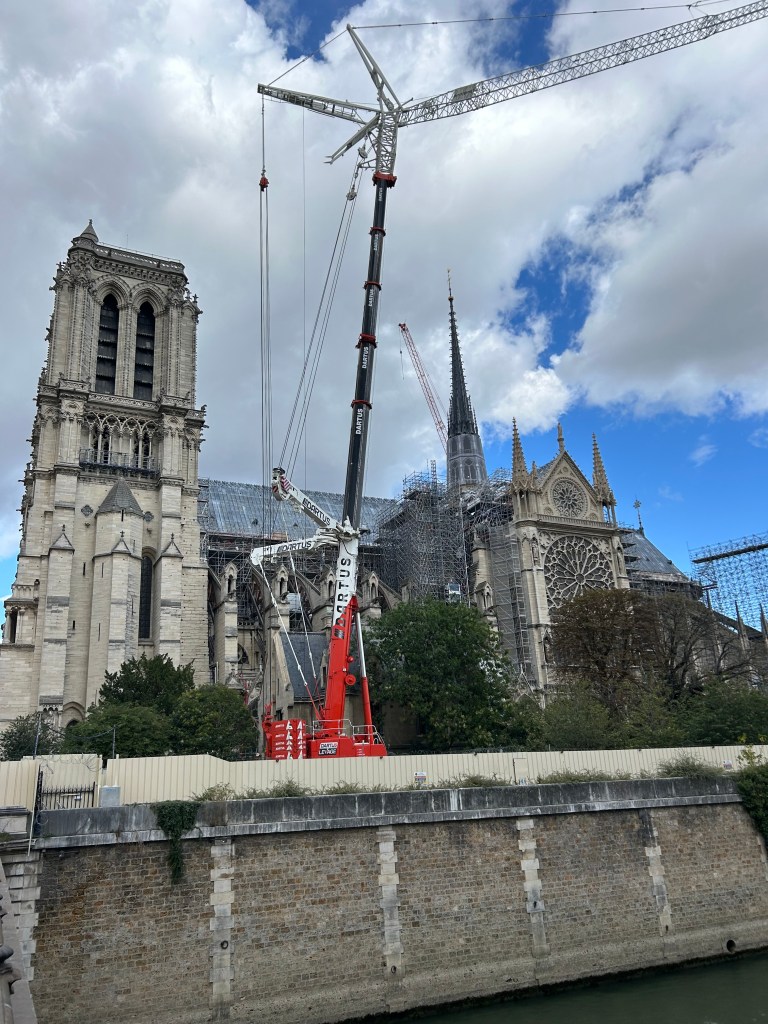
We got off at Notre Dame Cathedral and could only view the reconstruction from the outside; reopening is planned for December 2025. We had lunch in a near-by café.
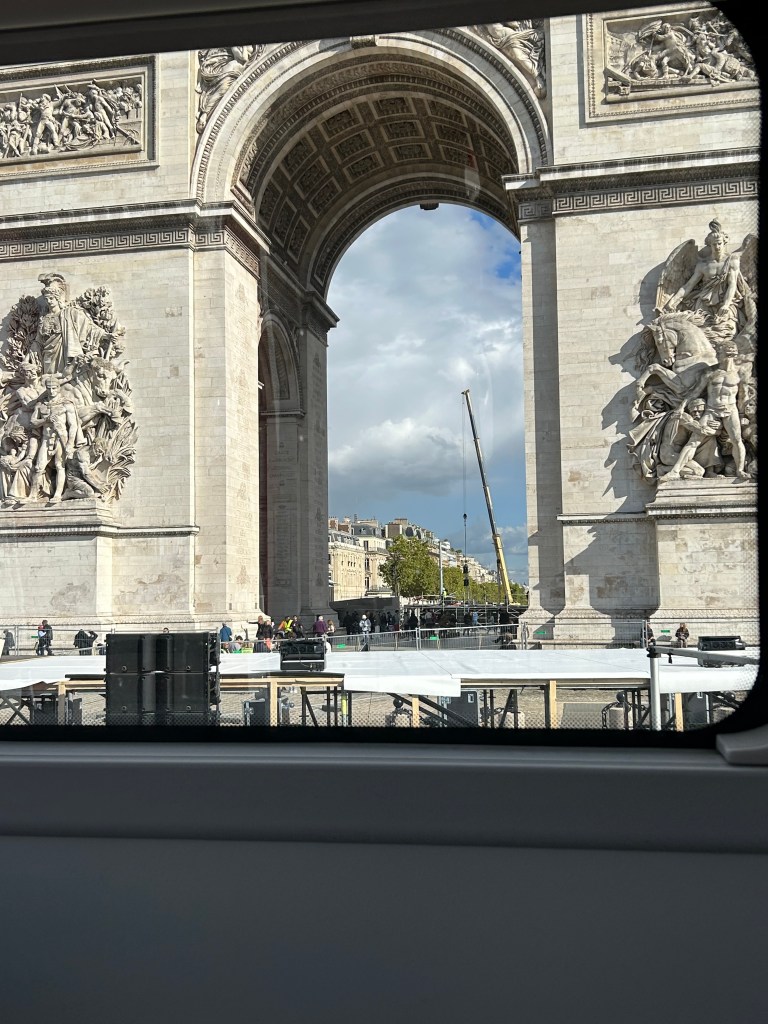
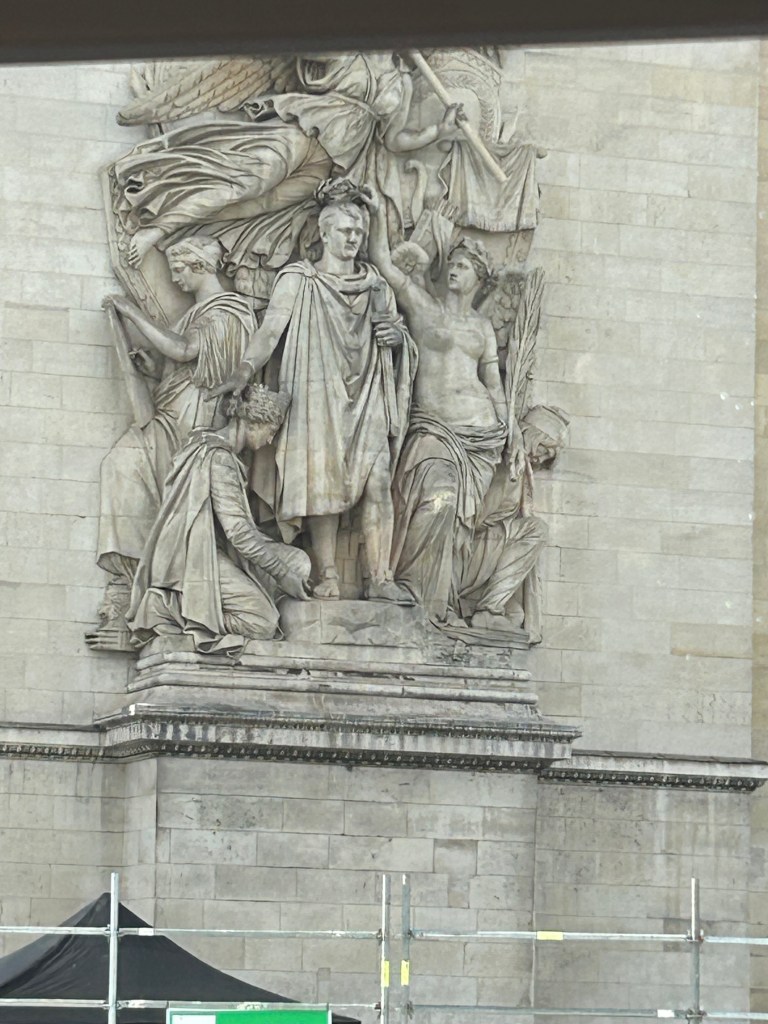
We circled the Arc de Triomphe. The Arc de Triomphe de l’Étoile, is one of the most famous monuments in Paris, France, standing at the western end of the Champs-Élysées at the centre of Place Charles de Gaulle, formerly named Place de l’Étoile—the étoile or “star” of the juncture formed by its twelve radiating avenues. It was commissioned in 1806, after the victory at Austerlitz by Emperor Napoleon at the peak of his fortunes and it would not be completed until the reign of Louis Philippe I, between 1833 and 1836. The Arc de Triomphe honours those who fought and died for France in the French Revolutionary and Napoleonic Wars, with the names of all French victories and generals inscribed on its inner and outer surfaces. Beneath its vault lies the Tomb of the Unknown Soldier from World War I.
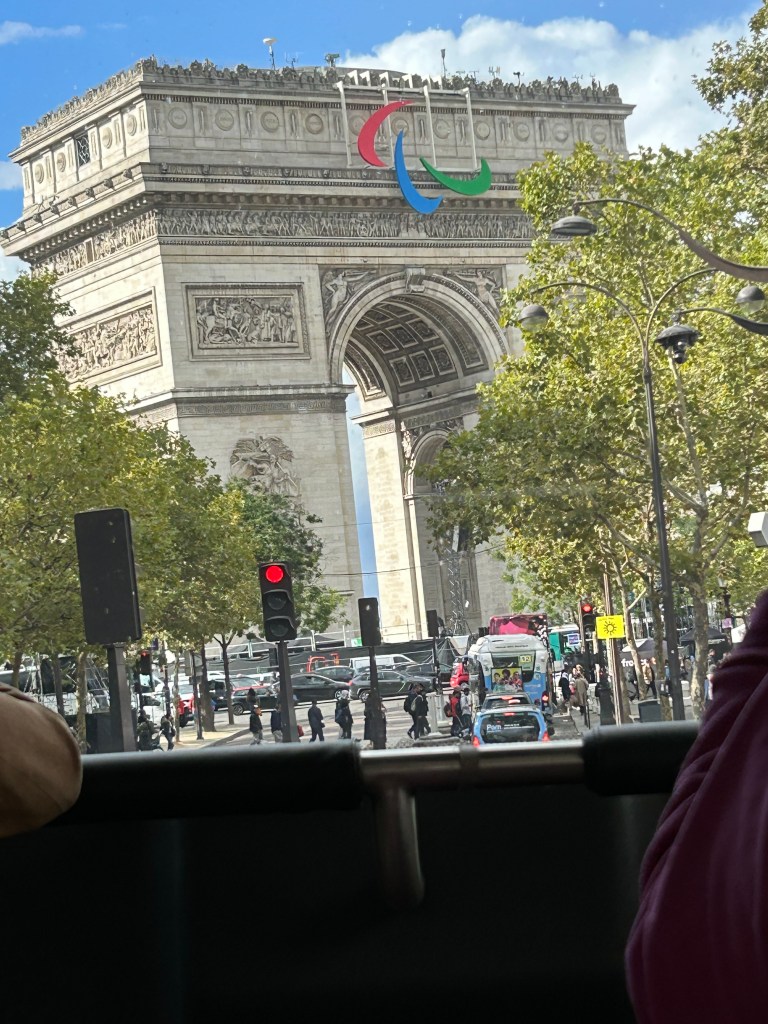
What a mad place with 12 roads coming in.
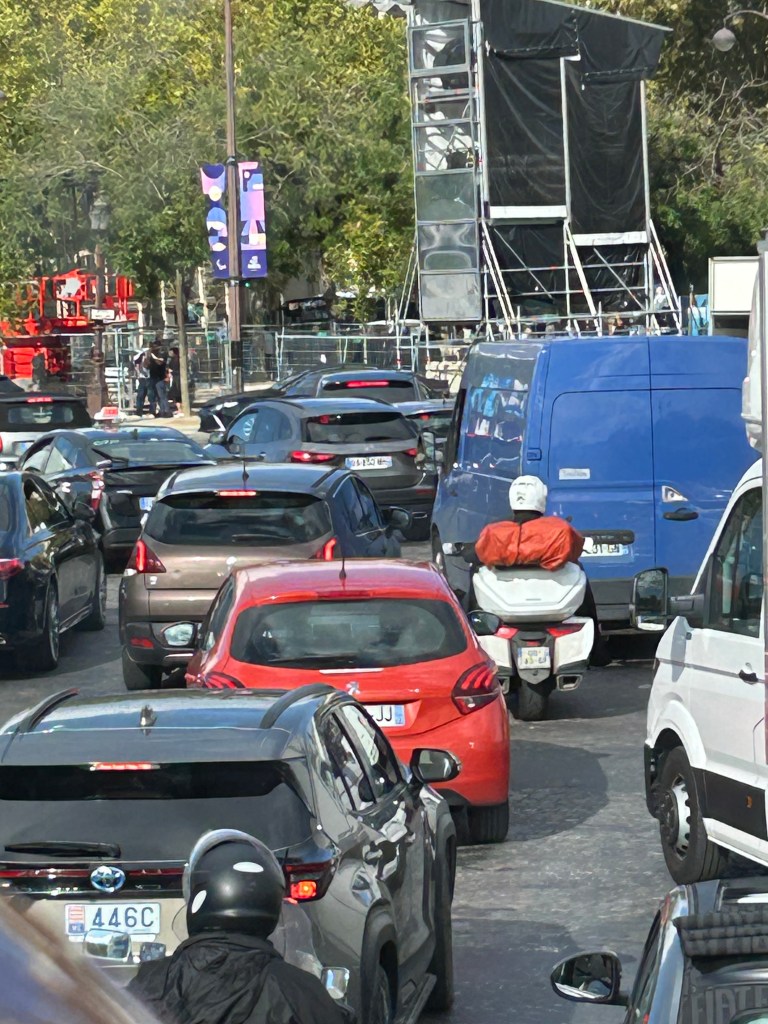
Congestion at Arc
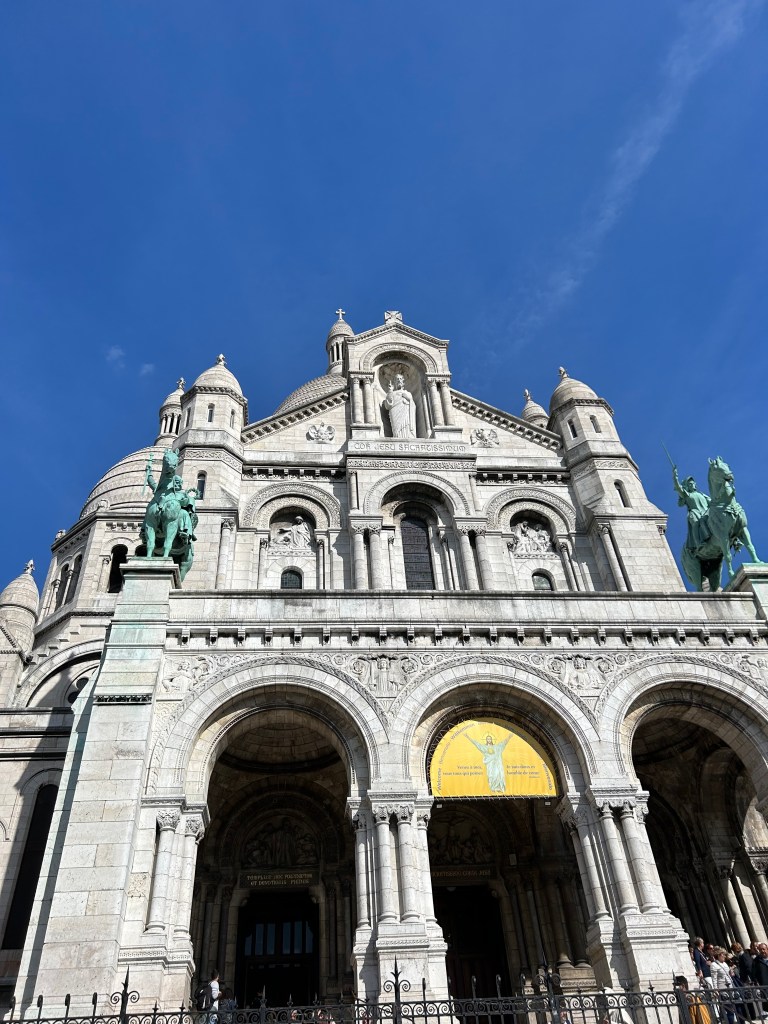
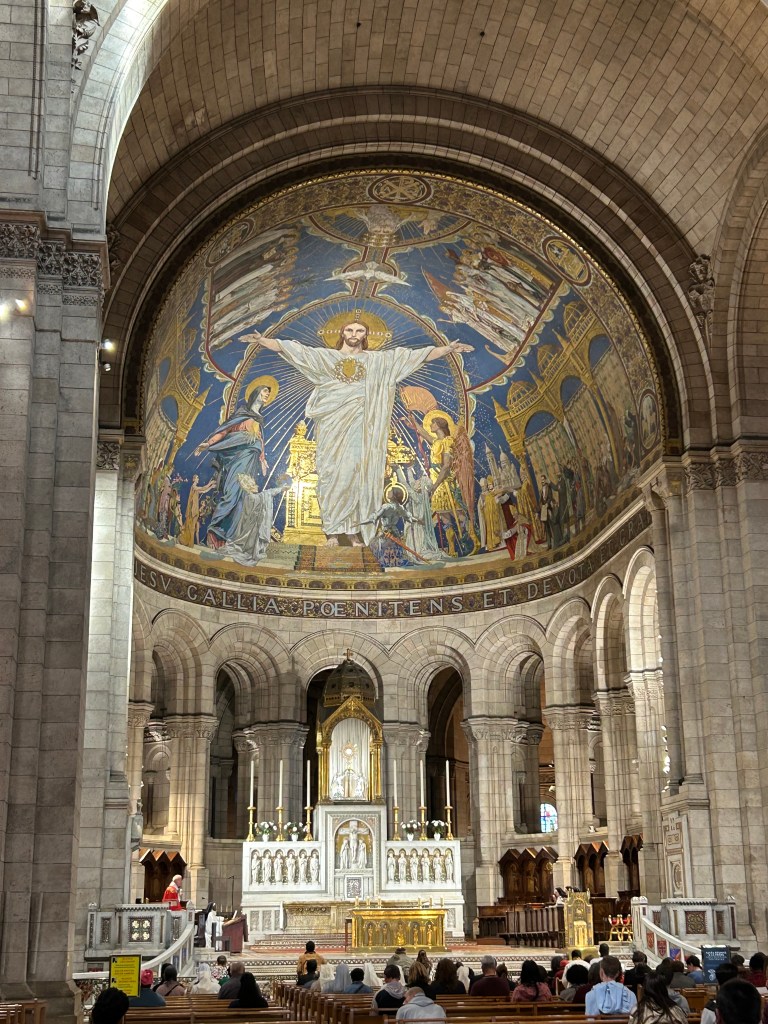
We then headed for Montmartre and Basilique du Sacré-Coeur. Sacré-Cœur Basilica is located at the summit of the butte of Montmartre. From its dome two hundred meters above the Seine, the basilica overlooks the entire city of Paris and its suburbs. The basilica’s Neo-Byzantine-Romanesque plan was under construction from 1875 under five different architects and completed in 1914; the basilica was formally consecrated in 1919 after World War I. It stands on a foundation of 83 pillars sunk 130 feet deep, necessary becauswe the ground beneath was honeycombed with gypsum mines. The exterieo is also laced with gypsum, which whitens with age. It is the second most popular tourist destination in the capital after the Eiffel Tower.
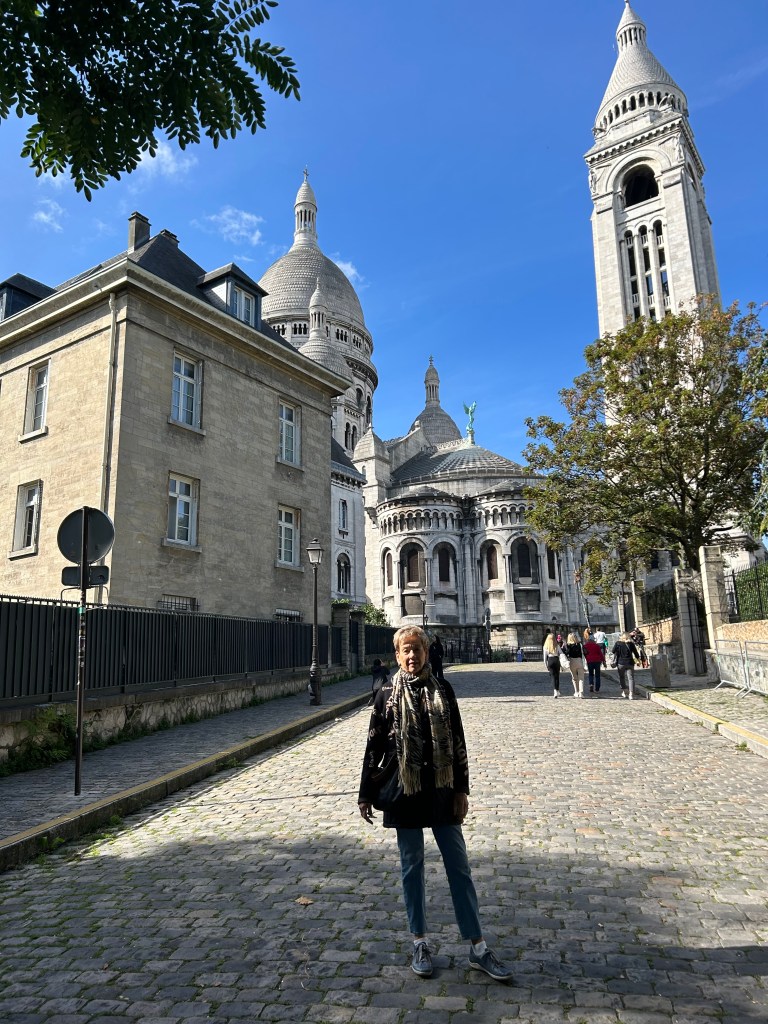
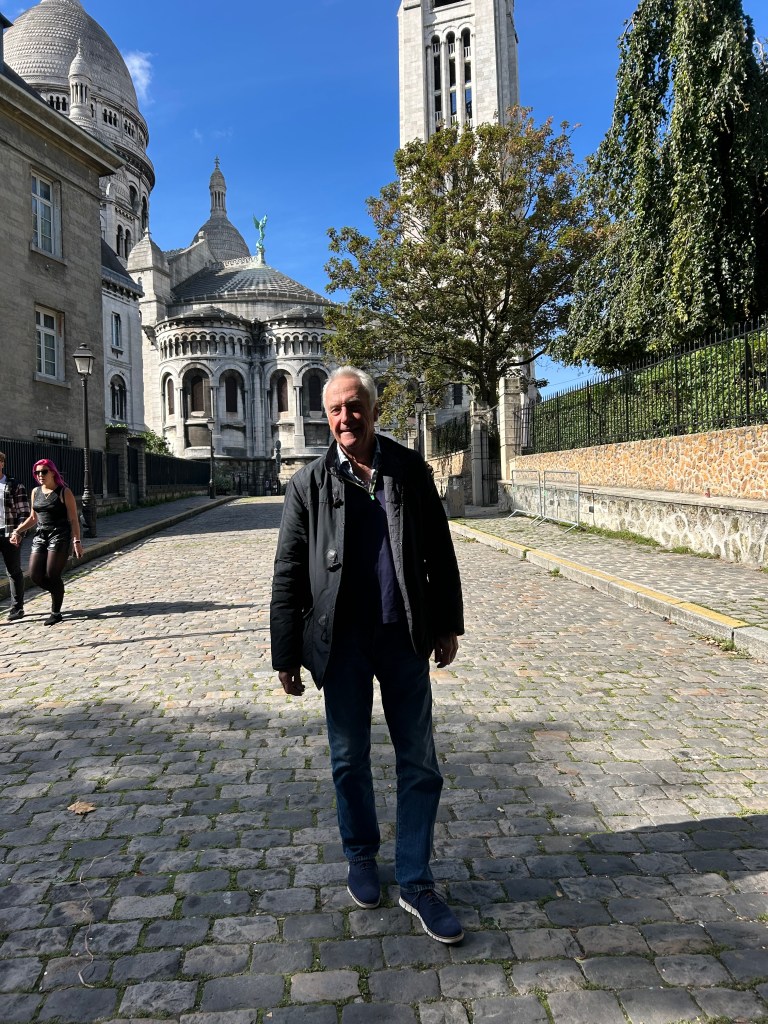
It was very busy at Basilique du Sacré-Coeur with a long line up but it was a nice sunny day so we waited and the line moved quickly.
The basilica’s exterior, with its onion domes and bleacehd bobne pallor, looks ancient, but it was built only a cenntury ago by Parisians humiliated by German invaders. Otto von Bismark’s Prussioan army laid siege to Paris for more than four months in 1870. Things got so bad for residents that urban hunting for dinner (to cook up dogs, cats and finally, rats) became accepted behaviour. Convinced that they were being punished for the country’s liberal sins, France’s Catholics raised money to build this church.
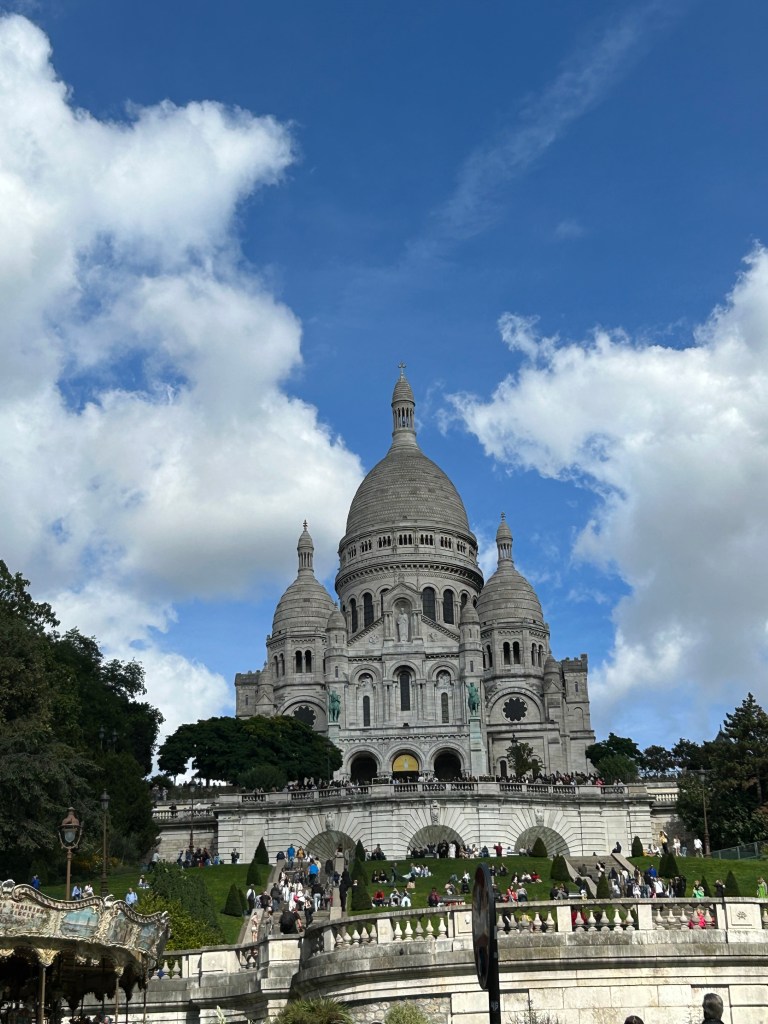
September 12 Paris Bill’s Birthday
By Metro, we arrived at the meeting point for our guided Eiffel Tower Tour.
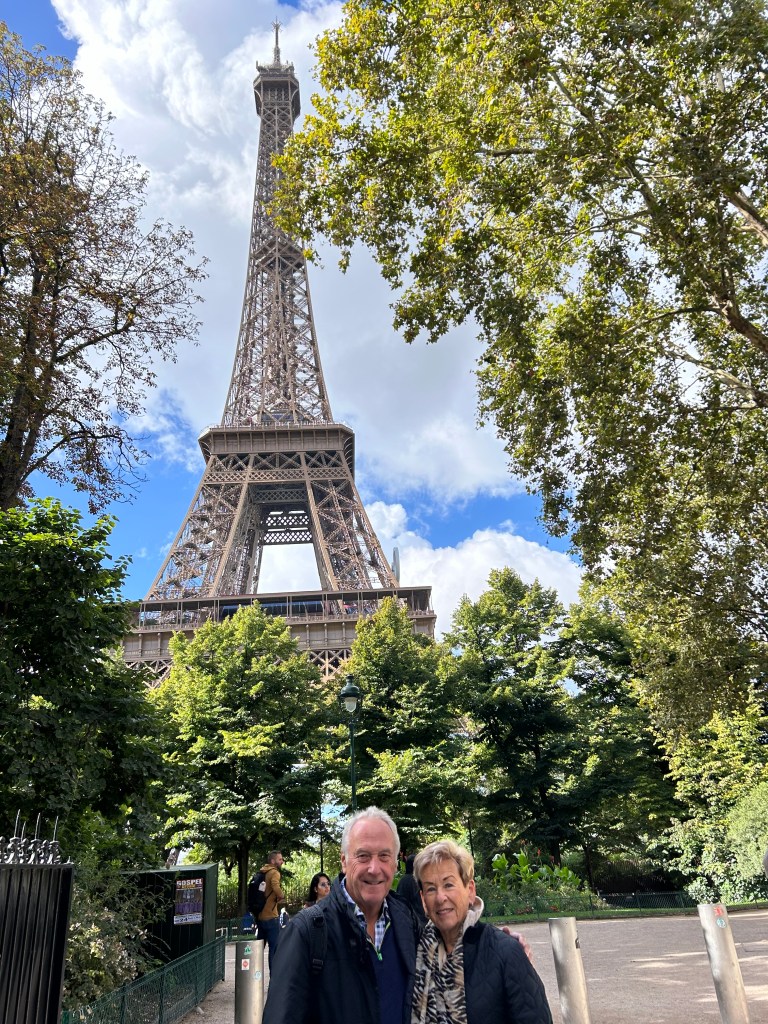
Our guide met us at the appointed time and place and warned us that we might not get to the top level as it sometimes is closed without warning.
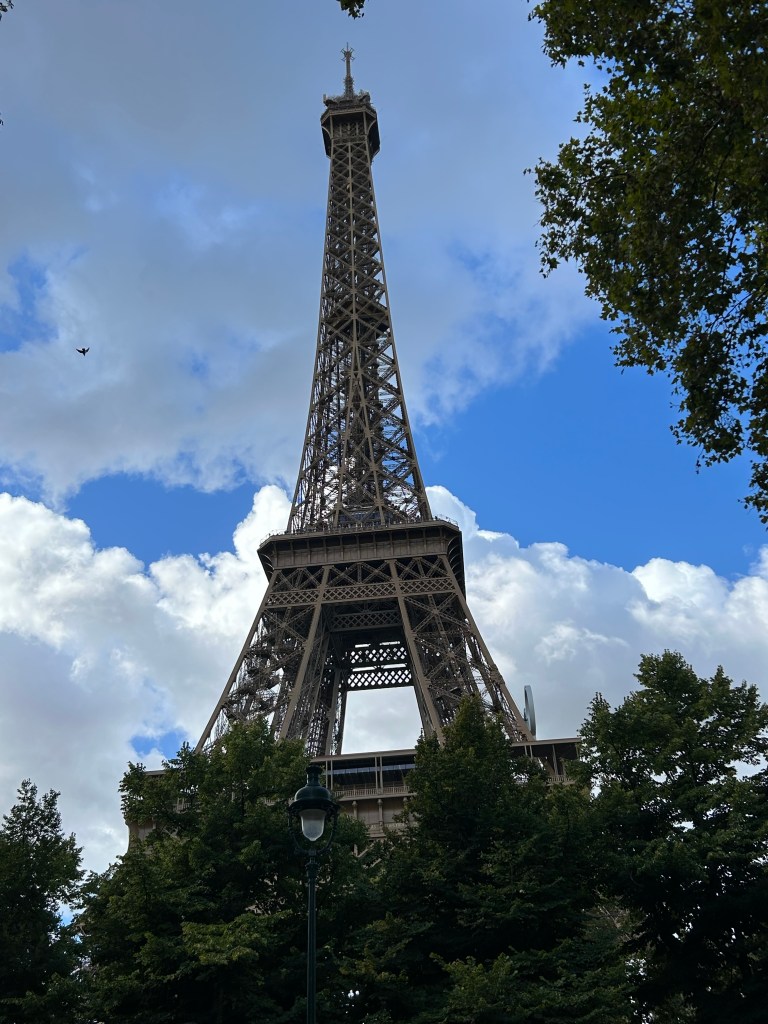
The Eiffel Tower is famous because it was the tallest structure in the world at the time of its construction in 1889. It has since become a Paris icon and a symbol of romance. More people pay to see the Eiffel Tower each year than any other attraction in the world.
Though named after Gustave Eiffel, the Eiffel Tower was actually designed by an assistant. Eiffel himself was not initially a fan of the structure’s design. He had been tasked, however, with designing the tallest structure in the world. The biggest challenge he faced in doing so was wind. The higher a structure stood, the more likely it was to be toppled by wind. Once Eiffel’s assistant demonstrated that the structure would be sound, even in winds at a height of 1,000 feet, Eiffel embraced the project. Parisians hated it. The tower debuted in 1889 as part of the Universal Exposition. It was initially supposed to be demolished after 20 years, but it had gained such notoriety by the end of the initial 20-year period that officials decided to keep it. It was used as a radio tower during WWI and in WWII was sealed off to prevent the Nazis from taking it over. More than 7 million people visit the Eiffel tower annually.
During the tour it was very windy and even rained but we carried on.
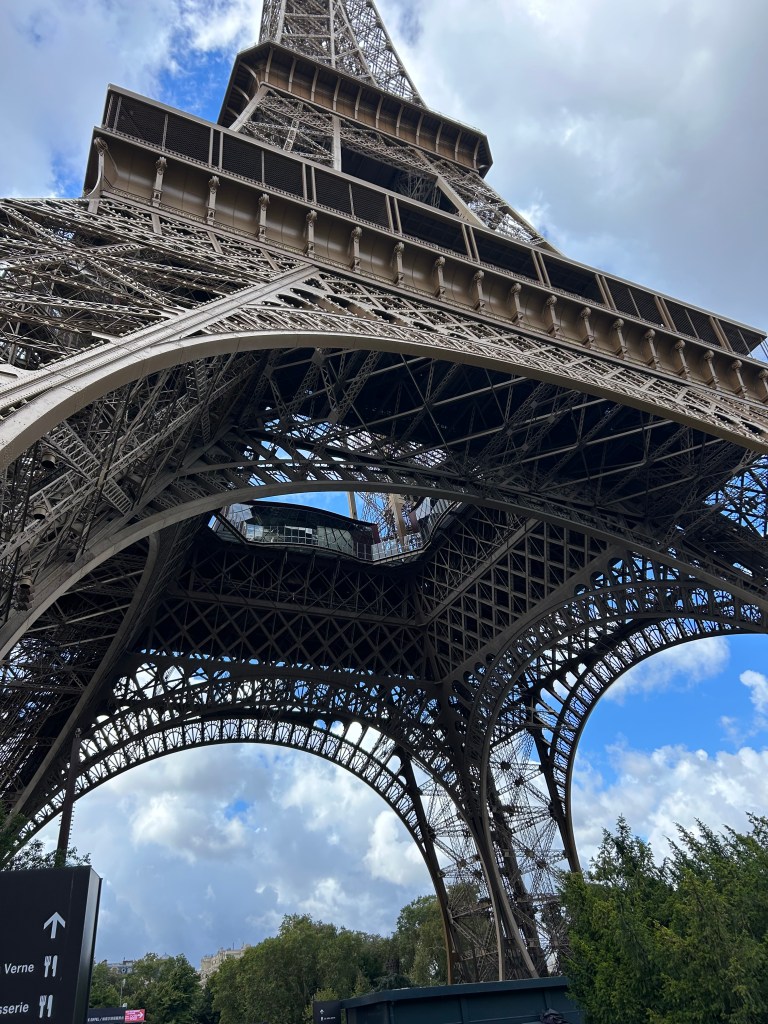
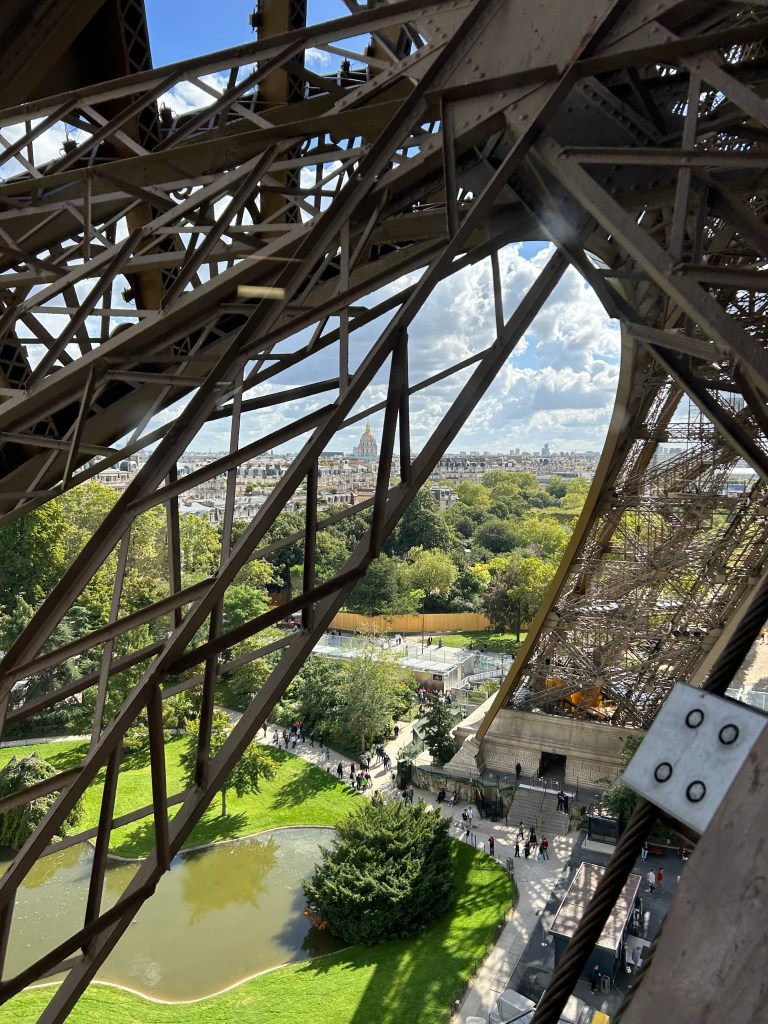
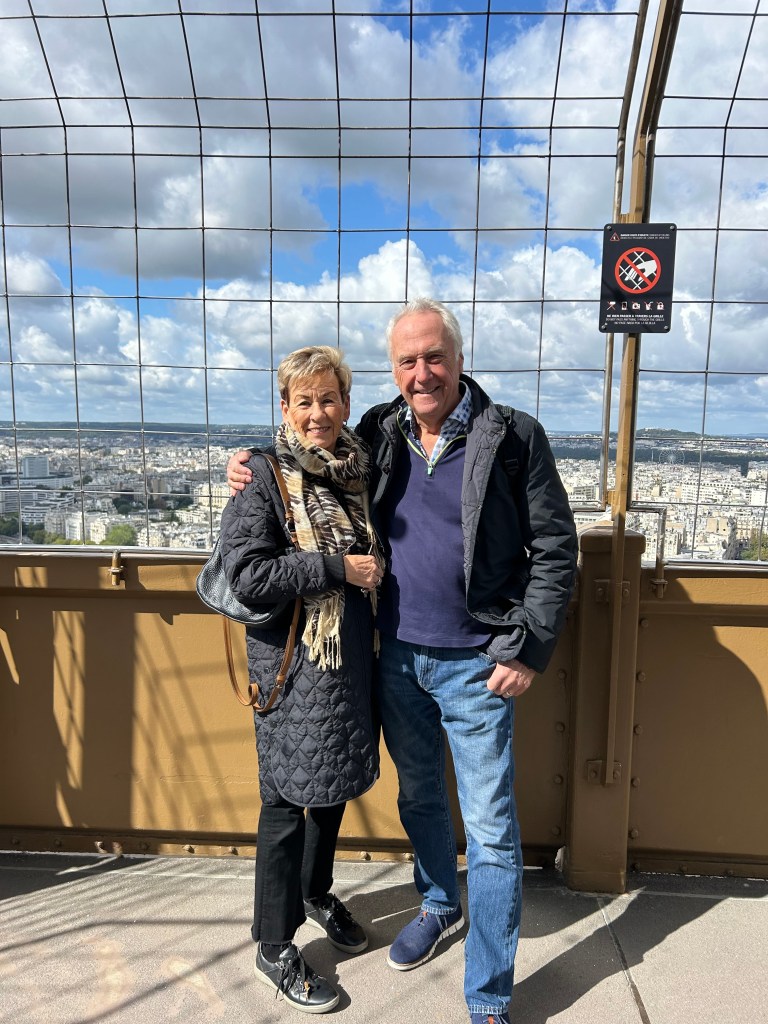
Eiffel Tower
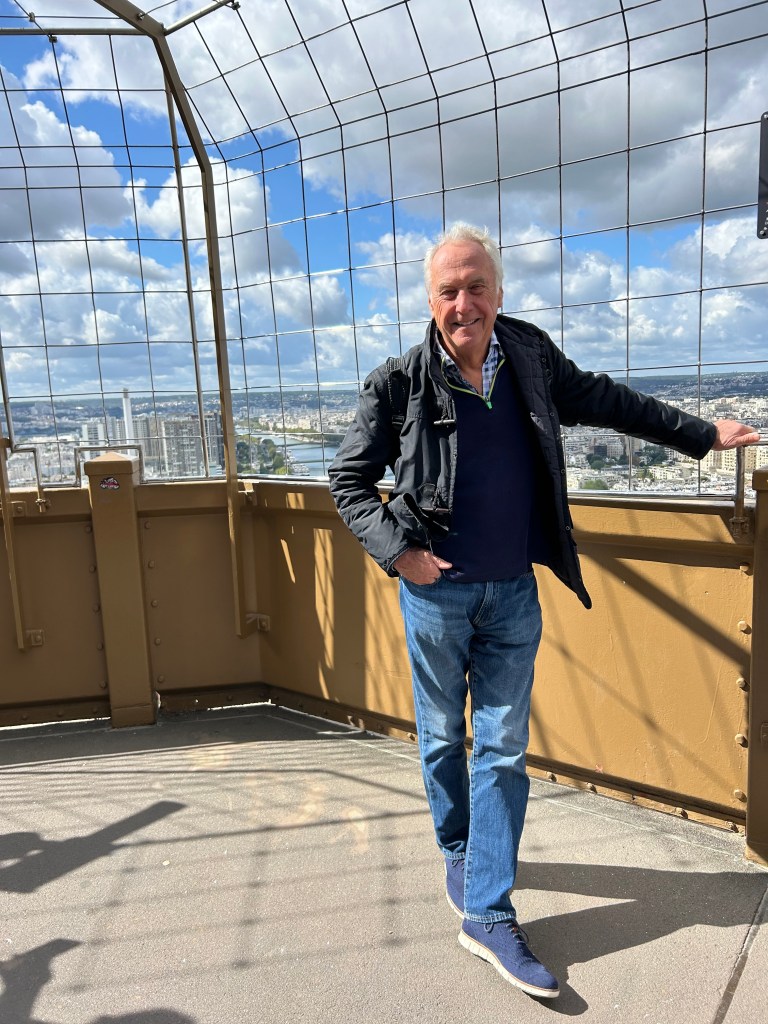
The guide said that Bill was one of her favourites and the group sang Happy Birthday to him.
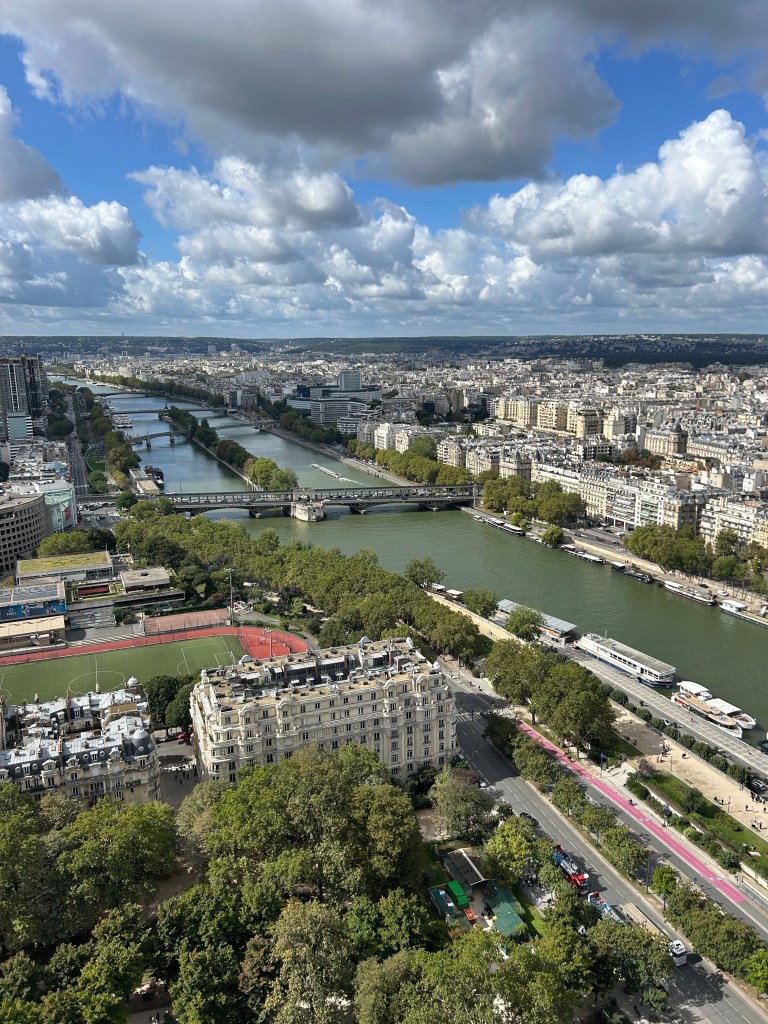
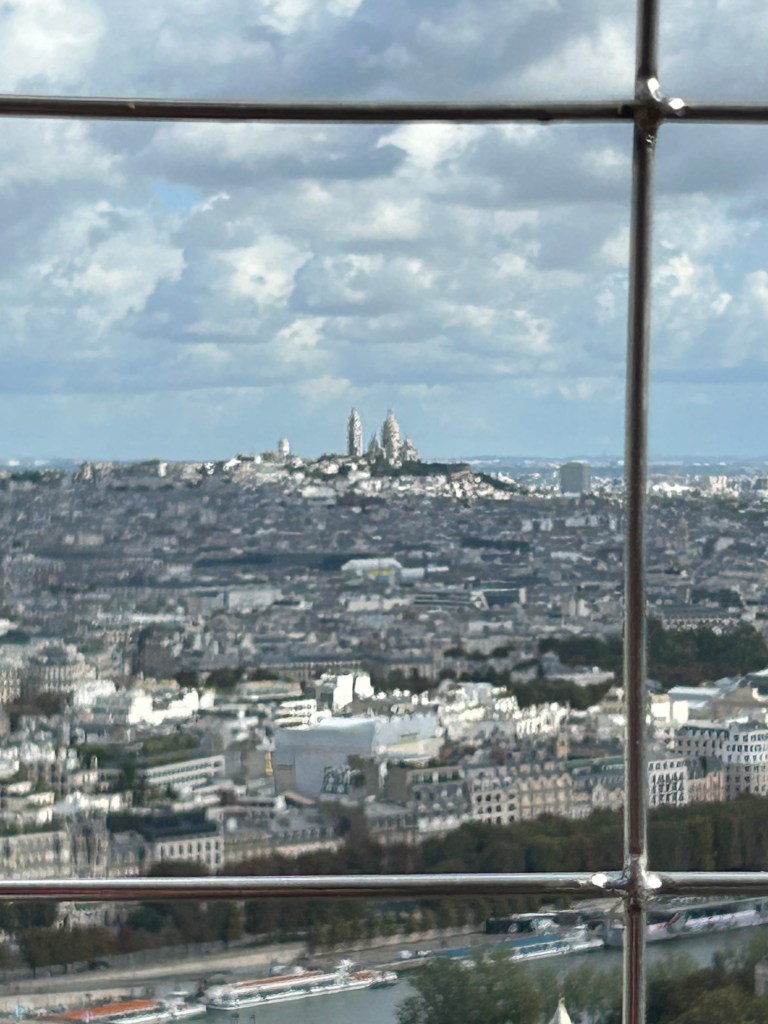
As we were leaving the tower, it actually hailed. Thanks goodness for our umbrella.
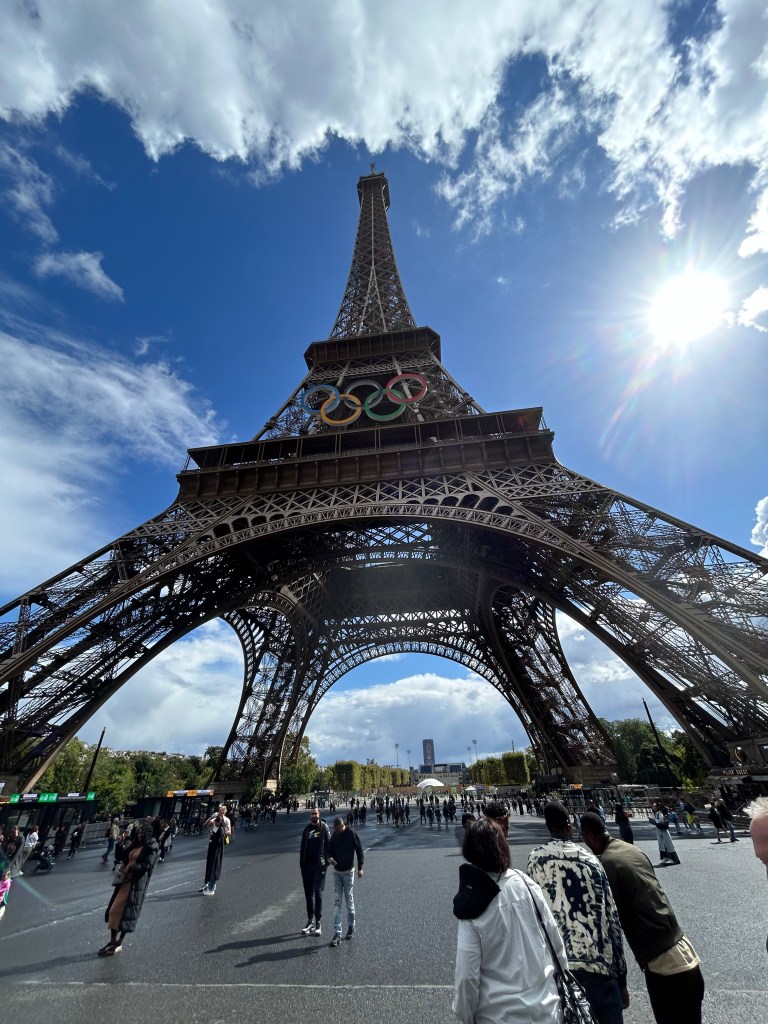
For dinner, we found a really neat Japanese fish market complete with the sounds of a fish market; we ordered a fish noodle bowl and glass of saki. We thought we’d go back Friday night but there was a line-up to get in.
September 13 Paris
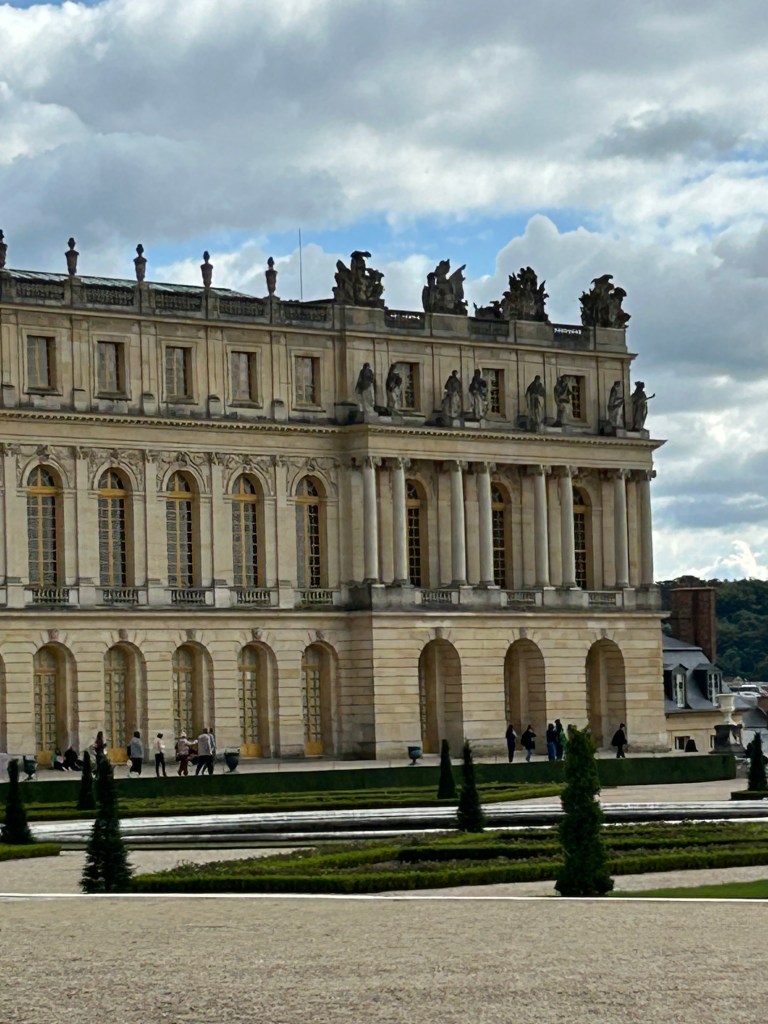
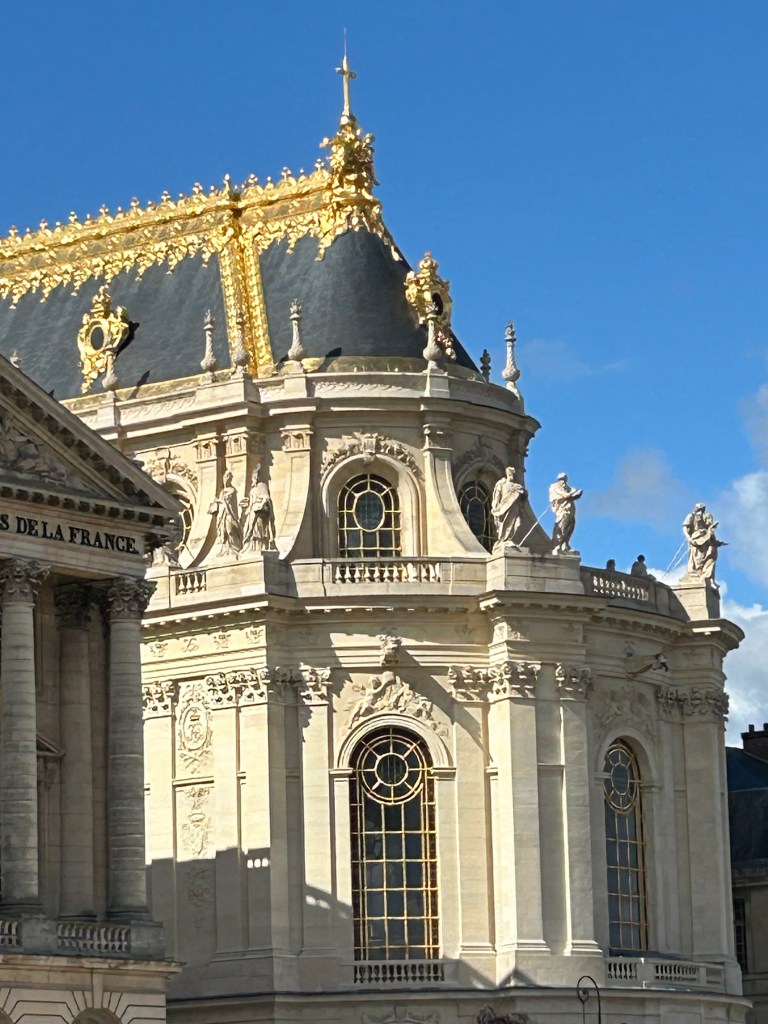
We took the Metro to the appointed pick-up location and went by bus to Versailles. Our guide met us there and took us on a very good tour despite the noise and crowds. I can only imagine what it must be like in the summer.
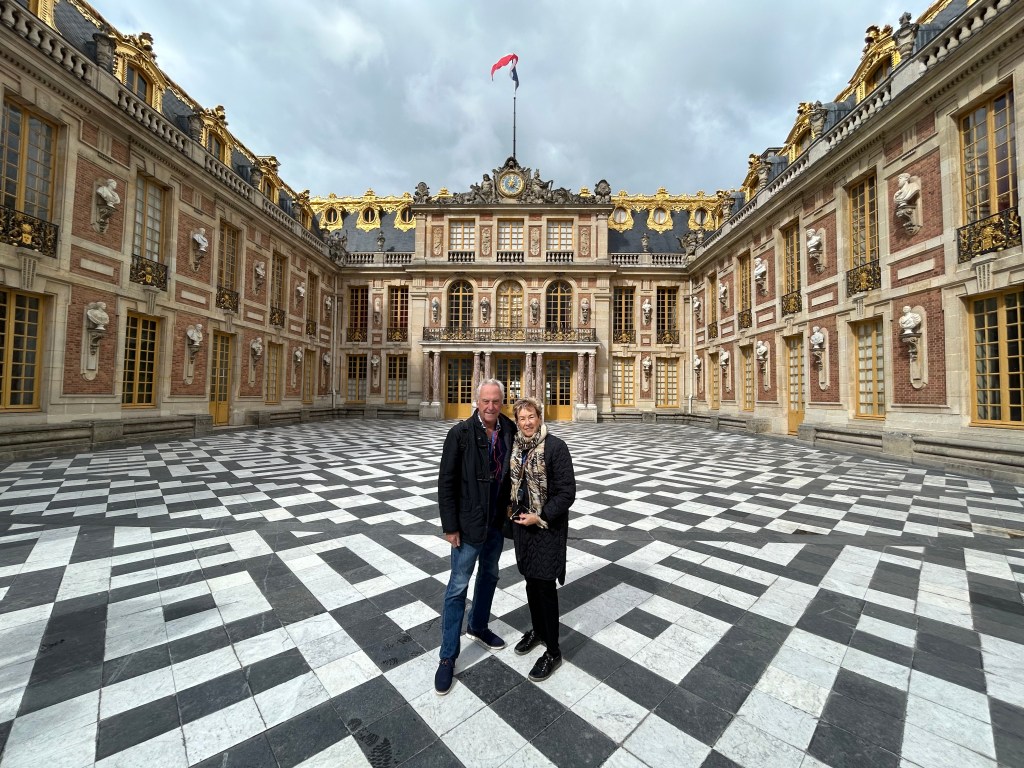
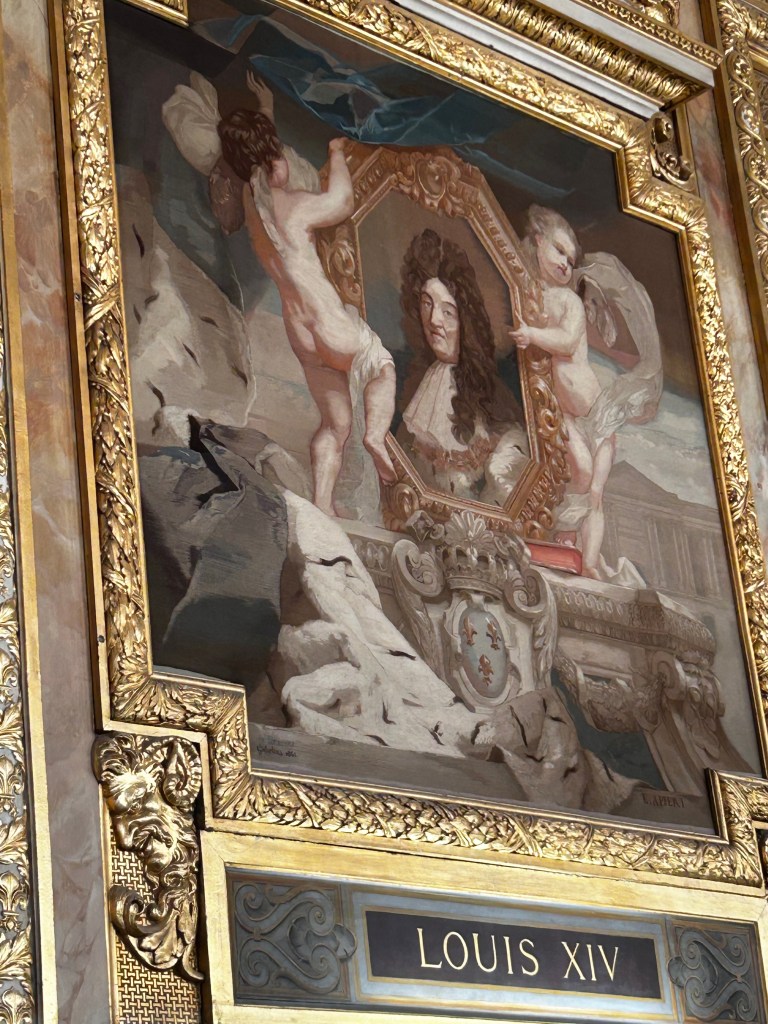
Since 1979, the Palace of Versailles, located about 18 kilometres west of Paris, France, has been listed as a World Heritage and is one of the greatest achievements in French 17th century art. Louis XIII’s old hunting pavilion was transformed and extended through several expansions in phases from 1661 to 1715 by his son, Louis XIV, when he installed the Court and government there in 1682. Louis XIV succeeded in attracting the nobility to Versailles to pursue prestige and royal patronage within a strict court etiquette, thus eroding their traditional provincial power bases. Over 6000 courtiers lived there in order to be close to the king.
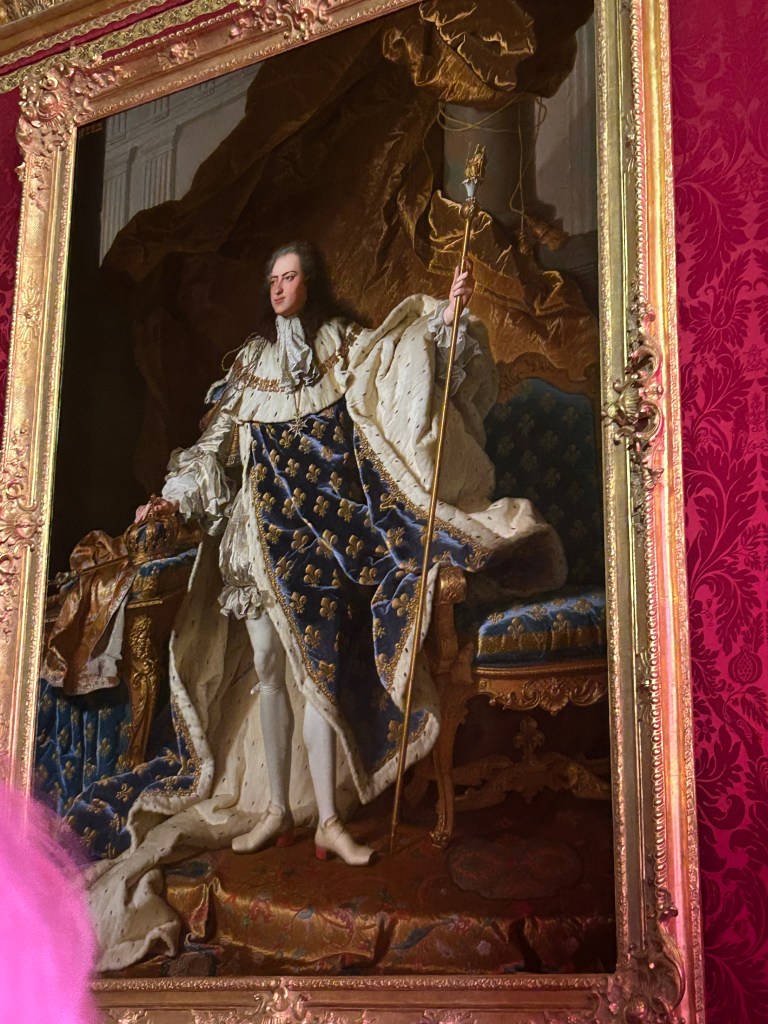
The nobles would wait for the King to rise and watch him get dressed to ensure notice and proximity to get their requests fulfilled.
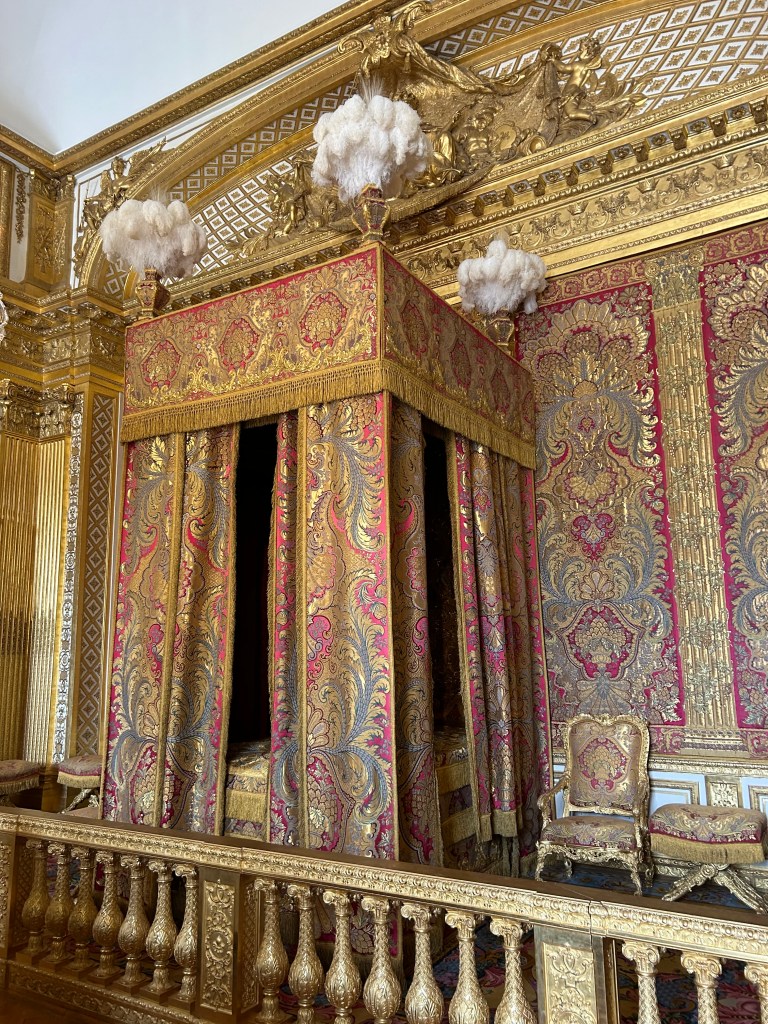
It was a favourite residence for both kings, and in 1682, Louis XIV moved the seat of his court and government to Versailles, making the palace the de facto capital of France. A succession of kings continued to embellish the Palace up until the French Revolution. This state of affairs was continued by Kings Louis XV and Louis XVI, who primarily made interior alterations to the palace, but in 1789 the royal family and French court returned to Paris. For the rest of the French Revolution, the Palace of Versailles was largely abandoned and emptied of its contents, and the population of the surrounding city plummeted. Today the Palace contains 2,300 rooms spread over 63,154 m.
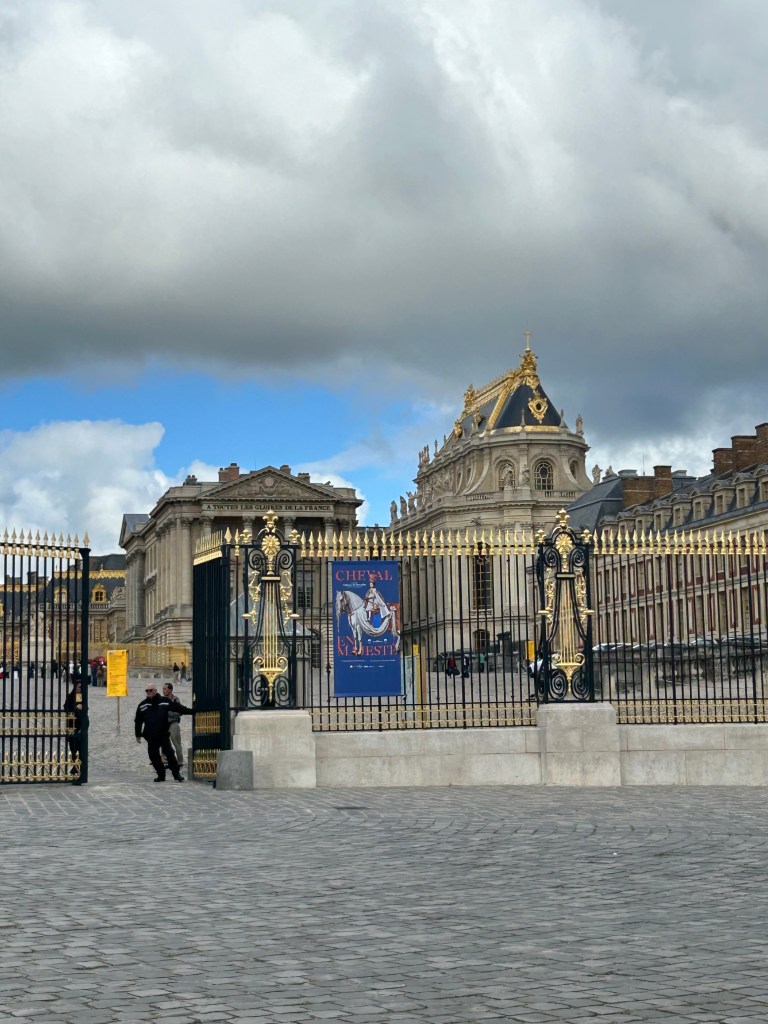
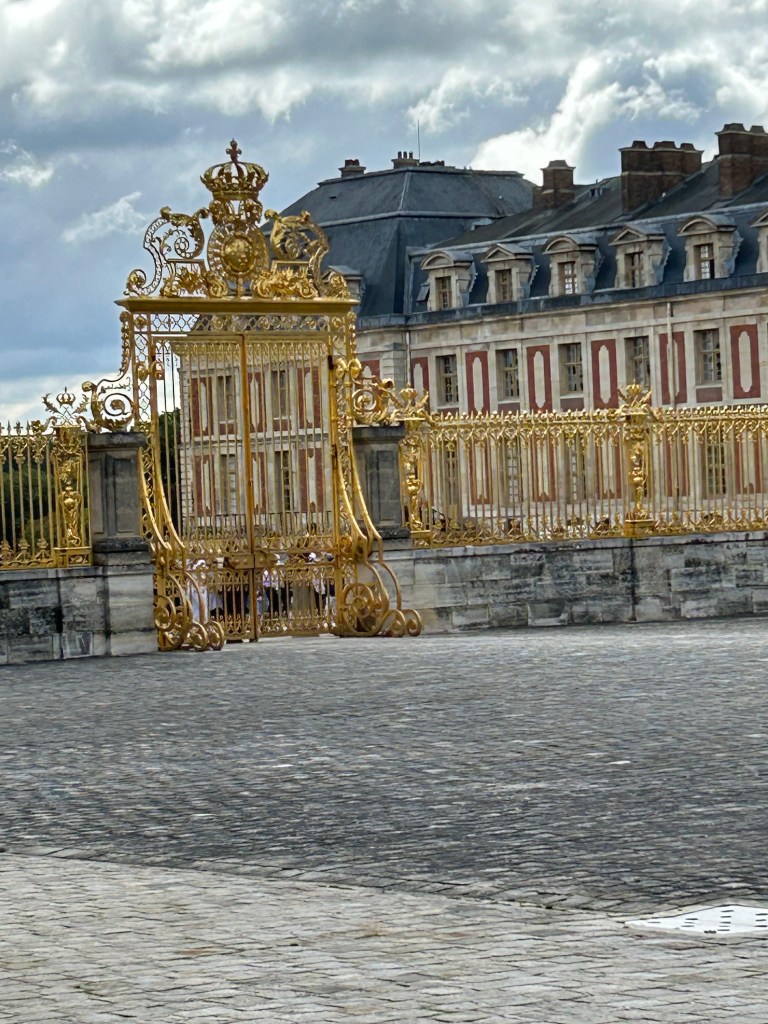
Everywhere you looked the attention to detail with gold and sculptures were designed to impress the nobles and visitors.
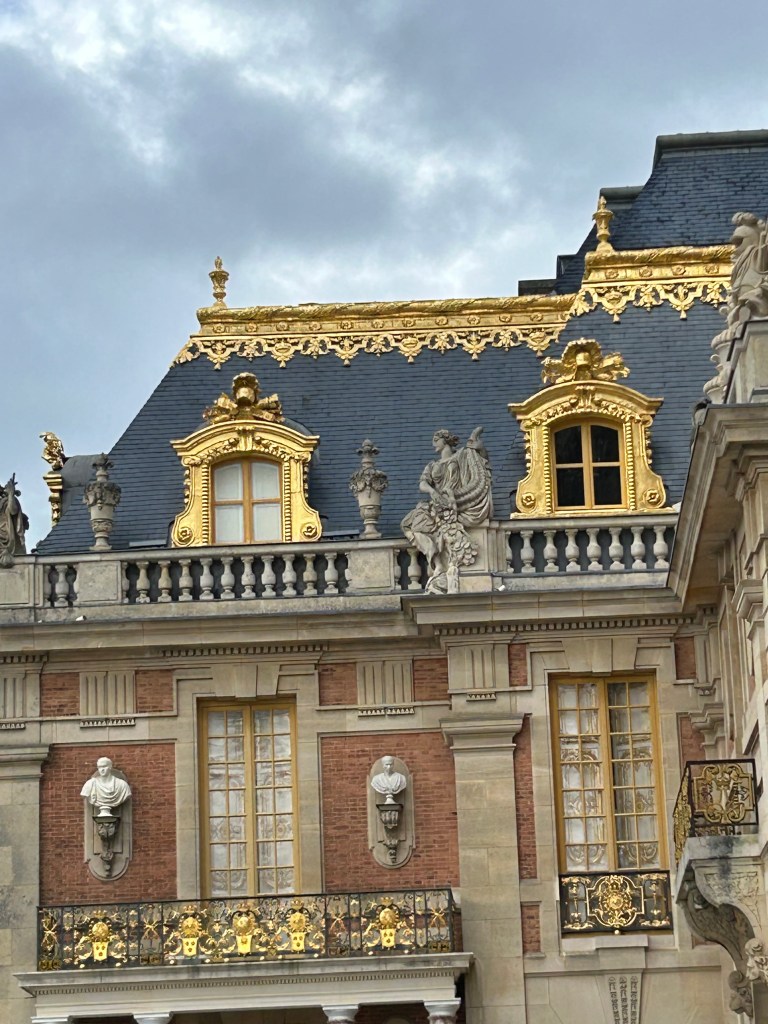
In 1783, the palace was the site of the signing of the last two of the three treaties of the Peace of Paris (1783), which ended the American Revolutionary War. On 3 September, British and American delegates, led by Benjamin Franklin, signed the Treaty of Paris at the Hôtel d’York (now 56 Rue Jacob) in Paris, granting the United States independence. On 4 September, Spain and France signed separate treaties with Britain at the Palace of Versailles, formally ending the war.
The King and Queen learned of the Storming of the Bastille in Paris on 14 July 1789, while they were at the palace, and remained isolated there as the Revolution in Paris spread. The growing anger in Paris led to the Women’s March on Versailles on 5 October 1789. A crowd of several thousand men and women, protesting the high price and scarcity of bread, marched from the markets of Paris to Versailles. They took weapons from the city armoury, besieged the palace, and compelled the King and royal family and the members of the National Constituent Assembly to return with them to Paris the following day.
As soon as the royal family departed, the palace was closed. In 1792, the National Convention, the new revolutionary government, ordered the transfer of all the paintings and sculptures from the palace to the Louvre. In 1793, the Convention declared the abolition of the monarchy and ordered all of the royal property in the palace to be sold at auction.
The King’s Apartments
This prestigious series of seven rooms were parade apartment, used for hosting the sovereign’s official acts. For this reason, it was covered with lavish Italian-style decoration, much admired by the king at the time, composed of marble panelling and painted ceilings. During the day, the State Apartment was open to all who wished to see the king and the royal family passing through on their way to the chapel. During the reign of Louis XIV, evening gatherings were held here several times a week.
Diana Room
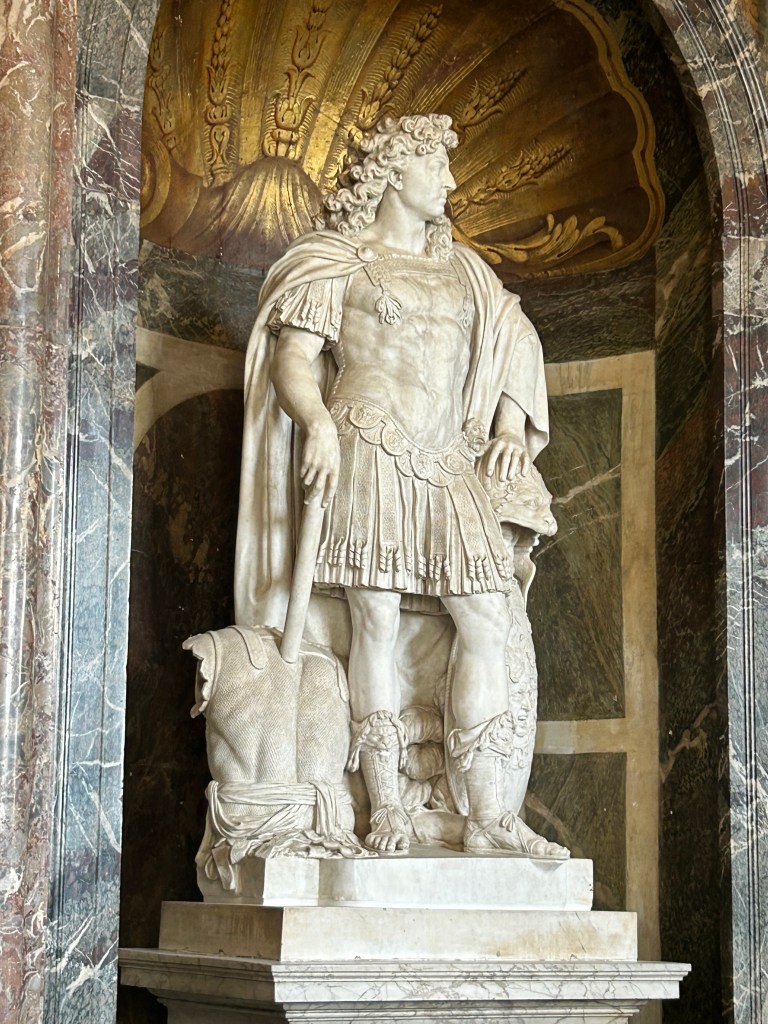
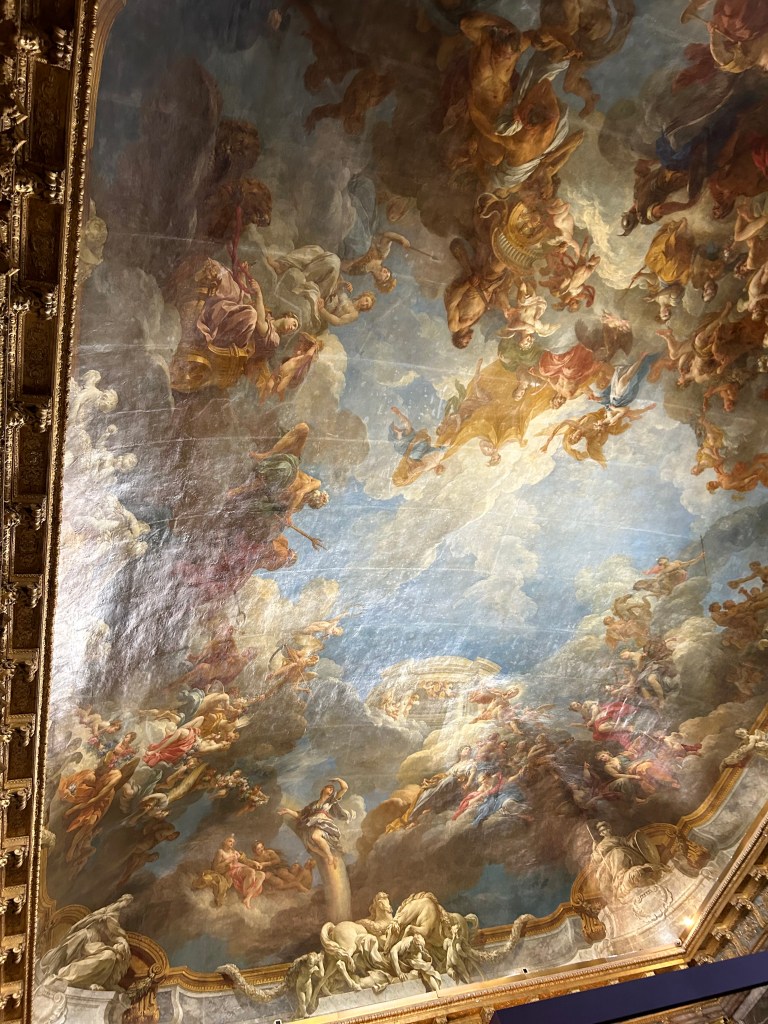
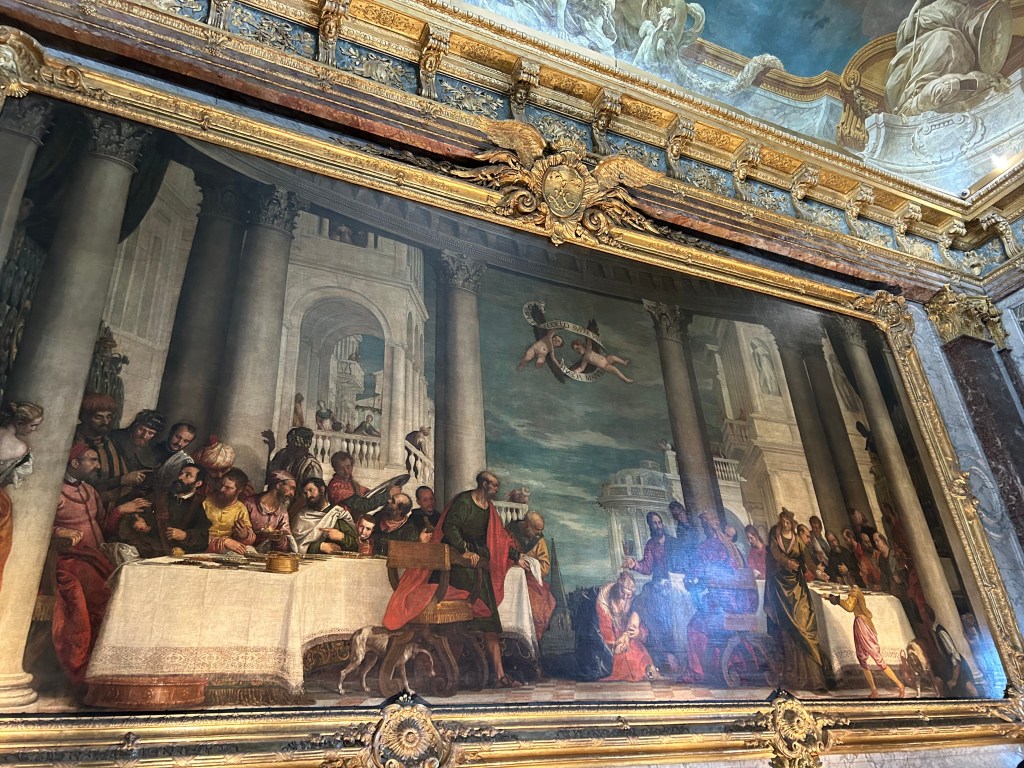
Hercules Room. Started by Louis IV but finished by Louis V who brought the huge painting by Veronese, The Meal in the House of Simon: Paolo Caliari (1528-1588), known as Veronese, was a Venetian Renaissance painter. It had been stored since its arrival in France as a gift from the Republic of Venice to Louis XIV in 1664.
Work on the Hercules Room was completed in 1736, when François Lemoyne finished the ceiling painting depicting The Apotheosis of Hercules. This vast, impressive, allegorical work, depicting no fewer than 142 persons, can be considered on a par with masterpieces by Italian fresco painters. It was created, however, using the marouflage technique, i.e. the scenes were painted on canvas and then stuck onto the ceiling.
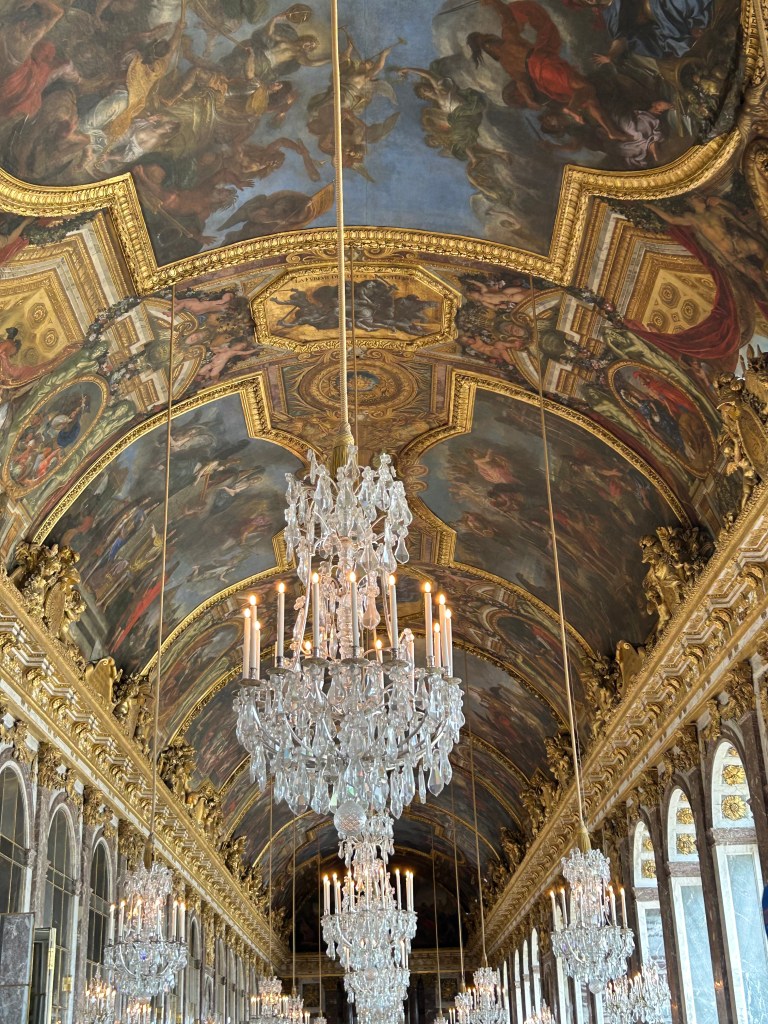
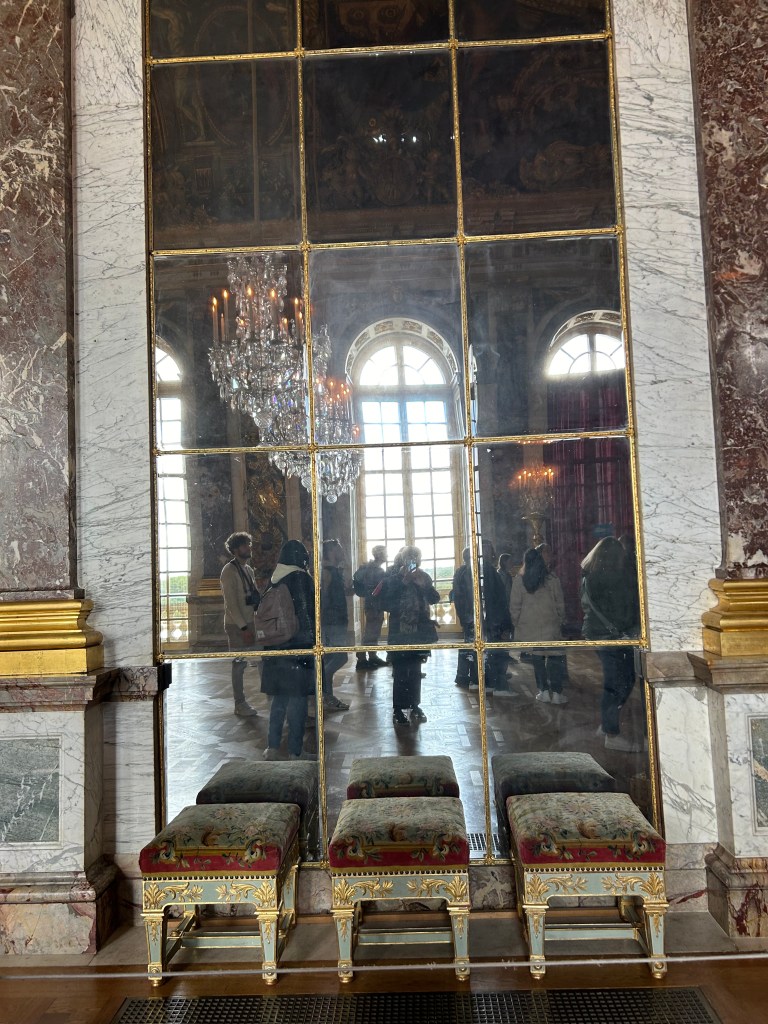
The Hall of Mirrors, the most famous room in the Palace. Following on from the victory over the three united powers: the Dutch War (1672-1678) in which France fought against Germany, Spain and the Dutch Republic, until the peace treaty of Nijmegen., depicted in the War Room, the whole length of the Hall of Mirrors (73m) pays tribute to the political, economic and artistic success of France.
Political successes are illustrated through the 30 painted compositions on the vaulted ceiling by Le Brun, which depict the glorious history of Louis XIV during the first 18 years of his reign. Military and diplomatic victories and reforms with a view to reorganising the kingdom are illustrated through allegories from Antiquity. Economic prosperity is revealed in the number and size of the 357 mirrors bedecking the 17 arches opposite the windows, demonstrating that the new French manufacture could rival the Venetian monopoly on mirror manufacturing.
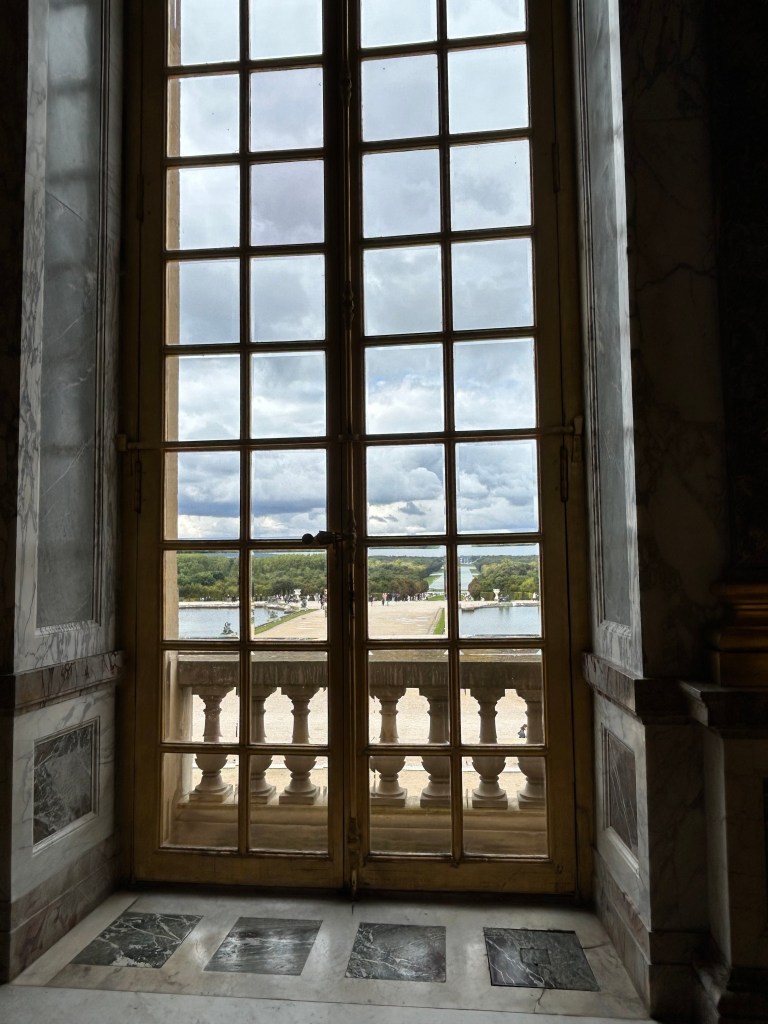
Queen’s Apartment
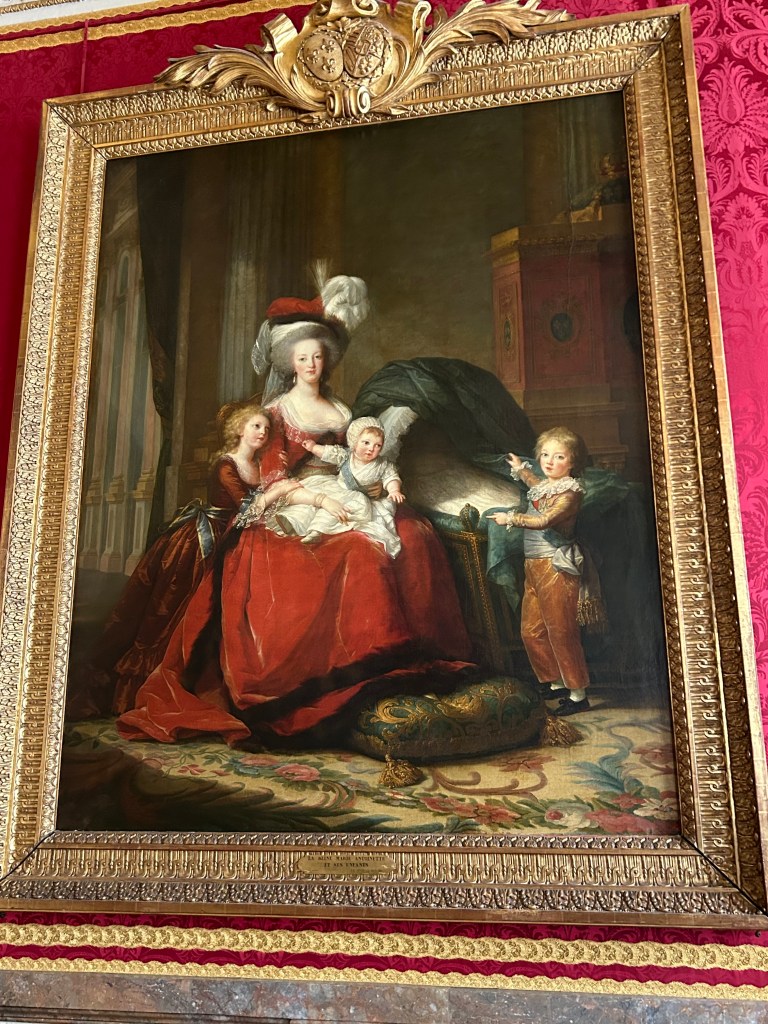
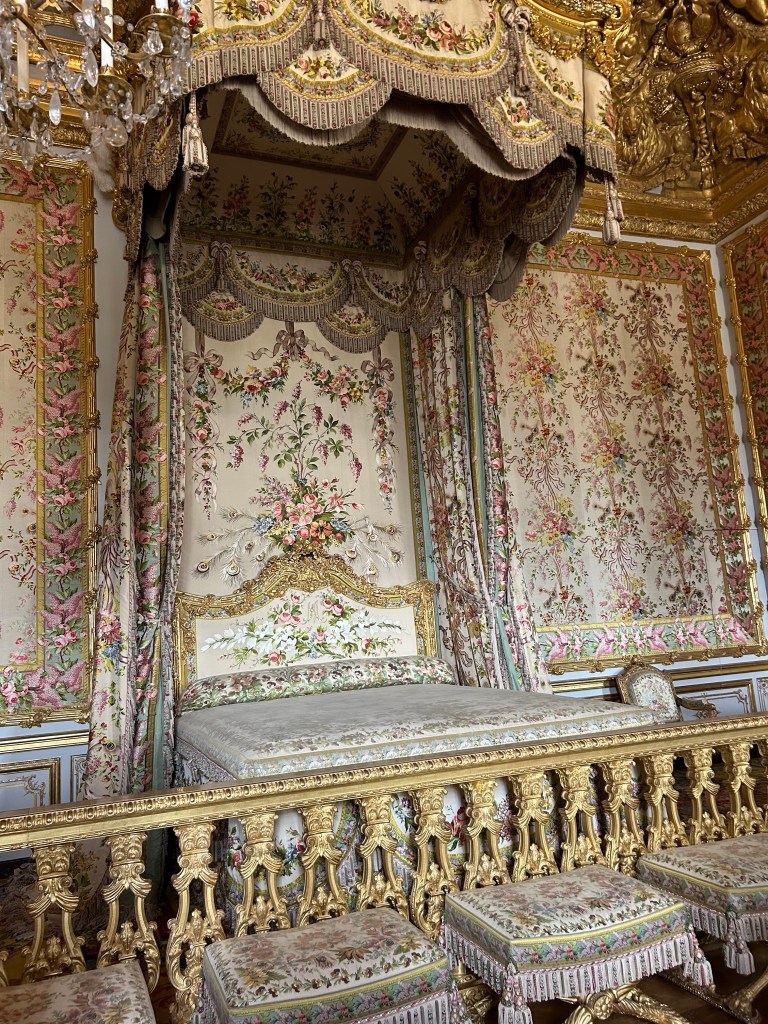
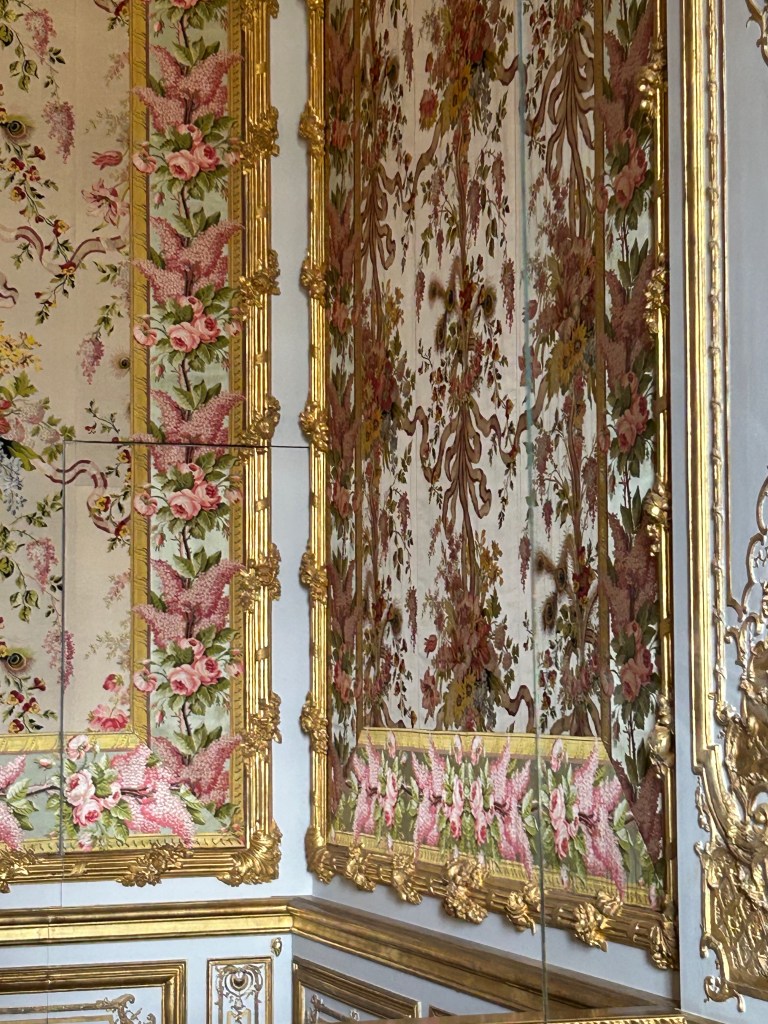
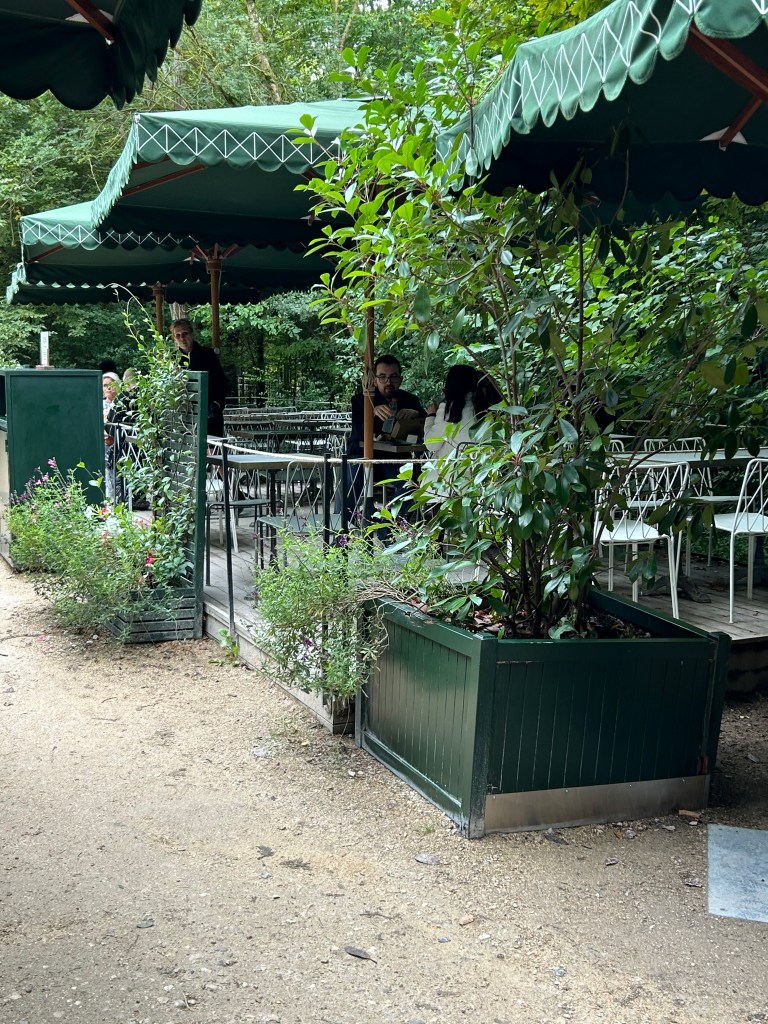
We had lunch in the café.
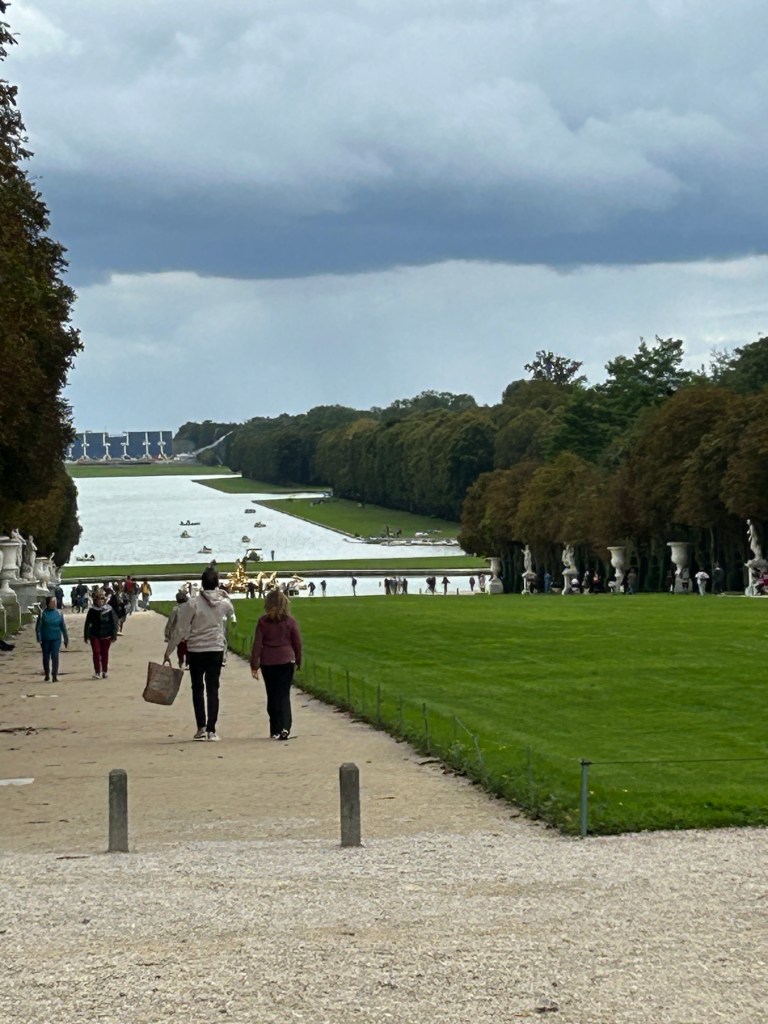
The gardens of Versailles, as they have existed since the reign of Louis XIV are marked by rigid order, discipline, and open space, with axial paths, flowerbeds, hedges, and ponds and lakes as motifs. They became the epitome of the French formal garden style, and have been very influential and widely imitated or reproduced.
Water features of all kinds are an important part of French gardens, even more so than plant designs and groves. At Versailles, they include waterfalls in some of the groves, spurts of water in the fountains, and the calm surface of the water reflecting the sky and sun in the Water Parterre or the Grand Canal.
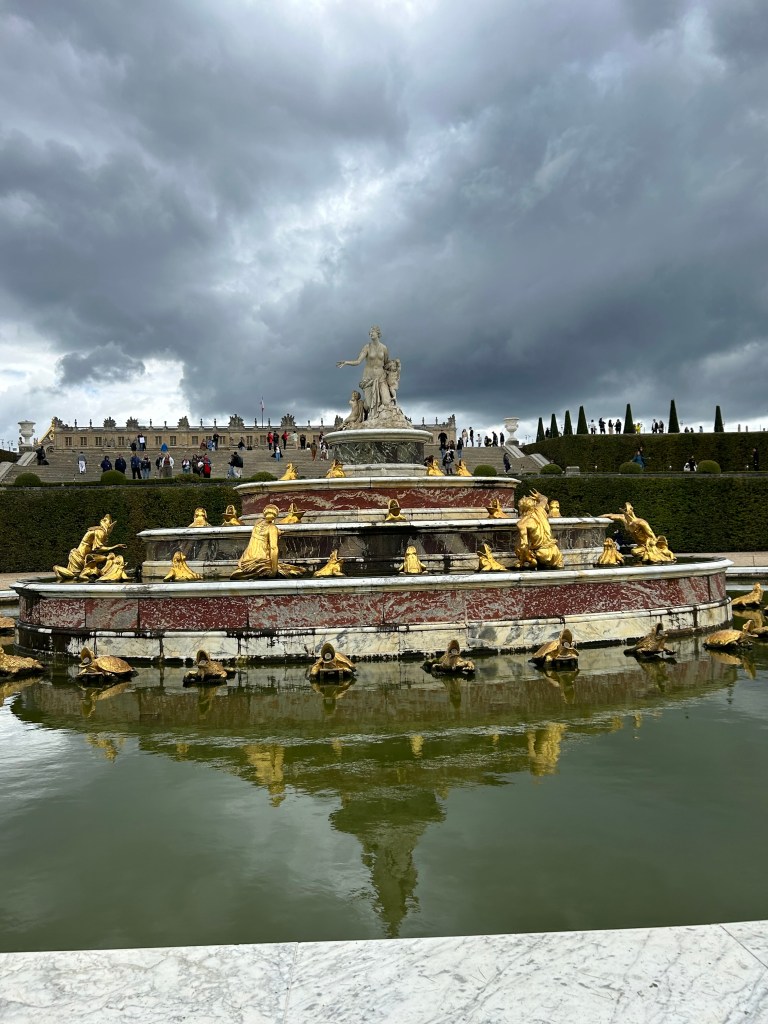
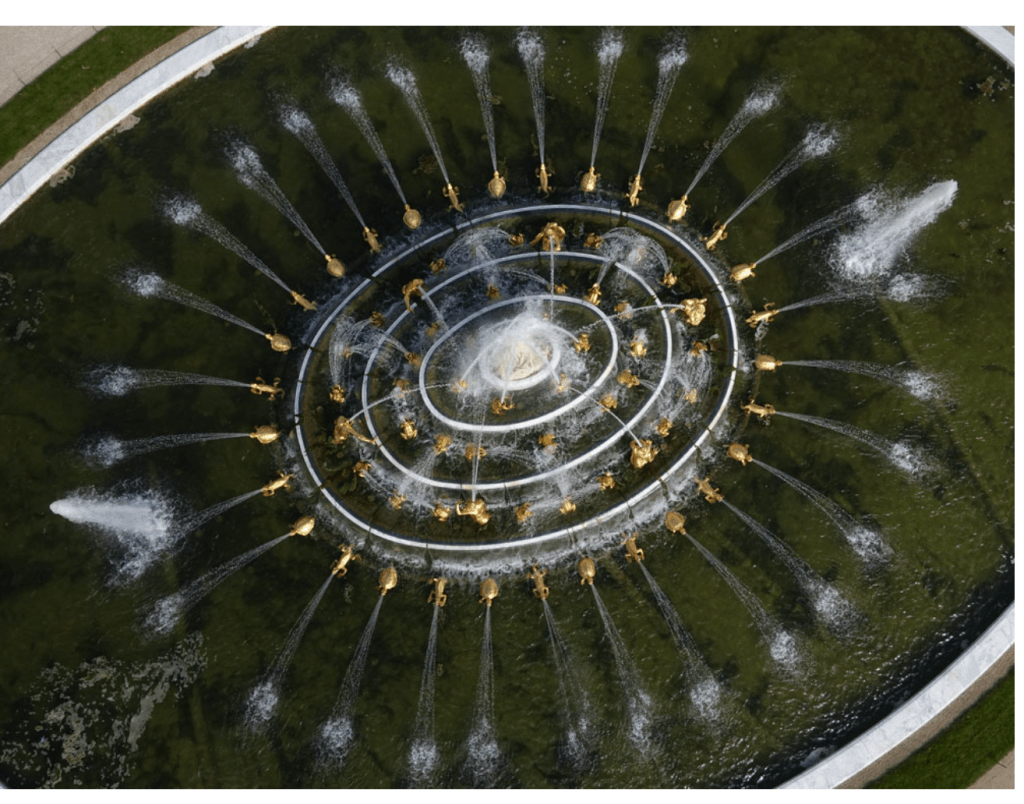
https://en.chateauversailles.fr/discover/estate/gardens/fountains#latonas-fountain
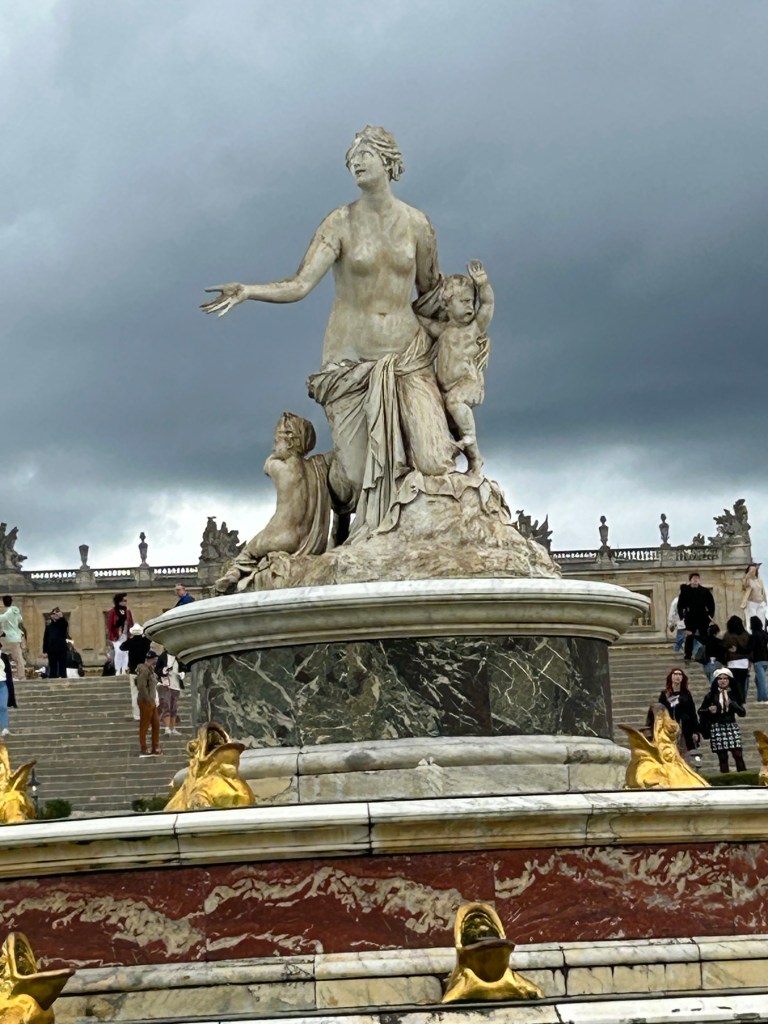
Latona’s fountain was inspired by The Metamorphoses by Ovide. It illustrates the story of Latona, the mother of Apollo and Diana, protecting her children from the insults of the peasants of Lycia and pleading with Jupiter to avenge her. The god obliges by turning the inhabitants of Lycia into frogs and lizards.
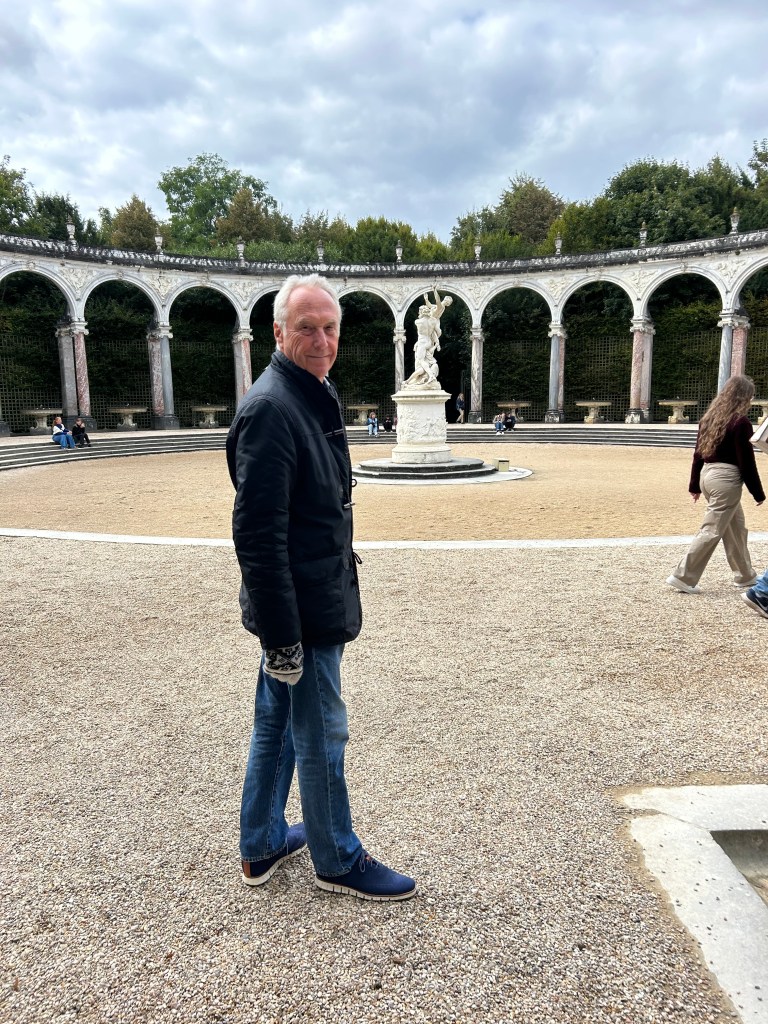
Commenced in 1685 the Colonnade has circular peristyle with a diameter of forty metres is supported by thirty-two pilasters that act as buttresses for the arcades supporting thirty-two Ionic columns. The pilasters are made of white marble, while the columns alternate between deep blue, purple and white marble. This discreet colour scheme helps to offset the whiteness of the Carrara marble in the arcades and the vases on the cornice. The sculpted decor of the spandrels represents cherubs playing music or engaged in rustic games. Under twenty-eight of the thirty-two arcades, whose keystones are adorned with masks of marine or rustic divinities, leaping fountains tumbled into a channel surrounding the peristyle. In the centre: The Abduction of Proserpine by Pluto.
Louis XIV added the spectacular and famous work in gilded head of Apollo riding his chariot. This piece, is based on the legend of Apollo, the Sun god and the King’s icon. It features the god bursting forth from the water in anticipation of his daily flight above the earth.
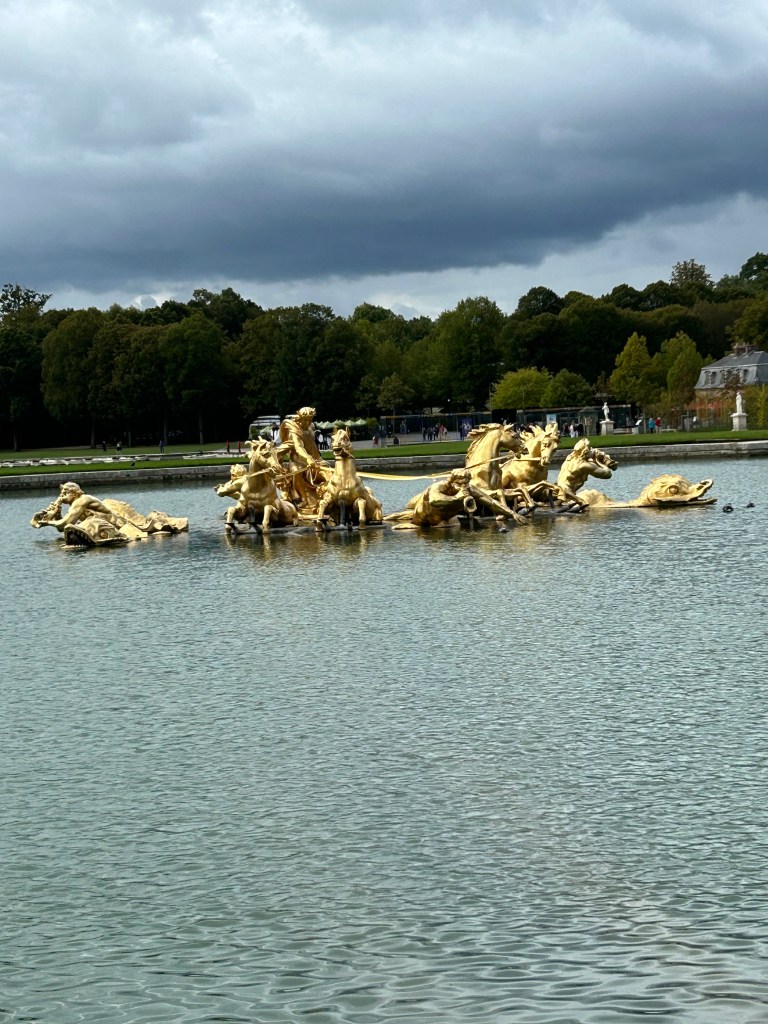
The water from the marshy bog of the area was marshalled into a series of lakes and ponds around Versailles, but these reservoirs were not sufficient for the palace, city, or gardens- all these gardens needed large amounts of water. Great lengths were taken to supply Versailles with water, such as the damming of the river Bièvre to create an inflow in the 1660s, the construction of an enormous pumping station at the river Seine in 1681, and an attempt to divert water from the river Eure with a canal in the later 1680s-very unpopular with the locals. Our guide said that it took 60% of the available water in Paris and surrounding countryside.
The palace still serves political functions. Heads of state are regaled in the Hall of Mirrors; the bicameral French Parliament—consisting of the Senate and the National Assembly —meet in joint session in Versailles to revise or otherwise amend the French Constitution, a tradition that came into effect with the promulgation of the 1875 Constitution.
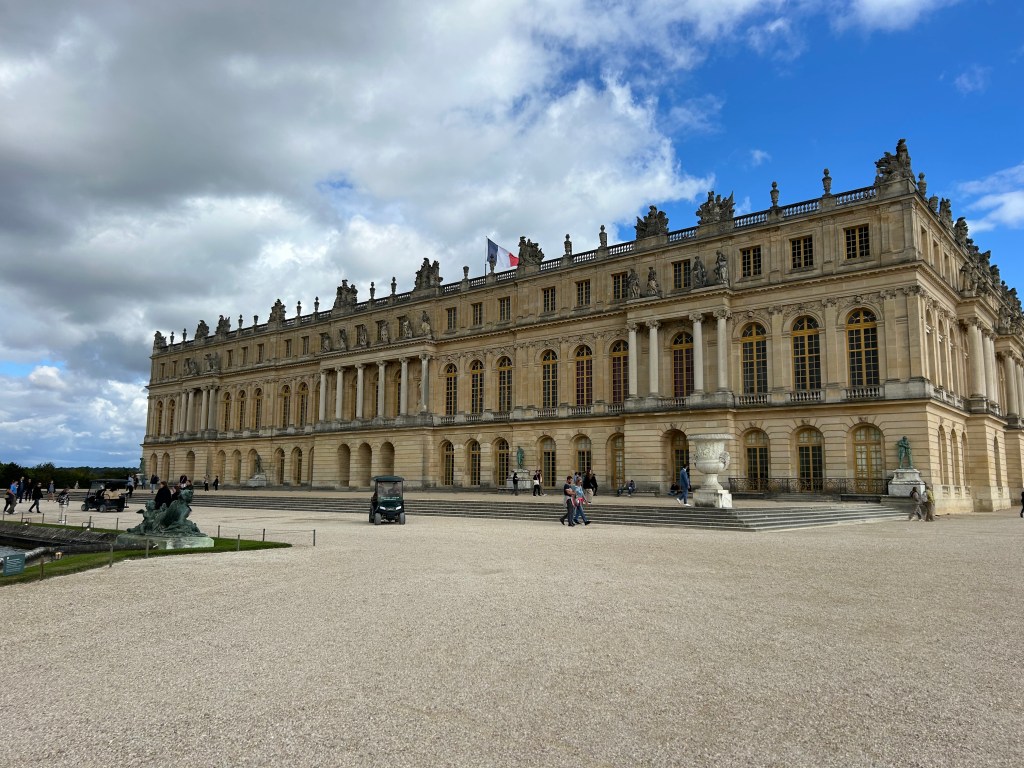
In 2009, President Nicolas Sarkozy addressed the Great Recession before a congress in Versailles, the first time that this had been done since 1848, when Louis Napoleon Bonaparte gave an address before the French Second Republic. Following the November 2015 Paris attacks, President François Hollande gave a speech before a rare joint session of parliament at the Palace of Versailles. This was the third time since 1848 that a French president addressed a joint session of the French Parliament at Versailles. The president of the National Assembly has an official apartment at the Palace of Versailles. In 2023 a state visit by Charles III to France included a state banquet at the Palace.
We returned to Paris by bus.
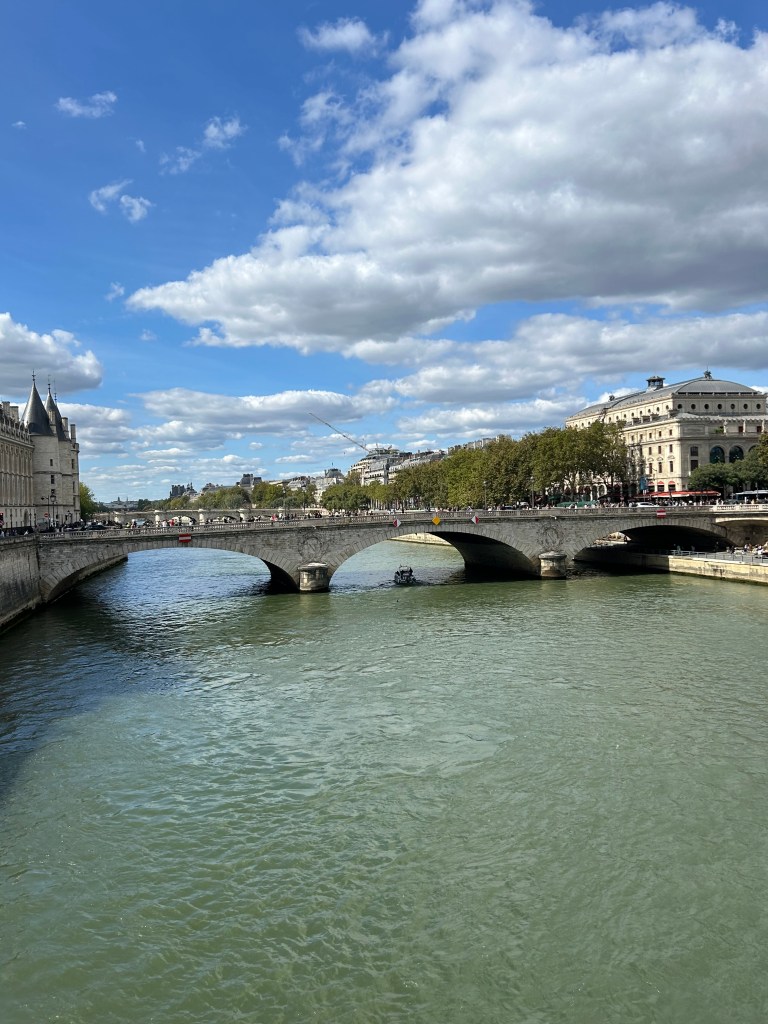
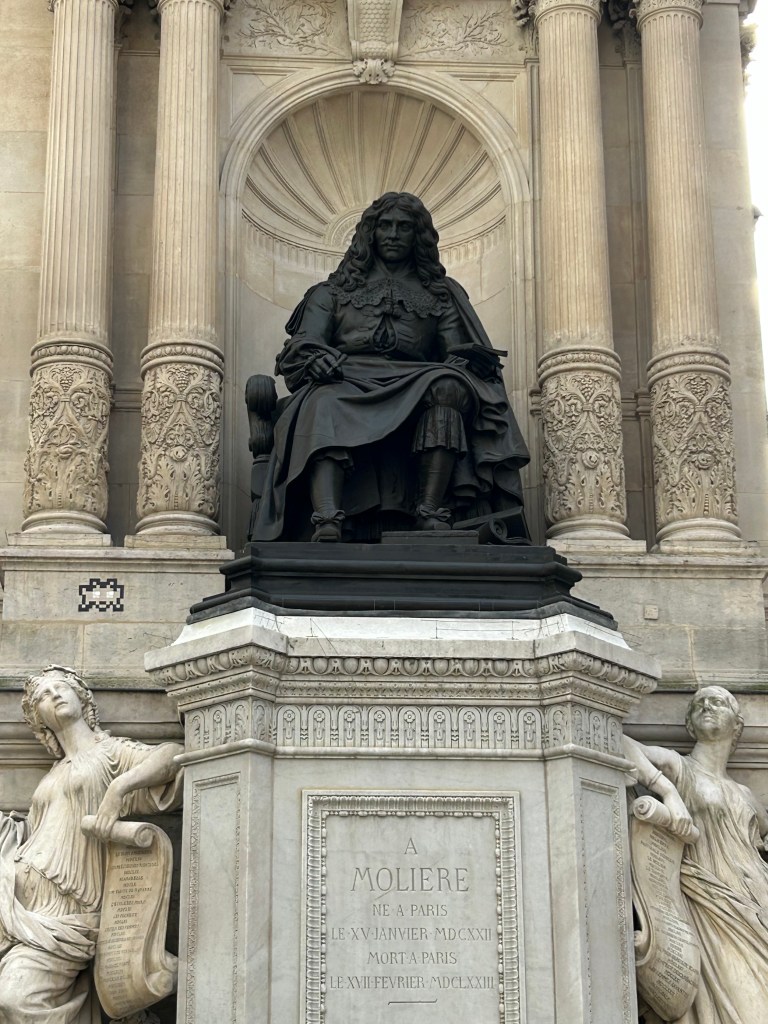
We loved Paris but the cool, wet weather will not be missed.
September 15 Paris to Alicante to Torre de la Horadada
It took all day despite leaving at 6 am to get from Paris to Alicante because no direct flights were available and we had a layover in Barcelona for 4 hours.
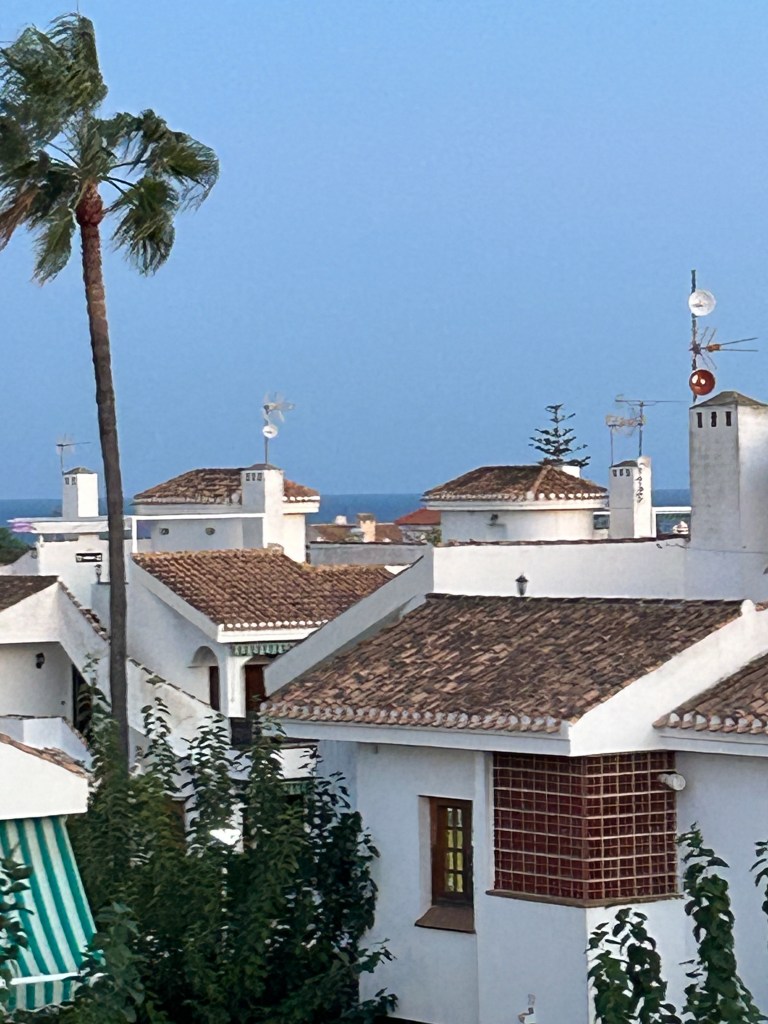
Great to be in Spain. At the condo. Shannon will say, ” Oh, Mom. Those are the same photos that you’ve taken for 35 years! It’s true but I still like them and like taking them. She does, too!
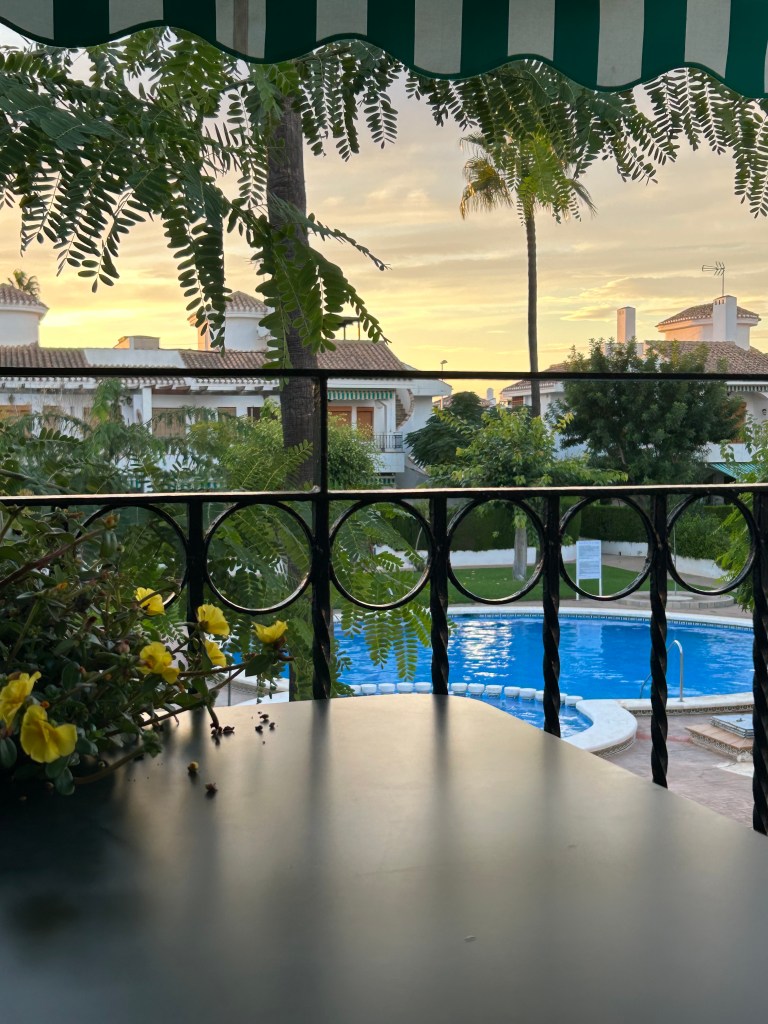
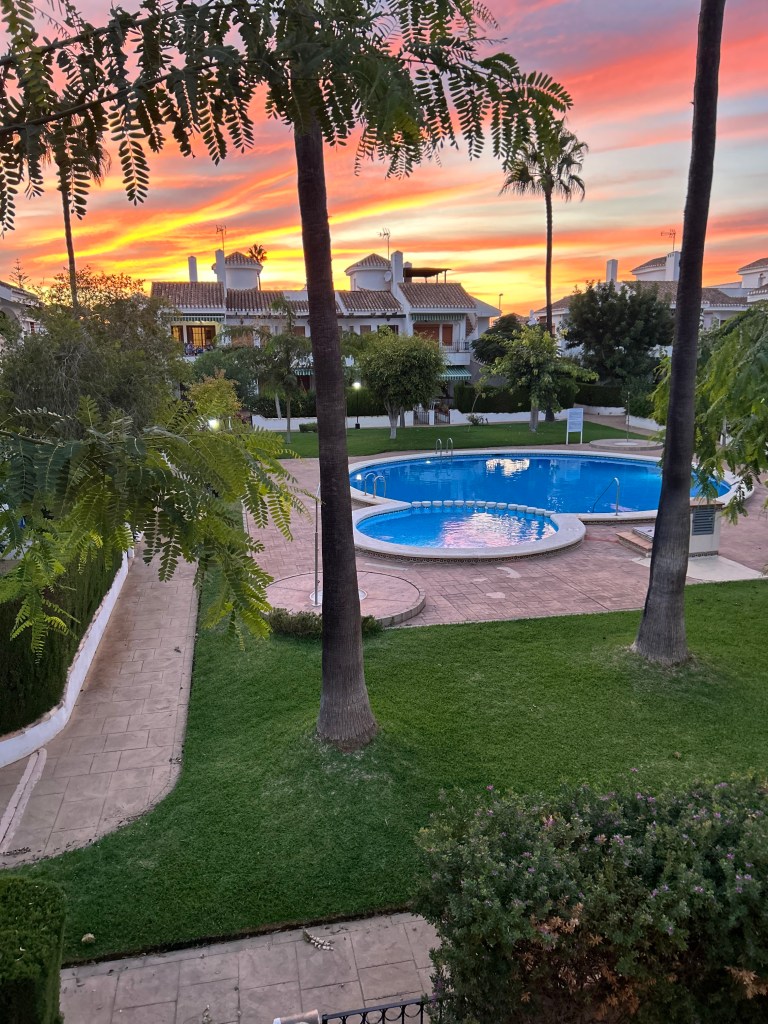
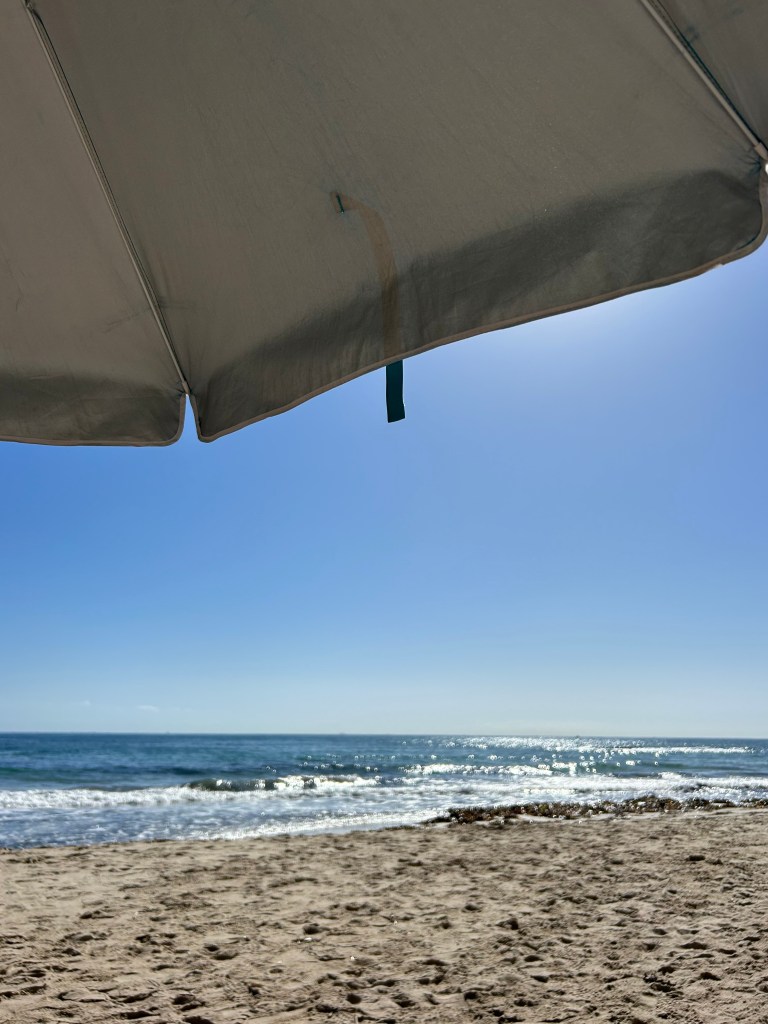
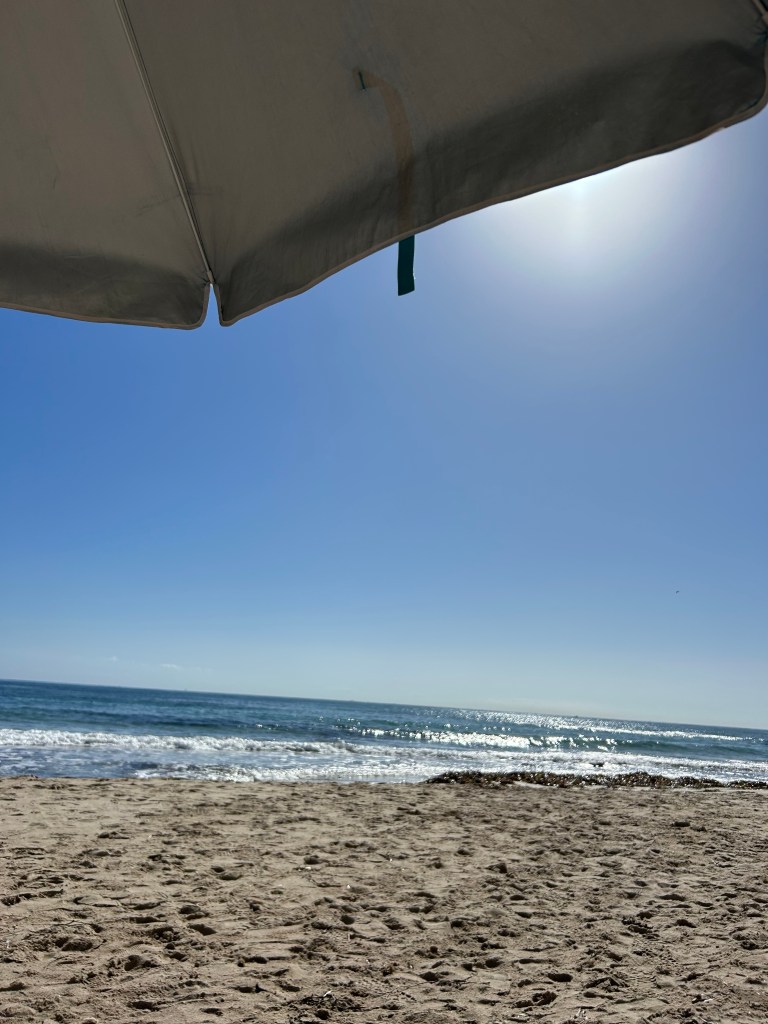
In the sun: 30 degrees. At the beach. In the sea.
Torre de la Horadada
The name of the town has its origin in two factors: the first, the 16th century watchtower; and the second, the site where the tower is found: the point of Horadada (el horadada) which comes from the Spanish word for “bore through” as it is situated on rocks made up of small caves developed by the water boring the rock.
From 1905 until the present day it has been property of the counts of Roche, who transformed it into their summer residence. During the 19th century the tower was used to make signals with an optical telegraph. In December 1995 it was registered as a property of cultural significance within Spain’s Historical Heritage as a monument.
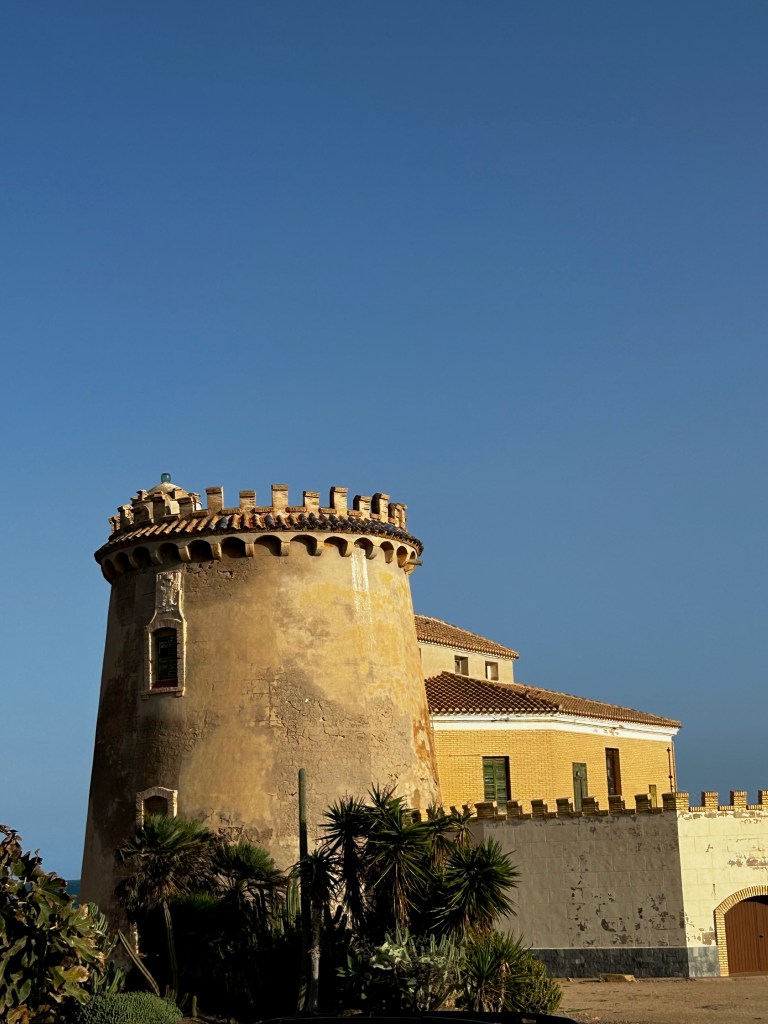
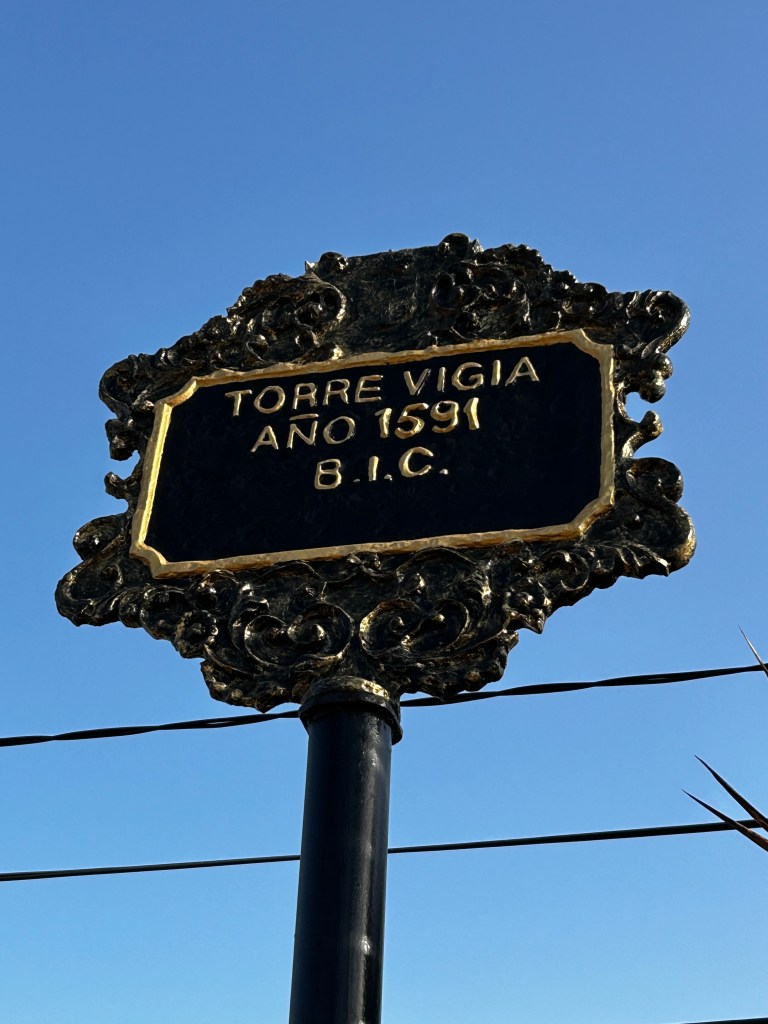
Torre Vigia is classified as “Asset of Cultural Interest” according to the sign in front of the tower:
The coastal watchtowers are a series of military constructions built in the 16th century (although there are traces of the existence of similar constructions from ancient times and the Middle Ages) along Spain’s Mediterranean coast to defend the territory from berber pirate’s attacks, who disembarked on the coast and plundered and destroyed towns and rural settlements.
King Charles I of Spain was the one who conceived a defensive system based on buliding these towers along the Mediterranean coast. However, most ot the towers were built during his son Philip II’s reign.
In 1568, King Philip II requested his advisor Vespasiano Gonaga to survey and design fortifications in the Kingdom of Valencia. Juan Bautista Antonelli designed this watchtower with round floor, thick walls and slope elevation (thicker walls on the base progressively becoming thinner towards the upper part). Construction of the tower started in 1591 with two floors assigned to accommodate the guards or for storeroom for ammunitions or provisions, a stone or wooden staircase between the floors and giving access to the terrace where there were sentry boxes for the coast’s surveillance. The access door was raised above ground level and a ladder had to be deployed by the guards after recognition of the person before access to the building was granted.
Back to our routines, including the 5 km walk down to the paseo, past the cafes, the Marina, the Torre, the beach and back.
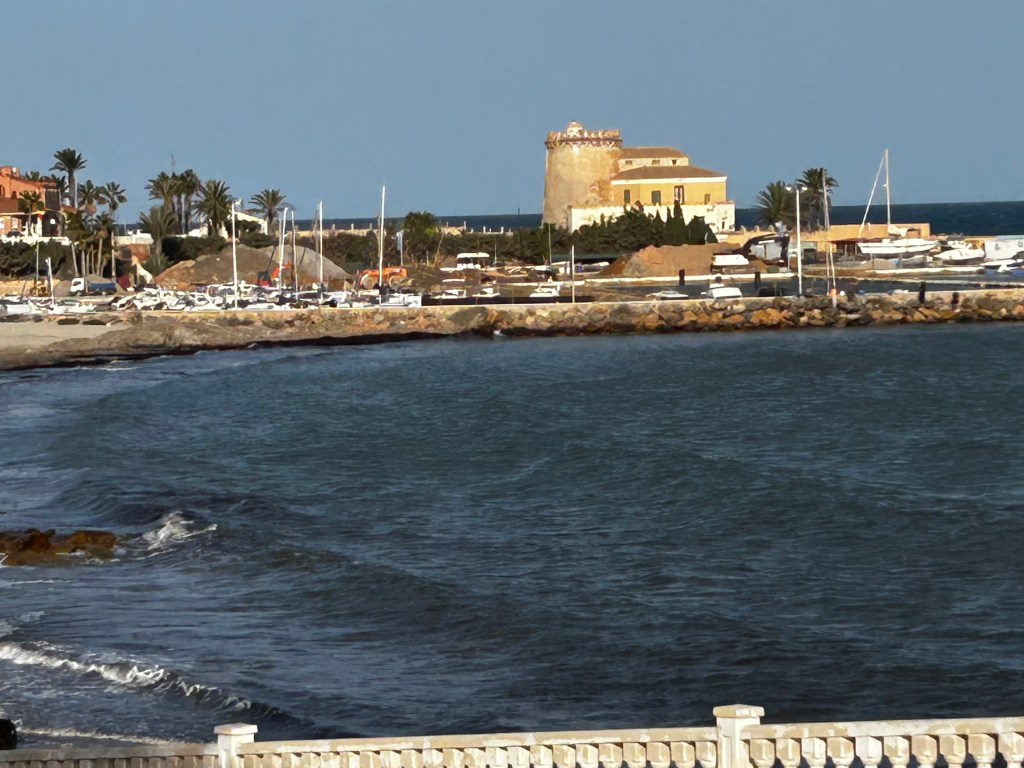
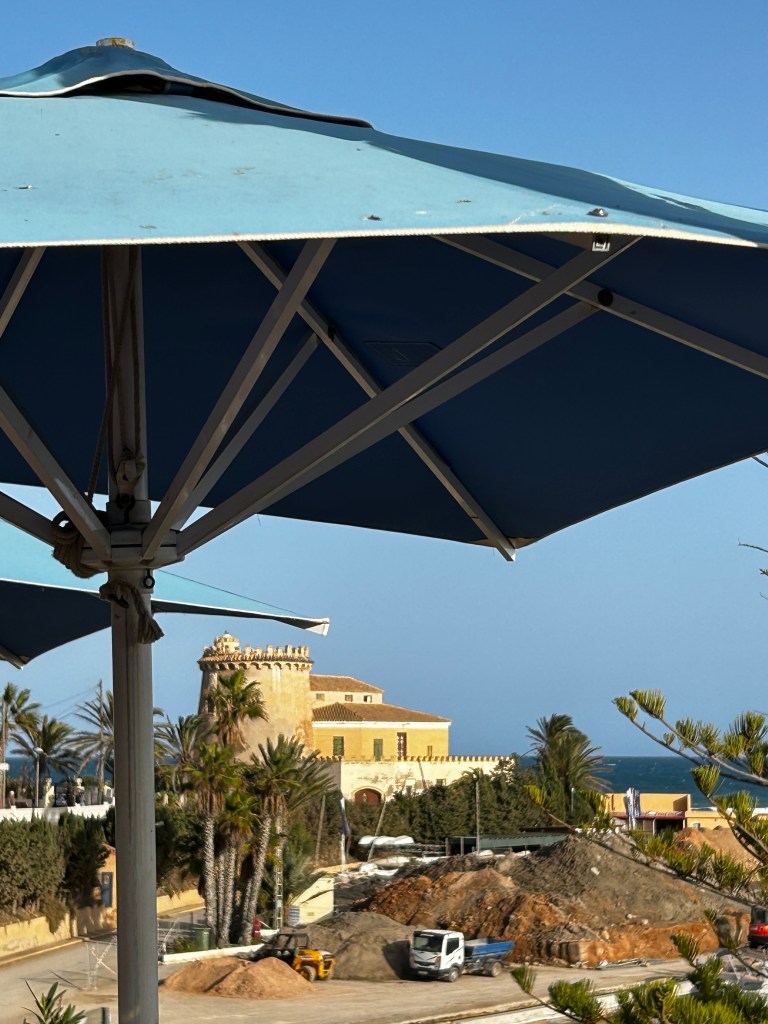
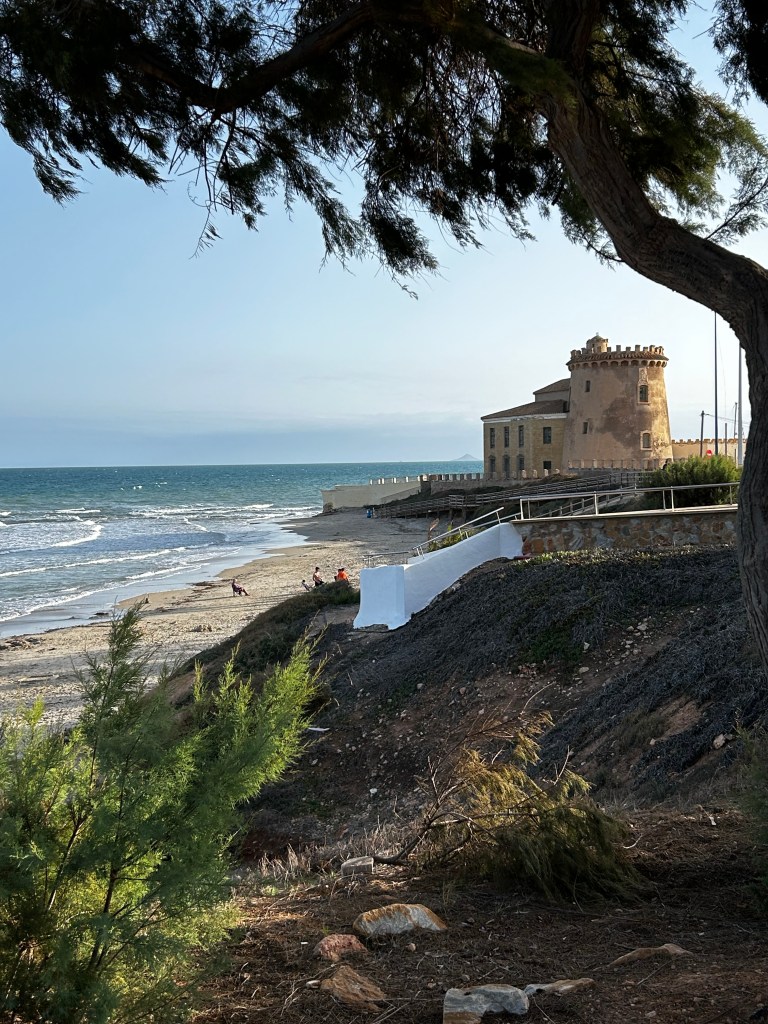
Back to dinner with friends.
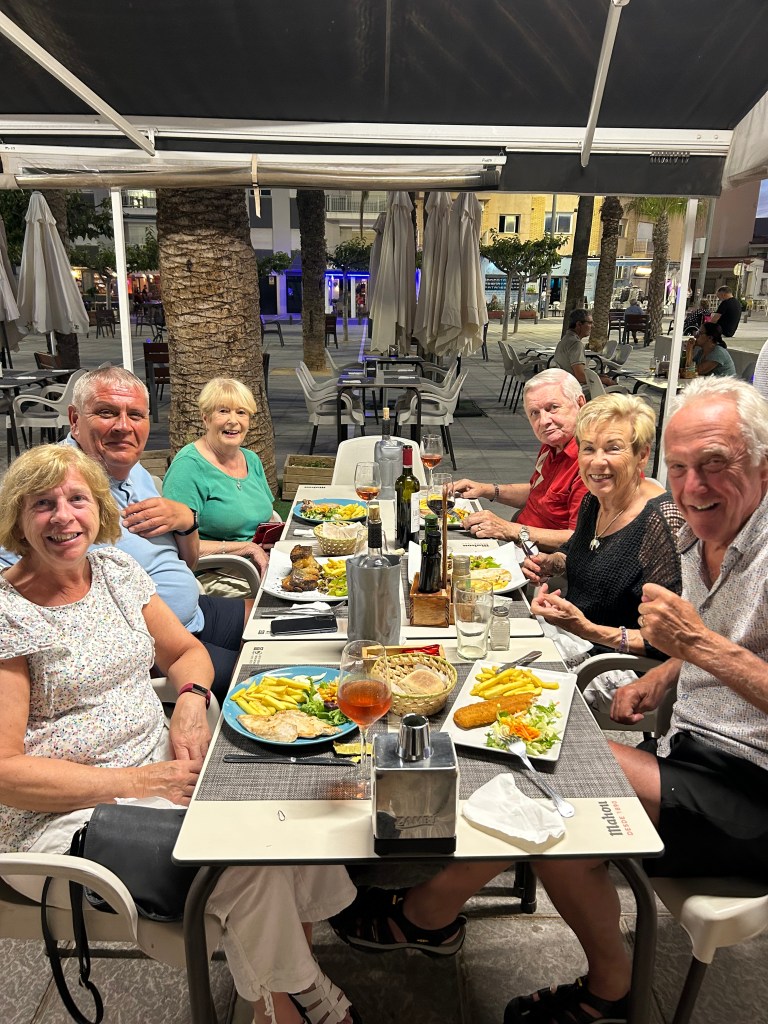
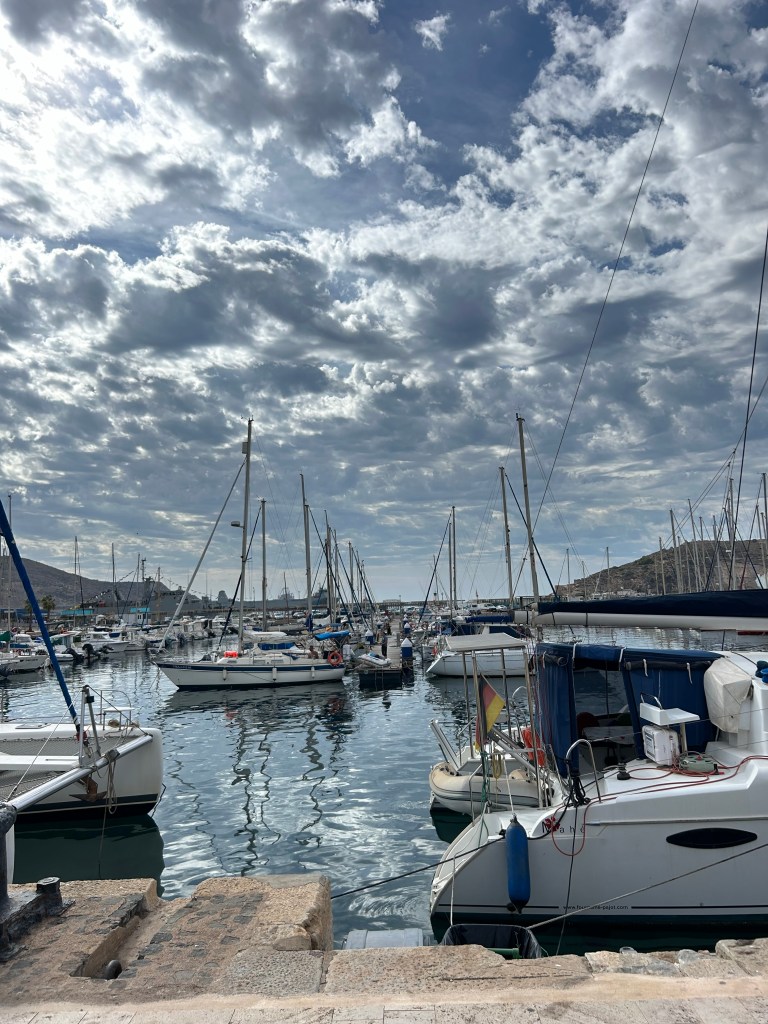
Day trips to Cartagena
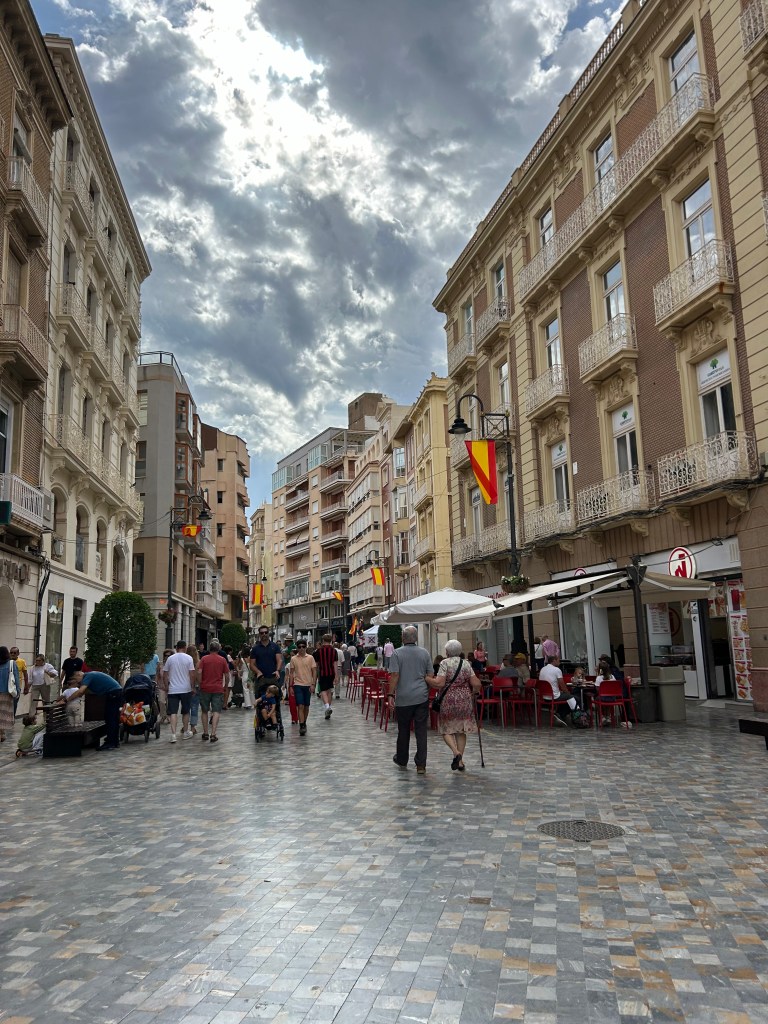
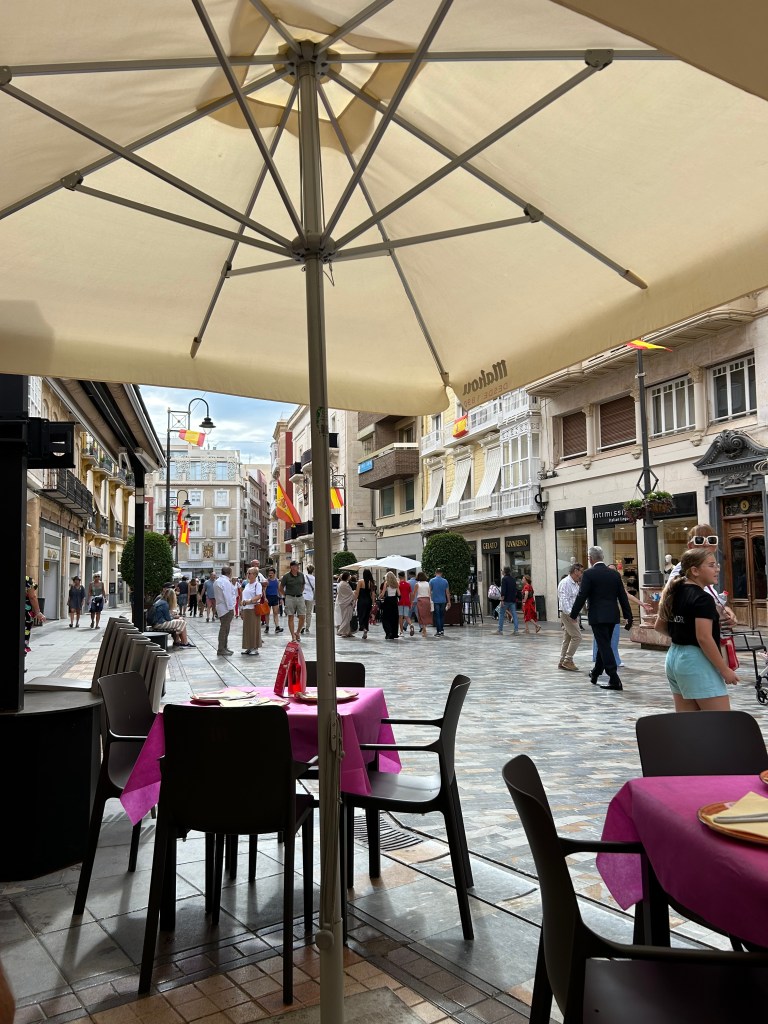
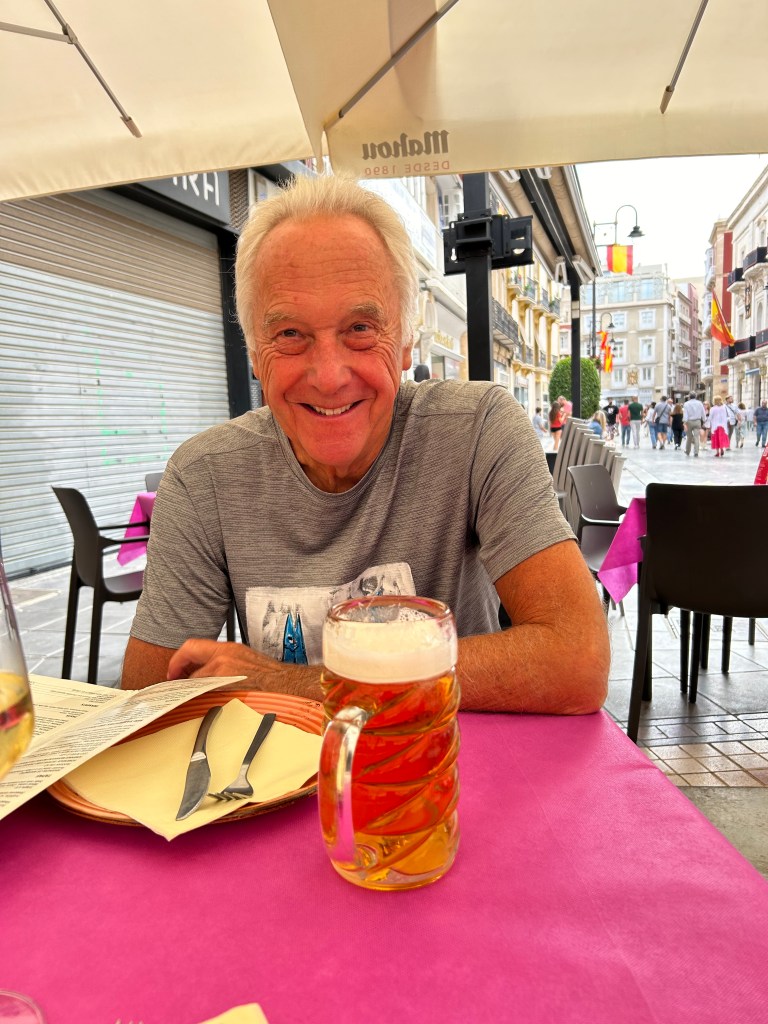
Walk the main street of Cartagena.
Have lunch
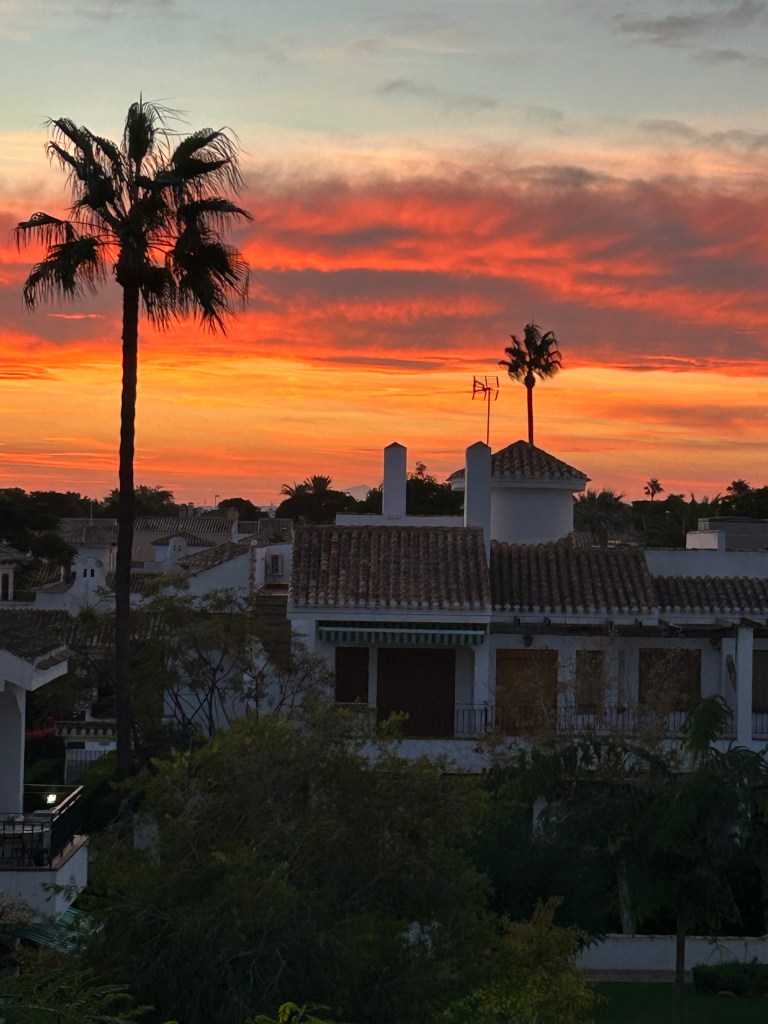
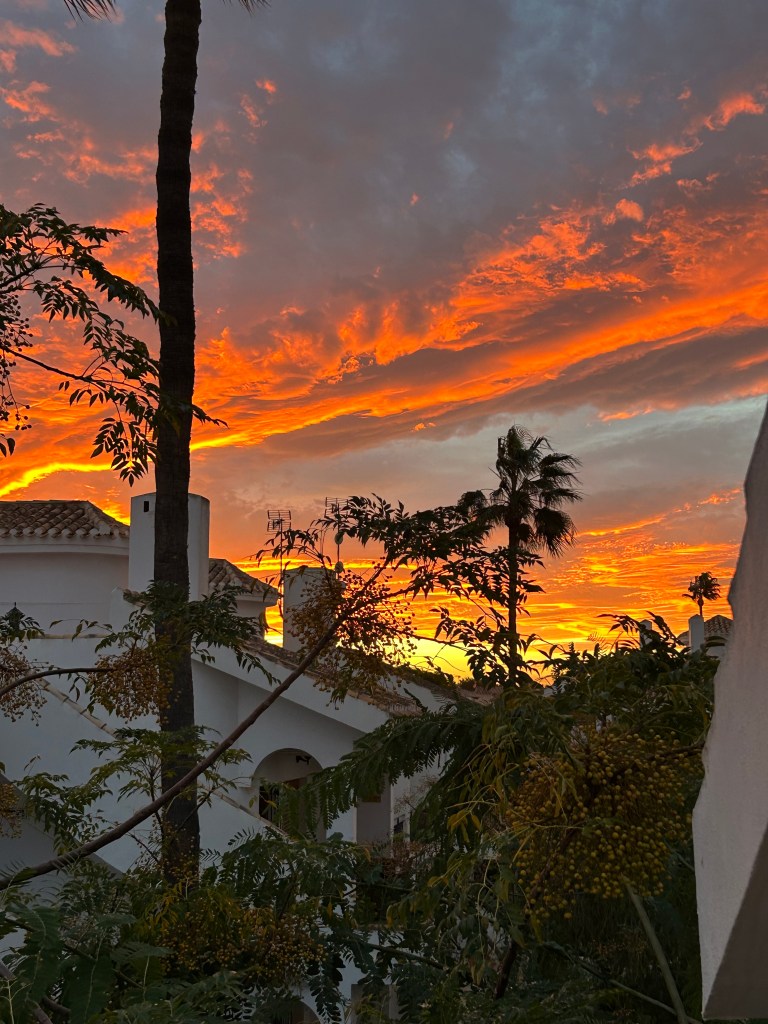
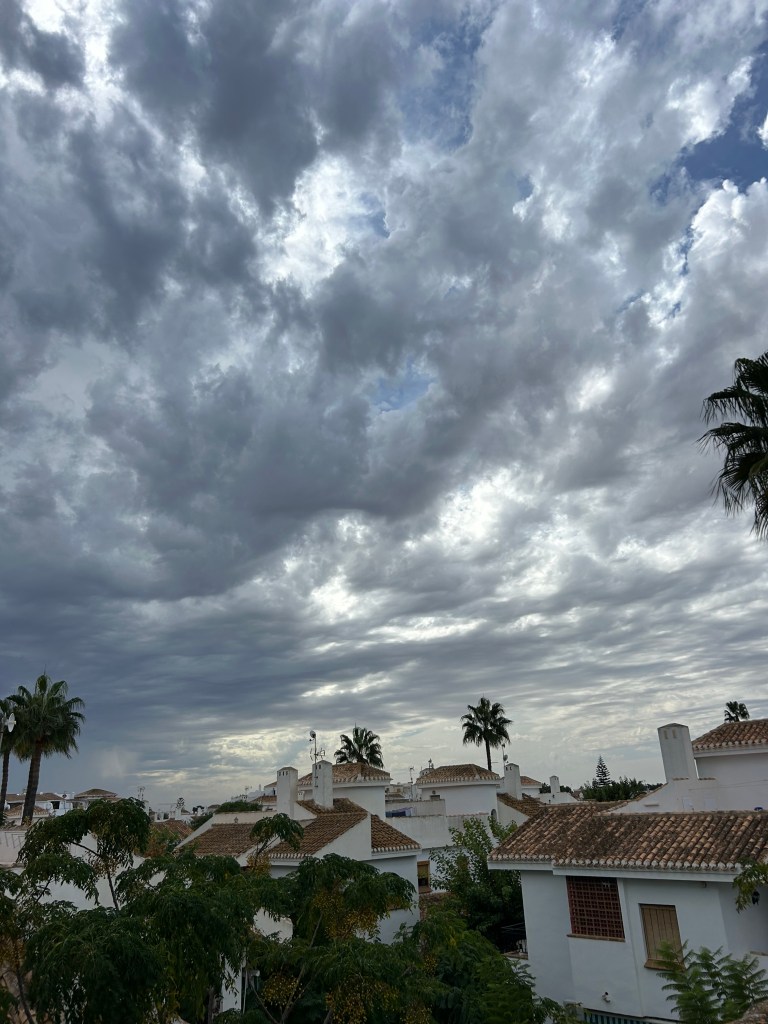
Home to an amazing sunset
We were so fortunate to have time with Pat and Vic Slobodian who own a house in the Torre and who live in Ontario but always several hours away. It was Valentina who first brought me to Spain with my family in 1989 to rent a condo for three weeks in July. New units like the one we rented were for sale and we bought one. So we manage two dinners together, the first while son, Stephen, was here.

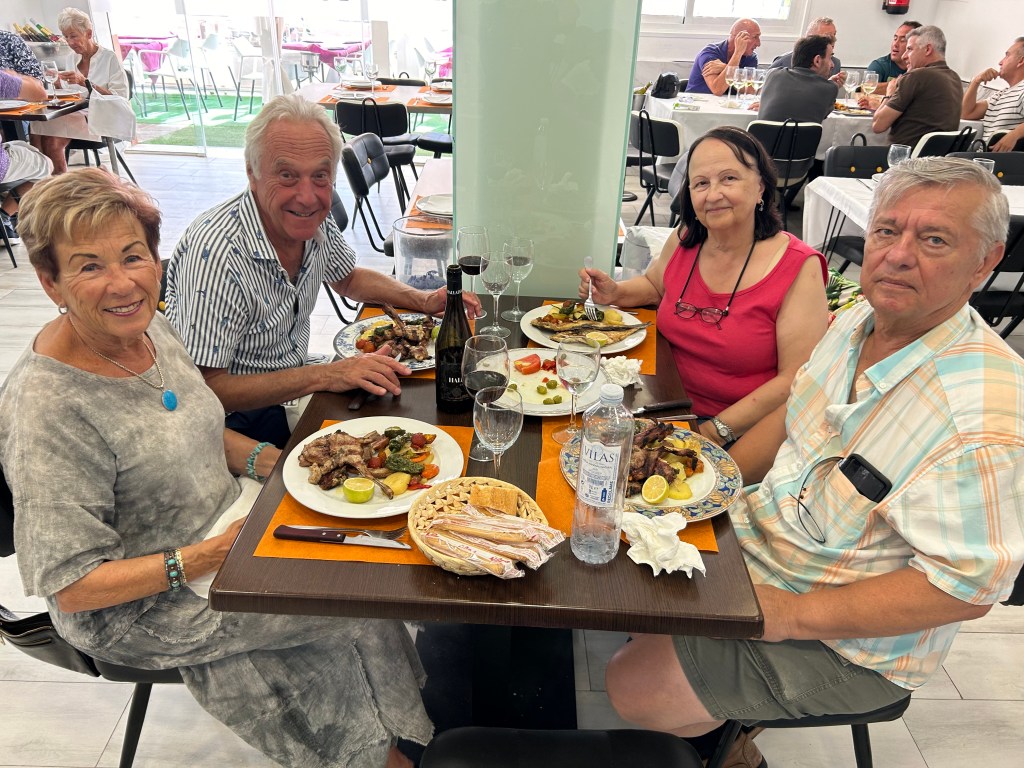
October 20 to Nov 1 Denmark and Sweden.
GoWay Travel organized our 12 day trip around my CARN Conference in Malmo.
October 20 Copenhagen, Denmark
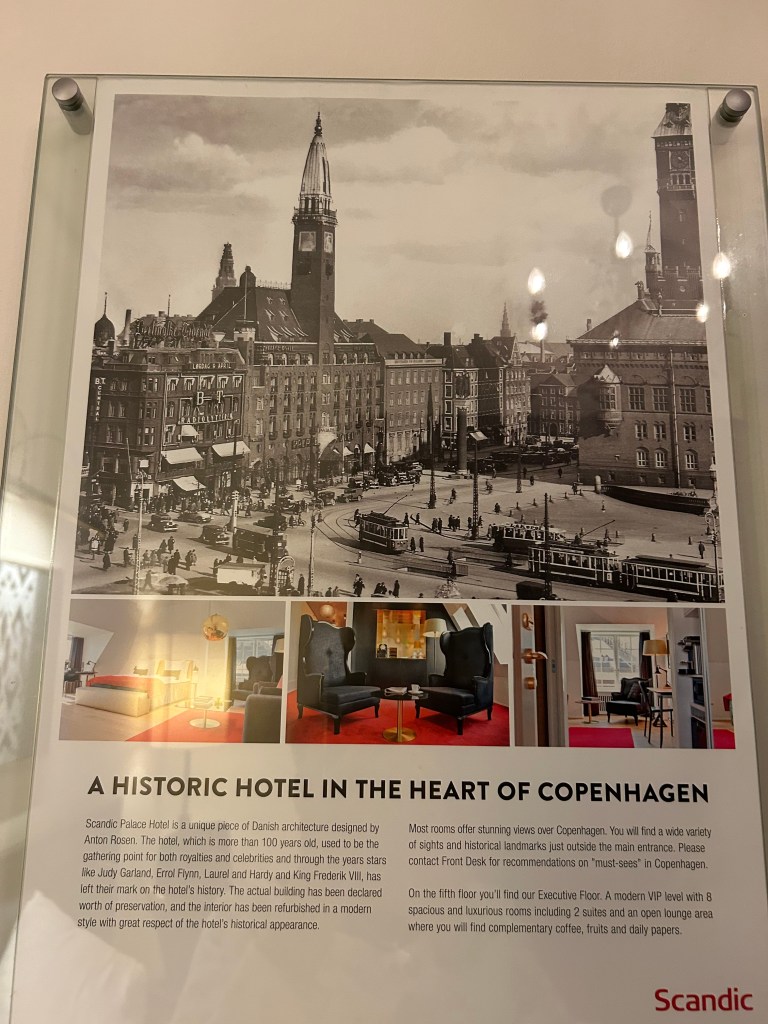
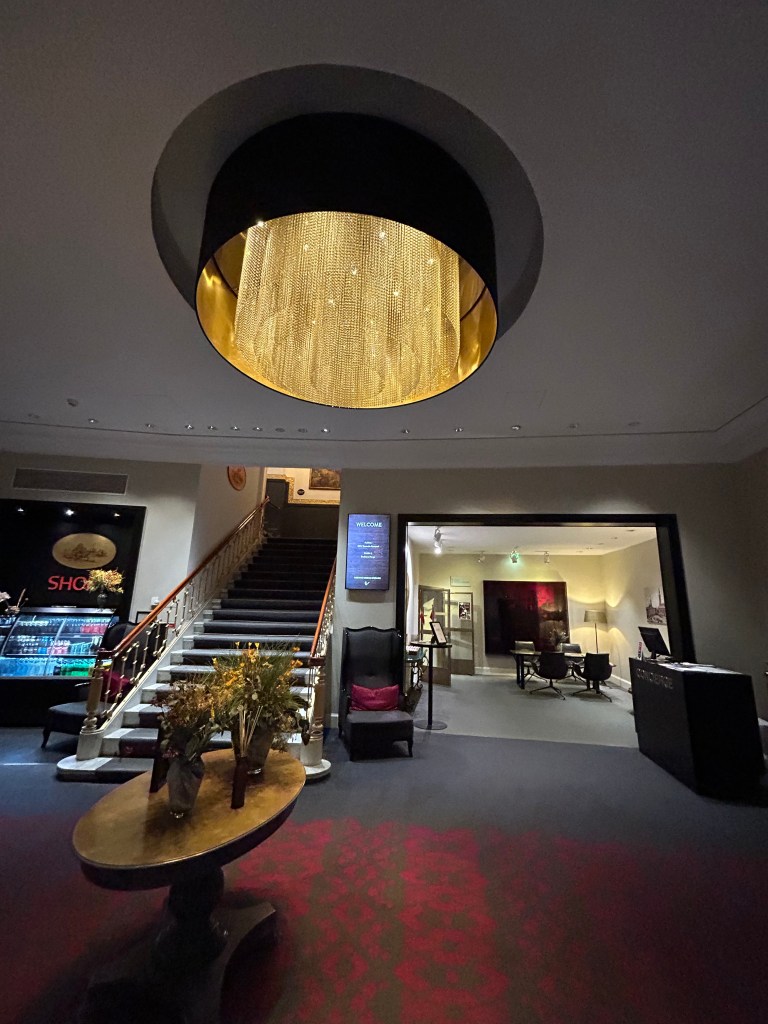
After a three-hour flight, we arrived in Copenhagen, got our luggage and boarded the train with our three-day pass without incident. We walked about 10 minutes from Central Station to our Scandic Palace Hotel. We were right on the square in front of the City Hall with the Metro station and a block from Tivoli Gardens.
Because our meeting point for our boat tour and walking food tour were not clear, we took the metro (a challenge with our knowledge of Danish) to Nyhavn (Called New Harbour but has been there 300 years) to find the Canal Boat pick-up point. This was a challenge, too, as we walked both sides of the canal inlet until we finally found it. No one we asked had any idea where it was!
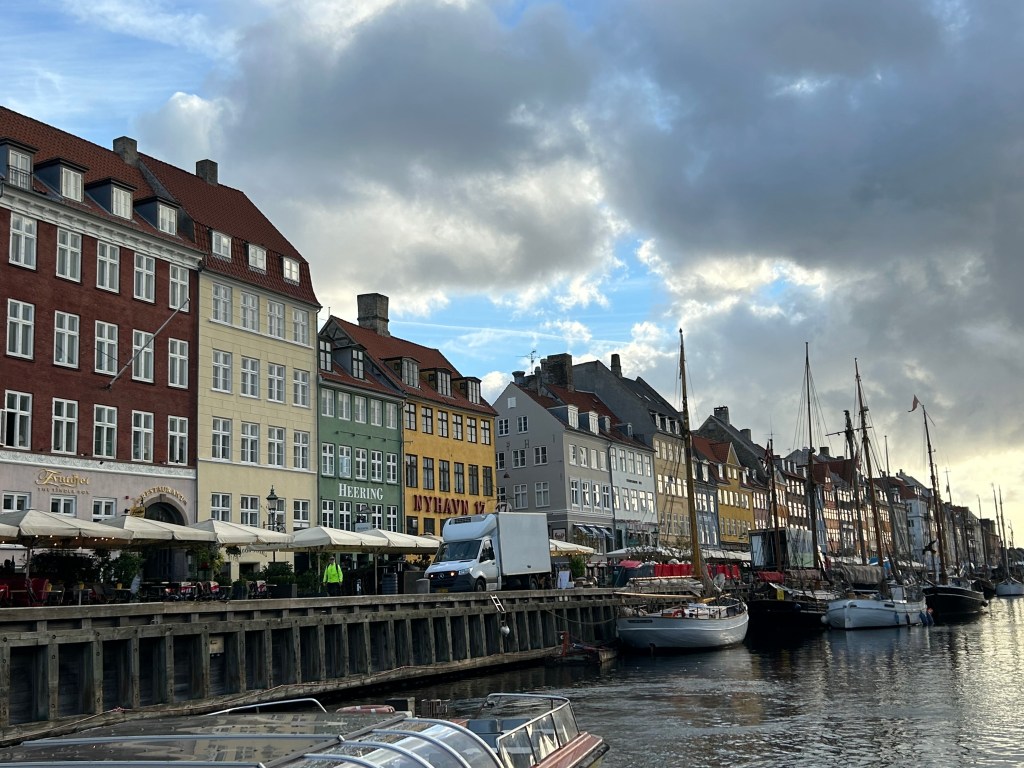
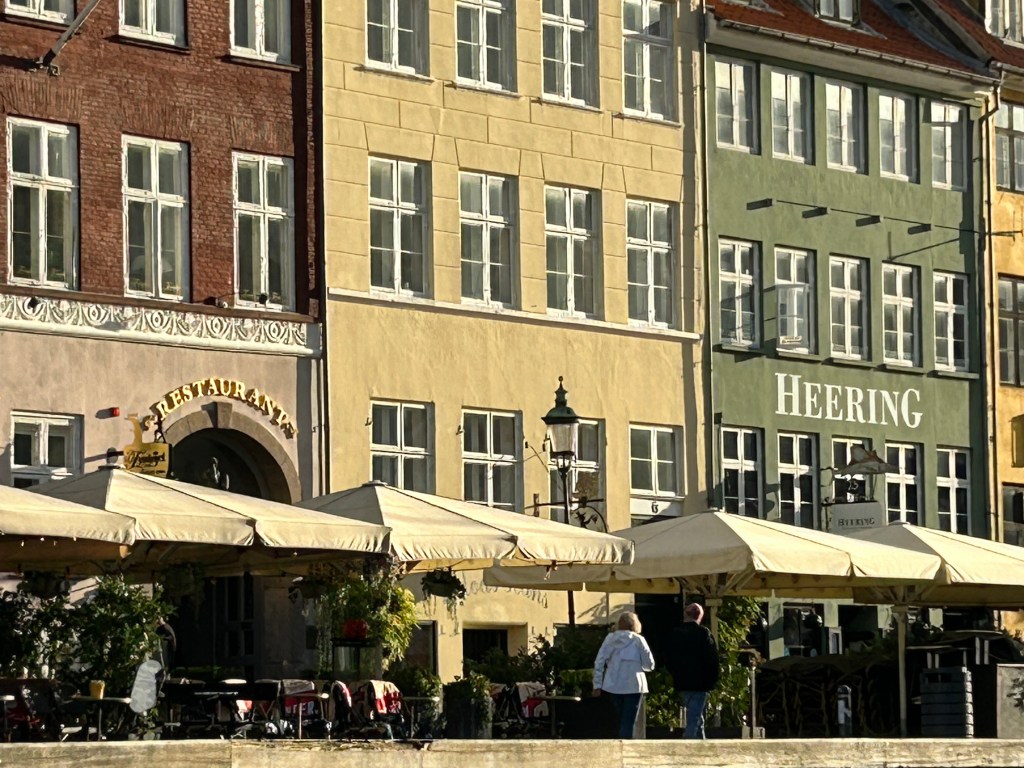
But we tracked it down!
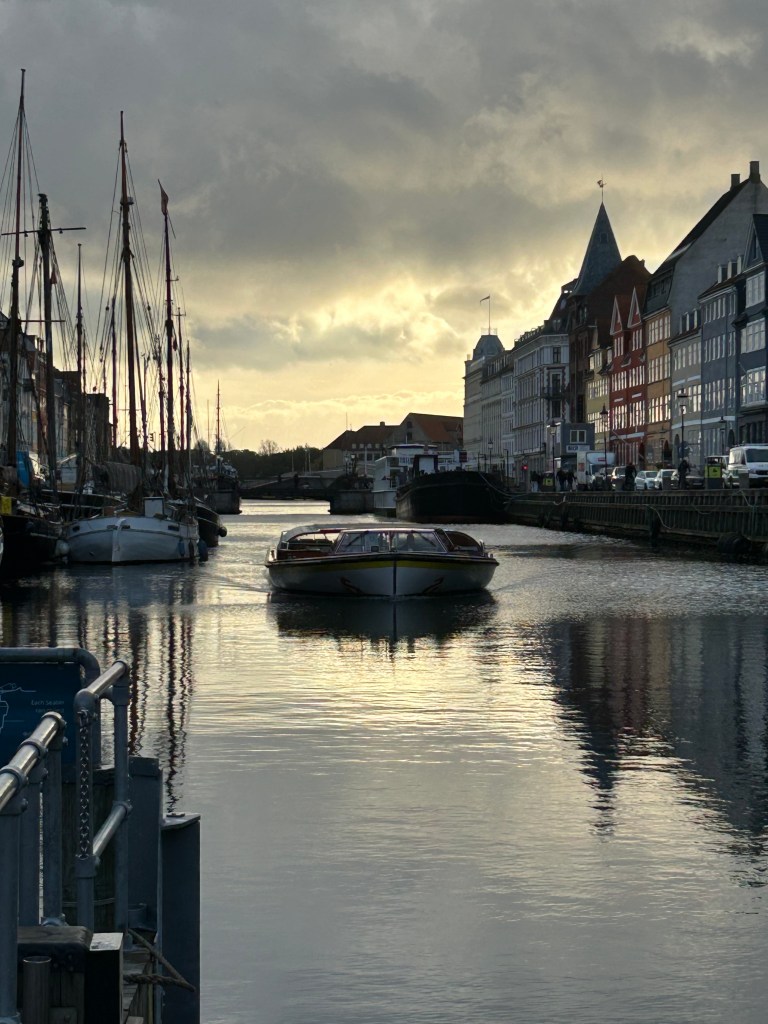
The sun was going down and the cafes and restaurants had their propane heaters and blankets ready for customers. The Danish seem to drink and eat outside no matter the weather.
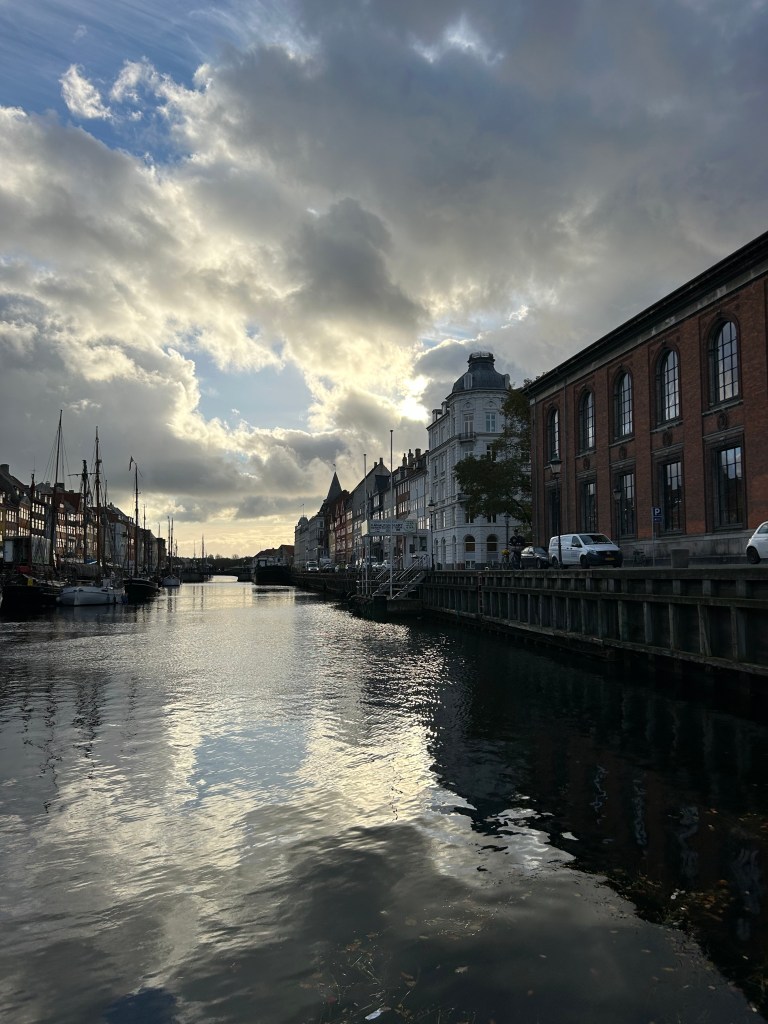
We then took the metro and walked to the location of our walking food tour which was a large food court in two buildings.
We had been given no meeting point so we tried to figure out the most logical spot. We returned to City Hall Square and had a hamburg at Hard Rock Cafe.
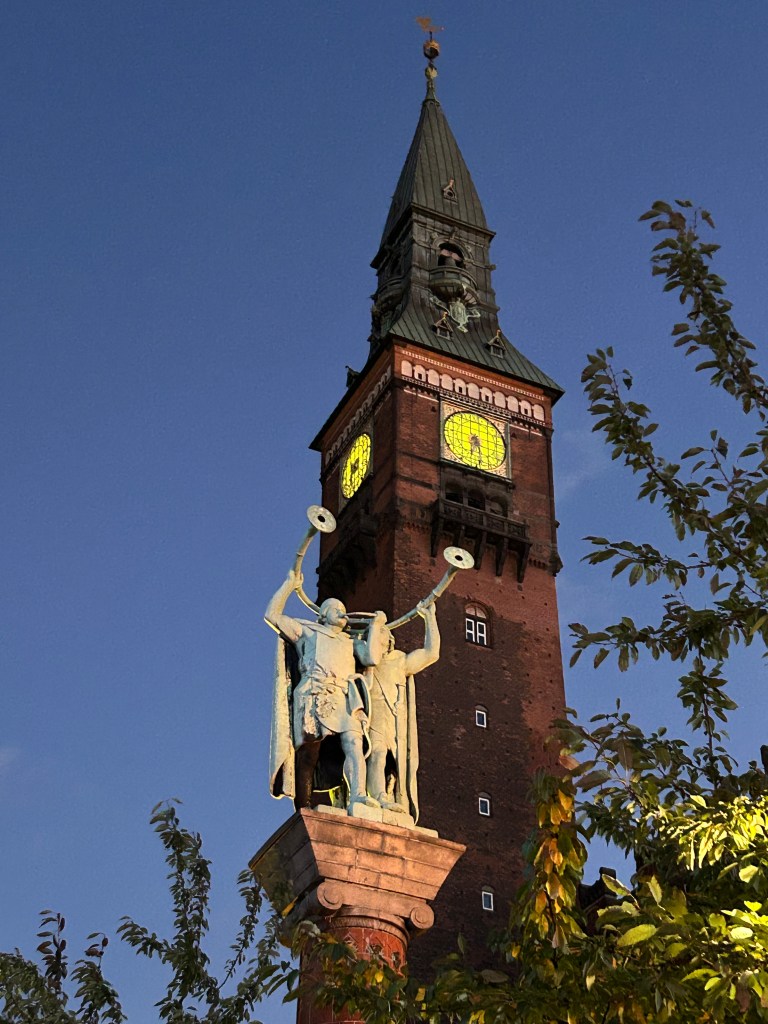
October 21, Copenhagen
We arrived early for the canal boat tour and started the tour sitting outside on the boat but once we turned to facing the wind, went inside.
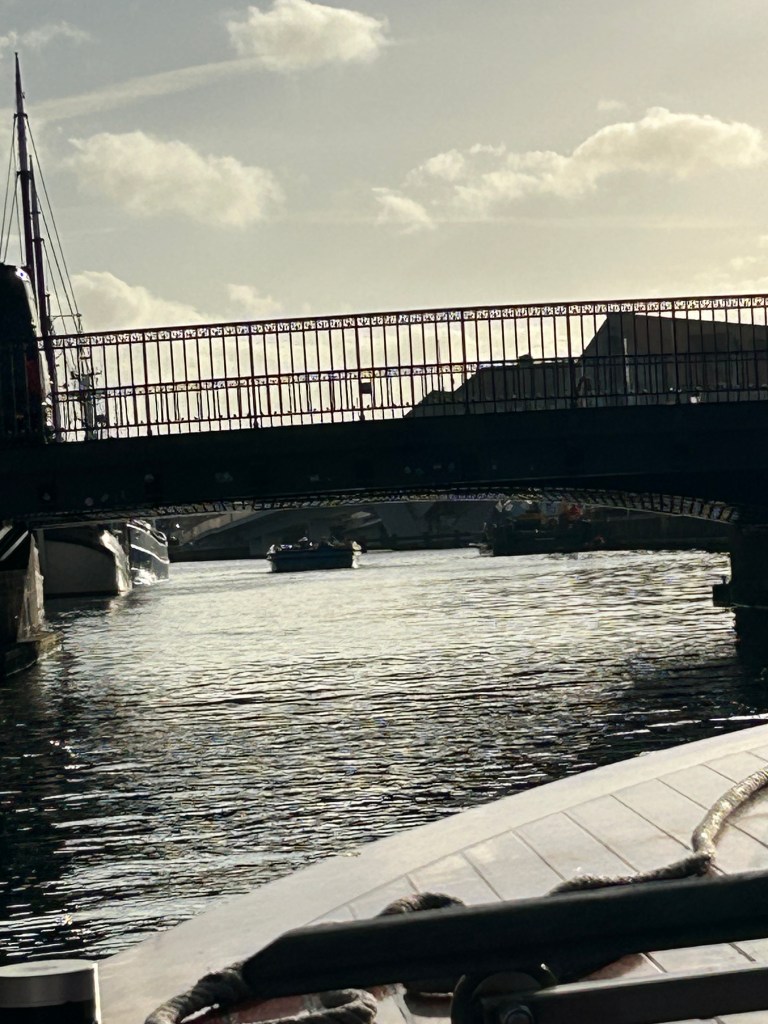
Beside the captain of the boat, a man was employed to ensure that no one stood up while we were going under the bridges- I guess it has happened!
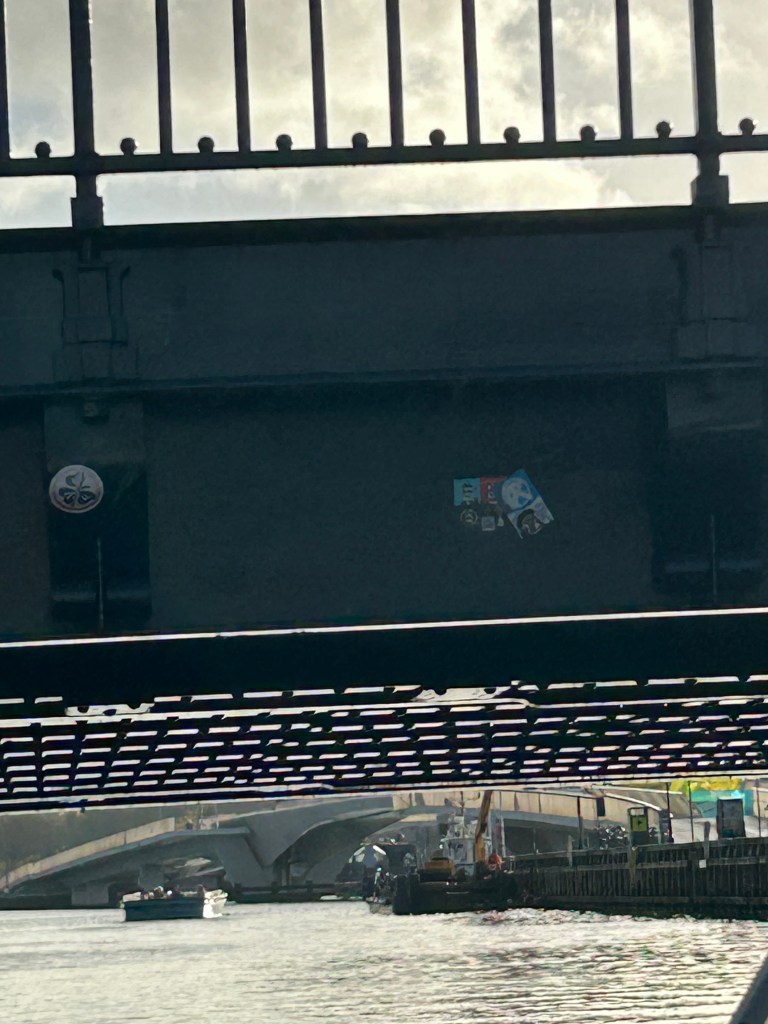
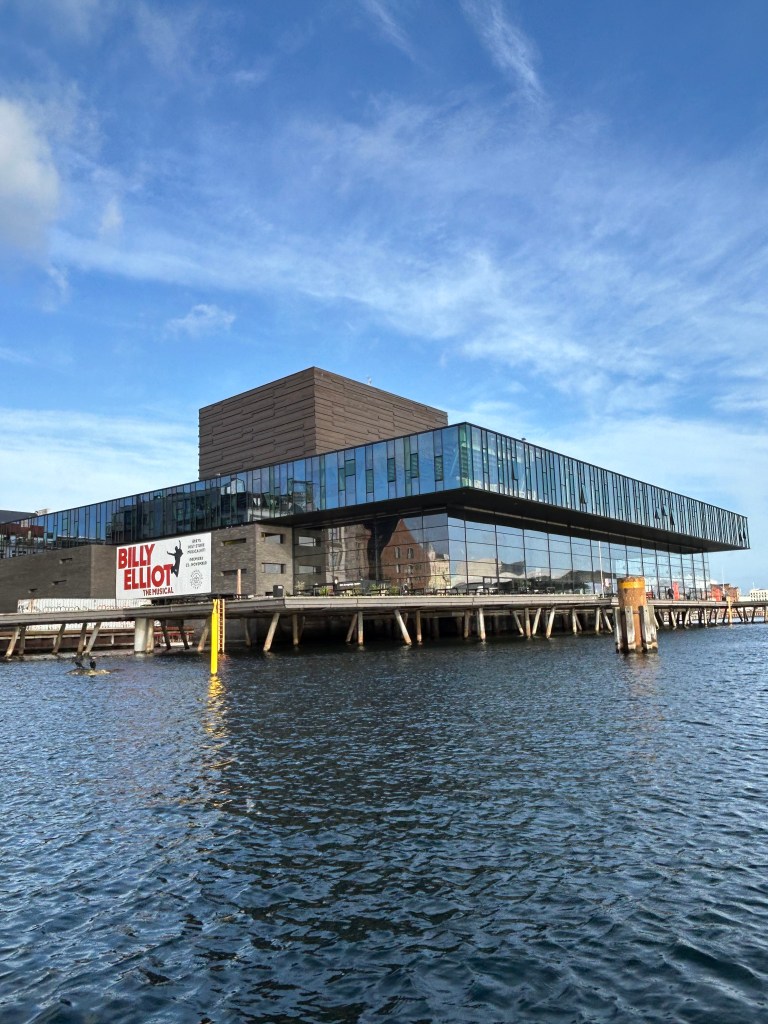
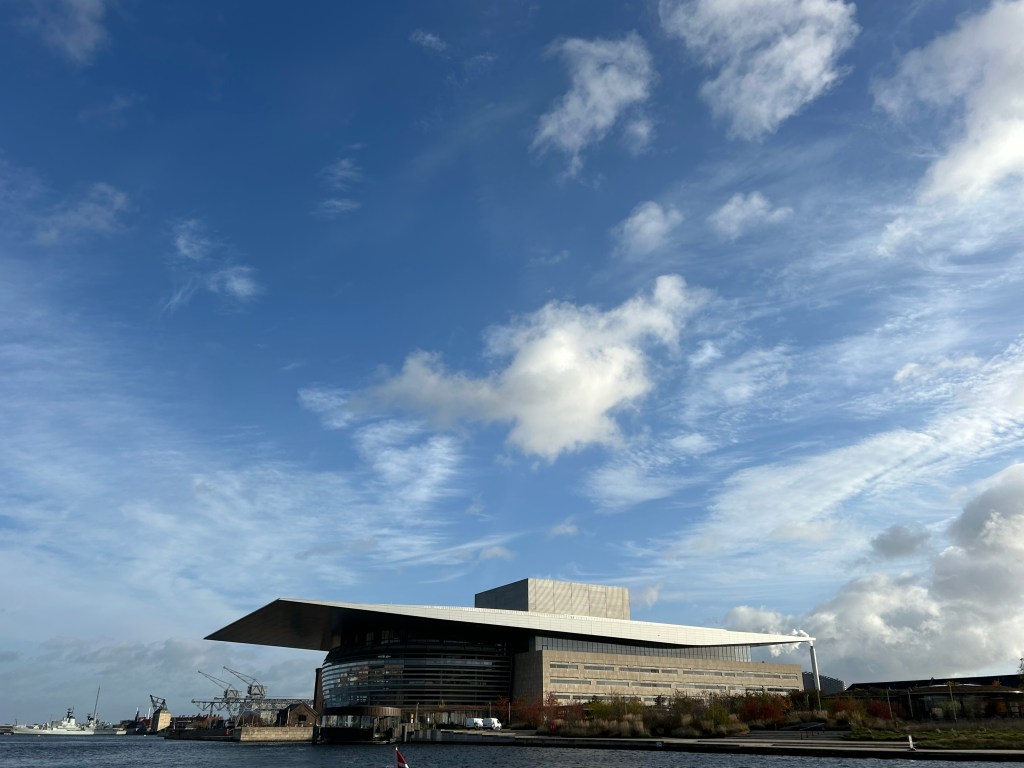
After the canal boat tour, we scurried over to the Food Buildings for 11:30. We walked the Food Courts up and down looking for the Walking Food Tour. No luck despite asking many people.
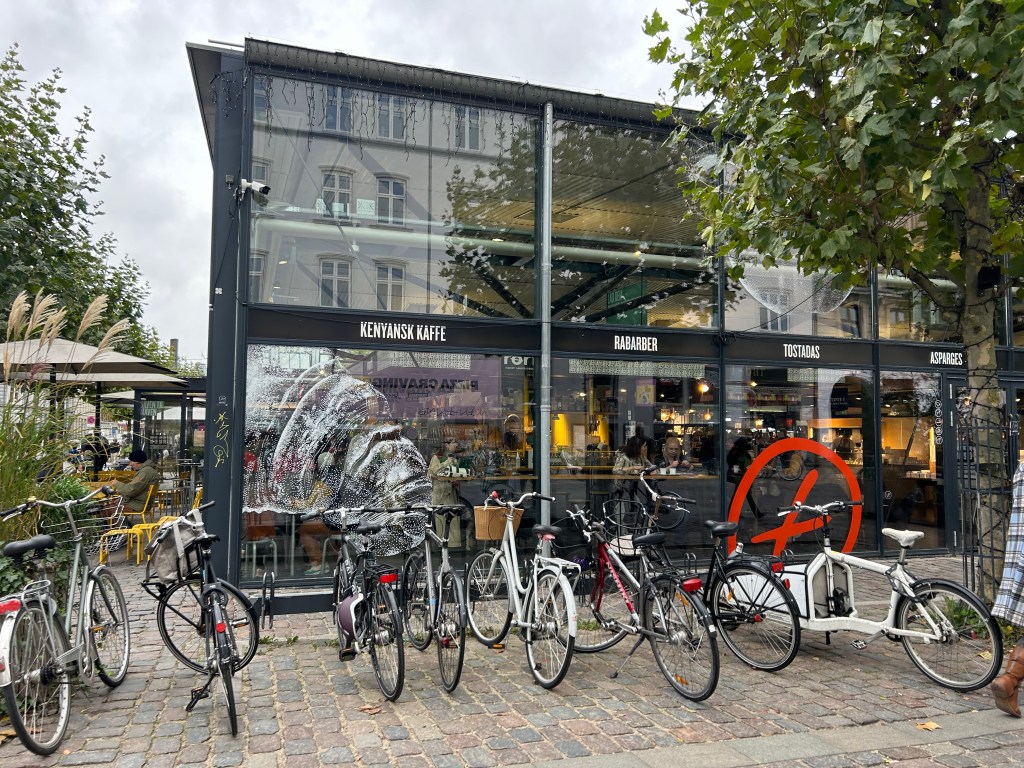
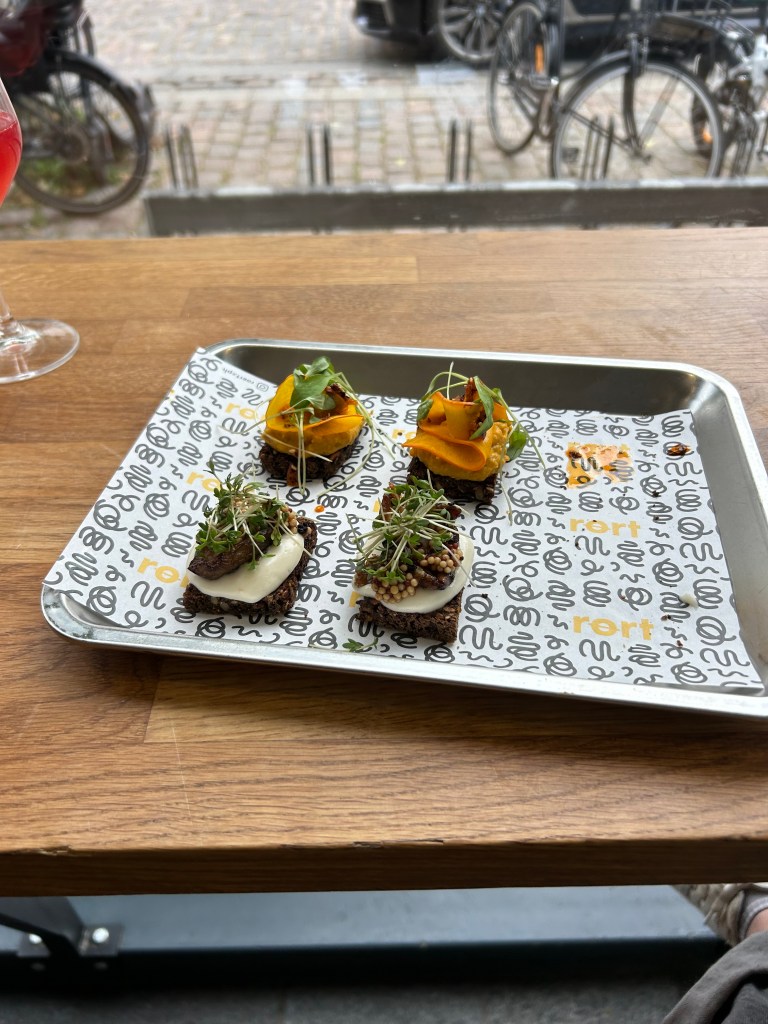
Finally we called the tour company and were connected with Peter, the guide, and the other member of the group, Ally Hefner, a U S Broadcasting student studying a Business credit in Dublin. We started with open-faced sandwiches which are very popular and particularly good in this restaurant in the Food Court.
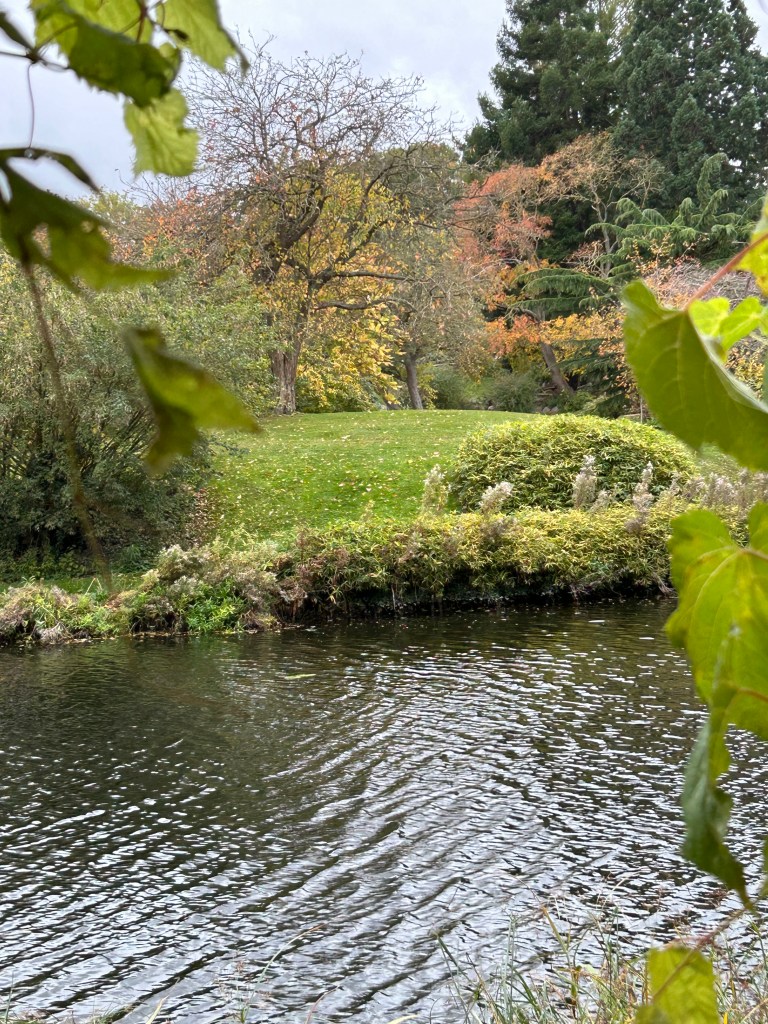
Then we walked through the Botanical Gardens. It’s fall here, too.
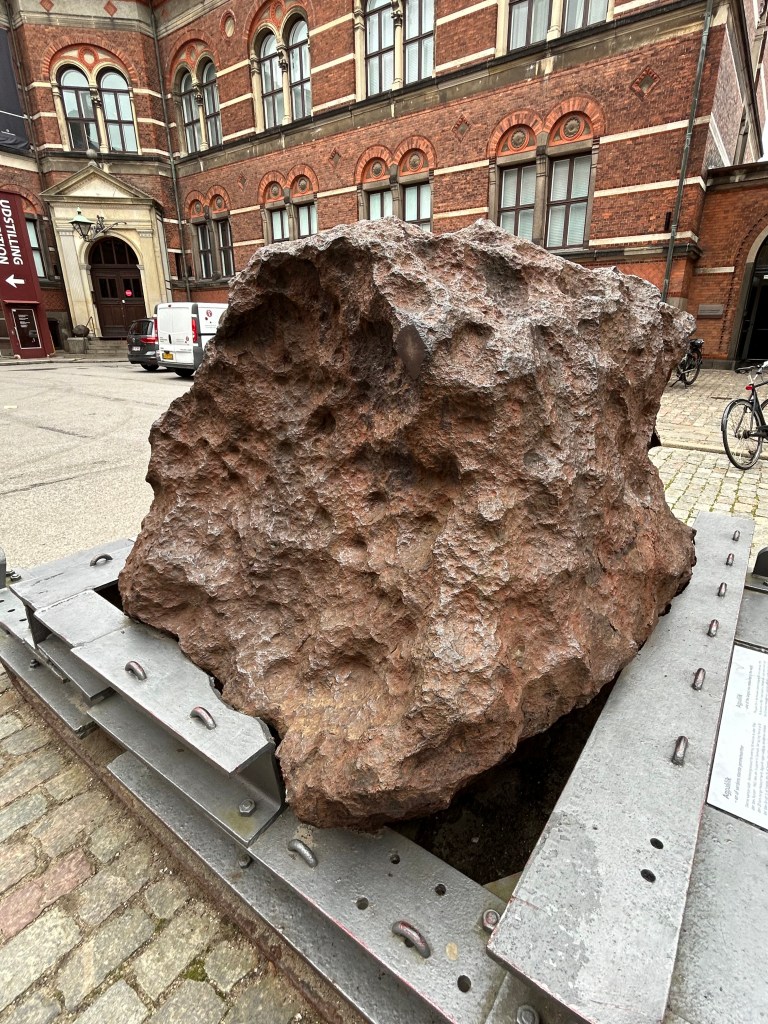
We had open-faced sandwiches for lunch and on our walk passed “Agpalilik”, one of the largest meteors in the world – 20 tonnes. Discovered in 1963 in Greenland it fell about 58 million years ago. It is sitting in the sleigh that was used to pull it free from the rocks. and is still sitting in the same steel sleigh. It’s only 16 tonnes now because scientists have cut off a chunk to study its interior.
We visited a licorice-making factory and store. We tasted a piece of the licorice that they were making and it was very strong. I bought the Queen’s favourite: raspberry licorice. Peter told us that cars cost 180% because of duties to be paid. It also explains the plethora of bicycles.
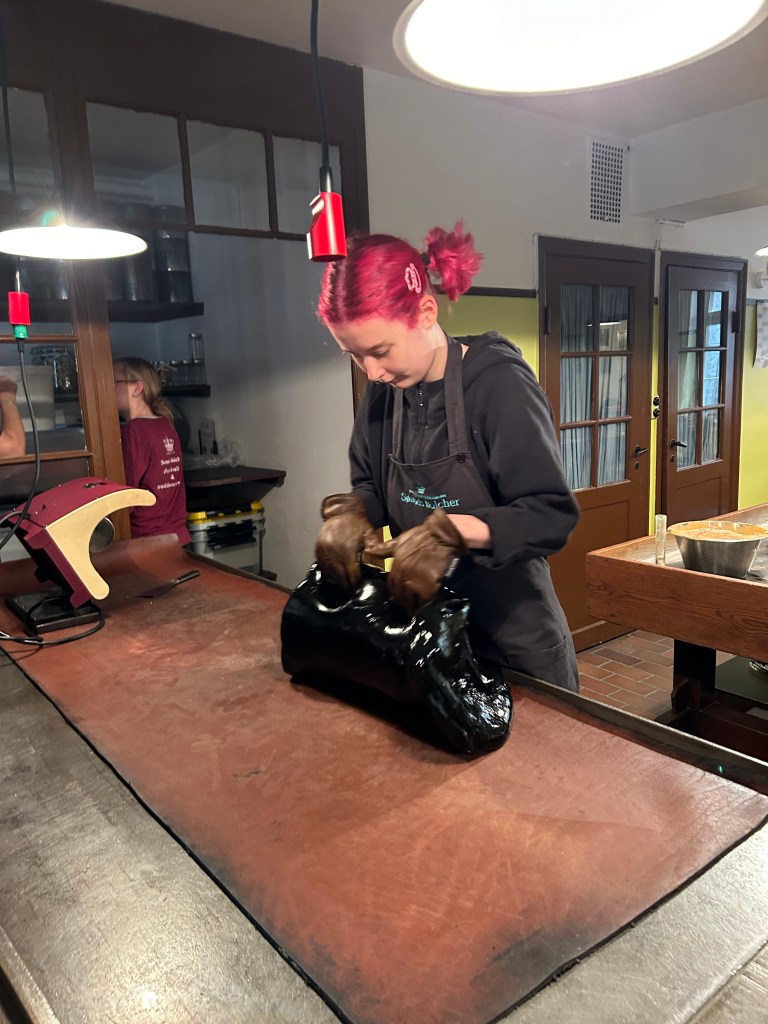
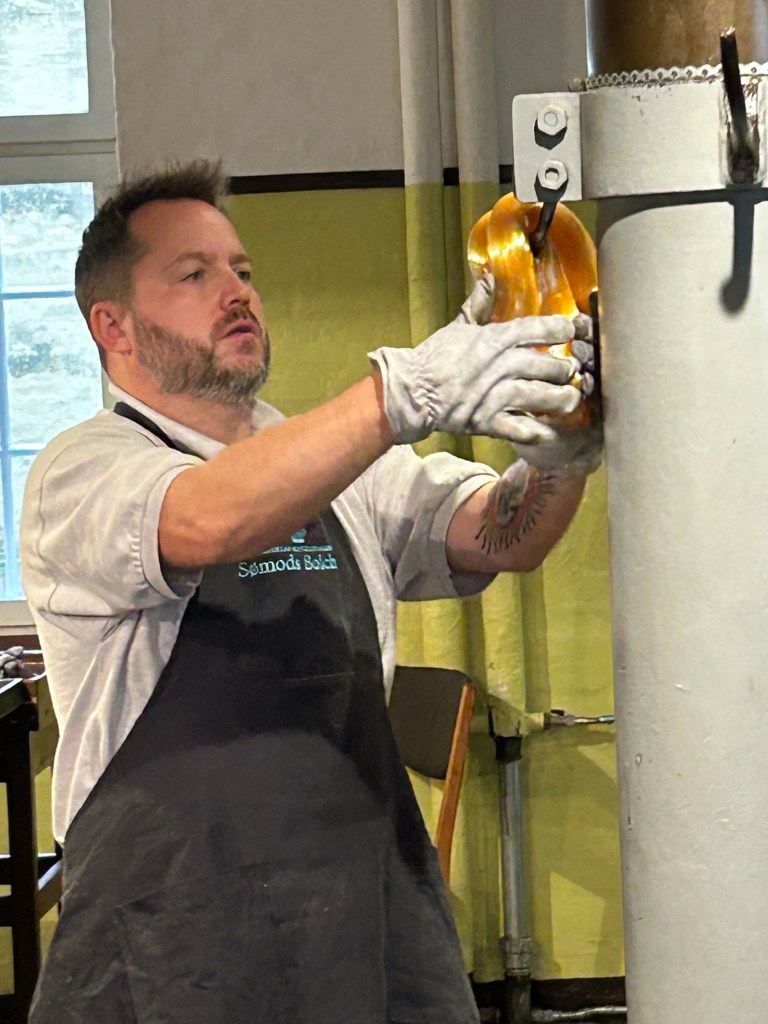
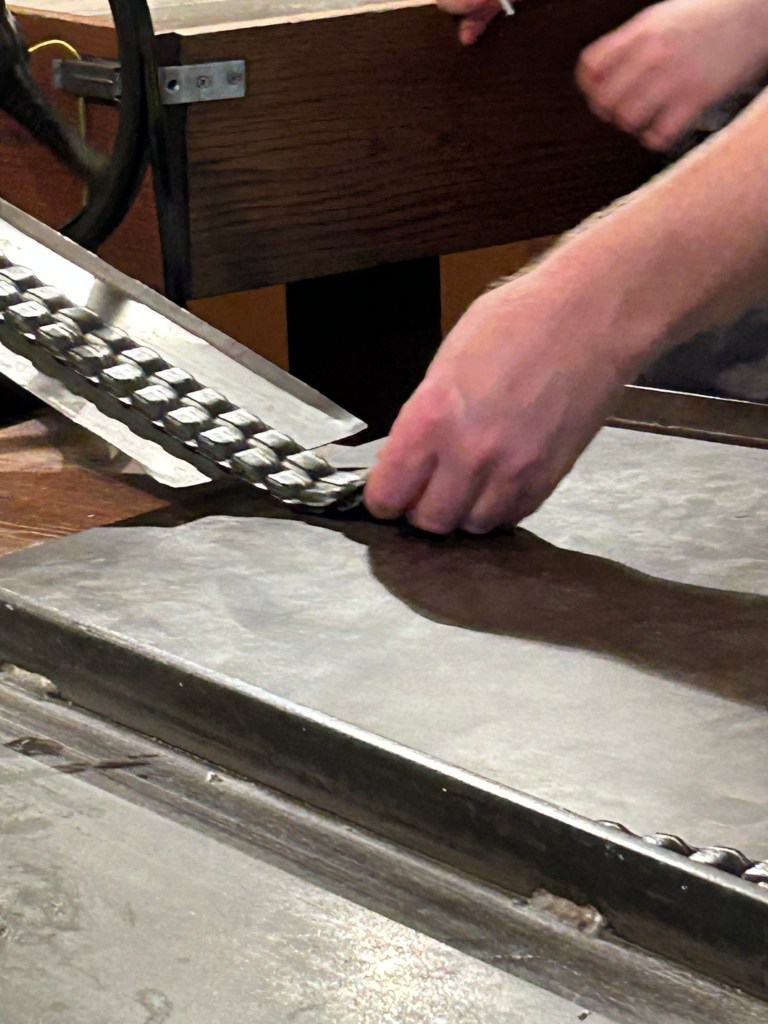
Next stop was the best hot dog place in Copenhagen; good but not sure about the best!
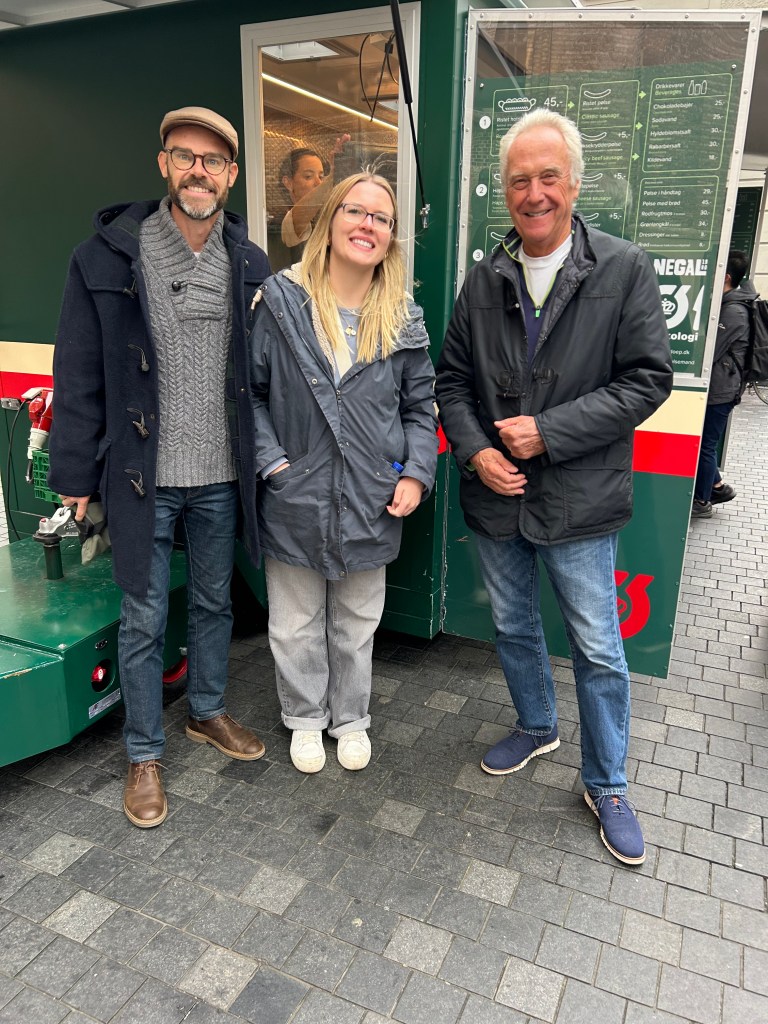
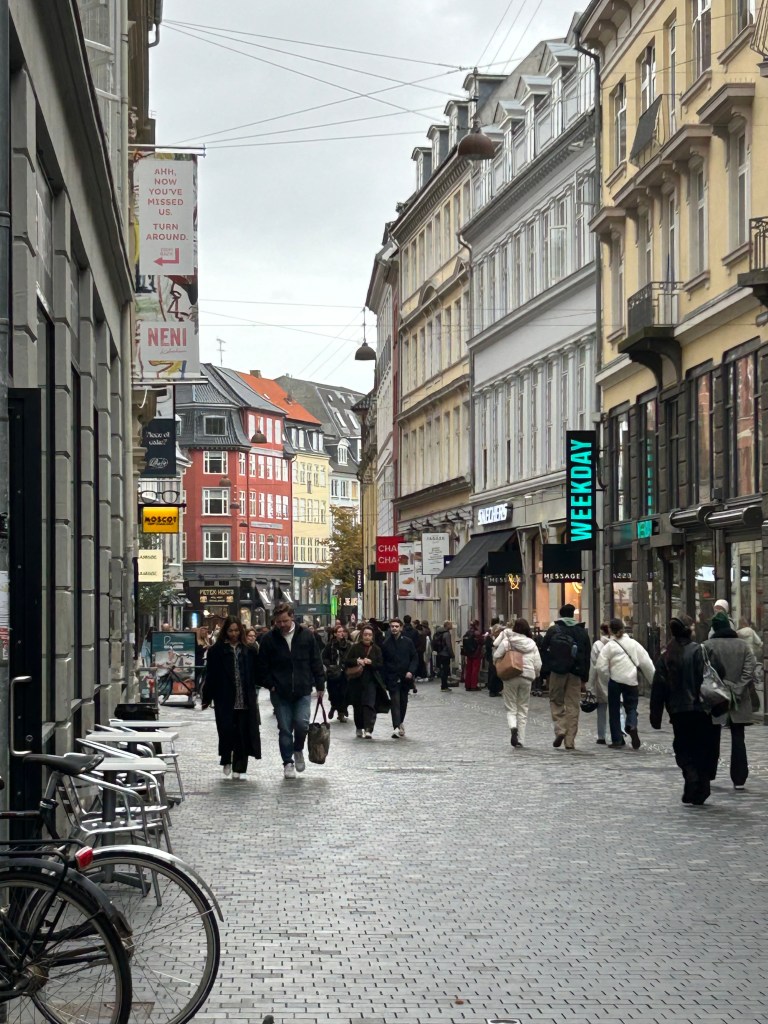
For the Swedish break, Fika, we had superb cinnamon buns from Emmery’s and then had a beer at a pub with 100 different beers from around the country and outside. That was a very enjoyable tour but we’re tired!
We went to Tivoli Gardens as soon as it became dark to enjoy the lighted Hallowe’en fantasy world and had ramen bowls at Wagamama’s.
October 22, Copenhagen
We took the Hop-on hop-off bus on a truncated run because it was late in the year and some stops were under construction. The first was the famous Little Mermaid from Hans Christian Andersons’ tale. Originally published in 1837 as part of a collection of fairy tales for children, the story follows the journey of a young mermaid princess who is willing to give up her life in the sea as a mermaid to gain a human soul. According to the bus recording, she has lost and had replaced her head and arms several times and been bombed.
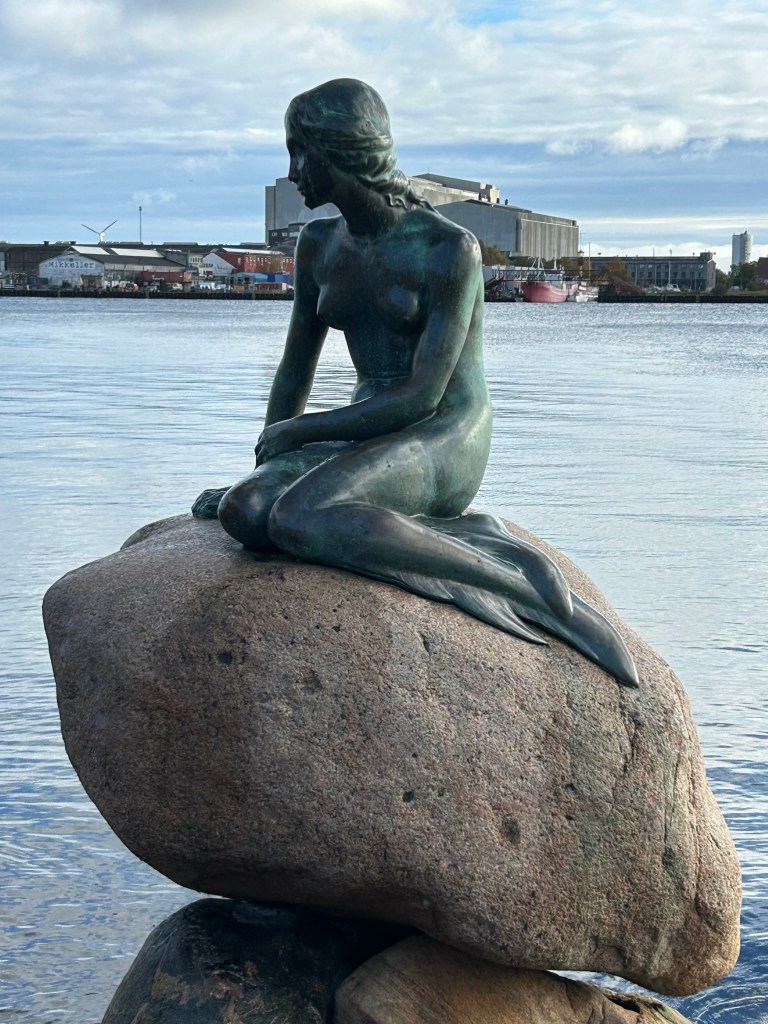
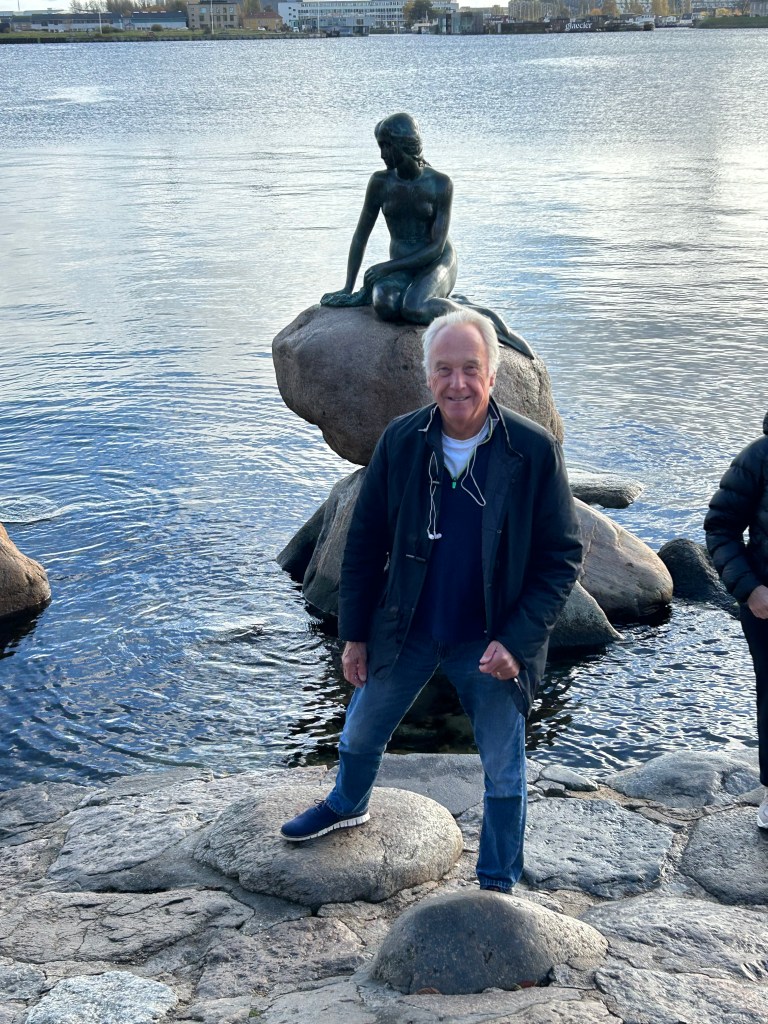
Our planned stop was Rosenborg Castle.
Rosenborg Castle
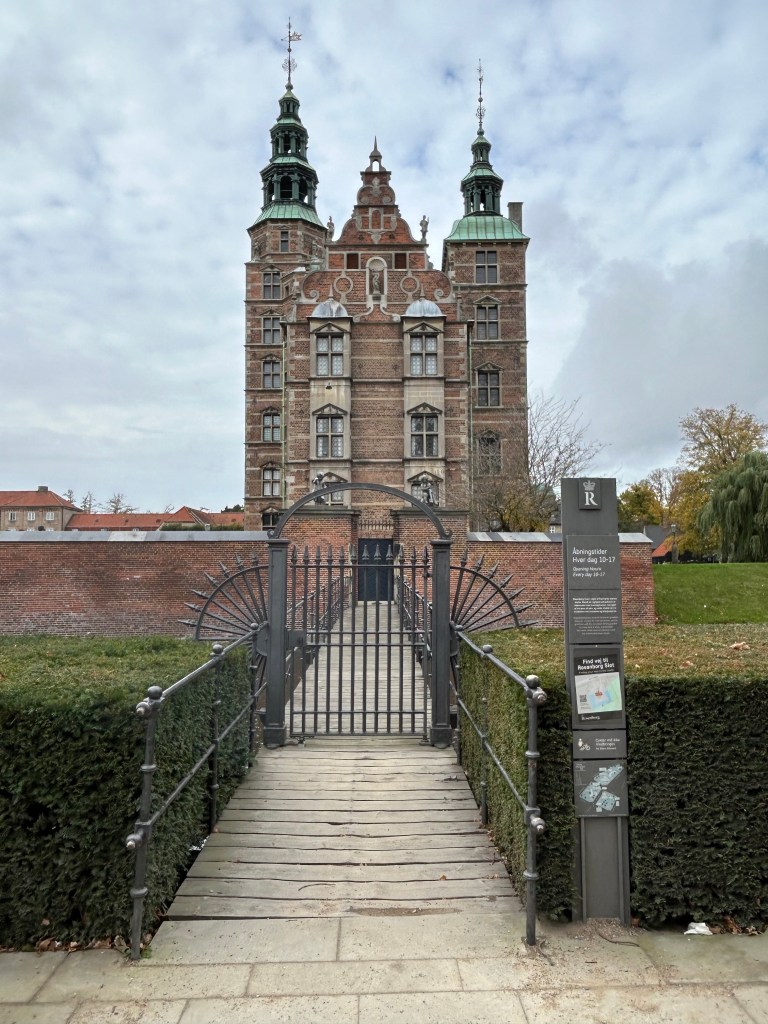
Rosenborg Castle was built by one of the most famous Danish kings, Christian IV, in the 17th century. The castle was originally built as a country summerhouse in 1606 and is an example of Christian IV’s many architectural projects. It was built in the Dutch Renaissance style, typical of Danish buildings during this period, and has been expanded several times, finally evolving into its present condition by the year 1624. Christian V (15 April 1646 – 25 August 1699) was King of Denmark and Norway from 1670 until his death in 1699.[1]
Well-regarded by the common people, he was the first king anointed at Frederiksborg Castle chapel as absolute monarch since the decree that institutionalized the supremacy of the king in Denmark-Norway. Christian fortified the absolutist system against the aristocracy by accelerating his father’s practice of allowing both Holstein nobles and Danish and Norwegian commoners into state service.
Christian V was a casanova and left a key under the tongue of the lion.
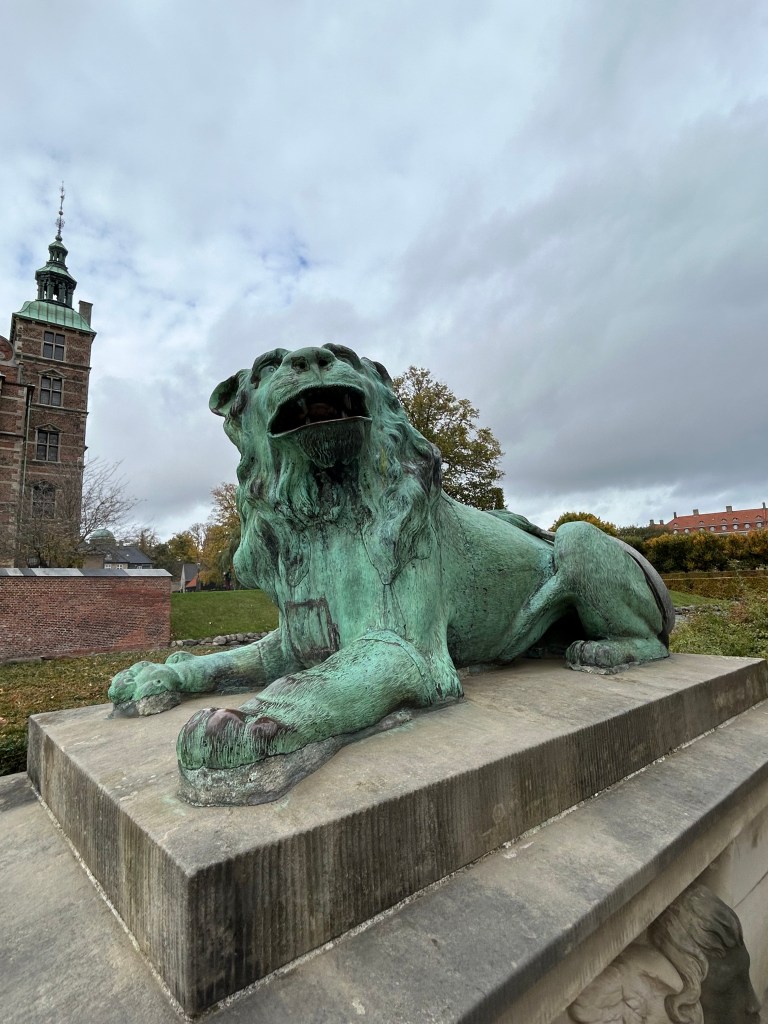
The beautiful castle features 400 years of royal treasures, and the Crown Jewels and Royal Regalia. Among the main attractions of Rosenborg are the coronation chair of the absolutist kings and the throne of the queens with the three silver lions standing in front.
The interiors are well-preserved and invite you to take a journey in time, stepping into the shoes of the royalty that once lived here. You can see the king’s private writing cabinet, his bathroom, and view wax figures of former royal inhabitants.
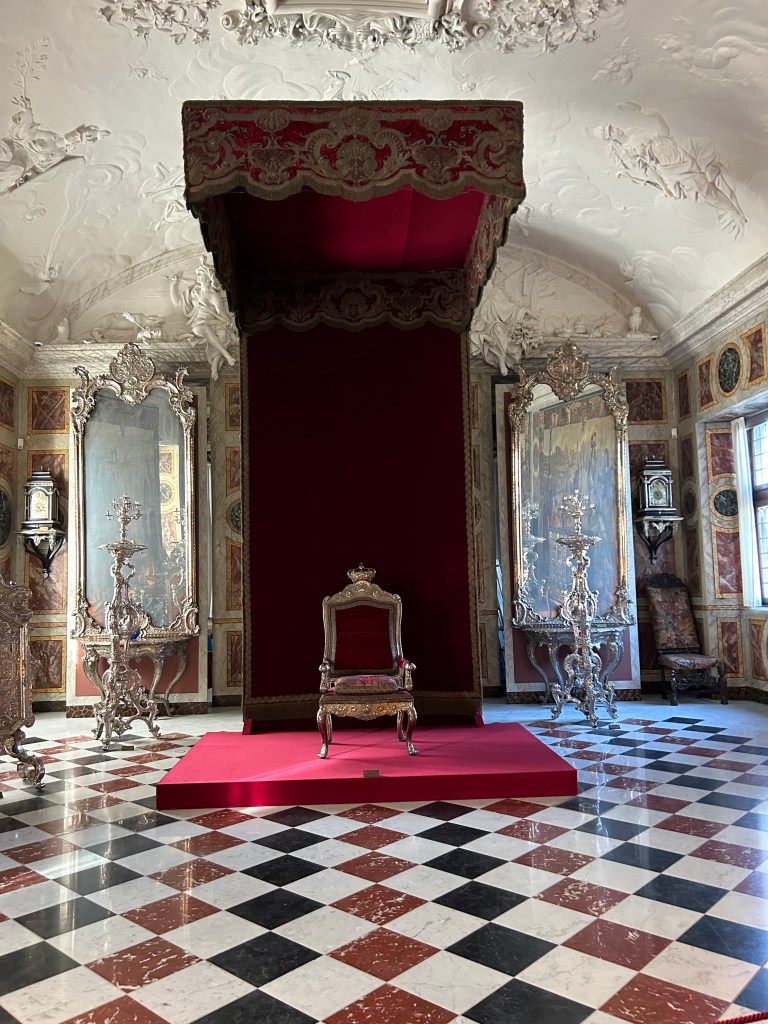
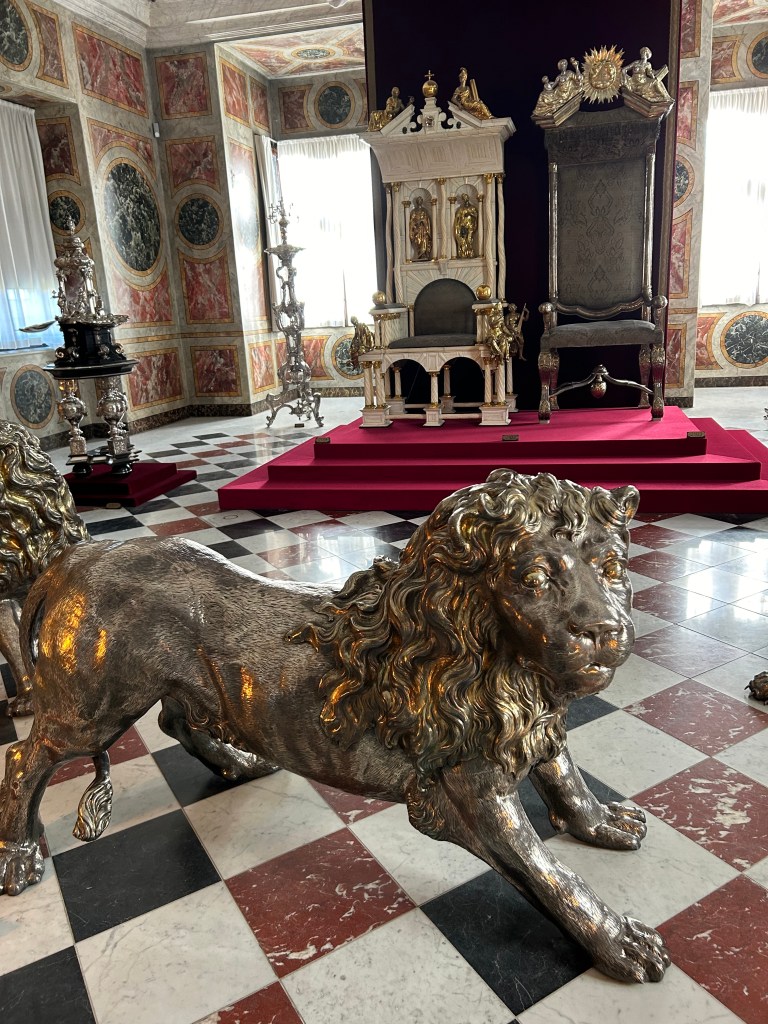
Among the main attractions is the Knights’ Hall with the coronation thrones, decorated with narwhal tusks, with three life-size silver lions standing guard.
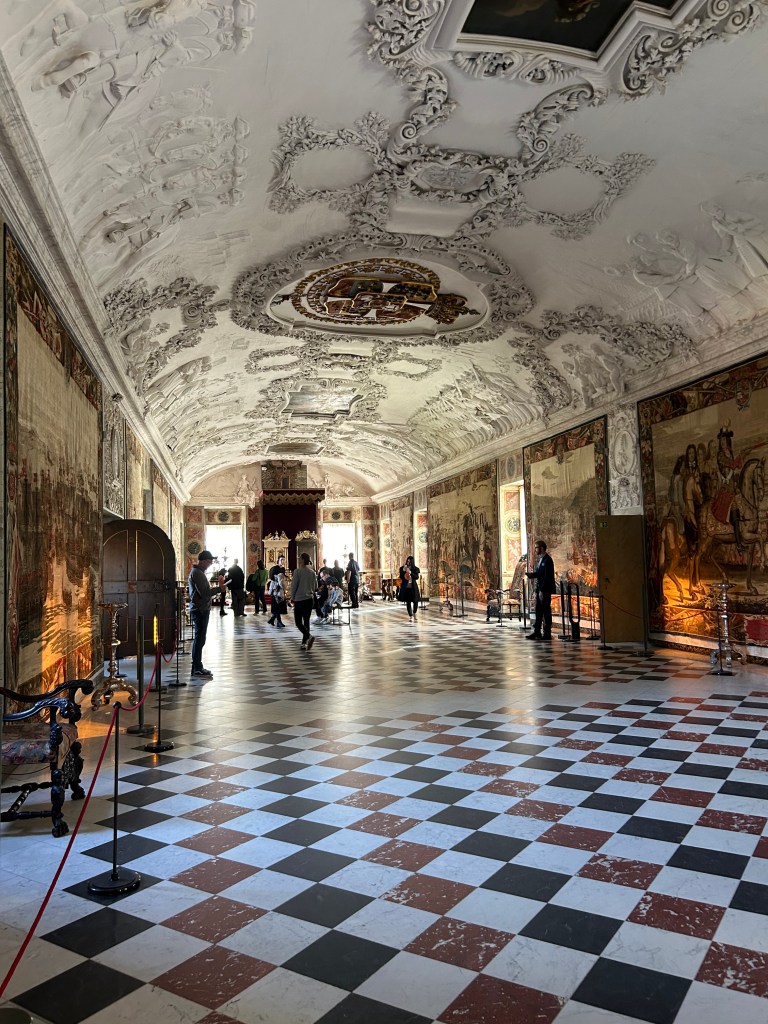
Tapestries on the walls commemorate battles between Denmark and Sweden
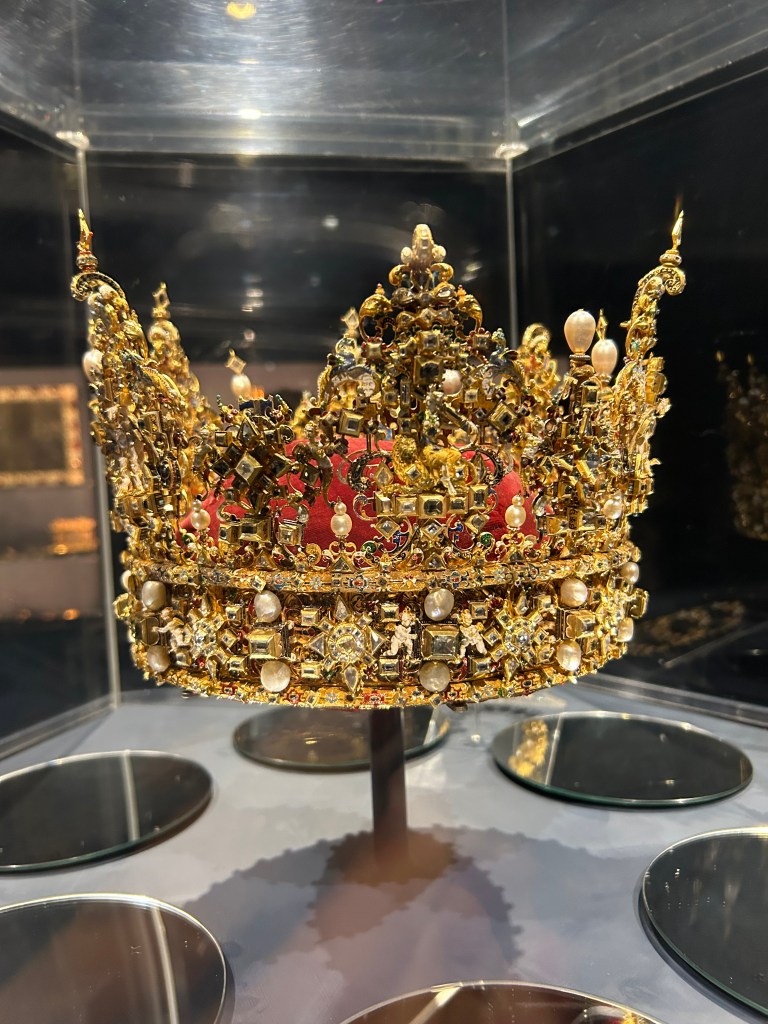
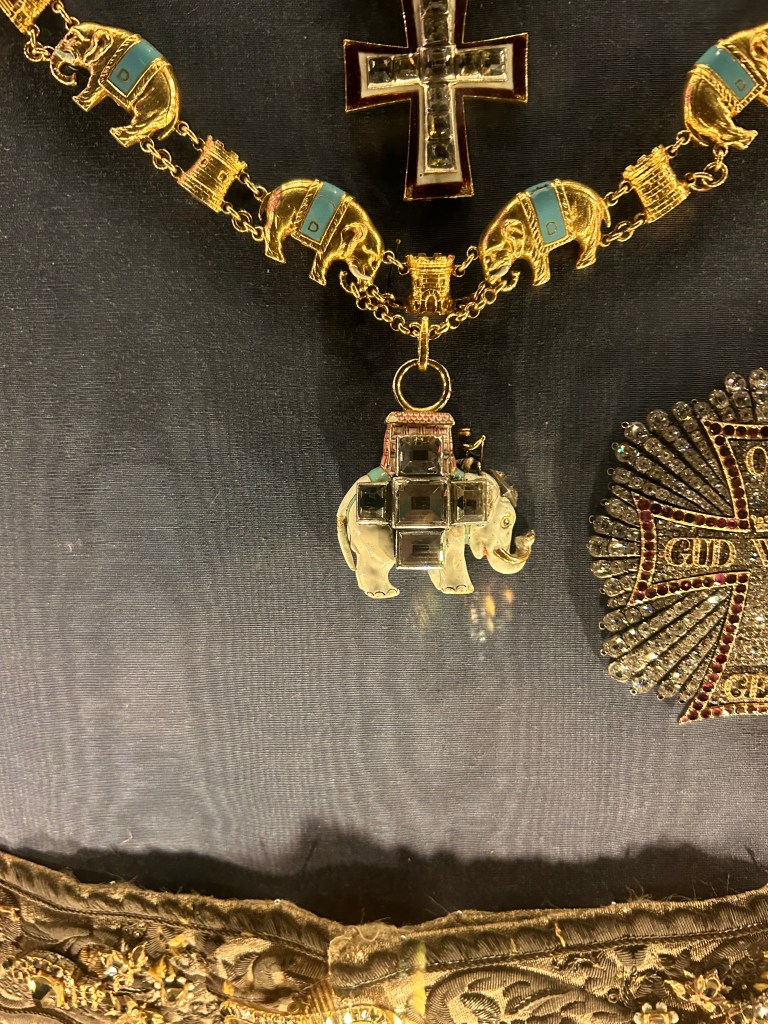
The delicate and glittering crowns of the Danish kings and queens are kept in special vaults at Rosenborg Castle, embellished with table-cut stones, enamel, and gold. The crown jewels primarily consist of four garnitures: a diamond set, a ruby set, a pearl set, and an emerald set – the emeralds being among the world’s finest.
We finished our afternoon at the National Museum. The first rooms gave a history from the origin of life, through the early civilizations in Denmark and items found in them.
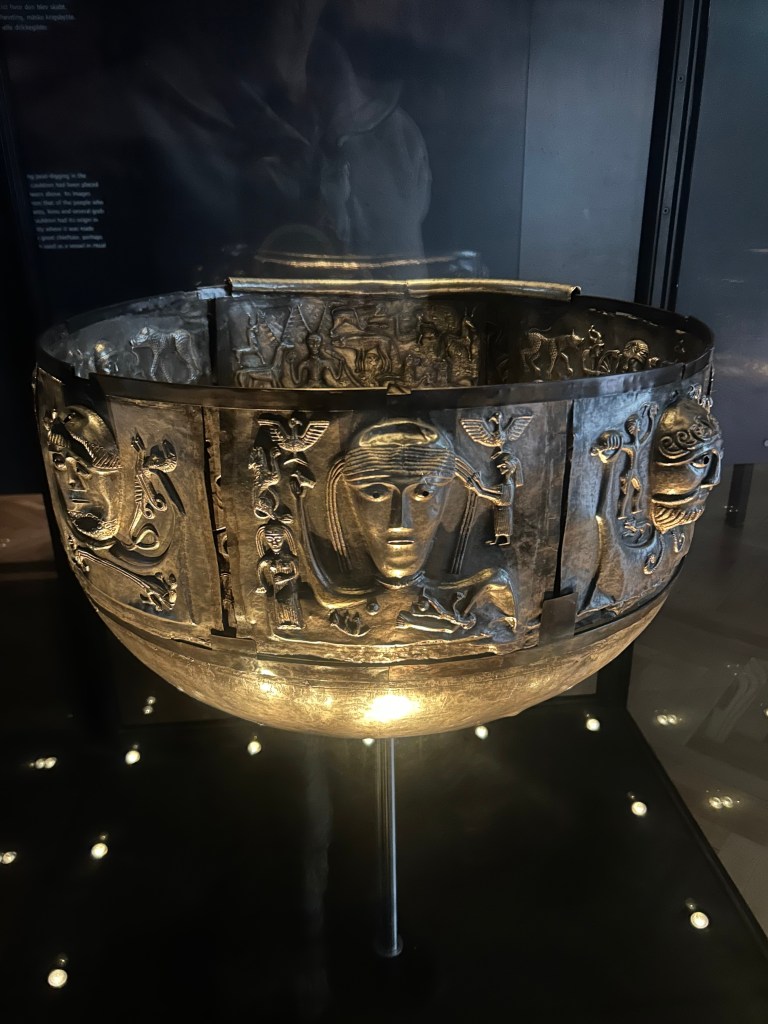
The Gundestrup Cauldron was probably made between 150 BC and the birth of Christ. The figures are boldly embossed and decorated carefully punched patterns. The sophisticated technique flourished in the centuries before the birth of Christ among the Thracians, who lived in the area that is no Bulgaria and Romania. In style, too, the cauldron looks like Thracian silver work. However, several of the objects depicted are Celtic – the helmets and the Celtic war trumpet. It is most likely that the cauldron was made where Celtic and Thracian peoples lived close together, probably in southwestern Romania or northwestern Bulgaria. It is not known how it reached Denmark.
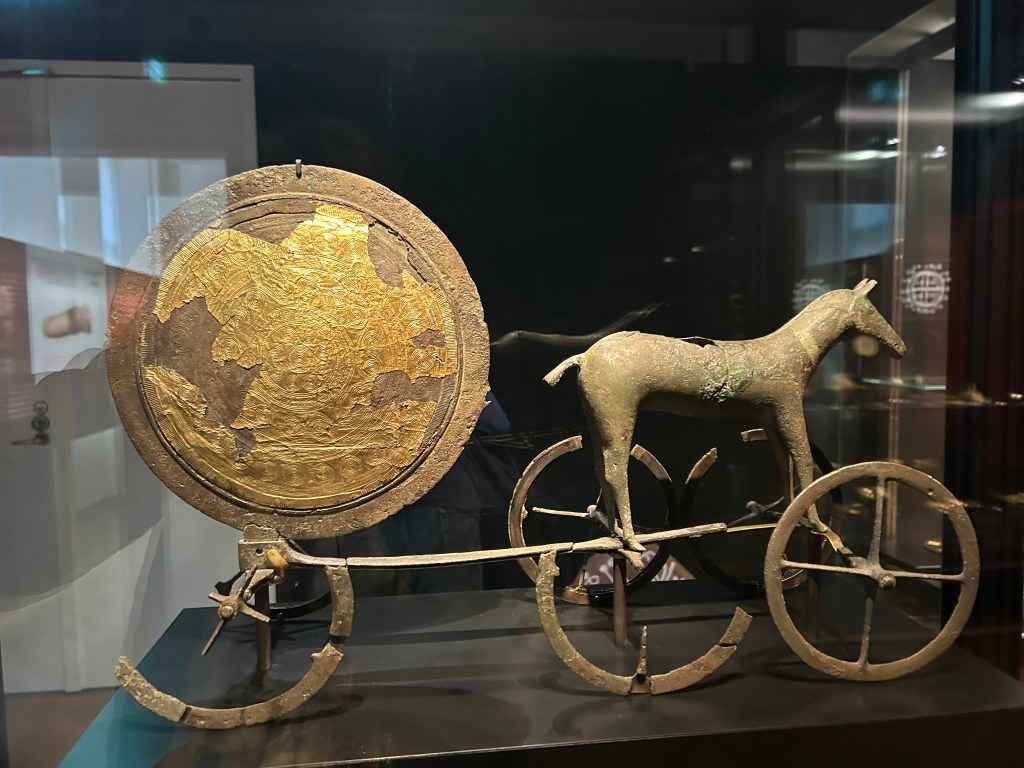
Chariot of the Sun was found in September 1902, when the bog Trundholm Mose in western Zealand was ploughed up for the first time. It was made in the Early Bronze Age, c. 1400 BC. The elegant spiral ornamentation on the golden sun disc reveals its Scandinavian origin. The Sun Chariot illustrates the idea that the sun was drawn on its eternal journey by the divine horse. The chariot is not itself part of the religious belief. The sun image and the horse were placed on wheels to illustrate the motion of the sun.
We crossed the City Hall square on our way back to the hotel.
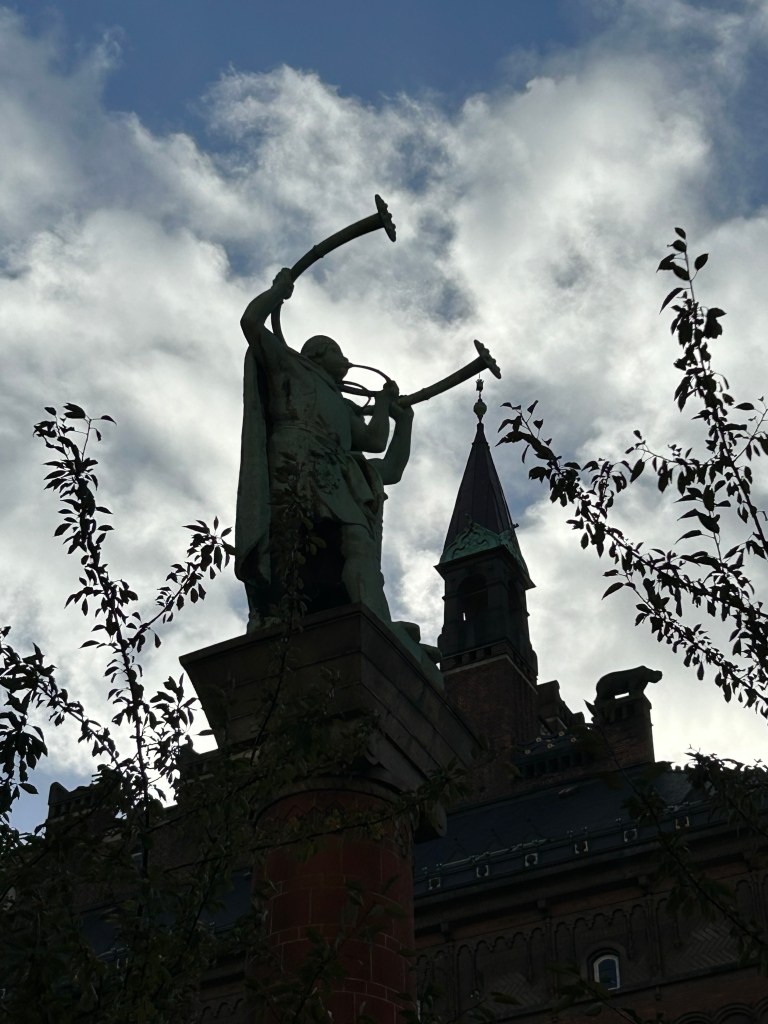
We walked to Nyhavn at the end of the day, had a drink on the boat on the dock and came back for dinner a small restaurant near the hotel- both of us had good meals.
October 23, Malmo, Sweden.
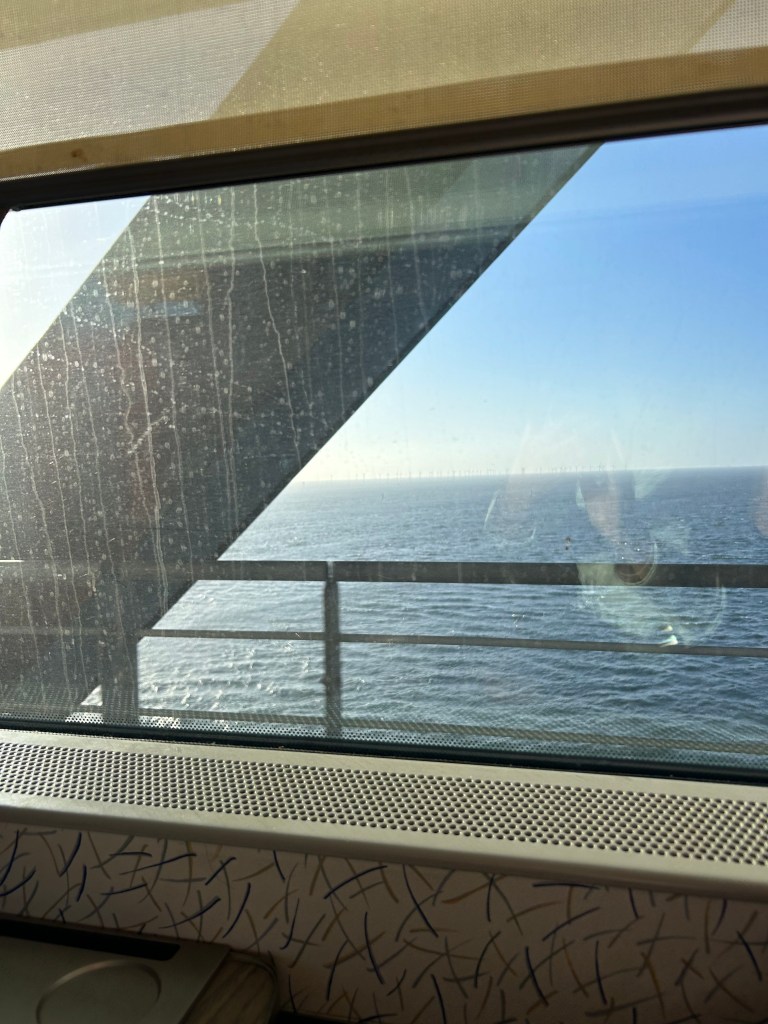
After breakfast we walked to the Central Train Station, got directions to Track 7 and took the train 15 minutes early (they run every 15 minutes), crossed over to Sweden on the bridge and arrived at Malmo at 11:25. We had visions of fabulous views from the bridge but the train actually runs under the bridge.
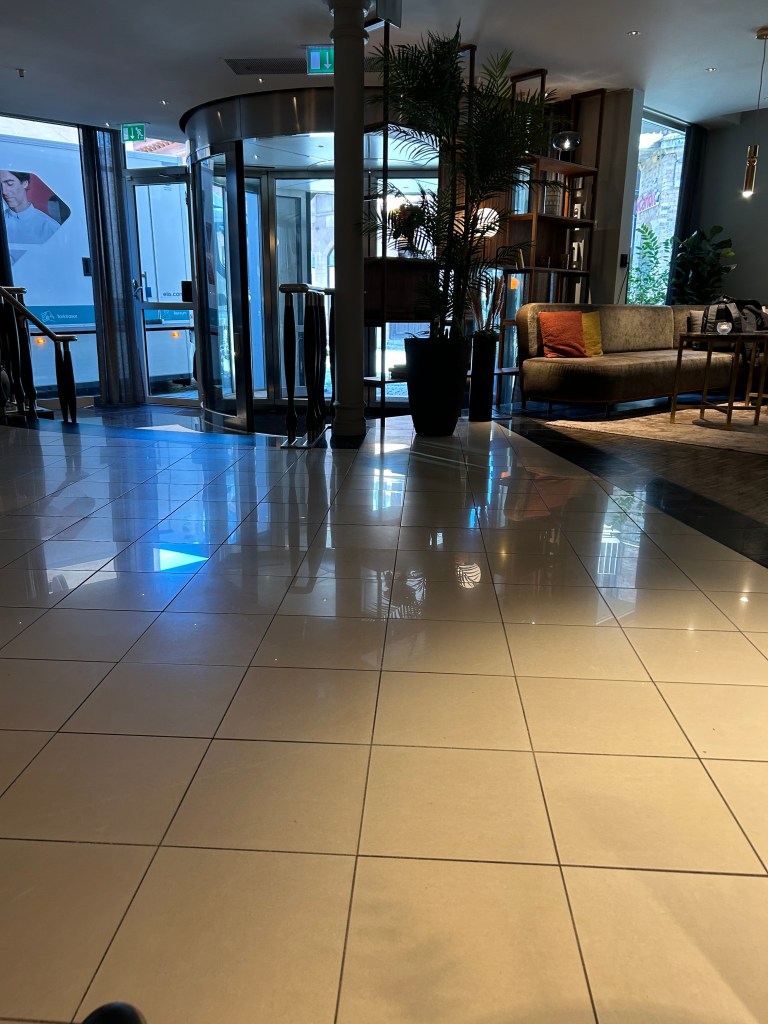
Using Google Maps, we walked to the Elite Esplanade Hotel. We checked our bags and headed out to see Malmo (too early to check in).
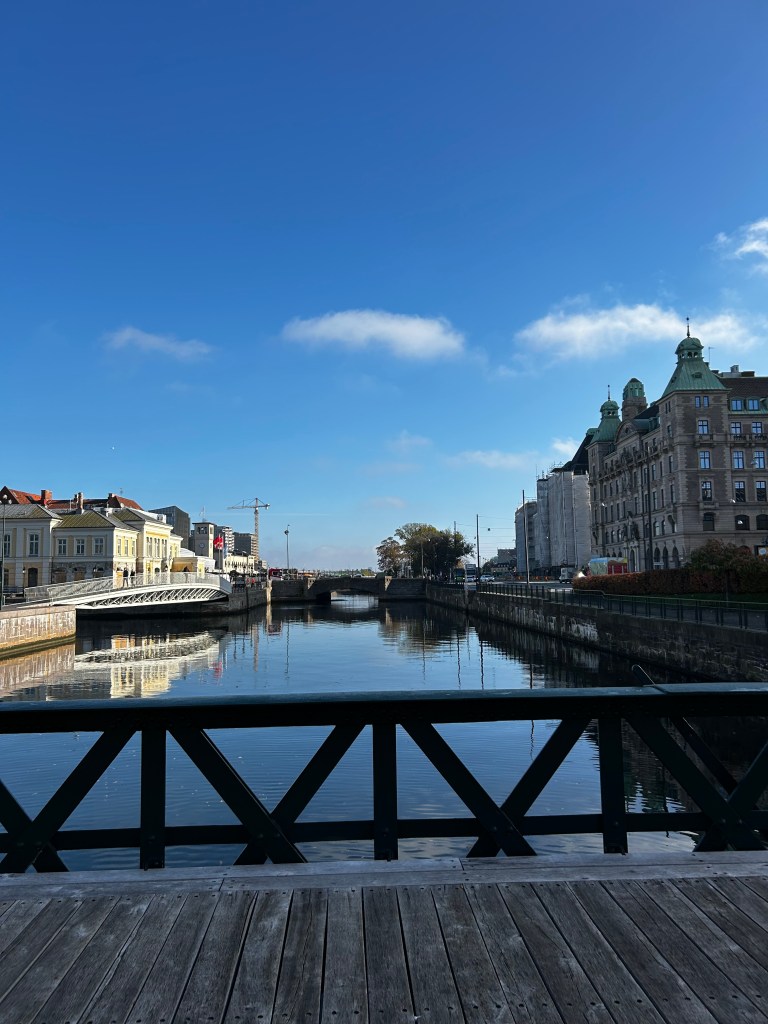
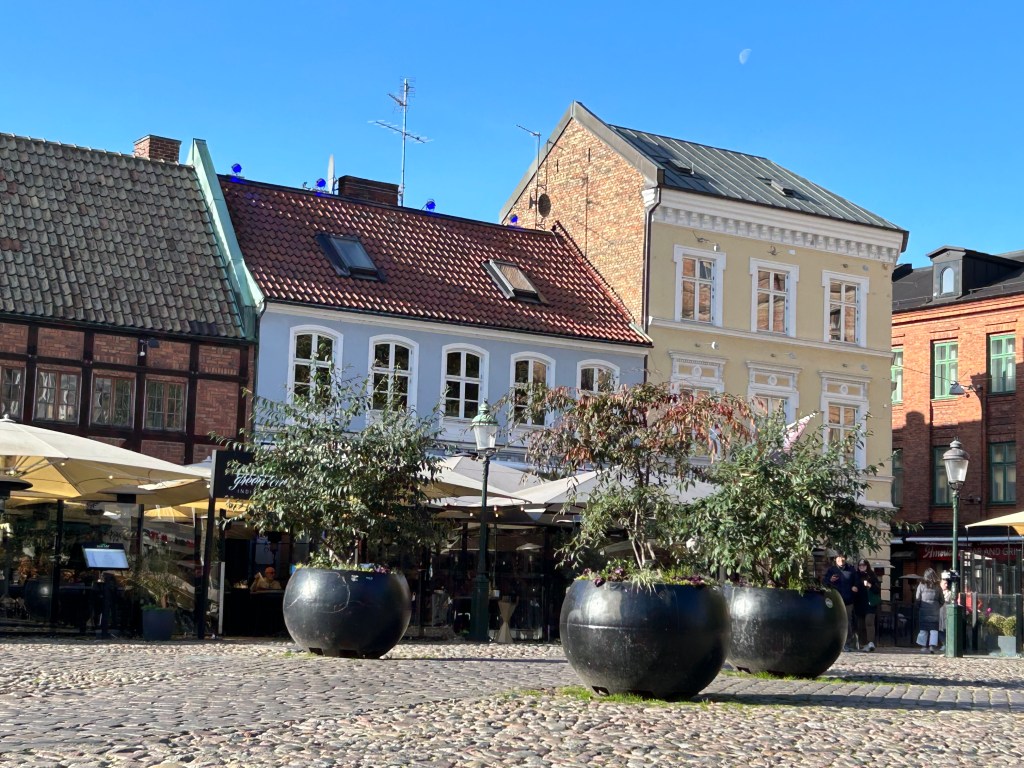
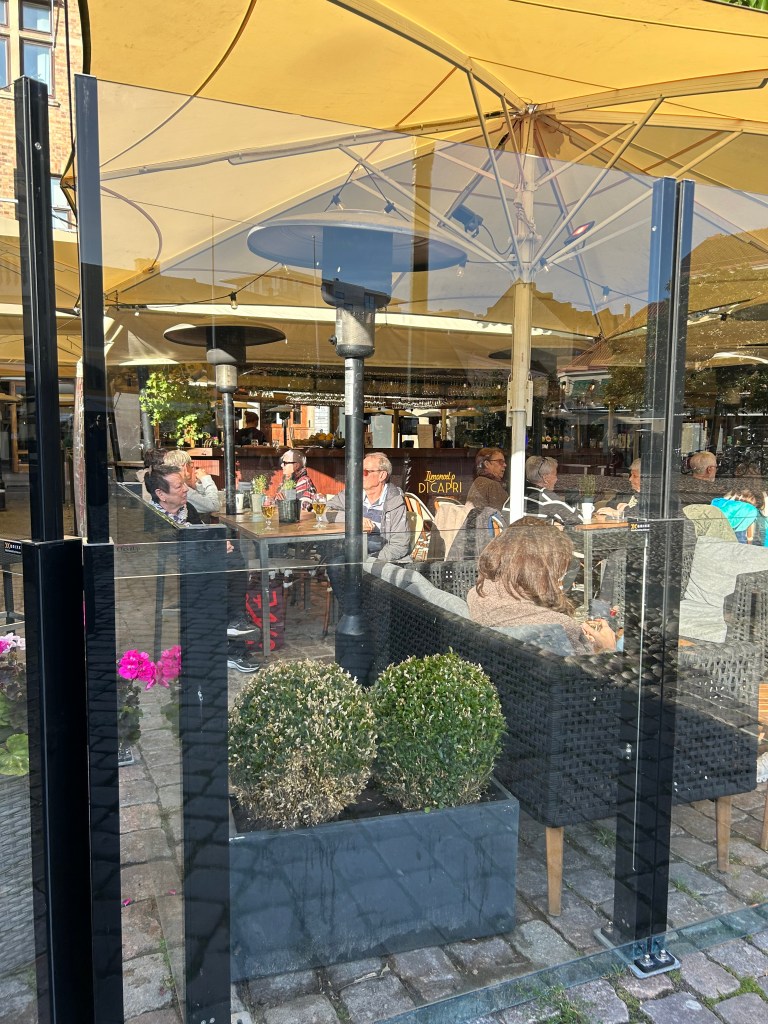
We walked around the city, through the square near our hotel with the cafes busy with diners. All the cafes have glass enclosures, heaters and blankets.
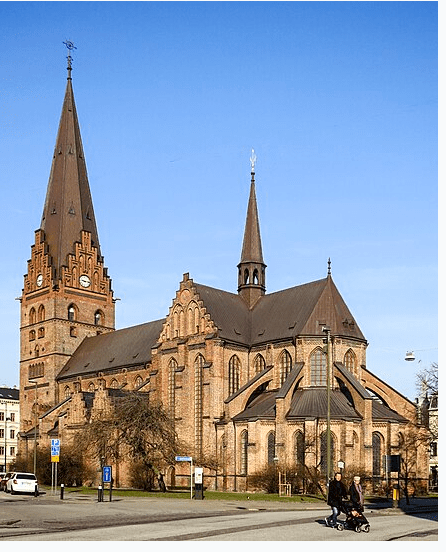
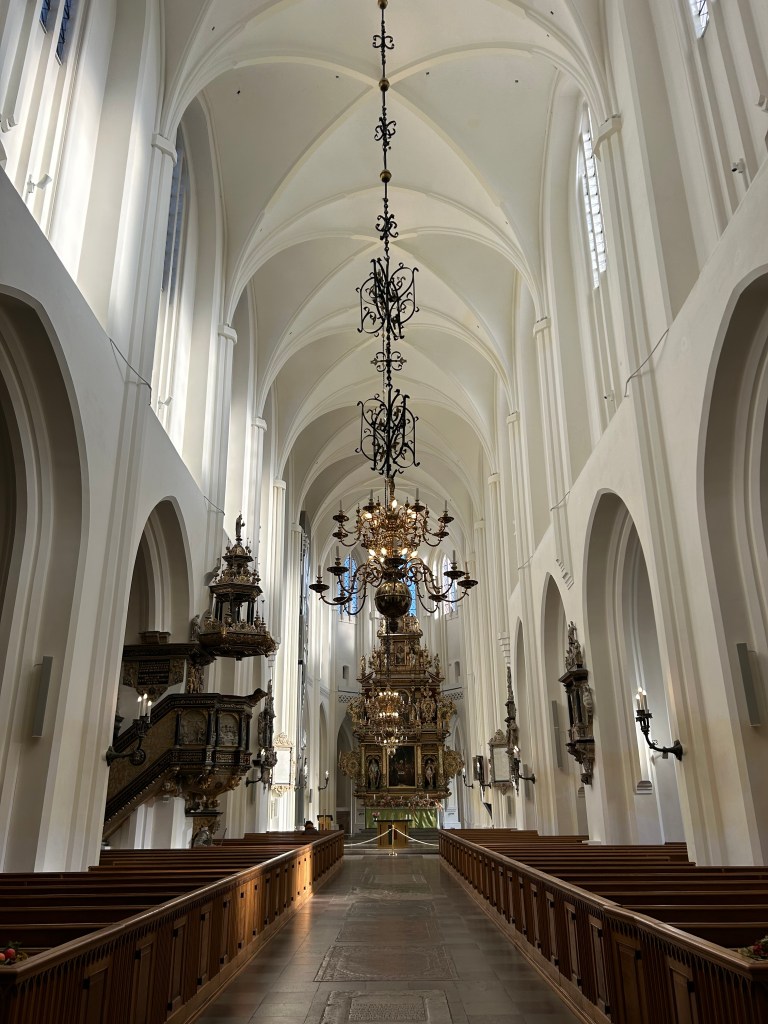
We toured St Peter’s a Brick Gothic church. Built in the 14th century as the main church of the city, it has been described as “the main Gothic monument within church architecture in Scania”.
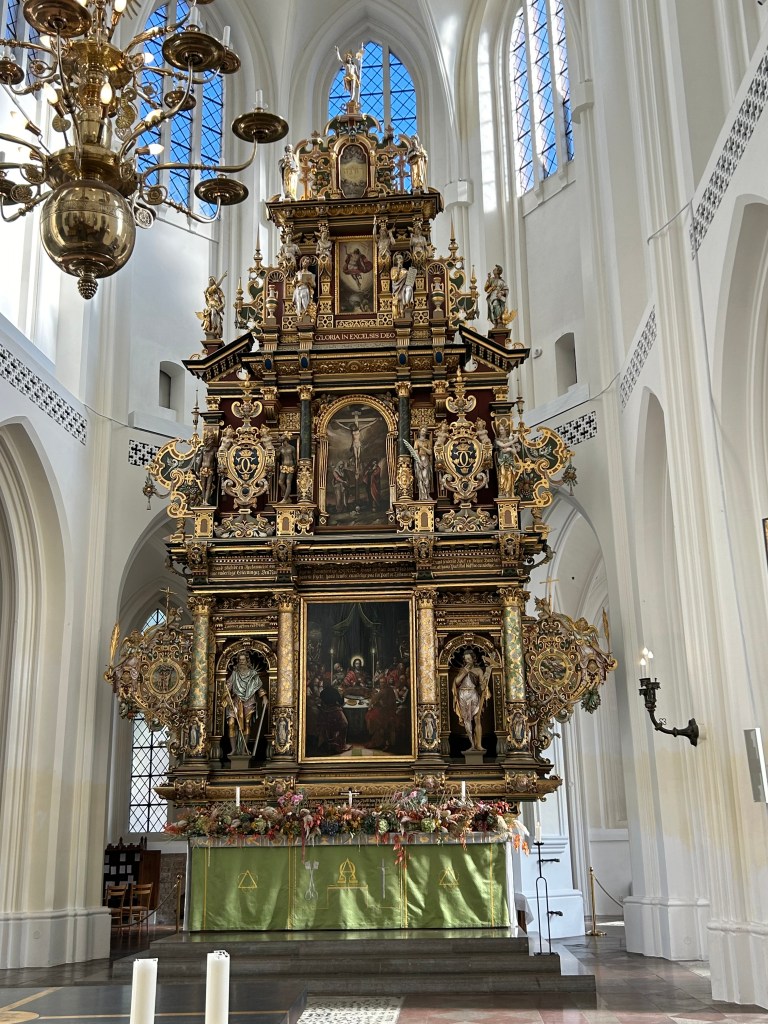
The church was a spiritual centre during the Reformation, and was one of only a few churches in what was at the time medieval Denmark that suffered damage due to iconoclasm as a consequence of the Reformation. St. Peter’s Church contains late medieval murals of recognized high quality, as well as a number of unusual furnishings.
Note: We had heard from our new Swedish neighbours, who just moved into Ruth and Mick Steele’s old apartment directly across from us, that there were crime problems in Sweden, especially in Malmo. This came as a complete surprise to us! Sweden? Really? When we googled Malmo, we read several disturbing articles on the drug gangs, shootings and violence, including bombs being set off.
Peter, our Copenhagen Walking Food Tour guide, confirmed this; in fact, he said that Denmark had closed the border to Swedes because of the violence- something that had never happened before. He attributed the problems to the large numbers of immigrants from war-torn countries for whom there was no preparation or support and their involvement in the drug trade to make a living.
Peter maintained that Denmark had managed the immigrant wave better because they had admitted only as many as they could support without endangering the Danish way of life.
October 24, Malmo, Sweden
We had a great breakfast (and stashed a meat-filled bun for lunch) in the very dark restaurant attached to the hotel, practised using the videocamera on the phone so that Bill could record our sessions and I went through my slides for Friday’s symposium session.
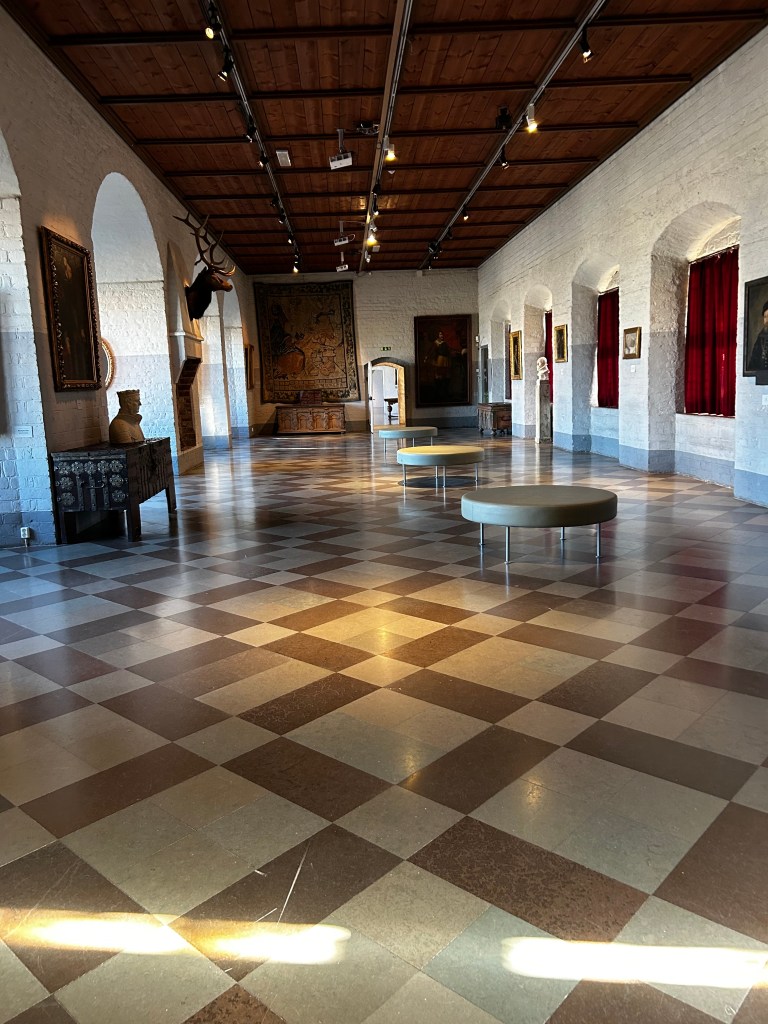
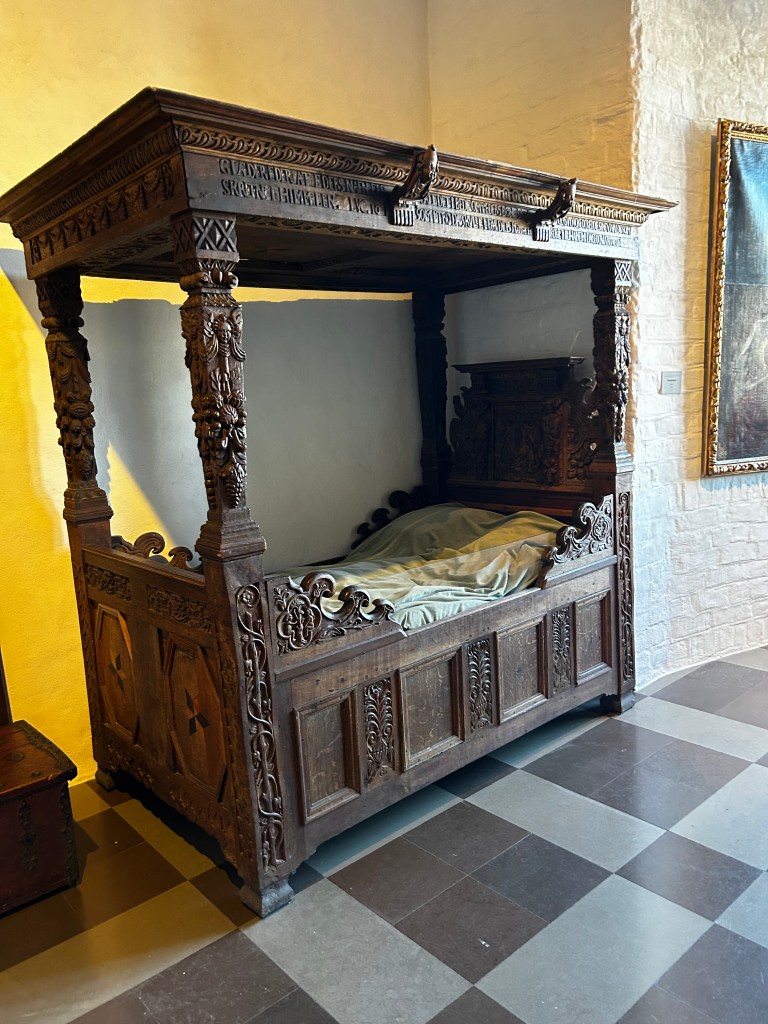
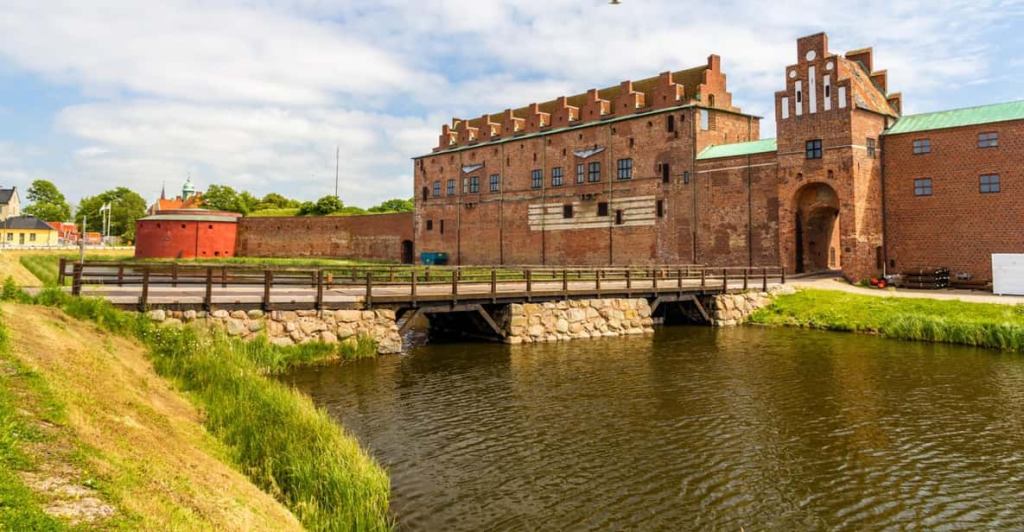
We visited Malmo Castle, built between 1526 and 1539, which is the oldest preserved Renaissance castle in the Nordic Region. The tour was disappointing because the interior had been stripped of everything including ceilings and floors.
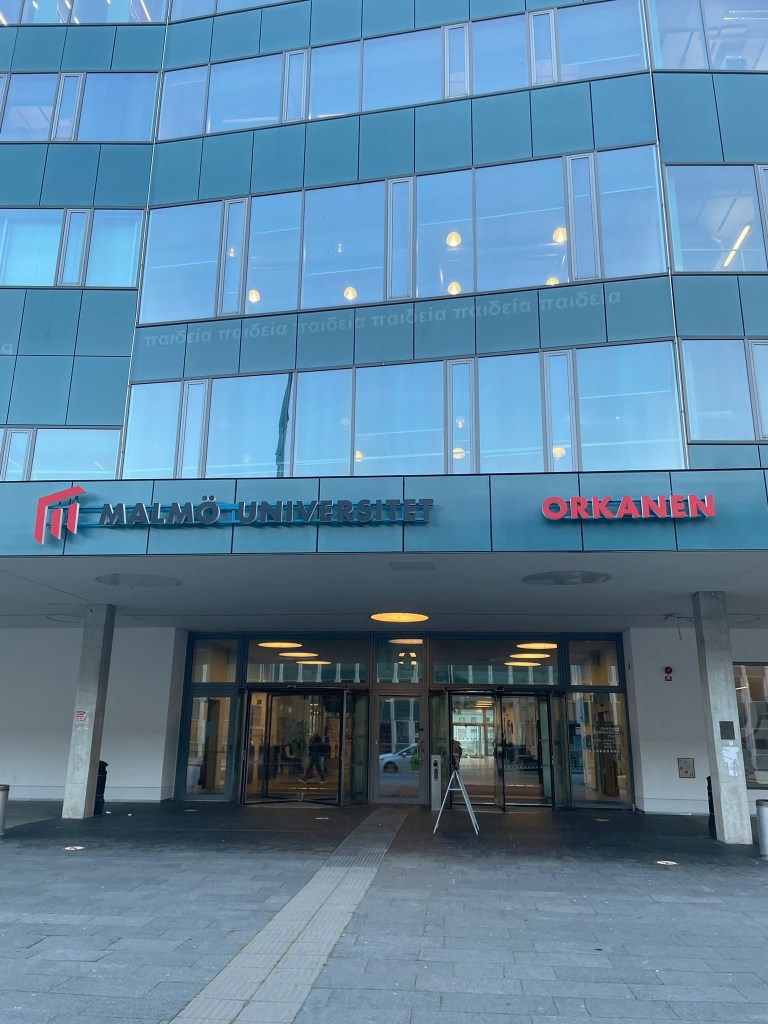
We met Mairin Glenn at the Registration desk of CARN 2024 at Malmo University; Bill met with Red in order to scout out the metropolis of Malmo- you can walk anywhere in 20 minutes! We saw Femke, Carina and many others from other CARN conferences.
Red and Bill walked about 10 km around Malmo. Mairin and I attended a very good lecture by Jane Springall where she used the metaphor of Gardening to Participatory Action Research. Then we practised using the technology for our session on Friday in the actual room where we will present. We managed to get PowerPoint, Zoom, YouTube and the upload to the Projection system working but some of the transitions were awkward.
October 25, Malmo
The big day of the symposium session arrived with our session at 9:00 and everything worked: the technology, the timing, the members of the group’s contributions (Jack, Parbati, Mairin and Michelle on video). We were so fortunate that the other two presentations did not turn up so we had the whole hour to ourselves. The questions extended our influence and were fielded by all of us.
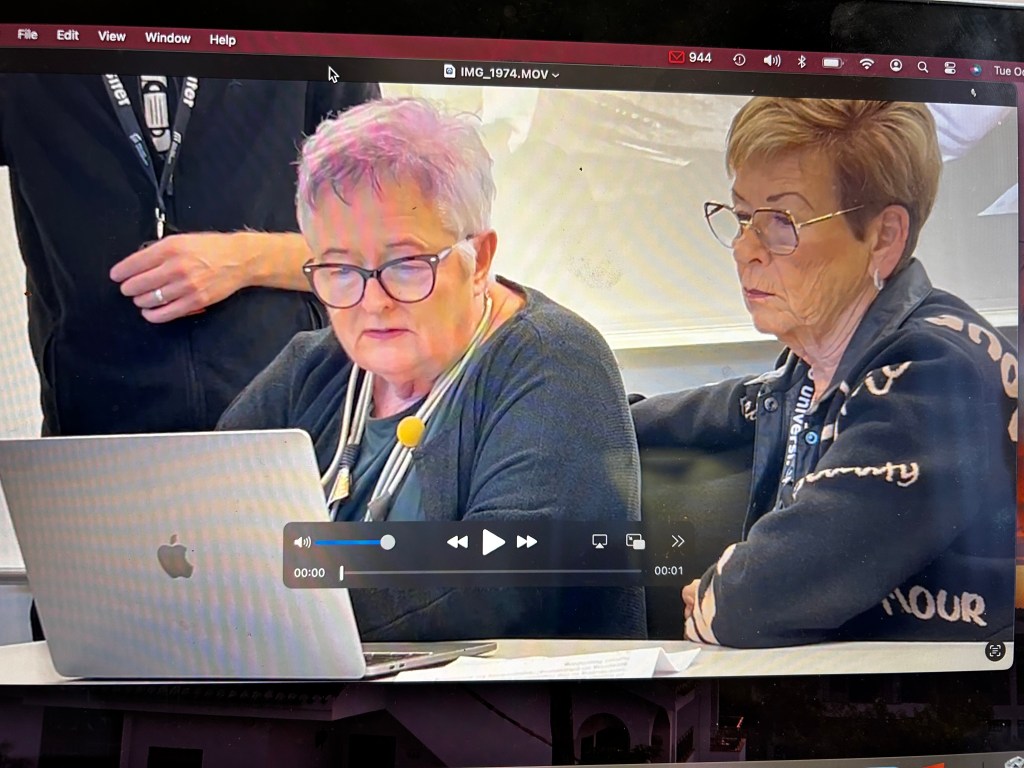
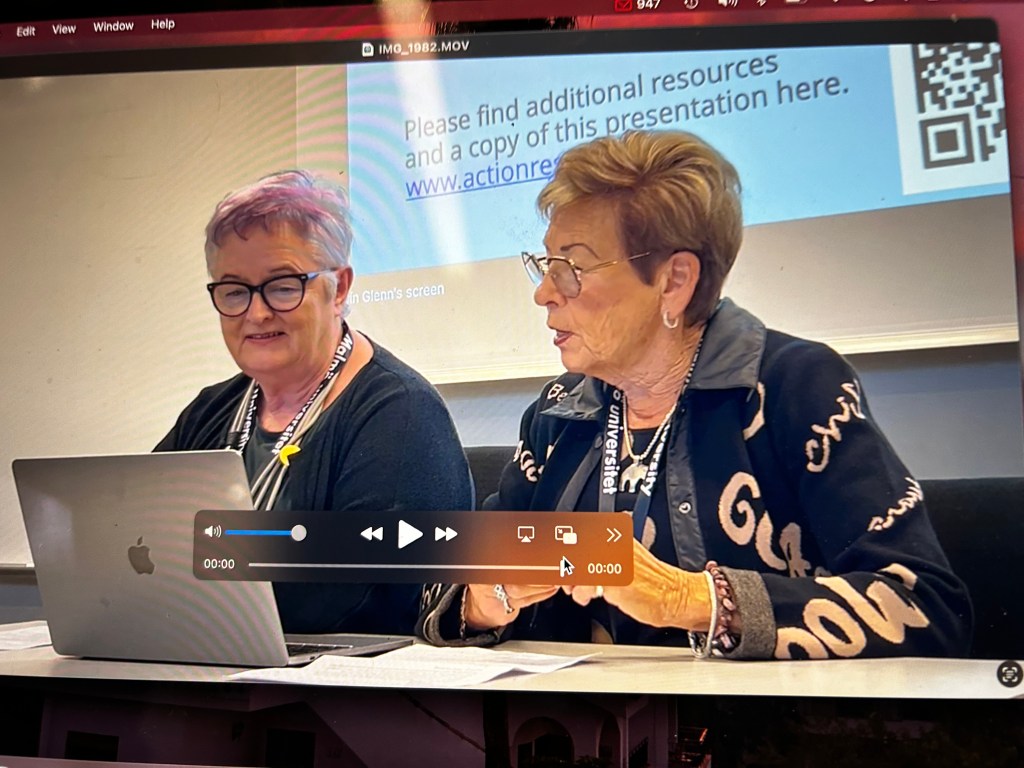
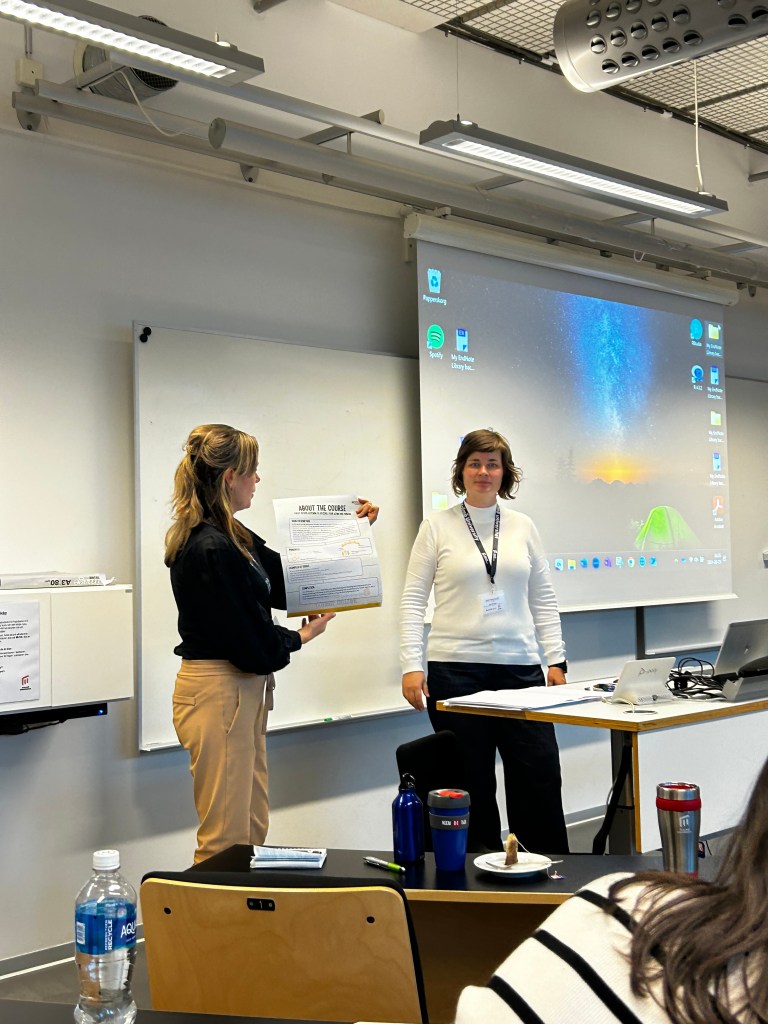
In the breaks, Mairin and I met Michelle’s students and reconnected with many old friends. It was a full day of sessions. I attended Femke and Carina’s session on helping managers involve the community in creating policy on urban planning.
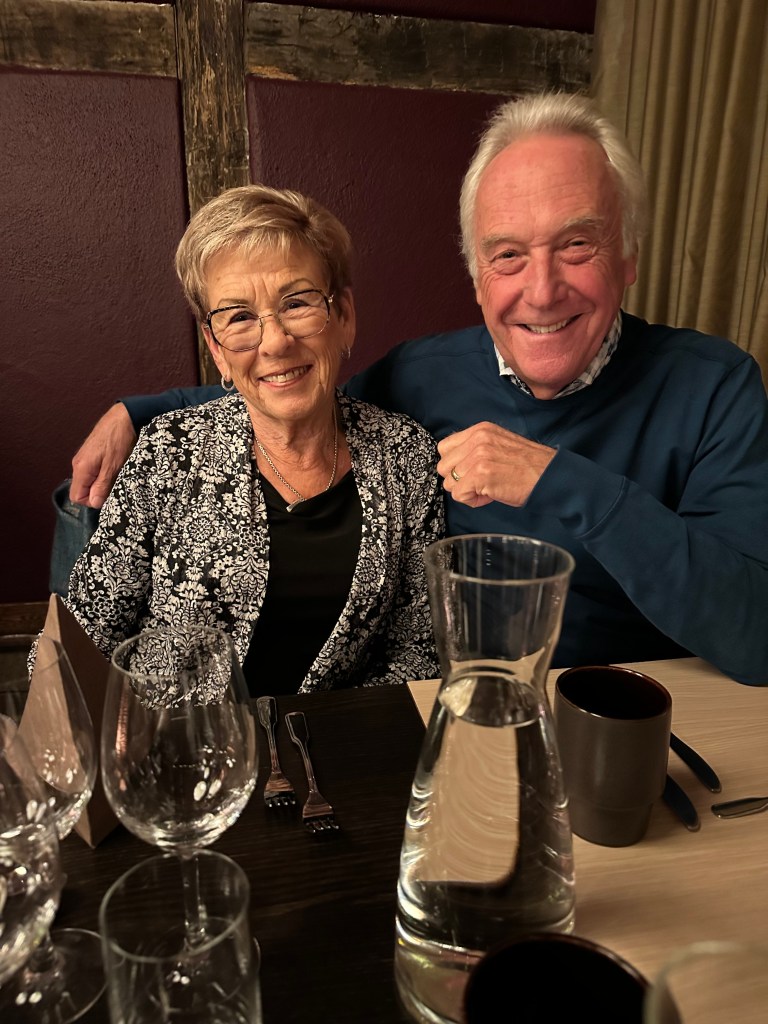
Held in an historical building, Mairin, Red, Bill and I enjoyed the conference banquet of shrimp appetizer, roast duck, wine and cheesecake dessert. The service was very slow but we had lots of time to chat.
Saturday, October 26, Malmo
After a cool very foggy walk to the conference and passing very few people on the streets, I attended both Ray’s (Michelle’s student) workshop and Lorena’s (she invited me to attend) in the morning and arranged for tech help for my workshop. Ray did an awesome job, very impressive.
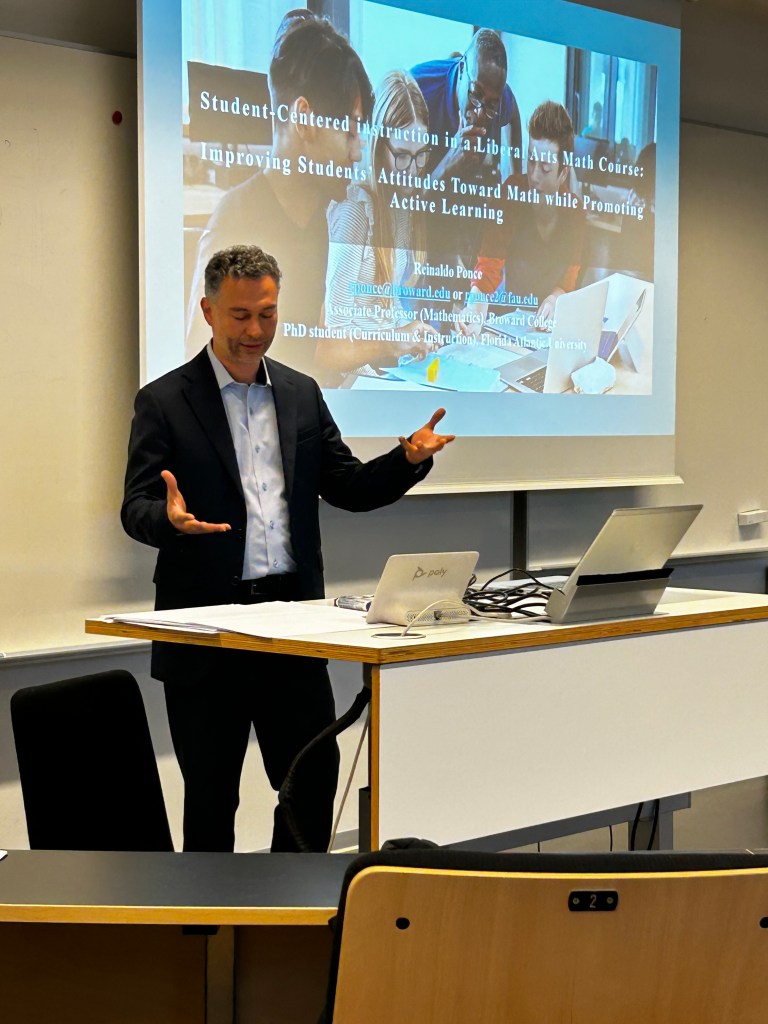
I went to the conference room for my session at 11:00 and worked with the student tech group to get started. We made some progress and when the tech guy arrived, I hoped that he would get Zoom working and despite a limited start, he did not. Also, our back up for Parbati was a YouTube video which I suspect was blocked by firewall. I soldiered on without the technology and I think did fine.
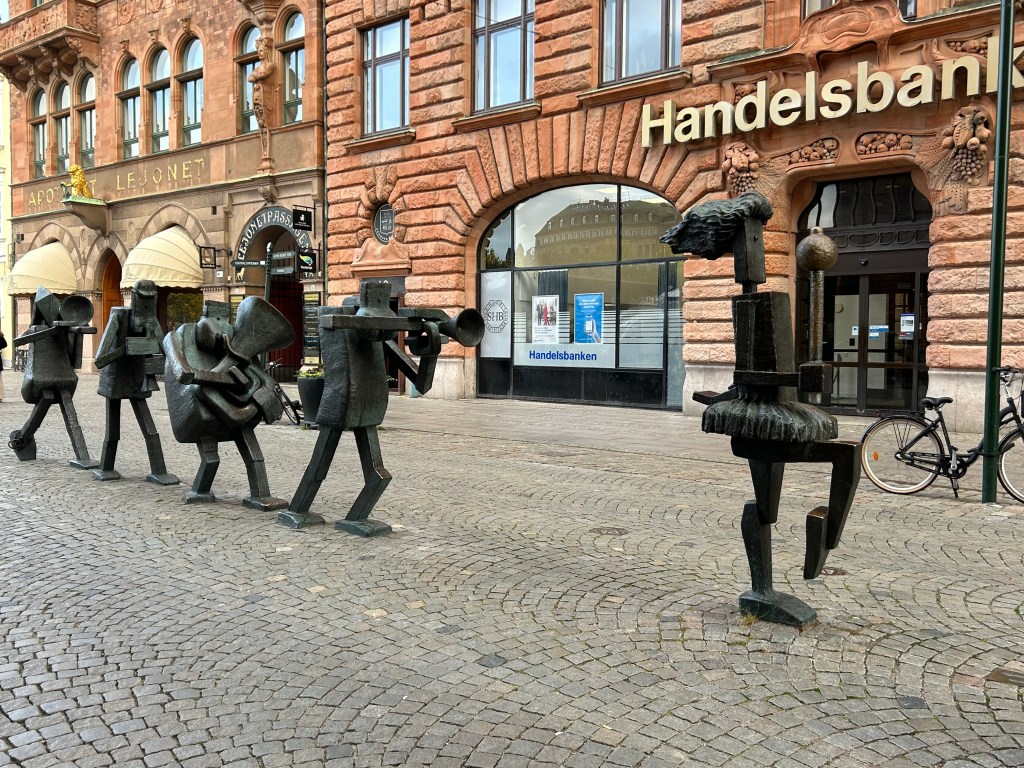
We walked the streets again and saw this group of musicians.
And stopped at a cafe for a drink.
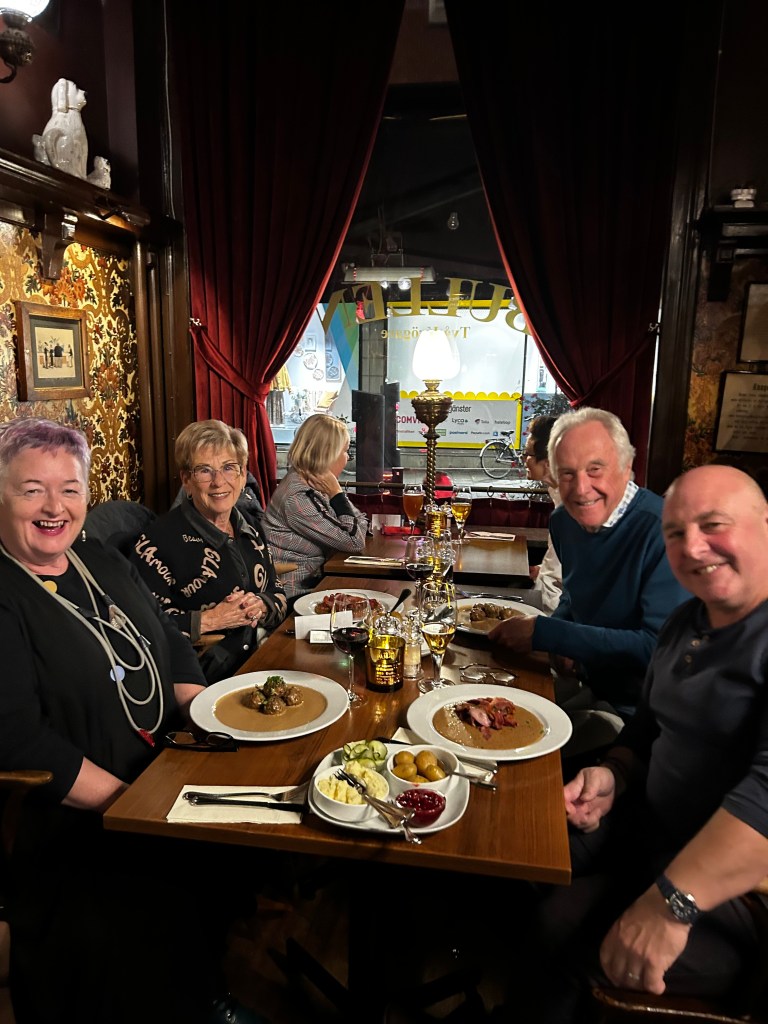
We went with Mairin and Red back to Bullen (means Bank) for more good Swedish food. We had an awesome evening together.
Sunday, October 27 Gothenberg
After another hearty breakfast, we got the train at noon from Malmo to Gothenburg. I have no idea the cause but I was sick for over an hour, emptying my system. Then I felt fine. We walked from the Central Train Station to the Elite Plaza Hotel following Google Maps in the cold and wind. While only a 20 minute walk, pulling suitcases on cobblestoned streets is wearing. We were lucky, however, because it rained during the trip there but was over when we arrived.
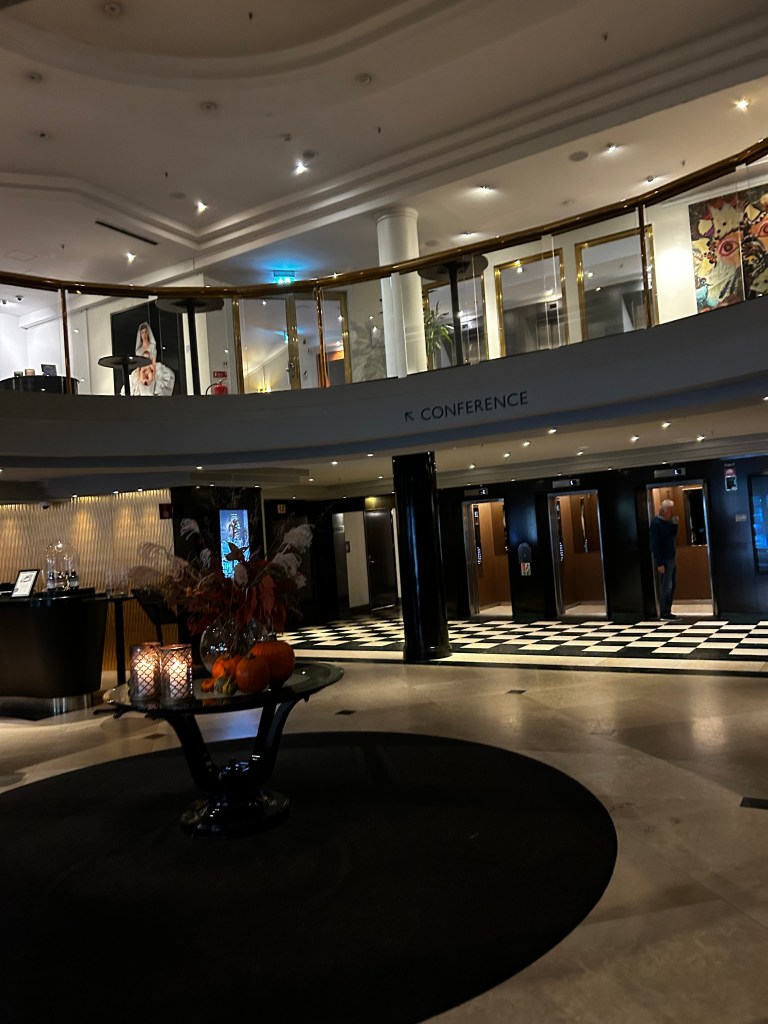
We walked the “Avenue”, had a drink and for dinner we went an Asian restaurant called “Chou” just around the corner from the Elite Park Avenue Hotel. We had Chop Suey, Bill’s with fried rice and mine with fried noodles: Both were very good.
Monday, October 29 Gothenburg.
We met Ulrica Flach, our guide, in the lobby and had a great walking tour for 3 hours around the city. We heard about the history and we covered a lot of the city centre!
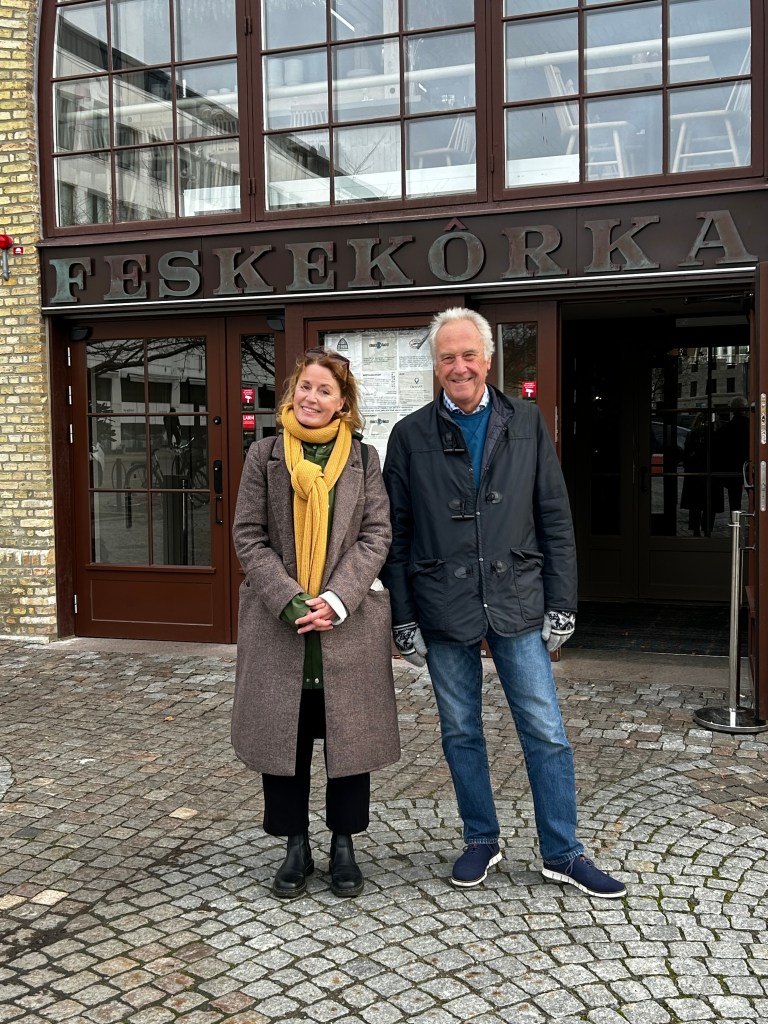
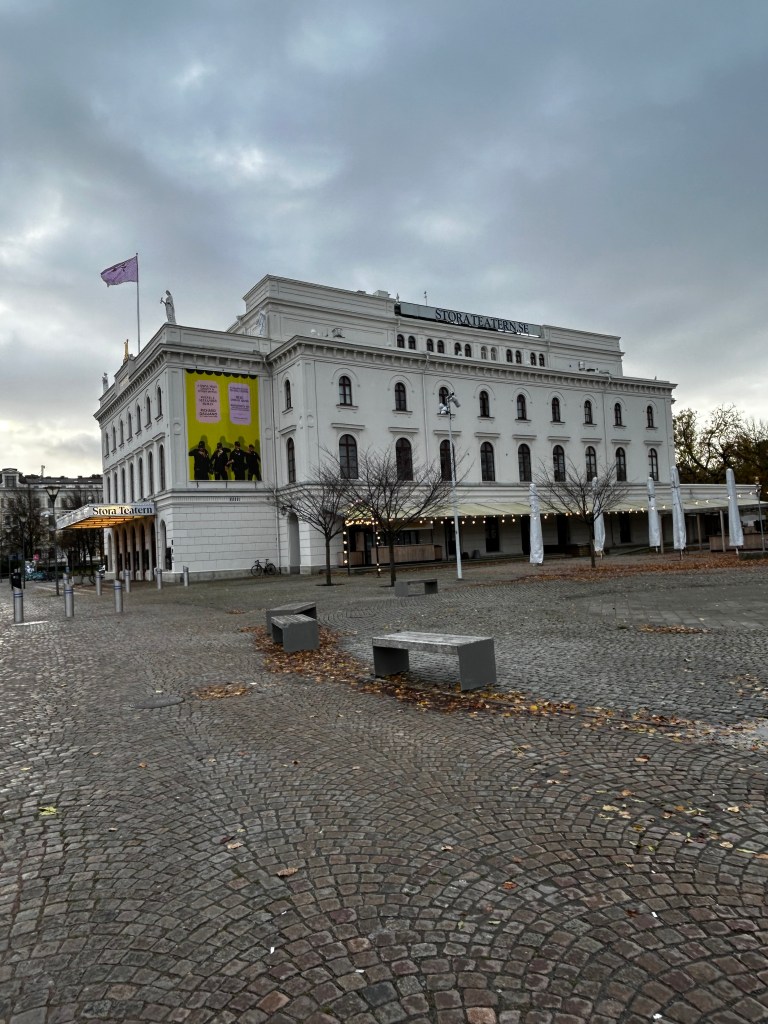
After walking down the “Avenue”, the main street lined by high-end shops, we passed the Opera House and crossed the King’s bridge.
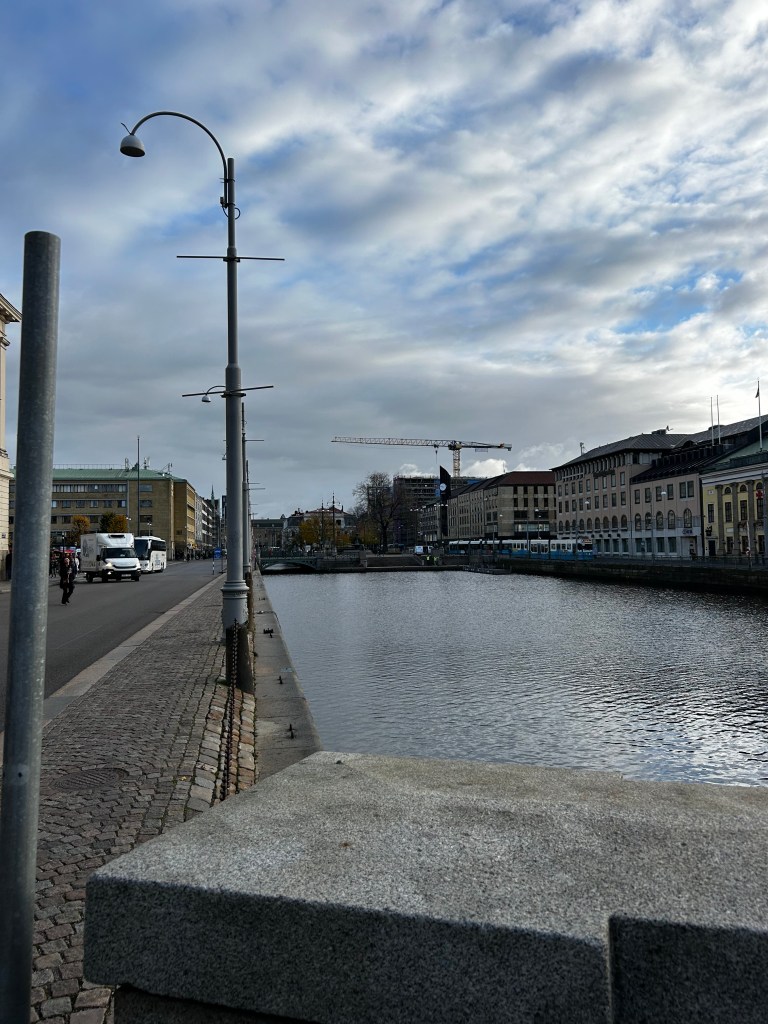
Gothenburg is located on the west coast, in southwestern Sweden, about halfway between the capital cities of Copenhagen (Denmark) and Oslo (Norway). The location at the mouth of the Göta älv, which feeds into the Kattegat, an arm of the North Sea, has helped the city grow in significance as a trading city. The archipelago of Gothenburg consists of rough, barren rocks and cliffs, which also is typical for the coast of Bohuslän. Due to the Gulf Stream, the city has a mild climate and moderately heavy precipitation. It is the second-largest city in Sweden after its capital Stockholm with a population of approximately 600,000 in the city proper and about 1.1 million inhabitants in the metropolitan area.
There are many canals that provided transportation for goods although many of them have been filled in to provide more land.
Before wooden buildings were banned in the city, this church burned down several times. Not much is left of the 17th Century wooden buildings. One time, a visitation for a rich man was underway and the church caught fire from a neighbouring building. This was before cremations were in vogue.
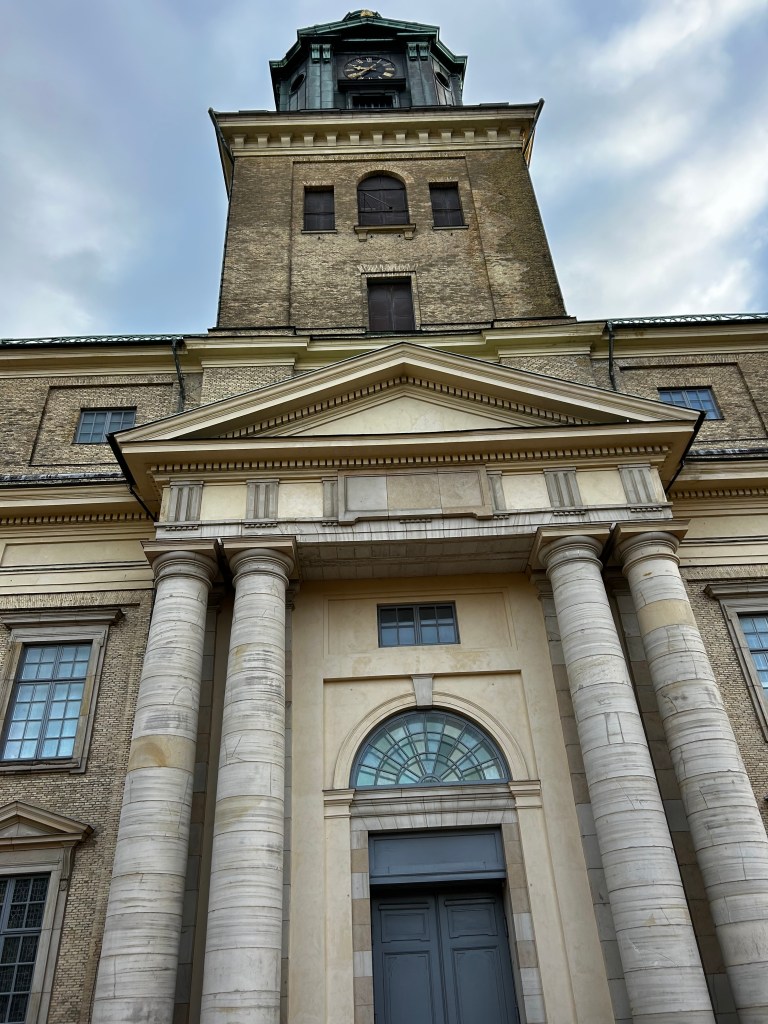
Gothenburg was founded in 1621 by Gustav II Adolf. The story told is that King Gustav Adolfs pointed to the ground on a hill and a bird told him that this will be Gothenberg. The reality is that the location was chosen for strategic reasons: defense of the south west and business: marine commerce access to the west avoiding Danish taxes. Dutch planners were involved as they had experience with canals and the soggy land left from building canals.
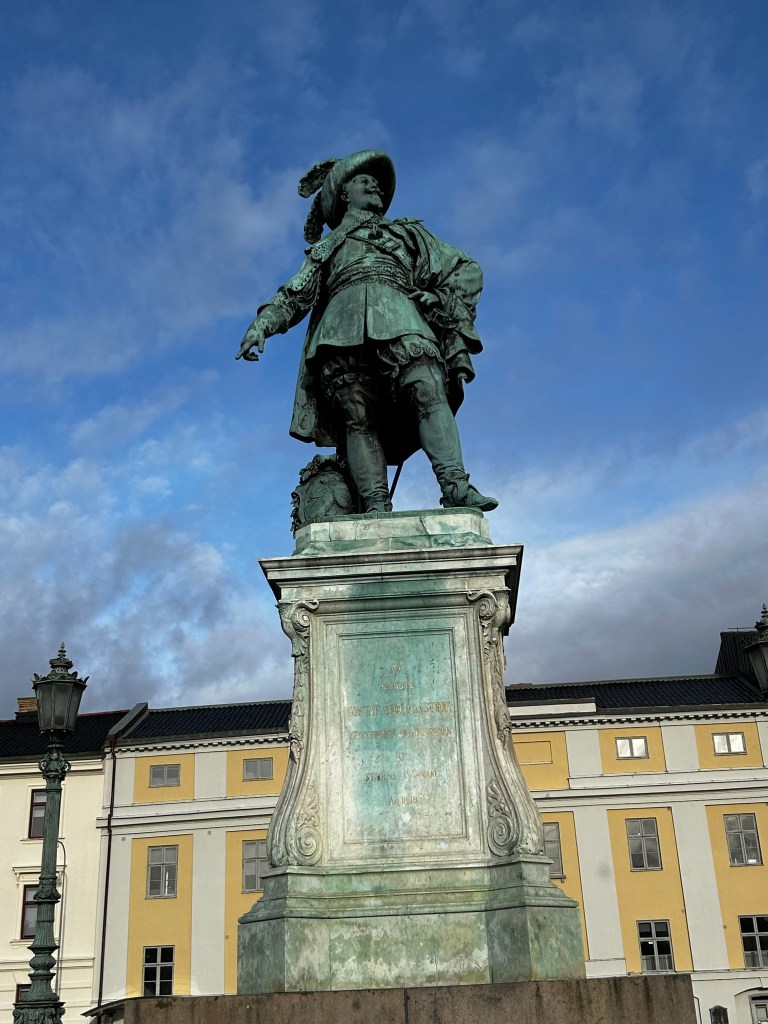
Gothenburg was built during the 1600s by the Dutch, as they were considered the best at building on marshland. This has given Gothenburg’s city centre its famous channels that are distinctly dutch-inspired. The original city was built inside a large zigzag-shaped city wall that came to characterise Gothenburg for centuries to come. Not much is preserved today from this fortification, but a remnant of the bastion remains close to Feskekörkan, the fish church. The moat along with other defensive structures made the 17th century Gothenburg one of Northern Europe’s most fortified cities
The former artillery Kronhuset from 1654 is now used as a cultural centre for ceremonies and arts events.
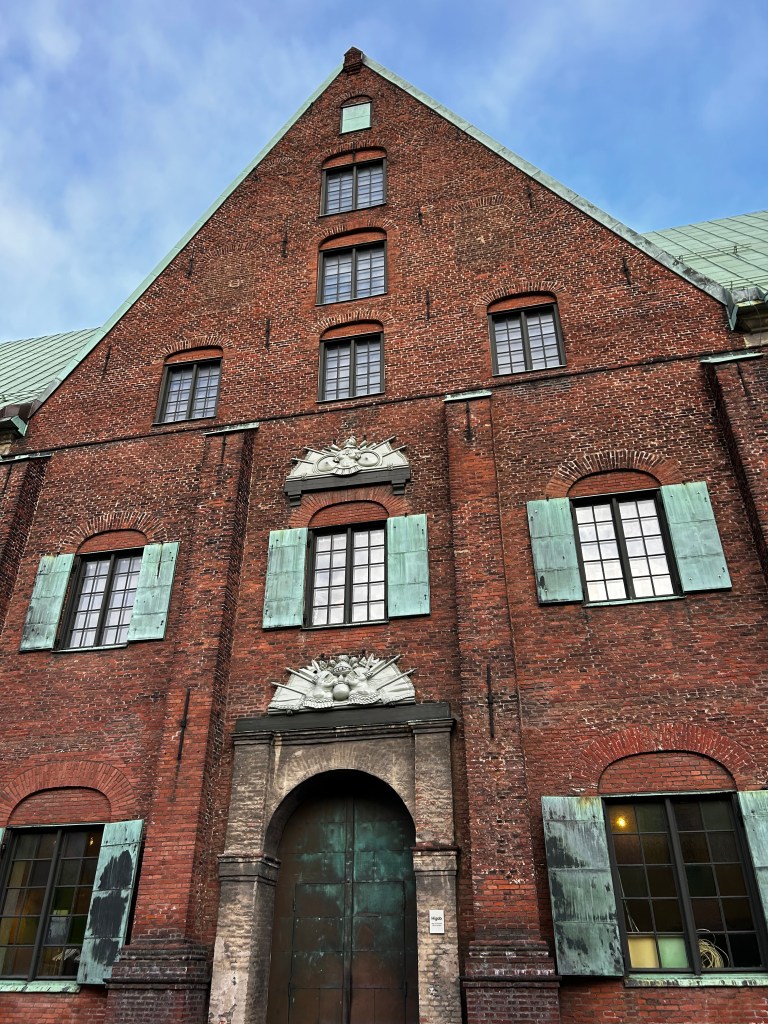
Because of the fires, a building ordinance was added in 1803 which declared that only stone houses could be built inside the moat. Some of Gothenburg’s most characteristic neighborhoods were built in the 19th century.
A large percentage of the Swedish population (1.3 million) emigrated to the US 1880 to 1910 and this ship took them from this harbour to England and then the US. With population growth and crop failures, land in the US was a magnet but other factors such as religious persecution from the Swedish Lutheran Church as well as social conservatism and snobbery influenced by the Swedish monarchy were in play.
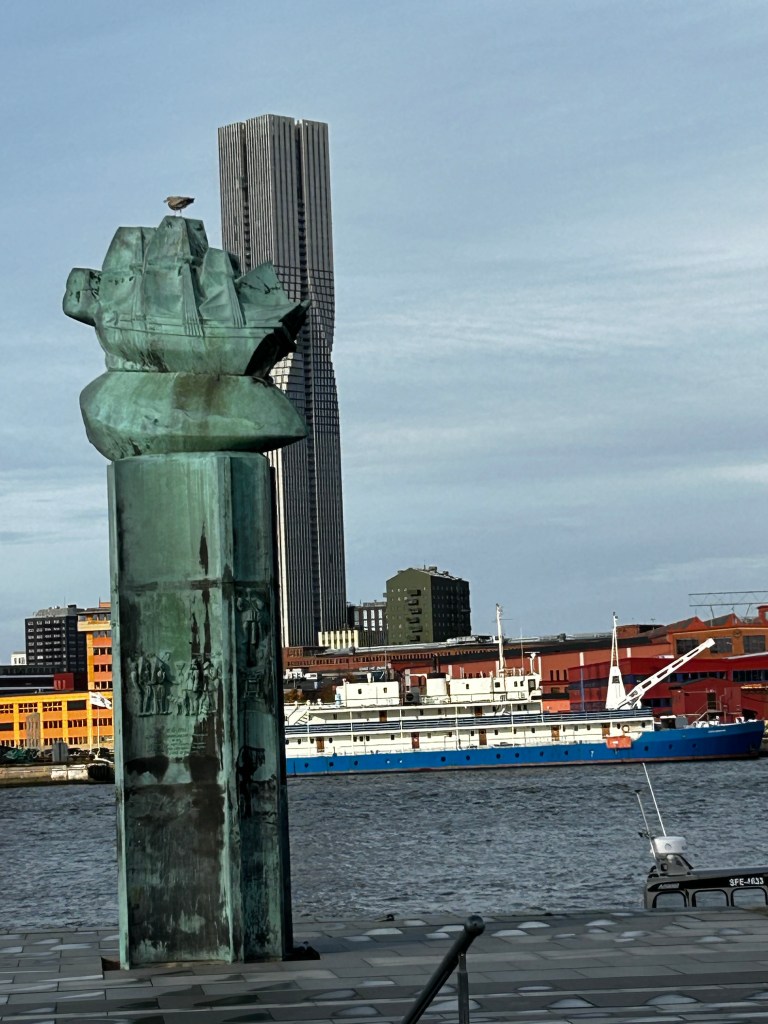
Historically, Gothenburg was home base from the 18th century of the Swedish East India Company. From its founding until the late 1970s, the city was a world leader in shipbuilding. A shipyard crisis was hard times for Gothenburg in the second half of the 1900s. From being one of the largest employers in town the shipbuilding industries gradually liquidated in Gothenburg. But the city has been praised for having succeeded in developing the areas where the shipbuilding industries were once located.
Skansen Kronan is one of the two towers built to defend Gothenburg from Danish invasion in the 17th century. The formidable looking stone building was built in the 1680s with later fortifications and artillery positions added later. It has commanding views across the city and beyond. We climbed up the the remnants of internal walls built for increased protection nearest Denmark, to view the city.
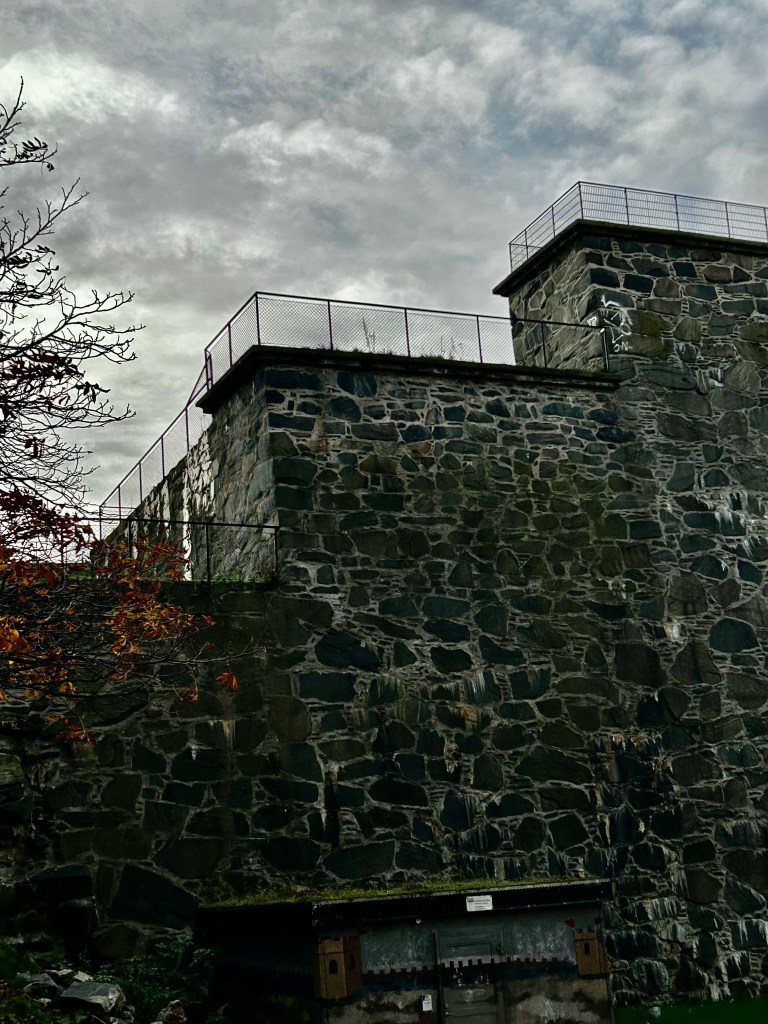
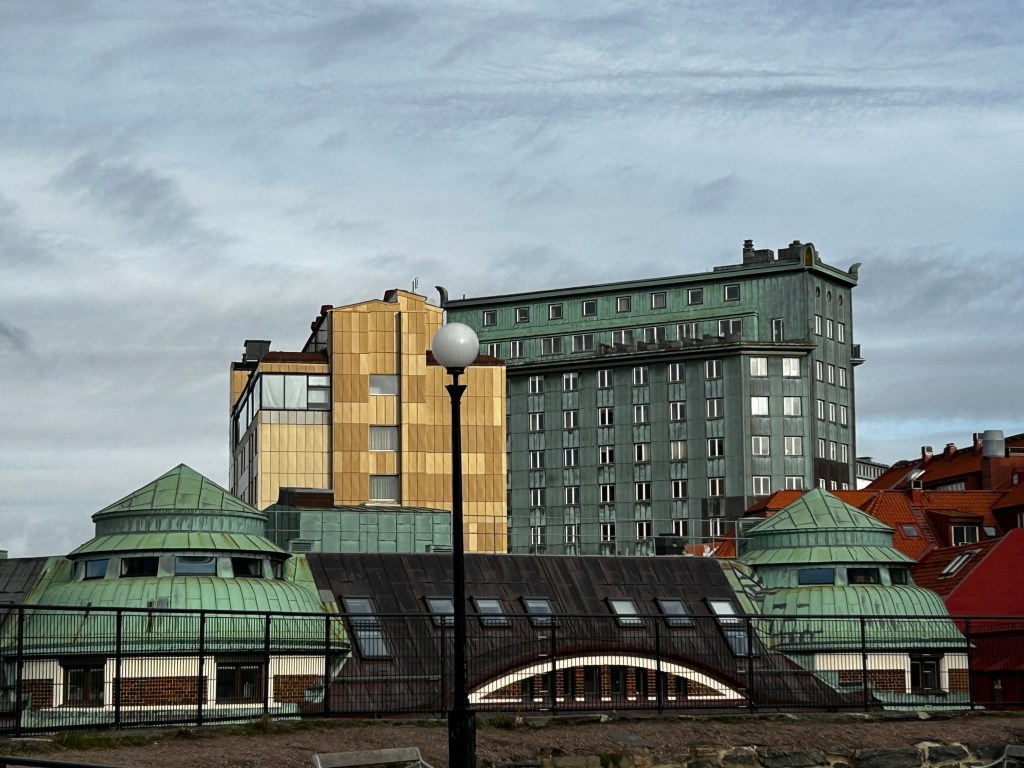
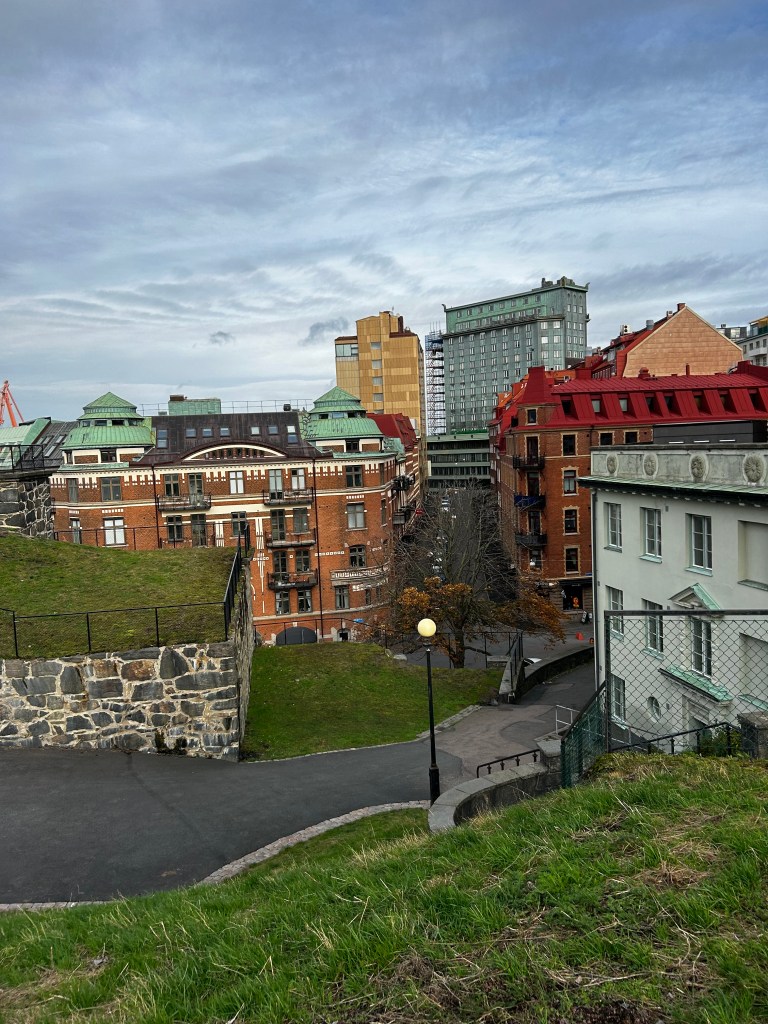
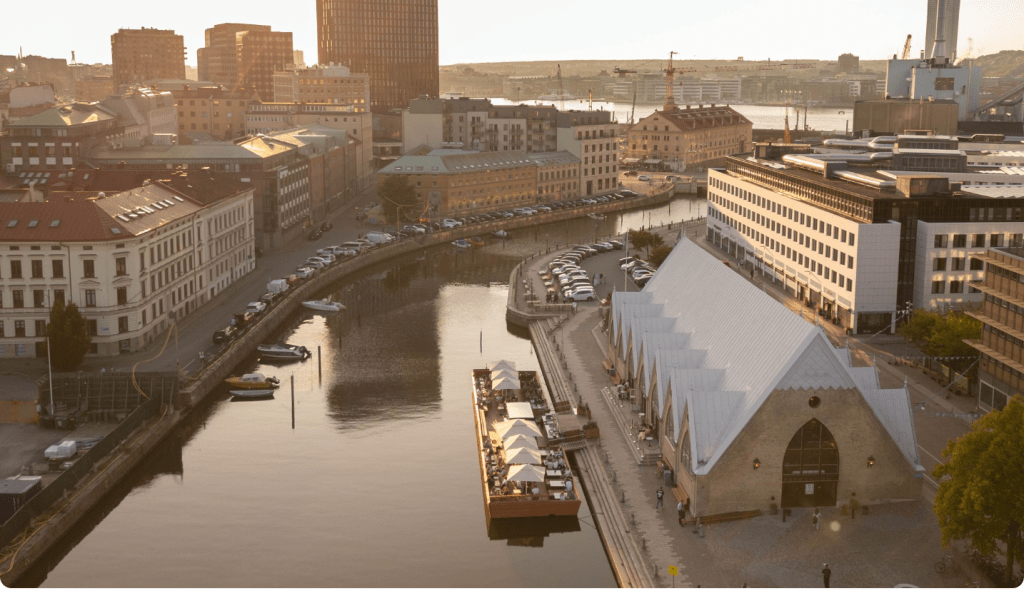
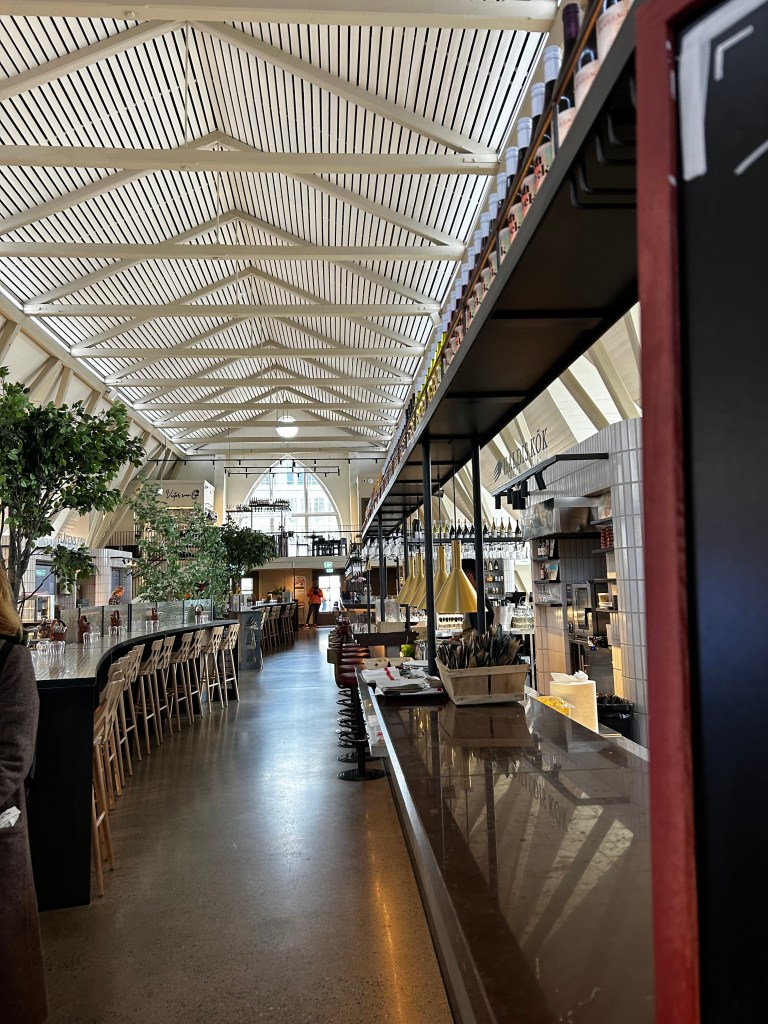
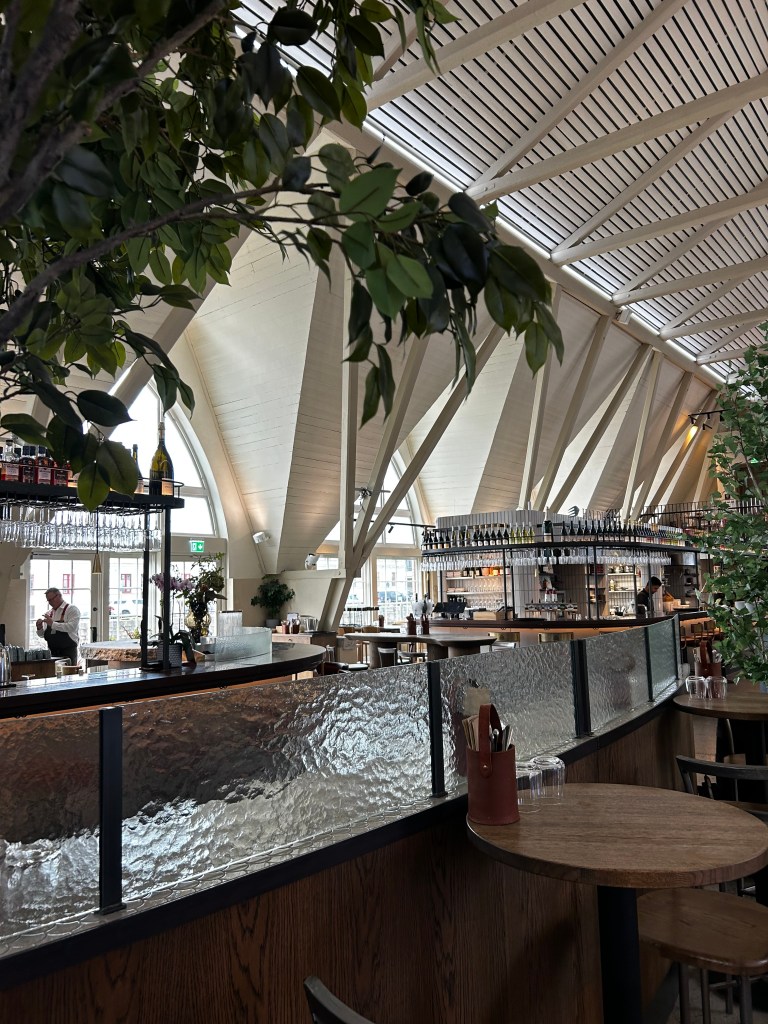
Fiskekyrkan or Feskekörkais Gothenburg’s indoor fish market by the moat, a unique building dating from the 1870s is one of Gothenburg’s most famous landmarks and attractions. The name means ‘Fish Church’, relating to its resemblance to a gothic church with pointed arches and fluted interiors. It sits right by the water, and is the place where fishermen would bring their catch to sell fresh. It had been under reconstruction for 3-4 years and had just been re-opened.

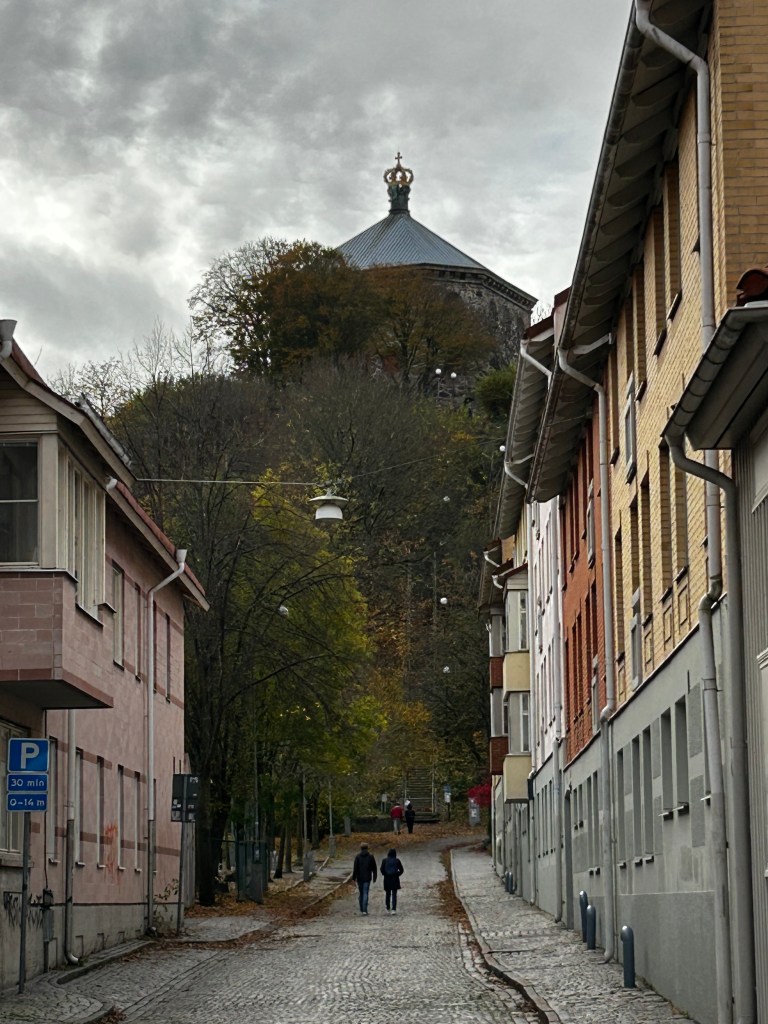
We walked to Haga, a shopping area for pedestrians with small shops with local merchandise. The wooden painted houses date mostly from the 19th century, when the area was one of the most impoverished in the city. We could see the lookout with the crown on top more closely. From this look out, guards would watch for the Danish coming across to attack and run down calling to the locals to burn down their houses. But it never happened!
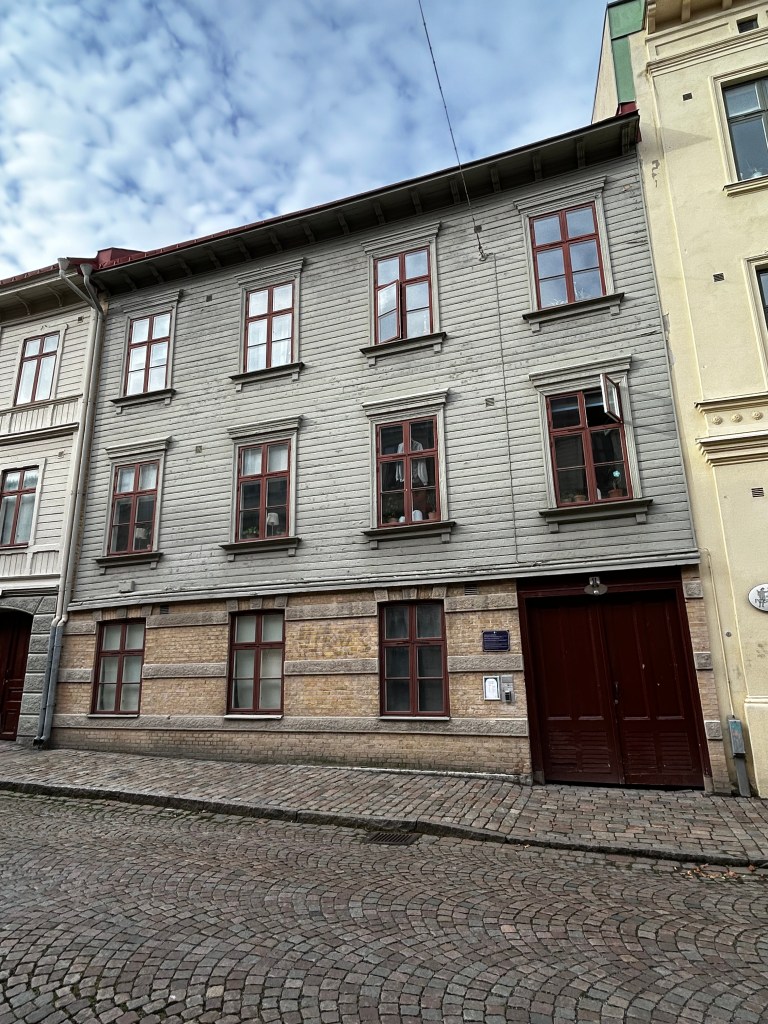
When the builders ran into trouble trying to keep the buildings low-rise and still meet housing needs for a growing population, they managed to get the municipality to agree to raising the basement above ground -note the brick first floor.
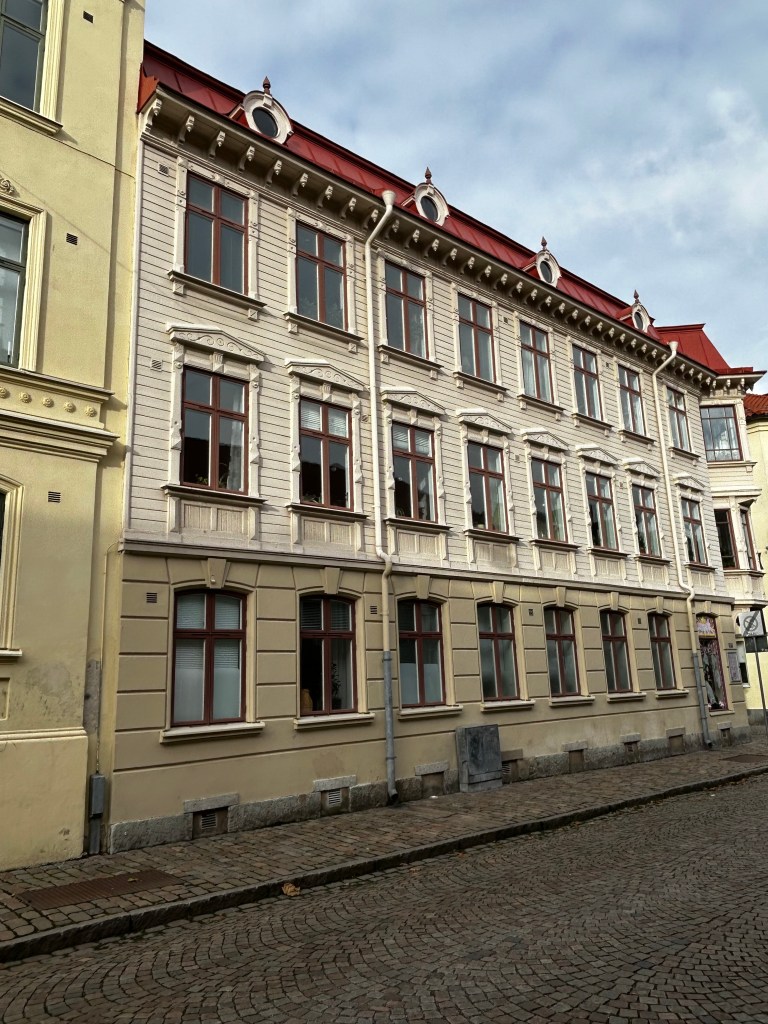
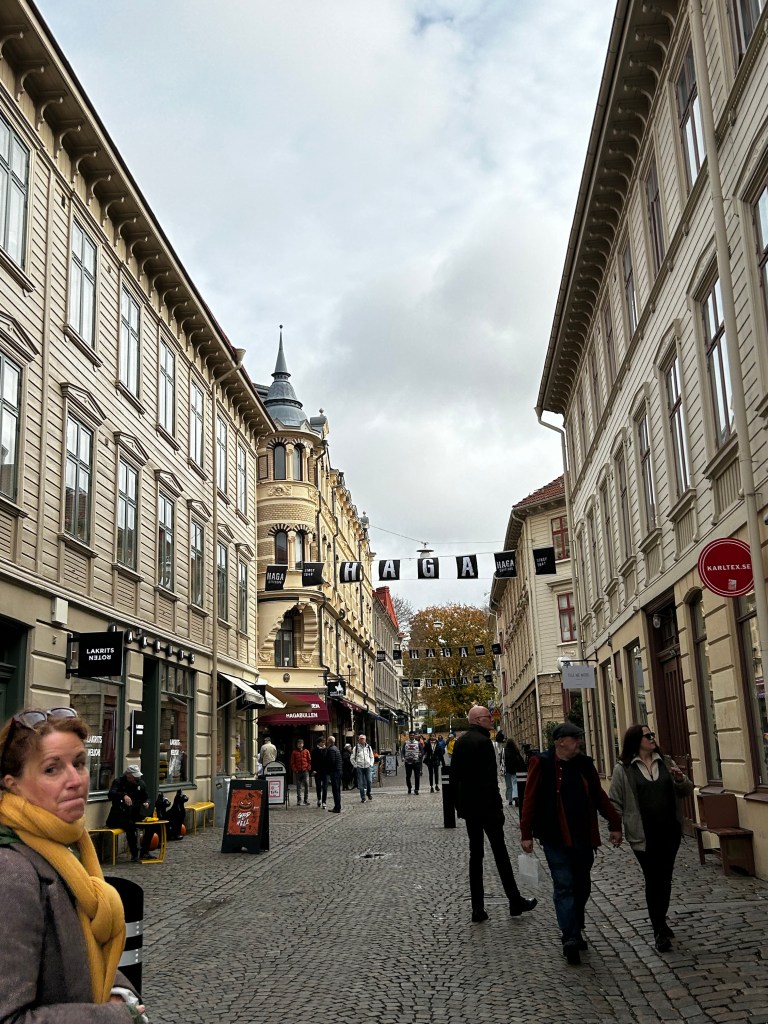
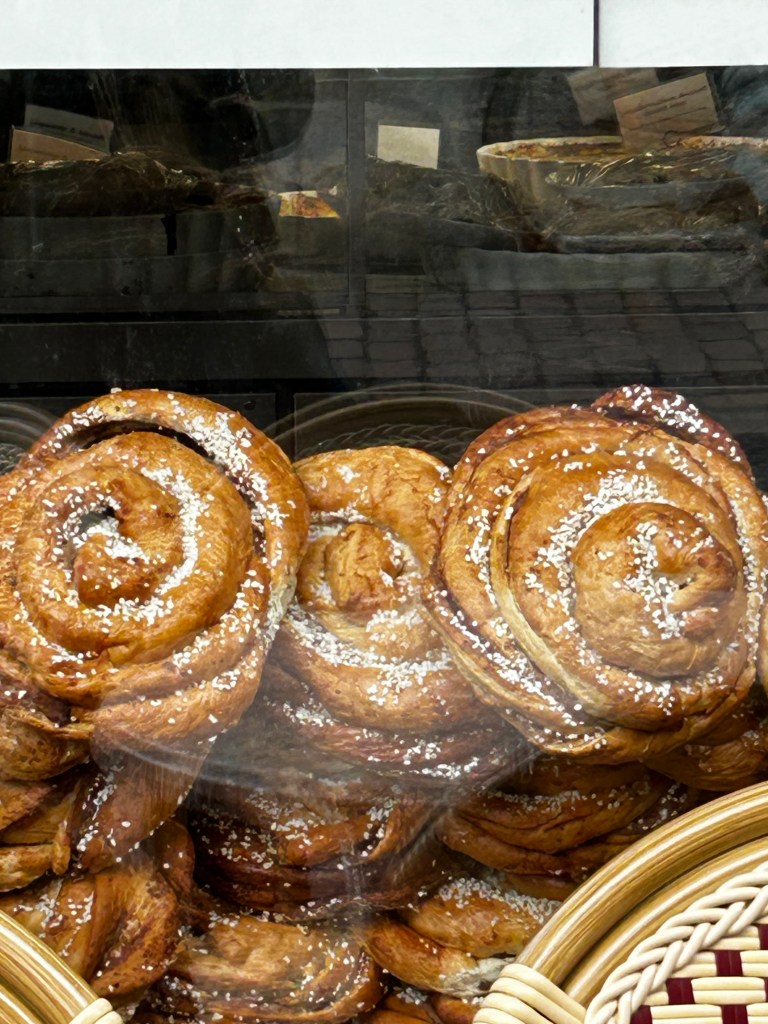
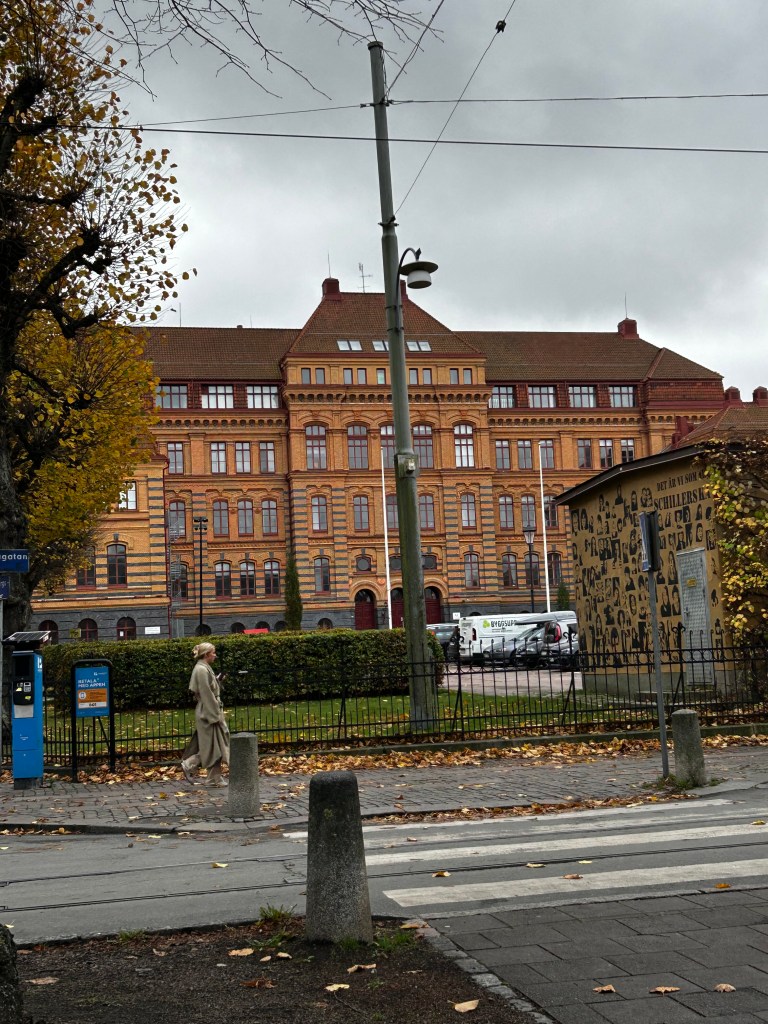
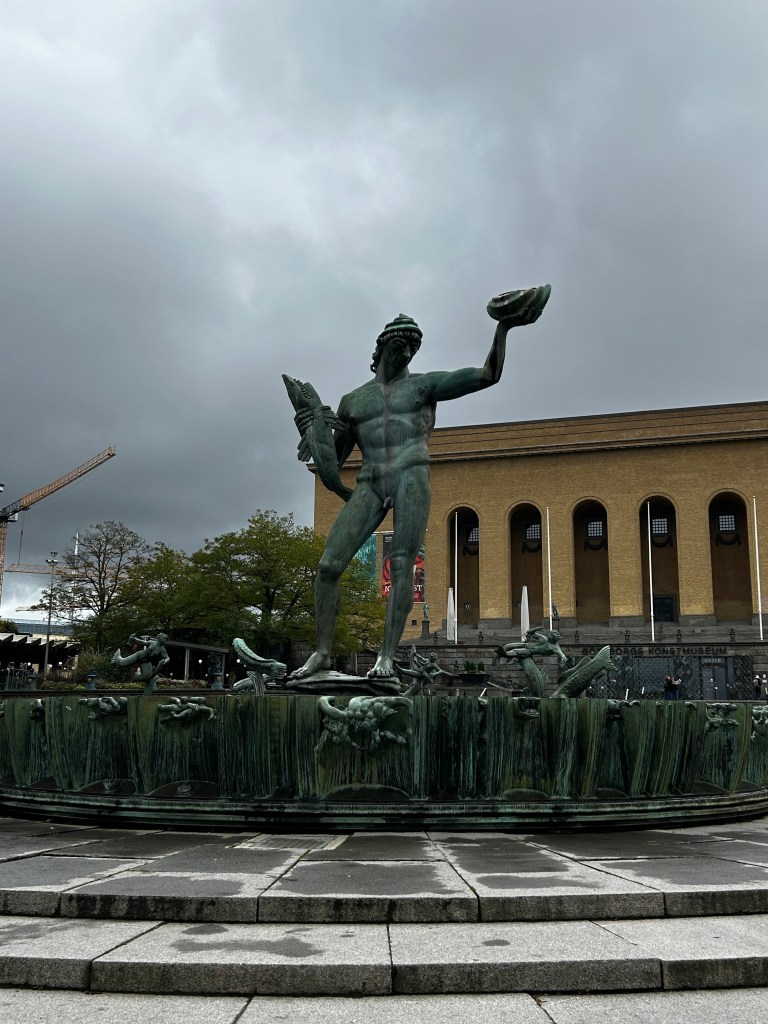
After a lunch break and after the rain stopped at 2:00, we walked back to Haga. We walked the area, bought a pillow and some gloves and walked back.
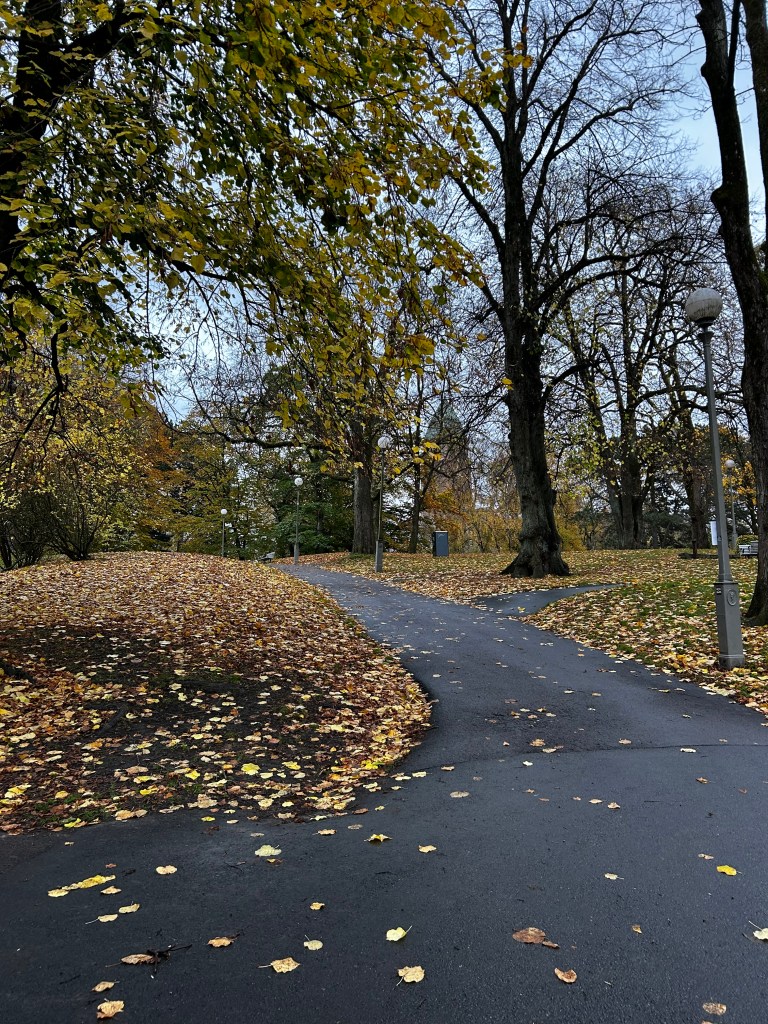
For dinner we went to Levantine, a highly-recommended French restaurant. While the ambiance of the restaurant is nothing special, we both had Bouillabaisse and it was delicious!
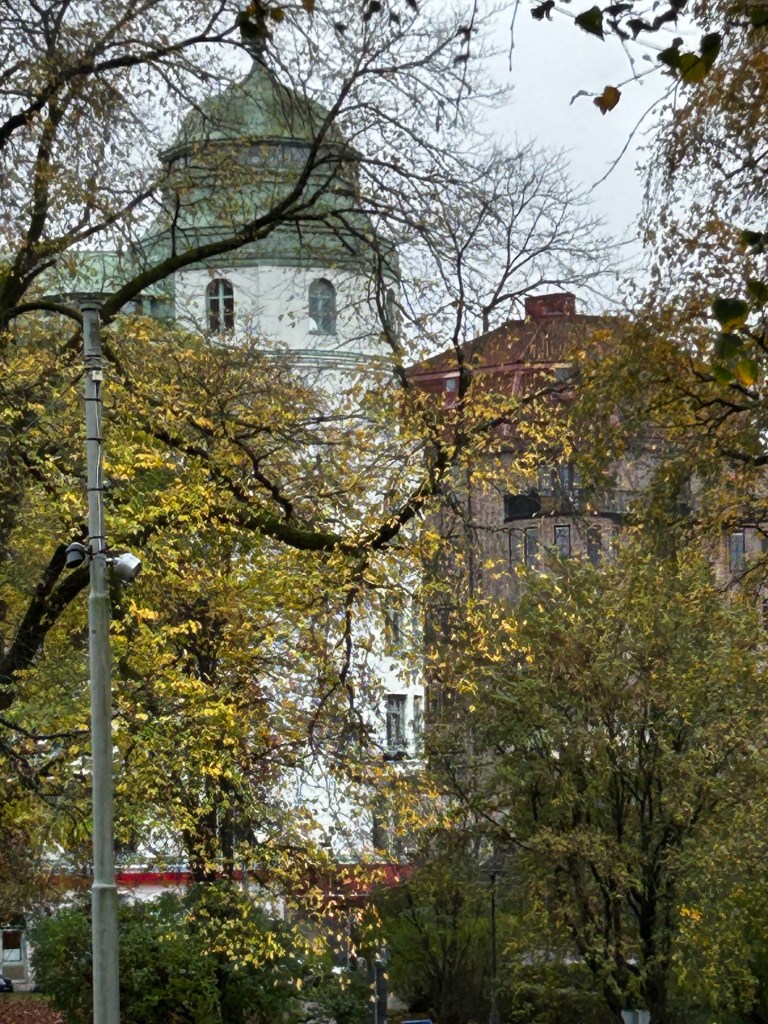
Tuesday, October 29 Stockholm
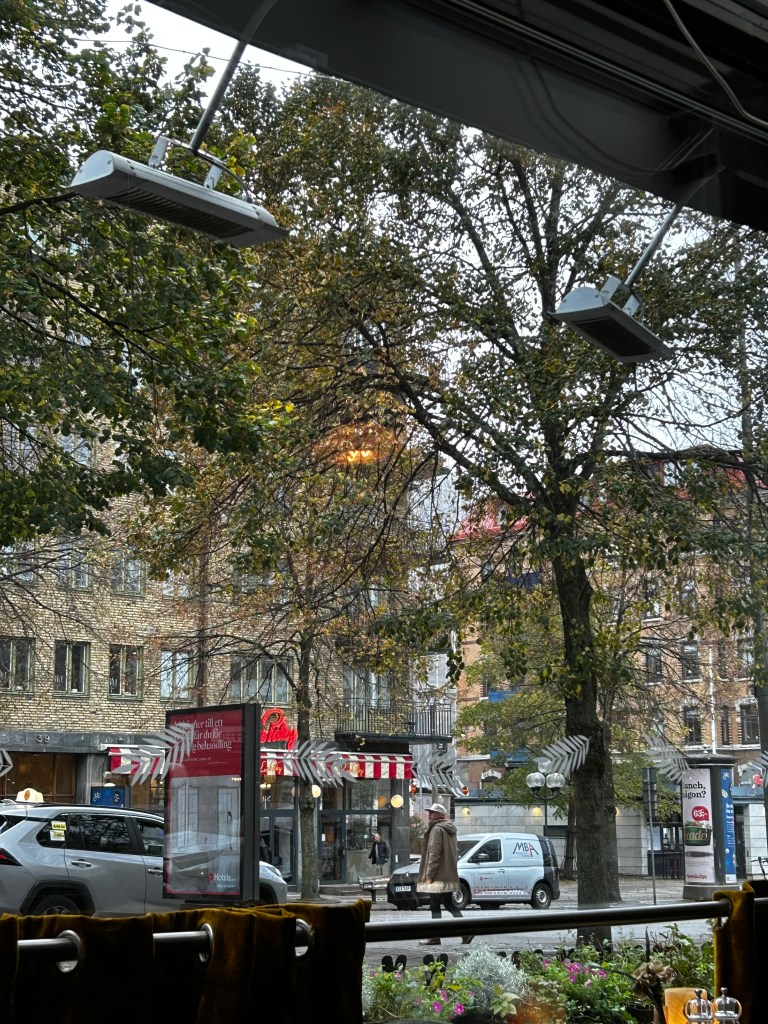
On a cool damp morning, we took a taxi as it was raining to the train station and took the train at 11:25 to Stockholm for almost 3 hours.
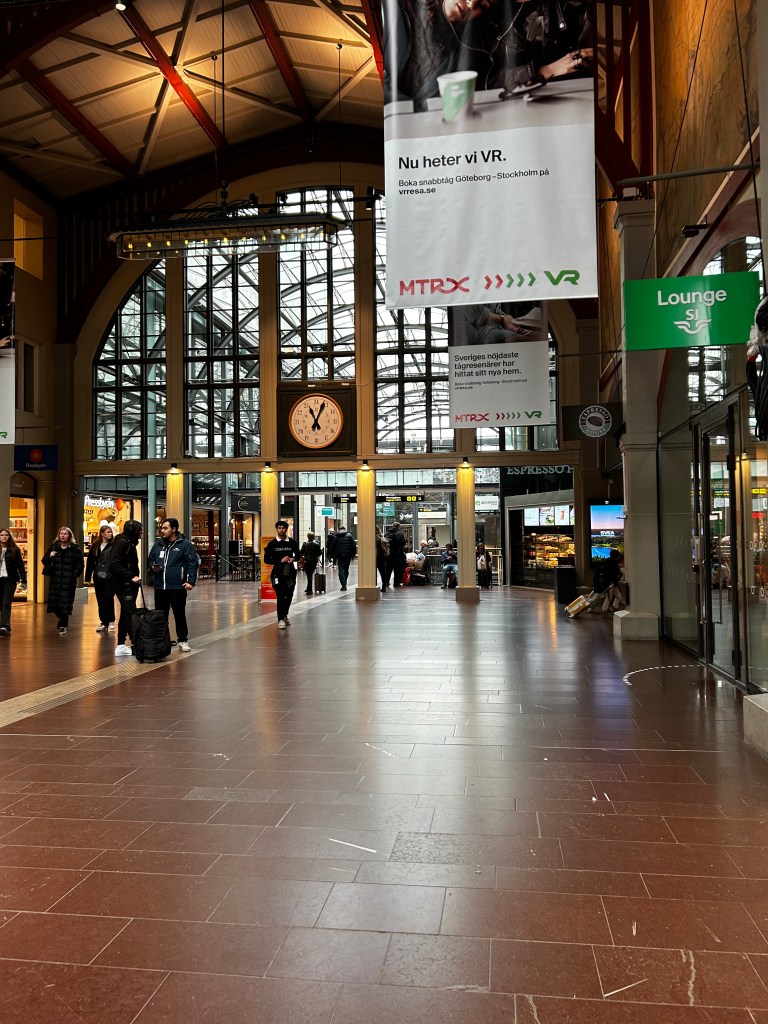
We both still have colds but Dr Liz’s natural remedies are keeping them low key and not slowing us down.
We arrived in Stockholm 30 minutes late because of a mysterious stop, mysterious because the announcement was in Swedish! The Scandic Continental is directly across from Central Station but we took an exit a block away.
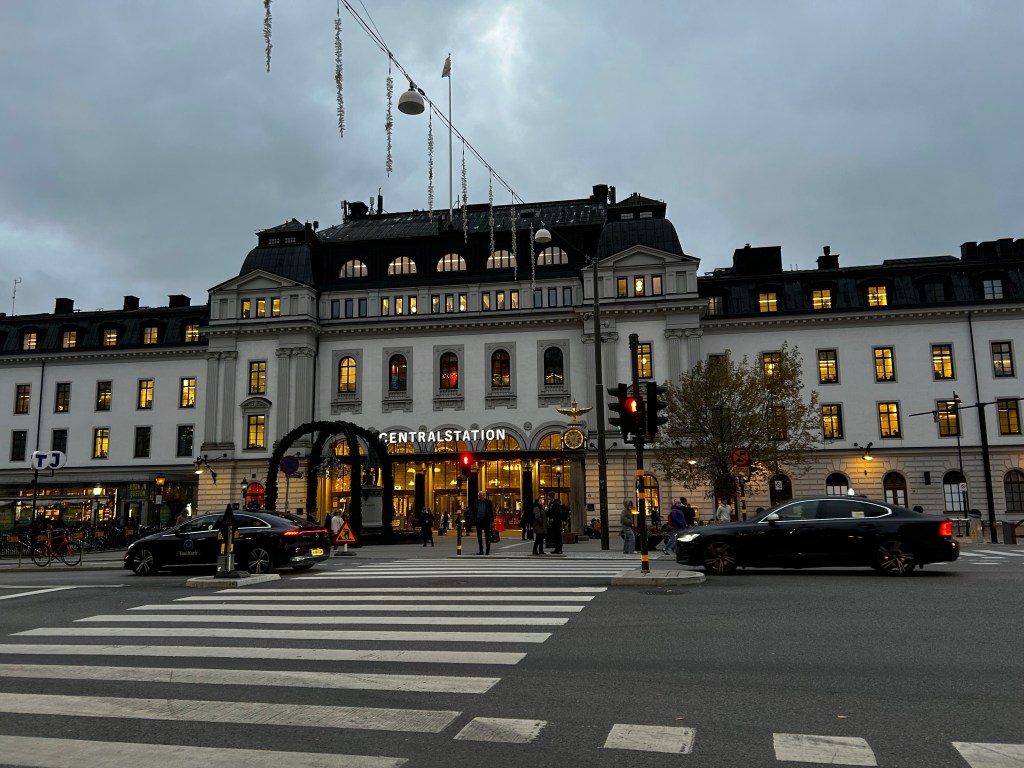
Greater Stockholm’s 2 million residents ( one in five Swedes) live on 14 islands woven together by 54 bridges. Stockholm is committed to limiting its environmental footprint. Development is strictly monitored; cars must pay a toll to enter the city; cars are expensive because of duties to be paid.
By the time we checked in, it was 4:00 so we went for a walk over to Old Town, Gamla Stan, Stockholm’s historic old town; charming, photogenic, full of antique shops, street lanterns, row on row of shops and restaurants. Until the 1600s, all of Stockholm fit in Gamla Stan. It’s a very busy place full of tourists even at the end of October, around the Royal Palace.
We found a Thai restaurant a block away from the hotel and had Pad Thai.
Wednesday, October 31 Stockholm
We had a wonderful breakfast and met Anna who is a physiotherapist, now tour guide. We asked to be to the Royal Palace in time for the changing of the guard.
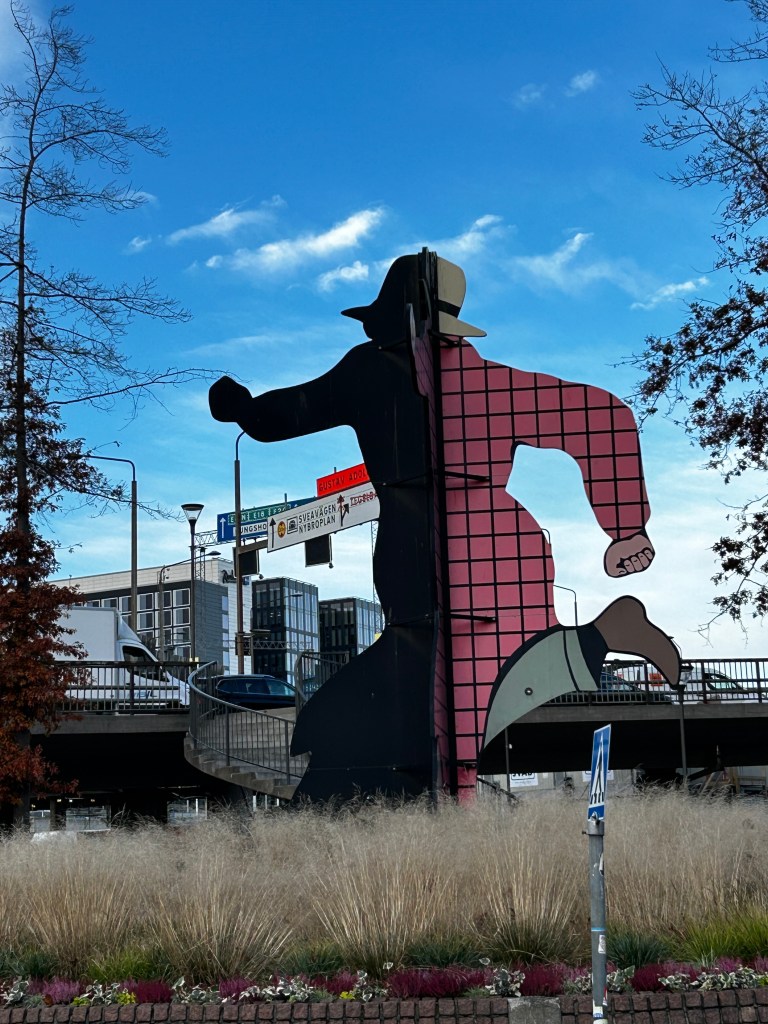
There are many sculptures in Stockholm and this is one to recognize and encourage outdoor activity.
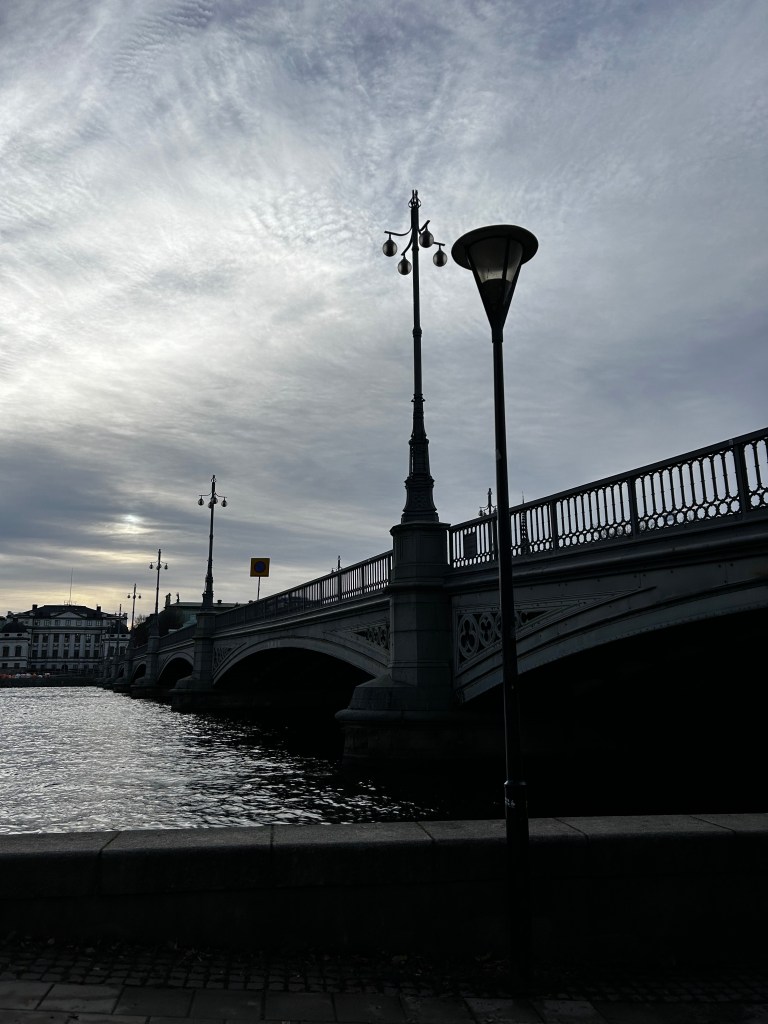
We headed out across one of the 54 bridges to one of the islands.
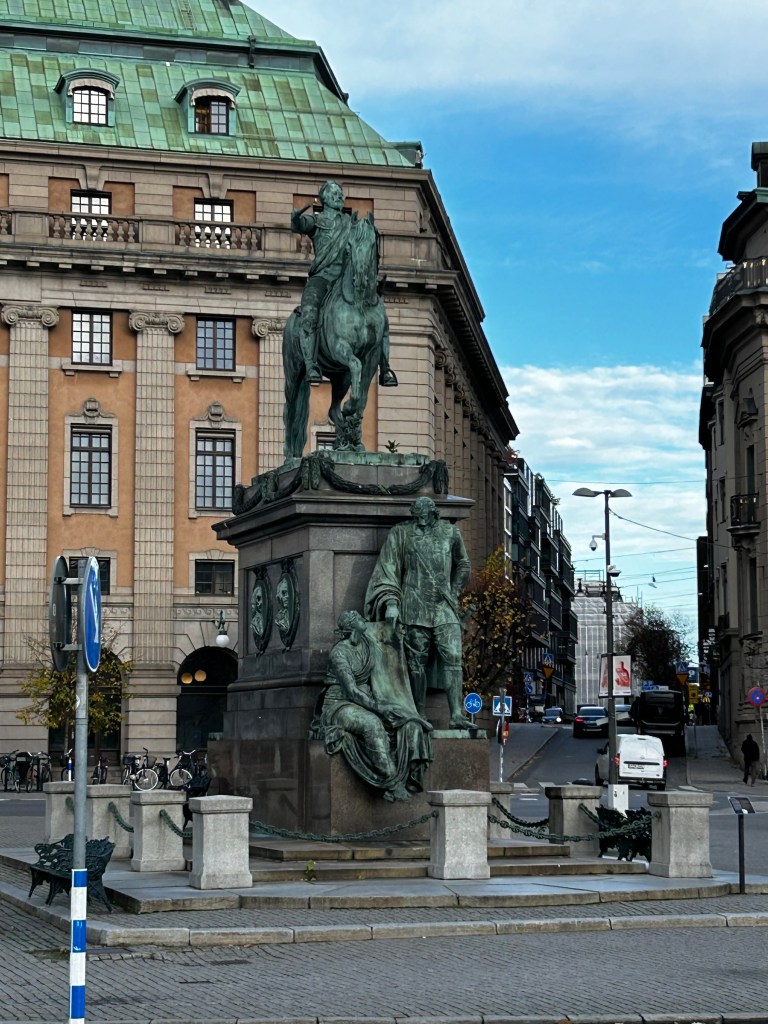
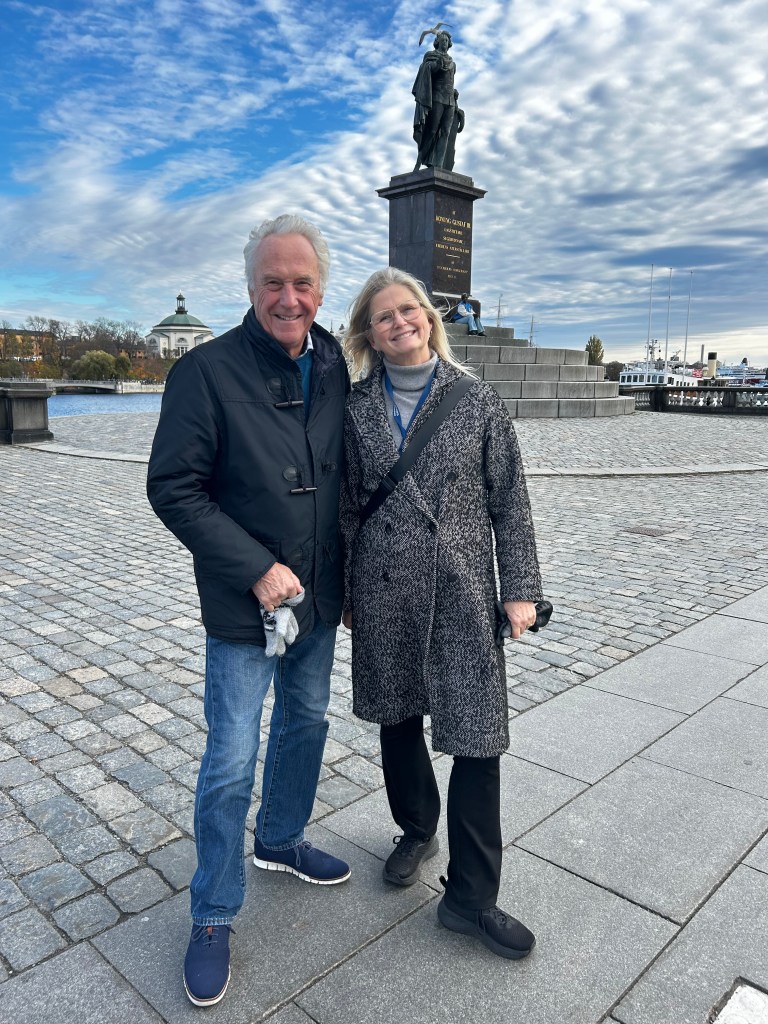
King Gustav III is gazing at the palace which was built in the 1700s on the site of the first castle. Gustav transformed Stockholm from a small Scandinavian port into a sophisticated European capital, modelled on French culture. Gustav loved the arts and founded the Royal Theatre and Royal Opera House where ironically, he was shot by a discontented nobleman.
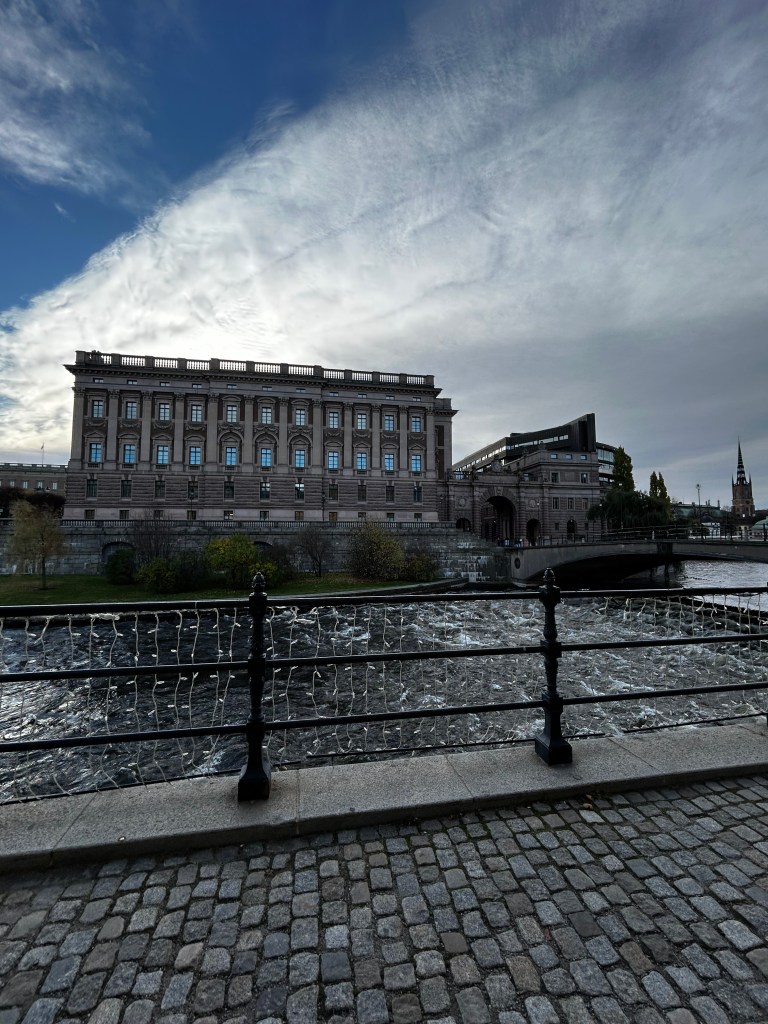
Bridge overlooking Slussen, named for the locks between the salt water of the Baltic Sea and the fresh water of Lake Malaren. Farther down there is massive construction of the waterfront. Stockholm exists because this is where Lake Malaren meets the sea. Traders would sail their goods from far inland to this point, where they’d meet merchants who would ship the goods south to Europe. In the 13th century, the new kingdom of Sweden needed revenue and began levying duty taxes on all the iron, copper and furs shipped through here.
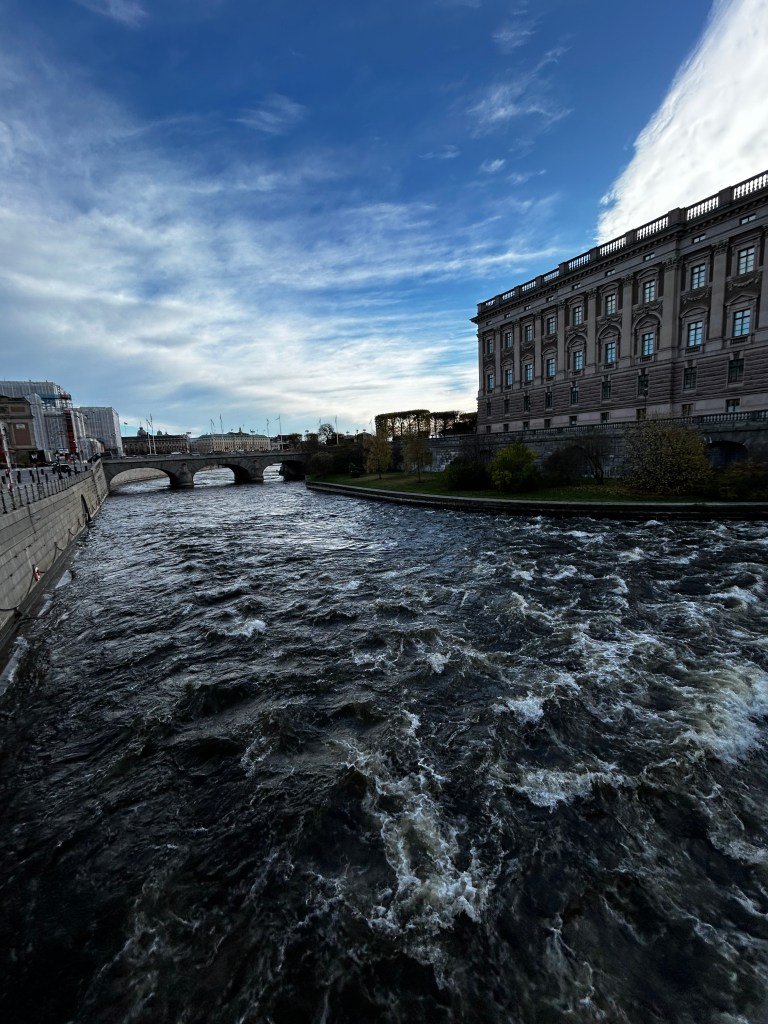

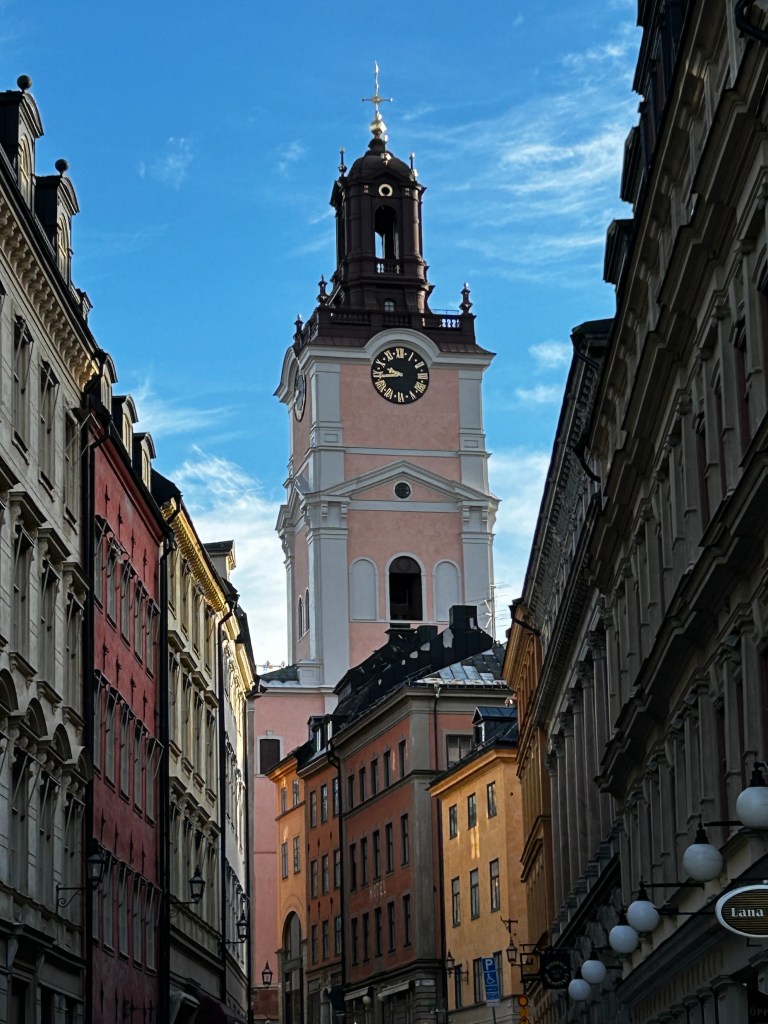
Storkyrkan: ‘The Great Church’ is the oldest church in Stockholm. Storkyrkan lies in the centre of Stockholm in Gamla Stan, between Stockholm Palace and Stortorget, the old main square of Stockholm. It was consecrated to Saint Nicholas in 1306 but construction of the church probably started in the 13th century.
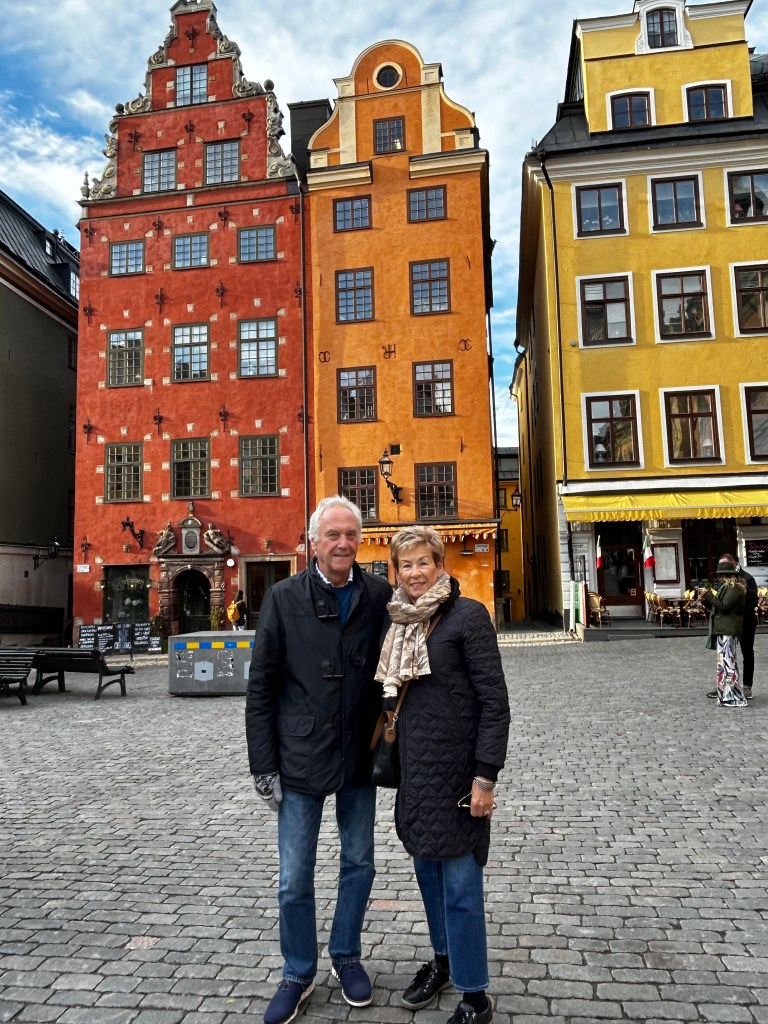
Stortorget: The most iconic, most photographed place in Stockholm: colourful old buildings topped with gables line this square – Stockholm’s oldest. In 1400, this was the heart of medieval Stockholm (population 6,000). At the town well, many lanes intersected making it a centre for trading.
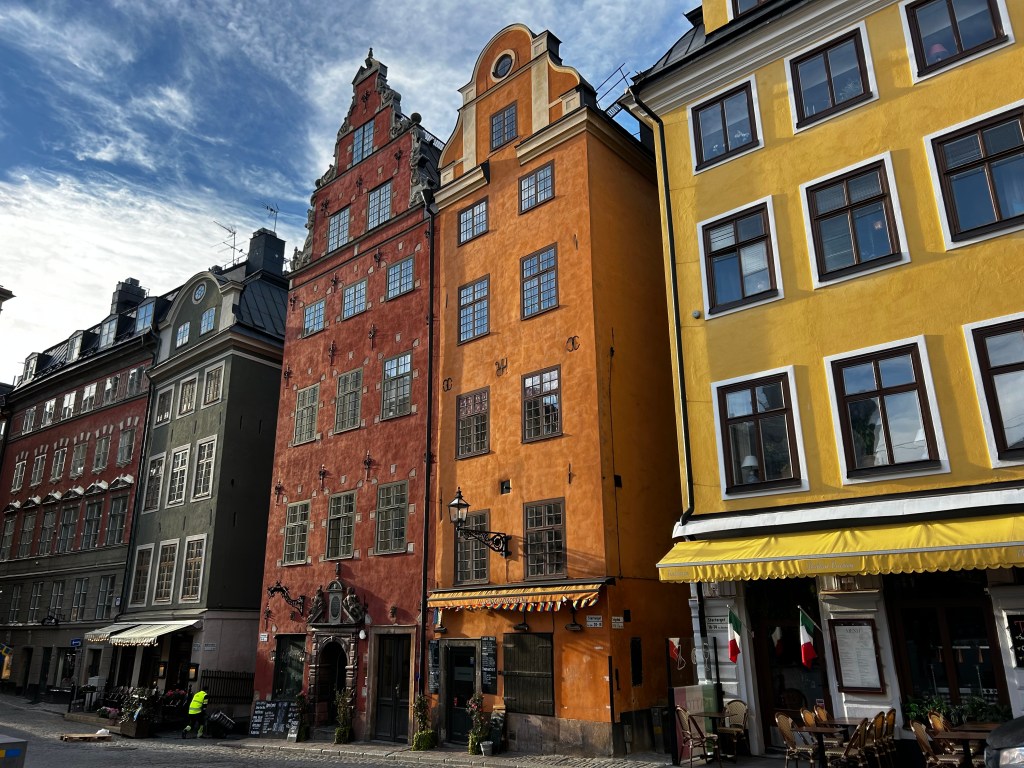
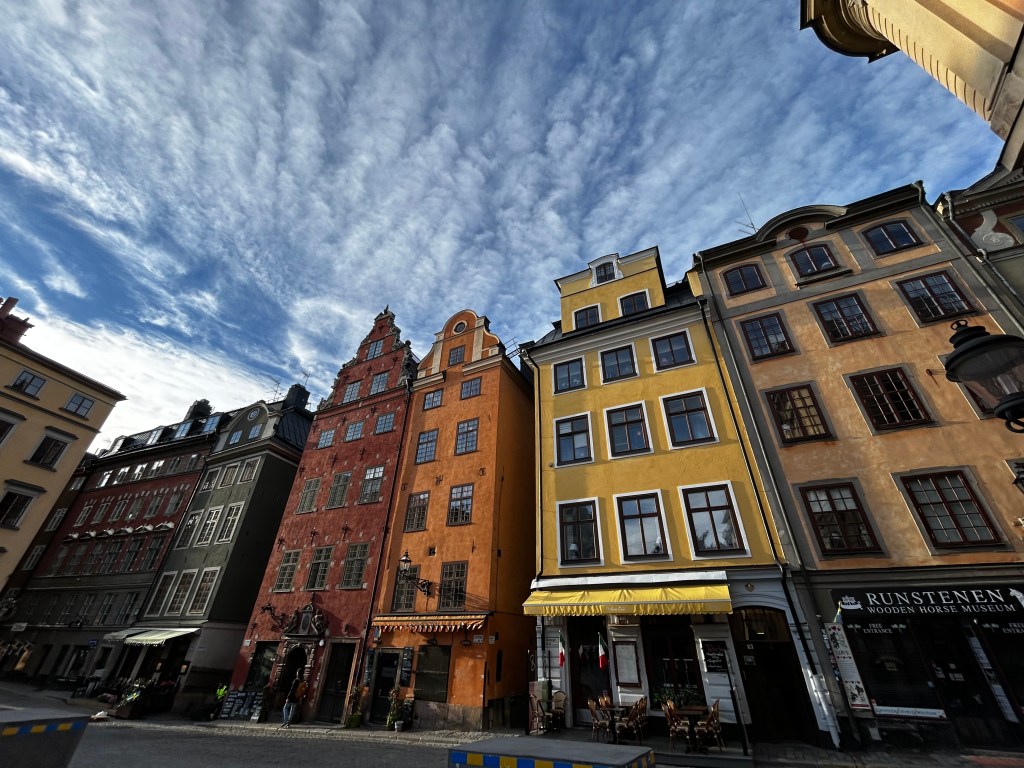
Of note is the metal in the walls of the buildings used for anchors for lifting and building and reinforcement to prevent bowing. Anna showed us the different forms:
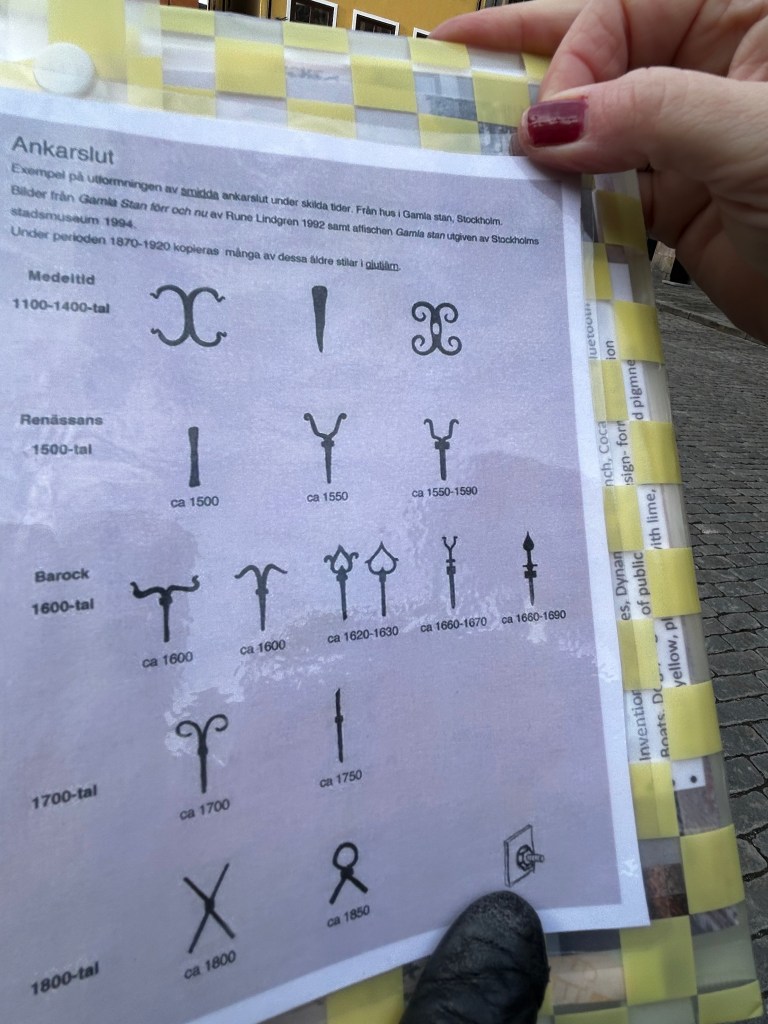
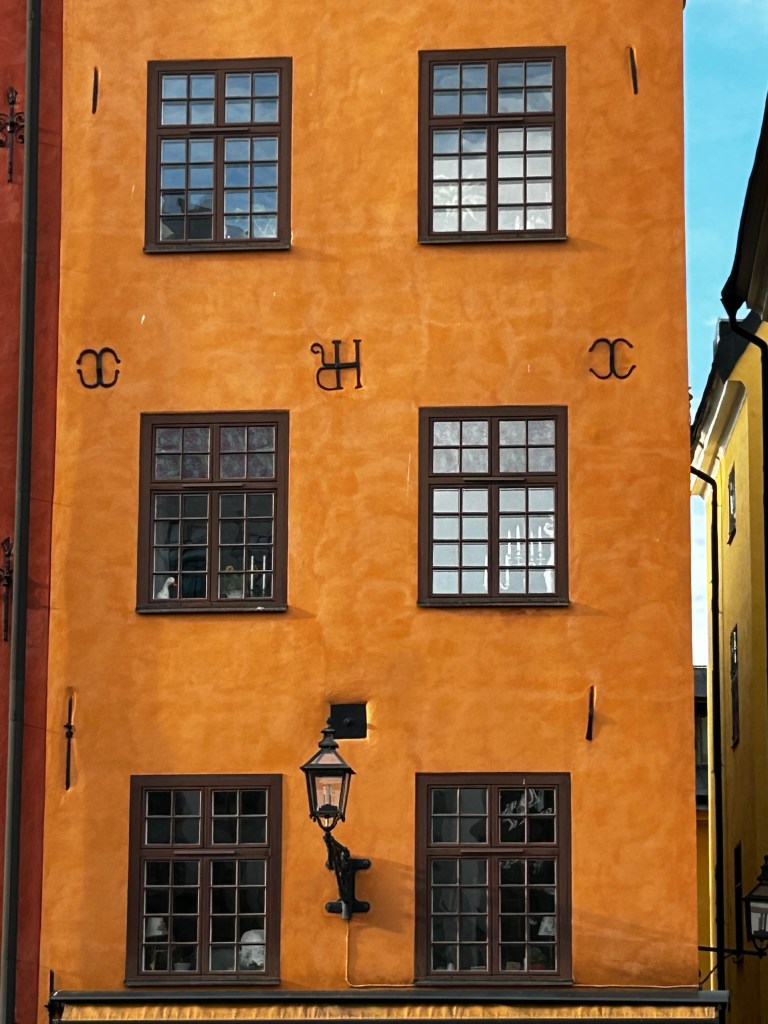
The beautiful old stock exchange is the home of the Novel Prize Museum.
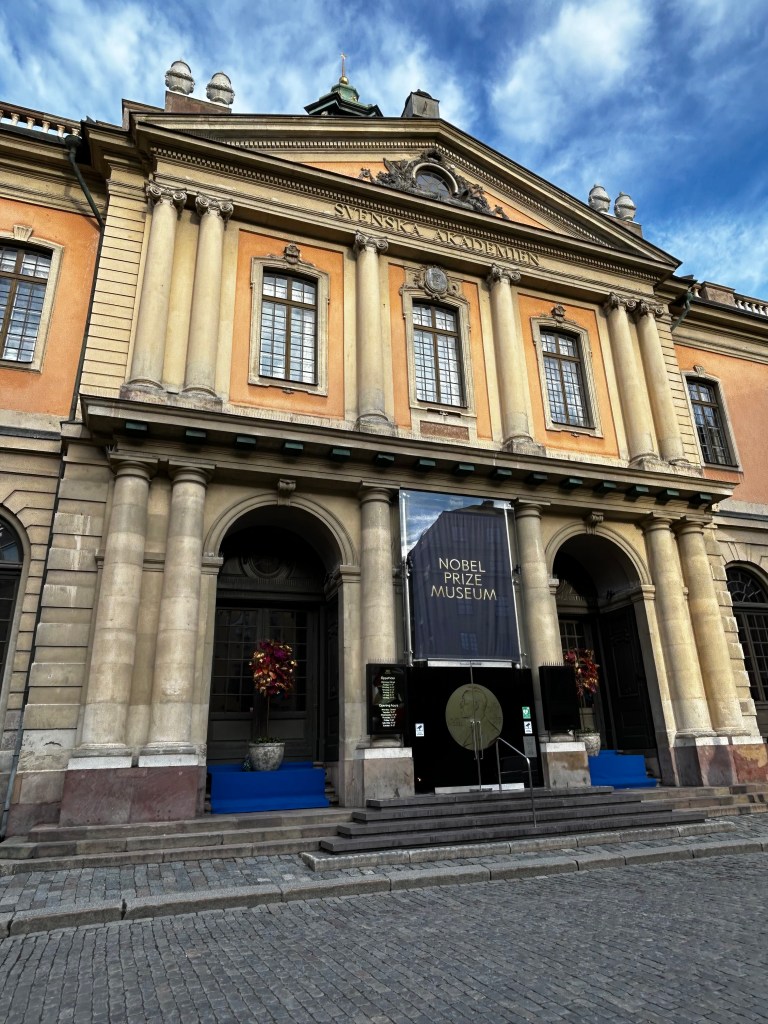
The square long held the town’s pillory. The site of the Stockholm Bloodbath of 1520, the square has a notorious history. During a Danish power grab, many of Stockholm’s movers and shakers who had challenged Danish rule – Swedish aristocracy, leading merchants and priests – were rounded up, brought here and beheaded. Rivers of blood were said to have flowed through the streets. One victim’s son escaped, went into hiding, and resurrected to lead a Swedish revolt against the Danish rulers. Three years later, the Swedes elected that rebel, Gustav Vasa, as their first king. He went on to usher in a great period in the country’s history – the Swedish Renaissance.
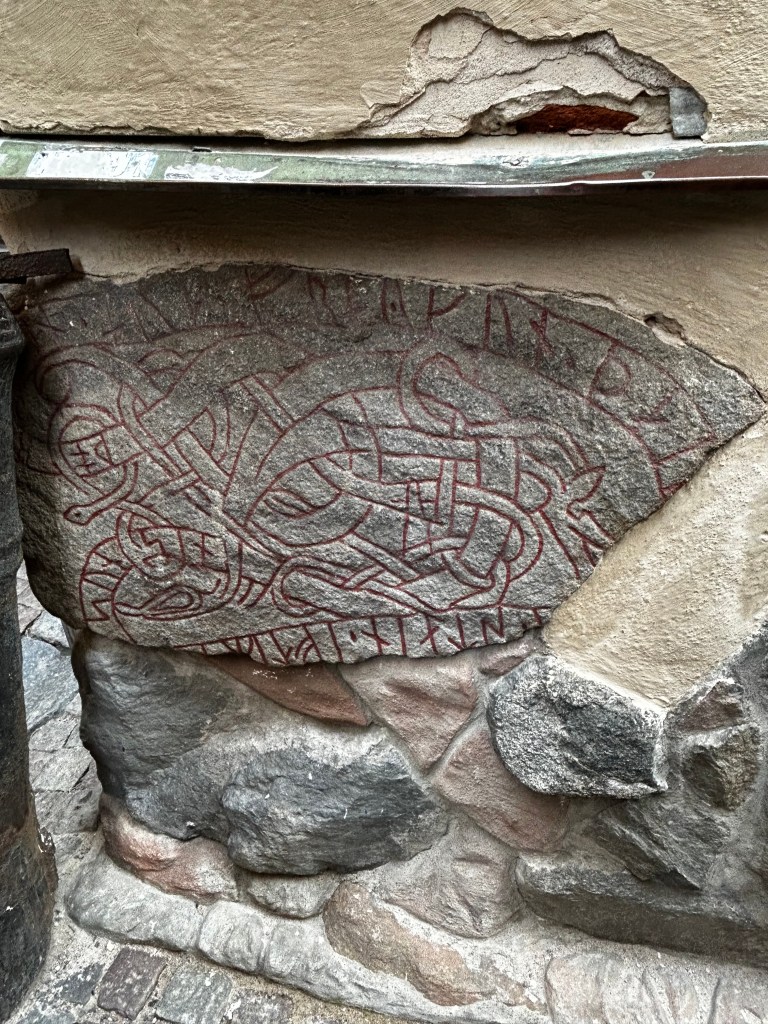
After a few blocks, we found a rune stone. Anna said that the old Nordic script says, “Torsten and Frogun erected this stone in memory of their son.” She said that sometimes runes were erected as a will to say that this farm shall be inherited by my son.
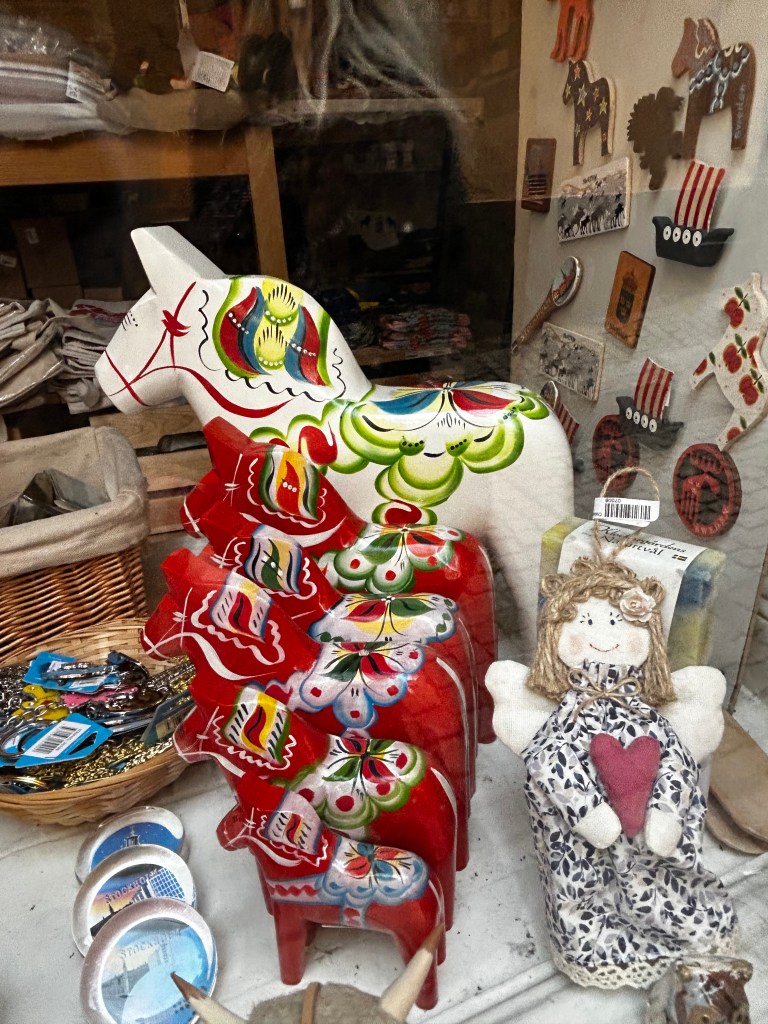
In the shop window, we saw the carved horses. Anna says that they came from northern Sweden where the lumberjacks used to carve the horses to pass the time as gifts for children. Some were painted. At a world’s fair, a large painted horse was a hit and became a symbol of Sweden.
Looking up, we could see the brick steeple of the German Church, the first German Lutheran church.
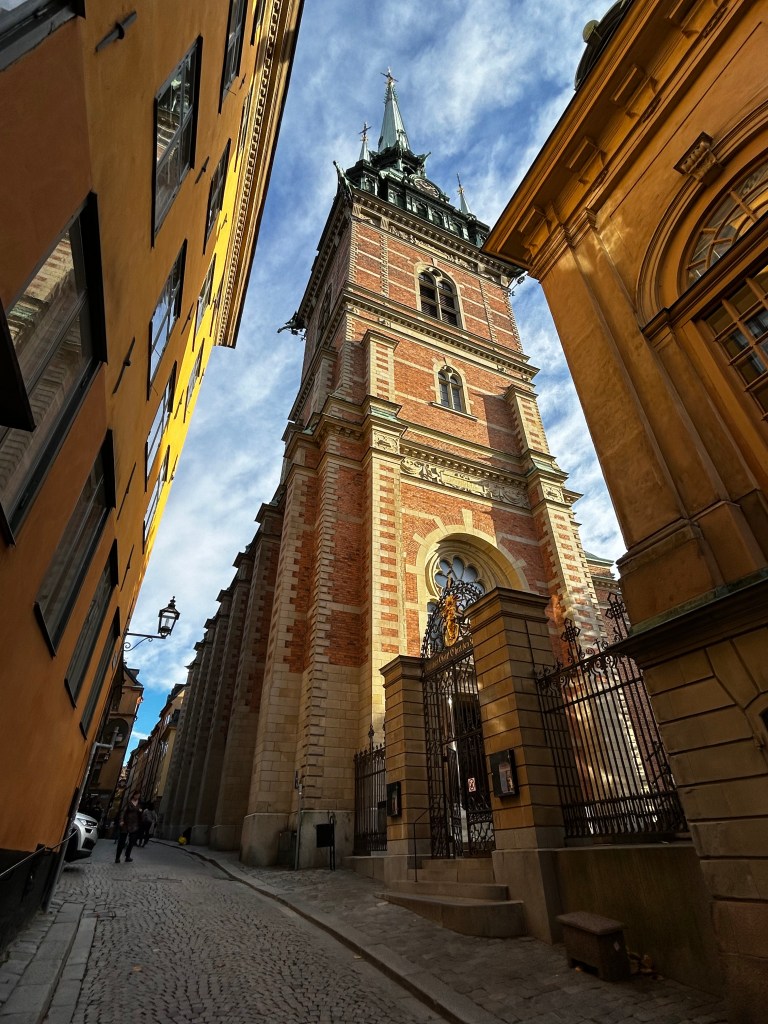
Many German merchants worked here and Sweden became a Lutheran country even before the northern part of Germany. Sweden and Germany have been closely linked except during the world wars when they took a non-partisan stance although Sweden did help the Nazis get access to Norway.
Then we walked through part of Gamla Stan, the Old Town.
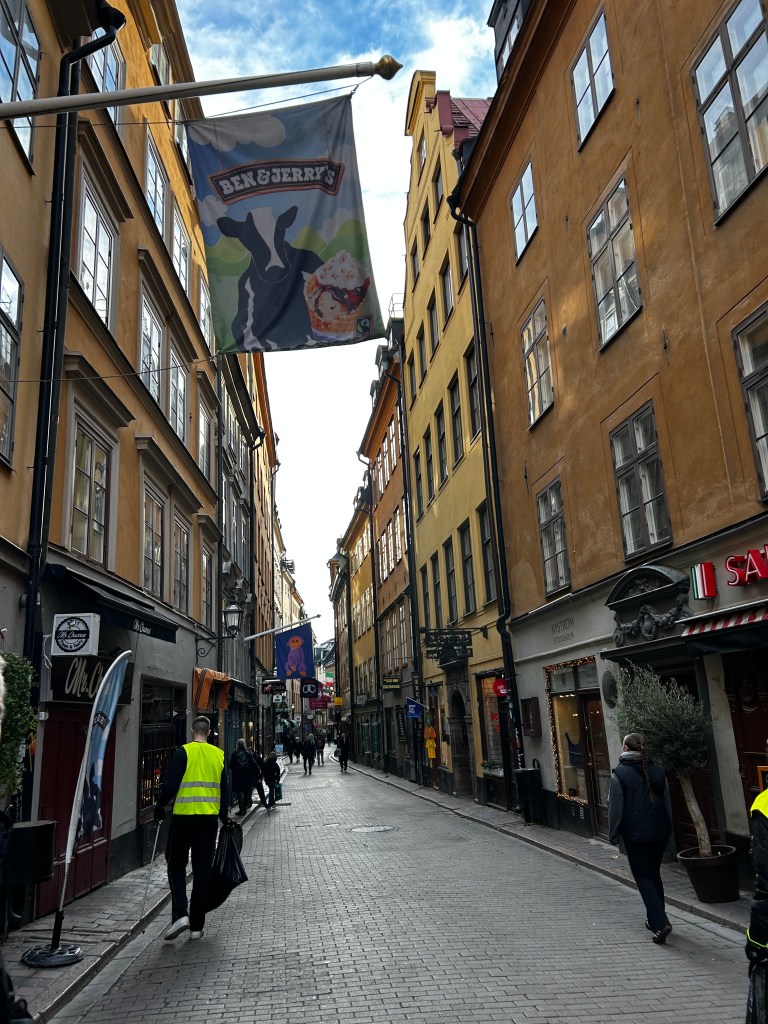
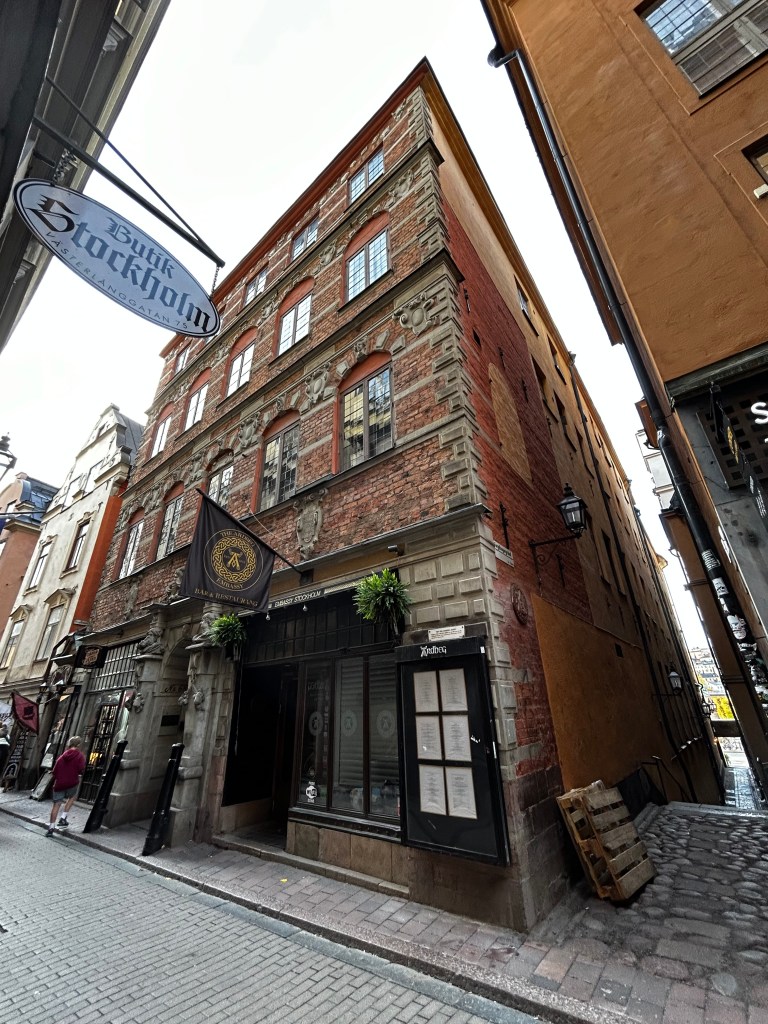
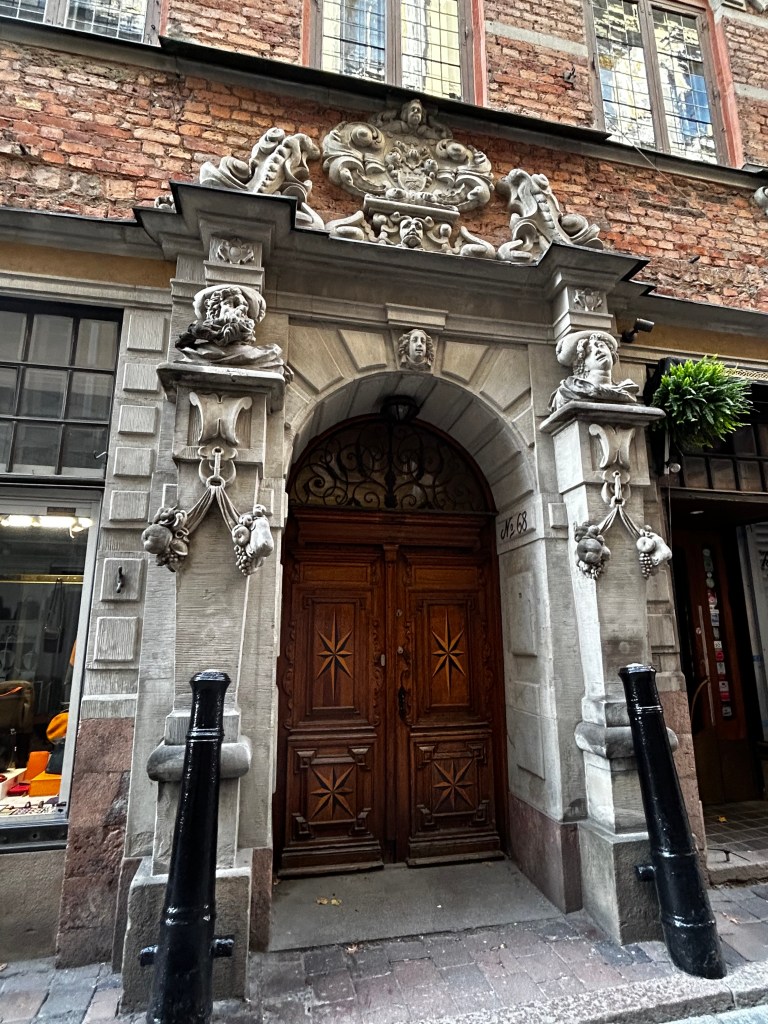
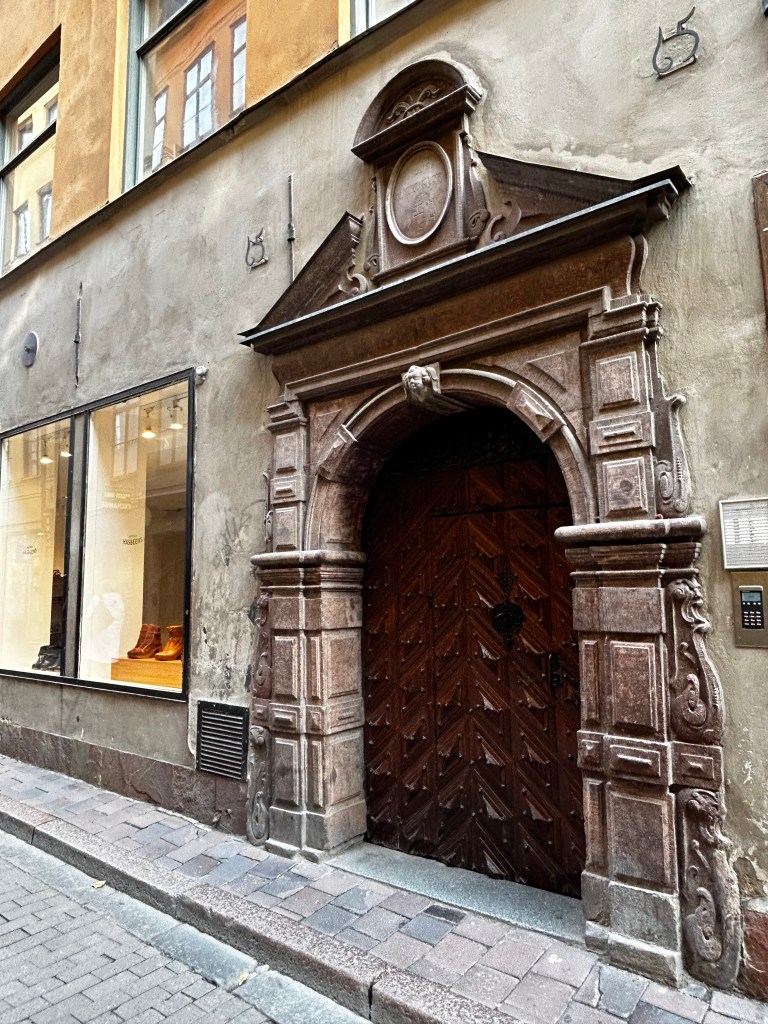
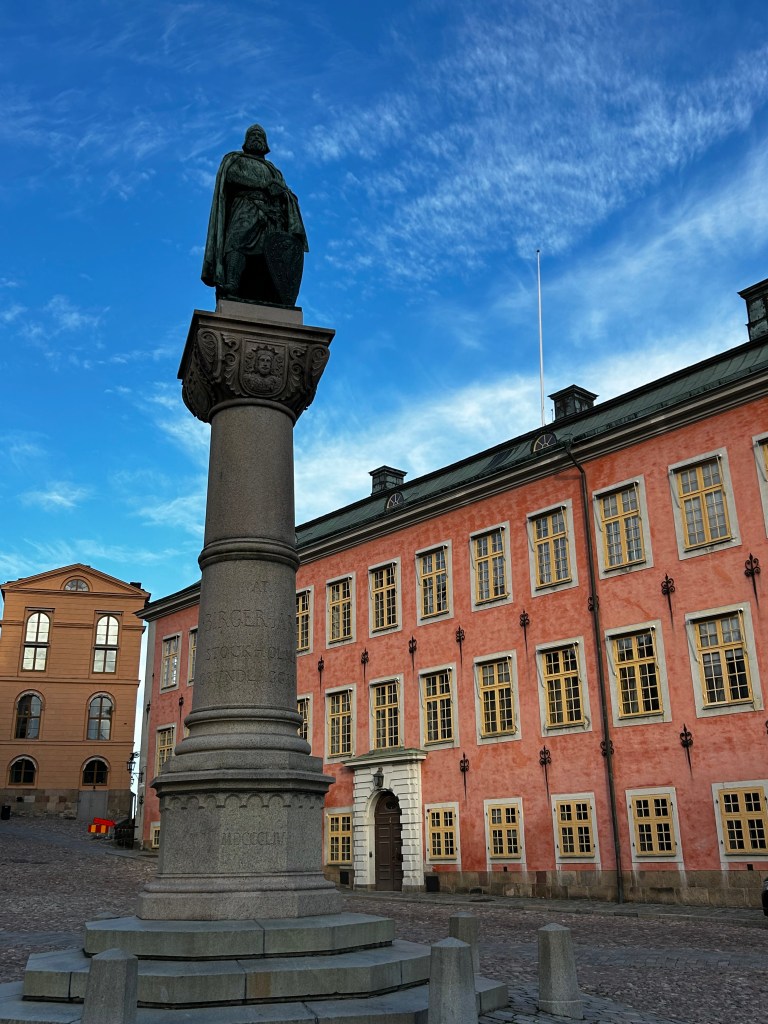
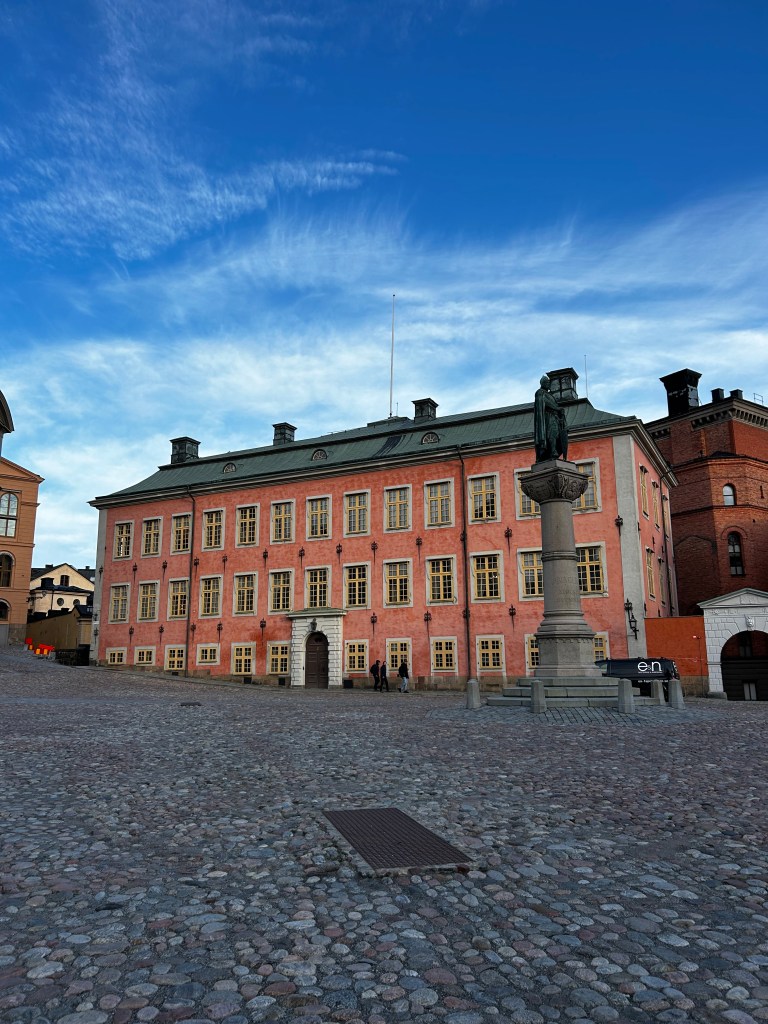
We arrived the “Knight’s Isle “, Riddarhomen is the quiet and stately far side of Gamla Stan. The knights referred to were the nobles who built their palaces on this little island.
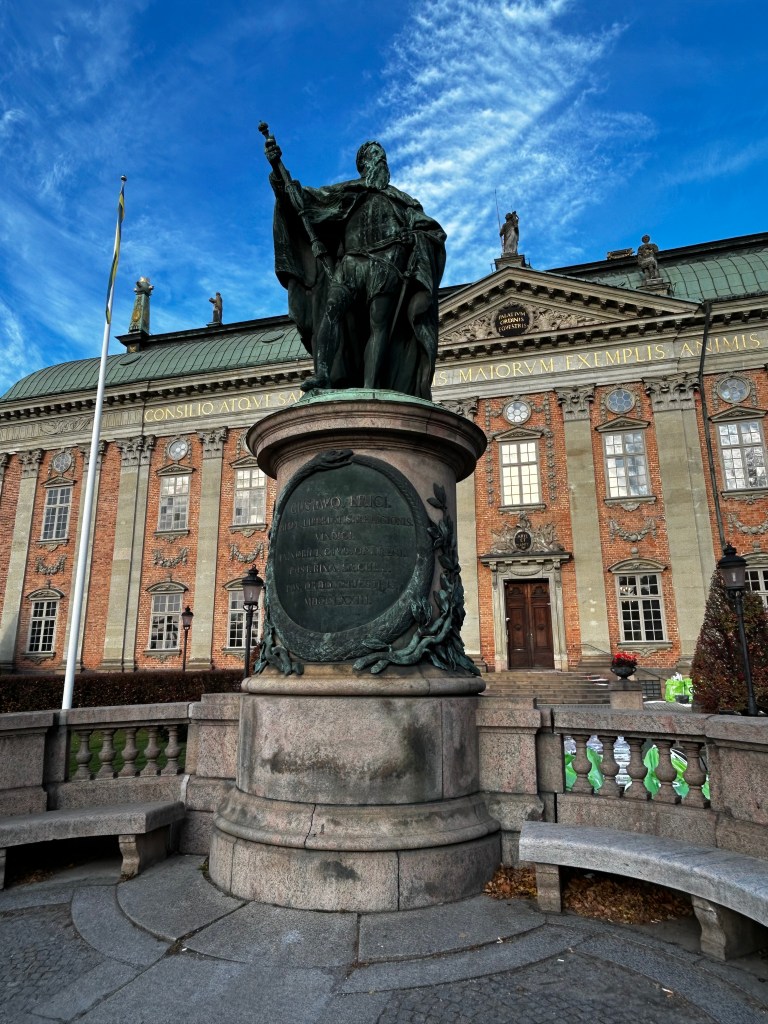
The statue of Birger Jarl considered the man who founded Stockholm marks the main square.
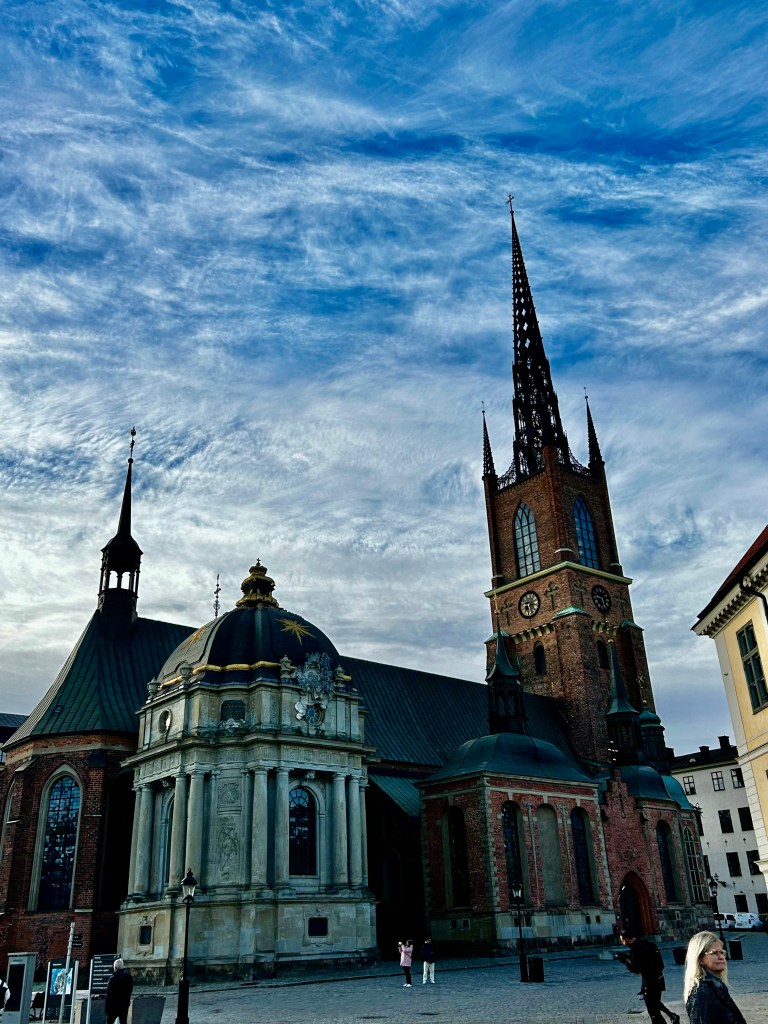
Established in the 13th century as a Franciscan church has been the burial place for nearly every Swedish royal since the early 1600s-a Swedish Westminster Abbey.
We then arrived at the waterfront in an area called Slussen, named for the locks between the salt water of the Baltic Sea and the fresh water of Lake Malaren. The locks are being rebuilt because of the need of maintenance of the differential between levels of the two bodies of water, about 2 feet, so that the Sea is not at a higher level. This is the waterway where traders would sail their goods from inland to ship goods to Europe. The reconstruction is massive with wide walkways and stairs for family picnics along the water.
We walked along the waterfront looking across the Baltic at a cultural neighbourhood where many museums, including the Vasa Museum, and the Grona Lund amusement park and at the cruise ships docked on the Baltic side. Then we walked through Foho, an area of cafes, parks and boutiques, on our way to view the Changing of the Guard at the palace. We said goodbye to Anna and arrived in time for the event.
We hurried to get to the 12:15 changing of the guard at the Royal Palace. While the royals live at Drottningholm, this is the official royal residence. The palace, designed in Italian Baroque style, was completed in 1754 after a fire wiped out the previous palace.
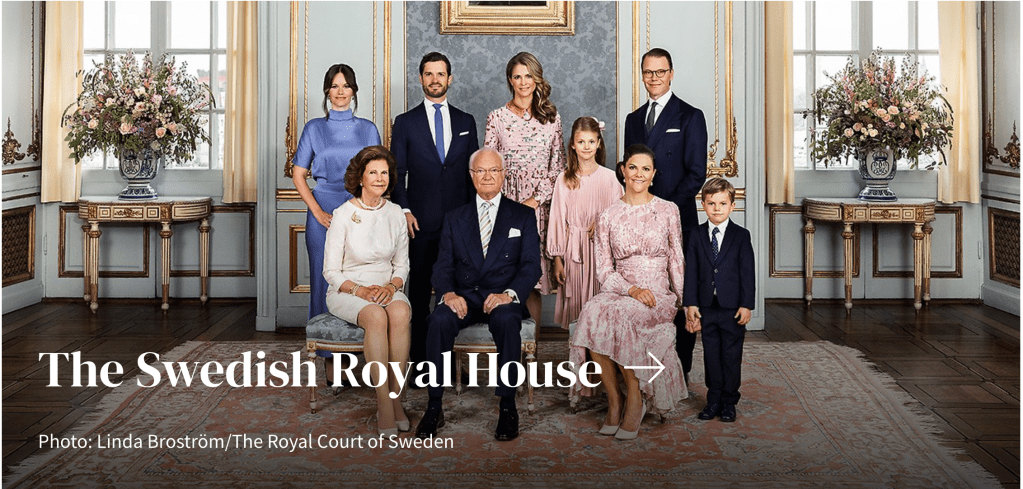
The Swedish royal family since 1818 has consisted of members of the Swedish Royal House of Bernadotte, closely related to the King of Sweden. Today those who are recognized by the government are entitled to royal titles and styles (manner of address), and perform official engagements and ceremonial duties of state.
Anna informed us that the heir to the current King Carl XVI Gustaf is Crown Princess Victoria. Originally she was not supposed to be the heir apparent to the Swedish throne: traditional laws of male primogeniture made it so her younger brother, Prince Carl, surpassed her in the line of succession after his birth in 1979. However, a constitutional change took place later that year that allowed Victoria to eventually inherit the Swedish Crown.
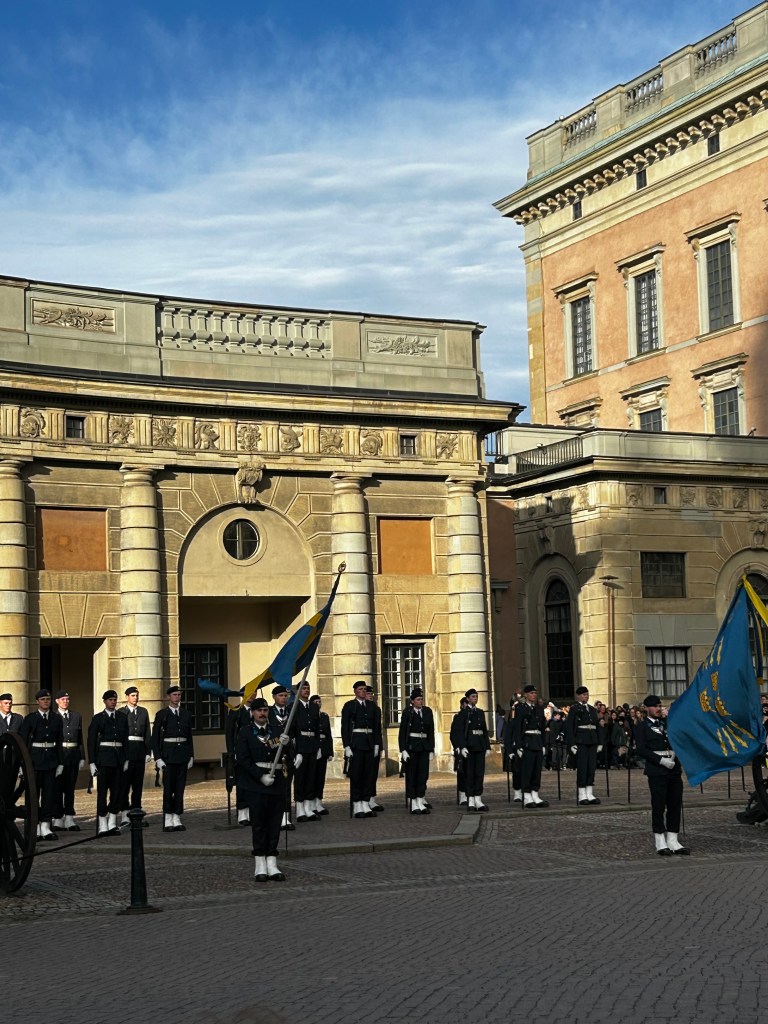
After the barking and goose-stepping formalities, the band showed off with a concert.
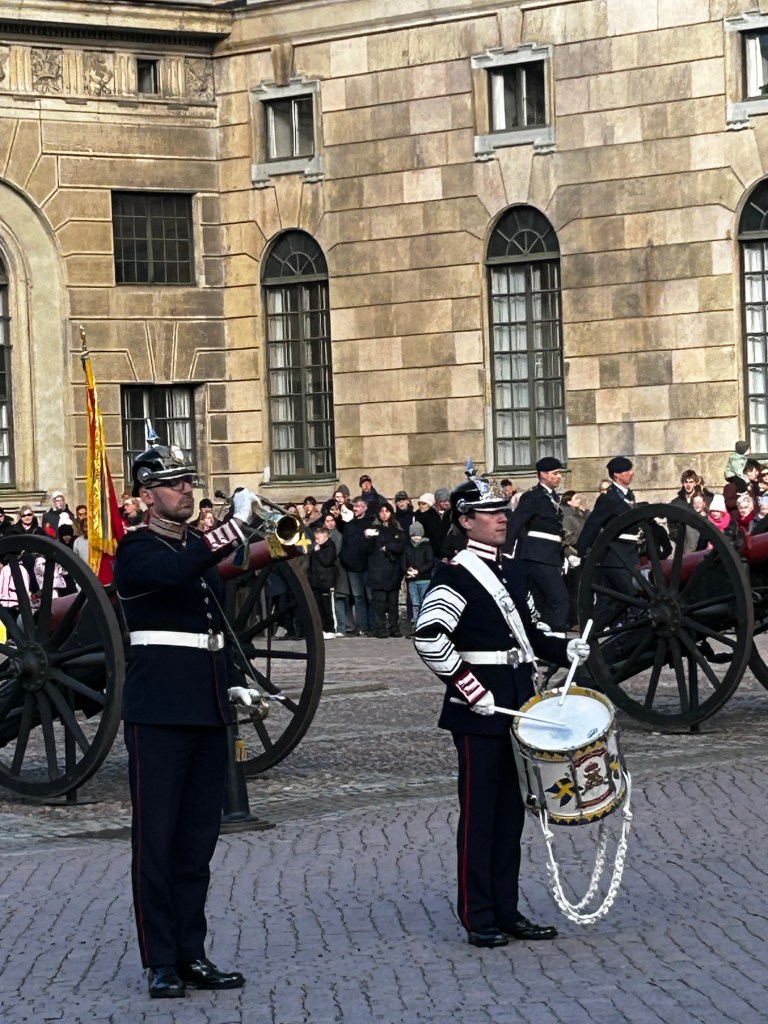
We walked back to the hotel and had dinner at Luzette, a French Restaurant directly across from our hotel in Central Station, and had a very good dinner.
Thursday, October 31, Stockholm
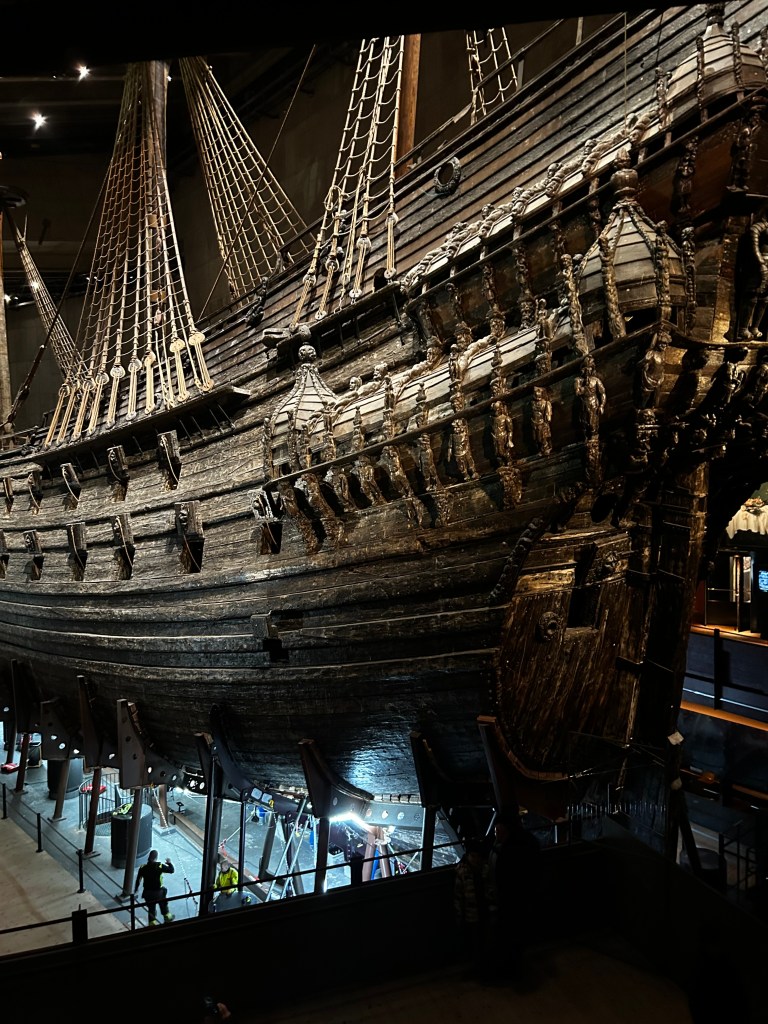
We took the street car to Vasa Museum and arrived shortly after 10:00 as Anna recommended. Anna had informed us that it is a school holiday so as the day progresses, the museum will get very busy as more children and families arrive. We joined the free tour for the first 30 minutes as the guide shared some of the details of the ship, its demise and recovery.
History
The Lion of the North, Gustav II Adolf, is building Sweden into one of the most feared powers in Europe. As part of the military expansion he initiated in a war with Poland-Lithuania (1621–1629) in January 1625, the Swedish king signs a contract with the Dutch master shipwright Henrik Hybertsson to build four new ships. One of them, Vasa, is to be the most powerful warship in the Baltic, if not the world. It is the beginning of one of the most spectacular fiascos in Swedish history.
The captain supervising the construction of Vasa, Söfring Hansson, calls Vice Admiral Klas Fleming down to the ship, moored at the royal palace, because he is worried. He has thirty men run back and forth across the deck and the ship rolls alarmingly. The Admiral has the demonstration stopped, afraid the ship will sink at the quay. Under pressure from the king to get the ship to sea, he orders Söfring to sail anyway. Months later, Vasa sets off on its first and last voyage.
1627. The machine of war is launched. The king´s newest and most powerful ship, Vasa, is launched in the spring and hundreds of craftsmen work through the summer to finish the hull and rigging. When completed, it is 69 metres long and more than 50 metres tall from the keel to the top of the main mast. The ship weighs over 1200 tonnes once outfitted with ten sails, 64 cannons, 120 tonnes of ballast and hundreds of sculptures. Richly decorated as a symbol of the king’s ambitions for Sweden and himself, upon completion she was one of the most powerfully armed vessels in the world. However, Vasa was dangerously unstable, with too much weight in the upper structure of the hull. A giant of a ship of its time is born.
10 August 1628: Vasa sails 1,300 metres and no farther. Still within sight of the shipyard where it was built, Vasa heels to port under a gust and water gushes in through the open gun-ports which are still open having just delivered a cannon salute. The crew cannot get the gun-ports closed so the water rushes in. Within minutes, the ship is lying on the sea bed 32 metres below. Thousands of Stockholm´s inhabitants witness the tragic scene, together with several foreign ambassadors; 30 crew are killed but the rest of the dignitaries on the boat were rescued. The King was away fighting a war.
Autumn 1628. A fearful Royal Council writes to tell the king of the disaster and an inquest is launched: the ship´s officers claim innocence; the builders are adamant that they built the ship according to the design the king approved; the experts believe the ship had too little belly, not enough hull to carry the heavy upper works; the designer, Henrik Hybertsson, had no blueprint for a ship this size and the king added another deck of cannons causing poor proportions. Master Henrik, dead more than a year, cannot defend himself and no one is to be punished.
August 1959. Vasa moves for the first time in 331 years. The Neptune Company insists on a tried-and-tested method, used since the Middle Ages to raise sunken ships. Divers have spent more than two years digging tunnels and passing cables under the ship up to floating pontoons. On 20 August 1959, the pumps start in the pontoons and Vasa frees itself from the mud. The ship is lifted and moved under the water surface in 18 stages, and in September Vasa lies at a depth of 17 metres by the island of Kastellholmen. Divers will spend another year and a half preparing the ship for the final lift.
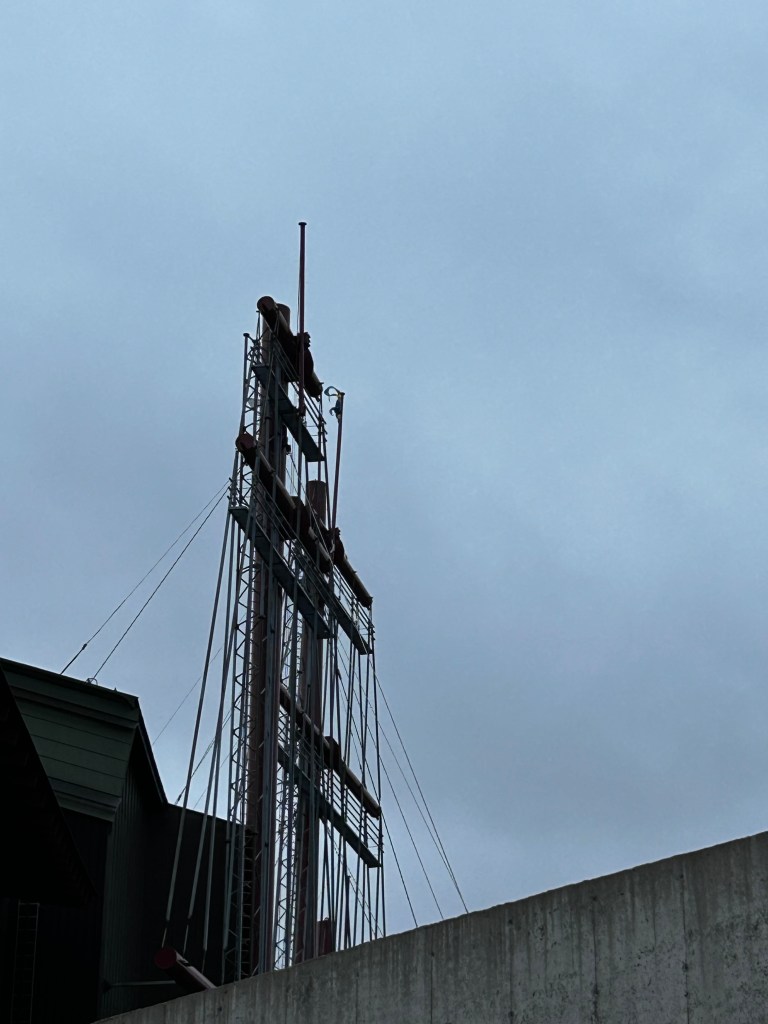
By Friday 16 February 1962, the ship is ready to be displayed to the general public at the newly-constructed Wasa Shipyard, where visitors can see Vasa while a team of conservators, carpenters and other technicians work to preserve the ship. The museum opens with a salute from two of Vasa’s cannon. Public interest is enormous and success is immediate – in 1962, 439,300 buy a ticket to see the ship and its unique finds. To give the sense of the height of the masts, the masts are visible through the room of the museum.
April 1962. Operation Preserve Vasa. Reconstructing and preserving a mighty warship from the 17th century is an enormous challenge. When waterlogged wood dries out, and the moisture in it evaporates, it shrinks and cracks. In order to prevent Vasa from being destroyed, conservation of the ship begins using polyethylene glycol, PEG, to replace the water for 17 years (1979). Loose objects are placed in large baths, while the hull of the ship is sprayed around the clock with the help of 500 nozzles and an elaborate pumping and filtering system.
It’s interesting that our friend, Diane Morgan, was there while they were still washing her with PEG.
The preservation continues every year. We could see new pneumatic braces for the cradle being constructed and old iron screws being replaced with stainless steel. The guide told us that the funding is a constant restriction on how much and how quickly maintenance and preservation efforts can proceed. They hope to keep her intact for a 1000 years.
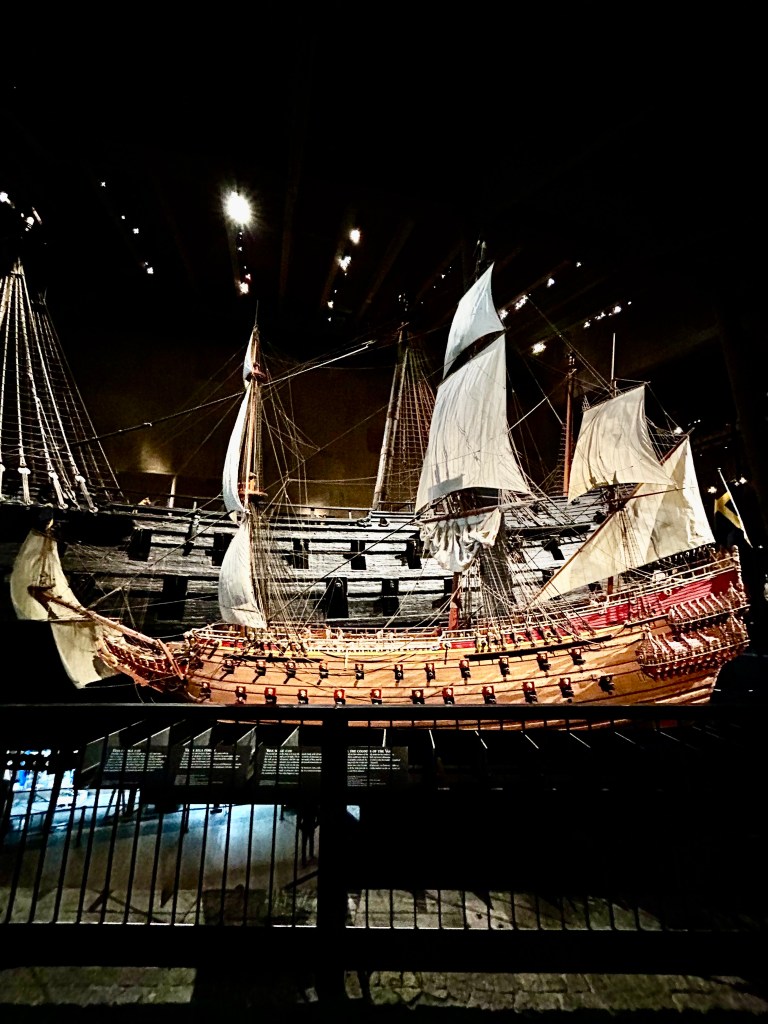
A 1/10 th Model of the VASA
The ship is so massive: it’s difficult to see the whole. This model was very helpful.
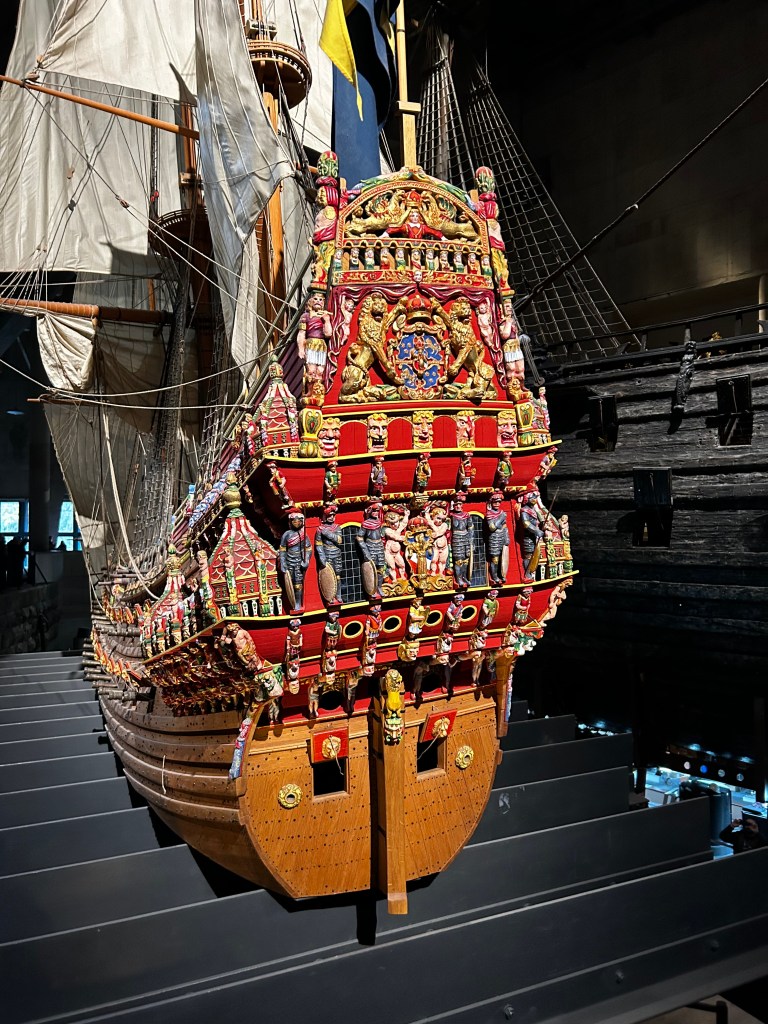
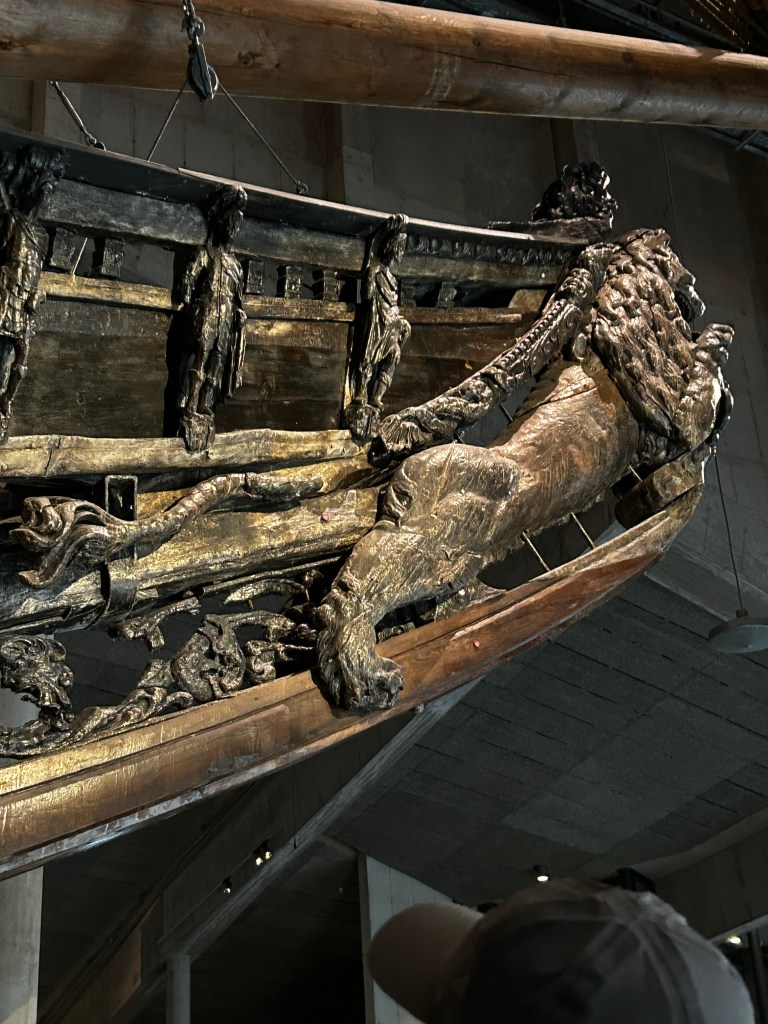
The Vasa is massive. It is amazing to see it so close and not in behind glass.
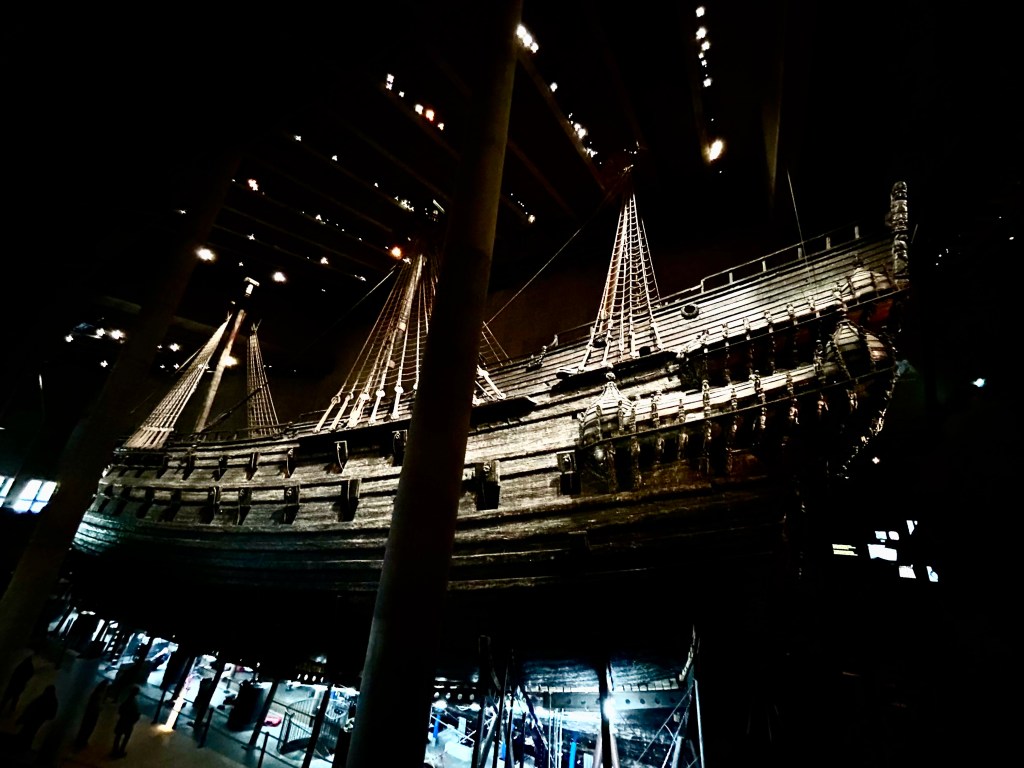
We could see the cradle below and people working on the maintenance and preservation. Because it’s wood that can shrink, it is regularly measured.
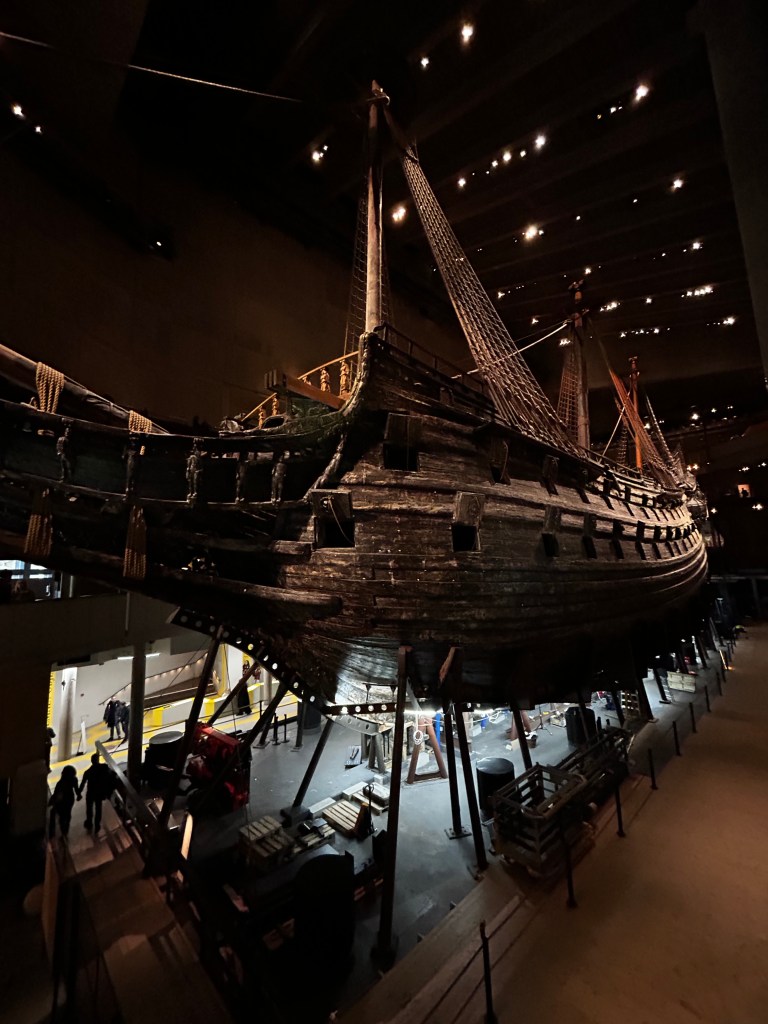
While it is sitting on the bottom of the harbour, salvage groups retrieve what they can find in the mud. Of all the cannons on the ship, only three remained at the time of its recovery; the others salvaged.
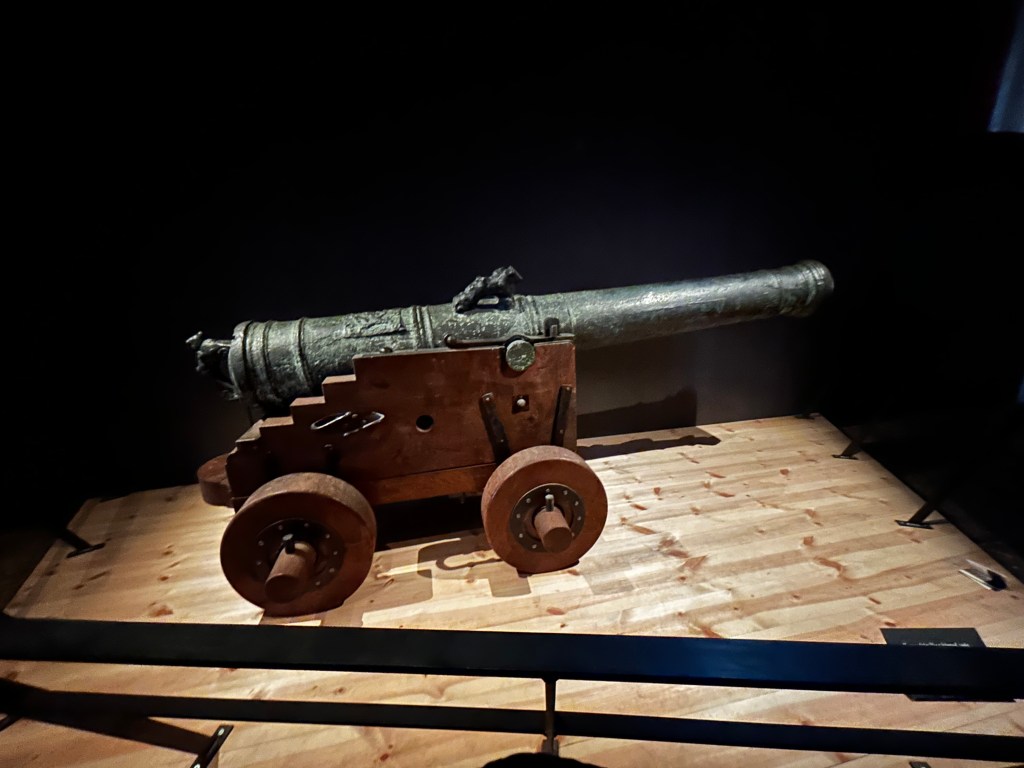
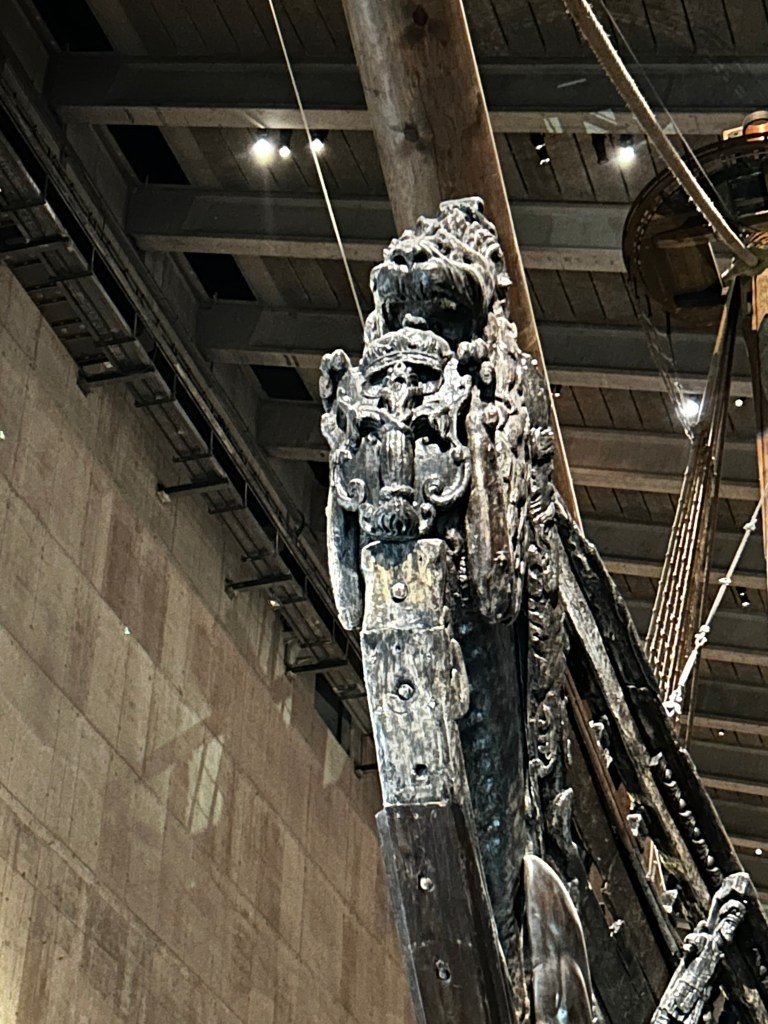
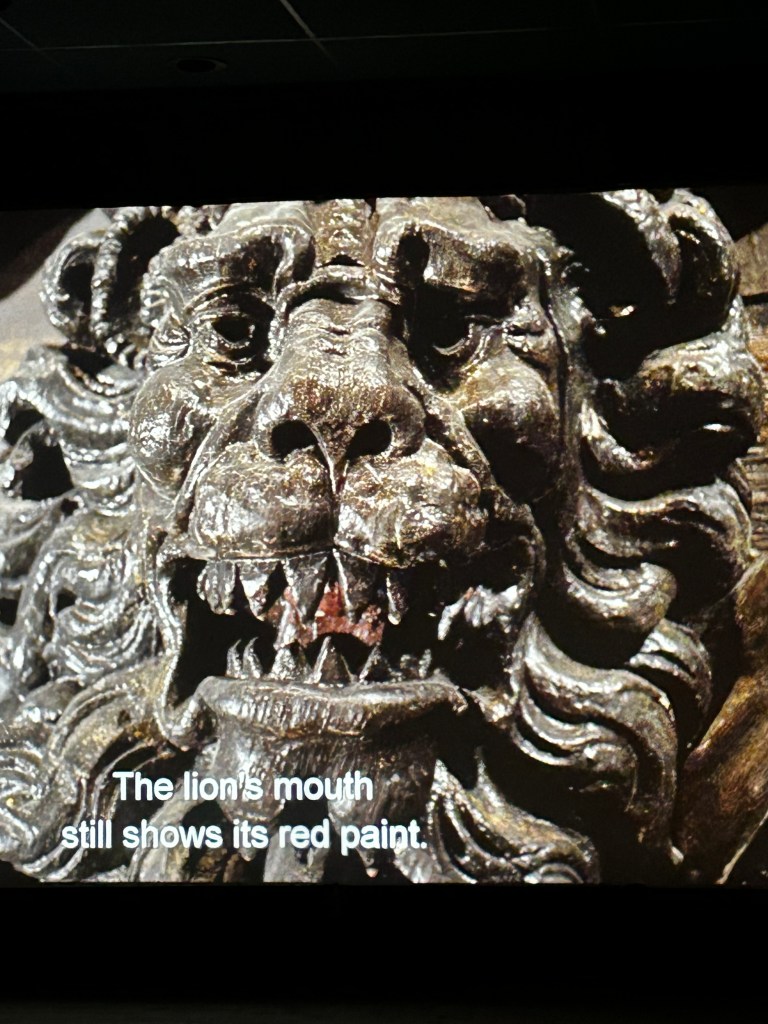
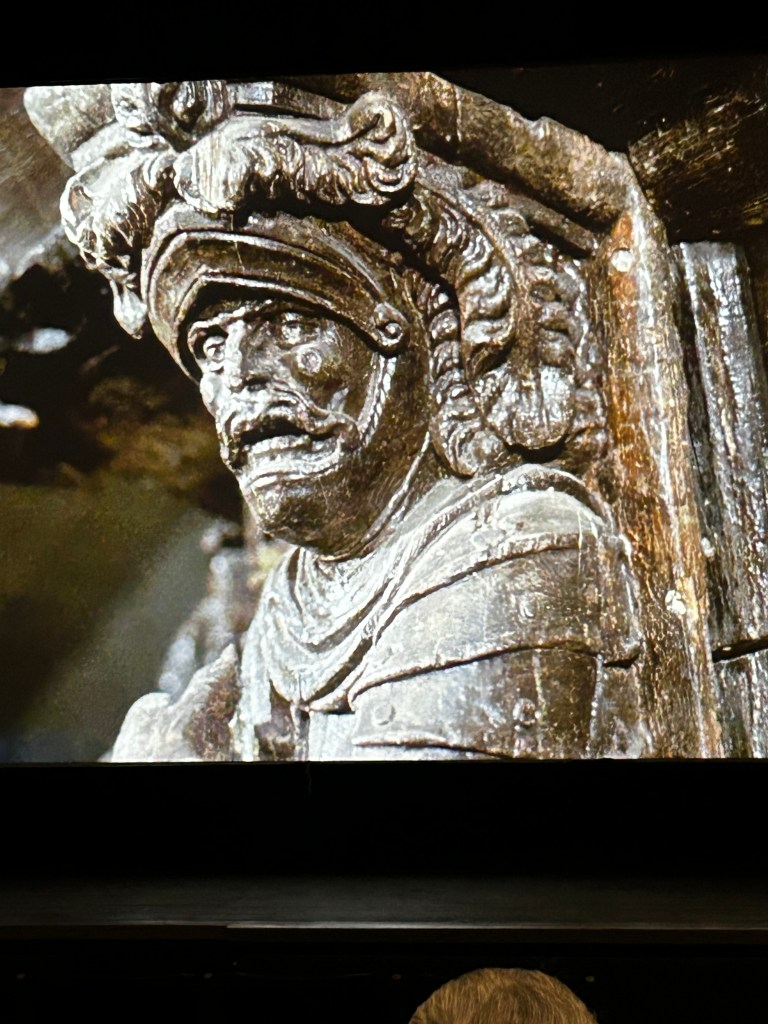
Because this ship was a showcase for King Gustav, it is full of beautiful sculptures.
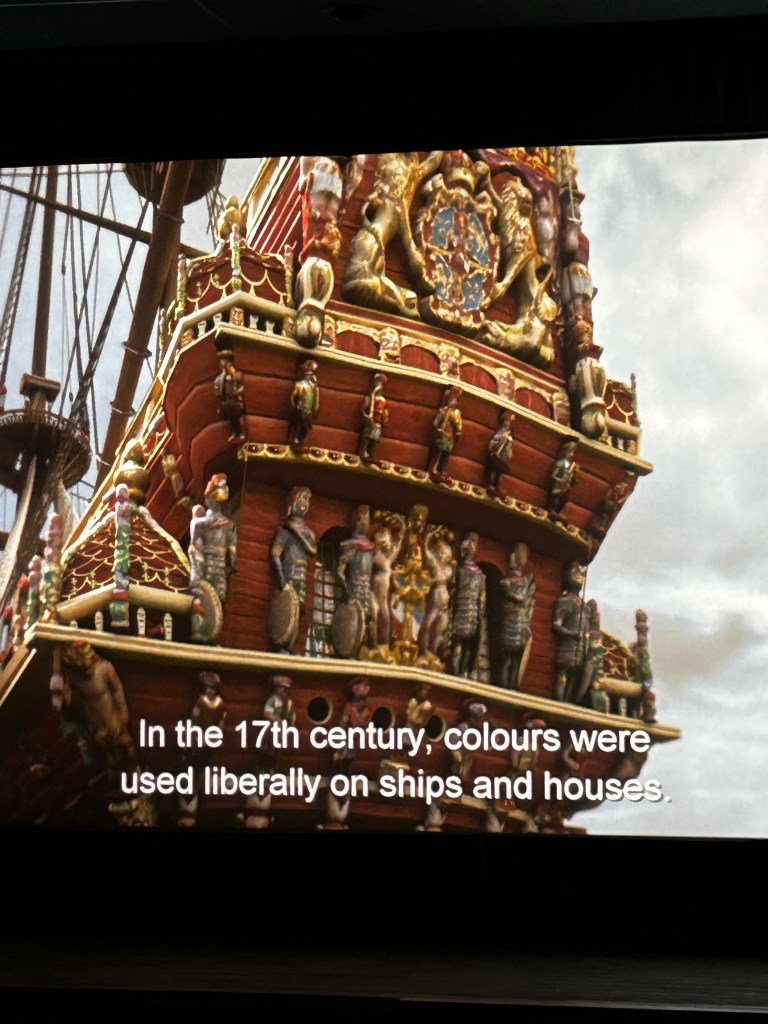
Our next stop was Skansen, the world’s oldest open-air museum founded in 1891 by a local public educator. Skansen features historical environments and buildings from all over the country to find out what it was like to live in Sweden in the old days.
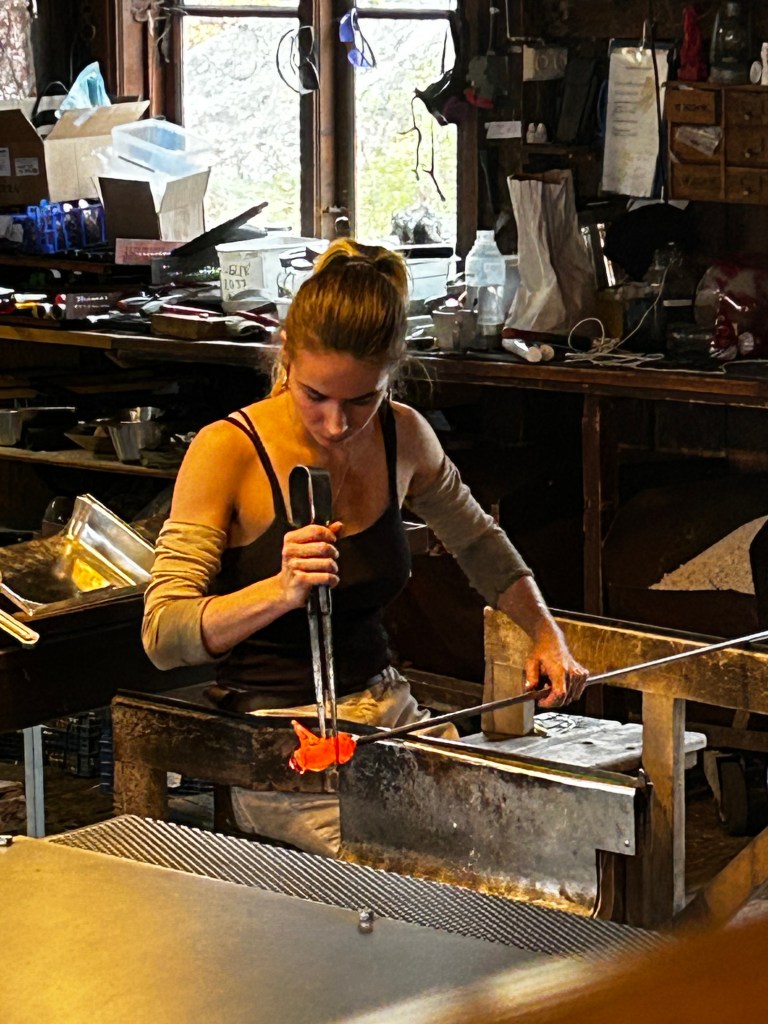
We managed to visit a few of the buildings but it began to rain and we made a run for the street car and got back to hotel only a little damp.
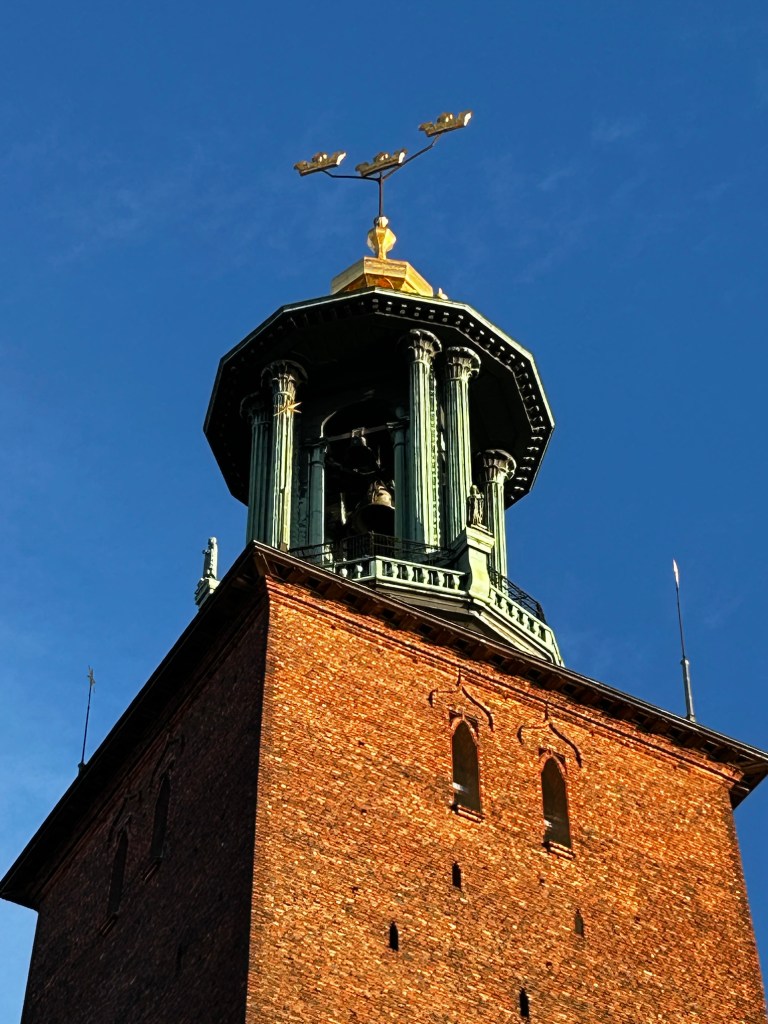
Our last stop was the City Hall (Stadhuset). According to Rick Steve’s, the Stadhuset is an impressive mix of 8 million red bricks and 19 million chips of gilt mosaic. While churches dominate cities in southern Europe, in Scandinavian capitals, City Halls seem to be the most impressive buildings. Built in 1923, it is the location for City Council, hobby legistlators with day jobs, meet in the evening once a week.
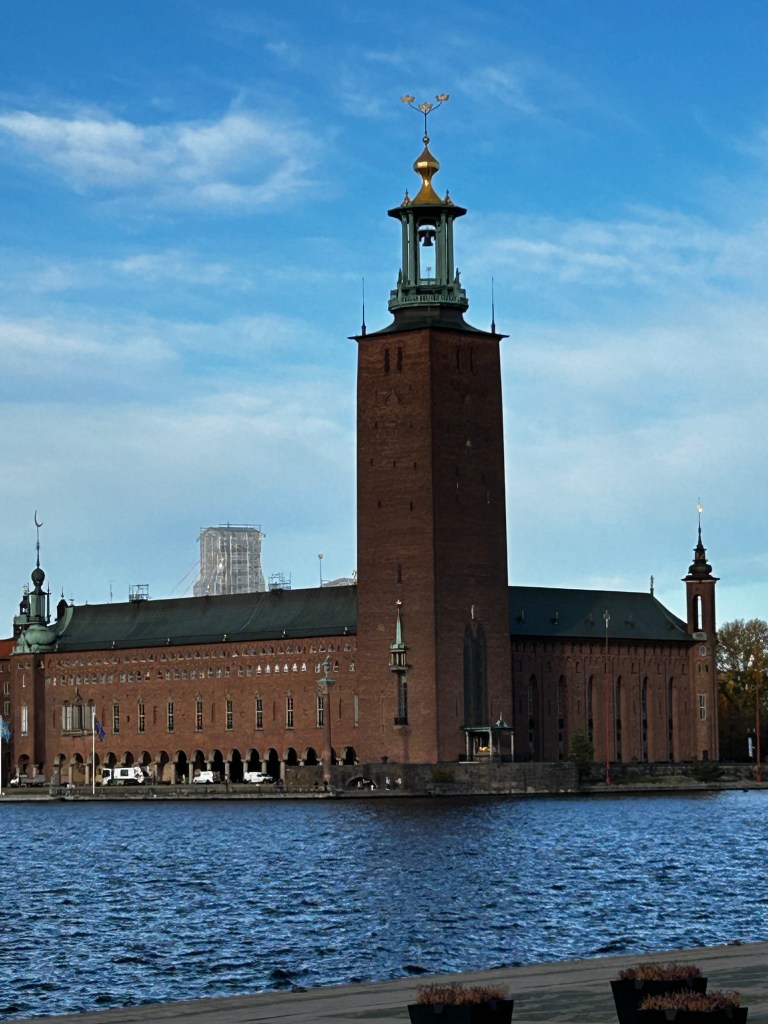
We joined a free tour of the City Hall. Very impressive.
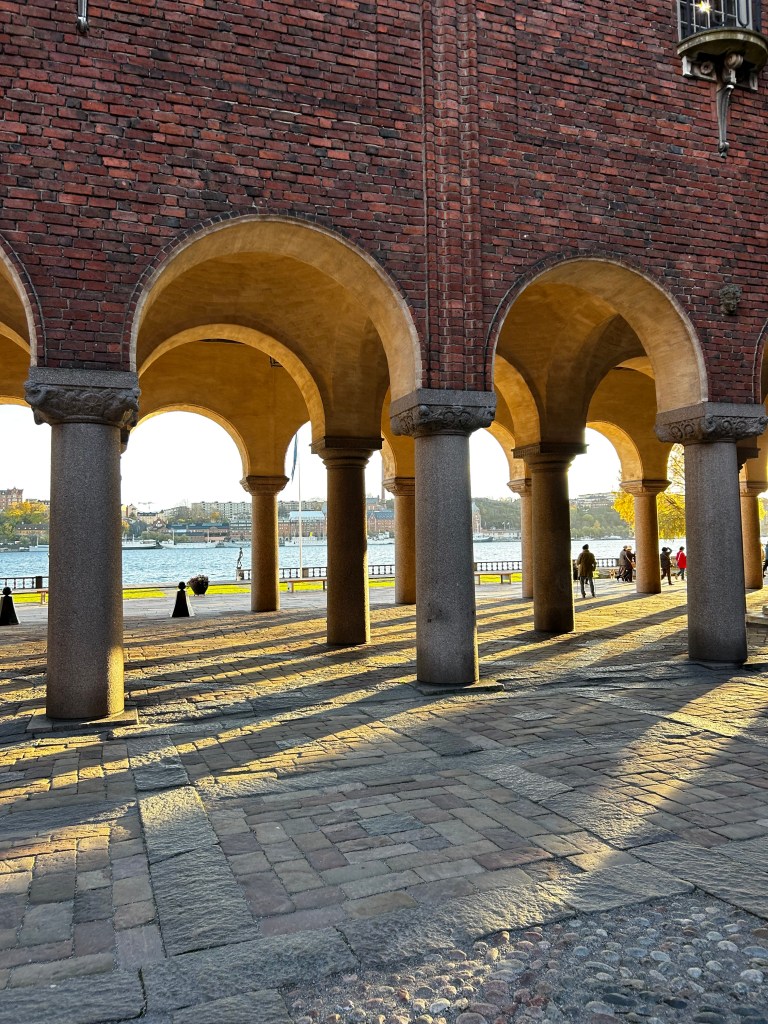
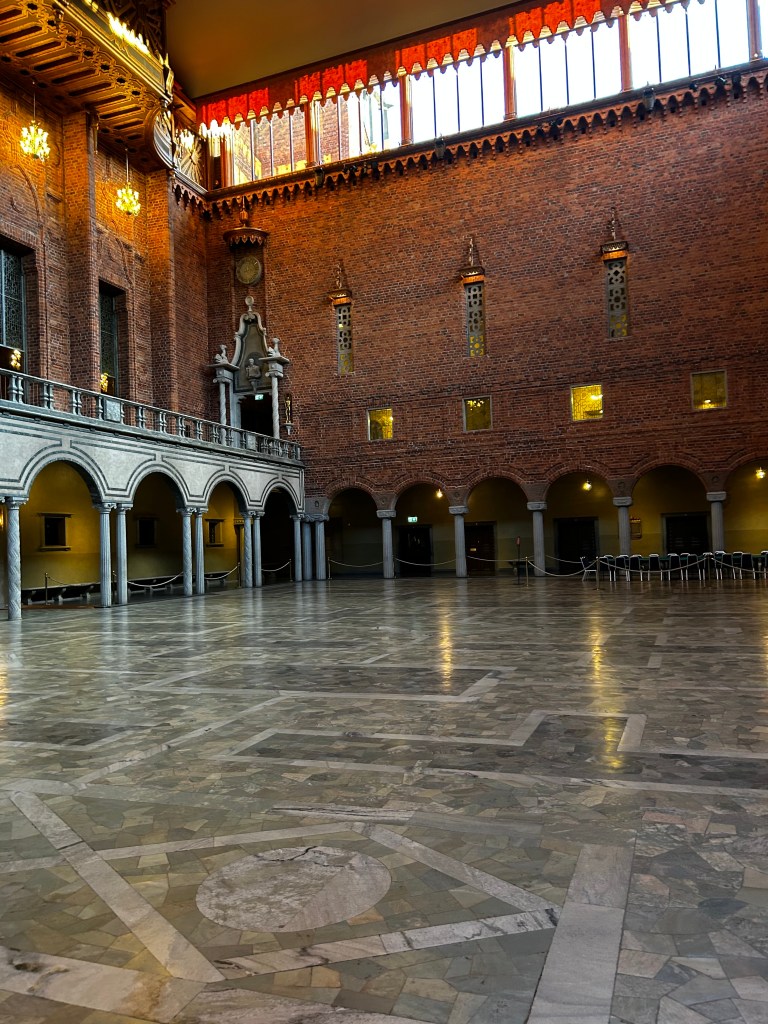
The first room, Italian,piazza-inspired, where the Nobel Prize dinner and reception is held is the Blue Room, so-called because it was first intended to be painted blue but the architect later changed his mind and liked the brick walls.
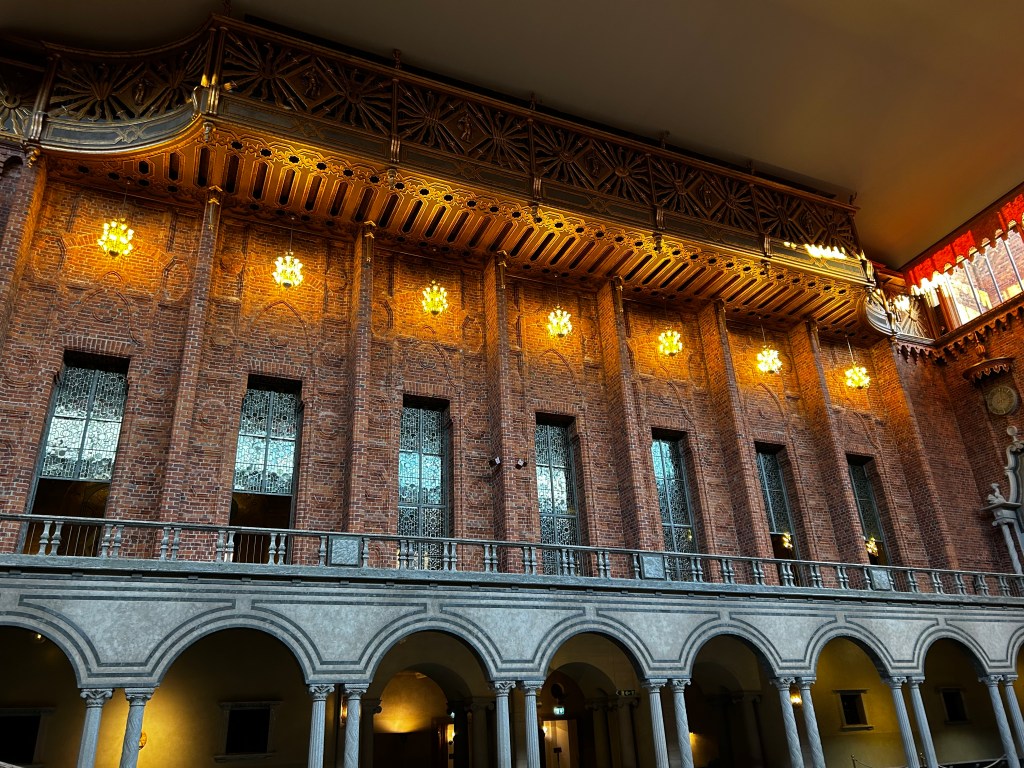
The City Hall chamber is very impressive.
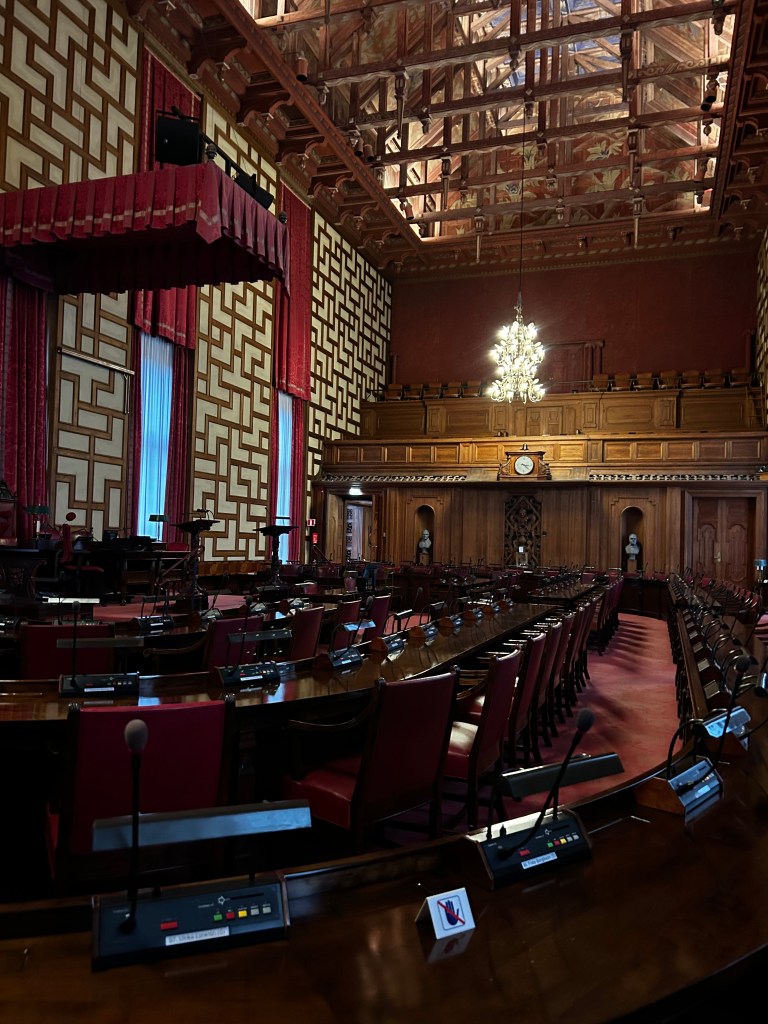
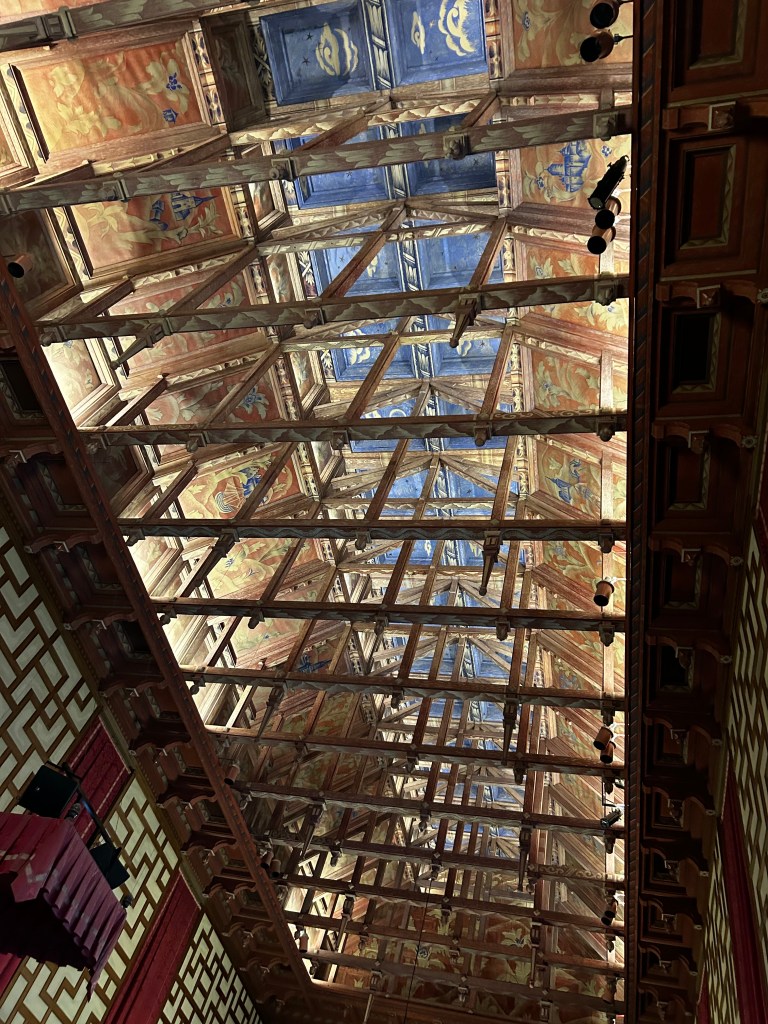
The Council Chamber has a gorgeously painted wood-beamed ceiling that resembles a Viking boat.
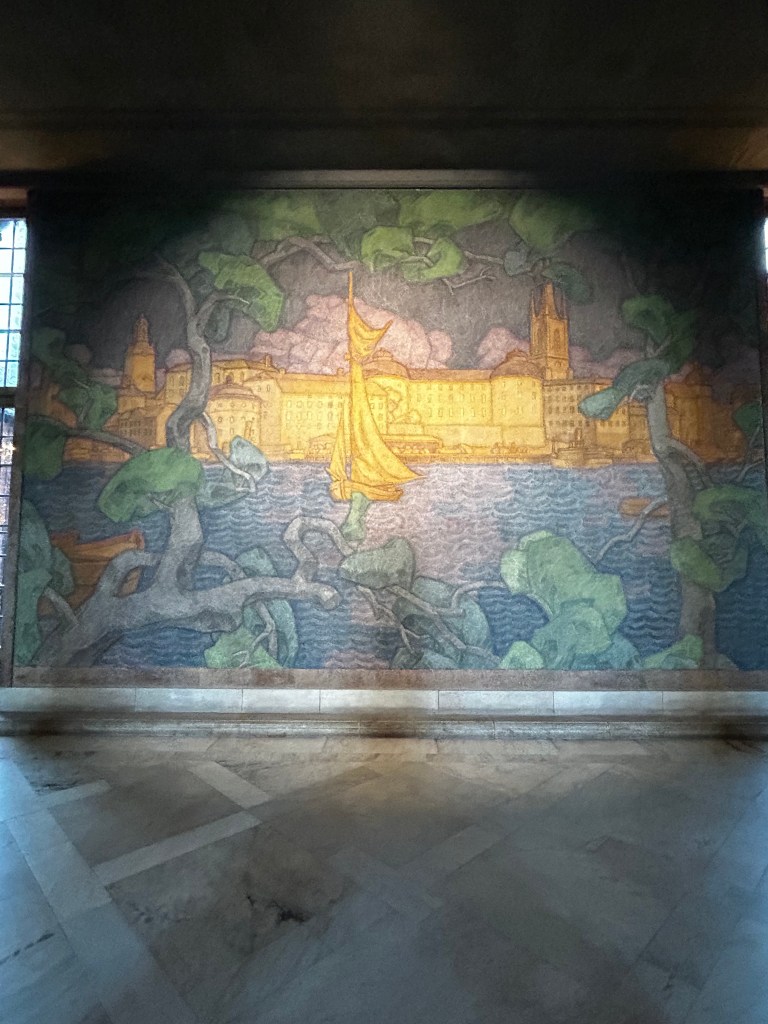
Next came the Gallery of the Prince lined with frescoes painted by Prince Eugene of Sweden.
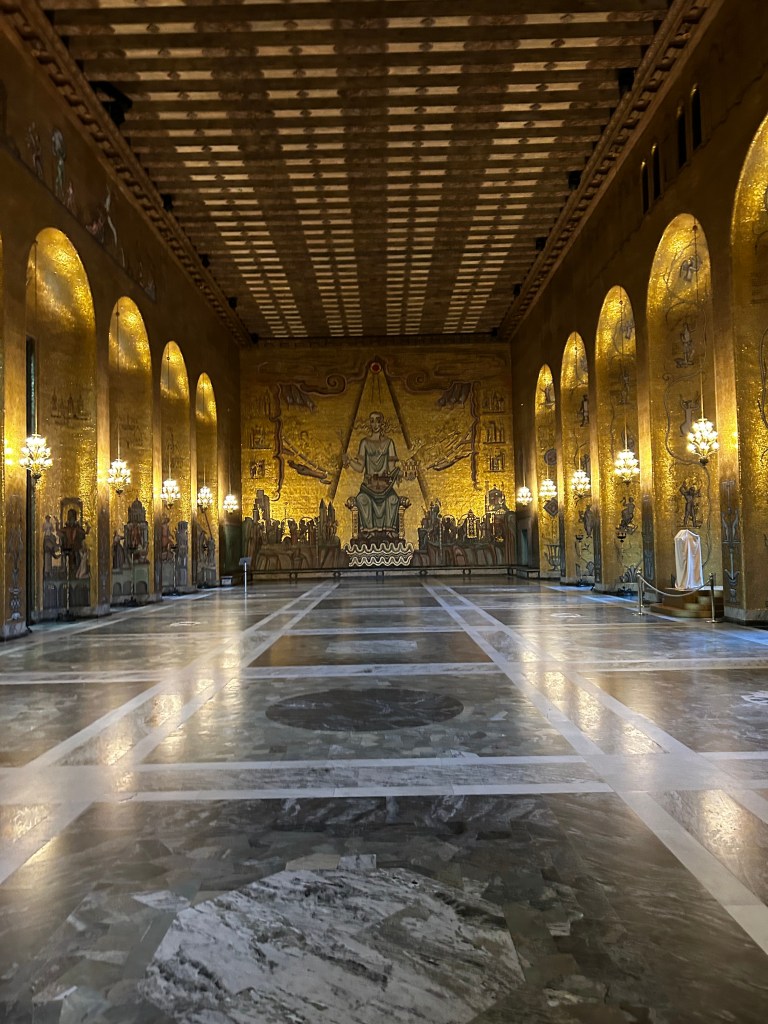
And last we arrived at the glittering, gilded, Neo-Byzantine style Golden Hall where the Nobel Prize winners have their dance.
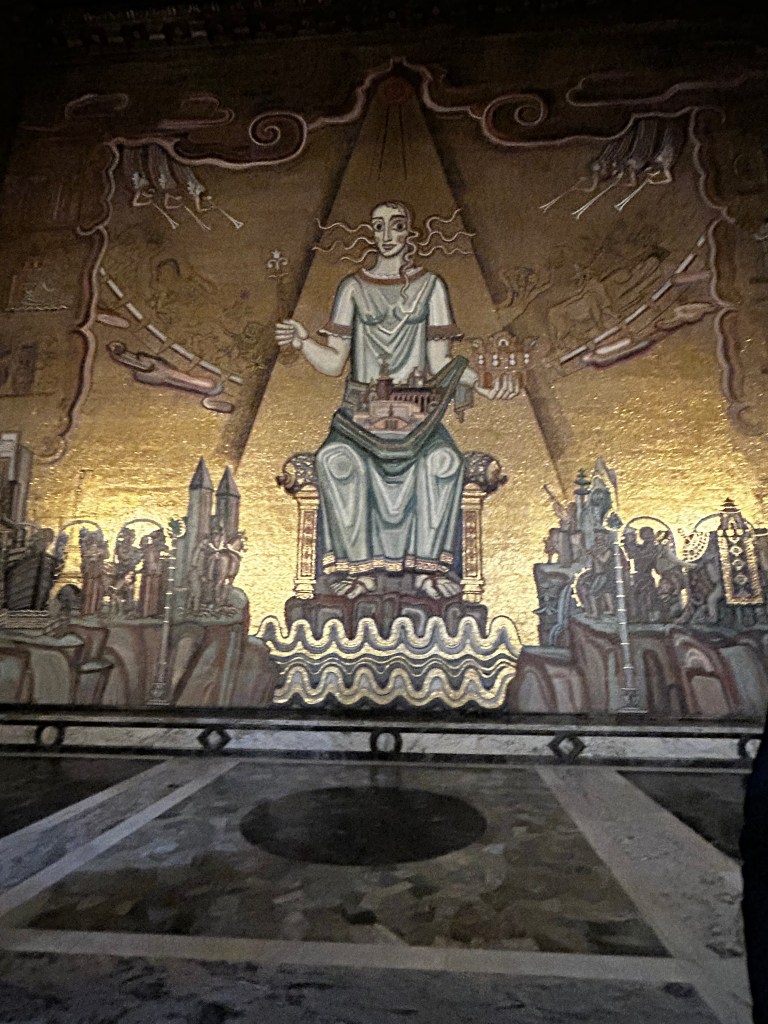
In this over-the-top space, a glimmering mosaic the Queen of Lake Malaren oversees the proceedings, as East (Istanbul’s Hagia Sophia and the elephant, on the right) and West (Eiffel Tower, Statue of Liberty and skyscrapers) meet in Stockholm. The locals were not impressed when they first saw it.
We went to the Fish Restaurant a block from the Scandic Hotel and had a very good meal. It was a 4:20 pickup in the morning, November 1, so we watched CNN and the American election updates and had an early night. The taxi driver who came from Bulgaria 11 years ago (too much corruption there) and who took us to the airport had a brand new Chinese electric car that he was very proud of. He said (with hand shaped as gun: Bang Bang) that there are gun shots every day in Stockholm.
Thoughts on Copenhagen, Denmark and Sweden
- Both countries seemed prosperous with no evidence, where we were, of poverty.
- There was a great deal of construction and reconstruction of old sites.
- We were shocked at the drug-related crime in Sweden. Malmo is reported to be the crime capital of Europe.
- The food was not unique with the possible exception of Bullen’s Swedish meatballs. Anna said that the Swedes love Thai food and Thailand.
- The public transportation was very efficient and accessible.
- We found prices at restaurants to be more expensive than at home and in Spain.
- We were advised that Stockholm is not very friendly but we didn’t find that to be the case.
- Stockholm has become Bill’s favourite city.
Back in Spain, November 1 Day of the Dead and National Day of Mourning
After an uneventful flight from Stockholm to Alicante, we got a new rental car from RecordGo for a much better price than Europcar that we have used for several years and been satisfied with their service and price. November 1 is La Dia Sante or La Dia del Muerte (Day of the Dead) – it is the day that families take flowers to the Tantorium/Crematorium of the family graves.
In addition, this last week, a terrible ‘Gota Fria’ blew through and caused unbelievable damage and over 200 deaths in the Valencia area. A year’s worth of rain fell in 8 hours. The photos of piles of cars, trucks, debris, mud, trees, household furniture were shocking. The national army was called in to save people and clear roads. We had checked with Christian and he informed us that there had been wind and rain in our area but no damage. Three days of National Mourning started on Thursday.
Some stores were closed but Dialprix near us was open to get some groceries as the fridge was pretty empty. After lunch a short siesta was in order and then our daily 5 km walk to the paseo and back.
In a storm in Pilar and Torre de la Horadada, the water runs down the streets and empties into the sea, especially the ramblas which are wider thoroughfares. As the water enters the sea, there are frequently wash-outs.
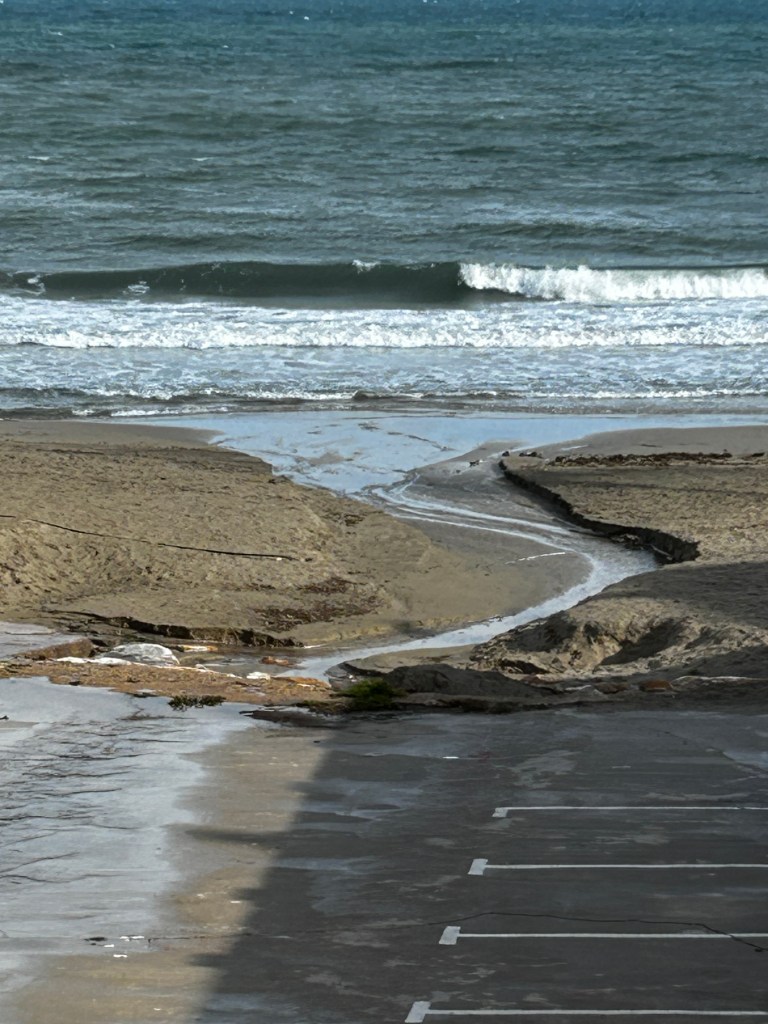
Despite it being November, we spent many days of our last 3 weeks on the beach with our daily walks to the paseo and back. The temperatures were daily in the low to mid 20s and 16-18 at night, warmer than last year. Bill swam in the sea on the 5th and the pool on the 5-8th.
The flowers continue to bloom although many have been trimmed for the winter.
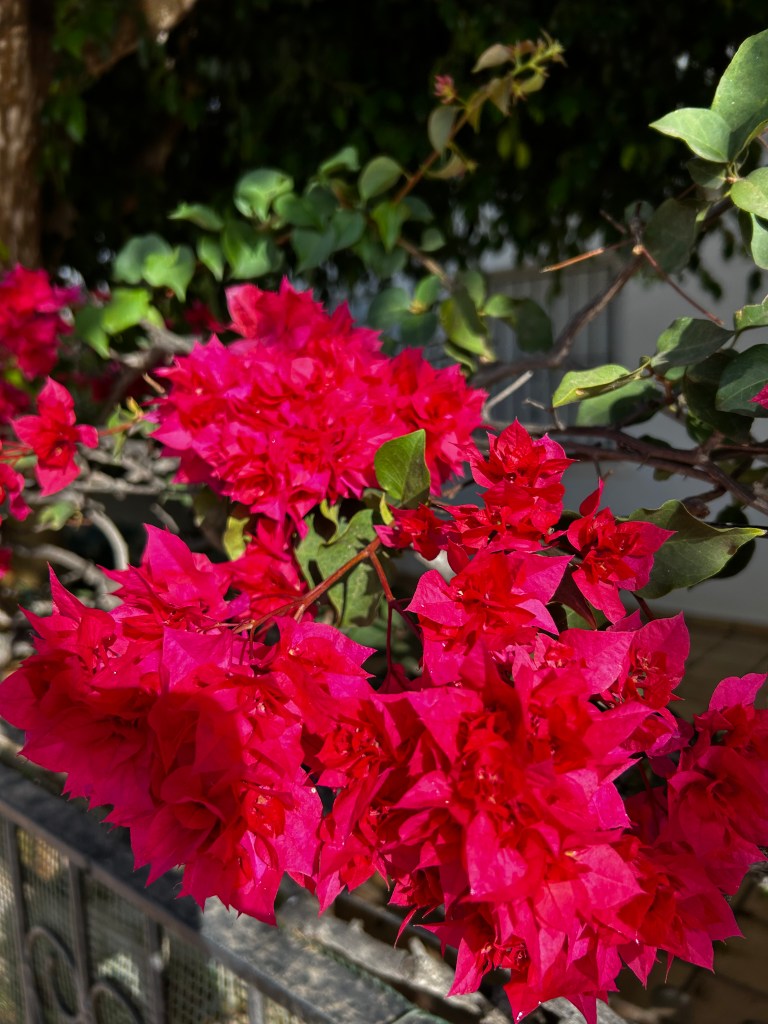
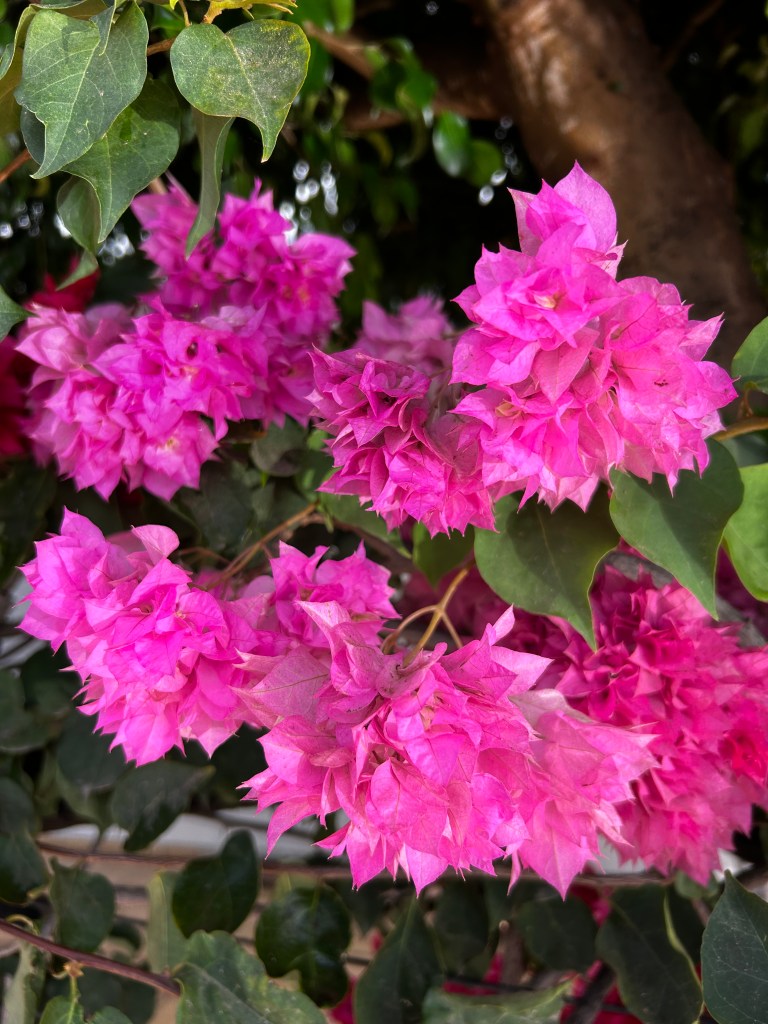

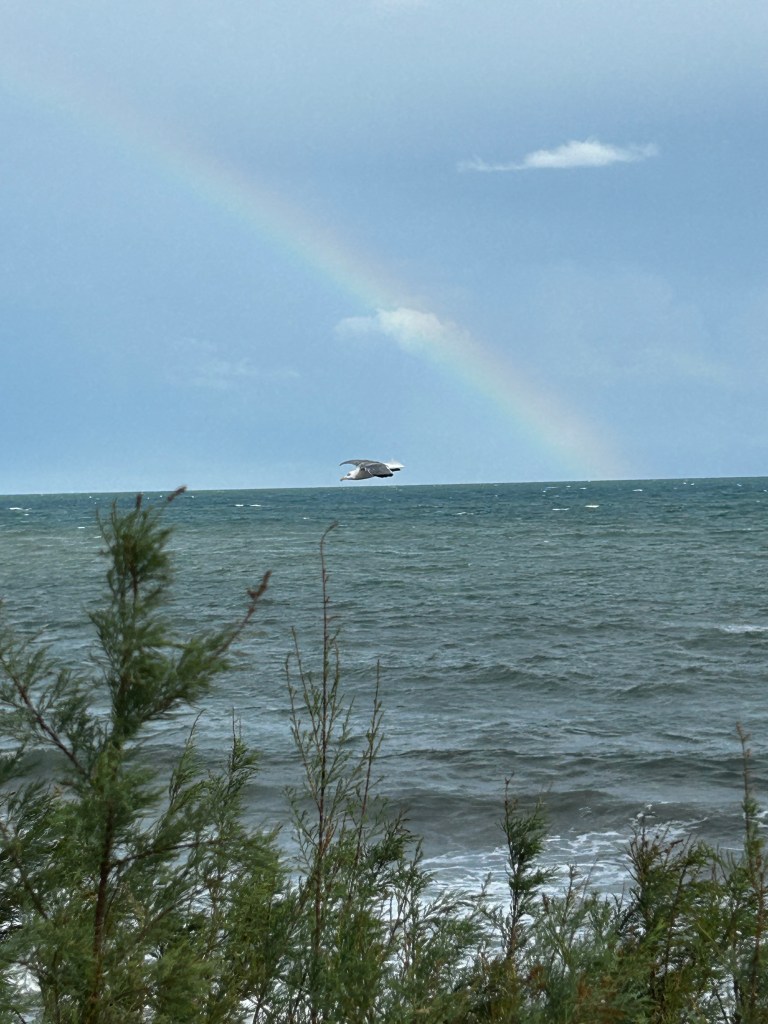
November 3, 2024
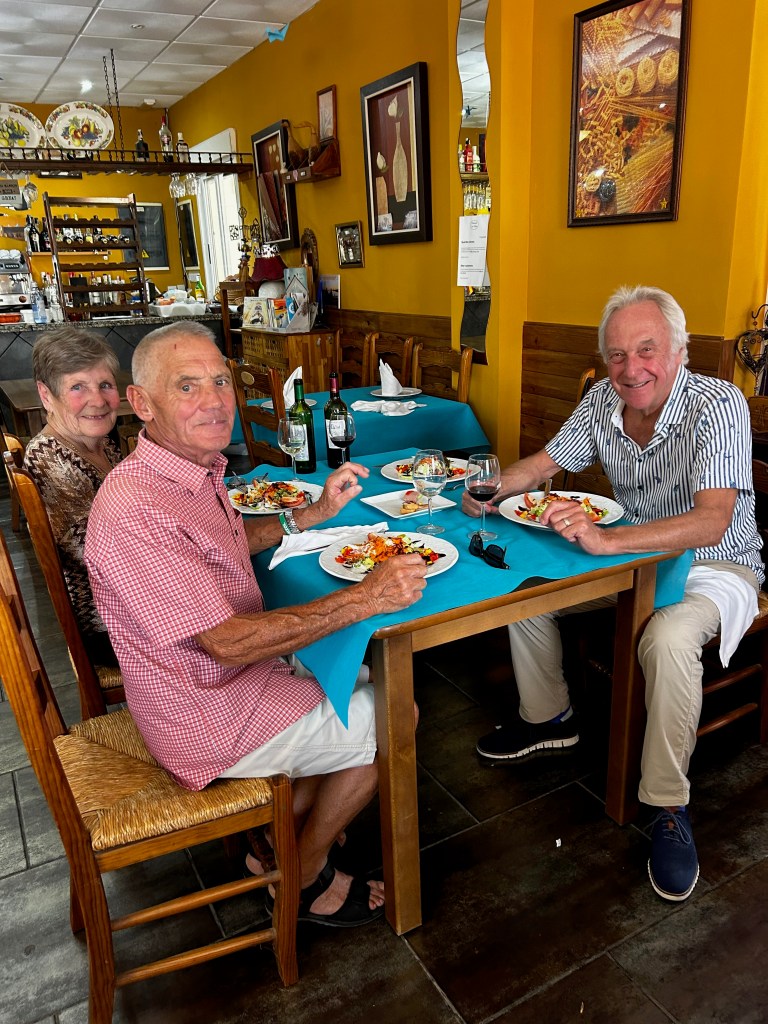
The Monday before leaving, we had menu del dia at San Marino Restaurant in Campoverde with Ruth and Mick Steele who now live 3-4 blocks from us in a house but used to live in the unit diagonally across from us.
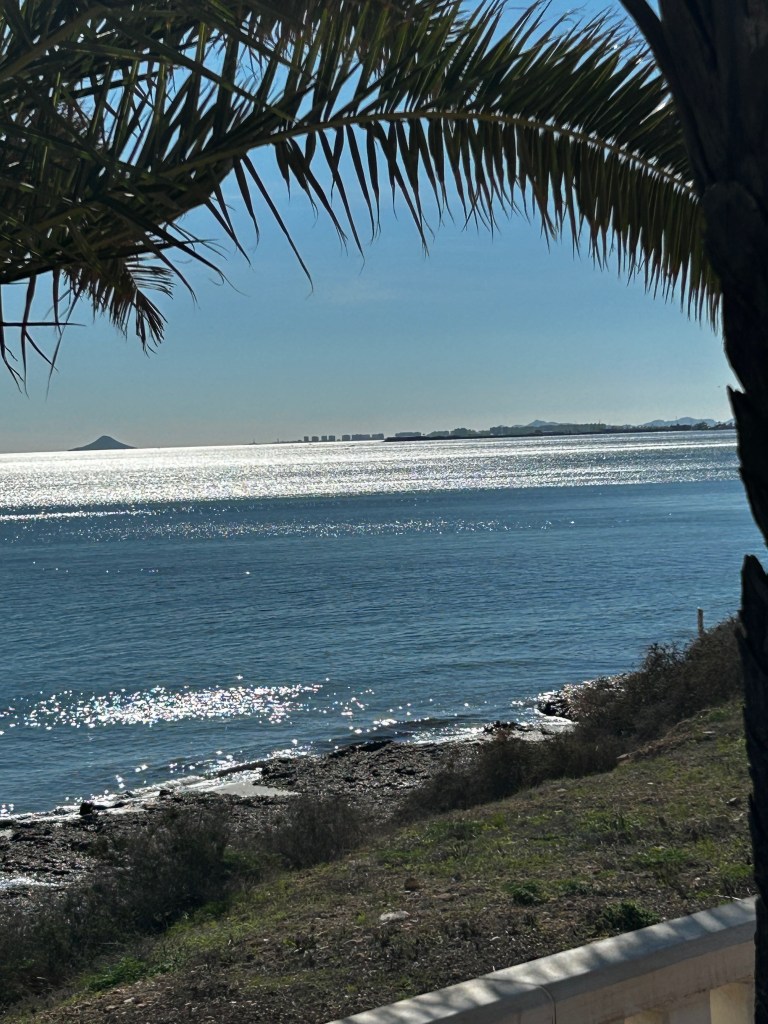
We had a last beach day on Nov 19 but the 20 th was warm, 25 degrees, but quite windy so we sat and read on the balcony and solarium and had our usual walk.
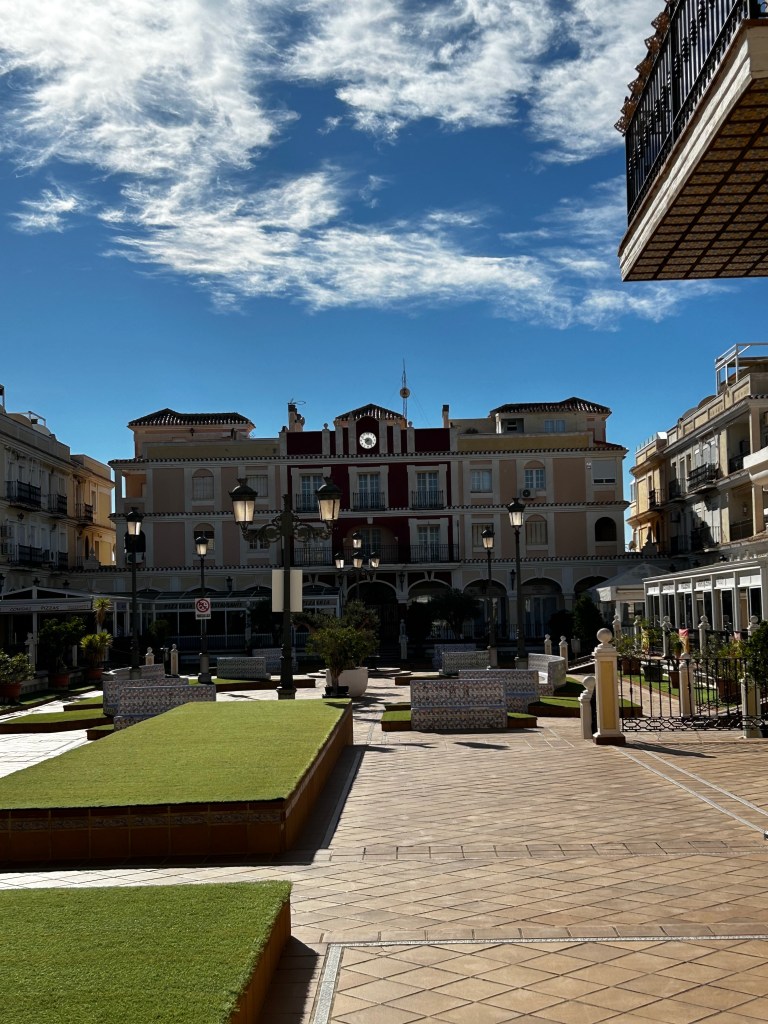
Thursday, November 21 Alicante to Paris, France.
After over a week of cleaning, clearing out, painting, storing away, we left for home, via Paris, France (the other Paris). We got to the airport in good time and then found that there had been a highly-unusual November snow storm in Paris what had delayed our flight for about 2 hours.
We had a tour of the Louvre planned the next morning so we just hoped that it wouldn’t be cancelled! We arrived 2 and a quarter hours late, our bags came immediatly and with no traffic the taxi got us to the airbnb by 11:00 pm. The host, Christophe, waited for us, although a back up of leaving the key in a key box had been arranged. The apartment is small with lofts where we can’t stand up but we managed fine because the location is a few blocks from the Louvre.
November 22 Paris-Tour of Louvre
We had arranged for a guided 3 hour tour with the Tour Guys. They contacted us with reminders, meeting location and details about the Louvre (no backpacks, bags etc.) We were there promptly at 9:35 for the 9:45 tour with one of the staff there to meet us but it was cold, windy and wet.
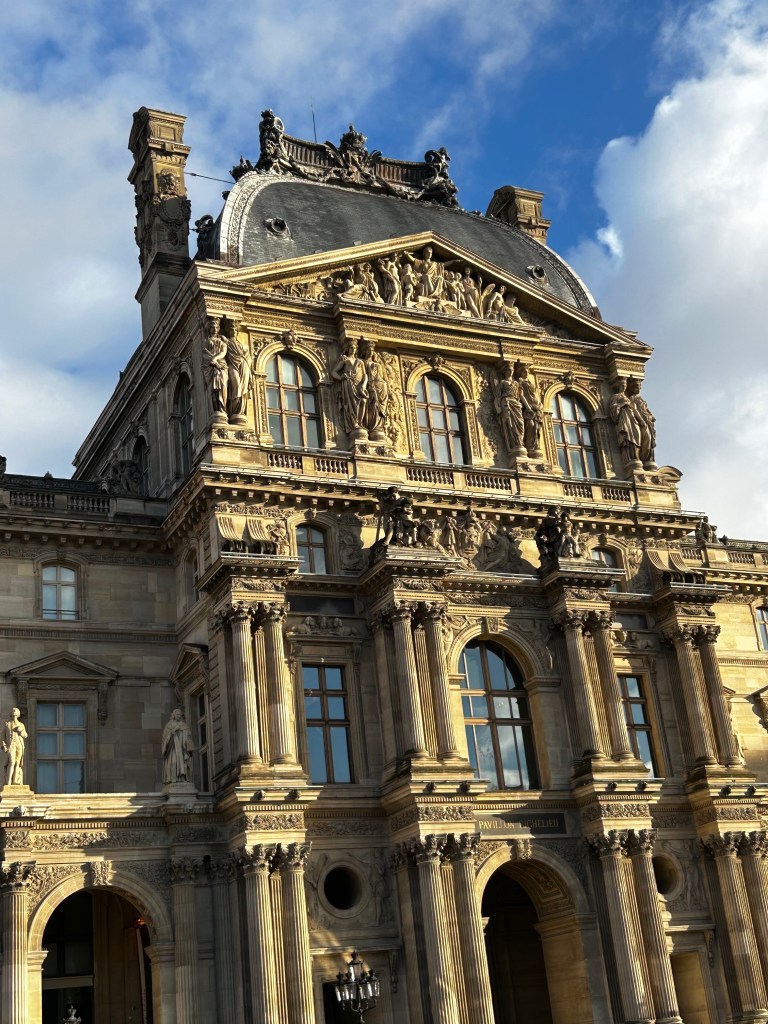
After waiting in this chilling weather, we finally got into the museum at 10:15 (we both thought that the wait might have been shorter with everything having been pre-arranged). The pyramid was built in according to the then president Mitterand’s wishes to celebrate …
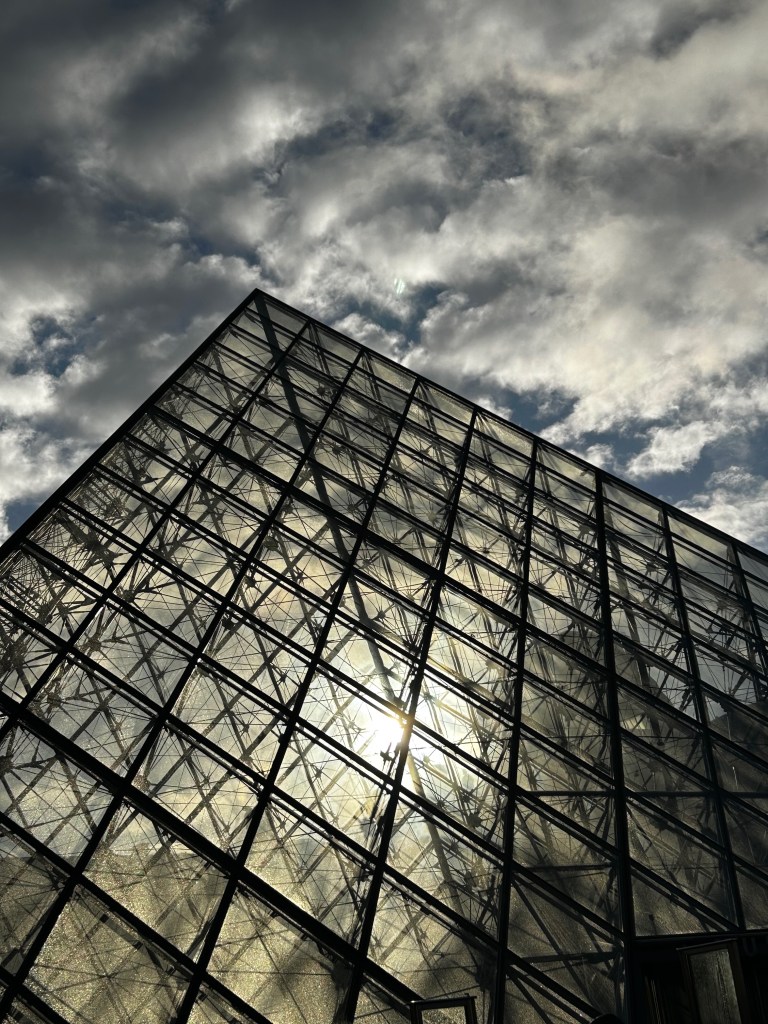
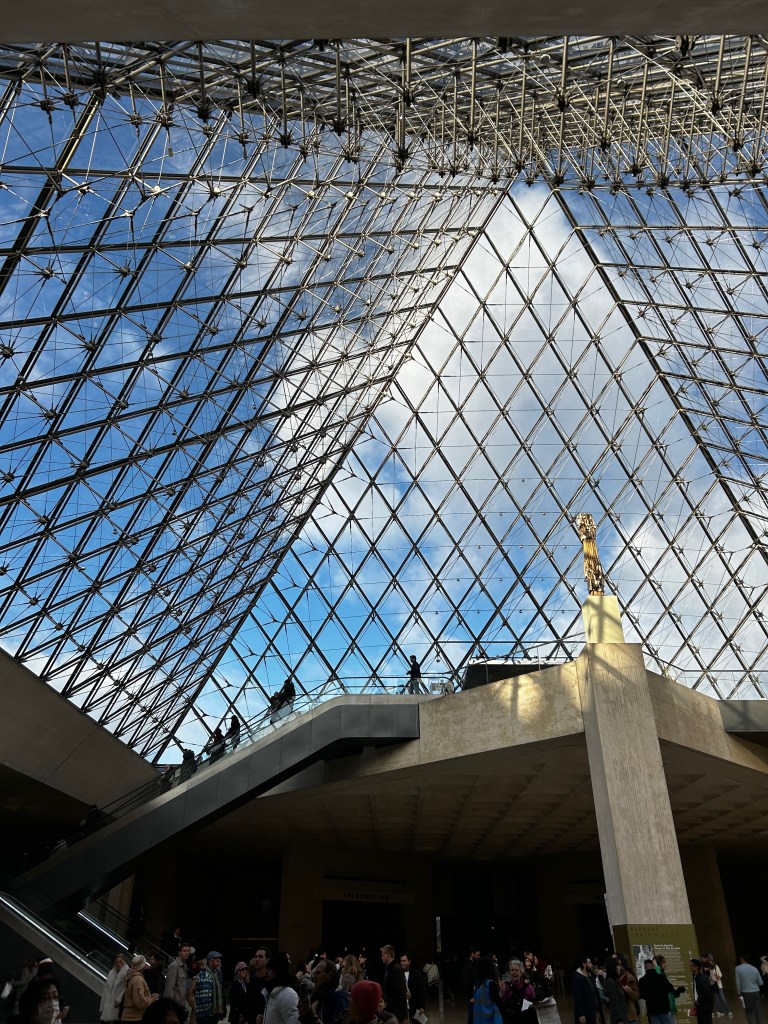
For a little over two hours, Monica walked through the rooms of the Louvre, filling us with information and interesting and sometimes humorous facts through our earphones about the history of the building and its paintings, sculptures and tapestries. It was fast-paced, balanced and well-organized and we felt that we had seen a lot more than we would have on our own.
History of the Louvre
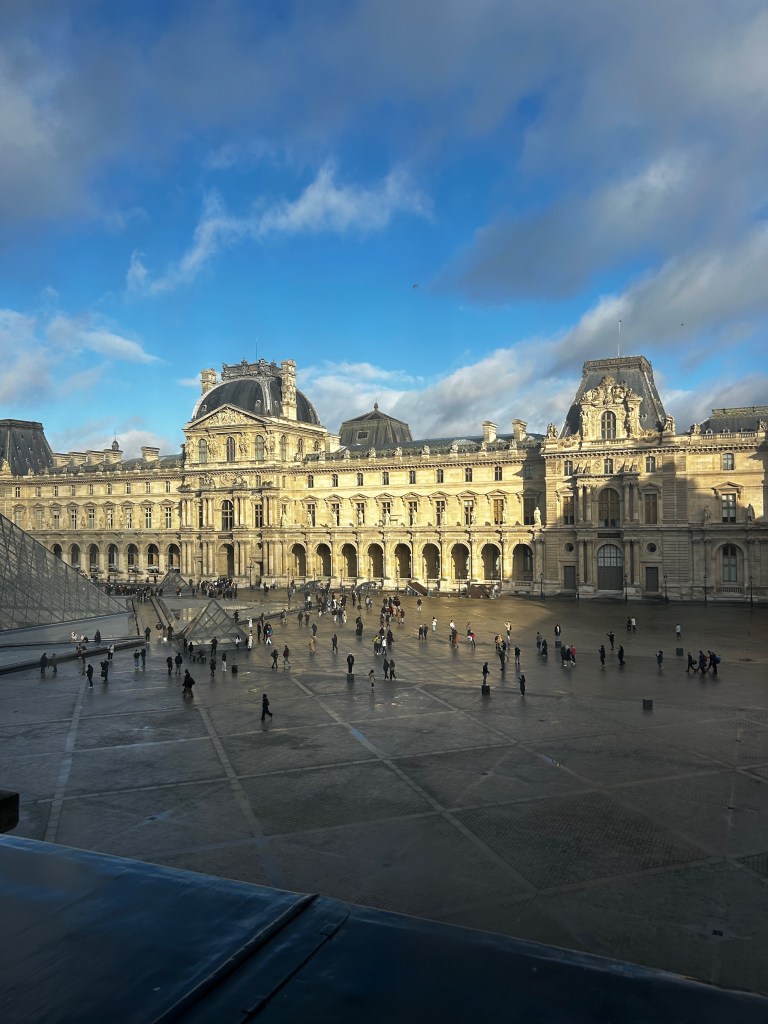
In 1546 Francis I, who was a great art collector, had this old castle razed and began to build on its site another royal residence, the Louvre, which was added to by almost every subsequent French monarch. Under Francis I, only a small portion of the present Louvre was completed. In the 17th century, major additions were made to the building complex by Louis XIII and XIV and both acquired great works of art.
The Louvre ceased to be a royal residence when Louis XIV moved his court to Versailles in 1682. The idea of using the Louvre as a public museum originated in the 18th century. The comte d’Angiviller helped build and plan the Grande Galerie and continued to acquire major works of art. In 1793 the revolutionary government opened to the public the Musée Central des Arts in the Grande Galerie. Under Napoleon the Cour Carrée and a wing on the north along therue de Rivoli were begun. In the 19th century two major wings, their galleries and pavilions extending west, were completed, and Napoleon III was responsible for the exhibition that opened them. The completed Louvre was a vast complex of buildings forming two main quadrilaterals and enclosing two large courtyards.
We started in the lower lever walking around the area that was the moat which according to Monica had to be cleaned up as it had been used as a dump by the townspeople and had bee recently been excavated.
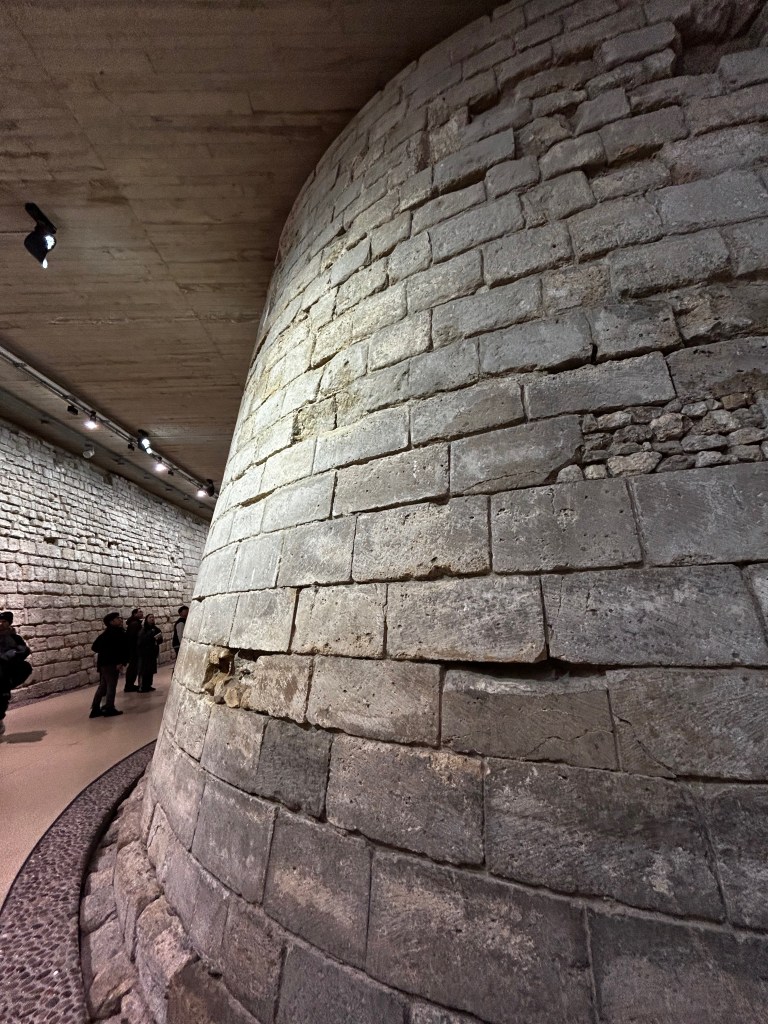
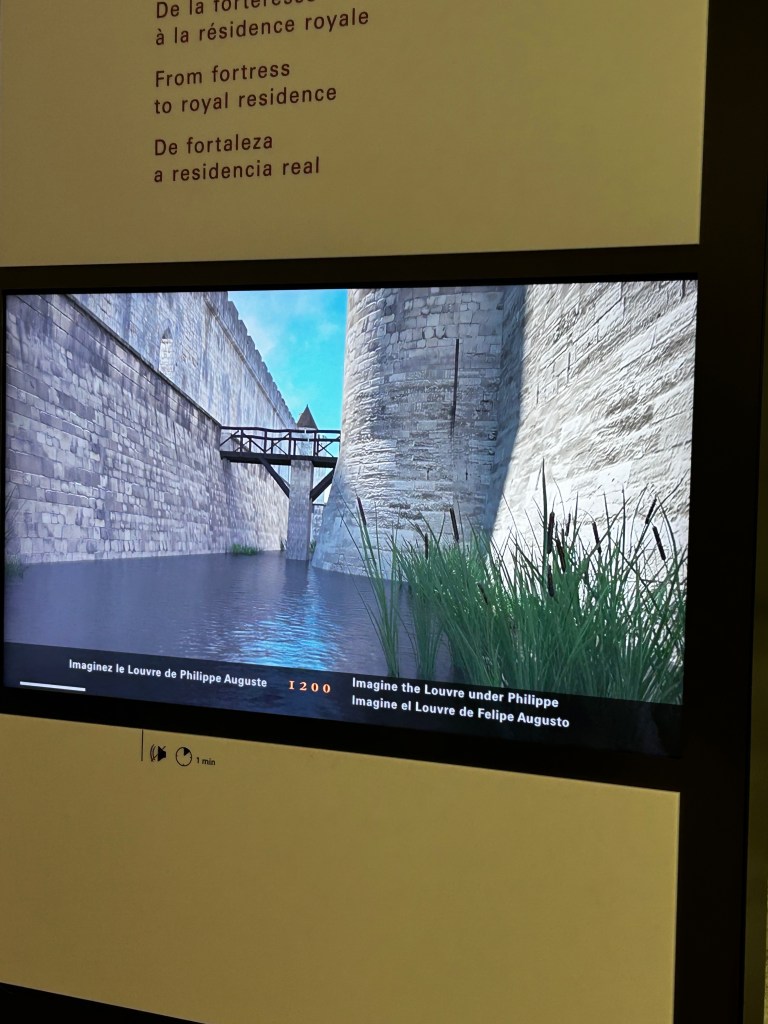
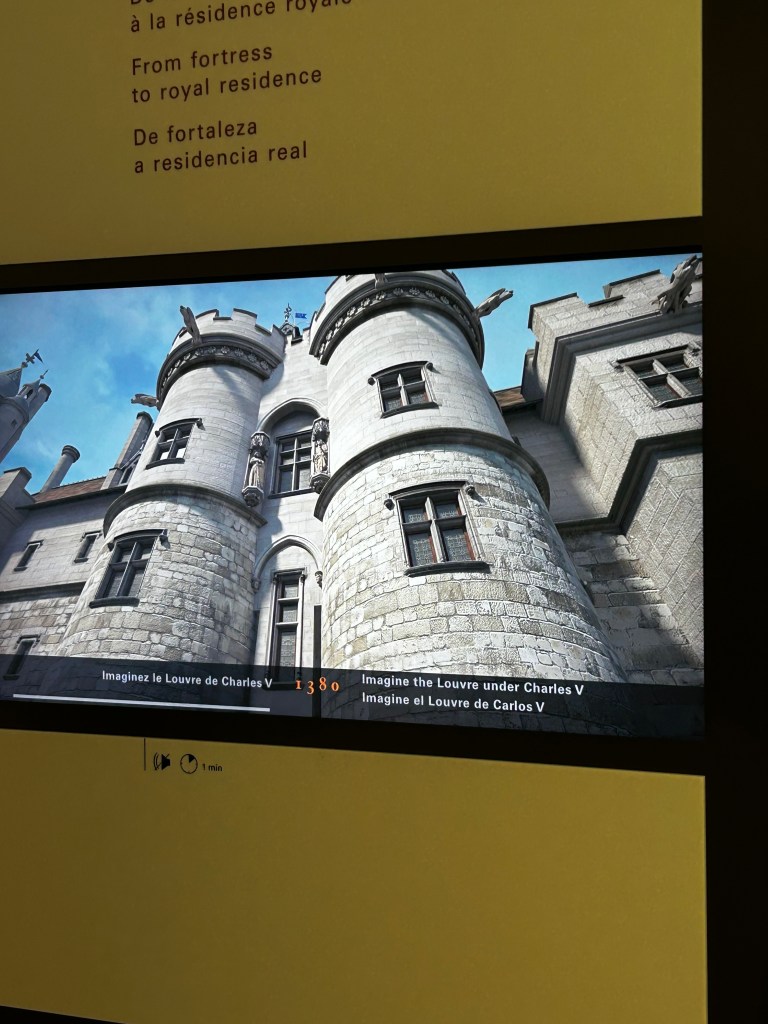
The transition from Fortress to Royal residence:
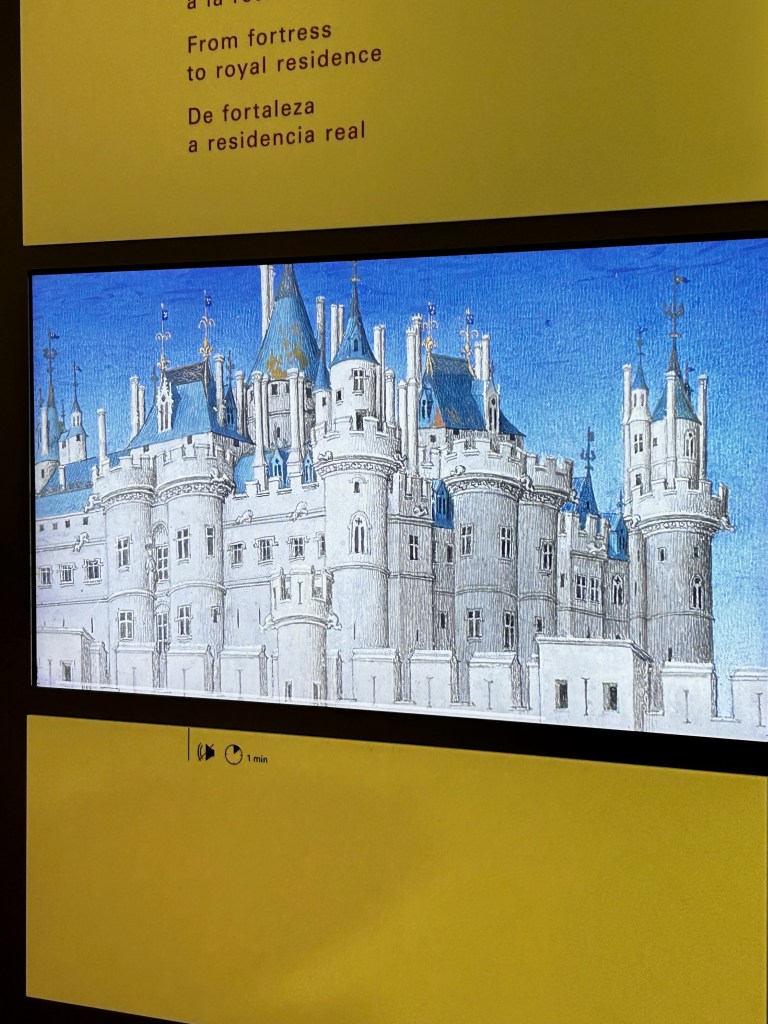
In the history of the Louvre, it did start as a fortress that each successive king/emperor increased in size and decoration.
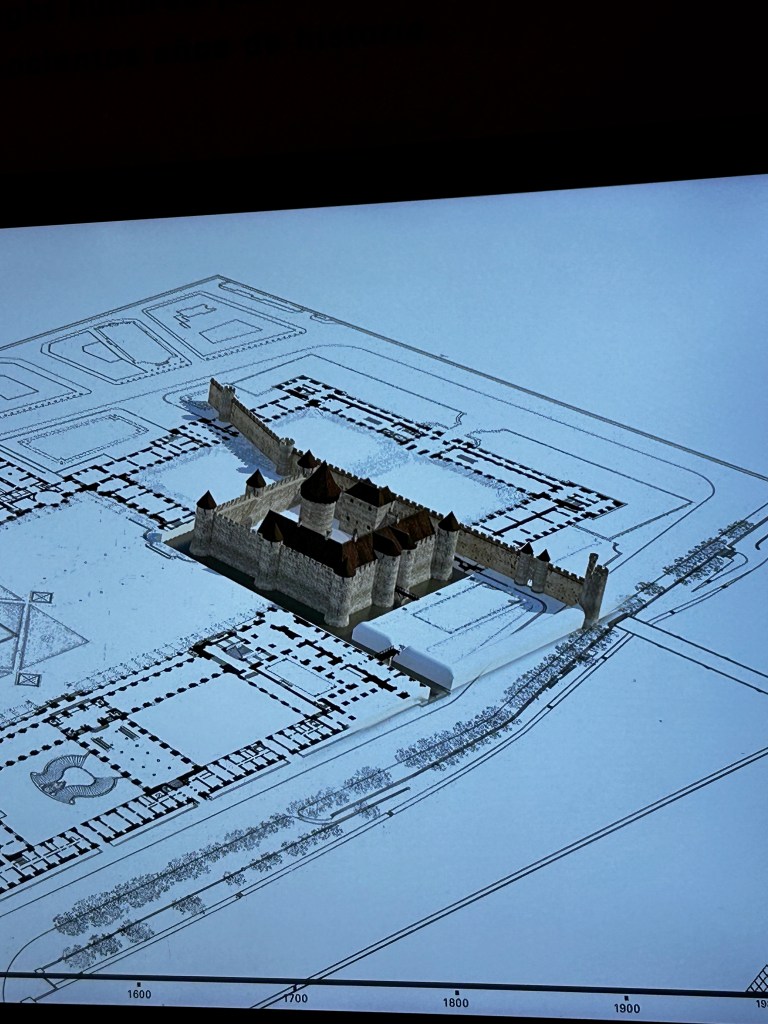
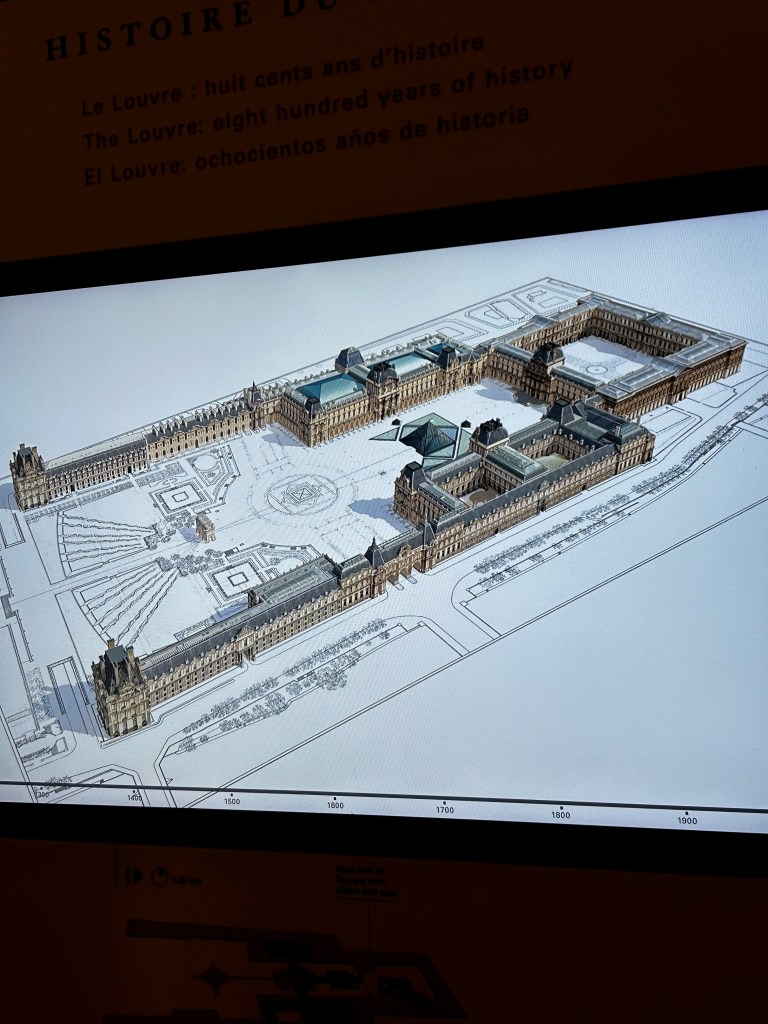
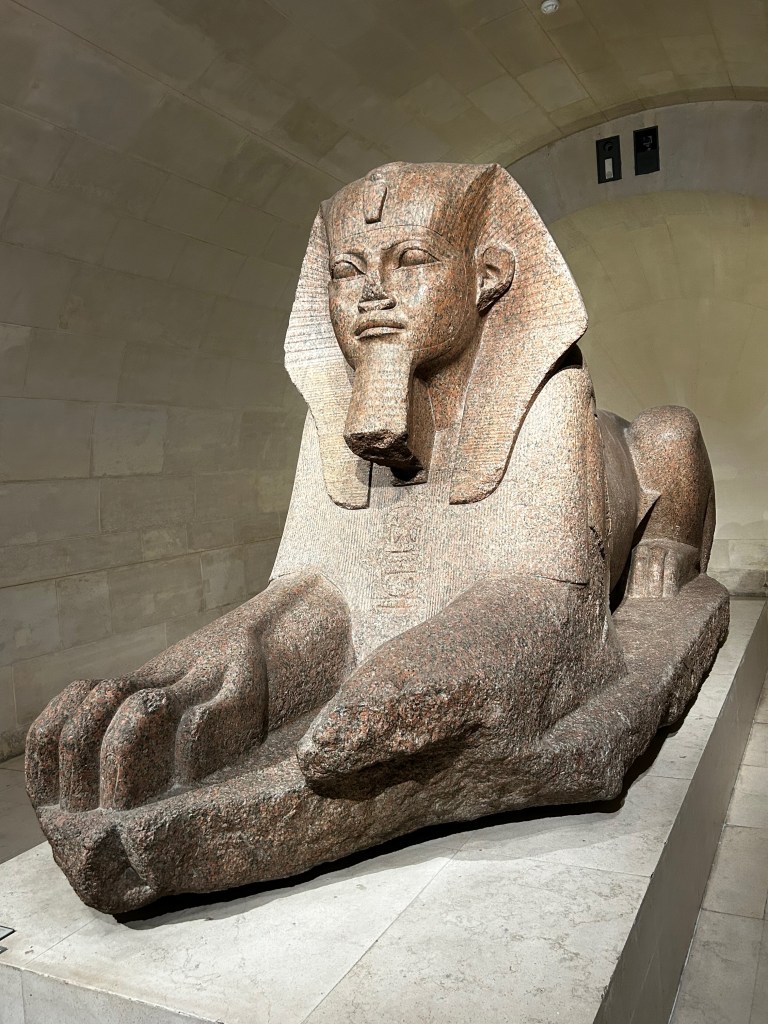
After this video version, I had an clearer version of what was planned by each successive king/emperor. We then moved to the Egyptian wing. This huge statue took a special barge and several months to move.
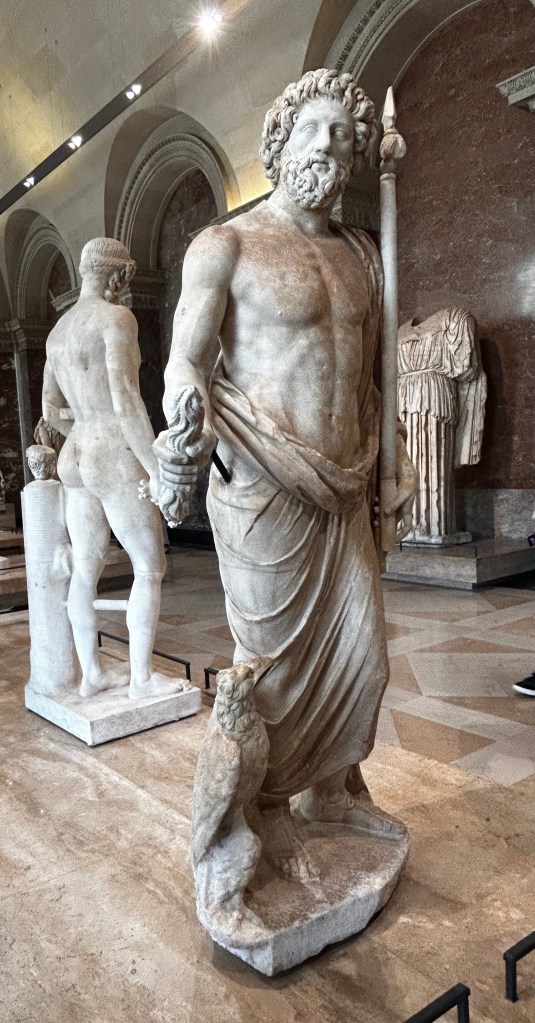
Then we moved to the Greek Antiquities, mostly copies with a few originals. Zeus is original but the head and eagle are modern.
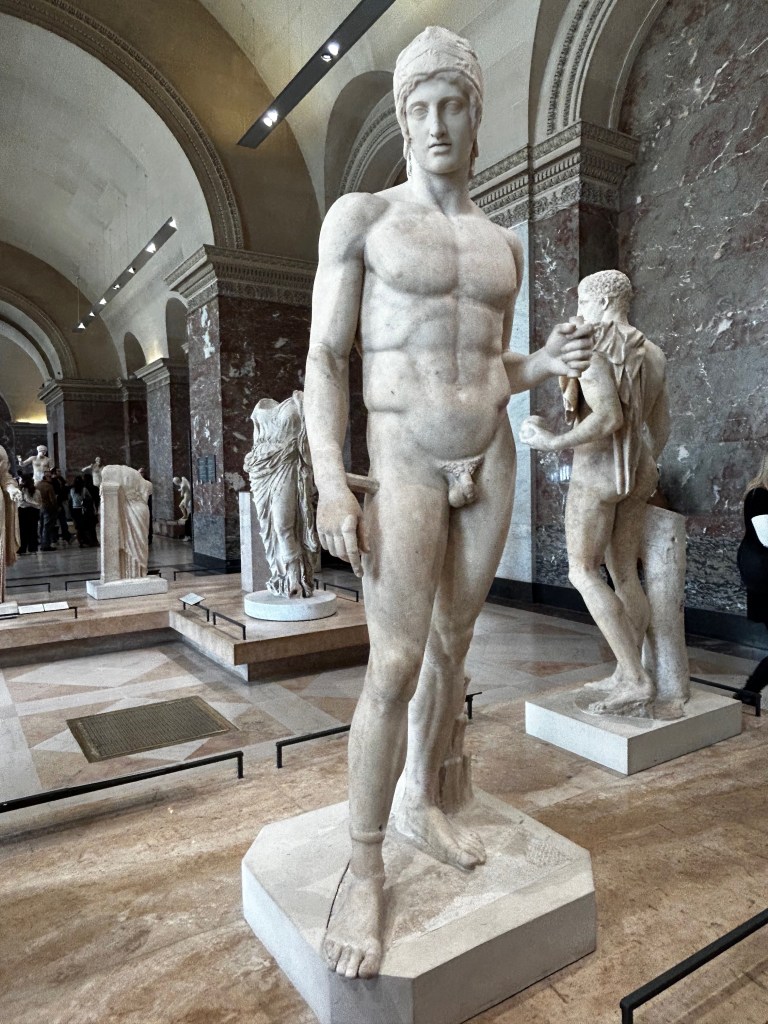
Ares, god of war, is recognisable by his helmet and ankle ring, which may refer to his amorous liaison with Aphrodite. This is the most complete statue from a series of ancient copies of a work that is now lost. All the male bodies look similar because the sculptors used the same models so the individual was recognisable by the hair, helmet and what he was holding.
Circa 360 BC, Praxiteles, the Athenian sculpture, created the first female nude of Greek sculpture. The inhabitants of Knidos, in Asia Minor, acquired his naked Aphrodite, the goddess of love, for the temple of the goddess, thus bringing fame to their city.
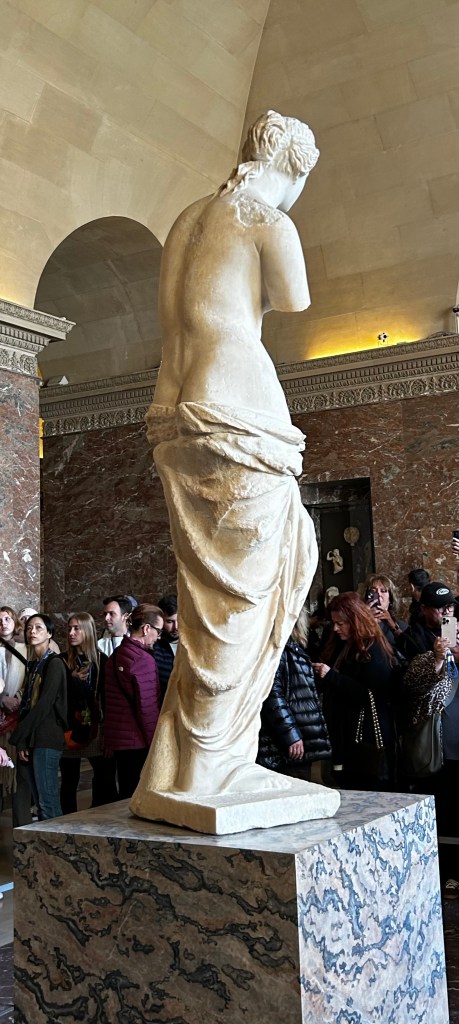
Uncovered in April 1820 on on the Greek Island of Milos, this original Greek sculpture, Aphrodite or Venus, goddess of Love, whose sculptor unknown is dated around 120 BC. She created a sensation when she was discovered because she is a rare Greek original and most “Greek” statues are actually later Roman copies. She, like Golden Age Greeks, epitomizes stability, beauty and balance.

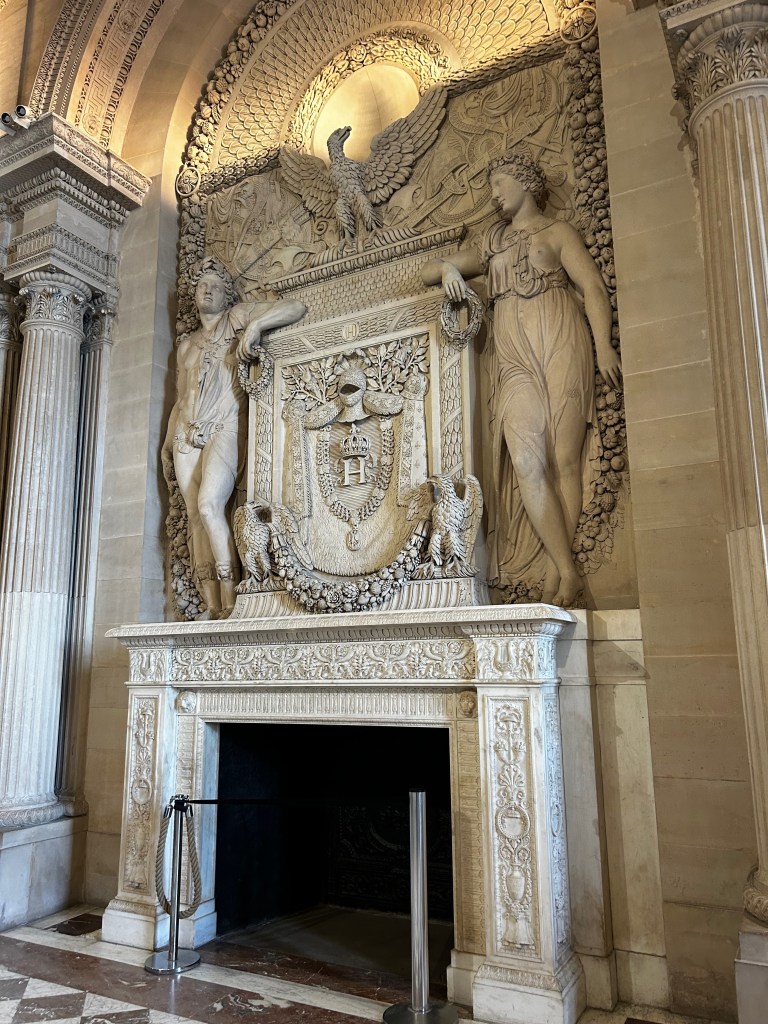
In this next massive hall, dances were held.
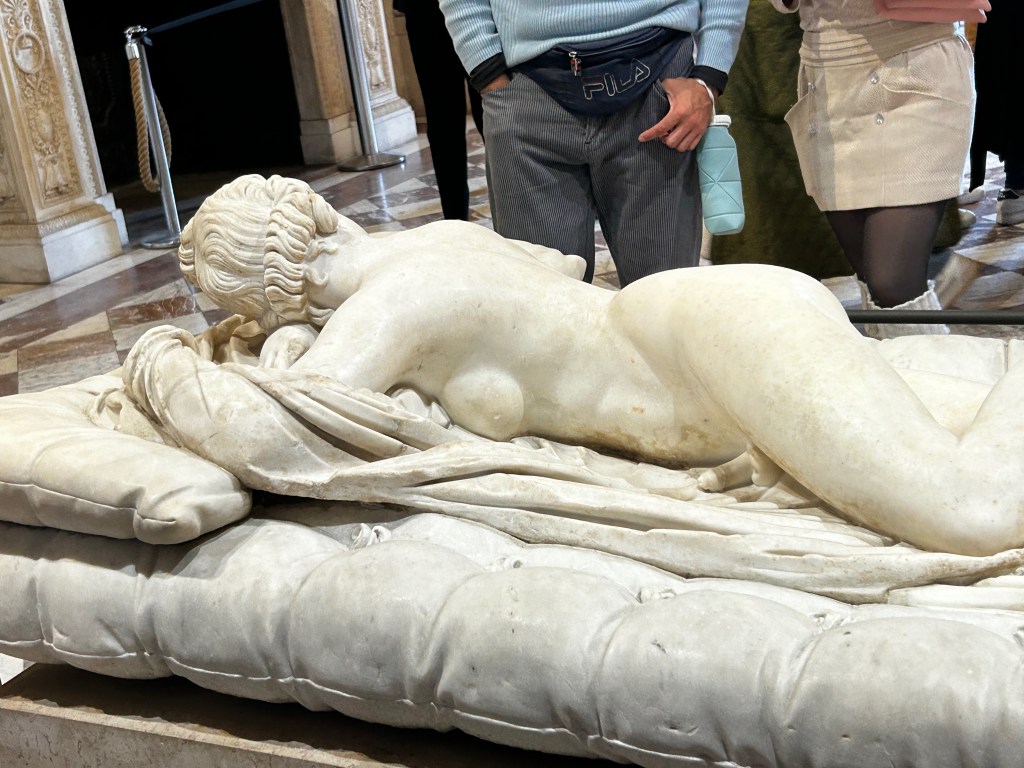
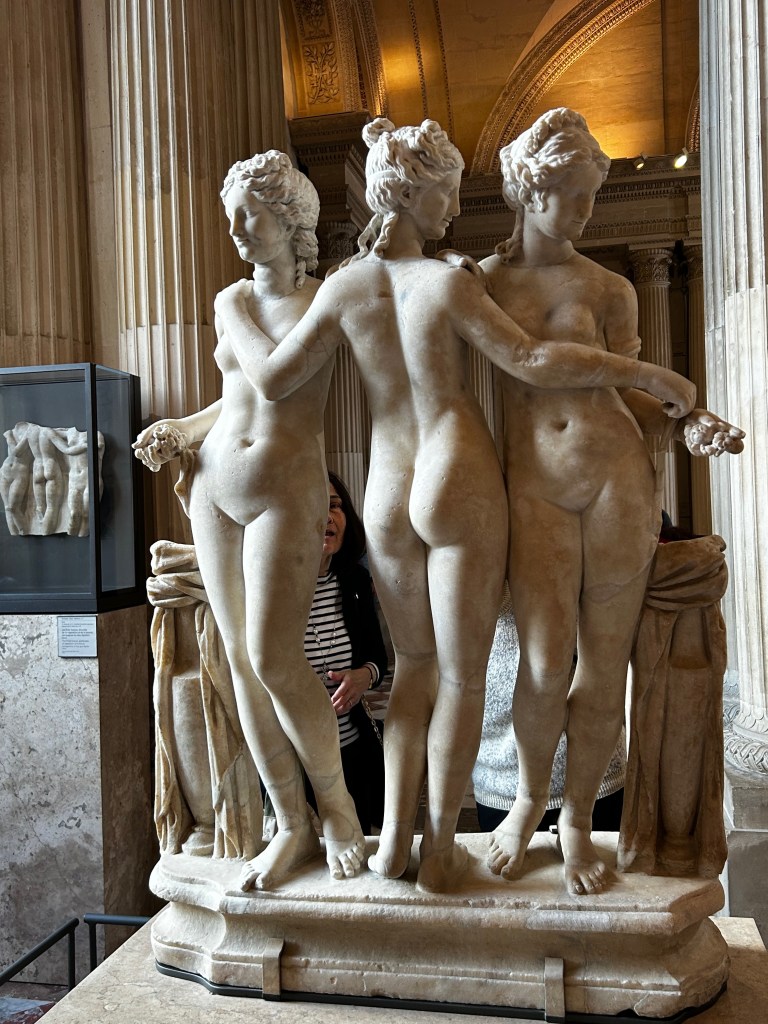
The three nude women, symbols of beauty, the arts and fertility, stand side-by-side in a lateral composition that is striking in its frontality.
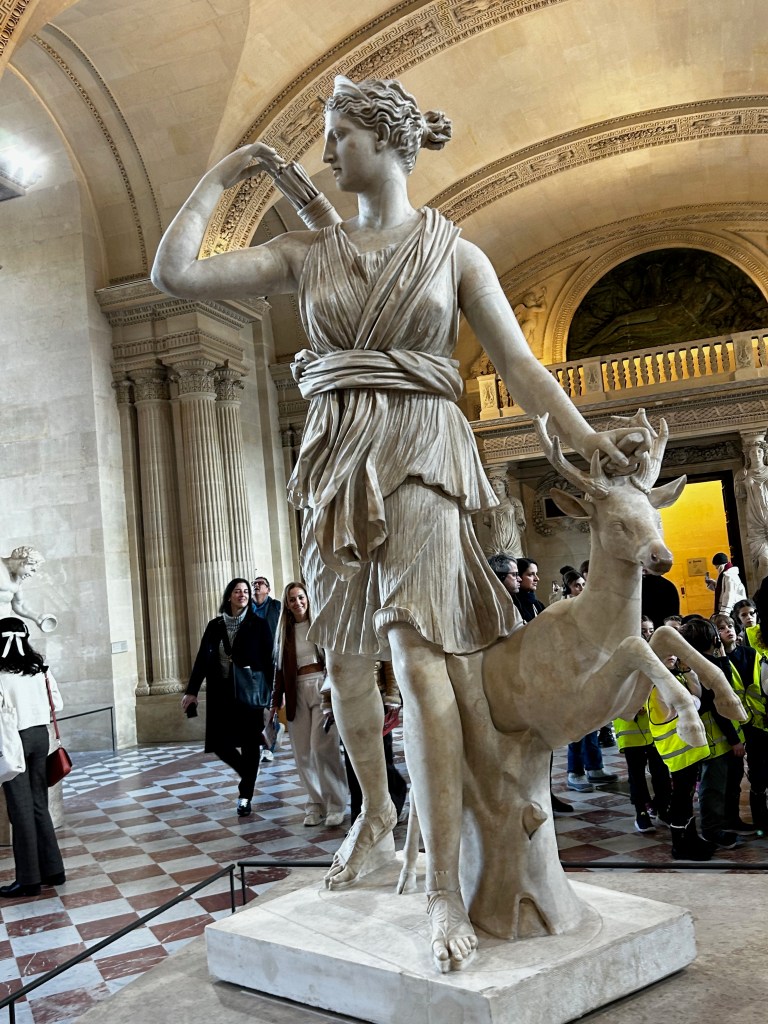
This statue of Diana, the first significant antiquity to enter the French royal collection, is striking for the dynamic position of the body. The statue moved with the French royal court: in Fontainebleau from 1556, it came to the Louvre’s Hall of Antiquities in 1602, then went to Versailles in 1996 before returning to the Louvre a century later.
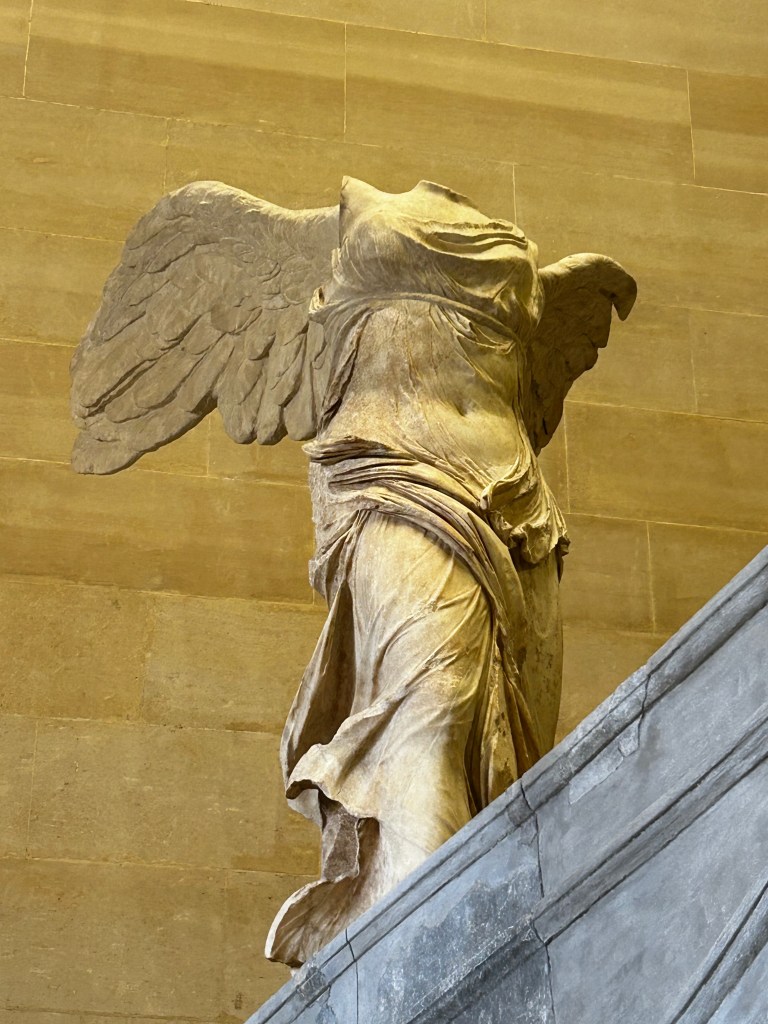
Later Greek art is Hellenistic, adding motion and drama. The Winged Victory Of Samothrace at the top of the stairs on the landing is mcuh larger than she appears as you climb the stairs. This statue of a woman with wings, poised on the prow of a ship, once stood on a hilltop to commenmorate a naval victory. this is the Venus de Milo gone Hellenistic.
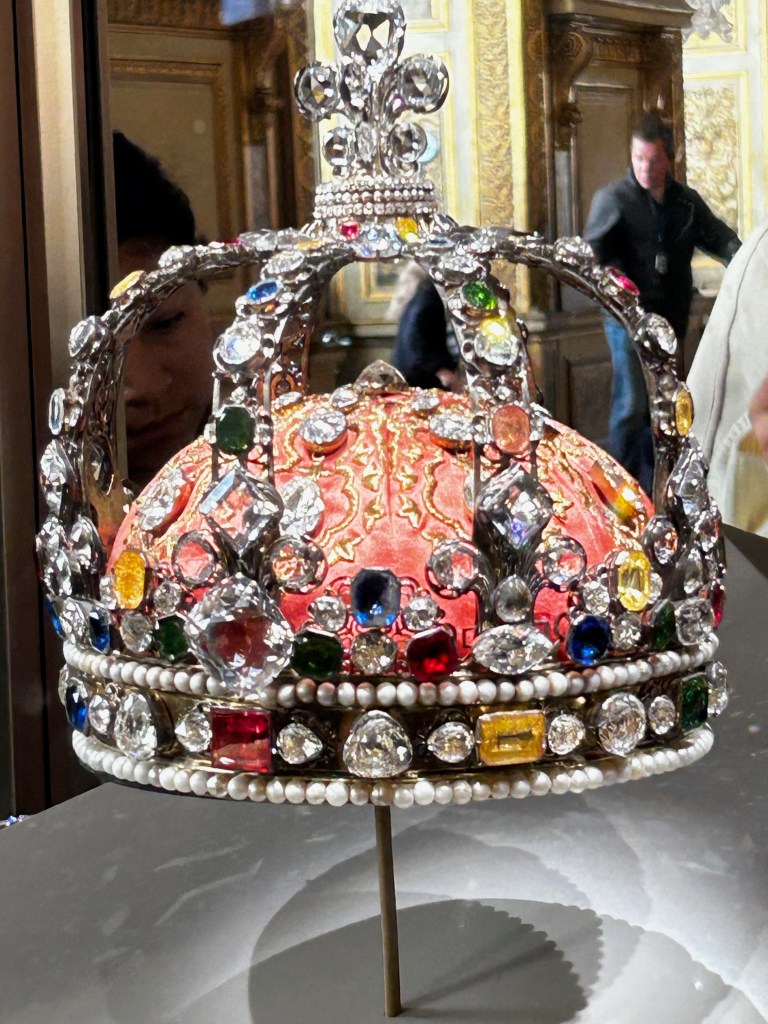
Laurent Rondé, jeweller to the king, supplied this crown for the coronation of Louis XV in Reims in 1722. It was designed by his son Claude and crafted by the young goldsmith Augustin Duflos. The fleur-de-lis at the front of the crown once featured the ‘Regent’ diamond while the other fleurs-de-lis on the band were set with eight ‘Mazarin’ diamonds, and the ‘Sancy’ diamond sat at the top. These gemstones were later replaced with replicas.
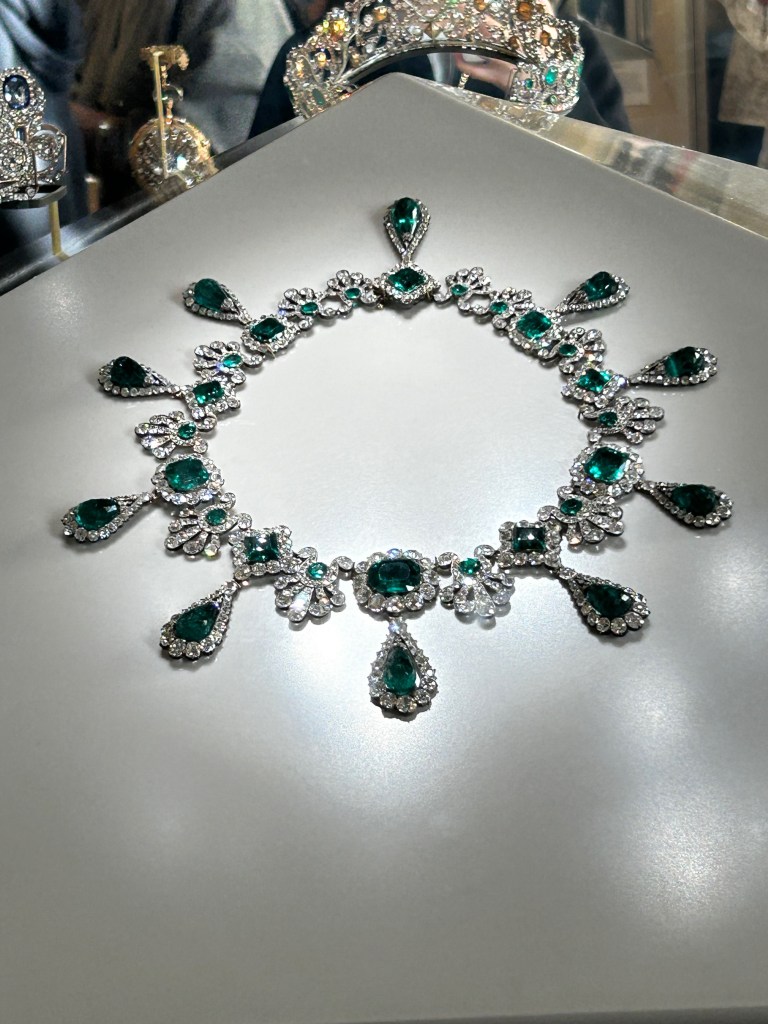
This necklace and earrings are part of the set of emerald jewellery – which also included a diadem and comb – presented by Emperor Napoleon I to Marie Louise, archduchess of Austria and a member of the House of Habsburg, on the occasion of their wedding in 1810. When Marie Louise died in 1847, as it was not mounted with any of the French Crown Jewels, the set was handed down to the branch of the House of Habsburg ruling in Tuscany.
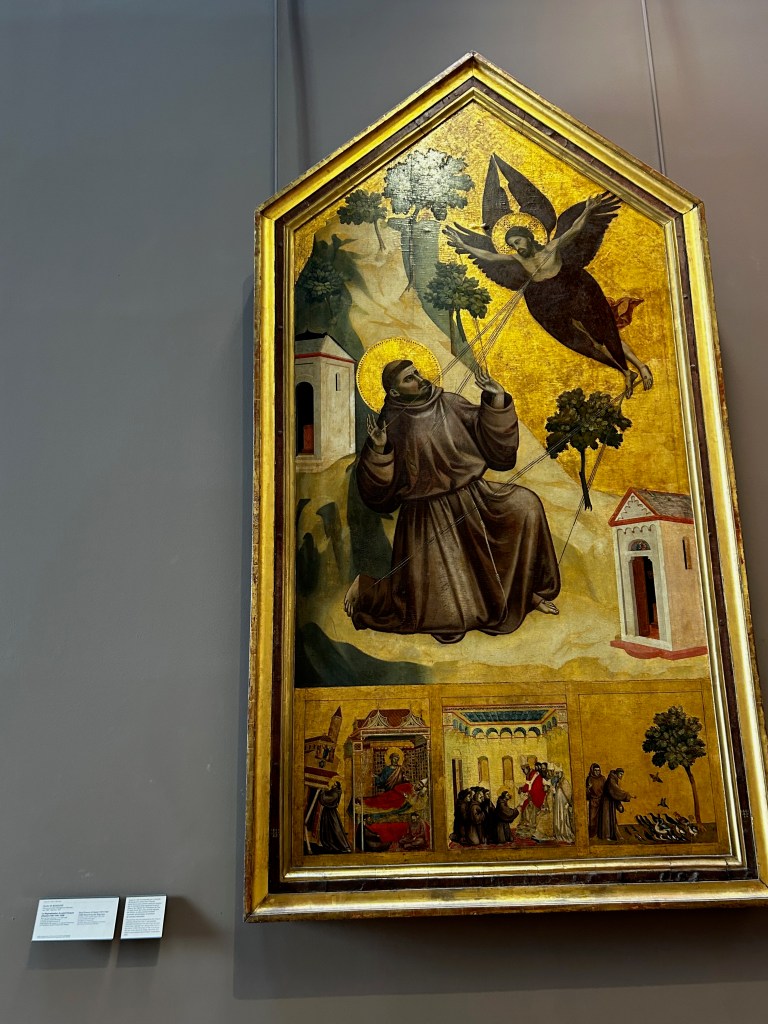
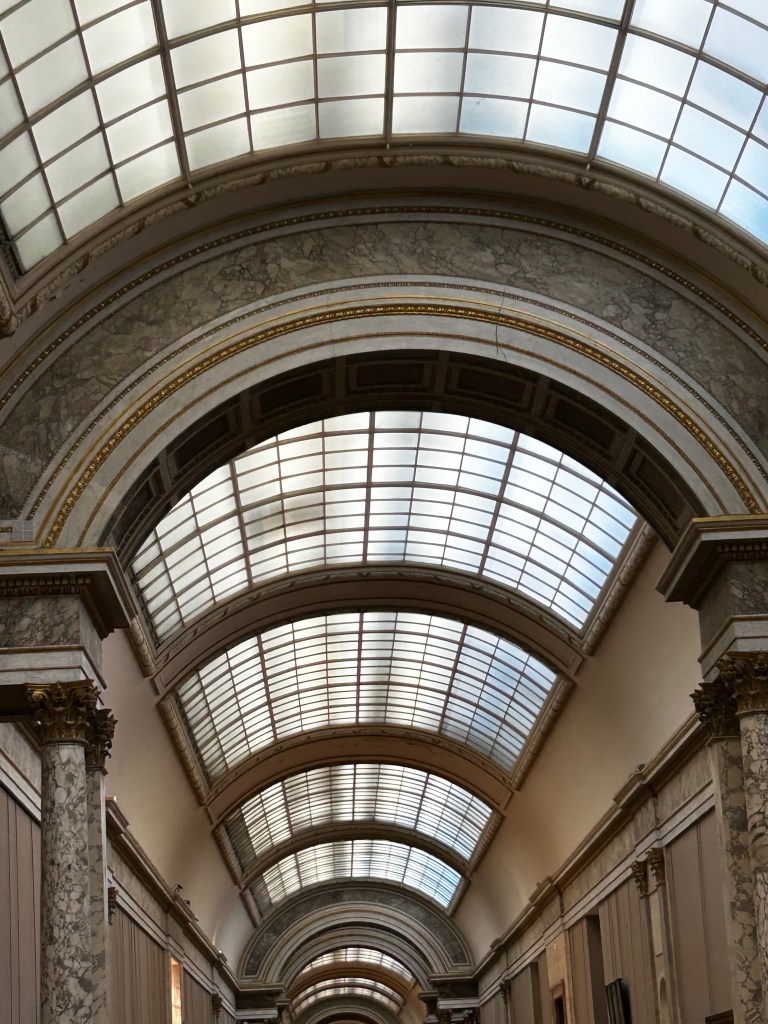
The Italian collection is in the Grand Gallery. In painting, the Renaissance meant realism, and for the Italians, realism was spelled “3-D”. Painters were inspired by realism and balanced beauty of Greek sculpture. Painting a 3-D world on an 2-D surface is tough and after the millenium of Dark Ages, artists were rusty.
Because the church had the money and living in a religious age, they painted mostly alter pieces full of saints, angels Madonnas-and- bambinos and crucifixes floating in an ethereal gold-leaf sky.
Sitting in the stunning Salon Carré of the Louvre is the brilliance of Saint Francis Receiving the Stigmata by Giotto. This is not only a work of transcendent beauty, it also has a fascinating role in the history of art. It appears as Italy is about to exit from its Gothic period — dominated by the Greek Orthodox “Byzantine” style — and give birth to a new wave of European masters who would change civilization forever.
It is the artist Giotto who leads this revolution that will eventually lead to Michelangelo, Leonardo da Vinci, and so many others.
The altarpiece presents us with an image of Saint Francis kneeling in a quasi-natural landscape — very realistic for the time. Rather than being seen straight on, as would have been customary, Giotto has him in a real pose.
Above him flies Jesus Christ as a seraphim, a form of angel described in the Old Testament as having three sets of wings. Saint Francis is being given the stigmata, which are the wounds that Christ received at his crucifixion. Rather than looking on at his saviour in a passive way, Giotto imbues Francis with a rich emotional life that you can see in his face. That expression, when compared to any artwork by his contemporaries, is shockingly humanistic.
Notice that Christ is smaller than Saint Francis. This was a radical new direction at the time. Giotto was using one of the effects of perspective to depict Christ as being far away, rather than formulaically painting him larger due to his greater importance.
Other details that fill out the work give us more information about its characters and the scene. Saint Francis was a mendicant monk, meaning he was impoverished and lived off of alms. This made him highly controversial before his canonization. So below the main image is a series of three panels that tell the story of his gradual acceptance by the church. This flows almost like a comic book, and that’s all by design. In that age, literacy was extremely rare, so the best way to tell stories was visually.
The visual feature that overwhelms all the others — that enormous ocean of gold that the image emerges from is entirely a stylized choice. What this gold does is command our attention, creating an undeniable force on the viewer who stands there in awe of what they see. In that way, Giotto allows us to have a similar experience as Saint Francis.
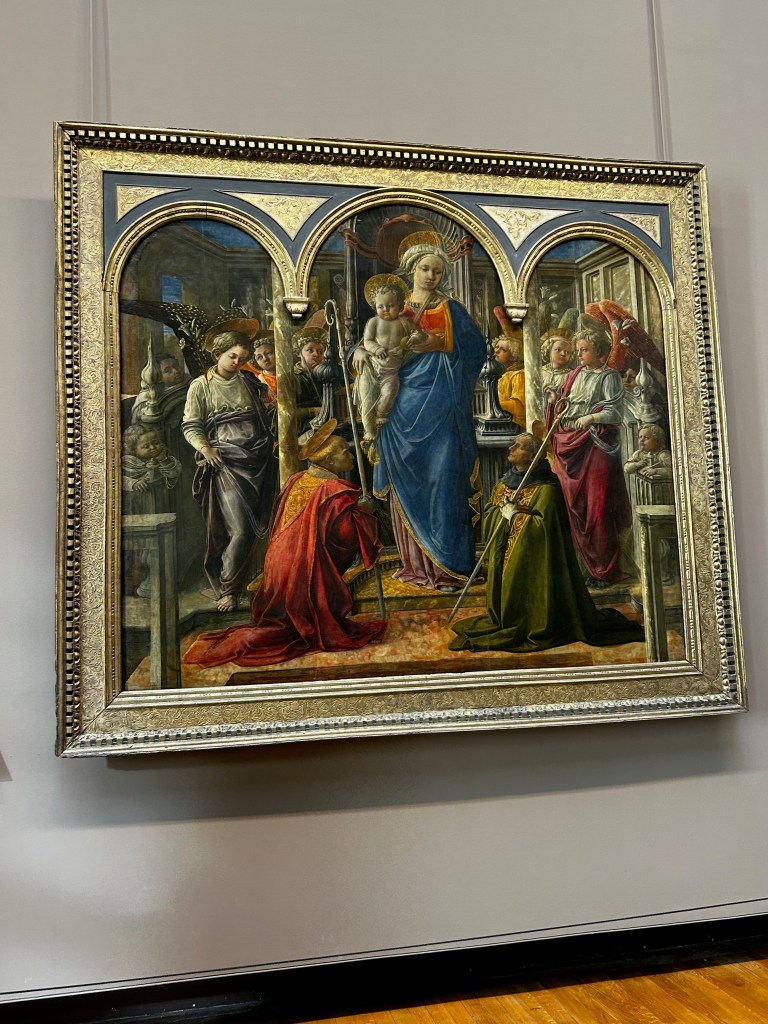
This one was interesting because the baby was very large in size. Monica, our guide, said that few painters had any experience painting babies so they were often disproportionate. The painting by Filippo LIPPI, Florence, vers 1406 – Spolète (Ombrie), 1469. Painted on wood, 1437.
The Virgin and Child Surrounded by Angels and Saints Frediano and Augustine, known as The Barbadori
The Louvre has the greatest collection of Leonardos in the world – five of them.
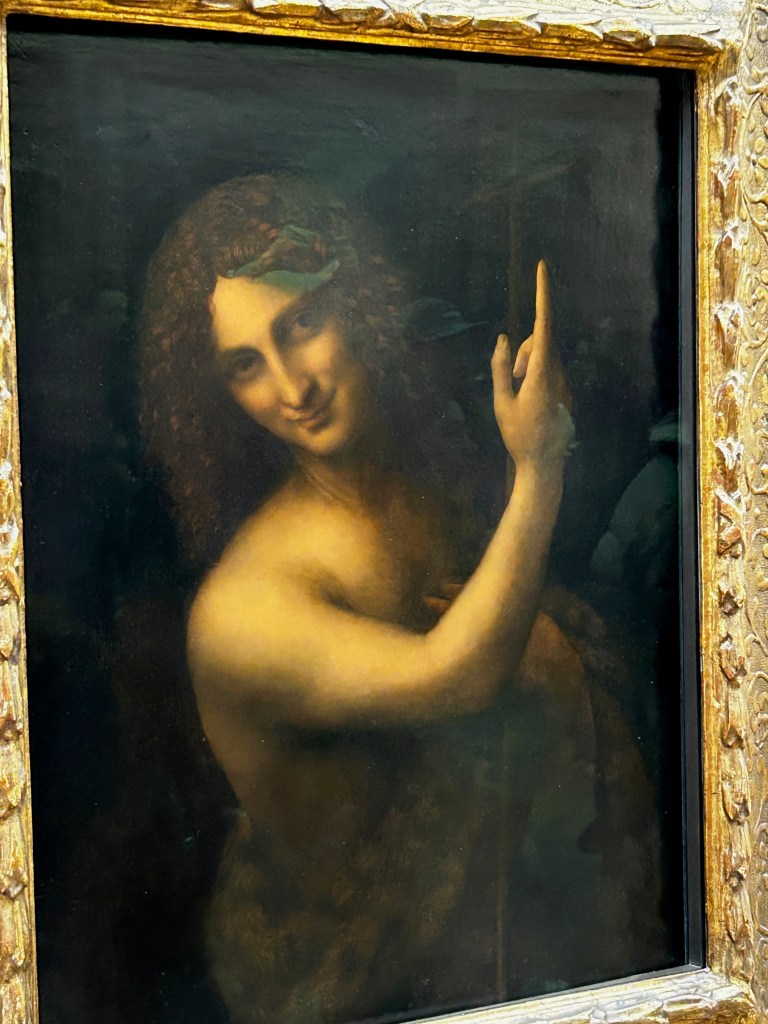
Léonard de ViNCI, 1519 painting of Saint Jean baptiste. Oil on panel. This Saint John the Baptist, with his pagan, androgynous beauty, is holding a cross symbolising the Passion of Christ, but his panther skin is an attribute of Bacchus, the Roman god of wine. This combination represents a new approach to traditional Tuscan images of the patron saint of Florence.
This painting is the masterpiece of Leonardo’s final years and the culmination of his soft, dark, monochrome, transparent style.
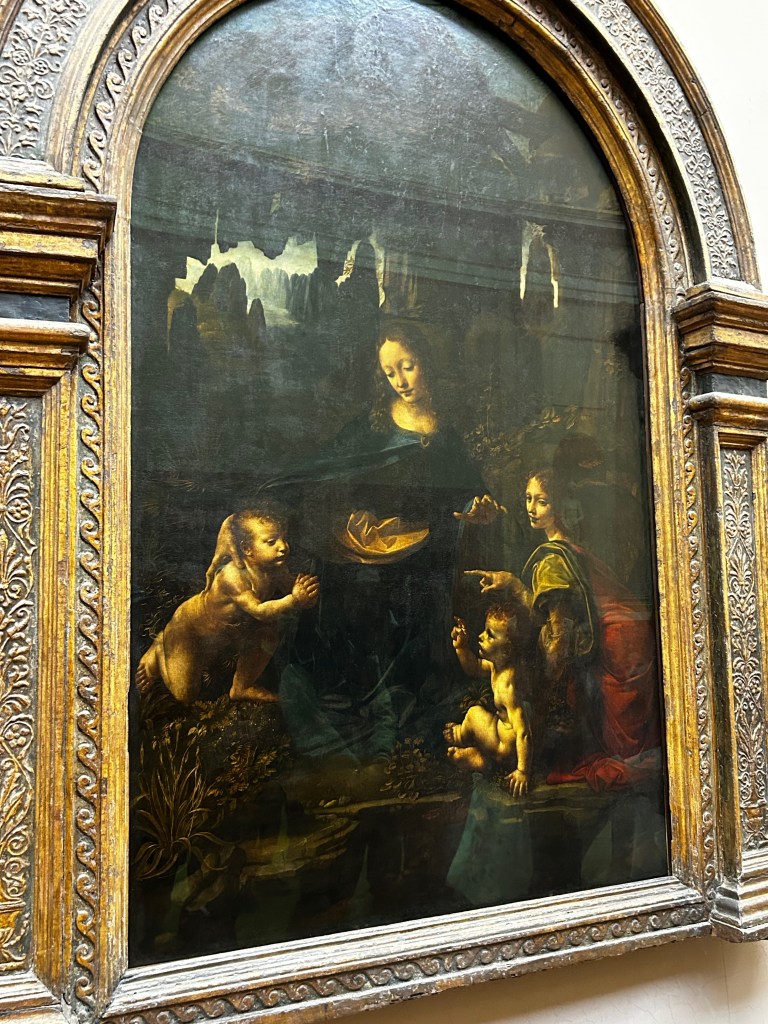
Léonard de VINCI Amboise (France). The Virgin of the Rocks. Oil on panel transferred to canvas, about 1483-1490
The rocks of this grotto with its luxuriant vegetation give the scene a mysterious atmosphere. The infant Saint John, kneeling on the left in an attitude of prayer, is blessed by Jesus, who is held by an angel under the protection of the Virgin Mary. This image of Mary is interesting because the patron who requested it did not like the figure of the girl on the right pointing and what that might suggest.
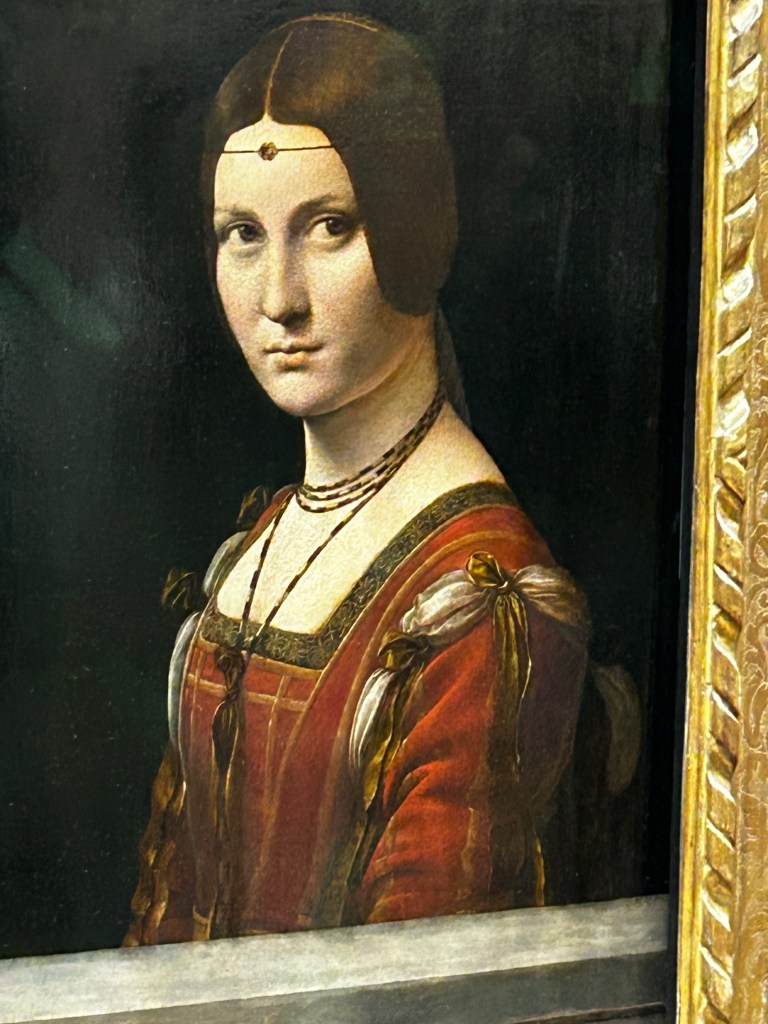
Leonard de VINCI 1452. Portrait of a Woman of the Court of Milan. Oil on panel about 1480-1497.
Leonardo da Vinci painted this woman, traditionally identified as Lucrezia Crise, in local dress with her looking at someone to her left and with that same smile of the Mona Lisa. Monica said that women were not painted with full smiles as they might suggest bad thoughts or thinking.
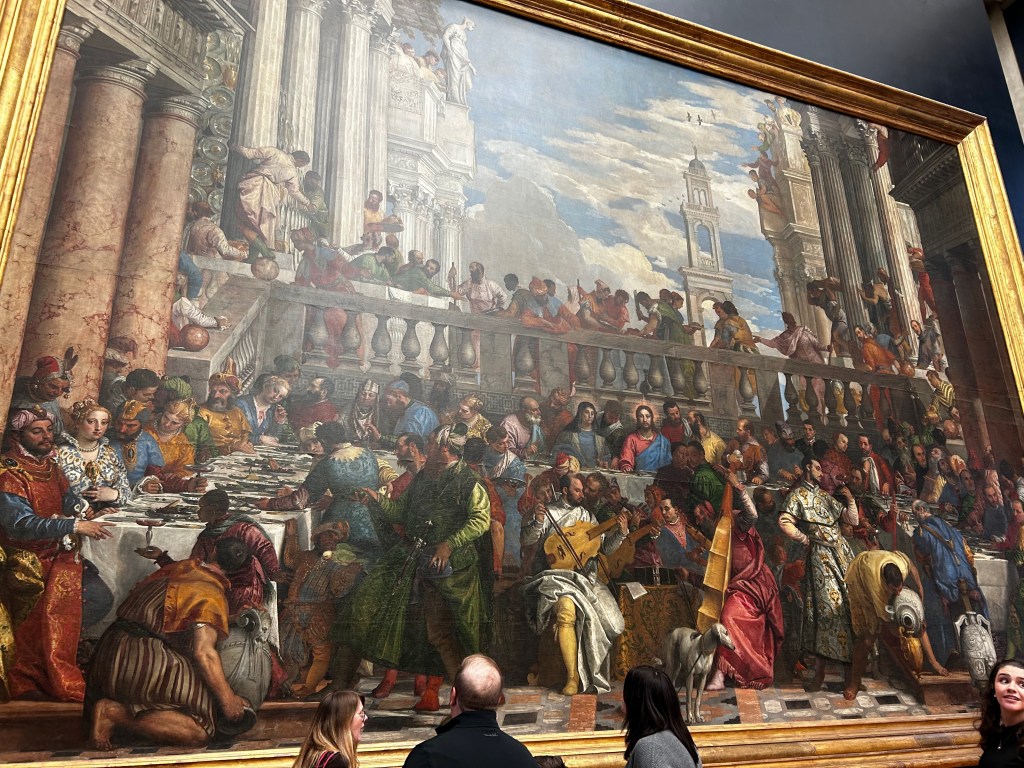
This massive painting opposite Mona is Paolo Veronese’s The Marriage at Cana, showing the Renaissance love of beautiful things gone wild. Venetian artists like Veronese painted the good life of rich, happy-go-lucky Venetian merchants.
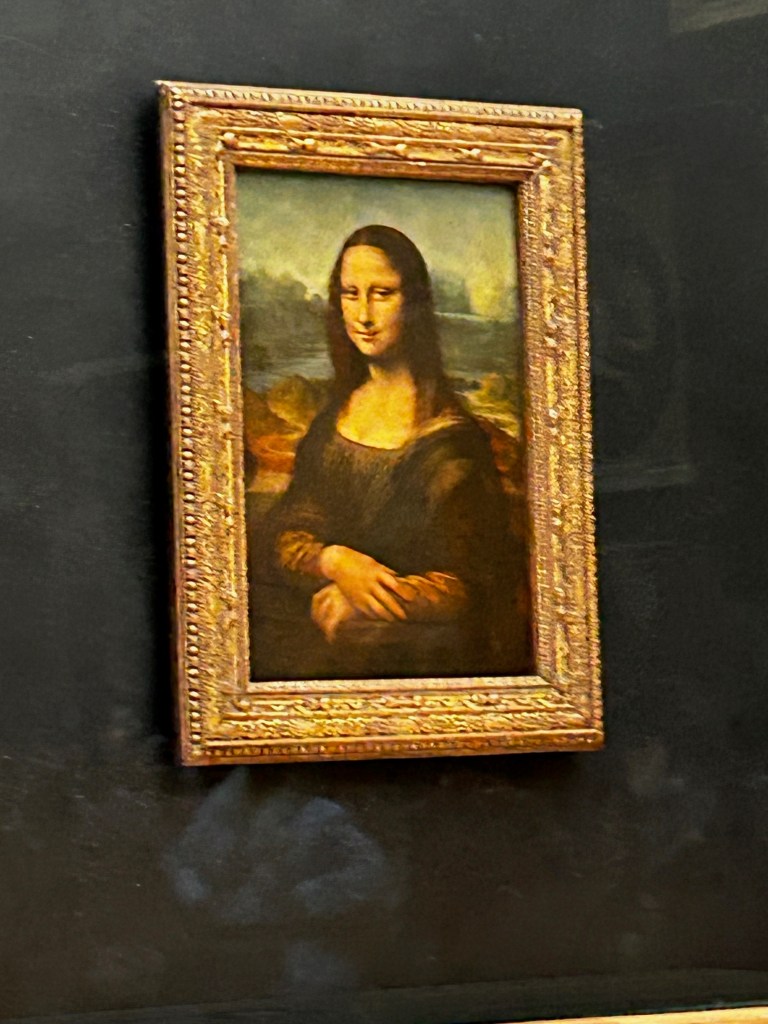
And of course Da Vinci’s Mona Lisa. When I first saw it many years ago, it was in another room and behind a glass frame. While it is behind a cordoned off area, this was a much better view.
Leonardo was already an old man when Francois I invited him to France. Determined to pack light, he took only a few paintings with him. One of them was a portrait of a Lisa del Gioncondo, the wife of a wealthy Florentine merchant. When Leonardo arrived, Francois, immediately fell in love with the painting, making it the centrepiece of the small collection of Italian masterpieces that would, in three centuries, become the Louvre museum. He called it La Gioconda (La Jaconde in French) – both her last name and a play on the word for ‘happy woman”. We know it as a contraction of the Italian for “my lady Lisa” – Mona Lisa. Our guide informed us that it was not a popular painting when it was first displayed.
The overall mood is one of balance and serenity, but there’s also an element of mystery. Mona’s smile and long-distance beauty are subtle and elusive, tempting but just out of reach. It is 30 x 20 inches.
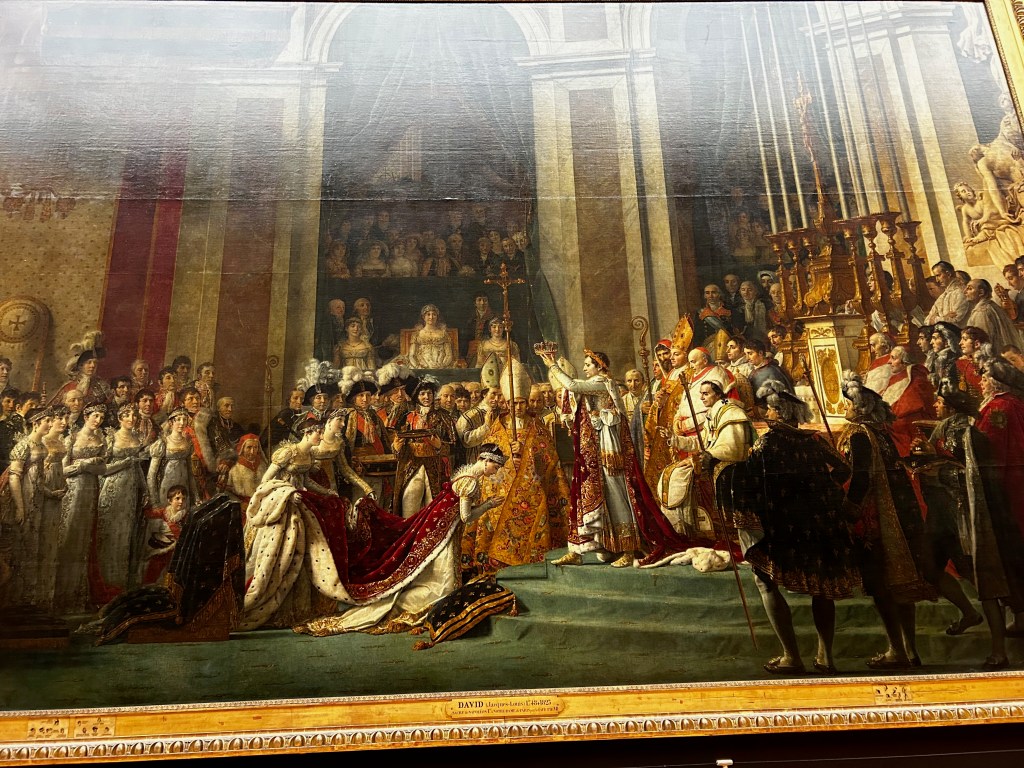
Now for something Neoclassical. Neoclassicism, once the rage in France (1780-1850), usually features Greek subjects, patriotic sentiment, and a clean, simple style. After Napolen quickly conquered most of Europe, he insisted on being made emperor (not merely king) of the “New Rome”. He staged an elaborate ceremony in Paris.
Jacques Louis DAVID. The Consecration of the Emperor Napoleon and the Coronation of the Empress Joséphine in Notre-Dame Cathedral on 2 December 1804. Oil on canvas, 1806-1807. Salon of 1808. David’s painting shows the ceremony at which Napoleon crowned himself and his wife Emperor and Empress of the French in the presence of his family, the Pope and the dignitaries of the Empire.
The realistic depictions of the faces and costumes of the 191 figures in the scene distract attention from the artist’s skilful reconstruction of the event. The setting is Notre-Dame Cathedral, with Greek colums and Roman arches thrown in for effect.
We had seen this Coronation of Napoleon and Josephine in Versailles; this is the original but both are by the same painter. The event is interesting because while the Pope was invited and conducted the ceremony, Napoleon put the crown on his head and on Josephine’s. Also, the women in white in the centre is Napoleon’s mother who did not actually attend.
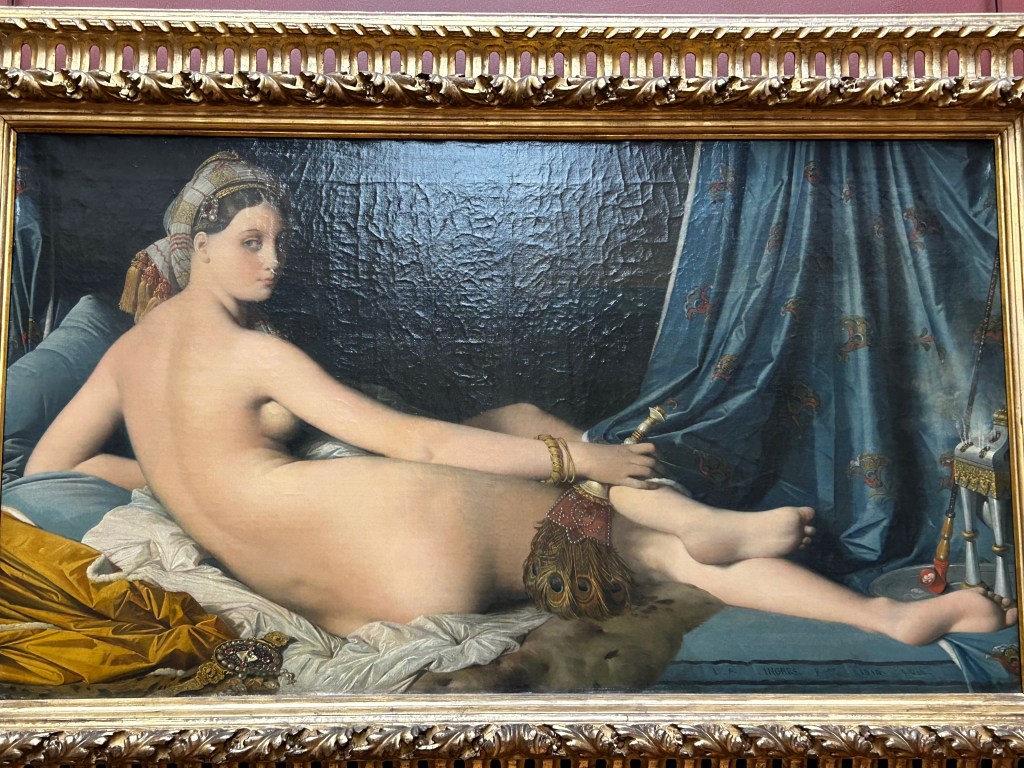
the Romantic collection, in an adjacent room, Salle Mollien, has works Theodore Gericault and Eugene Delacroix. Romaniticiswith emphasis on motion and emotion, is the flip side of cool, balanced Neoclassicism, though both flourished in the 1800’s.
Jean Auguste Dominique INGRES La Grande Odalisque Huile sur toile, 1814. Salon de 1819.
This life-size nude is an imaginary depiction of an Ottoman sultan’s slave. Her serene pose and velvety skin recall Venetian Renaissance paintings of Venus. Breaking away from anatomical realism, Ingres paid great attention to purity of line. Interesting because of the elongated form of the woman’s body, the position of her legs and the movement up the curtains and because the painter had little knowledge of harems.
Napoléon on the Battlefield of Eylau is an oil painting of 1808 by French Romantic painterAntoine-Jean Gros. It depicts a moment from the aftermath of the bloody Battle of Eylau (7–8 February 1807) in which Napoleon surveys the battlefield where his army secured a costly victory against the Russians. Although Napoleon on the Battlefield of Eylau, it is by far Gros’s most realistic work depicting Napoleon and breaks from the subtlety of Neoclassicism.
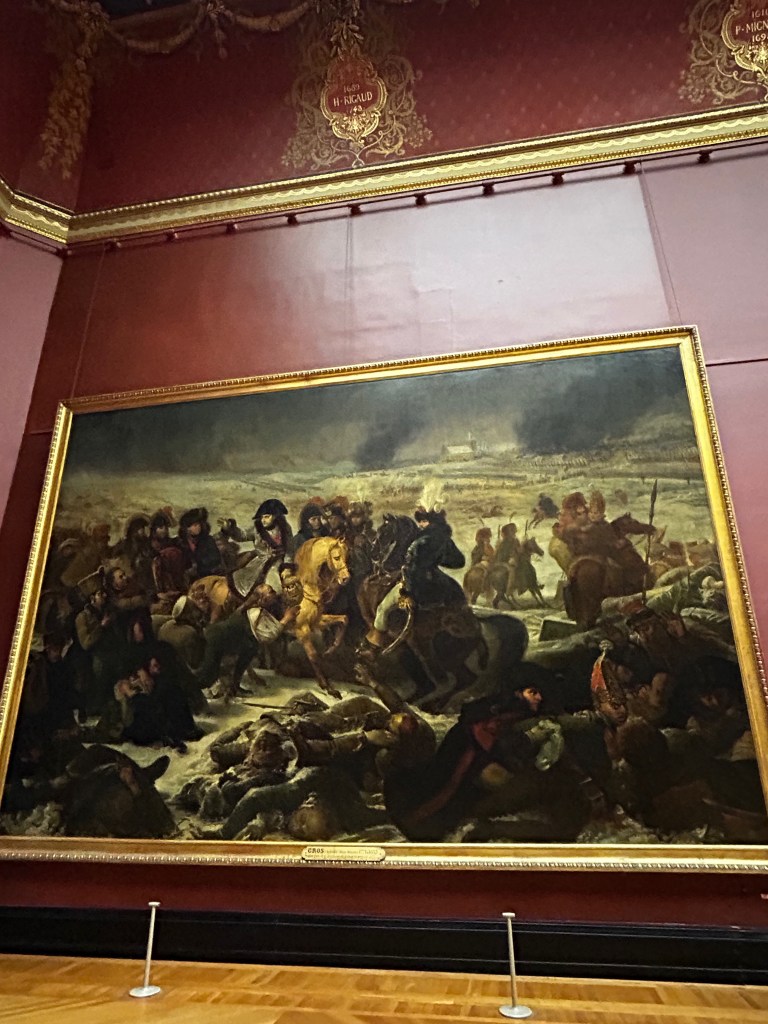
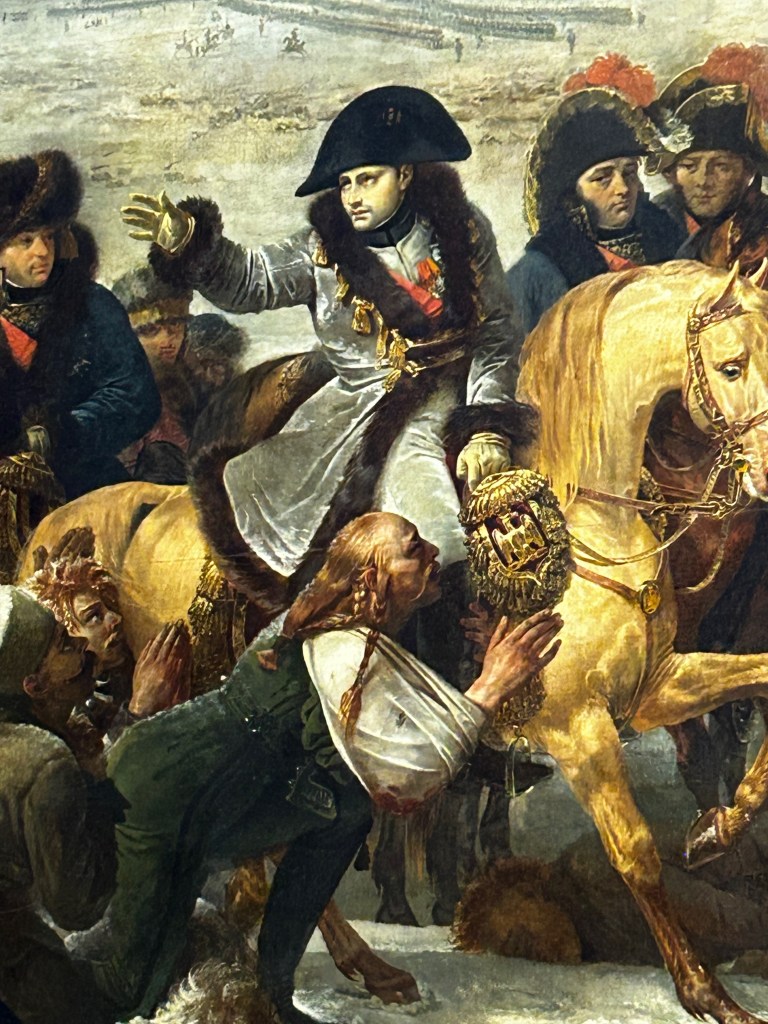
Close up of Napoleon on the Battle Field of Eylau
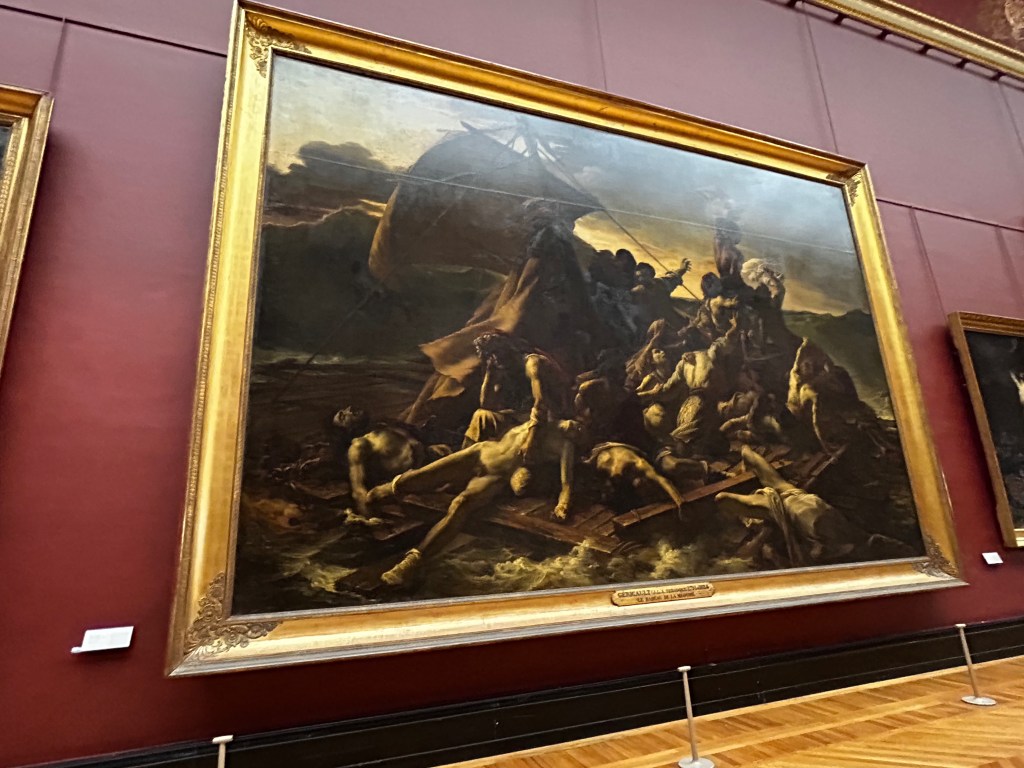
The Raft of Medusa: Theodore Gericault began to work on this huge painting without having been commissioned. The resulting composition was a history painting, but based on a recent event rather than a ‘prestigious’ historical subject. The figures in the scene are not mythological heroes or brave warriors, but victims of a shipwreck, forced to resort to cannibalism to survive. The painter chose the bleakest moment, when they saw the ship that would eventually rescue them sailing away in the distance.
This painting, first exhibited in 1819, was more than just a depiction of a tragedy. After the fall of the First Empire in 1815, the Bourbon kings had returned to power and the shipwreck discredited the newly restored monarchy: the captain of the Medusa had obtained his position on the strength of his connections with power rather than his competence; in fact, he had not sailed at all in the past twenty years! Unable to prevent the ship from running aground, he left part of his crew to drift on a makeshift raft.
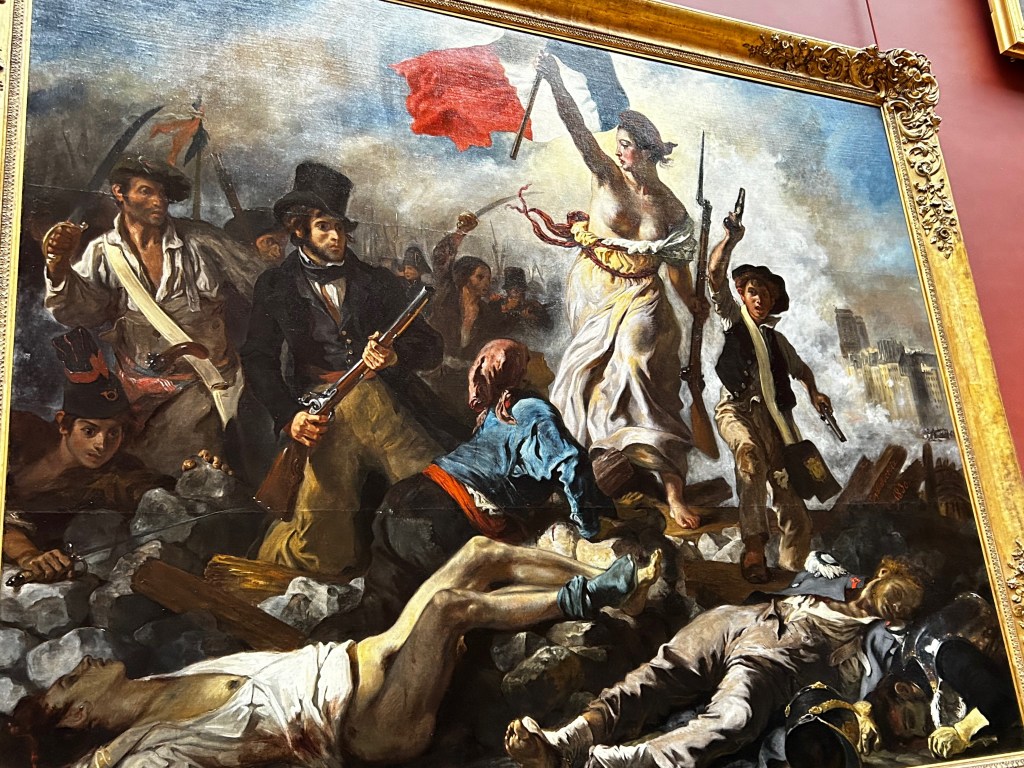
Delacroix’s Liberty, commemorating the stirrings of democracy in France, is a fitting tribute to the Louvre, the first museum ever opened to the common person. The motto of France is Liberte, Egalite, Fraternite-liberty, equality and brotherhood for all. Delacroix is best known today for this painting. It was inspired by the ‘Three Glorious Days’ of the July 1830 Revolution when the people of Paris rose up against King Charles X.
The Parisians are depicted breaking through a barricade. The female figure at the top of the composition – part classical goddess, part woman of the people – urges the crowd forward and waves the tricolour flag. She is presented as a symbol of Liberty. Delacroix deliberately used the colours blue, white and red in combination several times in his painting: the French flag, a symbol of the 1789 Revolution then of the Empire, was banned when the Monarchy returned to power between 1815 and 1830. This famous allegorical/historical painting, often referenced in art and advertising, stands as a symbol of liberty and freedom fights.
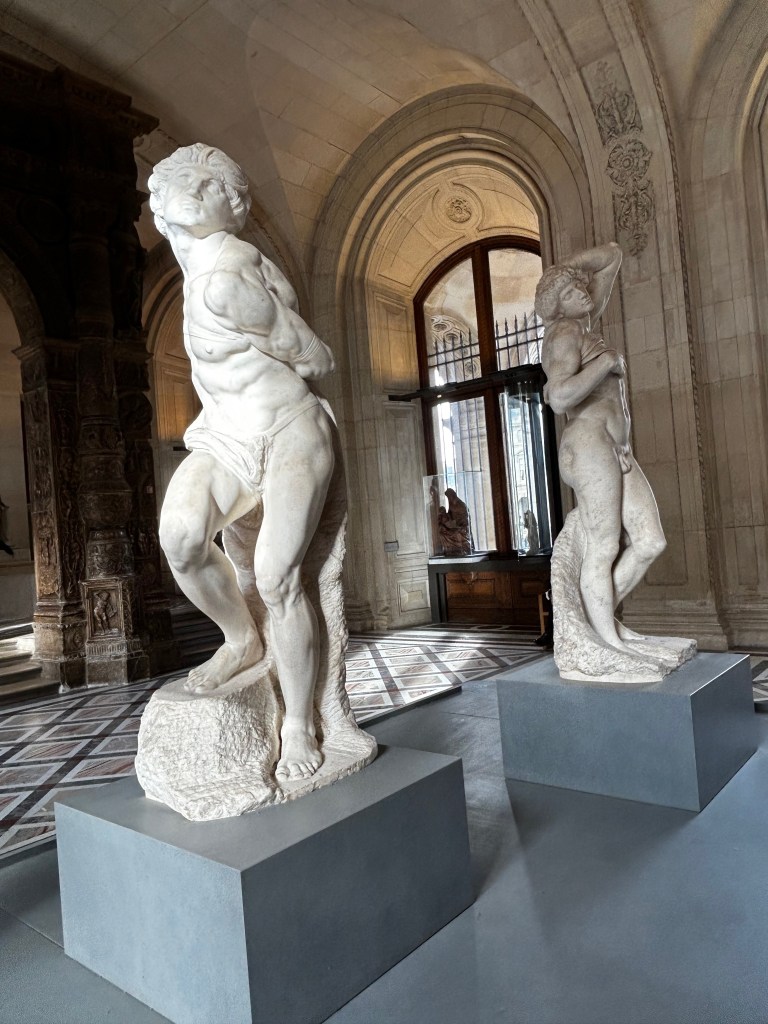
Michelangelo, like his fellow Renaissance artists, learned from the Greeks in this creation of The Two Slaves (1513-1515). The two large twisting males nudes look like they just woke up from a long nap. The perfect anatomy, twisting poses and idealized faces appear as if they could have been done 2000 years earlier. They are very different: the one on the left, the Rebellious slave, fighting against his bondage, shows the agony of that process looking tense and worried and the one on the right looks like he doesn’t have a care in the world is said to show the ecstasy of the result. Michelangelo said that his purpose was to carve away the marble to reveal the figures God had put inside.
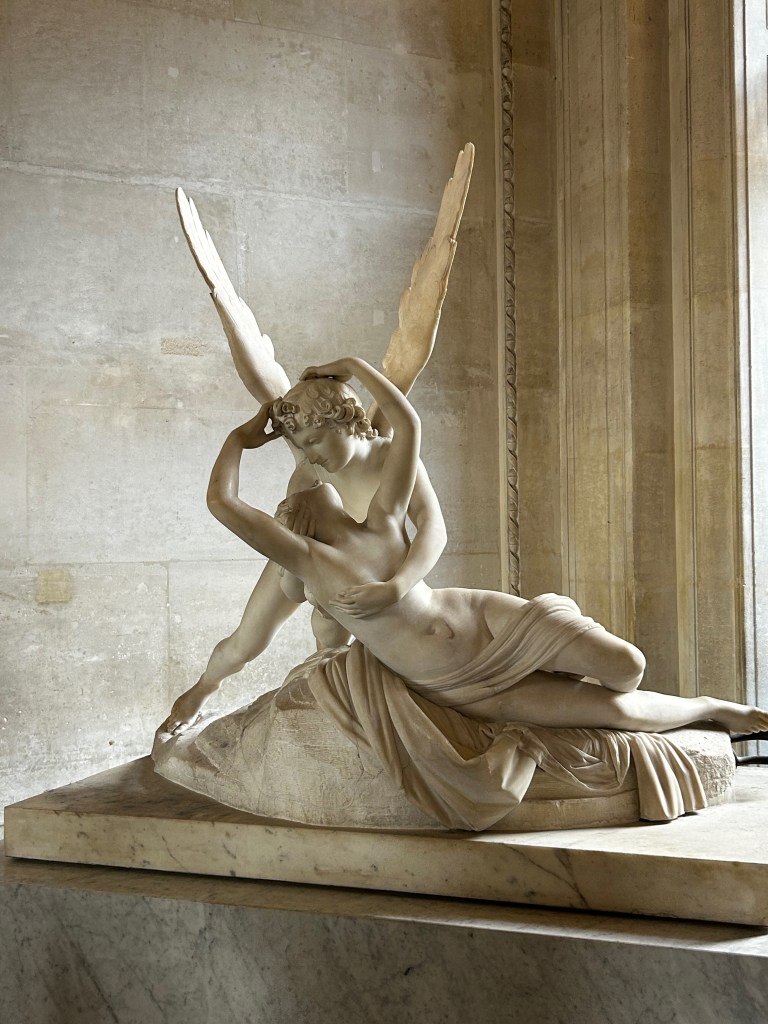
Psyche Revived by Cupid’s Kiss is a sculpture by Italian artist Antonio Canova is regarded as a masterpiece of neoclassical sculpture, but shows the mythological lovers at a moment of great emotion, characteristic of the emerging movement of Romanticism. It represents the god Cupid in the height of love and tenderness, immediately after awakening the lifeless Psyche with a kiss.
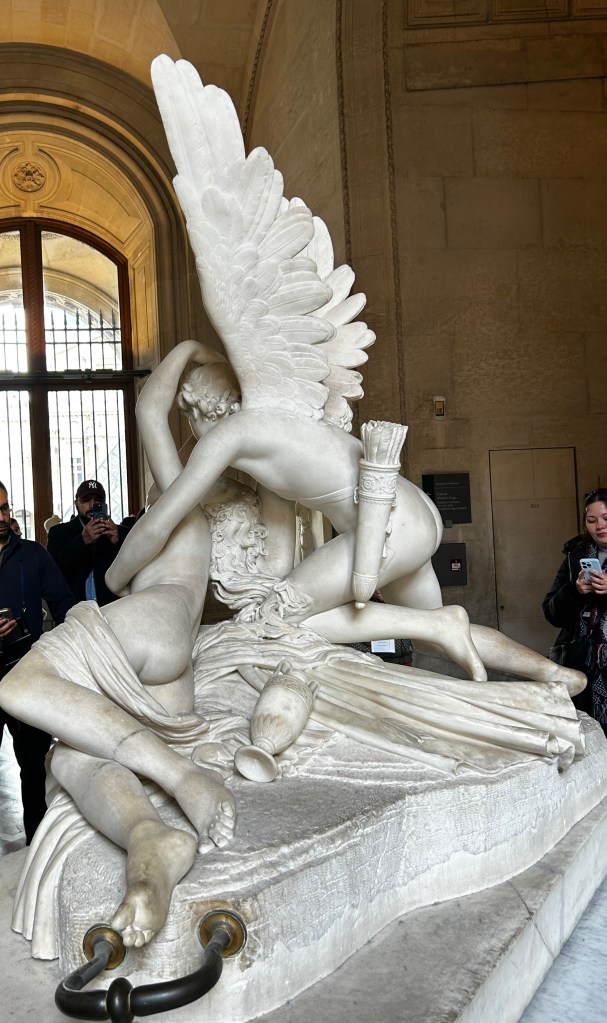
Having been recently awakened, Psyche reaches up towards her lover, Cupid as he gently holds her by supporting her head and breast. Antonio Canova’s fine technique in carving marble contrasts their realistic smooth skin with the surrounding elements. Fine curls and lines make up the hair and light feathery details create realistic wings upon the landing Cupid.
In Apuleius, Psyche had been warned by Venus against opening the jar she was given to collect a scrap of beauty from Prosperina for Venus: “But I give you one especially strong warning. Do not open or peep into the [jar] you carry, and repress all curiosity as to the “Imprisoned Treasure of Divine Beauty”.” But she gave way to curiosity just as she had returned from her voyage into the Underworld, peering into the jar to take some of the Divine Beauty for herself. However, Proserpina had not filled it with the Beauty, but rather with the “Sleep of the Innermost Darkness, which freed from its cell rushed upon her and penetrated her whole body with a heavy cloud of unconsciousness and unfolded her where she lay.” It is the moment in which Psyche is “a corpse asleep” revived by Cupid that Canova chose to depict. “Delicately purging her of the Sleep, which he put back in its original lair the [jar], he roused Psyche with a charming prick of his Arrow.”
Various details such as the jar behind Psyche allude to the story by Apuleius as Psyche had just opened it and had gone to sleep thus the jar remains lying beside her. Additionally, the arrow which Cupid struck Psyche with to awaken her is also found near the jar and Cupid wears a quiver next to his waist.
Psyche Revived by Cupid’s Kiss seemed an appropriate last piece of art for our visit to the Louvre.
We had Quiche Lorraine for lunch at Le Mollien, the small restaurant in the Louvre.
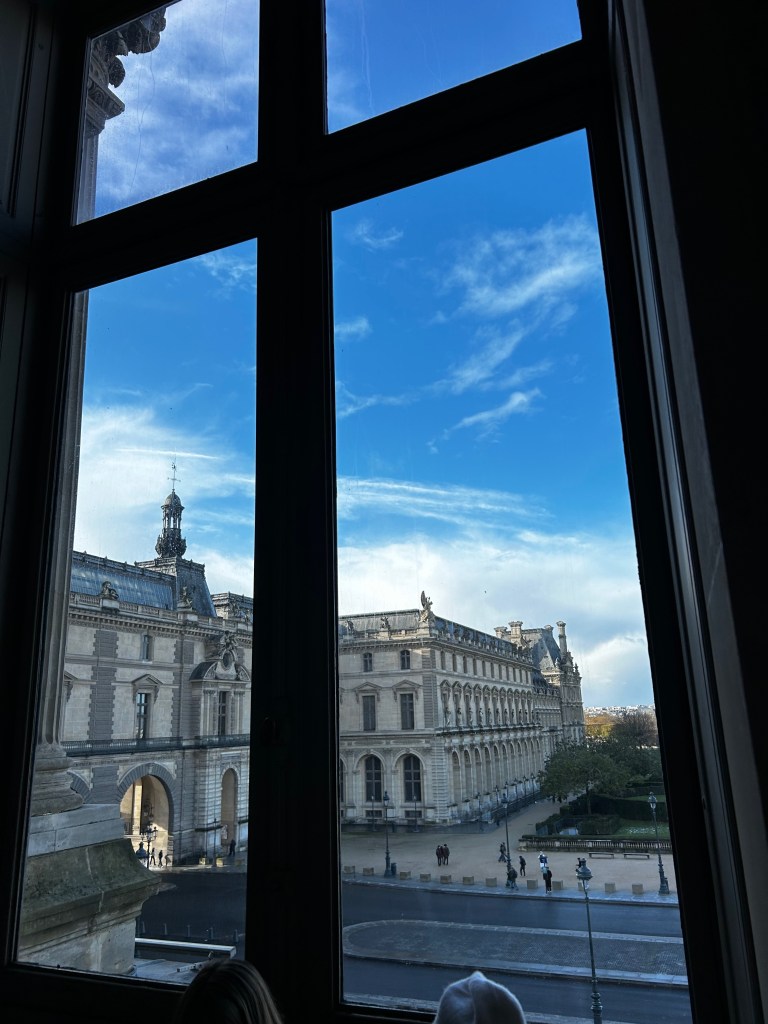
It was cold, not a great day for walking about with our not having winter clothing. Then we walked to the Christmas Market in the Tuilleries Gardens, made a dinner reservation and walked home. We had a very good dinner at Bistro Richeleux.
Our 12:05 flight home on Air Canada was uneventful and we landed at 2:00 pm with a short delay for a malfunctioning bridge but very efficient security and luggage retrieval and arrived home by Paris Airport Services at 4:15 pm.
 Site Title